How Amy Bakes Bread Grew from 500K to 11 Million Pageviews in Just Two Years
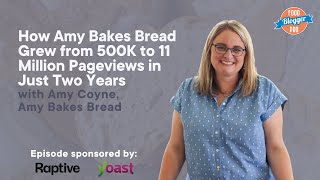
Amy Bakes Bread grew from a hobby blog to 11 million pageviews in two years. She hit 520k Instagram followers after a 90-day push in 2023, then pivoted to Google search traffic which now drives most growth. Revenue is roughly 80% ads, with courses and a cookbook filling out the mix.
Questions this video answers
2020 (WordPress.com initial hobby blog).
90-day Instagram posting challenge and adding sourdough content to the website (posted daily; published ~10 new pieces/month through much of 2023).
From around 1,000 followers to ~16,000 followers in that 90-day period.
End of October 2023.
Reached ~100k pageviews in 2023; by summer 2024 monthly traffic hit ~500–600k; end of 2024 reached ~9 million pageviews for the year; YTD 2025 reported a little over 11 million pageviews.
Chapters
Amy, welcome to the podcast.
Thank you so much for having me today.
Yeah. We're going to be talking about a journey that you've had, which a lot of people listening to the podcast, no matter where they are at in their blogging or online content creation journey, a lot of people would want to know how you did this. They want to hear about success stories. Because in a relatively short amount of time, you've grown your site and your following. And not only have you grown your site and your following, but you've also grown the revenue that the business is producing, which is so fun to talk about. And also there's a lot in there that we can dive into. So at what point do you think we should start? Sometimes we roll the tape all the way back to the beginning. But where do you think is the best kind of starting point to launch that conversation to talk about your journey as a content creator?
I kind of do think it is a little bit at the beginning, because I. I've been a mom for, I don't know, my daughter's almost 16, so. 16 years. And that's kind of where, you know, what I wanted to do that was initially. But I always had this love of baking, creating, things like that. And so as my kids got older, I was like, okay, what could I actually do with this? I love to do this. Anyway, I've had all these years of experience. How could I use this to, like, help me, but also, you know, help other people?
Yeah. When you say, as your kids got older, does that correlate to you having more mental bandwidth to think about things like, what, what's the. Explain that a little bit.
Right, right. So I think, I don't know, maybe this will resonate with other stay at home moms. But you kind of get to that last kid who's starting to go into school, and you're thinking, okay, what am I gonna do now with my six hours a day? Or, you know, whatever you have after.
You'Ve dropped all your kids off.
Exactly.
Nobody's sick. Like those sometimes seemingly rare days where you then just have a block of time.
Yes.
And usually you'd have one home or maybe be kind of juggling, maybe it's a shorter preschool or whatever. But suddenly you have these blocks of times. That's when you started to think about, okay, what does this look like for me to do something in this block of time?
Yeah. And I actually, I started to think about it a couple years before, and I have a lot of friends who are going through this, you know, stage two Thinking, what am I going to do? You know, in this time, a lot of us, you know, think, oh, I want to go back to work or I want to go do something. And yeah, and this. So I started just kind of as a hobby, posting some of my recipes because I loved to bake and that. And then once my littlest, my youngest went into kindergarten, first grade, I was like, okay, I actually could start doing this more.
So when you say posting, was that to Instagram?
I actually started my blog in 2020, but just as like a hobby. I didn't have a recipe cards, I didn't have anything on it.
Was it a WordPress site and you just posted a recipe and it was.
Word WordPress.com it was like a creative friends and yes, friends and family liked my stuff. You know, that type, that type of thing. But I did have this background in sourdough baking, and you would think that I would have capitalized on the 2020 sourdough, but I didn't because I didn't know what I was doing. But I did have. I had been baking sourdough for years before that. It was something that I love to do. And I saw this, I saw the spectrum of sourdough. So it was kind of the spectrum where there were people who have been baking sourdough for many years. It's very technical, it's very science oriented. And then on the other side, you had people who just said, oh, just mix this up and it'll turn out great. But I was the person in the middle. Like, this doesn't make sense. But I want to make this for me and for my family because I really like this type of bread. And so I kind of saw those two spectrums and was like, my past, I graduated, I was a teacher. So I'm like, I could figure out how to teach people how to do this so that it's repeatable and it tastes really good.
It's one of the things that I think is really important to point out is sometimes I think we look at getting into a new career. For a lot of us, this is a new career. You have an extremely successful business now. And we would look at our past career and say, this is going to be a career change. And in a lot of ways it is. So you're dealing with plugins, you're dealing with SEO. You, you kind of talked about this idea of not knowing what you were doing in 2020, and now you do know what you're doing. We're going to talk about that transition. But as much as possible. I think it's helpful for us, like you did, to not look at it as a career change, but a career evolution. So the medium changed. You're no longer in a classroom, but you are still teaching people. And I know the same was true for Lindsay. She was a fourth grade teacher, she was an elementary school teacher, and she had a lot of experience, opinions, expertise on how to take information and deliver that to people in a way where they understood it. And so I think that's a great way to think about the evolution of your career. Just like you talked about. We have friends, Sonia and Alex, who have a site called A Couple Cooks and they were previously technical writers for. I don't remember the specific industry, but what they would write about is, you know, how do you have success with a certain thing taking it from, you know, I always think of it like whenever I take the instructions out, like I put a chair together for my daughter who's getting really into art. She wanted like an art chair. I put that together yesterday. I thought of Alex and Sonia because their expertise is, you know, is this technical writing which translates so well to recipes. People have previous experience with photography, video, whatever it might be. Even if your previous career, and I'd be interested in your thoughts on this or current career is being a stay at home parent, I think there are things that correlate and you can bring over from that experience. So were you aware of that in the moment that that would be something that would be beneficial for you as you started to move into this career of being a content creator? Not.
Not really. I think it was more of. I just had this something that I love to do and I wanted to share it with people. I wasn't thinking, oh, I want to just create a bunch of content just to put myself out there. But I do think to your point, with a stay at home parent, with the evolution of Instagram, you know, social media, it's become a lot easier for a stay at home mom, for example, to find that expertise that they've had or that they've built up and start sharing it. Yeah, because I think that, that it's. It's taken out, right. The gates or the things. Right. Because you can have access to a lot of, a lot of people and share and build up a following. Even though that wasn't necessarily my initial thinking, but I think that it is really something that anybody could do because we all have a phone, you know.
That we're in the world of software. They talk about this idea of a minimum viable product an mvp. And so what does it look like, if you have a software idea, to not spend, you know, hundreds of thousands of dollars going into the lab and creating it in the dark and then revealing it to the world, but instead to get something as basic as possible, but something that people can use so they can start to interact with it. You can get an idea. Does this have life? Does this software product have life? And in the content world, I think that also exists. What we're doing is we're creating something. We're putting it in front of people and seeing if people resonate with that, if there's a need for it, if people are interested or fascinated by it. And the great thing is that's really easy. Now, it also creates a lot of competition, the flip side of that. But if you have an idea, if you're curious about a thing as quickly as possible, how do you get to the mvp, the minimum viable product version of that content? And I think, like you said, the best way to do that is by using a platform where by the end of this podcast, you could have an account set up and you could have your first piece of content published, and you can start to see, does. Is this something that people are interested in? Obviously, it takes a while to build up momentum with it, but a lot of times you can kind of workshop things on these platforms in a way that previously was really hard. There's a lot of technical lift that went into creating your own platform.
So, yeah, and I will say, yeah, I would say with that, too, is I did not. I remember I used WordPress.com, which I shouldn't necessarily have done that, looking back. But I remember saying to my husband, I want to spend $300 just to create this website. You know, and he was like, go for it. You know, do it. You want to do it. But I just remember that was like, all that I put in to it. And then other than that, it was just. It was my time. It was, you know, but I didn't. I didn't, you know, start even investing really into the systems and all of that until I was making money from business.
Yep, let's talk about that. When did that point happen? Because you started as a hobby. You're really clear. Yeah, I want to do this as a creative endeavor to publish my content online. When did you start to make money? And then when did you decide, I'm really going to scale this up because, you know, we're going to talk about this, but spoiler alert, the site now is like, you know, Multiple six figures. And you can go into kind of the specifics if you want to, but it's at the point now where it's like an extremely successful business. So between 2020, I was just doing this as a hobby, and 2025, there's been a lot that's changed. What was the inflection point when you started to look at it as a business?
Yeah, it really. Well, so I will say there's two inflection points. So the first was in January 2023, I was asked to teach a sourdough class in person. And at that point I was like, okay, I've been wanting to put this on my website. I've been just fiddling around with this for the past couple of years. I'm going to really try to give it a go for a few. A few months. And so I said, at that point, I said, I'm going to add all the sourdough information to my website and I'm going to post on Instagram for 90 days. I'm like, I can do. And every day. I'm going to post every day for 90 days. I can do that. And so that was the point where I first said, okay, I'm actually going to try this. And so I published. I was just looking at this. I think I was publishing about 10 new pieces of content a month at that over for 2023, most of 2023. And in those 90 days, I grew from around a thousand Instagram followers to like 16,000. So that showed me like, oh, wow, people are interested in this. This is helping people. I can actually, you know, I'm enjoying doing this. Like, I like helping people. I'm going to keep doing this. So that was kind of that, that inflection point. And I haven't stopped. Stopped posting on Instagram. I posted almost daily since then.
Yeah, that's kind of that MVP idea. A thousand to 16,000. And we always talk about this, okay, if you can get 16,000 people, you can probably get 32,000 people. And obviously there's a cap to that eventually. And they talk about this idea of, you know, a total addressable market tam, like for Food Blogger Pro, the TAM is probably smaller than sourdough, but we probably haven't reached it yet. There are probably more people who are interested in creating food content similar with what you're doing. More people interested in creating sourdough. But that allowed you to test it out and get an idea. Okay, there are these people out there who are interested. So that was in 2023.
That was January. Yeah. And by October, by October of end of October, I was accepted with raptive.
And so that's also a point where you are like, okay, I previously wasn't really making money for my site or maybe was doing some classes here and there. Now I'm making multiple thousands of dollars a month. And you start to think, okay, what if I could double my traffic? Is that kind of the mindset that you were in at that point?
Yeah, it was kind of. I was realizing, oh, you know, I think my goal was just like, I'd like to make a little bit of something from this because I'm putting so much time into it. I wasn't really thinking like this was going to grow into a giant business. Which is why I said there were two inflection points. Because that, that actually, that has come more recently, probably in December, January of 2025, December 2024, January of 2025. When I said, okay, I really need to start taking this as a business because it has the traffic, it has all of these things and I need to, you know, know, kind of own that this is a business, that this is like what I'm, you know, what I'm doing and putting my time in. And, and it has the, you know, the revenue to support that.
Yeah. And kind of at that point when it goes from multiple thousands to potentially multiple tens of thousands, you start to realize there is something rare and unique here. And it's almost out of respect you want to say, okay, I want to show up and like honor this thing that has been built, really invest back into it. You provided these helpful numbers. So you talked about that hundred thousand page views point at, in 2023. And then in 2024 you started to experience some of that growth kind of into 500, 600,000 page views monthly during the summer. And then you said in September is when it picked up again with baking season, ending the year with 9 million page views, which is awesome. And then this year, January, kind of quarter one. Do you want to talk about that?
Oh, yeah, yeah. So I just looked at actually yesterday, so I'm at a little over 11 million page views right now for this year.
And we're, when we're recording this, we're not even halfway through the year yet.
Yeah, yeah.
Which is incredible. Tell, tell me about what that's been like for you to experience that in a two year period of time.
It's really been, I mean, life changing, I guess in a way it really has been because there are just things like that we're you know, maybe I'm able to do with my family or things that we've been wanting to save up for, things that, you know, in that way and also just being able to plan, you know, financially, but also with the business saying, like, you know, I wake up every morning and I'm still excited to talk about sourdough or, you know, so it's something that I am still enjoying and loving. Right. And I think that that makes a big difference in wanting to, like, get up and help people with. With making really good food for their families.
Yeah. There it's that really amazing cross section of doing something you love. Flexibility, autonomy, like you. That's really unique. Being able to, like, create substantial income from that, also very unique. And then people finding value in it. And, man, if you can lock all of those things in, that's a really amazing thing. Talk to me about Instagram, because that's been an important platform for you along the way as well. Spoiler alert. So you talked about 16,000. That's currently over 500,000. Probably be, you know, I think it's 520,000 when we're recording now. Probably be higher than that. What have you done there that has helped you grow, you know, to. From 16,000 or 1,000 when you, you know, actually started. All of us start. Start there. But to grow it to, you know, half a million followers on Instagram over a few years.
Yeah, I really feel like Instagram, for me is kind of. That's where I feel the most connection with people. So that's a really important piece of my business, is that community. I think that one of the things that I've done is I've really tried to build, like, positive connections to my audience. So here's an example. I have had a reel that I posted where people have commented on it saying, oh, you pronounced the name wrong or you did this or whatever. And it got a ton of engagement, you know, 5 million views or something. And when I went to look at the analytics of it, the amount of people that followed me from that reel was very small. And then I've had another reel that. That went, you know, viral, and it was aligned more with my audience. This is a croissant inspired sourdough loaf, and it went crazy. And I've gained 50,000 followers from that, from that reel. So finding, you know, being positive in a way that you feel like you're adding value to the community that you're going for, I think is a really big. Is a kind of a big one. And not just posting A reel that to get engagement. Yeah, if that makes sense.
For sure. There's this reality that numbers are different and we can look at it and say like 5 million followers. Oh my gosh, that's amazing. But it's different depending on who those views are from and are they aligned with the audience that we want to reach. And my guess is that those two viral pieces of content, the one could have had fewer views, but the resulting increase in followers is going to be more valuable than something that obviously got, you know, a lot of views but not a lot of followers. You want to be building your audience as well as increasing, you know, views that you get on a piece of content. What would you say were the. You alluded to it a little bit, but for somebody listening, what would be the takeaway from that kind of analytics observation that you had?
So I think that it is going into the analytics of what you're posting. So first of all, if you, you can't know what's going to hit if you're not posting. Right. So you need to be in there in the app, like posting a lot or consuming some content. So, you know, like, what would maybe hit more? Like, I know certain recipes or things that I make are going to do better than others just based on how easy is it, how unique is it, you know, things like that. Right. So it's. I, I've learned that because I've put posted a lot. So kind of posting a lot, then going into your analytics and looking in the analytics actually and seeing, okay, how many followers did I gain from that piece of content? And sometimes that will surprise you because you might think, oh, this didn't perform very well based on the number of views. But you see that actually the number of people that you got from that.
Piece of content, that's great. Are you building in any prompt to the reel that you're creating? Hey, follow me. Or like anything around helping to encourage people to become followers that you're doing?
Um, I did for a while when I was starting. I don't do it as much anymore, but I do use. This is gonna be another one that I talked about, but I do use now Grocer's list, which has been a huge game changer.
Awesome.
For so many, so many pieces of this building. My, my email list, I actually was looking at into the analytics and I think 5% of my traffic right now comes from grocer's list.
Yeah, that's great.
So it's, it's just been so good. I used many chat before that and that was good too. But this works so much better for food.
Yeah.
A food site.
It's great. Yeah. Grocery List is coming on as a podcast sponsor. Depending on when this is coming out, people might hear that and Ben is great. And then by the time this comes out, we'll also. We've talked about investing. Like, we're just. So this is a disclaimer for me with that. But a huge believer in that platform for all the reasons that you described. Like, it's. There is a social first consideration to the content that we're creating right now. A blog and a website is still the main mechanism, I think, for a lot of creators in our space where they're earning income. But it's shifting how we are capitalizing and building the following that eventually goes back to your site. Like building an email list through social, directing traffic through social. All of those are becoming more important and they've built a great product. So can you talk to me about the percentage allocation of where traffic is coming from? Today you talked about 5% coming from grocer's list. My guess is search, maybe Pinterest Direct and email.
As I was looking at. It's kind of interesting. So if we go back to 2023, I had only been getting, I think 14% of my traffic was from Google. So it was 33% was direct traffic, 25% was Instagram, 14% was from Google, then like 11% Pinterest. And I think that. So a lot of that was because I had unintentionally installed some kind of plugin that made it so that nothing was showing up on Google. None of my stuff. But. Yeah, but this is an SEO hack.
Turn that plugin off.
Yes. But I was getting so much organic direct traffic from that that I was still able to qualify for raptive in October, even with that.
So, so organic direct, meaning like you are just getting direct traffic from people seeing your content somewhere and then just typing in your URL and going there.
Yes or yes. And I think that that has continued to be a huge part because I get all the time people say I just go to your website and search for what I'm looking for.
Which that wouldn't have happened if not for social media. Is your understanding that people are discovering on social, I think seeing it and then saying, I want this going to your site.
Yes.
Yeah.
Yes. And so then as that got fixed and I've fixed things on my website and Things. So in 2024, I think I was like 33% was Google. So now that Was had risen more to the top and 30% was direct. Instagram was still around while Instagram went to like 14%. And then this year.
And when you say Instagram real quick, are you. Is that like people click on.
Clicking on the link, the link in the bio or. Yes, yeah, that's mainly, mainly what it's coming from. And then this year it's like 45% Google, 21% direct. So Google has increased a lot. Direct has kind of stayed about the same, except that Google's increased so much that it's like making like. Anyway, and then groceries list was 5% Instagram 8%. But if you add that groceries list with Instagram, I don't know. So Instagram kind of a similar platform. Yeah, it's kind of stayed about the same.
Yep.
In that way. But it's. It's been really interesting to kind of see those numbers and see where a lot of this, this traffic is coming from. And email has been a big. I've been really focusing on that this year as well. So I think I've got maybe 5% right now from email, but I'm hoping that that will grow a little more because grocer's list, I've grown my, I think 10,000 from groceries list just in the last two or three months.
Amazing. Yeah. Your email list.
My email list, yep. Yeah, yeah.
And that is offering some incentive for people on. You're creating a piece of content on Instagram, a reel people will comment to, then get the opportunity to opt in to whatever it is, like a, you know, starter kit, PDF or email series or something like that.
Yeah.
Yep. That's great. Um, going back real quick, some people might have in their mind, what, what can I do to make sure that my site is showing up in Google? My guess is that there's a setting that was a noindex setting. Like maybe you had some design work done or you were doing some development. A lot of times this happened. It actually happened to my friend who had like a private equity website, like a software company in private equity. And I went to his and I couldn't. I was googling it and I couldn't find it. And then I went to his site. I was like, okay, it's up. So I did like a no index test to see. It was like, oh, this site is no indexed, which means it's not Google. You're telling Google to not put the site in its index. It's simply just turning that off and then it shows up. Was it something like that?
Yeah. I actually I think what had happened is I had switched, like, from Yoast to all in one or something like, and in that switch, it hadn't done correctly. So sure.
So you get that cleaned up and then things are. Search is increasing, but also at the same time, all of those other traffic sources are increasing.
Yes.
How much do you think the growth, like Instagram was a mechanism for the growth of the site? Like, can you talk about how those play together? Because I think in a post helpful content hcu, helpful content update for Google and a post helpful content update, it seems like, and there are people who probably know this data better than I do, that there's a correlation to your web presence broadly, especially on platforms in our niche like Instagram. And the impact of the maybe branded search are helping your overall search. Branded search meaning like people go to Google and search Amy Bakes bread sourdough, you know, beginner guide. And so then you have this kind of correlation. There's this branded search. Does that feel like kind of what was happening? Is your understanding of that kind of similar. Tell me about Instagram and search and kind of how all those are tied together in your mind.
Yeah, yeah. So I do think there's a really big correlation with that. I think one of the things that I have seen. So I want to go back to that reel that I talked about with that croissant sourdough loaf. So I had been thinking, okay, I want to make sourdough croissants. I was in my kitchen, I'm playing around with it, and they're very time intensive. It's not an easy recipe. And I thought, what would happen if I just took some grated butter and stuck it in this sourdough bread and it turned into the most delicious, crispy, on the outside croissant, like sourdough loaf. It's not a croissant, but it had that same. So if you're a sourdough baker, that's a really easy hack to get something kind of like a croissant. And. And I knew. I'm like, okay, I think this could go pretty well at the time, right? This has not even been. Nobody's searching for this on Google. And so anyway, I posted about it, and now my post comes up. When you search for sourdough croissants, that loaf is coming up as one of the top recipes, which it's not technically a croissant, but it also pops up with my Instagram video of it and my YouTube video of it. And, you know, all of these things. And I think Think that that completely impacted the search results because it was such a viral recipe and has had so many people comment on it and so many, so many people do it. If you're in like the Sourdough community, you would have heard of it or made it or something like that.
Yeah, it's interesting. It's a little bit where keyword research falls apart because you have the keyword research tools, which tells you historical information around people who have performed a search around a certain keyword. But as a creator, you have the ability to get something in front of millions of people, of which tens of thousands or hundreds of thousands of those will go and then search for that thing. And that search term may have never existed before, for it was, it was like really, really small. And so we have this opportunity to kind of create our own search volume through reaching people with the content that we're creating. So how do you go about deciding what type of content that you're going to create? Are you using keyword research tools? Are you creating all inspired content? Do you think social media first? Do you think your blog first? What does that look like?
Yeah, so I have always, I've always been blog focused in the sense that anytime I post a piece of content I want it to link to something. So I want it to either link to my website or link to a product or you know, something like that. Like, I want there to be a purpose for me to post that content. And then as far as keywords, honestly, I feel like I'm still learning about keywords. In December of 2024, I had a site audit and that's when I really started to realize, like, okay, key keywords. And at the time I was, I was a, it was a really good audit. But I was kind of told you need to go back and like fix so many things right. For all of these keywords. And so I have been spending a lot of time. But if I only focused on fixing those keywords and didn't focus on also creating as well, I would have never had that sourdough croissant loaf that's now one of the top recipes on my website. So I feel like there is this balance that has to happen between those two things.
Yeah, it, there has to be the inspired nature of it, especially if you're, if you have the component of social. Like if you are strictly creating keyword based content for your site without the consideration around, how is this going to show up within video format? Is it going to be a good match for my audience? But there is that Kind of middle ground where you're not completely ignoring it, but you're also taking into consideration your audience, the needs, the artistry of it as well.
And I do think too, it is interesting now because people will just go to my site and type in stuff and just kind of search and poke around my site. So I do need to take the time to go back and redo a lot of these things that are maybe older or I could do better now because people are coming and looking even though they're not necessarily Google searching it.
Yeah, it's one of the great things about Slickstream search. It's just such a powerful tool. So for people who have listened to the podcast for a really long time. We were an advisor for Slickstream when they were first starting out, Kingston, who was the founder of that company. I remember when he first demoed this and I was like, oh my goodness, this is such an upgrade from the typical WordPress search. It's real time. It's going to make it so much easier for people to come to the site, interact with it. You get to see how many favorites there are and whatnot. So Slickstream is a great tool and allows you to kind of have your site operate in a similar way to how people would normally search for something. It's just way more robust. So Slickstream now is a raptive product, free to use, super powerful product and they also have some great analytics. So a good one to check out for anybody. I think it was open in general for any creators, but maybe it's just exclusive to Slickstream, I don't know. But it'd be worth checking out. Slickstream.com so tell me about what the business looks like today. So it's 2025 and I know that you have, you're also doing online courses, you have cookbooks, you know, you have raptive income that you're creating from this site. If you were to kind of create a little pie chart, what would that pie chart look like for the business today?
Yeah, so it's currently about 80% ad revenue, which is like I, my goal is to diversify that a little bit, but it's really common. Yeah, but. And then it's about 12% affiliate links and then maybe 6 to 8% is like cookbooks courses and I have a cookbook coming out in September, so that will probably go up as the cookbook launches and stuff like that.
That's great. So can you talk about the course element with it? Has that been a good thing? What have you learned in that process? And one of the things that's cool about it is kind of was how it all started. It wasn't a course, but it was a class. And I think a class is kind of analogous to a course.
It's true.
Anything that you've learned in that process and things that you would do similar or different if you were to do it again.
I really, I liked, I loved teaching the in person classes. I've, I've stopped doing that this year. But I love teaching them because I love to, you know, get right in there with people. Right. It's probably that teaching background. It's fun for me to get in there and talk to people. I feel like doing the courses in person really like helped give me, you know, confidence and speaking in front of people and talking with people and really having to niche into like what my method is and with sourdough and all of that. And then I had so many people asking can I want to take the course? But I live in Kentucky, I'm not near Kentucky. And so I said okay, well I will try to put this into an online platform. And so I created an online platform for the course. And so I currently have an online course that you can take and I also split those up into mini courses, like little courses. So people could just do one specific area that they needed help with with sourdough. And honestly it's gone really well there. It's just kind of there. I don't promote it all that much anymore. It's just kind of on my website. People will find it. If they want extra help, they can go there and they get it's I think two hours of like pre recorded video of me showing all the instruction, a bunch of PDF recipes and guides. I use Thinkific to, to do it and it's worked really well. So that's just kind of maybe a little bit of an extra that I have added on. I don't know if I will add more courses to it eventually. I, I'm kind of at a point now where I'm trying to decide I need to get more into like a little bit more long form YouTube video content, you know. So I'm, I have so much short form, but I don't have that, that longer form. And so it's deciding what direction do I want to go with that.
Yeah. One of the things that's hard is as you have something where you are. We talk about this idea of catching a wave and being an expert surfer and there is not a wave necessarily in a trend which you could speak to that if you'd want. But a wave in that there's a broad group of people who are interested in the thing that you are talking about and sharing about. And you have kind of lined these up in a way where you are, you can surf the wave. There is the wave, you know, the, the market of people to, to speak to and there's the platform that you can do it on that you are an expert creator on Instagram, web like short form video. You have all of these opportunities and suddenly what you realize is you have more opportunities than you have time for. And one of the things that we talked about is this reality of you're also still a parent, you're a mom and you have a husband who works full time as well. And Lindsay and I are in a similar position where we have our girls, they're four and six, we both work. There also are demands at home. And it's like we have all of these things that have to happen at home, all of these things that have to happen at work. So talk to me about what that's been like for you as you've made decisions around what you will continue to do, potentially hiring to have somebody to help with doing certain things. What have you learned over the last year or so as that reality has become more apparent?
Right. That has been kind of a hard transition to think of as, as a stay at home mom who's had that as her career for, you know, most of my children's lives to now into this like full time. I could be working endless hours if I wanted to.
Right.
So having to balance that been tricky. I feel like I, I have hired some part time help with social media and my sister has been helping me with writing and things like that because she's, she's an English teacher.
Teacher, family.
Yes. And she's been, she's phenomenal. So I have had that help. I really needed that help especially when I was writing cookbooks last summer. And I have, you know, my kids are a little bit older, they've had to help out a little bit more around the house. But I still, it's important to me that I'm there to pick them up from school. And you know, I try to fit this into those spaces in my, in my day that I can, I show up on my Instagram stories in the carpool line. Like I, I try to look at what's going to give me maybe the most bang for my buck. Like as far as far as creating or developing a new recipe. I'm not making the, the ones that people, you know, aren't searching for as much, or I'm trying to make the. The name of it something that somebody could search for, even if it's a little bit different.
Right.
So I'm just trying to do those little things and. But it really has been having to look at and re, you know, have some conversations with my husband. He's incredible, and he's always, you know, helping out, but I can't do as much as I was doing because now I'm working full time with this. So I think that's been tricky to navigate, but it's gone well. You know, like, it. It's. But it's being. Being honest, having those conversations and saying, okay, like, we need to reframe how we've done things as a family for so long, because now this is our new normal.
Yep. It. I was messaging somebody that I've known for a long time, and she sent an email and was just saying, appreciated a podcast episode and was saying, she's transitioning. They're gonna have two kids now, so she's pregnant and they'll have their second. And just talked about the reality of that being this new season and the new season bringing new considerations. And as I reflected on it, one of the realizations I had was especially having kids. But I think even without kids, there is this continual rearranging of our lives and schedules that needs to happen. And the more that I accept that, the easier it is to then say, okay, I'm just going to be in this perpetual state of trying to find the balance point on any given day, week, month, year around life, business, you know, personal, the own things I want to, like, navigate and make time for. And the point isn't to find the perfect balancing point. It's like to acknowledge there you almost never get there, but you're constantly trying to find it, and it consistently shifts. And so as soon as you feel like, okay, I'm there, it moves a little bit, and then you have to find it again. And for me, it's been helpful just to accept that, yeah, I'll never find it.
Yeah, that's very true.
So as you look to the back half of the year of 2025, what are the things that you're going to continue to do that you think have been most successful and helpful for you in going from very beginning four or five years ago, really, you know, two, three years ago. Three years ago, really?
Yeah.
To this established, successful business, what are the things you're going to continue to do? And then anything that you'd say maybe you'll do less of.
Yeah, so I will definitely. I'm still going to continue to show up on Instagram. Like I have been. I feel like that's really kind of that heart of my business. But as I've gotten better at Instagram, it takes me less time. So I think that. That I think spending. I've been spending less time on it now as I've gotten better at creating content or seeing what things will perform well or that. So I plan to spend less time on the app but continue to show up.
That's great. When you say things that have worked well, is it like Instagram, real content, stories?
Typically it's reels. It's stories. Like, stories. You know, watching. I used to be on stories all the time, and I would have the lowest views, you know, because I'd do 20 stories or whatever. And just really realizing, like, okay, I can funnel people to a certain recipe if I post, you know, a picture of that recipe and use a automation or, you know, just kind of learning how it works. And then after I do that, the first couple of ones I typically do, like a DM automation with. That's kind of very realistic about my life. And then if I decide I want to share more, I'll share more. But those ones get the most engagement, the first couple that you share. So I think I don't feel like I have to be on stories as much, that kind of thing. So I feel like I will do that a little bit differently. I'm going to be focusing a lot on repurpose, you know, repurposing content that I already have, but also still creating. So I try to do at least one new post a week. Probably will do more during the holidays.
Repurposing. Like, you had an Instagram reel from six months ago that did well, pulling that back up and reposting it.
Yeah, I'll do. I'll do that. Or I'll take the same footage and just like, change it up a little bit.
Sure, yeah. New voiceover, a little bit of a different footage. But you're not, like, reshooting it.
Yeah. Because the thing is, a lot of people still haven't seen that content.
Right.
So you may as well. I used to think, like, oh, I can't post the same thing, but I. That's. That's not true.
Yeah, well. And sometimes even if people have seen something before, they're not going to be frustrated if they see it again. Yeah. Like, we live in a world where we have, you know, repeat exposure to media commercials as an example, over and over again. You know, even if it's like TV shows, we'll watch a TV show multiple times. And so it's not a bad thing. Even if people have seen it, if they see it again, that's great, Amy. It's fun to hear your story. And one of the things that I love about it is this idea of taking the raw assets that you have as a teacher, as a mom, and then your expertise and interest in a certain subject and saying, hey, you know what? I'm going to start creating content around this and wrap my skills and abilities with that extreme passion and interest. The phrase that I had in my mind as you were talking about it was this idea of like, declare this will see if this sticks. Declare, share and be there. And for a lot of us, it's saying, I'm going to show up with my expertise. Declare your expertise. You're going to share what you know about that expertise. And then as people interact with you, you're there. You're going to be there and interact with them. And it seems like you've done such a good job with all of those saying, here's going to be my expertise that I'm going to talk about. Sourdough sharing that expertise, but then also, like you said, being supportive of that community, interacting with that community, doing whatever you can to be there and support them, which is cool to see. See. So anything else that we didn't cover that you feel like would be important to hit?
I don't think so. I think we've covered quite a lot.
That's great, Amy. Where can people follow along with you? Obviously, Instagram and your site give a shout out and we'll link to that in the show notes.
Yeah, it's. You can find me. Amy Bakes Bread. So I'm On Instagram @AmyBakespread or AmyBakespread.com is my website.
Awesome. Thanks for coming on, Amy.
Thank you so much for having me, Sam.
More from ChatFBP

One more reminder to tune in here to the latest podcast! https://pod.link/1014116331









One more reminder to tune into this week’s podcast! https://pod.link/1014116331

A glimpse at our October coaching call all about returning to your blog. Replay on FBP!