How Charli Prangley Doubled Her Side Hustle Income in One Year | The Food Blogger Pro Podcast
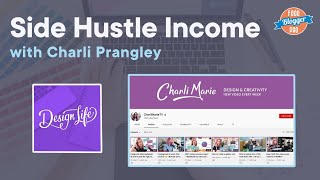
Charli Prangley doubled her side-hustle income in one year by landing a recurring Figma sponsorship, expanding multiple small income streams, and outsourcing video editing and bookkeeping while keeping her full-time job. She talks networking at conferences and on Twitter, organizing her inbox, and building diversified income.
Chapters
So how about in terms of earnings? I know that you shared a post. We'll link to that in the show notes. And you. And you kind of break down. Okay. You have your job include that information. Here's how much I'm earning from my full time work profit sharing from ConvertKit. And then you have kind of laying out the income that you're also earning from your. Your side hustle. What have you found to be as a creator with significant followers on multiple platforms, what have you found to be the most effective way to create an income and then advice around that for other people who are looking to do a similar thing in a different industry?
Yeah, so I think there's. So I doubled the income that I made from my side hustles last year which was really exciting. And I think that doubling came. I can pinpoint it to three things. Um, if we have time to go into them.
Yeah, we do. And can you say what it was and then what it went to?
Yeah, yeah. So I'm going to speak in pounds because.
Sure.
That's the currency that my business.
Just to do the math in your head would be impossible. Yeah.
So in the previous year I earned £19,638 from my side projects and then in the last year I earned £41,580. So I think it was like technically 112% growth if we want to be.
Specific, which is awesome. And the rough the like would it be like 1.4. I have no idea what the. Like.
I think it's like almost US$60,000 is. Would be what I earned this year. Something like that.
Yeah, yeah.
To give us some frame of reference for the rest of it.
Yeah. And everybody who usually operates in pounds is just going to be like finally like yeah, yeah. Someone's. We have to. In order to honor that we'll have to do the reverse whenever that comes up in US dollars.
Yep. There we go. Yeah. So.
So what do you. Yeah. Three things you attribute that to is what is.
Are what the first thing is I managed to land a channel sponsorship which gave me consistent income throughout the year. So this is with figma. They're a design tool. I use them for my work, love them, feature them my videos often.
We just started using Figma for all of figma for all of our brands and the same thing. It's like awesome.
Yeah, yeah, love it. And so they pay to sponsor my channel monthly. They pay me $2,000 a month. And what that gets them is a link near the top of my description on every Video, it gets their logo, it says powered by Figma at the start of every one of my videos. And it's sort of like a brand alignment, I guess is, is what they're paying for there.
And that's like the tool you're using, which makes it a really easy yes for you. Like you talk about live streaming, my guess is 90% of the time it's you in Figma.
Exactly.
Working on that. Yep. How did that come about? Did you reach out to them? Do they reach out to you?
Yeah, I actually did reach out to them and suggest it because I'd had a previously webflow sponsored my channel for a few months, which is another tool that I use regularly and will also stream in a lot. They had some changes to like their marketing priorities and my channel was sadly no longer one of them for a channel sponsorship. But I was like, this has been great, you know, having regular income from YouTube that I can count on. And so I reached out to Figma and was like, would you like to take over this slot, this channel sponsorship slot and pitched it to them, told them, you know, gave them some details on my view counts and just really tried to make the pitch based on aligning our two brands and how it would be good for them for, you know, for us to be aligned.
And they went, and who, who is it? Who, what person is it? And how long did it take you to get to that person to have that conversation?
So luckily for me, it didn't take a long time because I feel like I've just been building up my network within this like tech, tech design, web design world for the past, you know, like five, six years, something like that. And so it's a case right now of, okay, I know I'm going to know someone who knows someone at the company that I want to speak to. I think for Figma, if I remember correctly, I might have, honestly, now that I'm remembering, reached out to their CEO who I'd met at the conference and we'd chatted and I was like, hey.
Straight to this app.
Yeah, what do you think about this? And he was like, let me pass you on to the right person. I think that's how that one went down.
Yeah, sure. But I think point, important point there is, I think a lot of people might hear that and think, oh, email the CEO. But actually the important little piece before that is the, the, the phrase where you said met at a conference, like that work was done well beforehand and it was probably pretty genuine. It wasn't like, hey, I have this idea of, like, I want to get a sponsorship. It was like, I love Figma. Great to meet you. Having a conversation, showing up at the conference, doing the hard work of sometimes just, like, meeting people without any purpose in that interaction. And, you know, call it networking, call it, like, relationships, whatever it might be. It's a great example of kind of the phrase of your network is your net worth, or your net worth is your network, like, whatever that phrase is, but just the significance of the people that, you know.
Totally.
Is there a way that you manage or, like, keep track of the connections that you have? It's been something I've been thinking about. I've been testing this app called Foak. Folk App, I think is what it is. But like. Or is it more of, like, hey, you know, that you have, you know, Gmail or whatever it is you use. You save contacts in there. But is there any type of, like, process you have around your network?
Most of mine, honestly centers on Twitter. I'm a big fan of Twitter. I've been on the platform for over a decade. Like, it's terrifying to think about. You know, if you wanted to scroll back through my old tweets and hear what I was thinking when I was in university, I don't know.
Yeah, yeah.
That is the core place that I would say I do, quote, unquote, networking. I like to follow people and not just follow passively, but get involved in conversations with the people who I admire. And I will, like, you know, do that purposefully, watch what they're talking about, what they're working on, and respond to them. Give them praise when it's deserved and. Yeah, that sort of thing.
Yeah. Do you. We talked about Sean Blanc, who's a friend and somebody we've interviewed on the podcast before, feels like that would have the potential to be like, a Twitter connection at some point. Did you. Do you remember connecting with Sean on Twitter? Is that how that connection.
I'm pretty sure I've connected on Twitter, yeah.
Yeah, he's talked about that as well. Like, the connections he's had from his Twitter followers. And I don't really use it. And so for me, it's like, it's interesting to look at Twitter because I think a lot of times we and people who listen to this podcast think of Twitter as like. Or think of social platforms as like, how do I get more traffic? How do I grow? But I think Twitter is an excellent tool to have meaningful connections with people and to build relationships.
Totally. I see. And you said you're Taylor Lawrence he was a journalist for the New York Times, I believe. I saw her tweet the other day that, like, perfectly summed up my approach to Twitter. And she said, I think, sure, I guess I post a lot on here, if you consider Twitter a social network. But I see it as a chat room.
Yeah.
Like, yep, that's exactly how I tweet. I tweeted, man, Twitter's on the brain. Treat it. That's how I treat Twitter is at room. Less broadcasting and more conversing. Yeah.
Yes. And so somebody posts something, you respond to it. When you post something, maybe there's an opportunity to respond. Have a conversation based on that. Yeah, for sure. So rewinding back to the start was that. That was number one. That was number one. We only know what.
Okay, let's. Let's speed through some others. So, yeah, number two, that channel sponsorship was £18,837 worth of the 41,500ish total. So that was quite a significant chunk, having that regular income. But having that let me focus on other things that I was interested in playing around with, rather than having to follow up with brands and get other sponsorships and that sort of thing. I had a couple.
It simplifies.
Totally. It simplifies. And really what's happened for me in the past year has been an expansion of my income streams. So I have way more income streams, but some of them are earning just little amounts. But when they all come together is, yeah, it all added up to this. This doubling of my income.
Yeah, yeah.
So the job board is part of that for this year coming.
Yeah, I love that. One of the things that we talk about, there's probably a better name for this, but the egg carton method, where we're like, hey, if you want to earn $50,000 livable income in some places of the US not everywhere. You know, if you're in San Francisco or New York, maybe not. But, like, what does it look like to have a consistent income and you're just getting started. Some people will look at that and say, like, I got to figure out how to get $50,000 of sponsored content. That's going to be really hard. But what if you look at it like an egg carton and say, okay, I have 12 spots. How do I get. Or 10 if it's a little bit easier, math wise, how do I get from 10 different places, 50,000 or $5,000 a year? Suddenly those numbers look a little bit different. Then you say, okay, divided by 12, what does that look like a month? Right. So I see you kind of approaching that a little bit where you say great sponsor content is an important piece. But I also have these other. How many would it be? Seven, eight different places where you're earning.
Yeah, yeah.
My question, follow up question on that would be, you know, you have the increase in income from the sponsorship, that being significant, the increase in the number of places that you're earning income.
Yep.
How much of your, how do you make the decision between going wide to a lot of different places versus like going deep and getting really good at one and just focusing on that.
Yep. So I think this is a, maybe we'll call it a luxury that I have as a part time creator because like we said, I do have my full time job which more than covers my bills. I don't need to earn income from my side hustles. It's more of like a, I don't know, building up my own business. Right. Like on the side. It's. And it's fun to explore different ways to earn income. So I honestly take the approach of following my own interests. I don't always make decisions based on the earning potential of them.
Sure.
It's more like how fun is this going to be to work on? Because it is something I'm doing in my spare time and, and I could be doing this or I could be going to hang out on the beach or you know, something else with my life. And so yeah, that is a big part of it for me is following the interests and that keeps the work fun though. So I actually really like that. I can do that.
Yeah. Huge part of it is your relationship with the work and if you're just doing it to try and increase your income, the it could potentially move towards soulless. And so part of the consideration is like what is soulful work? Plus bonus, if you're also able to create an income that you're able to fold in as kind of a greater part of your kind of portfolio that you are creating an income from. So number one, kind of more income from a specific area. Number two, broader in terms of the areas that you're creating income from. Number three would be what number three would be.
And maybe this is a little counterintuitive, but actually investing in help, I spent, I think it was like 18, no, £19,000 in the past year on outsourcing on software equipment, that sort of thing. And that has been key for me in being able to keep up with my side hustles alongside the full time job. So I have two video editors who edit all my content. I think I've edited one of my own videos in the past year.
How did you find those people to work with?
Well, one of them was actually a viewer of mine who, you know, had watched my videos, you know, the ones I've been editing myself for years, and heard that I was interested in outsourcing. It reached out. I thought, this is great. You already know my style and like my content. What I like. Perfect. And that's worked out well. And the other is the sister of a friend here in Valencia who does video editing. I was like, great. Yep, let's work with you.
Yeah, yeah. It's interesting. That's similar to how we've found folks that we work with is either friends of friends. Like, hey, we know that you're good at this. Maybe you're not our first tier friends. Like, I. I'm a little bit cautious of working directly with friends, but when it's like friend of a friend or like family friend, there's. It's like tier two. You're not like going to hang out with them on Friday night. A little bit safer. And then also, the great thing about having a group of people who follow you is that it's kind of this. It's. It's the reason people would pay you to have a job listing. Like.
Exactly.
Because you have these people who get it and know it. But then you can just take advantage of that and not have to pay anybody because it's your network and your followers. What was the video editing was a piece of it. Was that the primary thing that you had outsourced or were there other things that you'd hired people to help out with or even mentioned software as well.
Yeah, yeah. So I also outsource or podcast editing. And the biggest thing for me in the last year that I added was a creative VA and VA who handles my bookkeeping. So like two assistants and the creative va, Chloe, she handles uploading all of my content. She'll draft, like the title and the description, even sometimes make the thumbnail and Instagram content for me. And that has really helped me on the, like, I love the creating side of creating and not so much the marketing side of it.
Logistics.
And yeah, ironic because that's what I do for my job is like marketing and design. But, you know.
Yeah, yeah.
So that's been huge because that's kept up my energy for my content. Not having to do the part that, like, drained me, you know.
Yeah, for sure. Um, there's something I've been thinking a lot about is what are the things that matter if I'm doing them? Like for you, I think of just. Cause this is the stage we're in. We have a two and a half year old. But you know Blippi, the YouTube creator. Maybe, maybe not.
I, I don't, I don't have a two and a half year olds.
Maybe that's why this is like. I'm like, you're on YouTube, you should know this person. But it's kind of like the Internet, essentially. Uh, but so kind of this like. I think one of those situations where just kind of stumbled into this. But he's a. We'll do like kids songs or like he'll go to the zoo and walk through the zoo and it has like. I don't know, I. I haven't looked, but probably 5, 10 million followers and. But there was this big to do where like he switched out the Blippi character and it was no longer him and it was like a different character still called Blippi, but like dressed in the same thing but different person. And it's like everybody was up in arms about it. We weren't.
That was drama in.
Yeah. In toddler YouTube. But point being, like, that's not something that can easily be replaced. You couldn't replace yourself on your YouTube channel, but there's a laundry list of things that you probably do touch and interact with that don't matter if you do it. Uploading, editing, potentially if it's somebody who's a good editor. Are there other things that land in that category for you around? Like things you don't need to do but still need to happen?
Yeah, I think. Well, the business admin side is one of them. Someone handling the bookkeeping, making sure that these people that I work with get paid on time. Sorting my inbox as well. I find my email inbox really overwhelming. And so having Katie, my va, who goes in and like puts things in different piles for me and tells me which ones to pay attention to has taken a weight off there and made that less overwhelming to go into Instagram as well. Like just. I don't know. I sort of feel like when I was publishing my own videos and like doing my own uploading, I would hit upload, share it on Twitter and be like, oh, done right onto the next one, you know, and that's missing out on a big audience on Instagram. Like it's huge. And I'm sure especially for food bloggers, they all know this.
Yeah.
But I really have only used Instagram as a. I don't know, maybe I'll say like as just a person, as a human, you know, and not as a brand. Not as a brand, exactly. And so yeah, it's been really helpful to have Chloe help me navigate that and suggest what to post because she's really good at it and yeah, just get things out there and she's helping me grow on them or too.
Yeah, we. So we're recording this on a Friday. On Tuesday we will be publishing, I think if everything goes right, a position for tinybit, which is our parent company, and then Pinch of Yam, kind of an admin assistant role to do that exact same thing for me and for Lindsay on the email side of things. Because it's like email is just so overwhelming and some of it matters for you to do it, but other parts don't. What advice would you have for people who are looking to have somebody help with email?
I think getting clear on what you want to get out of it and like, what is your current issue? You know? So like one of the issues for me, well, the two main ones were dealing with the sponsorship requests, like going through them, seeing what I wanted to explore further and what I didn't, or partnerships, whatever, that sort of thing. And also making sure that really important emails didn't get lost amongst all of the former.
Yeah.
Whether that's replies from people that I've reached out to personally or, you know, there's some like key contacts that I always need to talk to, like my video editors, for example. I also wanted to make sure that I was seeing all replies to my newsletter because if someone's going to take the time to read an email and reply to me, I want to make sure I'm reading that and like hopefully, hopefully applying to them too. And so yeah, she set up my inbox in a way that makes those things clear because I knew that that was my main issues that I was trying to solve for with email.
Yeah.
So trying to think through that rather than just saying like, my email inbox is overwhelming. It's like, well, what is overwhelming about it?
Yes. And what you found to be overwhelming was everything was equal priority.
Yes. And like I felt like I was missing things and so I was going in and like reading everything and looking at everything to try and find the gold. And so having someone come in and sort of tell me what I should pay attention to and what doesn't need to be read right then if you.
Are doing a four hour, like live Twitch stream and you have an hour after to do email probably shouldn't spend 30 minutes of it, like reviewing random follow up delivery notifications from a package or like whatever it might be to have somebody who kind of will sort that for you and then prioritize, prioritize that and say like, hey, here are the, Here's a bucket for newsletter responses. Here's a bucket for like, like vip or like what are, what are the different. You kind of mentioned a few of those.
Yeah, yeah.
Is it like labels within Gmail?
Yeah, it's kind of specific, but it's email and as well as a specific view of my, you know, like inbox first page. You see, I don't even know how to set this up. So that's great.
She's been doing it for me.
But there's like a section for sponsorship requests so I can just very quickly when I'm in that zone, go through and I have like a 10 text expander that I can type to decline automatically if I want to order a response or choose to follow up if I want to so I can quickly clear that out. And then there's the VIP section and then a bunch of other folders that she's made for organizing every single email really? But they're the ones that I don't need to go into unless I'm specifically looking for something.
Sure.
Yeah.
Yeah, that makes sense. Sam.
More from ChatFBP

One more reminder to tune in here to the latest podcast! https://pod.link/1014116331









One more reminder to tune into this week’s podcast! https://pod.link/1014116331

A glimpse at our October coaching call all about returning to your blog. Replay on FBP!