How Eat the Culture Builds Community and Empowers Black Creators | The Food Blogger Pro Podcast
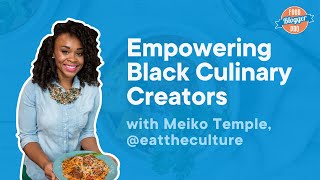
Transcript of a podcast interview with Miko about 'Eat the Culture', a community initiative that organizes themed collaborative recipe roundups to amplify Black food content creators (notably around Black History Month, Juneteenth, and the holidays). Started as grassroots collaborations in 2017, scaled to rallies of 30–70 creators by 2019, and later formalized under the Eat the Culture name to include virtual events, workshops (e.g., cellphone cooking-video course), interactive cookbooks, and plans to incorporate as a nonprofit. The project emphasizes storytelling, cultural preservation, media outreach, and building economic value for creators.
Questions this video answers
2017
About 30 to 70 creators
Black History Month, Juneteenth, and holiday roundups
EatTheCulture.com
Mikoandthedish.com; name spelled M E I K O
Chapters
It's interesting in the, in the pre. Pre recording, we also talked about the different things that have come related to your site.
Yes.
And one of those things being eat the culture. And I'm curious to hear you reflect on when that came about and your realization for that needing to exist within the world.
Yeah. So as I kind of mentioned before, the dividing of attention between the corporate world and the blog, I think one of the things that I always tried to do is still put out content when I could. I never completely walked away. One of the things that was a commitment for me and a driver for me was doing ground ups with other black content creators. So what I would do is every Black History Month and then later every Juneteenth, I would pull together black content creators that I knew and didn't know. And most of them were growing, were looking for opportunities to put their name out. And we would basically collaborate by combining our social equity and reaching out to media outlets to tell stories about our Black History Month and what it looked like around food or what our Juneteenth like around food. And it created, you know, story concept that, you know, media outlets like Food52 or the Kitchen were very, very interested in, got us exposure, got bumps in traffic to all of our sites. And we started doing that in 2017. I remember 2000, I think 19. I was like that, you know. You know, rallying 30 to 70 content creators at one time is a ton of work because we're not just asking them to use an existing recipe, we're asking them to develop a recipe around the theme.
Yeah, yeah, yep.
So one, it's like working within all these individual content calendars or development calendars. Right. Having them do something new based outside of what they would typically be doing, thinking about that, while also thinking about the needs of the media outlets and what they need. So it was a whole, you know, case study in project management and working and managing people. But ultimately it's pretty proved to be very valuable for the black content creator community, particularly in the food space. And you know, when 2019, I was like, I don't know, if no one says nothing, I'm not gonna do it. And they were like, mika, what's this happening? And so, you know, every year it's like, okay, is this coming out yet? Like, when are you gonna ask for us for our recipe? And so at that point it had been proven, like, there's demand for this. They're finding value. The media outlets are finding value. And so just this past year we made it official, official under the title, Eat the Culture, where we now officially do these roundups for Black History Month, Juneteenth and for the holidays.
That's awesome. So this will. The episode will be coming out end of January, coming up on Black History Month. What for those who are creators, who are publishers in the world, you know, what is. What does that look like, to come alongside a movement like Eat the Culture and support that? Or for white guys in suburban Minnesota like myself, what does that look like to come alongside a movement like Eat the Culture and support that, knowing that we do have a voice? Part of it maybe comes from conversations like this, but also, I'm sure there's lots of other ways that that can happen, and I'd be curious to hear your thoughts on that and what that looks like.
Well, I think one way is very easy for sharing. Anybody is just sharing the recipes. I mean, these. In this case, I think we're approaching about 13. I'm sorry, not 13, 30. Semi content creators who are developing recipes around Afrofuturism. So kind of the intersection of technology and art and food, we're constantly trying to push ourselves with new themes every year. And so this is the theme that we're approaching. So, I mean, I think that also presents, like, an interesting conversation because we're also looking through the lens of, like, you know, geopolitical issues and how to interpret that through food. Just. Just going out there and playing with their food.
Do you have an example of what that looks like?
Like, yeah, sure. My submission this year is going to be a bruleed sombi. Sombi is a Senegalese rice pudding. And as we all know, rice pudding is like a humble dish. It's just rice, coconut milk, salt and water. But the brulee over the top represents what I like to say is gentrification. So just thinking about humble communities being taken over and beautified for wealthier people to come in. And so I'm doing a humble dessert, then I'm bruleeing it and adding gold flakes over the top to kind of symbolize the gentrification that has been happening. And I'm telling that story along with the food.
Yeah. And then. So do you publish that recipe on your site along with kind of an explanation of, like, here is this piece really?
Like, exactly.
Here's this art that. And one of the things I appreciated growing up, my dad was an art teacher. And like, him helping me sit with something and, like, try and understand it and letting that then impact me and art at its best, I think impacts people And I think food is art and no better example than this. So how does that then. So you are developing that for within the kind of movement of Eat the Culture.
Yes.
What, what then how does that fit in? So you publish that on your site. Are you. Is Eat the Culture then doing kind of like a roundup of that content and presenting it to, ah, yes, food outlets? Or like, what, what. What does the in between look like?
So, so how it's executed is basically each person submits their recipe to the roundup. We then do a blog post on our individual site, sharing our recipe along with links to every participant in the roundup. So we're doing some external linking going on there. Right. Then from that, everyone has to be placed published at the same time so that we can then share all of our blog posts with the media outlets. And the media outlets, then they actually share each. Typically, most media outlets share every person in the roundup. Cool. Share their recipes, they include pictures. And then we tell a story of what the theme of the roundup is all about. And we normally call out summaries from each person's contribution. So we get to see all the stories that people and the concepts that they've come up with, while also kind of telling, like, how this all came together.
That's really cool. So essentially it's like a.
It's like a virtual potluck. That's what we call it.
Sure, sure. Yeah. Like, everybody's bringing this. What I was going to say is like, on the art side of it, it's almost like a mobile, like, art gallery that could be duplicated. Like, so you can go to, you can go to all these different places and you can say, like, great, here we're going to put these on display. People can click and they can go and visit and kind of read a little bit about it and understand it. And there's a theme to it, like, hey, here's the theme for this year's roundup of content. And then each people kind of does their own take on it. Is that getting close to kind of what Eat the Culture is?
That is very close to exactly what we do. And we typically do some variation of that with each of our virtual events. Sometimes they'll be accompanied by like a workshop or conversation, a virtual conversation where we talk about something. Like one time we did a virtual conversation about, like, what is black food? This concept of black food. And you know, we did that and invited, you know, anybody who wanted to come in and talk about it. So that's one way to support Is, you know, join the conversation and to share, you know, some of these recipes, to try the recipes, and to follow someone new.
Cool. So does that happen primarily in, like, in February, where you're doing this round of content, or is it throughout the year that you're. The events seem like they could maybe be something throughout the year, but maybe a big push in Black History Month or what does the schedule look like?
We do typically align with holidays like Black History Month, Juneteenth, and we do have a holiday roundup. This last holiday, we did a virtual cookbook where we also. Because Eat the culture is about the roundups and the activations, but it's also about teaching. And so we did a course on how to use your cell phone to record cooking videos, because obviously, like, video is so important now. And so we taught how to use the specific application, how to create a video. And in order to be a part of the book, you'd have to submit a recipe and do a video with that recipe. And every video in the book, in the virtual book is link to. I'm sorry, every recipe is linked to the video. So it was like an interactive book that we gave away for free. But we just want to push people or our black content creators to continue to grow their business and push past their. Maybe their comfort zones.
Cool. What. When you say activation, what do you mean by that?
Well, that's just the roundups themselves. Got it. Yeah.
Yep, that makes sense. So eat the culture. When you describe it to people, are you describing it as a community? Are you describing it as a. As a movement? As a. Like, how do you describe to be. Or even, like, how do you think of it? And maybe that's a better, better question.
Does it have to be one thing? I mean, I feel like. Yeah, I feel like it's a community and it is a movement. I mean, at its core, we are building community with black content creators in order to help build value for them so that they can grow their businesses. That is at the core of what we're doing. We're creating a space for them to ask questions, to learn, and to activate what they learn immediately through our roundups.
Yeah. Yeah, that's really, really cool.
And from the movement part, you know, you know, one of the things that I think, not just with black content creators, but in general, the power of new media is just immense. And, you know, food bloggers are our storytellers now. We hold the key to our family histories and stories, and it's all encapsulated, you know, on our blogs which is so beautiful. And so, you know, when I think about my history, my grandmother was adopted, so I feel like we kind of have a place where things stop. And I long so much to know where I'm from and where do I get this desire to cook, because it's definitely not my grandma, but it just feels like it's in my blood. But I don't have all that history. And so for me, it's very personal because I really want to make sure that these things are documented for generations to come. And so that is the movement making sure we document and tell our stories from our perspectives. Um, and, you know, share them with. Share with the world.
Yeah, it's. I've been importing all these old VHS tapes for my parents and I came across this one that was like a VHS tape of another movie that had been imported. Like, I don't know what, whatever it was like before vhs. Um, but what was so interesting is it was like multiple generations removed. So it would have been like, I think my grandma's grandpa. And for me it was this moment of like, oh, like that's like my family. And part of me is in them or part of them is in me. And it's interesting to hear you reflect on that also as it relates to story. This is more just a question towards you. I'm curious to know what does that look like for you to try and find that? Like, have you, have you tried to navigate to say, like, who is my family and what, what, what were they like? And because.
Yeah, absolutely. I have a complicated family history, so there's a lot of disenfranchisement that for, for those who, who are still living. But I, but I, I definitely long for that and I definitely have tried to kind of do my own search. I've done the genetic, you know, testing just to figure out where I'm from. And it's completely in conflict with what my family told me. So there's a lot of just like eye opening happening in the process. I'm actually in the process of that right now because it's definitely something that I long for. I feel like, I feel like outside of not having, you know, true lineage, understanding the ethic, culture, community has helped me kind of find roots and understanding. But you know, family wise, like, I'm on the journey as we speak.
It's interesting just everything that's made available through that. Yeah. And especially the story like yours. So I'm curious to know when you, for, for the movement side of it, what have you learned in Terms of being the kind of central person in a movement, organizer, facilitator around with either culture. But also just like, what have you learned in the process of rallying a group of people around something and being the central person for that? Because that's a significant thing in. And especially when it's not like, you know, like Plant Power January, which is like an important thing that Pinch of Yum does. But it's kind of this like, hey, people want to eat better in January, but what you're doing is like significant in a very real way. And do you feel like a weight around that or do you feel obviously a passion around it? What is that like for you?
It is. It is a weight, but it's. It's a weight of love. I love what I do. And like I said, when I was in doing anything else, I was committed to doing the roundups. When I wasn't. When I wasn't doing my blog, I was committed to the roundups because it wasn't only affecting me, I was helping other people. So there was a lot of weight around it. But, you know, some of the things that I've learned is to over explain, you know, I think some of the things that you think like, you know, people will automatically get, they don't necessarily get. And you're dealing with people who are very busy if they're running a food blog. And so sometimes you have to repeat 101 times just until it clicks. It's almost like the marketing thing. Like people have to see it seven times before it actually sinks in. Like you have to do that as well when you're rallying a group of people. That's from the blogging or the influencer or content creator side, and that's even from the media outlet side. I've reached out to media outlets on behalf of the initiative and first time I don't hear anything. But you just, you just can't stop. You just got to keep pushing forward. And for me, like, if it were just for me, when I am turned down, I just, I just kind of, you know, walk away. But this definitely just felt deeper and stronger and more important than myself. And so I would push past the rejection, I guess, in order to make sure that, you know, we were properly placed and bringing enough awareness to the initiative. So I would say like, you know, over communicating, being okay with rejection, and keep pushing forward. And then you have to kind of think about where you want to, like where the goal is and kind of work backwards from a timing perspective. Because ultimately the goal is to get our story in as many media outlets as possible. That means copy has to be written, and it has to be different for every media outlet because there's that SEO component that you're dealing with. It can't be the same, so you're telling a similar story, but it has to be different enough for every outlet. You kind of have to take a slightly different angle. So I had to learn not only how to prepare for that, but even enlist the people who are participating and say, if you're participating, are you okay with copywriting? Are you okay with helping to tell this story? I'll start it off. You build from there and kind of thinking about it that way. But after you get everything together for the media outlets, then you have to get the full list of participants and have all of their links. I wanted everything laid out for those outlets so all they had to do was copy and paste, and that's made it the easiest for them so that they continue to bring us back. And so that's what I thought about, is like, what do they need? And then after I thought about the needs of the media outlets, I'm like, okay, so what do these content creators need to make it easy for them? And so I would. I created a schedule, I added. I added deadlines to their calendars. I shared. You know, I have this system now of Google Files where they always enter in their information. We create folders for uploading everyone's images to make it easily accessible to share across all of our different platforms. You just think about what you need to do to make it easier for everybody involved. And it's a lot of manual work, but eventually, once people find value in it, they'll start wanting to help you make it easy as well.
Yeah. So one of the things that's so interesting to me about this is that it's. You have it. The. This. The social impact is obvious. Right. So, like, the things that you're doing have a very real impact not only around shining a light on black creators, but also on the stories that they are interested in sharing the most. One of the questions I have for you is, so there's all different types of income. And I feel like social income, social impact income is one outcome. The other is income income. And that can usually sustain you, whether it be through a nonprofit or like a B corp, which is kind of a hybrid, or somebody who's just saying, you know what? I'm gonna, I'm gonna do this because I think it matters, and I'm. And I want to make the time for it. So I'm curious for you. Obviously it takes a lot of time. It takes a lot of energy, a lot of brain space. How do you fit that into what you do on a day to day basis? And do you think of it as, hey, you know what, this is kind of something where like there's a double bottom line here in that I'm able to create an income from this and that also is going to have social impact. That would be kind of the B Corp model. Or like, hey, this is a nonprofit or like, you know what? This is something that I just believe should be done in the world and I'm going to do it no matter what. Like that's being another category. So I'm curious to know how you think of that work that you're doing there and how that fits into your day to day knowing that you're busy and capable of doing a hundred things.
Well, when I started it, it was just like I felt like this needed to be done. It was important for me. But even when I wasn't committed to my blog, it made me still feel a part of the community. It made me feel like I wasn't completely disconnected. And so it was serving a purpose for me as well. Even though there was no official pay. So I, and I say official because when you write for some of these outlets, they give you a small like stipend for, for writing for them. But it's not like anything major, so there was no major income incentive in order to do it. But at the bottom, at the. I'm sorry. Yeah, at the bottom of last year, formalizing the organization to Eat the Culture. The plan is to have a double bottom line to, to hit with value and the movement piece of it, but also to make some sort of income and not income, but funding for the work that we do.
You do the work better if you have the funding to support it.
Yeah, yeah, exactly. So when we first started it, this was communications coming from meco and so they knew to look out for meco. But since I changed the name, I feel like there's also still a credibility and a piece to it to reintroduce like things. Not everything is changing. We're still providing value. And so we haven't approached the first year because I have a board now and we haven't approached the first year in any way trying to make income from any way shape or we're just providing value and getting people used to the Eat the Culture name. But eventually the plan is in this year we'll be formalizing into a nonprofit, but juggling our own individual businesses as well. But that is the plan. Absolutely. We do plan to go that route because I think that we have enough behind us as far as our portfolio to show that we are adding value to the community and we could do so much more with more funding.
That's awesome. I did an interview recently that will be coming out. The foodblocker Pro member who runs a nonprofit as his full time gig and uses his food blog as a. As a kind of support to that.
Okay.
But one of the things that I've observed is I think a lot of times people will have like, my friends who are in corporate will like have their nonprofit and my friends who are in nonprofit will like have their side hustle to support it. And I feel like I've flip flopped on that. Like, personally I've worked at a nonprofit and then was kind of doing our side hustle while we're building it. Now we have this as our main thing and spend some time with the organization called the Children's Shelter cebu, which is a nonprofit Lindsay and I were involved with. But what I love about that is I feel like the skills and abilities that you have, that we have as creators, as builders, as creatives, those are so needed within and starters really like you being somebody who can start something and rally people around it are needed in a social impact environment. And you being somebody who's been willing to say, you know what, I'm going to focus on this because it needs to exist within the world when you could just focus on your own thing and focus exclusively on that. I think it's worth shining a light on that and acknowledging that as something that's sacrificial and world impacting, which is really cool. What is your advice to people who see that and say, you know what? Like, I'm inspired to start something like that. Like whether it be a movement or a community or something that has some level of social impact. And they're inspired by your story around starting that.
Yeah.
What's your advice to them in doing that?
You know, the space that we're in is pretty interesting because everything leads you to be competitive. I mean, even when you think about SEO, it's like rankings. Like, you know, everything feels very competitive. And I would say just don't underestimate the power of collaboration and working together. You know what I mean? Like, find a common thread line and find people. I mean, there's so many groups right now, particularly in food blogging, where you can share your interests and get other people to jump in, at least to try something and to get your feet wet. So I would say leverage those groups. And those groups are very valuable for sharing information. And if you have an idea, throw it out there. I remember when I first opened my shop, I feel like I don't know how many food bloggers were doing this, but years ago, when like the drop shipping first became a big thing, I started doing shirts on the blog. And so I dropped in like a, you know, hey, I'm thinking about doing, you know, foodie related shirts. What do you think? And people were sharing ideas about, you know, what, you know, I was like, oh my gosh. Because I used to keep everything here because I'm like, I'm afraid to share my ideas. But I'm like, if I want these people to buy them, I need to know what they want. And that's the same thing. If you have an initiative that you want people to rally around, you need to know what they think about it. So use those groups in order to ask and see who would jump on board. I think that's the easiest way to do it and to get started.
Yeah, I think so. Rarely do we talk about the things in an open way that we're thinking about or pursuing or hoping to do in the world. And I think the more you can enlist other people to like, even if it, even if just for 15 minutes, they give you part of their brain or maybe it's longer than that. Maybe they say, hey, this is something that I'm passionate about as well. I would love to come alongside you and be a part of this just through sharing and being open about what it is that you're doing. So I love that. This is awesome. It's inspiring for me to hear Nico your story and what you've been up to. And I think a good reminder of like, what matters in the world. And in that we should be prioritizing impactful work like that. For people who want to follow along, this will be kind of a double share. But like with your blog and what you're doing online. But also Eat the Culture, especially as we're coming up on Black History Month here. What are the best ways to do that and to follow along with both of those areas?
Sure. I try to make it as simple as possible. So EatTheCulture.com is the site where we live and where you can find out about our initiatives. And we are everywhere on social at Eat the Culture as well. And if you want to follow me on the dish, it's simple. There too. The only difficulty even Jork had to clarify is the spelling of my name, which is M, E, I, K, O and the dish, and that's Mikoandthedish.com and Miko on the Dish on all social media.
That's great. Thanks. Yeah, we both have those names where, like, I would say maybe yours is different. I would say, like, if I were to just type it in and like, somebody at Starbucks were to read it back, it's like 80% of the time it's right, but it's 20% of the time it's like, it's like, kind of right, but not exactly. Especially with the silent J in my name. That's what gets you that silent J. Yeah, exactly. So that's great. Miko, thanks so much for coming on.
It was a pleasure. Thank you so much.
More from ChatFBP

One more reminder to tune in here to the latest podcast! https://pod.link/1014116331









One more reminder to tune into this week’s podcast! https://pod.link/1014116331

A glimpse at our October coaching call all about returning to your blog. Replay on FBP!