How to Live More Sustainably and Avoid Food Waste as a Food Blogger with Marley Goldin
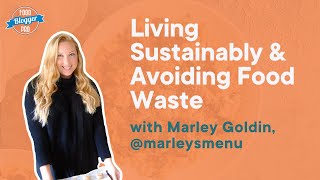
This content was created by ChatFBP. This content was uploaded by ChatFBP. This is a YouTube video titled "How to Live More Sustainably and Avoid Food Waste as a Food Blogger with Marley Goldin" created on March 23, 2022. It features a conversation between an unnamed host and Marley Goldin, discussing sustainability in food blogging, tips for reducing food waste, and integrating sustainable practices into blogging content.
Chapters
Marley, welcome to the podcast.
Thank you. I'm so excited to be here.
Yeah. We're gonna focus in on something that I actually. Here's my story around sustainability.
Okay.
I'll start it off with a. With a short story. I had what I felt like was a genius discovery last night. It's the most basic of basics, but it's a start where I was my. One of my roles within our family, we have two little girls is like, Lindsay will take them up and they'll do bath and then I'll like clean up the kitchen. And Lena, our youngest, who's a little over one, has her little like milk sippy cup. And usually I would just like take that over and like dump it out and clean it up. And then she would do like one more milk, like a bottle. I was like, wait a minute, I'm not going to dump this out. I'm going to put this in the fridge. And then like in an hour or two, when she does that bottle, I'm just going to take it out again and use it. And it was like, it was the most basic of basic. But I feel like there's a hundred different things like that in the world of food sustainability that exists that we don't even think about. So what I'm curious to know, after I tell my short story, would love to hear your story around how did you get interested in this and passionate about it. And then we'll talk about kind of some tips and tricks, but also what that looks like for you to fold that into your blog. So, yeah, curious to hear your story.
So as long as I can remember, I've always really loved the environment and being outside in nature and, you know, just a funny little anecdote. When I was about from ages 10 to 15, I went to sleepaway camp and we all had like a roll call where they would say our name and we'd say just a one liner just to respond. And mine was always, every year, don't waste water. Because my friends always made fun of me that I would go behind them and turn off the sink while they were brushing teeth. Yeah.
So I feel like I am that person for lights where I'm like, hey, if it's like, if we're not in the room, we got to turn the light off. Otherwise there's just like no value in it. Yeah.
Yeah. So I just think that I just have had always had this innate passion and excitement around sustainability and that kind of led me to pursue my degree in environmental health science. And I was just armed with all this knowledge about sustainability and the environment that I wasn't using in any of my previous jobs. So when I, you know, became my own boss and I started this food blogging journey, I was like, I have to integrate this somehow. Like, this is such a huge part of my life and part of me that I have to figure out how to kind of integrate it. And that's when I really started researching more about food in the environment, which is a whole huge subject that we weren't even really taught in school. And then I just started really digging into food waste, which is like a huge issue right now. And it's something we have a lot of control over in our homes. And that's when I started kind of trickling in little, what I call green tips, which are within each of my recipes, I like to put a skim stopper that is a green tip. And it will talk about, maybe you make your own sauce to avoid getting extra plastic. Maybe you will look for organic produce. Maybe you will shop seasonally. Maybe you'll take something that you have to use up from your fridge and add it to this recipe. And so with every recipe, I started putting in the little green tips to kind of help people understand and even think about sustainability while they're cooking. And then that kind of turned into writing more standalone sustainability articles that I have on the site and just, you know, becoming more of a resource to people when it comes to food and sustainability. And that's where I am now.
Yeah, that's cool. Can you. A couple of things that you had mentioned that were interesting. What is a skim stopper? You'd mentioned a skim stopper. Yeah.
Yeah. So a skim stopper will be something within your post that you want to make stand out that, you know, when someone's skimming through your post, it will either be bold or in a different color or in a different font that will cause them to stop and take a look at it. And even if they don't read anything else within your blog post, you they're more likely to read that. So what's that main point you want to get across within your blog? And it doesn't have to be a green tip. Can be, oh, pro tip. Like, if you're making this this way, you should use this particular technique or product. It doesn't have to be a green tip. It can be anything that you want the reader to take away and will also end up making them spend more time on your page. So it's actually really a smart tactic, not just to get your point across, but also from a business standpoint, it's a smart tactic.
Yeah, it's, it's interesting. There's something about the way that you structure a blog post which is different than, you know, a book or a newspaper article, where the way people consume content on the web is much different. And the idea of different, putting in this green tip so somebody skimming and it stops them is a great way not only to call out important information for you, that being, you know, sustainability related tips and advice, but it's also a great way to structure your content because that's how people consume it. They look at headlines, one sentence here, a list here, a little call out. And the example that I pulled up here was on a caramelized onions and mushrooms post and you said, organic farms rely on biodiversity to generate rich soil, avoiding the use of pesticides and fertilizers, which means no toxic runoff. Consider organic mushroom, onions and mushrooms for this recipe. So it's a little tip. It's like, hey, here's why organic is important. Right? I think a lot of times people are like, wait, like, why would I, what's the reason why I buy organic? Well, here's why, like, this is an important thing. You're not going to have pesticides and fertilizers. It's more of, you know, this intentional use of rich soil to get good results from, from the things that they are, that they're growing. So have you found that for your site that are people coming to you because they know, like, are they aligning with you because they are sustainability minded people? Or do you feel kind of what you're doing is like sustainability evangelism in the way that somebody might come across a recipe and you might be like, hey, here's this important thing that you should know. How do you, how do you view that in terms of the content that you're creating? More like influence and impact on new people who aren't sustainability minded or additional content for people who already are sustainability minded?
Right. I'm so glad you brought that up because when I was trying to figure out how to integrate this into my blog, I was really concentrating on what's missing from the industry. And I feel like there are so many great people who do such great sustainability things already, whether it be in food blogging or lifestyle blogging. And I think that what's missing is for those people who have no concepts of sustainability, it's not a part of their lifestyle at all. A lot of those things can be really intimidating and kind of like guilt inducing. And I think that for me, I wanted to kind of cast a wider net and be more of like a gateway into people who know nothing and still, you know, they're not ready to, you know, give up their modern lifestyle or gourmet palettes just to, you know, be more sustainable. But instead I wanted to be that person who could say, listen, we could all do better, but let's start here, let's start here. Let's not, you know, overlook the small things you can do just because you can't be perfect all the time. You know, a big part of what I constantly say and do is saying, like, small changes over time can make a big impact. So don't be discouraged by the fact that you can't be perfect because, you know, you don't. You're not ready to go completely zero waste, plastic free, completely vegan. All these things that, you know, are great goals but maybe aren't for everyone. So you'll see me say a lot and hear me say a lot. Attainable, sustainable. Because I really want people to understand that the small changes do have an impact as well.
Yeah, that's great. It's almost like people who are sustainable, curious, right? Like, they talk about sober curious, where it's like, I'm going to experiment with not drinking. It's people who are like, I feel like I want to do better at this, but I'm not. I don't have like super strong opinions on it or, you know, zero waste kind of situation. It's like, hey, I just don't want to use as many plastic bags. Like, how do you do that? So with that as an example, knowing that the people who are listening to this podcast are probably producing more food than normal because not only are they producing it for themselves and for their family, but also a lot of times probably doing multiple rounds of testing, sometimes it doesn't work out. You know, what, what did. How do you start to step into this and, and, and, and to reach attainable sustainable while also knowing that you're producing more food than maybe most folks would.
Right, right. So I think for one thing, something that I do and that a lot of people could be doing is testing in smaller batches, whether it be baking or cooking. If it's something that you're trying out for the first time and you're not completely confident it's going to come out perfectly, start with a smaller batch. For one, you know you're going to end up wasting less ingredients and wasting less final product. But for two, you're Also gaining knowledge about your recipe and, you know, giving yourself more to write about in the blog post. Listen, you can have this recipe. You can third, this recipe, it's tested and tried. It's true. It's. It's good this way, too. So I think starting with this. Testing in smaller batches is a really great way to avoid a lot of extra food waste.
Yeah. And how much, like, let's say it's baking, how much would you run into a situation where, hey, you're going to do a half or a quarter batch of something, do you run into, like, then when you scale it up, it doesn't actually do what you want it to do? You know, I'm speaking outside of my expertise because I'm not the one doing the recipe testing.
But yeah, no, it's harder with baking because a lot of times, like, if you're using an egg, it's hard to have half an egg. Usually scaling up is easy. It's the scaling down and testing smaller batches that's harder. But I will say, like, especially with like a cookie, if you're testing it in a smaller batch and maybe it spreads too much, it's usually still edible. You may be not ready to put that on your blog because no one wants a huge cookie that's spread and completely flat, but it might be really good. Edible plate for your ice cream. You want to make sure you're doing things that are still going to be. Not directly for the trash can still be something you share with your neighbor and say, hey, this is my first test. They're a little thinner than I want them to come out, but they're still delicious. So thinking about those things, um, and also, like I said, it's hard sometimes with baking, but usually with baking, things are still edible. They may not be perfect, but you can still consume them and freeze them and consume. Consume at a later date.
Sure. Yeah. So idea being, maybe it's not the perfect outcome, but it's still something you could take and say, like, hey, I'm going to keep this. I'm not just going to toss it, freeze it, come back to it later. I'd be curious to know. You know, I think just in general, this idea of waste less is good, but what is the why behind it? Like, what is in doing this? What are we actually doing?
Right.
Part of it is like, you're spending less. Great financial decision. Part of it is like, you have this thing, you might as well give it to other people. You're maybe not putting it into a landfill, but it's disposable, so that's not. Or it's. It'll compost, you know, so, like, what is the. What is the reason behind it? For people who would maybe be curious.
Around that, I think it's twofold. For one, you know, the food industry has a huge impact on the environment. You know, 25% of global greenhouse gas emissions come from the food industry. It's a huge amount. A quarter of our annual freshwater consumption goes to the food industry, whether it be to make new crops or for animal feed, things like that. And it contributes to air, water, soil, noise, pollution. And for all of that damage that's happening to the environment, for 40% of food to go to waste, it's just really detrimental. Also, what you said about it's organic that will compost. Actually, when food is diverted to a landfill, it doesn't have the oxygen it needs weeds to break down organically. So instead of breaking, it doesn't. So it instead breaks down into methane and water. And what happens to that water is it sinks to the bottom of the landfill. It mixes with other pollutants that are in the landfill, and it can leak out in something that's called leachate. So not only are you not consuming the food that has put so much stress on the environment, but you're diverting it to a place where it can't break down organically. So that's the first reason. The second reason I think we can all kind of understand and get behind is that it's ethically wrong. There's one, you know, one in nine people are hungry or malnourished. And it's not because there's a lack of food. It's because the higher demand for food in the west is actually driving up prices for food in other areas. And we're, you know, taking food away essentially from places that need it to come to places that will inevitably waste it. And so for those two main reasons, I think that food waste is just a bigger issue than an environmental issue. It's like a humanitarian issue as well.
Yeah, it's almost like when you look at the supply and demand side, if we can accurately reduce the demand by correcting the actual amount of food that's needed. So let's say the actual amount of food that's needed is maybe 60% of what we're actually consuming, because I don't. I don't know, we're throwing out. Did you. Do, you know, like, on average, how much food would we throw out in.
The U.S. in the U.S. it's 40%.
40%. Okay, interesting. So 60% of food we're actually consuming. 40% we're throwing out, which even when I think about our own behavior, it's like, oh, this is expired. Toss it. Like, if demand goes down, then that's going to impact pricing. Impact pricing, from what I hear you saying is that could then be global in terms of making food more affordable on a global basis. How about on that consumption side? What is your mindset around purchasing in a way where there's macro supply and demand, but then there's household supply and demand? And how do you get your 60% of actual consumption closer to 95% actual consumption without just like eating more than you need to in order to consume the food? Like, how do you, how do you, how do you do better at that?
It's hard and it's something that I struggle with personally, but it's, it's really all about planning. It's all about planning and understanding, looking sitting down before you go to the store instead of just throwing things into your cart. Looking at, especially as a food blogger, what recipes do I want to develop this week? And then it's actually even smart from business standpoint because you think about, okay, this week I'm going to make a chimichurri recipe. And then once I make the chimichurri recipe, I am going to test, you know, XYZ recipes that actually use the actual chimichurri in those recipes. And so every single Sunday, what I personally do is I sit down and I think about, okay, what am I going to work on this week? What do I actually need to buy? What do I already have in my fridge? What are the quantities? And then I don't assume that I'm going to mess up. I do travel back to the grocery store if I need to retest something. And then even if you don't want to post all of those recipes sequentially, you can have them in your repertoire to post later. And what that means is you're also creating a cluster, a topic cluster around your own content that actually helps with internal links. It helps with your eat on Google. So it's a smart business decision. And a happy byproduct of that is that you're not going to end up wasting as much produce. You're not going to end up wasting as much ingredients that you either already have in your pantry and you've assessed and you took stock of that, or you just didn't buy unnecessarily.
Yeah. Can you talk more about that idea of Clustering and internal linking. Eat. I think a lot of people would hear you say that and be like, oh, that's kind of interesting. Can you double click on that and explain in depth a little bit more?
Yeah. So for me, it's been a total game changer for my blog. It's just help with my Google ranking so much because what I've done is I've really planned around what we're calling a topic cluster. So just in that recipe alone, I've made a. That example alone, I've made a chimichurri recipe and now I have three other recipes to link to, naturally, that the reader will actually probably be interested in. Right. Because I know they're searching for a chimichurri recipe, they've made their chimichurri, what are they going to put it on? And that goes for the other way too. So once I've made the recipe that includes the chimichurri, I'm just, I'm not going to put in my recipe card how to make that chimichurri because you can buy it, you can decide to buy it or hey, as linked to my chimichurri recipe in case you want to make it at home instead. So it's a very organic way to link between your posts. And it also shows Google. We'll talk about Google as a person, right?
Sure.
Who? It shows Google that you have in depth knowledge on this on chimichurri because you have three recipes on it and you have a standalone recipe that they're all linking back to. So I. Yeah, go ahead.
Well, and the idea with that, I'm curious to hear the tie back to sustainability with that is like, hey, if you have, if you're going out and you're purchasing ingredients in a certain category, you can create other types of recipes within that. That kind of being a topic cluster. Is that, am I getting at that what you're saying?
Exactly. Right? Yes, got it. Yeah.
And point being, for those who aren't familiar, there's, you know, kind of this SEO best practice around. Hey, if you're going to start real broad example, if you're going to start a website, one thing you could do like let's say you were me and you're going to start a website. You could do things that I'm interested in. Like, I could say like Bjorksite and I could have like one day I could post about ping pong and then the next day I could post about coffee and then the next day I could post about tech. Like that's not a great idea. And because it's all these random things, as you get more focused, the more beneficial it is. Because then Google can see like, hey, this is like a tech site. But even within that, what you're saying, what I hear you saying is you can have kind of clusters of content and you can be viewed as an authority around that kind of cluster. People would talk about. These are would all be search terms that people could use if you want to learn more about it. So topic cluster, hub and spoke would be another example. So one of the ways we're thinking, thinking about this with Food Blogger Pro is like, hey, how do we have a hub and spoke topic cluster around food photography or food videography? And you can get those on a more micro level, which I hear you saying, which would be more like ingredient based. Or hey, you have more specific examples of like these chimichurri recipes that you're doing. How broad do you view those for you and your site? Like, even within, you know, your sidebar here, I see you have these would be broader ones, vegetarian, vegan, pescatarian, you can kind of click into those and dwindle it down and say, like, hey, breakfast vegan, for instance, do you have kind of a general thought around how you view your content and organize it and even does that impact then how you go out and shop for those ingredients to bring it back to the sustainability part?
Yes, absolutely. So I just think it's a more natural way for your user to click through your content personally, because I think that if you've grabbed someone on a particular recipe, you already know they have interest in that. So you already know that you're not just doing random links because you're supposed to because of, you know, whatever Yoast is telling you, you're doing it because it's an actual aid to your user. And on that note, it's also encouraging your user not to waste ingredients. Because if I'm making a raspberry tart and I call for 4 ounces of raspberries, but grocery stores sell them in 8 ounces, then your user is left with 4 ounces of raspberries that are going to sit in their fridge, unless maybe they'll snack on them on their own, but also unless you direct them to another place to use up those raspberries, not only are you actually giving them an option to use the ingredients, but you're actually, you know, putting a little bug in their ear saying, oh, you know what, I'm going to make something else with this. And you're Encouraging your reader not to waste. So not only are you helping your own self, you know, organize your content, but you're really digging into what the user needs because you already know they have those raspberries in their fridge because they only used half of it for your other recipe. So I think no matter how you look at it, it's a really good practice. And at the end of the day, you're not going to waste as much. Your user is not going to waste as much, and you're really putting an effort into using every bit of that ingredient that you had them go out and buy. I'm so passionate about this because we're in people's kitchens, we have an opportunity to really help them understand without even having to understand the science and the heaviness behind food waste. You're helping them understand that, yeah, you're buying this ingredient. Let's use it thoroughly, let's use it all up. And that's just so important to me. And I feel like it should be important to everyone because it's helpful on the sustainability side, but it's also helpful for you as someone who's in people's kitchens. You're helping them. You're helping them.
Yeah, yeah. Point being that we're as creators and people with a voice in a unique position in that we can help people understand how to do this better. Exactly. It could be a little call out in a note. It could be, you know, a little piece of advice that you have, a skim stopper, whatever it might be, for those Marley who want to take their in to explore their curiosity around sustainability. You have a lot of resources, you know, continue to publish those. What's the best way for people to do a deep dive into that, to learn a little bit more, follow along with what you're up to, whether on your site or just other areas to explore.
Yeah. So, you know, on my site, I do have a whole section called Do Our Food Choices Matter? And that really dives really deep into the food industry as it pertains to climate change, pollutants, microplastics, food waste, as we've been talking about. So there's that. That's there for you. I tried to make it not boring and really short and sweet so that you can just kind of, you know, get through it quickly and get the information you need. I also have a whole section on composting. So I have an article about advantages of composting. Composting, why we should be doing more of that, how to do it, whether it be in your backyard or in a more urban setting. And then I have specific articles on different ingredients and how you can best compost them. And then outside of that, I do always link to resources that I find helpful, whether it be within my actual recipe or within my sustainability articles. I'm always shouting out people I think you should be listening to so you can find me@marley's menu.com that's my blog. Or you can find me on Instagram at Marley's Menu. I also have a Facebook if you and I just don't want anyone to hesitate to reach out because I cannot tell you how happy it makes me when someone asks me a question about sustainability. It's never, you know, an intrusion or it's never a bother. I'm always happy to answer from my knowledge or even do more research for you. So please reach out to me. All of my contact information is on my site. Happy to answer an email or a direct message on Instagram.
Awesome. Marlee. Super fun to connect and talk about this. Really appreciate it.
Yes, thank you so much.
La.
More from ChatFBP

One more reminder to tune in here to the latest podcast! https://pod.link/1014116331









One more reminder to tune into this week’s podcast! https://pod.link/1014116331

A glimpse at our October coaching call all about returning to your blog. Replay on FBP!