Rainbow Plant Life's Journey from Corporate Lawyer to Full-Time Food Blogger
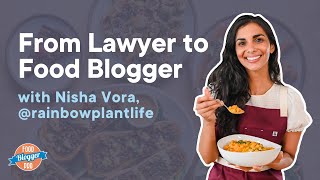
Podcast interview with Nisha Vora (creator of Rainbow Plant Life) describing her transition from corporate law to a full‑time food career. She recounts quitting law in 2014 to backpack six months with her partner, key lessons from travel (including a near‑miss avalanche in Nepal), moving into nonprofit law briefly, then entering the food industry and joining Hungryroot in early 2017. She built Rainbow Plant Life as a side project (Instagram, blog, early YouTube), published a cookbook shortly before quitting, and later left to pursue the food business full time, citing mental health and the desire for purposeful work.
Questions this video answers
2014
Six months
About 40 people
Beginning of 2017 (early 2017)
Chapters
Welcome to the podcast. Super excited to talk to Nisha for a lot of the reasons that I talked about before. Before we jump into talking about your blog, your site, your business, I wanted to rewind the tape a little bit to 2014 where you have this kind of pivotal moment. It seems like from reading about your story, a little bit where you leave your job as a successful attorney, successful lawyer, whatever bucket you'd want to put that, and take six months to backpack around the world with your partner. What was that time in your life like? And why did you decide to kind of pull the rip cord on your currently successful career and have a big shift?
Well, thanks so much for having me on the podcast. You are a big fan. So really excited to be here. So, yes, 2014, definitely a pivotal moment in my life. I had been working as a corporate lawyer, one of those big law firms on Wall street for two years after law school, and hated it as much as you could imagine hating a job for many reasons. And you know, I had the markings of success, like the trappings of success. You know, I went to a quote, prestigious law school. I'm using air quotes for people who aren't, who can't see, you know, I was working at a prestigious law firm. I had done all the things like I was supposed to do in my field in terms of like being successful, but I was miserable. And I was like, why am I living this kind of life where I dread getting up in the morning even though I'm a morning person. I live for the weekends, but I can't even enjoy my weekends cause I might have to work and I'm just living in a constant state of anxiety. So my partner was also working a law firm when we decided to just kind of up and quit. We've been planning for a couple months about where to want to travel and like how we would make it happen and how we would budget it. I, um, and it was a really big, it was probably the biggest risk I had taken up to that point. Being a very type A risk averse person. Um, and at what point in that.
At what point in that process did you know, like, oh, shoot, I've spent a lot of time building up to this being my career and now I don't want this to be my career.
Um, it wasn't that dramatic because I knew that I didn't want to work at a big corporate law firm for the rest of my life. I knew it was, that was going to be kind of a short term thing. But I also knew that I was young and that, like, I didn't really have that many other opportunities to do something this interesting and this kind of off the beaten path. And it just felt like I was really stuck in that moment and I wanted to explore something different. And I definitely did that while we were traveling.
Yeah. What do you feel like in those six months? What do you feel like you learned coming out of it about yourself and career?
I. I call it my Eat, Pray, Love moment. Like, as a joke. But it's also.
But also. Seriously?
Yeah, it's like you. You kind of discover, what are the things that make me happy in life? What are the steps I need to do to build an intentionally conscious, purposeful, happy life? Because, you know, being happy requires work in some sense. Like, you have to create practices that you cultivate and stick to. It just doesn't, like, fall from the sky. And I really wanted to be more intentional about how I was living my life in a way that aligned with my values, but also would just make me happy and enjoy myself. And I've never been shy of working hard, so it wasn't like I didn't want to work hard, but I wanted to work hard for something that I was genuinely interested in. And we had a couple of moments along the way during our travels where it was very clear to me that, like, oh, wait, you only have one life to live. And again, super corny, super cheesy, super, super. Also, you're like, oh, no. But I really just have this one life, and if I'm not living it with purpose and with intention and with a desire to make the world a better place and to make myself a better person, then, like, what is. What is the point?
Yeah. Do you remember one of those moments when you had. When you were on that trip and you're like, oh, my gosh, one life to live.
Yes. We were in Nepal. We did a long, like, three week. It was supposed to be a three week trek in the Himalayan mountains. It was in October, which is supposed to be their best season for trekking. Unfortunately, there was a freak avalanche on the route we were on, and actually, like, 40 people died. Um, and they were a few days ahead of us on their track. So it was just a complete freak accident. And it was really scary. And, you know, with hindsight, I was like, that could have been us. And so things like that will definitely kick your butt into gear in terms of, like, figuring out what kind of life you want to live.
Yeah, it's interesting. Just this morning, I recorded a podcast. We're doing this series called Book Nook. And it's recapping certain books that we've enjoyed or talked about on the podcast. One of them is E. Myth that E. Myth Revisited. And in that book, he talks a lot about how your business is a component of your life and you have to be just as intentional with building your life as you do with your business. And I think a lot of what we do and a lot of what people are interested in when they are building a business is also figuring out how to fit that well within their life. Like, what is something that both I'm passionate about, I'm interested in, but then also aligns with how I want to be living. So coming out of that, what did that look like? What did you change about your life and the work that you're doing?
So I returned back to New York City where we were living, and I continued practicing law, but in a much different environment that was more aligned with my values of, like, justice and equality. I also kind of scaled back on the things that I thought were making me happy, like living in a luxury apartment and like going to fancy dinners. And it was more like, oh, no, the things I enjoy are spending time with friends and family, even if it's not in a super fancy schmancy setting. And, you know, I practiced basically nonprofit law for almost two years, but after the first few months, I knew that, like, there was still something missing. Like, I felt more comfortable in that environment. I felt like I was working towards something better, but I just knew that I wasn't really supposed to be practicing law.
Yeah. And at what point did you realize that, like, you were like, oh, my gosh.
Yeah, probably like six months in, because I had great work hours at this point, I was working like 9 to 6 instead of like 9 to 10 or, you know, these crazy long hours. I was working with incredible human beings who were just like the most selfless, wonderful, loving people. And I still wasn't. It still wasn't clicking. And a lot of the work I was doing was in court and I just hated the adversarial nature of it. And like, I should have known that's what I signed up for.
But I totally.
Until I was put into the situations, I didn't realize how much I hated being in those conflict heavy situations.
Yeah, it's. Have you ever done strengths Finder? Like the. In the. It's like a personality quiz, and it gives you strengths. One of them is harmony. And for me, every time I've done it, it's like, harmony is a. Is. Is Always like a strength. Like, I just really don't like when there's people that are disagreeing on things, which is like, I'm, I'm okay with it, we can work through it. But it's like I have friends who like seek that out. It's like, oh, they're great attorneys. Like, those are people who want to like argue and argue hard and not give up. Whereas if I'm in a situation like that, like as quickly as possible, I want to get to a point where people are understood, they feel good about where everybody's at.
And yeah, I wanted to make sure.
A version of that was true for you. Whereas, like, hey, I want, I don't necessarily want to be in continual situations where people are in disagreement.
Yeah. And there's also the like, more structural issues of like, I went to law school, super naive and like bright eyed thinking that I could use the law to change the world and help people. And it's a really conservative, static force that is hard to change. Obviously it does change, like on occasion and very slowly. But I felt like I wasn't really able to make changes in people's lives in the way I thought that I could have. Very naively so.
Yeah. So what did it was the next version of what you imagine doing, like publishing content online and building a brand?
No. So when I had this second job where I had better hours, I just started posting to Instagram my like, food photos as a hobby. I had always loved cooking and food. I started teaching myself how to cook when I was a teenager and I was like, oh, I have all this free time, like, I'm just gonna do this as a creative outlet. I didn't even really know what a food blogger was at the time, aside from the fact that I had like been to food blogs. But like, I didn't know what it was like as a job. So it was definitely just starting as just a fun outlet.
Yeah. And at what point were you like, hey, I could actually do this.
So I could actually do this is to. There's two chapters to that. Like I, after about, I don't know, eight months of doing just like food Instagram really is all I was doing. I had a blog, but it was more related to the things I was talking about earlier, like my experiments with happiness and the things I had learned from traveling. But I was like, oh, I'm having this success on Instagram. I'm like really enjoying this food space. Can I leverage that into a job, like an actual job at a food startup or food publication? And then a couple years later was like, okay, can I leverage this into my full time business? So I went to work at a food startup starting at the very beginning of 2017 at a place called Hungryroot. It's like a healthy, casual, fast food startup delivering food in New York City and across the country. So I started there doing social media, like recipes, photography, all these things. And I was like, hey, look, I can do this on Instagram. I can do this for you too. And so I was doing that while I was building own business on the side.
And did you know at that point? So my experience was when I was at a nonprofit, they needed help doing like random IT stuff. I was like, awesome. I'm interested in that. I know it's somewhere that I kind of want to go. Generally speaking, did you know at that point that the work that you were doing was leading up to something that you eventually wanted to do as a business owner? Or did it happen just to be that you came out of that with those skills and abilities that then you just, instead of working for another company, you kind of folded that into what you wanted to do? Like, did you know it was kind of like on the job training for being an entrepreneur and building what is.
Essentially a publishing business when I started? Absolutely not. Again, like, I didn't really know that people did this for a full time living. I was just trying to get out of law and leverage my newfound creative skills into work where I was getting paid, I was getting a salary, I, like had benefits. And I was like, I liked the workplace, I liked the people, I liked the job. So initially it was definitely not like, I'm gonna then use these skills to start my own business. It was more that like rainbow plant life continued to grow as a side hustle while I was working there. And eventually it just became too much to do all of them at the same time.
Yeah, it's interesting. We, Lindsay and I had a similar experience where we're working our full time jobs and also working to build the thing that we're trying to build. And at some point you realize you're doing essentially two full time things and you can't do that for a long period of time. So how did you know when to make the switch and how did you feel confident in making that switch?
A couple reasons. I felt like it was time. One, I just knew that I was having this itch to be my own boss. I think that's something I've probably had in my DNA. My dad is the same way. He was like I'll never work for anyone else. Like once I've worked for myself.
What did your dad do or does he do?
He's a doctor. He's like semi retired now, but he started his own practice without very much knowledge or money in a small town and was just like, I'm never gonna work for anyone else. So probably part of my DNA. But also like I truthfully had like a little bit of a mental health crisis. I was just working so much, so much. Like 5am to 10pm Monday through Friday, like probably eight to 12 hours on the weekend. Like I was just doing too much and I felt like I couldn't do the best at either of my jobs and I knew I needed to make a change and I felt like I had gotten a lot out of the job that I was working at in the food startup. Like I had gone from just doing like basic stuff on Instagram to like managing like really large photo shoots and things like that. I felt like I had developed a lot of important skills and gotten a lot out of it. And I just felt like it was time, you know, the biggest, I think not hurdle, but the thing that was stopping me was like stability again, like being a lawyer in the past, like I'm a risk averse person. I was like, am I going to be able to make a stable income? Like I would have taken a pay cut, that would have been fine. I just needed to know, like, will I be able to make enough money to make ends meet, especially living in New York City? But yeah, it was, it felt like the right time to make that switch.
Yeah. And did you have at that point, did you have like a year track record with the, your business and saying like, okay, I know that if I look back at how much I've earned from the site, Instagram, YouTube, whatever, it'd be that with some level of predictability it can have this moving forward. Or did you have to backfill that and say, now that I'm focusing on this full time, I'm really going to have to hustle to fill the gaps in order to, you know, live in New York City, pay rent, do all the things that you need to do? Um. Cause I think a lot of people struggle with that. Do you, when you are capped out, do you, do you cut what you're doing and say, now I'm going to focus on this full time and really try and make it work? Or do you do whatever you can to get to the point where you can get kind of on the low end of what it Takes to sustain day to day and then make the switch once you've gotten there. Like, for Lindsay and I, that's what it was. We were coming from jobs where, number one, we live in the Midwest, in Minnesota. Lindsey was a teacher and I worked at a nonprofit. So, like, you weren't making. Yeah, like, we didn't have a huge amount to replace from a lifestyle perspective. Um, but still there's a little bit of nervousness around that. So, like, we were really slow to make that transition. What did that look like for you?
Um, I definitely wasn't making that much in my business when I quit because I wasn't able to focus on that stuff. So, like, I didn't even have ads on my blog at the time. I don't think I had that. Like, I probably had enough traffic to have ads, but I did not have ads at all. Um, I had a very small YouTube audience at that point, so I certainly wasn't making enough or really that much any at all. But I did have the cookbook. So I had written a cookbook. Probably my cookbook came out like a month before I quit. So I had, like, advances from that. And like, it was a. It was a nice chunk of change. I had savings from my past jobs, so I didn't have a very clear sense of all the different ways I was going to scale up my business monetary, monetary wise. But I also knew that, like, I'm super hardworking, I'm pretty good at what I do, and I knew that there was so much more room for improvement and optimization. And, like, talking to other friends who were doing this full time, I was like, I'm sure that I could make it happen. And if I don't after a year, then I will reevaluate and try to find a more traditional job back in the workforce.
Yeah, I think that's something that sometimes people forget is like, it's not, do I do this or do I not do this? You can make the decision to do it, but then also have a fallback. Like, hey, in a year, if I'm not there, I can fall back on these other things. Whether that be in your case, you could do law, you have the skills and abilities to do photography, recipe development, you can product manage or project manage. If you were to go back and look at that time period where you did make the switch, would you have done anything different?
I would have made it sooner, honestly, for my mental health. As I mentioned, like, just spent too many months being frazzled and all over the place. And also, like, again, I didn't know that, like, this could be a very financially lucrative career. Like, I really had no sense of if you could optimize certain things that you could make a nice living. And I think I would have just done it earlier, and then I would have started this earlier in terms of. Yeah.
More from ChatFBP

One more reminder to tune in here to the latest podcast! https://pod.link/1014116331









One more reminder to tune into this week’s podcast! https://pod.link/1014116331

A glimpse at our October coaching call all about returning to your blog. Replay on FBP!