The Journey to Reaching 30 Million Views a Month with Jeanine Donofrio of Love & Lemons
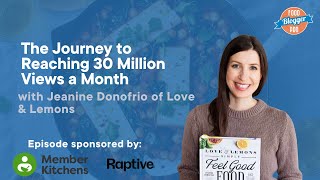
Conversation with Jeanine Donofrio (founder of Love & Lemons) about her 14–15 year evolution from amateur food blogger to a scaled content business. Key themes: starting the site as a hobby (around 2011), leveraging design/programming strengths, monetizing first via sponsored posts, pivoting to SEO/ads (around 2019) which helped grow traffic (now ~30M pageviews/month), building a small team and outsourcing photography to avoid burnout, batching content seasonally, and planning for recurring burnout cycles while protecting family time. Also mentions an upcoming cookbook (vegetarian, flavor-focused) and a Substack called Lemon Water.
Chapters
1, 2, 3, 2.
Janine, welcome to the podcast.
Thank you so much for having me. I'm such a fan. Excited?
Oh, awesome. Thank you. So you are somebody that I'm excited to talk about because I get to ask you some of the questions that people often ask me, and a lot of times they ask them as like the collective. Like me and Lindsay, you know, we've worked on something for a long period of time. You are in that exact same boat. You started loving lemons in 2011, is that right?
Yeah.
Yeah. So we're on the like 15 year mark. We're coming up to the 15 year mark of creating content in some way, shape or form probably almost every day. It's an incredible feat to be able to do what you've done. Not only that, but the site itself, the following that you have has also grown exponentially through that time. So I want to hear about how you have, how you figured out how to do that over a long period of time and also related to that. Any insights you have related to burnout in like overextending yourself and how you found that kind of balance along the way.
Yeah, well, I think it's, it's crazy when you like the 15 year mark. That's crazy because in my head it's 14, which is. Makes me seem a little less old. But it's. I think if you, if anyone would have said you're going to be doing this 14 years from now, like, I probably would have been like, I'm out. No way. I, like, I started on a whim and things change all the time. And I think that's why I, it's just, it keeps, it's interesting. I don't know. I started and then one thing led to the next and one thing led to the next and one thing led to the next. So I feel like it's just been almost 15 year evolution of the next thing presenting itself to keep going.
Yeah, it's interesting.
Too much. And then it was just at some certain point where it's like you look back and go, oh, wow, this is a whole career, this whole business. And, and the business isn't really going anywhere, but it's like. Yeah, but at the beginning it was, it's, it's wild.
Yeah. So when you started it, talk a little bit about what that looked like, what did day to day look like when you're in the early stages. And then we've heard from people who have said it would be really great to hear what it's like for a day to Day creator today. So maybe it would be interesting to contrast. Hey, early stages. What did that look like, and how different or similar does it look today for you?
Well, at the beginning, it was chaotic and random, and it was Jack and I in the kitchen cooking dinner and trying to take pictures of it, and I had, like, different photo equipment I. I had maybe bought that day or the next new thing I was trying out, trying to just figure out. I don't know what we were doing. I was inspired to cook with vegetables. I was inspired to come home from the farmer's market and somehow make what I was making look beautiful and share it. And I don't know why. It certainly wasn't a business when it started, although I had an idea that it would become something. But I also, at the time, it wasn't anything. Nobody was making money and food on the Internet, so it wasn't like a career choice or a career path. It was. Here's this cool thing that some people are doing that I think is interesting. I was following smitten kitchen and 101 cookbooks, and I just thought it was interesting. And so we just started it. So Jack and I would. Would shoot our dinner at night, and we'd have, like. It was just. It was so amateur hour.
Because this is for everybody who starts. It's like, everybody starts as an amateur, which is, like, one of the great things about it. It's also hard because, like, you know, you're an amateur when you start, but, well, well.
And we would also have, like, family or friends over for dinner, and then we'd, like, take a picture of that dinner, you know, like, quick five minutes.
Like, step out, take a quick picture.
Yeah. No, we'd be like, oh, sit over there. It was like Christmas dinner. Like, I had, like, the family over for Christmas once, and I was like, okay, everybody, we're gonna go over here to our kitchen island and flip on the lights. And, like, we, like. And I was. But Jack's family was, like. My family was more on board with that. And Jax was like, what are you doing?
What is going on here? And you're like, trust me.
And this is a little selfish. Yeah. And my. My family was just like, okay, we're going to eat cold food, whatever. Yeah, the food is always cold. And. Yeah, that's what it was. And it was like kitchen fires and dropping cameras, and it was total amateur hour.
Yeah.
And then that would be, like, the cooking part. And then I spend my day, like, trying to Photoshop. Not Photoshop, like, make it different, but try to like adjust the like lighting or saturation or something just to try to make like our terrible photos look decent. I was a graphic designer so I felt like I could like kind of fudge it, like not make up stuff. It's not, it wasn't AI, it was just sort of like enhanced to make the photo look kind of professional.
Yep.
So I would do that during the day and spend way too much time doing that and not doing. And not doing my like regular job.
Sure. Which was what?
At the time I had a graphic design business.
Okay, got it. So you had kind of history, graphic design. You're starting to experiment with what does it look like to document some of these recipes you're creating. You have some sites that you follow. There's some inspiration there. What do you feel like were the unlocks along the way, meaning the moments along the way where you look and say like this was something that we did, something that we learned, something that we implemented that that was really helpful because a lot of times I think we can look back, it's the culmination of a thousand, you know, hundred thousand little things. But oftentimes there's some bigger things that we can look at and say, like actually this was super helpful in the journey to getting to today.
Yeah, well, I think what was helpful and I don't know what, I always wonder people because people always ask me like, do you have advice? Do you have tips? And it's so hard because I'm like for starting now, I have no idea, like I'm not there, I'm not starting now. I mean it would have to be, you know, like how to go viral on TikTok and I'm hardly even on TikTok but, but @ the time, like I, I think having like having a graphic design background helped. I use, I should say, let me write again. I'm getting excited. I played in my strengths so I kind of knew my weaknesses. We were not professional photographers, we weren't professional anything. But I knew that I could design a website and Jack is a programmer so I know he could program it. So like that's what we, those were our strengths. So we like used that to get started and then we had a nice looking website. So then once people got there, like it was a nice experience. So I think that was something I could look out to what everybody else was doing. And at the time it was like Everybody's on like blogspot.com and things like that. And I thought, okay, we can make like a nice looking site and it'll look different and it'll seem different. And so my whole strategy at the time was really just trying to like do something a little bit different to stand out than what everybody else was doing. And I think that's been my strategy. I mean it was my graphic design strategy. It's, it's like, it's not a, like a specific, you know, it's not so specific. It's just like the way I think, try to think about things is what are other people not doing? And like, what can I, what can I do different? Yeah, and I think that's really, I actually think that's also really hard now. And it's something I struggle with a lot presently is that I think a lot of like social media requires you to do the same. Like it requires you to create things that are just like everybody else's to, to hit. And I struggle with.
That. Yeah, it's one of the really interesting conversations in the world of content creation, which is what's working, what's best practice, what when you are observing not, not just even within the food world, but just generally speaking, content creation, what are the things that are hitting. Okay, we need to take note of that. We need to be aware of that as content creators because probably there's some variable that exists within that content that is working from an algorithmic standpoint. But how do you also be novel? Like, how do you be interesting? How do you be unique? How do you not just do the exact same thing that you see somebody else doing? And I think that's a, there's an art to that as a content creator to figure out how do you show up in a unique novel way, but also not so novel, but that you're creating something that gets published into a void because it doesn't have some of the mechanisms that exist from on short term video side of things, like from an algorithmic standpoint. I'd be curious to know today, how do you look at content creation? Because you have your social platforms that you're publishing to, but you also have your site and there's considerations around that as a discovery tool, but also social as a discovery tool. And to the degree that you're comfortable, you can talk about your site and traffic to your site because that's a really, it's a really successful site and you have hundreds of thousands of followers on Instagram as well. So would be interested to hear you kind of speak to that and if you could share to your comfort level, like high degree of what your site traffic looks like as.
Well. Site Traffic we have 30 million.
Page views a month now, which is like, mind blowing. And it's. And it's to the point where it's. That's like established companies that are operating in New York are like media companies publishing content with a small, you know, big team. And you've built that up, you know, as a small team, you and Jack and obviously some folks that you're working with. We've met some of your great team members. But, like, that is amazing. And, and yet you also have social as well. You have your Instagram and you have, you know, all these other platforms. So talk about how you are viewing yourself as a content creator today. What does that look.
Like? Well, and then I have the books too, because that's like an important piece of like, I think the creative puzzle. Because for a while I was, I was creating, like you said, a lot of recipes into the void because we didn't have ads on our site. We weren't doing any kind of SEO for years. I didn't, like I said so that it was kind of a sort of a misstep for me. But I was really into the look and the feel of my site and I went down the sort of. I was monetizing with sponsored posts and it was doing really, really well at that. And I didn't want to. And I like that because I could control who was showing up on my page. I didn't have like McDonald's showing up on a healthy food blog, that kind of thing. So that's how I set it. Like, that's what I set out and that's what I did for years. And it wasn't until I started getting burnt out with that that we started looking at. And I had. Then I had friends. Catherine Taylor walked in from Cookie and Kate walked in one day and said, like, do you know what our, like, do you know what RPMs are like right.
Now? When was this? Like, what year was.
This? 2019. Okay, so I had, I had. Was not making, like, we had no ads. I was not making anything on our site. And we had. What was our page views by, like, I think we had like 400 uniques at that point. So, like, it was like it was established, but we. But I wasn't doing anything special to drive everybody there, except for pushing through my social networks and all the different press and things like that. All of your slow, organic sort of things. Anyway, that was the year that we started doing SEO. And it was also the overheisers like Sonia and Alex, a couple of cooks, like, they're our good friends. And they came and said, here's Semrush the tool and like here's how you should be using it. And so it took like me a while to get out of my head of like, here's my look of my site and here's what I'm doing on my business to have other people going, look, here's like, here's what's going on around, around you and what you should be doing. Like get your hand head out of the sand kind.
Of. And I was like, you should buy them like a, you should buy them a doordash gift card or.
Something. Yeah, yeah. Well, so, yeah. And I was, so I was burnt out. I, I think I just finished my second, my second book was about to launch. The sponsor posts were going crazy because then you have to manage like those clients and the schedule isn't consistent. Like somebody needs to move from this date to that day or didn't approve the thing on time. And like it was just this juggle and you're like, oh my God, I need this to go up now because this has to be over here. And it was. So that's what it was. And I was burnt out. And then the idea of like, oh my gosh, I didn't know what I'm leaving on the table. So when we stopped and, and I say we by this point like, so Jack is involved in the business from like he does the sort of the back end tech. But Phoebe, my first hire and I like, we're like partners now. So Phoebe and I like, you know, I was like, here's what we're going to do. We're going to do SEO. And when we got in there, we realized like, okay, I had like, because of all the early work, I had done a lot of early free work. I was featured on a lot of sites early on. So our web authority score was high and I didn't really realize it. And then we had a lot of accidental keywords that we figured out and then we just started at the top of what are all the high volume vegetarian keywords. And we just started going down one by one by one by one and organizing our time, prioritizing our time to, you know, do all the things you're supposed to do, like content, you know, keyword research. And so that, so that's where we pivoted from there. And I forgot that the second part of your.
Question. No, it's, it's great. I feel like. Yeah, sorry, go.
Ahead. I was gonna say like a key moment to was hiring somebody and who ended up being like a really great. Like the best decision I ever made was for me to like softening everything myself to hire people that were like a little bit like, not opposite from me, but like have skills that I don't.
Have. Complimentary skill set.
Yeah. Complimentary skill set.
Yeah. So one of the things you said, you talked about this idea of kind of like operating as a partner with. Remind me her name. Phoebe. Is that like official business partner or were you saying like, hey, this person knew the business so well that it was like, you know, working with a partner to like build a.
Thing? Well, she started out part time as like a sort of assistant and like eight years later she like, she's got into the business now. So she likes partner. Like we partner. You know, we worked closely together, but she, but she's like involved now.
So. Yep. And I. And I think that there's a couple things that I think are worth pulling out there. Number one is like the idea of working insanely hard on something. And you already had success in the category of sponsors and working with sponsors. It was a sustainable business from that point. We'll come back to the sustainable part because you talked about kind of the burnout variable and what that looked like to move through that. But there is a significant pivot that you had, which was showing up, doing sponsored content to pivoting to thinking about ads and search optimization. And the thing that I think is important to point out is that came after eight years of content creation and not monetizing with ads at all. And so, man, you think of that span and we can talk about it on a podcast interview, but if somebody's starting today, you know, you talked about that idea of like, what would your advice be if somebody started today and they show up and they're creating TikTok content, what would your advice be? Well, we don't really know. One of the things we could say though is like, there's gonna be a long period of time that you may have to create content in order to become excellent. And my guess was at that point, after eight, nine years of creating content based on the skills that you had before you even started creating content online, which were around graphic design, which you probably had five, six, seven years of experience before that with graphic design that you parlayed into graphic design around food, like, that is a really long arc just to get to the inflection point of you figuring out like this opportunity of doing keyword research and, you know, focusing on search. And the reason that I say that is because I think sometimes people don't understand or don't get the full picture around how much time is actually involved in the arc of a career. And here we are now talking to you, you know, 14, 15 years into your work as a content creator, but like multiple decades into your work as somebody who is excellent in graphic design and content generally. And so I think that's an important piece to point out. And then the second piece is this unlock that comes from working with somebody and partnering with somebody is a complimentary skill set and finding that person who can come in and is doing the things that you probably wouldn't be as excited to do that allow you to do more of the things that you are excited to do. So as it relates to that, can you talk a little bit about what does day to day look like for you when you show up and are running this business as a content creator, but also not just creating content. You are a business owner. Like, you're doing other things as well. So what does day to day look like for you.
Now? Day to day? Well, actually, it's. Well, it's kind of all over the place because now at this point, well, I should say, like the arc wasn't 2019 was like the year that we decided to put, to like us start put ads on our site and start going for SEO. But like, by then, like, I had two books out by then and the sponsored post business was really successful. And so it was, I think it was. And I would have been happy, like the money I was making, everything I was, I was like perfectly happy with that. So it was just sort of like that. There have been like, I think how what I've been monetizing since like the second year.
In. So I would say through sponsored relationships. Yeah, that makes sense. So it wasn't necessarily like a business unlock. It was just an evolution of the business and how you were.
Monetizing. Yeah, exactly. It was an evolution and like you said, an evolution that started with a whole career in graphic design where I made a, by the way, a lot of mistakes that I was able to put into this. Like, I already knew how to work with clients. I knew what the pitfalls would be. I knew, like when somebody would, well, like, want to change something or they wouldn't like something, how it's going to handle it ahead of time. And that was in the contract ahead of time, you know, everything like that. I feel like a lot of early people were complaining about, I was like, oh, I've already handled.
That. Yeah, Been there, done.
That. Right. Because of like running a business before that and then like working at a small business before that. So like this. So it's all really hands on. But the day to. The day to day now because I have. So I have two full time people and then I outsource a bunch. So like now we outsource our blog photography, which is amazing. That was like a huge change. That also allows us to create more content. It allows us to put more time into the recipes to have like, I'll shoot things myself for Instagram and that kind of thing. But it allows me more of the fun. Like it allows me to do that for more for fun and less on a like schedule. So we have a very specific. We'll do like four blog shoots, three or four blog shoots a year now. And we'll batch a bunch of that together. So we'll have. So we work in basically these month ish chunks where we'll be depending on what the time of year is and when the next shoot is coming up. We'll test recipes. Phoebe and I test recipes together. We test every recipe together and we'll test recipes for. So we'll do like 30 blog recipes at a time and then so that. So everything's batch. And then like we finished a book in May that will come out next year and we tested that pretty much all winter from like last like on and off. So we. So we have times where there is. So are. We're testing so many recipes. There are so many leftovers in the fridge. It's crazy. And then that allows us time. Like it's summer and now we have the child. So I don't like to work a lot in the summer and I definitely don't want to be stuck working on a book all summer long where I'm going to be like grinding it out. So we, you know, we did that all winter when it was like in Chicago. It's dark and snowy and it was a perfect time. It is the perfect.
Time. Great time to be.
Productive. Yeah. Like go really fast. The winter flew by. It's like you never have enough time to finish a book. Um, so. So it's summer right now. It's like, it's like, I mean it's the end. So today I. It's a beautiful day. So like we took the kid for a walk, we had lunch. I'm here talking to you. And that's today. Like I might like shoot a video for Instagram tomorrow. We have some travel coming up later and then, and then at the end of October, we have a shoot. So, like, we've started testing some recipes for that. And then in, like, for the last two weeks of September, we'll. We'll like, knock that.
Out. Yeah, it's. It's one of the things that. No, it's. I think it's a really good answer. And the answer, it sounds like, is that you've been intentional to. Not. The question that I asked was like, day to day. But I think the best response is actually, what does it look like on a yearly basis? Because what you've been doing, what you've been able to do, and it's one of the great freedoms that we get in or in when we have a business that we're running, is crafting what our schedule looks like. And for you, what I heard you saying is summer is important, so it's not like you're going to maximize work at that point. Winter, it's not like you're going to be super excited to be out as much. Some people would. Right. Skiing, you know, whatever it is like ice skating on Lake Michigan. Not that you can do that, but, you know, so it's like, okay, how do we shift the majority of the work? If there's 100% of work is 100%, what does it look like to have 70% of that land in the months that you are least interested in being out and about and then taking the other 25, 30% of that? You know, you're still going to be working, but that work is going to look different and you're going to prioritize other things in different seasons. And sometimes we think of batching as like, hey, on Mondays I'm gonna do emails. But I love that idea of actually we're gonna batch and do, you know, a week where we are gonna dedicate to kind of creating the media for the next three months of recipe content that we are gonna create. And that rhythm is going to be different for every person based on how they like to work, what it looks like for them to show up.
Consistently.
What. But I love what you're saying around the importance of figuring out, like, the times that are most valuable for you and protecting those so work doesn't sneak in and then the times that are least valuable and then prioritizing work in those seasons, which I think is a really great answer, that if we work a W2 job, most W2 jobs, like, it's not something that we have the option to do. Usually the schedule is decided for us and then we show up. But what A luxury to be able to say hey, these are some of the ways that I view my year and prioritizing those in that way. So you know, if you were to say like from a percentage standpoint where the majority of your time goes recipe development there would be like actual article content creation, social media. Would you be able to do on a year because of a percentage.
Allocation? Guess percentage. Well I mean recipes like I am involved in every like Phoebe and I like I said do every recipe together. Phoebe does a lot of the like email and SEO. SEO writing and I do like the book proposals like the, the overall sort of strategy. Everything that, everything visual except for you know we're, we're also seeing the photography but I'm managing and over coordinating sort of all the visuals and putting that all together. Do you ask for numbers? I'm not a numbers person. Sure. And every year has been different, is different because it depends if there's a book in it or not. So this year in the book.
Years, my guess is that's going to be a higher.
Percentage. The book. Yeah. It's like, well it's like cooking us. Oh. And it's writing and. Yeah. And then this year was a lot of writing you know because we finished the book and yeah. And we're doing this substack now that's a little bit more like casual like fun writing. So I, the percentage is hard but I would say it's cooking, it's planning, it's strategizing. I think the thing is a lot of like my work or my part of it or the brainstorming or the coming up with it's. It happens like in the middle of the night. It happens while I'm on the walk. It happens like not like sitting down at the computer and I'm definitely not like sitting down and clocking hours. And then I, and then what's changed entirely or rather like we have a child now and he's four and that's really when this, when I started prioritizing my time and where it has to go because we, I, I work about, I would say I like have a part time job right now and it took me fit like that's what took so many years to get there. And because I want to be with him after school. Yeah like he does half days and I don't want to miss out. He's four, he's never going to be four again. So after like we've had all this massive success like two years, like two summers ago I took. That's when I Started. I took the whole summer, basically, the whole summer off. Yeah, I was in a burnout. I was in a burnout book had just launched. So I was burnt out anyway. And I was like, I don't even know if I'm going to come back to this. Like, I'm. I'm dead. And. And he. And I need to spend my time with him because what else do I even want? I have, like, the blog is plenty successful. I have three books out now. Like, what am I even doing? But he's the most important thing. And it was sort of after that and the fact that, like now by then I had. I had. That was the year that we started outsourcing the photography, which was a major, major shift because it used to be. I'm sorry, I'm all over the.
Place. No, that's great. It's great. No, it's super interesting.
Yeah. The year that we started, before we started outsourcing the photography was. It was total chaos because it would be like we'd be shooting something that would be like posting tomorrow or the next day. And that life we lived for so long. And it was only because when I started the third, like when I signed the third, not when I signed it, but when we were negotiating the third book, um, the money that I asked for, I was like, this time because I thought I would outsource the second one, and then I ended up not. Because it's hard to lose control of these.
Things.
Yeah. Like, it's hard as a visual person and I. And I couldn't. I mean, I think. I think it's safe to say that anybody who starts as a content creator is like kind of a control freak. A do it.
Yourself. Totally.
Totally. You have to do everything yourself. And so to break out of that to, like, get help from somebody else or even, like, hire somebody. Took me forever to even, like, hire somebody. And that was not like an easy, flippant thing. It was like a lot of, I'm going to do this. I know I need to do this. I'm not going to. So I was going to outsource the photographer for the second book and then I did it and then it was. It's. It's so hard to. It's too much for one person to, like, a couple of people to do. A few people do. So the third one, I was like, I am not even going to let myself move.
Forward. Yeah. It's not an option.
Arranged. I knew who I wanted. And I'm like, I, like, I have. Getting the price that, like, I'm not doing this, like, for sure not. So we work and I have a great photographer and food stylist and everything. And it's like, it's so lucky and amazing. I should to be able to get to the point where I get to work with really talented people and people I really want to work with and also have like really talented people. I've hired like Phoebe to be able to do this and to have this creative life. So the third book, they shot it, it was great. And then after that it was going. We do a lot of it over zoom. Sometimes we'll fly in and do it, but it'll be like a zoom photo shoot. And it was working so well that I was like, oh my gosh, this is going to end. And now we're going to be back to shooting our own blog stuff. And. And it was just so nice to have not in my house, in my kitchen, to not have all the food mess, like in the living room. And, and so I was like, okay, like, can we make this work? How can I, can I afford this for my regular content? And then like, we figured out. I was like, we have to figure out a way to make this work. And then, and then we did. And so where was I going with that? So that's why we have sanity. I have like sanity now is because like that was, that was the big move in like now I. We can't now we have to work like batch things out by like months because we have to get recipes to them by a certain time, two weeks before the shoot. And it has to be like a five day shoot or a six day shoot to make it the whole thing worthwhile. So I'm not sending like two recipes at a time or five recipes at a time. I'm sending 30 recipes at a time. And you have to be kind of organized to get 30 recipes done at a time. And that's not including the social stuff or, or anything else. That's just like one blog shoot. So, so.
It'S. I think the thing that is so, so often can happen is you get to this point where you have been successful because you show up, you work hard, you continually ship, even if it means a chaotic shoot, and then the blog post goes out the next day. I don't know if this feels true for you, but I think what often happens is you do that, you do that for an extended period of time. It serves you well in some way. And then there's a variable in your life that shifts. And in our story, the variable Is kids like, okay, we have kids now and suddenly when I'm grinding, we are grinding 12 hours, 14 hours in a life pre kids. That is hard work. But it doesn't. I'm not like morally conflicted about it, but as soon as I started to become morally conflicted about choosing work during a time when I could choose time with my kids, that suddenly there was a variable that made it more likely for me to fall out of good relationship with the work that I was doing. And you can call that what you want, you know, burnout. You can call it like, you know, becoming like disenfranchised with your work. Like whatever it is, it's. For me it was realizing there's this variable that changed. It could be different for everybody. Maybe you have parents who are becoming ill or you have your own life considerations or health or relationship that going through a separation or something. But I've had to realize that I need to honor the changing variable and making changes within my own life. And the question could be maybe you just reduce all the way you say, okay, I'm going to just do less or if I want to continue to do, to have the same amount of output within the business. The way that that's going to happen is by replacing some of my hours in work output, by having somebody else come in and do that output. But the hard part, like you talked about, especially as a creative person, is you know what 100% feels like and it's really hard for somebody else to come in, especially right off the bat. But even long term to come in and do that same a hundred percent. Sometimes you get that, sometimes you get somebody who comes in and it's actually 120%. It's better than what you would have done. But oftentimes as a creator, it might be 80%, it might be 95%. You can work to get that up. But I think the hard part is like to say, okay, this is 80% is 100% awesome if it means that I'm getting that time back and I'm able to use it for something that feels more aligned in this season. So can you talk a little bit about how you came out of that season of burnout and some of the things that you learned coming out of it? Because I think everybody listening has either probably been through that or if they continue to hustle and work hard, like we'll maybe come up against that. And so what did you learn through that season that that has informed how you work.
Today? Well, I have had four major burnout Sessions. There's been four books, four burnouts. And I think there's been something different to learn about each one. But I think what it is now is now, like, I know it's coming, so I know it's coming, and I will plan for.
It. Yeah. Like, know it's coming. Like, know it's unavoidable or know that.
Okay. Yeah. Like, it'll be on. Like, if there's a big. And it doesn't have to be a book just for me in this one. This one surprised me a little bit because the book hasn't even come out yet. But it was like, it came at a different time. So it's always going to be there, and it's going to be a little different every time. But, like, for me, that. So. But it would be maybe for somebody else just after some other big push or big. I don't know, maybe different for everybody, but for me in particular, it comes. It comes when I know to expect it. It doesn't make it better because it's a little bit debilitating. But, like, I. So I need to plan the Runway and also not know when it's coming. This is making sound terrible, but, like, this time, I turned the book in in May, and I couldn't cook. Like, I couldn't think about food or making something I thought I would never cook again. I ate noodles from Elizabeth Street Cafe for, like, a month. And I was like, I don't know. Jack's like, are we going to the grocery store? Like, are you gonna ever cook again? Like, he doesn't like, it's fine. But. But I was like, I don't think. I don't think so. Like, no, not today. Not today. Like, we grilled a little something or whatever, but I'm like, I just can't. I can't think about it. I can't do it. Like, I can't even stop stomach it. And, like, I don't know when it'll be over. Maybe this time it might be done. I might. I'm. I might be done for it this.
Time.
Yeah. But other times, like, the. After the first year, like, I. The first book, I, like, we didn't have a kid, and I, like, found. I was at my mom's house for, like, a family. Like, a summer incident that was going on with my family, and. And I slept. I couldn't, like, get out of bed for, like, three, like, two or three months. And I was tired, and I've never been that tired. Like, I'm not that. That way. I'M like. So I just was like, I guess I'm going to keep sleeping until this is.
Done.
Yeah. But I can't. I can't do that. Like, not with a child, obviously, but, like, I could order doordash in every single day until I feel like cooking again. And that's what I. That's what I did. And two years ago, at the end of the last book launch, I, like, stared. This is when I get into trouble, is because, like, I. That one I planned, like, okay, I'm gonna do nothing. I'm not gonna plan a creative.
Project. Yep, you made the.
Space. Yeah. Yeah. I, like, I don't even want to allow myself to brainstorm something new because I don't, like, I. I just need to. I need to, like, mentally just zone out. So during all these naps, like, I would stare at. We have this, like, lake place, and I just. I would stare at the water. Stare at the water. I'm like, I'm just gonna stare. I'm not.
Gonna. Meditative.
Almost. Yeah. Yeah. I'm not gonna bring a pen. I'm not gonna bring paper like that. I'm not, like, definitely not my phone. But I don't even want a place to write anything down because, like, that's what I. This is what I need. I need total, like, like, mental. Yeah. I just need a break. I need a mental break. And that's when, like, so I sat day after day after day and. And stared and stared and stared. And then it was like I was, like, driving to Target, and the whole next book just came in. And then I was, like, looking for a receipt to, like, write it down on.
And.
Wow. So it's like, I. So I would say, like, the burnout. It's like, a necessary step. And then, like, to, I don't know, make some space, allow it to come in. And then I have to, like, let it finish before I can cook again or, like, think of a new idea again. And then, like, I think becoming, like, fine with that. Like, okay, I might not cook again. So then I'll. I'll figure that out. I'll do something else. If I don't want to cook.
Again, I'll start to not force it. It feels like is a really important piece with.
It.
Yeah. Yeah. It almost feels like, as you're describing it, it almost reminds me of. I've had some friends who have had bands and, like, when they describe what it was like to tour and to come off of tour, like, what that was, like, the intensity of that season. And then Their interest in music post touring was so low. Not always, but, you know, I think it's kind of a similar thing in that you have this massive touring creative energy that you are needing to exert in a season that, you know, talking about it within the context of a cookbook that requires it, you have to have this output, you have to show up, you have to be creative, you have to produce this content knowing that on the back end, whether it's a tour or a cookbook, publishing it and then marketing it and whatever, that there will probably be a recovery that is needed from that stretch where you are, you know, putting in an abnormal amount of creative energy and time and whatnot. I can see a lot of kind of similarities between the two. So you, you have your fourth cookbook that'll be coming out in a year, is that right? Okay, so what do you. What do you plan? Talk a little bit about the cookbook. And then how do you set yourself up knowing what you know now that you've had three reps with this.
Before? Oh, right. Well, this one, I already had the burnout, like after turning it in.
So. Okay. That's when it was.
Okay. That was early. That was a surprise. I've never really had it right then before, but. But it'll come out. I mean, it's too soon to really to talk about, but it's a concept that I'm really excited about. It's all about flavor and vegetarian cooking. And it has a really unique, like, organization. Organization that was really fun to make and it made for like, coming up with recipes. Not just like, here's an arbitrary list of recipes, but here are there. It's a fun organization. So that'll be fun to come out. But I think the thing that I'm planning for that is just like, knowing that it's a lot of work till the launch is a lot of work. And I want to create like the content around the launch, pace that out ahead of time so that it's not October and it'll be out next October. Wait for it. So that the season of the launch is a little bit easier because we've shot recipes, we've done a lot of that ahead of time, which. That's usually the stuff that I've. Every other time I've waited, it's because it's so much work just to get the book done. I've always underestimated the part where the amount of time it. It takes to create the content to launch the book. So I wanted to get ahead at a lot of that, but I haven't thought about, like, then after, it'll be like, October, November. I mean, so. Because I've never. I've never launched in the fall before, so it'll be new. I don't know. I guess I'll take a Christmas break.
That. That time, but perfect time. Yeah, perfect time to take a.
Break. It's just, I think, leaving space, so whatever. Knowing, like, it'll be one month, it'll be two months, I'm not sure, but. And then not planning something so big that's due right at, you know, kind of in that.
Space. And I think a lot of it comes back to the conversation where we started things, which is, how do you continually show up and create over a long period of time? And I think, you know, we have this phrase that we talk about a tiny bit better every day, forever. Like, how do you show up? How do you continually create? I think one thing that's important to add to that is, like, it's not always about every day. Like, you need to think about it on a yearly basis as well. And there are seasons of rest for us. And I think maybe one of the dis. Something that could be a disservice with that concept of, like, showing up every day is people feeling like, well, if I don't show up, is that bad? And I think on a macro level, the goal is to view something as a journey. Three years, not three months, and, you know, or 10 years, not 10 months. And part of that is like, oh, it requires really consistent effort, really consistent improvement, willingness to evolve. But also within that, one of the great risks for our businesses is true burnout. Like, let's say you did get to the point where you're like, I never want to cook again. Like, that's a liability for any of our businesses. And so we also need to protect our creative energy. And sometimes what that requires is like, rest and retreat. And it sounds like one of the biggest things that I hear from you, processing it is like an understanding of your own needs as. As a content creator and not being afraid to honor those needs in service of sustaining yourself, your business, like, over a long period of time, which is great. And I feel like that's, you know, for us as content creators, something that will always be important is, like, our creative energy. So speaking of creativity, kind of as we close out, one of the things it sounds like you're doing, that's kind of a fun thing that isn't. I know a lot of creators talk about this as being something like they look back on. It's like, hey, it's like blogging 10, 15 years ago is substack and you kind of reference substack. Can you talk a little bit about your substack that you're launching and some of the thought process behind.
Why? Yeah, so it's called. Well, this is not like a how to or professional. It's like a little bit. It's just a fun thing. It's called Lemon Water by love and lemons. And it's lemon water. It's like I drink lemon water in college every day. And it's like little ritual, like a day. I think it's like people's daily ritual sometimes. It's not a daily read, but it's like a place where I feel like, you know, sometimes I miss that. Like blogging 1.0, the days where you just like posted something and wrote a little story. Because it's certainly more involved than that when it was. So it's just a space to write about. Just like what we're. Phoebe and I are writing it together. And it's just a place to put what we're. What we're into right now in the moment. Because I, like, I've. I've already talked so much about, like, how planned out everything is now, and it's like a bit of a machine. And so it's just like a place to put something. A seasonal idea or something I like to do on Instagram. Are these like, no recipe recipes? Yeah, I'll just post like, here's some photos of, like, some things I've made. And then people are like, where's the recipe? There is no recipe. So I'll do like, simple things that are like, okay, well, here's a place for the no recipe or the simple thing, or like the. Like, here are three tomato salads that you don't need a recipe for because you can.
Just. Lemon water. Here's the recipe for lemon.
Water. Yeah, exactly. So it's just. It's just something fun, I think, just to have like, I don't know, an outlet because it's. I think just content creation has become complicated into, like, where does certain content go? Yeah, like what goes on the blog, what's in an email, what isn't a book, what is on social. And. And how does that work?
So. And it's a really nice. I haven't thought about this until now. Like, I think there are a lot of people who loved creating content that was almost more of like a letter versus, like an optimized SEO post. And one of the things you hear people talk a lot about is like, oh, making sure that you're deleting content on your blog that doesn't have traffic and making sure that it's only like the best post that exists. But it's like, man, what if, like Lindsey for a long time would write an update and it's like, here's an update on our dog Sage and like, here's eight pictures of her. And like, that's fun to write and it's fun to create. And where does that go now? It could go on social, but even then I feel like people are wanting to have kind of a curated experience. So setting aside another platform to say, hey, if I want to have this creative outlet, here's a place where some of those things can land. I love that. And so we'll be sure to link to that in the show notes. Is there anything that you feel like we missed or that would be important to point out as we've had a conversation around your story and your journey as a content.
Creator? Yeah, I don't know. I'm not sure this has been, this has been fun to talk.
About. Yeah. I think for me, like I said when we got started, what's great is to be able to have a conversation with somebody who has had these multiple kind of evolutions along the way and is still today showing up and creating content. And you know, you talked about what it looked like 15 years ago versus what it looked like today. It's very different. But what has maintained throughout that entire experience is like, you are still the owner of this business. You are still creating content that people are consuming that's making a difference in their life. And that's what's required for us if we're going to have a decades long business. No matter what it is, but especially on the Internet, it's going to require us to change and evolve along the way. And you and Jack, who's a big part of the business as well, have done such a great job of that and excited to continue to watch as you guys move forward with your journey of building love and lemons. So where can people find you? Is there anywhere that you'd substack? You know, we'll link to that. Anywhere else that you'd point out that would be a good place to.
Follow along, you know, loveandlemons.com loveandlemons on Instagram. Just the normal.
Places. Great. Janine, thanks so much for coming on. Super fun to talk to you. And we'll have to do it again sometime.
Soon. Thank you for having me.
More from ChatFBP

One more reminder to tune in here to the latest podcast! https://pod.link/1014116331









One more reminder to tune into this week’s podcast! https://pod.link/1014116331

A glimpse at our October coaching call all about returning to your blog. Replay on FBP!