In this interview, Chelsea Miller explains how knife making serves as a personal, therapeutic practice that mirrors the events of her life. She recounts growing up apprenticing with her father in a blacksmith shop, discovering the aesthetic and emotional appeal of discarded farrier’s rasps, and transforming them into functional art. Miller describes the creative tension between hot, hard steel and soft, pliable wood, and her philosophy of rescuing rusted, forgotten materials to give them new purpose. She shares her love of speaking with chefs, noting how knives become extensions of a chef’s identity, and discusses her clientele—collectors, enthusiasts of the handmade movement, and those curious about an artist’s evolving practice. Miller also reflects on the broader market scarcity of handmade knives, the cultural shift toward hands‑on creation, and her view that each finished knife is not truly finished but continues to live and evolve after it leaves her studio.
Chapters
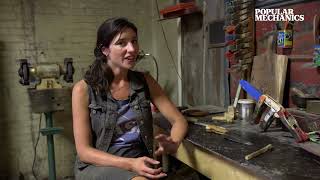
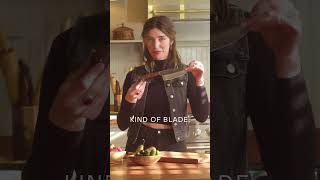
I really feel like I use knife making as a way to interpret my life around me and the things going on in my life. So whatever's happening for me personally, I have this amazing opportunity to come into my studio, be alone, and really process it at the same time as being creative and doing something with my hands and putting all of those things into something that I'm making. I grew up mainly an apprentice to my father in his blacksmith shop. I learned a lot of metalworking and woodworking from my dad from a really young age. My father had been quite sick for a while, and I went home. And while I was there, I was really at a point in my life where I just felt like I needed something artistically of my own. And so I spent a lot of time just looking at all the materials around me there. And I was really taken by these metal horseshoe rasps, and there was something so rustic yet elegant and beautiful just about the way those tools were made and how they were aging. I picked up a few and just started sculpting them basically with a grinder, shaping them, turning them into jewelry, and over time playing in the shop, I made a knife. The first knife I made, uh, it's more like a wedge. It doesn't really cut very well, but there's something about it that I feel like even today I'm still sort of chasing that raw sense of creativity where, of course, it wasn't a very well-made knife, but there was something that— it was a real representation of where I was at as an artist and as a person at that time. I really like the way that felt, and then adding the wooden component to that as well was just really, really satisfying. Working with this material that is very hot and hard in contrast with a material that is very soft and very gentle and takes shape very easily. The two of them together is just sort of this tension that I really like a lot. So the materials that I use, I gather from the natural world. So I love to find old, rusty, discarded material that has had a life before and is now you know, sort of been forgotten until I give it a new function, a new purpose, a new life. And growing up in Vermont, my father had horses that he used to log the land, and he cared for their hooves himself. And so he used these farrier's rasps on their hooves, which is a high-carbon steel and has this really beautiful grater imprinted into the steel. And the first time I saw it, I just knew that I wanted to work with that material in some way. There's nothing I like more than talking to a chef about knives. When you start asking them about their knives, it's like their eyes completely change. It's such a personal tool for them, and so I love to see them and hear them talk about where they like to get their knives from, how they like to use their knives, how important their knives are to them in the way that they express themselves. Most of the knives available are not necessarily custom knives. They're very expensive, and also there's a sort of disconnect as to, you know, what you find on a typical shelf in your knife shop or your kitchen store. You really have to seek out studio artists who are making knives. So my customers are certainly collectors of handmade things. They're certainly people who are interested in a movement people who are interested in the lifespan of an artist and what artists are doing, you know, at a certain point in their careers. I think it's an interesting conversation about, you know, why aren't there more handmade goods in our marketplace? You know, how did we get to this point? And there's become more of this trend to actually get in touch with our hands and make things of our own. People ask me often, you know, whether I feel sad about giving away my finished pieces. Well, I feel like they're absolutely never finished. I mean, I feel like they're just at the the door of birth when I send them off into the mail. I mean, they'll go off and have this incredibly, incredibly long life. I can't even imagine where they are today and what kind of, kind of experience they're, they're having, if they have any consciousness at all.