In this video, Chelsea Miller introduces her handcrafted knife line, highlighting that her smaller knives start at $200 and her premium chef knives reach $800. She recounts her upbringing on a Vermont farm, her father's blacksmith background, and her move to New York at 18 where she pursued performing arts before returning to hands‑on work. After experimenting in her father's shop, she launched her knives at the Brooklyn Flea, which led to coverage in Saveur and The New York Times and attracted elite chefs such as those from Eleven Madison Park, Mario Batali, and Massimo Bottura. Miller explains the distinctive feature of her knives—a built‑in grater derived from the original rasp side of horseshoe rasps, the material she uses. She describes her batch production workflow: forging smaller knives, cutting and stock‑removing larger chef knives with an oxy‑acetylene torch, grinding, belt‑sanding, selecting and shaping wooden handles, gluing, clamping, curing, final sharpening, and oiling. She also notes the growing consumer demand for durable, handmade products that last a lifetime.
Chapters
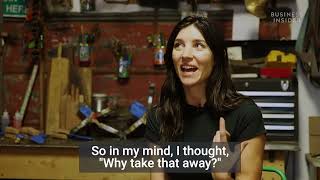
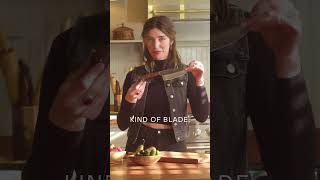
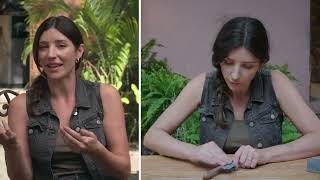
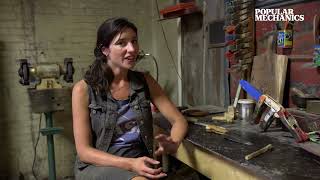
I'm Chelsea Miller, and I make knives. The chefs at Eleven Madison, Mario Batali, Massimo Bottura— chefs who make some really, really, really delicious food, let's say that. My smaller knives start at $200. The largest knife, the chef knife, are $800. I moved to New York when I was 18, and I was singing, dancing, acting. And as much as I love that kind of storytelling, I grew up in Vermont on a farm, homeschooled. My father was a blacksmith, and I was really missing that, that quality of working with your hands and that creative process. So I went home for a while at the end of 2011 and started playing around in my father's shop. These knives came out of that exploration. My friends encouraged me to take out a booth at the Brooklyn Flea. And the Brooklyn Flea is an incredible place to be as a creator because there's an incredible amount of foot traffic and a lot of high-profile writers, photographers, chefs. And that's how I got my first publications in Saveur magazine, in the New York Times, and it really blew up from there. Most of all my knives have a grater on the side, which is very unique because I've never seen a knife with a grater. But also that is the original function of the original material that I make it from. Made from horseshoe rasps, which have that rasp on the side that was originally used for filing horses' hooves. So in my mind, I thought, why take that away? We can incorporate that into this new tool. Since I've started my own business, I've noticed a real progressive movement towards more and more and more handmade things, and a lot more consciousness about where your items are coming from. Trying to buy things that are going to last you your lifetime instead of something that's meant to be thrown away the second you open it. I leave a window of about 3 to 6 months. If I were making one knife at a time, that would take me a couple of days. But because I have so many, I tend to make them in batches. So as many as I can, I start, I start from the beginning process, maybe 10 knives at the same time. So for a few weeks, I'll be working on those first initial processes on those knives altogether. Then I'll move on to the next stage. I use the forge for all of my smaller knives. And essentially what we're doing is we're heating the metal and then using the hammer to hammer out the metal, lengthen the metal to give us a longer, smoother material. And I don't do that with the chef's knives because I want to leave that grater on the side of the knife. So with the larger chef's knives, uh, I've already cut out the pieces in Vermont with an oxyacetylene torch, and then once I get them here, I start the stock removal process. So I start with my bench grinder grinding away the excess metal on one side to leave the grater on the other. And then I'll move to my belt sander and using a series of belts that go from very coarse to very fine, I'll bring that blade down to a fine edge and make it all shiny and smooth and, and sharp. Each piece, depending on the way that it looks, it calls for a different piece of wood. So I'll shuffle through a lot of wood to find the right wood for the right knife, and we'll cut out the wood We will sand the handle a little bit, then we'll drill the holes, glue it together, clamp it, and then wait for it to cure. I usually let it cure for about 24 hours. Then we'll take that off, sand the handle down, all the excess glue off the edges, and then we'll put a final sharpen on the blade, oil up the handle, and it's ready. It's ready to go off and cut some vegetables.