Bond Investing Explained: Wall Street Pro Reacts to Billions Season 2, Episode 7
Chris Haroun breaks down the Billions Season 2 bond storyline, explaining how a $500 million distressed municipal bond was bought for $100 million, then covers Treasury yield curves, portfolio allocation, and why letting junior staff speak first in meetings actually works.
Chapters
If we do what it takes to make the bond viable, we're going to clear over 100 million, seize all their assets, property, utilities, machinery, vehicles, buildings, everything, even town hall.
Let's talk about finance and business lessons from the seventh episode of Billion Season 2. Based on my work experience at Goldman Sachs in New York City and based on my work experience at the top hedge funds in the world. Now, please like, comment and subscribe and stick around because at the end of this video, I'm going to grade the episode for Wall street realism with a buy, hold or sell rating. In this video, we will discuss three topics. The first topic is how do bonds work? And how should you invest in bonds? And we'll learn this by analyzing a bond investment from this episode of Billions in a town where casino is supposed to be built. And in this video, we'll explain the yield curve when it comes to bonds and so much more, which is crucial to understand for anybody that wants to buy a house or get a mortgage. Now, what I'll also do is I'll use James Bond props to quickly explain what is a balance sheet and how bonds materially impact the balance sheet and your net worth as well. Now, this bond investment in this episode can lose Axe Capital $100 million or make him potentially 30 times that amount.
I'm having problems with that bond I bought upstate.
If they hate you enough, they will
find legal grounds to you.
You know the kind of options this leaves me to get my money out.
Now in topic two or three, we will discuss how the smartest hedge funds come up with incredible investment ideas during meetings and how you can come up with groundbreaking ideas in any meeting that you conduct.
Won't all this be a PR nightmare?
PR that comes with losing that much money is a nightmare too. And we lose the money.
Then in topic three of three, we'll discuss do you need a personal coach to help you take your career to the next level? As Wendy helps most of Axe's employees make a fortune through her mentoring. And in real life, the actress that plays Wendy was coached by Tony Robbins to prepare for the role. And so was I. And in topic three, I'll discuss crucial life changing career tips that I learned from Tony that you can immediately apply to your life.
She is a natural, natural born killer.
That's what she builds all day.
Killers. Topic one, Bonds explained who is crazy enough to invest in casinos in the middle of the desert? Well, Robert Dairo will explain from the movie.
Casino corporations tore down practically every one of the old casinos.
And where did the money come from to rebuild the pyramids, junk bonds. Now, there are two main ways to raise a lot of money. Number one is to sell ownership in your company, meaning equity, like an ipo. And the other way is to get a loan, like a bond, meaning a liability. And this is best explained by looking at this balance sheet right here. Now, never memorize stuff in finance and accounting. Always understand it, because it's so much more fun to learn this way. Now, a balance sheet tells us who owns our stuff, like this car, which is an asset on the left side. And on the right side of the balance sheet is who owns the asset, meaning us or somebody else. And a balance sheet has to balance, meaning the left side has to equal the right side, hence the name, balance sheet. So let's pretend that you are James Bond right here, and you want to buy this $6.4 million Aston Martin car. And, yes, this Aston Martin from the Bond movie sold for $6.4 million. Now, you only. I should put in quotes, you only have $1 million in cash to buy this asset, meaning the $6.4 million car. So what you're going to do is you're going to buy part of this car using $1 million in cash. That means you have equity of $1 million in this asset, which is a car. And so equity means ownership. So your equity in the $6.4 million car is $1 million. Now, how are you going to buy the other $5.4 million of this car? Well, what you can do is you can get a loan from the bank of Aston Martin. And a loan is like a bond, and we'll keep building on this together. So let me put a small version of this bond right here. Okay, great. So the balance sheet. Now, balances mean the left side, which is the $6.4 million asset. The car equals the right side, which is James Bond's $1 million in equity, meaning ownership of the car, plus the $5.4 million liability, meaning loan or bond. So a balance sheet tells us who owns our assets, meaning who owns this car. It's either the equity holder, us, or it can be a bank, for example, like the bank of Aston Martin. And the debt holder almost always has what's called a senior claim on the assets in the case of a bankruptcy. And what this means is the bondholder gets their money back first before the equity owners do. And this is how it works with stocks as well. The debt holders get their money back before the shareholders. Now, if James Bond can't make this debt payment on this car here. Then he defaults, and the bank of Aston Martin gets to keep the car as the debt holder has the senior claim on the assets. Okay, so we're now done talking about the balance sheet and Aston Martin. Whoops. Let's build on this analogy with this bond here in Sandicot, okay, that Bobby Axelrod owns, which is a $500 million bond for the fictional town of Sandicot in upstate New York. Now, the town of Sandicot might go bankrupt, and Bobby is able to buy this $500 million bond for only $100 million, which is an 80% discount. And the market thinks that Sandicot might go bankrupt. So why did bobby buy this $100 million bond?
Move forward with the bond. Casino is coming to Sandicot. We are committing to this play.
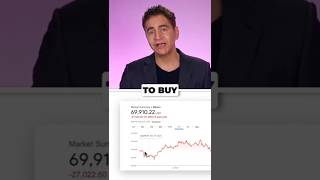
So Bobby bought this bond because he believes the town of Sandicot is getting a casino. Therefore, if a casino is built in Sandicot, then the town of Sandicot will make a fortune in tax revenue. And this bond here that Bobby bought for $100 million will easily be worth $500 million. Well, what does this $500 million bond even mean? Well, governments don't issue equity when they raise money, they issue debt. So when you buy United States federal debt like, like this treasury bill here, you will not lose your money because US Government is the lowest risk investment in the world, and the last entity to ever go bankrupt would be the US Federal government. But when you buy municipal debt from towns or cities, and these are also called munis or municipal bonds, like this one in my hint, you can lose every penny if the town declares bankruptcy. And this actually happened with municipal bond investors in the 1990s, with bonds in a region of California called Orange county, where Anaheim is located. So why would anybody invest in munis, meaning municipal bonds? Well, there's a couple of reasons. First of all, they're safer investments than we think. In fact, since 1970, the default rate on municipal bonds is less than 0.1%. And it gets even better, though, because usually you don't have to pay federal and other taxes sometimes on municipal bonds as well. Well, how do I know how risky a bond is to invest in? Well, ratings agencies like Moody's, Fitch, and S and P, they put ratings on bonds like aaa, which is the best, then aa, then A, then than triple B, et cetera. And anything graded below these levels you see here are often called junk bonds or high yield bonds or non investment grade bonds. So, as Robert De Niro mentioned, the casinos in Las Vegas were financed using junk bonds because they're risky. And the riskier an investment is, the more return investors want. So junk bonds have higher returns than United States federal bonds like these ones here. And just like with IPOs, most bonds that are created or underwritten by big banks like Goldman Sachs and JP Morgan, and the way that the investment bankers decide what rate of return to assign to a bond when they start to sell them to investors is what they do is they look at what's called the yield curve. And the yield curve impacts you and I more than you know, because it impacts what your mortgage is and what interest rates and inflation expectations are. So let me explain this and we'll come back to the Sandicop bond very soon. Let's go together to a United States government website called treasury.gov and then let's click here on data. And then yield curve. And then let's select the current month and then apply. And here we see that that short term and long term rates are as follows. Now in my hand I'm holding a short term U.S. treasury bond that has a yield of 5.2%. And the manager of the store of money in America, meaning the Federal Reserve, sets these short term rates and the market sets the long term rates, meaning the 30 year rate, for example, which is what many of our mortgages are based on. And as of now, the 30 year rate is lower than the short term rates. And let's chart this together here. Now this is called a yield curve. And when we see that long term rates are lower than short term rates, it means that many investors expect a recession to be coming soon. Why is this the case? Because if the market believes that longer term rates are lower than shorter term rates, then this implies that the government will cut interest rates in the future in order to help economic growth. So currently we have an inverted yield curve, meaning longer term rates are lower than shorter term rates. And often this means that we might be going into a recession. And so a normal yield curve is when long term rates are higher than short term rates. And if long term rates are higher than short term rates, then the market is implying that the economy will be better in the future. And hence the Federal Reserve will be increasing interest rates to cool down the economy so we do not have inflation. Now you might be thinking, Chris, I see here that the 30 year rate is under 5%. But why am I paying closer to 7% on my 30 year mortgage that I just got? Because the likelihood that we default on our mortgage is higher than the likelihood that the Federal Government defaults on its debt. So the lowest risk is this yield curve, meaning the US Government. Then the yield, then this yield curve is for high quality companies that issue debt like Apple. And then this yield curve is for mortgages. And up here we have a junk bond yield curve for risky investments like a casino, for example. Now, quick side note, please always keep track of the 30 year government rate because if it drops a lot, you need to call your mortgage broker immediately and see if it makes sense for you to refinance your mortgage at a lower rate, which will save you a fortune in the long run. It all adds up. And your mortgage and all the mortgages of your neighbors are issued by a bank at a higher interest rate than the 30 year Treasury. And then what the banks do is they take all these mortgages that they underwrote, meaning that they created and they often sell all of them to investors in a mortgage bond, for example. And I'm working really, really hard on explaining this in an upcoming vlog on the big shorts. Now, these mortgage bonds and similar asset classes force the entire planet to being within 24 hours of bank machines not working. In the fall of 2008, it was deadly. Now, when interest rates are really, really high, like close to 20% in the early 1980s, then investors do not buy stocks because they can make double digit annual returns risk free by buying United States federal debt, meaning Treasuries, for example. And this is why when interest rates are crazy high, the stock market does not do well. Now, when you buy Treasuries, meaning US Federal debt, like this pretend example here, they are sold at a discount and this is why they're called discount bonds. For example, when you buy a T bill, meaning a Treasury bill, which is a short term bond, you might pay $95,000 for this and one year later it matures at $100,000 face value, which is the value shown on this pretend T bill. So you make $5,000 and $5,000 divided by $95,000 that you paid for. This means you'll make a return of about 5.26%. And since you paid a $5,000 discount to the maturity value of $100,000, this is referred to as a discount bond. And the market calls federal debt that matures in one year or less, like this one here, T bills, and the market calls federal debt that matures in much more than one year. Treasury bonds and T bills do not have dividends, meaning they do not have coupons. And hence they're referred to as zero coupon. Securities. Now, when you invest in a municipal bond like the town of Sandicot, quite often they do have coupons. And coupons are like dividends. And coupons on bonds are often given out every six months, unlike stocks, which is quarterly. And most municipal bonds mature in 10 years after they're issued. And this episode did not tell us the exact terms of this Sandicop bond. But let's assume for now it's a 10 year bond. And let's also assume that the yield on this bond is 4%, because when it was issued, rates were likely much lower than they are today. So if we look at the back of this bond, we see that there are 20 coupons that we can clip or redeem. And coupons on bonds are issued usually every six months. So over the course of 10 years, as we can see here, we get 20 coupons at a 4% interest annualized. So 4% of the $500 million bond means $20 million of annual dividends, meaning coupons. And since we get a coupon every six months, then each of these 20 coupons we can cut out here gives us $10 million. Now, another reason that munis are riskier than treasury bonds is because munis don't trade as much, meaning they're not as liquid as Treasuries are. Now, the town of Sandicot issued this bond here so that they can get a lot of money to grow their city. Now, I would assume that this 500 million dollar bond was not sold at a massive discount to the face value of 500 million because it is likely a coupon bond. Plus, given the tax benefit that investors get from owning a muni, it was sold likely at a slight discount, not a massive discount. So when you compare bonds that are taxed like corporate bonds to municipal bonds that have less tax, you need to compare them on an apples to apples basis. For example, if a corporate bond has a yield of 5% and a muni has a yield of 4%, and assuming that both bonds have the same rating, then the Muni could be a better investment once we account for the tax benefit. Let me explain a simplistic back of the envelope way to compare the bonds, meaning corporate, to munis, is to take the 4% muni divided by one minus the tax rate that you would pay on a corporate bond. So, for example, if we had to pay 30% tax on a corporate bond, then we need to take the muni's return of 4% divided by 1, minus the tax rate, meaning 0.7, which is a higher tax equivalent yield of 5.7% versus the taxable corporate bond, which has a yield of 5%. Let's get back to Sandicot's bond. So axe bought this $500 million distressed debt for only $100 million. And since this is a Muni, then he might be making 4% per year on it. Assuming that Sandicot can pay all these coupons right here. So this means not even accounting for the tax benefit, the 4% of $500 million is an annual coupon of $20 million. And this $20 million is a huge amount because that $20 million is actually 20% annual return on Axe's investment of $100 million. So if Sandicott gets the casino, then in my hypothetical scenario, not only does he make $400 million on this bond because it'd be worth 500 million and he bought it for 100 million, but he also makes $20 million per year in coupons. So if we hypothetically assume that this Bond matures in 10 years, then he would make $400 million plus $20 million in annual coupons for a total return of $600 million on his $100 million investment in the bond. And it gets even better too, because he likely used a lot of leverage to buy the 100 million dollar bond. So if he used 5x leverage to buy the $100 million bond, then he only used $20 million of his capital to generate a return of $600 million, which is a return of 30 times as money. And this is a simplistic calculation as we're making many assumptions and we're not incorporating the future value of money or tax adjustments here. Now, this was way too good to be true because this happened.
Sandicot's not getting the gaming license.
It's over. So Axe is set to lose $100 million and give up at least $500 million in potential returns on the Muni. Now, before we move on to topic two of three, where we will discuss how to materially increase productivity of meetings and how Axis analysts tell him how to recoup recoup the the Sandycott losses, let's first discuss what and how much you should consider investing in bonds in your portfolio. So I humbly believe that stocks are a much better long term return on investment than bonds are. And I think that the average annual return on the S P 500 over the next 20 years is going to be 15 to 20%. Because I think companies are going to save a lot of money by using AI to cut expenses. But as much as I love stocks in the long run, from a portfolio management and risk management perspective, we should all own lower risk investment grade bonds in our portfolio. How much though? Well, an old school private wealth management tip is to take 100 minus your age and that is the percent of your portfolio that should be in slightly more risky stocks. So if you're 80 years old then 100 minus 80 is 20. Therefore 20% of your portfolio should be in slightly riskier stocks and 80% potentially in lower risk investment grade bonds.
Why?
Because you have less time to make this money back than when you were in your 20s and you might be retired in your 80s. Now again, this is an old school investment approach though, because I think that many people alive today will make it to 150 years old and there are many people still working today in their 80s and 90s. So what bond should you buy? Well, if interest rates are artificially high, then put more of your bond allocation into US Federal debt like Treasuries for example. Otherwise I recommend sticking with bond ETFs meaning exchange traded funds, which is basically a portfolio or collection of bonds. And consider buying investment grade municipal bond ETFs so you get the tax benefit after you do your research and after you check with your accountant. Of course. Also consider buying investment grade corporate bond ETFs and I personally only recommend buying bond ETFs from very well known companies like Vanguard and BlackRock, which owns iShares. Also make sure that you please read the investment prospectus before buying. Now what I usually do is I buy US government bonds directly from the US treasury by visiting treasurydirect.gov and when rates are rising and if I'm worried about inflation, then I like to buy the Series I savings bonds where the annual rate changes every six months depending on what inflation expectations are. And the maximum amount you can invest as of now is $10,000 per year in the Series I savings bonds. One more thing on bonds. If you buy a bond that has an annual return of 5% and interest rates go up a lot, meaning higher than 5%, then the value of the bond you own goes down. Why? Because if I own a bond that pays 5% and interest rates go up, then new bonds that are created have a higher return because interest rates go up. Therefore some investors will sell the 5% bond and and they will buy the new higher yielding bond. Conversely, if interest rates are 5% and I own a 5% bond and interest rates go down to 3%, then the 5% bond will go up in price because new bonds are created with a return of only 3%. Now, if this is complicated to understand, I want you to think of it this way. The stock of Coca Cola Ticker KO and the stock of Pepsi Ticker PEP as of today, both have about a 3% dividend yield. Now, if Coca Cola hypothetically increased their dividend to 6%, then investors might sell Pepsi and instead buy Coca Cola. Topic 2 of 3 How do the smartest hedge funds come up with incredible investment ideas during meetings? And how you can come up with groundbreaking ideas in any meeting that you conduct.
The gaming license was the guarantee that Sandicot would pay off the notes. Now the license is gone, the area is going to default and we're about to eat a half a billion including 100 million fresh capital we put in.
Any suggestions? I recently interviewed the top Stanford MBA Venture capital professor Ilya Strebulov on my weekly webcast and the link to the replay is in the description of this video that you're watching now. Professor Strebulov explained that the top venture capital firms like Sequoia and the top startups encourage idea generation in meetings by doing the following two things. Number one, junior employees always speak first. This way they aren't biased to agree with senior management. And Axe did this in this episode here with his most recent hire.
The note exchange requires that the town pay you first before any of its other financial obligations like union contracts with town workers, teacher salaries, all that austerity just means you enforce that.
Yes, go ahead and seize their assets. Then once the newer or more junior employees provide their ideas, then encourage them to expand upon them. This really helps morale at all levels as well.
You'll be mostly looking at land, buildings and utilities. The town also has an original Remington. It's worth upwards of 900,000.
Then the next person to speak should be the second most recent hire, who in this case is Taylor.
The effects are viral. The losses spin off to the businesses that provide services to the town. Other area businesses start to close and more jobs are lost.
There has to be a way to
get this done without destroying the place.
Now it's refreshing to see Axe have a sense of morality for a change. We'll see if that lasts though. Now the second way to get more ideas in a meeting, per Professor Strebula, is to always assign one person in the meeting to be a naysayer, meaning they have to argue the counterpoint.
Anzac, you're being awfully quiet.
Are we really going to do this? We could hold the debt, take a short Term loss. But then take the lead in regrowing Sandicot, redeveloping the downtown.
And once you hear the opposing viewpoint, then it makes everybody more comfortable to provide their opinions.
But in my opinion, town put the hurt on itself. Corrections are in order. There's a way to make this work and that way is hard but necessary. As Taleb says, become anti fragile or die accurate.
Some of the best performers at hedge funds are highly unemotional. And Taylor quoting Taleb who wrote fooled by randomness and and the black swan. Here is something you would hear in hedge fund meetings. Personally, I couldn't live with myself dismantling a town. Now Taylor is often a contrarian which is badly needed when it comes to idea generations in meetings.
Once we do this, the town will face that challenge and come out stronger or it will cease being either result absolutely natural as in of nature itself.
Now Don Draper from Mad Men said, if you don't like what's being said, change the conversation. And so this next employee or consultant suggests a media campaign that changes the conversation in terms of who is to blame.
That was my nest egg for retirement.
Then that nest egg got invested.
But the town it was invested in mismanaged its finances. Now the bottom line is that everyone's opinion should be heard, starting with the junior employees. And we need to also assign at least one person in the meeting to argue the opposite opinion so that we can be intellectually honest in choosing the right outcome. Unfortunately, Bobby Axelrod decides to do this though.
Seize all their assets, property, utilities, machinery, vehicles, buildings, everything, even town hall. Love to seize the town's bank accounts, payroll accounts, pension funds.
Topic 3 of 3 Do you need a personal coach to help you take your career to the next level? As Wendy helps most of Axe's employees make a fortune through her mentoring, I will also discuss crucial life changing career to tips that I learned from Tony Robbins that you can immediately apply to your life. And so Wendy in real life worked at a hedge fund. And before she took on the role of Wendy, Tony Robbins coached her. And Wendy is the quintessential career coach in billions. And many top hedge funds have an on site counselor just like Wendy.
Wendy Rhodes is the in house performance coach at Axe Capital. What'd you take down last year?
7.2 million.
7.2 million.
Feel that she plays a role so well now the most important thing that a parent or a teacher or a manager can do is build confidence of their children, students or employees. And many people hire life coaches or career coaches. And the most important thing they teach is how to be more confident. And we have to remember that we are always our own worst enemies because our lack of confidence is often self fulfilling. And here's how I humbly believe that you can improve your confidence. Okay, first of all, I'm not an artist, but this is the most important chart you'll ever see. Let me come into frame here. So this chart here, on this axis is your age. And this axis, let's give a dark. And you, you'll see here that when you're younger, you really don't care what people think. You have meltdowns in restaurants like I'm sure I did. You just don't care. Then when you're older, you also don't give a darn what people think. The problem is this, when you're a teenager or your 20s, 30s, 40s, and sometimes older, you're up here, you care what people think of you. And this is a dangerous place to live, man. And I refer to this as the Triangle of despair. And you need to avoid this as at all costs in your life, you need to live at this level here and not care. I'm not saying be rude or disingenuous, but just don't care what people think you have. What an awful waste of time that is to think of that. Who cares? And the reality is that people have their own problems. They're not thinking of you. And I say with love, my heart, they're thinking of their own issues. So live at this level here like the top entrepreneurs do in the world. And only when you live this level can you really reach your full potential in life. So how do you get rid of that negative Nancy, so to speak, in your mind or negative person telling you you're not confident? Well, I have a very simple exercise for you. So what you're going to do is get a piece of paper right now. Pause me please. Get a piece of paper. This will help a lot. Okay. And then get it. Get a pen. And if you meet me in real life, I'm a very tiny man. And what I want you to do. Sorry, what I want you to do is this. I want you to write this down. I don't care what people think of X. And then fill in the blank for X and do that 10 times. For example, I don't care that people think that I'm sophomoric because I still play video games. I do. I just don't care. And when GTA 6 comes out, I'm not doing a vlog for an entire month in 20, 25. I don't care. I don't care what people think of my nose, which is massive. It's so big that I run out of this stuff, this powder, really quickly. Maybe I'm beautiful. Maybe it's Maybelline. I don't care that I've got a brutal sense of humor that's not funny at all. Rinse, lather, repeat. You get the idea. So I want you to do that 10 times. I don't care about. And I promise you this will significantly help you to live your life on your own. Her. So we are always our own biggest enemy.
I'm down 4% year to date. Everyone else is up double digits. I'm down.
You're just listening to the wrong voice.
So Wendy is so right. Instead of listening to the wrong confidence killing voice in our head, we need to do this.
You tuned into the one yelling at you over the loudspeaker speaker that you're stupid. And you're ignoring the quiet one inside. Now, that's the voice that got you here, and it's still there if you're willing to listen.
So true. Now, in addition to materially boosting the confidence of Axe Capital employees, Wendy also makes the employees of Axe Capital visualize their future success. This is powerful.
Close your eyes. Picture yourself at 80 years old. Did you become a better version of yourself?
Now, the most important lesson I learned from Tony Robbins, aside from him convincing me to become a teacher, is goal setting. Tony recommends imagining what your perfect life will look like in five or 10 years in the future. Then what he does is he has you write down your favorite five or ten year goals. Then, and this is crucial, then he makes you put on a deadline date for those goals. In fact, Tony Robbins says that the reason that most people give up on their New Year's resolutions by the third week of January, is because they don't set a deadline date. So please, write down your goals and then set deadline dates and have your goals repeat every day in your calendar and review them often, please. And be aggressive with your goals. Now, Elon Musk once said that if you set a deadline of three years, you'll get it done in three years. But if you set a deadline of three weeks, then you'll get it done in three weeks. And Jeff Bezos also has his product managers at Amazon write a press release today that's going to be be released in three years. Why does he do that? Because that press release documents the product manager's goals in three years today. And this means that there's a gap and the product manager can work on filling that gap that they visualize and documented in that press release. Have your employees do this. Now. I also have my students and my clients do a similar exercise by creating what I call their simple perfect 10 year resume. Their simple perfect 10 year resume in 10 years. Write it today. Then it's really fun to fill that gap and grow and become the person that makes those goals become a reality. And as Seth Godin said, you already have everything you need to build something far bigger than yourself. Step one is to write down your goals and set deadline dates. Now Wendy also counseled an employee in this episode to do and say the right ethical thing when it comes to investing.
Axe bought the distressed debt on this town upstate. Now they're defaulting.
What do you think you should do? Who are you to those people upstate?
Chaos.
Yes, XCAP is the agent of chaos.
So a good life coach or mentor at your company can also ensure that our moral compass always points north to the right thing. One more thing. I humbly recommend taking Tony Robbins in person four day event called Unleash the Power within or upw. Now I promise you, it might be the best investment for your career and potentially your happiness as well. Let's talk about grading of this episode for Wall Street Realism with a buy, hold or sell rating. Now, the episode did a superb job of not only explaining the structure of a distressed bond, but also highlighting the moral dilemma that hedge funds face when trying to balance morale and profits. And the episode also did a great job of showing why it's important to get everybody's opinions and counter opinions too, in meetings when it comes to rank. Lastly, all the scenes with Wendy are incredibly well scripted and her role is an accurate depiction of the role that counselors play at large hedge funds. As a result, I'm going to give this episode a Buy rating. Please subscribe and I will see you soon in our next Reaction video when we react to Season two, Episode eight. Thank you.