Warren Buffett's favorite valuation metric shows global markets at 130% of GDP, the highest ever recorded. The U.S. sits even higher at over 200%. Crashes are impossible to time, but you can prepare: hold cash for opportunities, avoid illiquid stocks, and sell speculative positions after a year to cut taxes.
Chapters
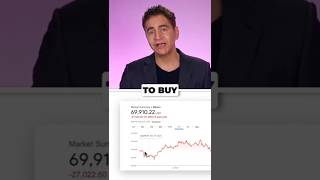
According to Warren Buffett's favorite market statistic, we are now in an unprecedented stock market bubble. His metric to determine this is if you take the global market capitalization, meaning the value of all publicly traded companies, and then what you do is you divide that by the, the size of the global gdp. And so if that statistic, this division here, global market cap divided by the global GDP, if it's over 100%, then Warren Buffett believes that the market is extremely overvalued and we could see a significant pullback. Now, currently, the global GDP divided by the global market cap is well over 130%, which is actually the highest it's ever been. So what I want to do right now is I actually want to do a quick little exercise and look at what the value is now and how to calculate this. So what we're going to do is we're going to go and do a search together on global market cap. So let's go there. Global market cap. And then what we'll see here is, we'll see the IMF's website right here, Actually, we use the World Bank's website. And if we click on this here, we'll see what the market capitalization divided by GDP is in the world. And let me just go through this really quickly. It's an interesting little, little case study. So if we go back to 1980, here, we see that the global market cap divided By GDP was, was 30. Okay. And the reason why stocks didn't do well then was because interest rates were very, very high. Okay. Then if we go over here to 1989, the market was doing extraordinarily well because the Berlin Wall fell and a lot of Eastern European labor moved west. Right. Which keeps inflation in check. So the market did well and then pulled back a bit during Gulf War I. And then what happened was over here in 1999. And this is where Buffett talked a lot about this. Remember, as well, I am that old. In 1999, the figure was over 110, meaning the global stock market market cap divided by GDP. And we saw a big pullback after March of 2000, which was the peak of the NASDAQ. At that point in time, we saw another peak here is as well, right before the stock market bubble burst in 2008, when we were within 24 hours of bank machines not working. Now, right now, it's tough to see, but we're actually, if this had data that was accurate, as of today, we would be up here. Okay. And right up there, that would mean 130% in 2021. Okay. So it's very, very high. It's a little bit concerning. A little bit concerning, yeah. Should you be worried about this? Well, I think a little bit. Now if we look at the gdp, we see the denominator, see the world there. Global GDP is a bit low now, to be intellectually honest, relative to normalized economic environments because of COVID impact on the global economy. And so if we normalize the data, then valuations are still quite high according to Warren Buffett standards. And governments have actually kept interest rates artificially low. Now in the United States, the GDP to market cap is insanely high. It's over 200%. So the question is, is this sustainable? No. And hedge funds have had their faces ripped off by shorting the market. And you know, it's actually really, really hard, it's impossible to time the market pullbacks. And there's actually a famous quote that the market can stay irrational longer than we can stay solvent. And I remember when I worked in the hedge fund market industry back in 2006 and 2007, I asked my boss, Art Sandberg, who ran Pennsylvania Pequot, great guy, God bless me, passed away. But I remember we wanted to pitch shorts in housing stocks. KBH and Lennar Ticker Len. And our thesis was that there was a private equity bubble and that there was also a real estate bubble. And he said to us at the time, son, I've been around long enough to understand never to stand in the way of insanity. You know, market peak, markets trough, but you just can't time that sort of thing. It's tough. It the reason that markets actually end up crashing eventually is because of what is called a black swan, meaning a rare event that we just can't forecast, like 9, 11, Covid, of course, etc. So what should you do? Well, I would be very careful owning stocks that don't trade very much, meaning the average daily volume of shares traded is low. Because as many hedge funds actually learned in the crash of 2008, illiquid stocks own you rather than you owning them when the market crashes. And owning stocks that don't trade very much caused many hedge funds to go belly up actually in 2008. Number two, if you can please try to keep some dry powder so you can back up the truck and buy when the market pulls back. So what metric should we use to know when to buy, meaning when to back up the truck and buy stocks? Well, I've mentioned before, when the VIX spikes close to an all time high we buy and if you want, go to my website, haroonventures.com and at the top search for Vix for a video on that. So again, when the VIX is at an all time high, that's when you back up the truck. It doesn't happen that often though. Number three, if you have owned speculative stocks for more than one year that are way, way past your target price, then take some profits. Now why, why am I saying that if you own it for more than one year? Well, the reason is because in most countries you actually pay less in capital gains taxes if you profit from stocks you've owned for more than one year. It's basically a government economic incentive that forces us to be long term focused because governments hate market volatility, which is what the VIX is based on. Now, later this year I'm going to be releasing my complete options and derivatives course to explain this in much more detail. And of course a much more comprehensive version of that course with more exercises will be added to my MBA degree program this year.