Profit from Bad News? Wall Street Pro Reacts to Billions Episode 2 of Season 3
In this YouTube reaction video, Chris Haroun, a former Goldman Sachs analyst, dissects the fictional hedge‑fund Axe Capital’s attempt to profit from a fabricated tsunami disaster in Brazil as portrayed in Billions Season 3 Episode 2. He walks through the on‑screen trading ideas—shorting Brazilian sovereign debt, buying sugar futures, long‑dated VIX calls, and non‑subsidised renewable‑energy stocks—explaining the underlying market mechanics and why each trade could be rationalised. Haroun then contextualises these moves with real‑world precedents, detailing how hedge funds have historically made money from catastrophes such as 9/11, the 2008 financial crisis, and the 2023 Silicon Valley Bank collapse, and he raises ethical questions about profiting from human suffering. The bulk of the video is devoted to risk‑management fundamentals: net vs. gross exposure, beta exposure, leverage levels, and the dangers of over‑concentration, illustrated with back‑of‑the‑envelope calculations of Axe Capital’s portfolio. He also breaks down hedge‑fund compensation—management fees, performance fees, high‑water‑mark rules, and “gates” that restrict redemptions—using the fictional firm’s $10.95 bn equity base as a case study. Throughout, Haroun maintains a conversational, instructional tone, alternating between critique and education, and concludes by grading the episode’s Wall‑Street realism with a buy/hold/sell recommendation.
Chapters
We're getting hit by a tsunami in Brazil. Shorting Brazil's largest debt holder. Buying long dated fixed calls. Also buying solar, wind and every alternative energy play not dependent on government subsidy.
Is no one worried about people you know in Brazil?
If it's a money maker, we do it.
Let's talk about how some professional investors profit from disasters and these other business and finance lessons from the second episode of Building Season 3. Based on my work experience at Goldman Sachs in New York City and based on my work experience of the top hedge funds in the world. Now please like comment and subscribe and stick around because at the end of this video, I'm going to grade the episode for Wall street realism with a buy, hold or sell rating. In this episode, Axe Capital tries to recover from a brutal month performance wise and wants to profit from a natural disaster in Brazil.
Brazil does not normally have tsunamis. Black Swan event How heavy are we in Brazil? Among the most notable Brazilian sugar and shipping.
So we buy sugar futures. Impending shortage means prices go up. Now, a black swan means a very rare event that is really tough to forecast that makes the market crash like Covid. Now why did he say to buy sugar futures? Because Brazil accounts for 40% of global sugar exports which will be impacted by the tsunami, leading to surging expected future sugar prices. And this will occur because of the temporary decrease in the supply of sugar. Now, during the COVID Black Swan event, investors first freaked out about the demand for oil. And the future price of oil went to literally negative $37 per barrel in April of 2020 on the new York Mercantile Exchange. Now, how is that even possible? Well, I cannot rationalize this, but some investors said that it can cost close to a million dollars to keep an oil tanker running every single day and therefore the future price of oil should be negative. I know, it doesn't make sense to me either, but as Warren Buffett said, the New York Stock Exchange is the only store in the world where consumers sell stuff and it goes on sale. So future prices can be very volatile.
A few of the moves I'm already making. Shorting Brazil's largest debt holder. Buying long dated VIX calls. Also buying solar, wind and every alternative energy play not dependent on government subsidy.
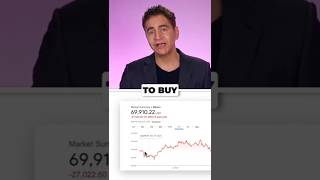
Now let's break this down. First, Brazilian debt. The likelihood that Brazil will be able to make its debt payments on bonds, meaning loans, goes down given the disaster. Therefore, Axe Capital is betting against meaning profiting from shorting Brazilian debt holders. Likely meaning shorting banks that own Brazilian debt, like Brazil's largest bank, Ito Unaquibanco or Spain's Banco Santander. Taylor also mentioned buying long dated VIX calls. Now, the VIX is a fear index. And what this means is the VIX is a volatility index that represents what the S and P options will do in the next 30 days. Now, when there's fear, the VIX goes up and you can make money by buying calls on a stock or an index like the vix, if it goes up. Now, if the VIX goes up a lot and closes above 70 like it did at the peak of the COVID crisis and during the financial crisis of late 2008, then I put my reputation on the line saying this, that means there's maximum fear and we need to buy stocks. And Taylor buying long dated VIX calls likely refers to buying VIX calls that expire in several months from now. Now, when you buy calls, you can pay a relatively small amount for calls. And if the stock or index that the call is based on goes up a lot, then you can make a fortune and all you can lose is what you paid for the call. So if we go together to finance.yahoo.com and we type Vix, then we select options and we change the expiration date on calls to a year or two in the future, then Taylor means buying calls that are likely out of the money as they are cheaper, meaning the ones we see here that are not shaded in blue. Taylor also mentions buying alternative energy investments not dependent on government subsidies. Why alternative energy like solar or wind power? Because Brazilian sugar is used to produce ethanol for fuel, and we know that Brazilian sugar will see a decline in supply. Also, a tsunami could hurt Brazilian powerhouse oil producer Petrobras, which drills oil off the coast of Brazil. Therefore, oil could go up as well. So investors will quickly invest in alternative energy plays like solar and wind, for example, that perform better when oil prices rise. Now, why did Taylor say not to invest in alternative energy companies that have government subsidies? Because when a financial crisis occurs, governments can cut alternative energy incentives, which is what we saw with the Spanish solar market collapse in late 2008. Now you only want to invest in companies for the long run that can survive without government subsidies. For example, after World War II, the Japanese economy was in rough shape for obvious reasons, and the Japanese government gave subsidies then to every sector in the economy to rebuild Japan, except for autos and consumer electronics, which since World War II have been the strongest sectors in Japan. So how else does portfolio manager Taylor plan to make money from the disaster in Brazil? An analyst that reports to Taylor has
this Buy idea Scandinavian Shipping Co.
While the South American companies are down for the count. These guys will have a shot at a monopoly. Smart trade and one company's loss can be another company's profit from a market share Shift perspective. Now here's what I just don't understand about this episode. Why didn't you anticipate the tsunami?
Maybe I should have when that underground earthquake hit off Mozambique. Strange conditions bring strange results.
So how could an earthquake in a country in East Africa create a tsunami in Brazil? Please type in the comments to explain this to me as I just don't get it. Now, profiting from disasters is nothing new for Axe Capital as Bobby Axelrod made a fortune on 9 11. Now let's quickly revisit this from season one. September 11, 2001 a plane crashes into the North Tower. Everyone you work with is dead while you sit back in your chair with a smile on your face, making hundreds of millions of dollars. So Bobby Axelrod made $750 million on 9 11. So how could Bobby have profited on 9 11? Bobby Axelrod may have made much of his considerable fortune by preying on aviation, hotel and shipping companies when they were most vulnerable, shorting their stock during those early moments after the September 11th terrorist attack. So on 911 at 9:03am, the second plane crashed into the World Trade center, and as a result, the markets in the US were closed that day and did not reopen until September 17th. And on 9 11, when the markets were closed in the United States, the European markets remained open. And hypothetically speaking, investors like Bobby could have shorted airlines and hotels and anything to do with travel in the European markets that day. Now, it's very tough to make $750 million by just shorting stocks, so he likely bought many put options on European airlines like British Airways and Lufthansa, which were both down 21% and 14% respectively that day. Now, a put is a derivative instrument that you can buy that costs a relatively small amount of money, and it can increase in value hundreds and hundreds of percents if the stock the put is based on goes down. And unlike shorting a stock, a put is a safer way to bet against a stock, because if the stock that the put is based on goes up, then all you lose is what you paid for the put. Now, a short is much more dangerous because you can lose an unlimited amount of money if the stock that you're short goes up, which is what caused some hedge funds to go belly up when they shorted stock Gamestop, which was up literally more than 29 times in the month of January of 2021. Now, three other ways that Bobby could have made money on 911 are as follows. Number one, buying gold, which increased in London trading that day by about 6% as investors love to own gold when there is uncertainty. Number two, he could have bought oil, which rose just over 5% on 9 11, as were fears that the attack was somehow linked to the Middle East. And the third way that Bobby could have made money on 911 is through shorting the US dollar as the foreign exchange markets are very liquid and the US dollar was down that day versus the euro, the British pound and the yen. Let's get back to Season three Episode two what about ethics and knowing that you are profiting from disasters is no one worried about the people you know in Brazil? If you want to pretend you're concerned, see Wendy.
He's not pretending. Wags.
If you really care, start a walkathon.
If it's a money maker, we do it.
So it's brutal. But are hedge fund investors more likely to be like Ben or like Wax? Well, I would say closer to Ben. Yes, there are unethical people in every industry, but in reality, most hedge fund employees I've worked with are good people. Yes, there are exceptions. Now, I was short the markets in 2008 when Bear Stearns went belly up, and also in the fall of 2008 when Lehman Brothers went under. And yes, I profited from this, but I felt terrible and it's one of the reasons I switched from hedge funds to venture capital. And this is crazy, but apparently in the fall of 2008, some corrupt investors hired actors to line up outside of banks so that the media would see the people lining up to get their money out, which led to material declines in the share prices of those banks. Now, when it came to the collapse of Silicon Valley bank in 2023, of course people did not line up to get their money out of Silicon Valley bank because of the growth of online banking. And this is deadly because if a rumor were to spread on a bank going under, investors would shoot first and ask questions later by taking their money out online, which is partially what happened with Silicon Valley Bank. So should shorting be even legal? Yes, I think it should be legal because free markets and shorting ensures that companies are fairly valued. And investors will argue that hedge funds have a fiduciary duty to to try to make money in all market environments for their investors. Let's move on to discussing risk management, net exposure, and something called beta exposure. As we can see here, Bobby is not happy as he is looking at his portfolio's daily performance, exposure wise. So let's pause his iPhone screen here and let's discuss what some of this stuff means. And I'm going to make a lot of assumptions here. So here we see that Axe Capital is down more than 4% on that day. And P and L here means profit and loss. Now, 4% is a massive move in one day and shows that Taylor, who is running the portfolio while Bobby is fighting his legal battles. It shows that Taylor is, of course, not doing a good job managing risk. And a lot of professional investors do not want a position in the portfolio to be more than 5% of capital. And they often do not want much exposure to one sector or too much exposure to one sector or country. And clearly, Taylor is overexposed to one investment theme in Brazil, which is a rookie mistake. Now, here we see that AKT Capital has about $10.95 billion in equities, meaning money invested in stocks. Now, in a second, I'm going to tell you how much Axe Capital employees might make in a good year. But we see here that the value of the stocks that Axe Capital owns, meaning equities that they are long or own, is about $7.1 billion. Now, this might assume, and this is a very rough estimate, that since they have $10.95 billion in stocks, and since they have 7.1 billion in longs, then 10.95 minus 7.1 billion equals total amount of stocks, they're short of about $3.8 billion. So what does this mean from a net exposure perspective? Well, per this blackboard, 65% of the capital is long and 35% is short. Long exposure minus short exposure here equals 30%. So this means that Axe Capital's net exposure is 30%, meaning Axe Capital is 30% net long the market. And of course, I'm making many assumptions here, and we're going to talk about leverage in a second. Now, many hedge funds often run between 30% and 70% net long the market. So although Axe Capital's net exposure is not that high at 30%, their risk management was brutal on this day because of too much exposure to Brazil. And Axe is not happy with Taylor's portfolio management skills. Now, one more thing. Quickly on that exposure, more sophisticated hedge funds look at what is called beta exposure, which means what is their real market exposure accounting for volatility? Now, we know that a beta for a stock of one means that that stock moves in line with the market. So, for your portfolio, I recommend always calculating your beta exposure, because this will more accurately tell you what your portfolio might do on a big up or a big down day. Here's an example. Let's say your portfolio is $100 and you hypothetically own one stock. Then that means you're 100% net exposed. But if that stock has a beta of two, then you have a beta exposure to the market of 200%, meaning if the market goes up 1%, then your portfolio might go up 2% and the market goes down 1%. Your portfolio might go down 2%. So always think about your positions from a beta exposure perspective. So, with axe Capital, although 65% of the portfolio is long and 35% is short, the net exposure looks like it's 30%. But what if the long positions, meaning the 65%, hypothetically had a beta of 2? And what if the short exposure, meaning 35%, had stocks that had an average beta of 0.75? Then, per this math axis, portfolio might have a beta exposure of 104%, meaning, although the portfolio only looks to be long 30%, the market, it might actually act like it's much longer the market from a beta exposure perspective. Now that we understand nets and beta exposure, let's very quickly discuss gross exposure. If you have $100 to invest and you invest all that money, then your gross exposure is 100%. If you borrowed, meaning use leverage of 20% to invest 120 bucks in the market, then your gross exposure is 120%. Now, in the fall of 2008, some hedge funds had gross exposure of literally 1,000%, meaning they used 10 times leverage. So for every $1 in assets and management they had, they invested 10 bucks. And this is deadly. And this is why many hedge funds failed in the fall of 2008. Now, how is it even possible to use that much leverage? Well, some hedge funds run what is called market neutral, which means their net exposure is closer to 0%, meaning an equal number of longs and shorts. And if you have a net exposure of 0% or slightly above or below 0%, then it can be easier to borrow money. For some funds. Now, of course, 10x leverage, meaning 1,000% gross exposure, is not that common anymore. And I remember back then, in the fall of 2008, Warren Buffett said that derivatives are financial weapons of mass destruction. So why didn't more hedge funds go belly up in the fall of 2008? Because when you invest in some hedge funds in the paperwork that you sign to invest, there is the mention of what is called Gates, meaning some larger hedge funds can put up the gates for a certain amount of time, stopping investors from redeeming their capital. How can they do that? Because their performance has been so good historically and so many investors want to invest. Therefore, the hedge funds have leverage, meaning they have clout, and they can have extreme terms in their investor contracts. And I'll come back to Gates in a second. Now, in terms of compensation, hedge funds often charge a 2% annual management fee. But Axe Capital makes their investors more money than other hedge funds do. So Axe might be able to charge a 3% annual management fee. So 3% of $10.95 billion is an annual management fee of $328 million. And Axe can use this to pay employee based salaries, rent for the office, technology, etc. And of course, Bobby Axelrod would keep a lot of that $328 million. And he would likely pay his analysts and portfolio managers up to a few hundred thousand dollars per year for their base salary. Now, the big money comes with what is called the performance or incentive fee, which is often 20% of the profits that a hedge fund makes for investors. Now, since Axe Capital outperforms other hedge funds, they might charge an incentive fee of 30%. So if Axe Capital is up 40% one year, then this means that the firm made investors close to $4.4 billion. This means Axe keeps 30% of that, meaning their performance fee, which is about $1.3 billion. And usually the owner of the firm, meaning Bobby Axelrod, keeps at least half that amount, meaning $650 million. And the other half goes to portfolio managers that made money that year for the firm. Now, it's a meritocracy, meaning you eat what you kill. Then what happens is the portfolio managers often decide what to pay their analysts that report directly to them. Now, if a hedge fund loses money in one year, then they don't get paid the next year unless they make that money back for their investors first. And this is called a high water mark. Now, in 2008, a lot of large hedge funds were down over 50%. And many of these hedge funds put up the gates to stop redemptions. And it took them until 2012 or so until they got above their high water mark. Now, this was a very rough day for Axe Capital. Let's see how it ended. How do we do today?
We're still down 5% overall.
Anyone else would have lost 12 or done something stupid to get even. Booking the loss was the only way 5% is a brutal day and Axe took it really well so that he can live to trade another day. Now a lot of hedge funds, what they would do if they're down 5% is they would take a knee, meaning they would they would stop taking on risk as the sticker shock of a down double digit month can certainly lead to investor redemptions. Let's talk about grading of this episode for Wall street realism with a buy, hold or sell rating. Now. The episode did a great job of explaining multiple ways to profit from a black swan event, including shorting using options. The episode also accurately implied a rise in the vix, meaning the fear index and to not invest in alternative energy companies that receive government subsidies because if a country has a cash crunch like what we saw with Spain in late 2008, then they're more likely to cut solar subsidies, for example. However, I just can't understand how an earthquake on the east coast of Africa can lead to a tsunami in Brazil, and as a result, I'm going to give this episode a sell rating. Please like, comment and subscribe and I will see you soon in our next reaction video when we react to Season three, Episode three. Thank you.