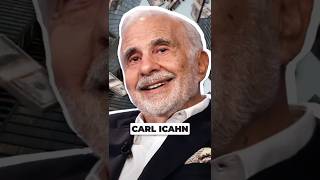
Chris Haroun argues you shouldn't enter VC straight from college or business school. You need to found or run a startup first. Without that experience, you'll hit a ceiling as a junior and never make partner, leaving many former bankers frustrated and stuck.
Chapters
With regards to becoming a venture capitalist, how would you recommend getting there? A current plan is to do two years investment banking at a bulge bracket and then move to a big vc. Would you recommend this or going to a startup? So I wouldn't do that. What you recommended, and I see it happen all the time. Okay. And it ends very badly. I have friends that will go to Harvard and then they'll Harvard Business School or whatever it is, work a couple years in investment banking, or in between undergrad and business school, I work in investment banking. And then they'll go to a venture capital firm. And they can't rise through the ranks. Okay, they can get in, but they can't rise through the ranks. They might be partner, but not general partner. General partner means you're more senior than a partner. And the reason they can't rise through the ranks is because they haven't started a company before, they haven't been successful or they haven't failed. You can't just sit. And when you invest in companies, you have to, you sit on the board. And when you sit on the board of these companies, you have to give advice to an entrepreneur how to run their startup. And that advice a lot of times is not based on what you learn in business school. It's based on your experience starting a company. And so what happens is there's a lot of former investment bankers that work in venture capital that are, that are, that are walking dead. And I'm sorry to use that terminology, but if you haven't started a company before, you can't really manage a portfolio in venture capital of startups because you don't have the experience. It's like me saying, I want to teach you Spanish. I don't speak Spanish. Or maybe I studied Spanish in school for a semester, whatever. So I highly recommend getting work experience first and do venture capital later in life. Don't do it early on. It's a disaster. Of course, there are exceptions. You know the people that start companies out of undergrad or high school, they might become a partner and do well, but you got to be experienced first. Okay, don't do it. Don't work. Do it because you won't be as marketable if you do it too, and you'll be frustrated. And a lot of friends of mine, I have lots, actually. There's a buddy of mine who was my student at Stanford, my guest lecture there a bunch of times. He's good friend, I'm good friends with him. He went to a venture capital firm right out of Stanford Business School. And he made it. I think he was like a more junior entry level executive post mba. And he got frustrated because he couldn't rise through the ranks. They wouldn't make him a partner. And so he quit. And I'm glad he quit because he's doing his own thing now and he's going to be tremendously successful. So do not do venture capital early in life. Wait until later. Wait until much, much later. And, and this is for everybody here, Alex included, when you start your career or your first job or second job, whatever it is, before you start and before you apply for that job, ask yourself, why do I want that job? You know, Alex, why do you want to be an investment banker? And I'm not just picking on you, I'm saying all this with love, my heart. But I remember when I was, when I was at McGill, we all wanted to be investment bankers. And when I teach at business schools, everyone wants to be investment bankers. And a lot of people don't know what it is. Investment banking can be really tough. And people say, no, you make a lot of money. You actually don't. You make the same amount of money as a 9 to 5 person that graduated with you. Because by the hour, I mean, you're working crazy hours, right? You'll get out of shape, you might lose friends, whatever. If you're going to do investment banking, sorry, damn it, I can't retract this stuff. It's like Justin Timberlake at the super bowl years ago. I'm in trouble here. But if, if you're going to do investment banking, just, just draw a line in the sand. Do it for a couple years, then get, get out. Okay? Don't, don't stay forever doing that. All my students want to be bankers, okay? Like in my, in class, business students, they don't know why. Just ask yourself why. You got to enjoy it. And I actually had a good friend of mine, he went he Harvard and then, and then Goldman. He actually worked with a guy and he told me a story about this guy at Goldman Sachs. And this guy had an MBA from, from, from, from Harvard. And when he was at Goldman Sachs, his boss, he worked in investment banking, kept asking him to change PowerPoint slides slightly and he would do little things like make him change the little bubble in a Venn diagram. Two circles here, sort of, right? Make one slightly bigger than the other. And he lost it. And he, and he told my buddy Dave, Dave Potter, who now is, he works at Fuller and Taylor here. He told Dave, Dave, if he asked me to move that bubble one more time, even a millimeter. I'm quitting. And he quit. That's what happened. So it's. It's my Advil.