Wall Street Pro Reacts to The Big Short Movie
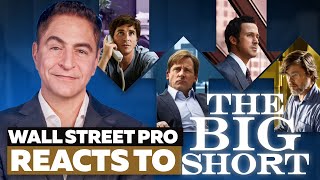
In this 2025 YouTube reaction video, finance professional Chris Haroun deconstructs the movie The Big Short scene by scene, using his experience at Goldman Sachs and top hedge funds to explain the core financial concepts that drive the 2008 crisis. He starts by demystifying mortgage‑backed securities (MBS) and the shift from prime to subprime loans, then walks through how banks bundled these loans into tranches and sold them for fees. Haroun details the mechanics of short selling, credit default swaps (CDS), and the role of synthetic CDOs, illustrating each with analogies (Jenga towers, blackjack bets, and Anthony Bourdain’s fish stew). He highlights predatory lending practices such as NINJA loans, the conflict‑of‑interest that allowed rating agencies to over‑rate toxic bonds, and the cascading leverage created by synthetic CDOs that amplified systemic risk. The video also covers liquidity crises (Bear Stearns, Lehman), the moral implications of betting against the American economy, and the broader cultural critique of fraud across finance and government. At the end, Haroun grades the film’s realism with a “Buy” rating, urging viewers to learn the basics to avoid future crises and promoting his finance bootcamp.
Chapters
There's some shady stuff going down. The whole housing market is propped up on these bad loans. You have any idea what you just did? So Mike Burry, who gets his haircut at Supercuts and doesn't wear shoes, knows more than Alan Greenspan. It's a time bomb. In this reaction video, I'll break down and explain the core financial concepts in the big short movie based on my work experience at Goldman Sachs and at the top hedge funds in the world. Now, please stick around because at the end of this video, I will grade the movie for Wall street realism with a buy, hold or sell rating. We'll talk about why we are within 24 hours of bank machines not working in 2008. And we'll cover subprime mortgages, short selling, mortgage backed securities, tranches, CDOs, adjustable rate mortgages, credit ratings, credit default swaps, leverage, liquidity risk, systemic risk, and much more. And I'll explain all of this from scratch. Let's begin. Mortgage backed securities, subprime loans, tranches. It's pretty confusing, right? Does it make you feel bored or stupid? Well, it's supposed to. Now, right away, the film acknowledges how confusing Wall street jargon can be. Terms like mortgage backed securities, subprime loans and tranches are deliberately complex to discourage outsiders. Now, in reality, these are just different financial products or components. And Wall street sometimes uses opaque language so that average people like me feel that they can't understand or question what's happening. Don't worry, we'll decode each of these terms in simple English. Wall street loves to use confusing terms to make you think only they can do what they do. Or even better for you just to leave them alone. This blunt line drives the point. Home financial insiders often benefit from complexity and secrecy. Now, if everything sounds too technical, ordinary investors might back off and leave them alone, allowing banks to operate without scrutiny. Now, our goal here is the opposite. To make these concepts clear so we won't feel bored or stupid when we hear them.
Basically, Lewis Rayner's mortgage bonds were amazingly profitable for the big banks. They made billions and billions on their 2% fee they got for selling each of these bonds.
Now, mortgage backed securities, called mortgage bonds in the film, were a gold mine for banks in the 1980s and 90s. And here Margot Robbie explains that banks would bundle home loans if into an investment bond and sell pieces of it. And they collect a fee of around 2% on each bond that they sold, earning billions of dollars because so many were sold now in simple terms. So I can understand It a mortgage backed security, also called an mbs, is a big pool of home mortgages packed together. And investors who buy an MBS are essentially lending money to home buyers. And they get the homeowner's mortgage payments as investment income. And banks loved this because it turned mortgages into a product they could trade, generating massive fees.
But then they started running out of mortgages to put in them. After all, there are only so many homes and so many people with good enough jobs to buy them right now.
The trouble began when banks exhausted the supply of reliable mortgages from creditworthy borrowers. And the housing boom meant that fewer new prime, meaning credit worthy borrowers were available. And there are only so many well qualified home homebuyers out there. And this line really highlights a basic limit. Not everybody can afford a home or qualify for a standard loan. And once good mortgages became scarce, the banks faced a profit problem because they needed more mortgages to keep creating MBS bonds to sell. In other words, demand from investors was high, but the supply of quality mortgages was finite.
So the banks started filling these bonds with riskier and riskier mortgages.
And to keep that profit machine churning, banks lowered their standards. They began including riskier loans in the mortgage pools. And these risky loans are what we call subprime mortgages. Now, a subprime mortgage is a home loan given to somebody with poor or limited credit credit history, meaning there's a higher chance they'll default, meaning they will fail to repay. And because prime borrowers were tapped out, lenders went after less qualified borrowers, people with low credit scores, unstable incomes, or little savings. And these subprime loans often had higher interest rates or tricky terms to compensate the lender for the extra risk. This was a scam. Now, in short, banks stuff the mortgage bonds with subprime loans and think of subprime as below prime quality. And the banks did just this to keep selling MBS bonds and collecting fees. And banks have to grow earnings every single year or their stock price can fall.
By the way, these risky mortgages are called subprime. So whenever you hear subprime prime, think accurate.
Now, because subprime mortgages were garbage loans very likely to go bad, they were typically offered to borrowers with credit problems or low income. And such loans carried high interest rates and often adjustable rates that would shoot up after a teaser period, making default more likely. So when you hear the term subprime, remember it refers to loans given to people who probably can't repay reliably. And those loans were ticking time Bombs inside of mortgage bonds.
So now he's going to short the bonds, which means to bet it gains.
Now here he refers to rockstar hedge fund investor Dr. Michael Burry, played by Christian Bale, who is one of the few who discovered the mortgage bonds were full of bad subprime loans. And he decides to short the housing bonds. And shorting means betting against an asset, essentially wagering that its value will go down and not up. And normally investors buy things hoping the price rises. A short seller does the opposite. Now, to short sell, you typically borrow an asset and then sell it, hoping to buy it back at a lower price and pocket the difference. And shorting can apply to stocks, bonds, or in this case, a whole mortgage market. It's risky because if you're wrong and the asset price rises, you can lose a lot of money. There's no limit to how high a price can go. Please be careful with shorting. But Michael Burry was convinced that subprime packed bonds would collapse, making shorting them extremely profitable. If he was right, when the majority of the adjustable rates kick in in 07, they will begin to fail. And if they fail above 15%, the whole bond is worthless. Now, this clip was from Michael Burry's short investment thesis in his hedge fund called Scion, where he lays out his reasoning. And many subprime mortgages were adjustable rate mortgages, also called ARMs, meaning loans, loans with low teaser interest rates for the first two to three years that would then reset to higher rates. Deadly. Burry predicts that in 2007, when those teaser rates end, meaning the adjustable rate kicks in, home buyers monthly payments will jump dramatically, creating mass defaults. And he notes that if over 15% of the loans in a mortgage bond default, then the entire bond is worthless. And this is because of how mortgage backed securities are structured in tranches, which means layers. Now, the top tranche of a bond can tolerate a small percentage of bad loans, say up to 15%, and still pay investors. But if defaults go beyond that 15% threshold, even the AAA rated tranche, meaning that safest layer gets hit and the bond's value collapses. So in short, Burry saw that a wave of arm rate hikes in 2007 would trigger a domino effect of default on wiping out the value of those securities. Now, an adjustable rate mortgage often starts with a low payment, but when the rate adjusts upwards, the payment can skyrocket as much as 200 to 300% higher. As we'll see in a later scene. And Bury correctly anticipated that many subprime borrowers could not afford higher payments leading to defaults well above 15%, thus imploding the bonds. I want to buy swaps on mortgage bonds, credit default swap that will pay off if the underlying bond fails. This is Michael Burry speaking to big Wall street banks, including Goldman Sachs in 2005. And he's essentially inventing a new financial instrument to short the housing market. Now a credit default swap, also called a cds, is like an insurance contract. One party pays regular premiums and the other party promises a payout if a certain bond or loan defaults, meaning fails. And Burry tells the bankers he wants to buy swaps on mortgage bonds, meaning he'll pay premiums to bet against specific mortgage backed securities. And if those bonds implode due to the subprime defaults we discussed, the swap will pay off big time, giving Burry a huge profit. Now in planar terms, a CDS lets an investor bet on on a bond's failure without actually owning the bond itself. And the bank, like Goldman Sachs or Deutsche bank in this film, would gladly sell him this insurance because they believed that mortgage bonds were safe and would never fail. And they saw Burry's proposal as easy money, collecting premiums for nothing. And a credit default swap transfers the risk of default from the seller to the buyer of the swap. And Burry is buying the risk. He'll make money if the bonds default because the swap seller must pay him the insurance money. And this instrument was the key to profiting from the coming crash.
You want to bet against the housing market.
Why? Those bonds only fail if millions of Americans don't pay their mortgages. That's never happened in history. Now the Goldman Sachs bankers were stunned at Burry's idea. Housing had always been seen as rock solid and home prices had never fallen altogether nationwide in the modern era. And the quote reflects their disbelief. They're saying you seriously want to bet that millions of people will stop paying their home loans? That's absurd. It's never happened before. And this captures the popular complacency of the time. And industry experts believed US housing was too stable to fail because even if some people defaulted, it wouldn't be widespread. And the borrowers assumed housing prices only go up and borrowers would refinance or sell if they struggled. And the idea that huge numbers of Americans would default all at once was beyond imagination. Hence that's never happened before in history. And this overconfidence is exactly what Burry capitalized on. And he studied the data and saw that an unprecedented wave of defaults could happen due to all those subprime arms resetting. And the bankers however, thought he was cray cray, which is why they were happy to take the other side of that bet. Now, short selling the entire housing market seemed so impossible that they jokingly saw Burry as handing them free money. A's, 0, B's 0, double B's 0, triple B's 0. That's America's housing market. So in this very famous scene, Deutsche bank trader Jared Venet, played by Ryan Gosling, uses a Jenga tower to demonstrate how mortgage bonds are structured and why they're so fragile. Now, each block layer in the tower represents a tranche of a mortgage backed security. Now the top blocks labeled AA's are the AAA rated trosses, supposedly very, very safe. And the lower levels, Bs or double Bs etc are riskier tranches with lower credit ratings. And so Jared pulls out the bottom blocks, meaning the lower quality loans, and they default it and nothing is left supporting the tower. It collapses completely. Now you're watching this video and my other finance movie and TV show reaction videos as you might be interested in getting a job in the finance industry. If so, please go to the description of this video, click the link to set up a call with us about joining my finance bootcamp program where we help you get a job in finance. Now, the visual Jenga metaphor is brilliant in that if the risky tranches fail, the whole system comes down. And tranches are like slices of a bond divided by risk. The top slice gets paid first and is the safest. The bottom slice gets paid last and will eat the losses first if loans go bad. And in theory, the top AAA rated tranche would only be affected if an extreme number of mortgages defaults. Recall Burry's 15% threshold. And so the Jenga demo, which was brilliant, shows that by 2007, the lower tranches, meaning full of subprime loads, crappy, crappy debts, they had little real value and once they fell, even the higher tranches were in jeopardy. Essentially, tranches were supposed to isolate risk, but when enough loans default, the losses spread upwards. So the entire bond and the entire housing market built on those bonds can collapse just like a Jenga tower. And this is a dramatic illustration of systemic risk, meaning the risk that the failure of the weak layers can bring down the whole structure. Well, my firm offers NINJA loans. No income, no, no job. I just leave the income section blank if I want. Corporate doesn't care. These people just want homes, you know, and they go with the flow. Now, this jaw dropping confession comes from one of the mortgage brokers in Florida that Steve Carell, who plays investor Mark Baum's team, interviews. And he's describing what are called ninja loans, a nickname for loans given to borrowers with no income, no job or assets. And the mortgage broker talking to Mark Baumgartner bluntly says that he can leave the income section of the application blank and the bank doesn't give a damn. Now, why would a lender not care if the borrower can pay? Because during the housing bubble, lenders weren't planning to keep those loans. They'd immediately sell those loans into mortgage backed securities that we discussed. Now, if the loan defaulted later, it wasn't the broker's problem. And the attitude was these people, meaning borrowers, just want a house and we just want the loan made so we can collect our fee. And banks were chasing volume over quality, so they approved mortgages without verifying income or employment, something that used to be unthinkable. And this lack of underwriting standards hugely increased the risk in the system. And it meant that many subprime borrowers actually had no realistic way to pay back their loans, especially after teaser rates jumped. It was a scam. And the brokers admit that they took advantage of naive buyers who go with the flow. And this conflict of interest, brokers getting commissions for loans with no penalty if the loan fails, fueled the subprime mortgage crisis. I can make 10,000 on a subprime adjustable. Trust me, I'm not driving a 7 Series without strippers. No one on the pole has good credit, and they're all cash rich. Brutal. Now, this quote is from the same Florida mortgage brokers bragging about their tactics. It reveals two things. Number one, subprime adjustable rate mortgages, meaning ARMs, were extremely lucrative for brokers. The guy got a $10,000 commission on one loan because such loans had high fees and interest. And number two, they deliberately targeted exotic dancers as clients. Why do they do this? Well, the broker says no one on the poll has good credit and they're all cash rich. In other words, dancers often made good money in cash tips. And. But they had poor documented credit, so they couldn't get traditional loans, making them easy prey for subprime lenders. And the brokers would put these clients into high rate adjustable mortgages, which likely didn't. They didn't fully understand me. And the client, the buyer, the stripper, didn't fully understand. And the brokers would earn huge commissions on this. The broker even jokes that his luxury BMW 7 Series car is essentially paid for by exploiting strippers. And this is a shocking example of predatory lending. Lenders making loans to people who lack the creditworthiness by taking advantage of their lack of financial savvy or desperate desire to own a home. And such borrowers often ended up with multiple mortgages that they couldn't afford, as we'll see next. And this contributed to the wave of defaults. Okay, look, if home prices don't go
up, you are not going to be
able to refinance, and you're going to be stuck paying whatever your monthly payment is once it jumps up after your teaser rate expires. Now, Mark Baum tries to explain this reality to a stripper who has several mortgages. And this line is about adjustable rate mortgages and the common promise of the bubble era. Don't worry, you can always refinance. Not true. And Mark warns that if housing prices stop rising, then the borrower won't be able to refinance, meaning get a new loan to avoid higher payments. Now, with an arm, meaning adjustable rate mortgage, the initial teaser rate is low, but after a couple of years, it resets to a much higher rate, causing the monthly mortgage payment to jump up dramatically. And during the housing boom, brokers assured borrowers total BS that they could refinance into a new loan or sell the house before that happened, which only works if home prices keep climbing. And Mark is basically saying if the music stops, meaning if prices flatten or fall, you'll be stuck paying the full adjusted rate. And for many subprime arms, that meant payments double or triple. Now, an adjustable rate mortgage by definition has an interest rate that can change over time, unlike a fixed rate mortgage. Always try to get a fixed rate mortgage, please, for your house. And the initial low payment period lured people in. But later adjustments were unaffordable. And Mark's explanation highlights the refinance risk. Subprime borrowers were counting on refinancing, but that only works in a rising market. And the moment home prices stalled, refinancing options vanished, leaving people trapped with exorbitant payments. Your monthlies could go up 200, 300%. Now, here, Mark quantifies the shock awaiting armed borrowers. A 200 to 300% increase means, for example, a mortgage payment of $1000 a month could jump to $3000 or even $4000 a month after the teaser period. And that is obviously devastating for someone on a limited income. And this is not an exaggeration at all. Many subprime arms had features Like a very low introductory rate and sometimes interest only payments, then a much higher rate later. Now, if a borrower barely qualified for the loan payment, there was no chance that they could afford triple the payment. Now, why would any borrower agree to this? Well, often they were told by the mortgage broker, don't worry, you'll be able to refinance or sell before that happens. And it was essentially a trap based on the assumption of perpetually rising home values. And this is why Burry calls these loans a time bomb. Once the higher rates kicked in, defaults exploded. Now, Mark's blunk statistic drives home how perilous these loans were. Adjustable rate mortgages start very low, but can adjust way, way up. Which is exactly what made the subprime crisis inevitable when home prices stopped climbing
200% on all my loans.
What do you mean all your loans? We're talking about loans on one house, right?
I have five houses and we conduct.
This is the moment that Mark Baum realizes just how insane the lending frenzy got. Now he assumes the stripper might have two mortgages, perhaps a first and a second loan on her home. When she replies, I have five houses and a condo, it's a huge reveal. This single individual with a modest income owns six properties financed by subprime loans. How is this even possible? Well, during the housing bubble, lenders were approving loans with almost no verification. And they often didn't check if a borrower already had other mortgages. And investors, or speculators, I should say, could buy multiple homes with tiny down payments, expecting to flip them as prices rose. Now, in this case, the borrower herself is shocked to learn that that her monthlies, meaning payments, could triple on all of these loans. And it dawns on Mark's team that many borrowers like her are stretched across numerous properties, completely unable to pay once rates reset or if any little thing goes wrong. And this is a classic sign of a housing bubble. People were speculating on homes with cheap credit and banks were willing to lend without restraint. And the five Homes and a Condo line highlights leverage at the individual level. She's massively leveraged, meaning using borrowed money to invest in multiple houses. And leverage really amplifies profits in a rising market. And she thought she'd get rich as all six properties appreciated. But it also amplifies losses in a downturn. Now, if home prices drop or she can't refinance, she. She doesn't just lose her house, she loses all six. And the bank or bond investors eat massive losses. And this one person defaulting on six loans shows how a few unqualified borrowers could create outsized damage and a domino effect, which I'll get to in a second. And Mark, stunned reaction foreshadows that the housing boom was built on an unstable pyramid of debt. Hey, there's a bubble. How do you know? Trust me. Now, after witnessing the absurd lending practices in Florida, Mark Baum immediately concludes, there's a bubble. Now, a bubble means asset prices, in this case houses, are far above their true value, sustained only by speculative demand and easy credit. Now, when his colleague asks, how do you know? Mark's Trust me is backed by what they just learned. Borrowers with no income owning five houses, banks giving loans to anyone, and loans structured to blow up are all classic signs of an irrational and unsustainable market. They now see firsthand that the Housing Markets foundation is rotten, inflated by greed and fraud. And this prompts Mark's team to do what Michael Burry did. Bet against the housing market in a big way. Call Vennet, buy 50 millions of swaps on the MBS. What do we got? Garabaldi. Mark, you sure? Yeah, yeah. It's time to call. What?
Every second.
So we saw that Mark Bong just said to call Jarrett Vennett, and that's the Deutsche bank trader played by Ryan gosling, to buy $50 million more in swaps, meaning short positions on those mortgage bonds. In other words, once they confirmed the bubble, they doubled down on shorting it, effectively shorting every effing thing, as Mark says. Now, a financial bubble always eventually pops. And Mark now has conviction from real evidence that a crash is coming.
If we don't give them the ratings, they'll go to Moody's right down the block. If we don't work with them, they will go to our competitors. Not our fault. Simply the way the world works.
Now, this quote is from an executive at S and P, meaning Standard and Poor's, which is one of the big credit rating agencies. And Mark's team confronts her about why S and P kept giving aaa, meaning the highest ratings, to mortgage bonds that were filled with junk loans. And her response reveals a huge conflict of interest. Ratings agencies are paid by the very banks whose products they rate. And she admits that if S and P refused to stamp a bond as aaa, the bank would just likely take their business to a rival raider like Moody's, who would give the AAA rating. In other words, the agencies inflated ratings to keep clients happy and maintain market share. And this was a systemic problem. The watchdogs were effectively in the Pocket of the banks brittle. So even extremely risky mortgage bundles got top notch ratings, misleading investors into thinking that they were actually safe fraud. Now, when she says it's not our fault, simply the way the world works, it's a shrug. The issuer pays. Model for ratings virtually guaranteed biased outcomes. And this conflict of interest was a major factor in the crisis. Now, a proper rating agency should have been downgrading bonds as the loan quality fell. Instead, what they did was they rubber stamped everything aaa. So pension funds and others kept buying these toxic bonds. Now the film uses this scene to underline how even the gatekeepers were compromised, contributing to the collapse. Now, in plain terms, the rating agencies didn't do their job because doing the right thing, meaning issuing honest ratings, meant losing their business. And this allowed the bubble to grow unchecked and risky CDOs and MBS's were falsely labeled as ultra safe. Some of the fresh fish doesn't sell. I don't know why. So what am I going to do for all this unsold fish, which is the triple B level of the bond in the garbage, and take the loss? No way. Now we have celebrity chef Anthony Bourdain's cameo explaining CDOs, which stands for collateralized debt obligations, using day old fish as an analogy. Now, in his story, the unsold fish represents the low rated portions of mortgage bonds, specifically the triple B rated tranches, which. Which are the bottom of the barrel. Right. Remember that that Jenga model and BBB is just above junk status. Now, during the mortgage boom, banks found themselves with lots of these triple V pieces that nobody wanted to buy. They're the smelliest fish. Normally you'd have to throw them out, meaning take the loss. But Wall street isn't about to accept losses. So did they dump the bad loans in the trash? No way, says Bourdain. And this sets up how CDOs were engineered. Instead of admitting that triple B tranches were garbage, banks found a crafty way to repackage them into a new product. And so in essence, a CDO is created by pooling together those unsellable risky bets, the unsold fish, and cooking up a new bond. And so it's financial alchemy, turning crap into something that looks palatable. And this process is called securitization again. But now they've securitized the leftovers of securitizations. Deadly. And the key point here is that ACDO allowed banks to hide the stench of bad assets by mixing them up and rebranding them as well. Rather than write off the bad loans, they resold them in a new disguise. Whatever crappy levels of the bond I don't sell, I throw into a seafood stew. See, it's not old fish, it's a whole new thing. The best part is they're eating three day old halibut. That is the cdo. Now, continuing Bourdain's analogy, he as a crafty chef, tosses all the unsold fish into a stew. Suddenly it's no longer unsellable old fish, it's a new dish on the menu. And the diners don't realize they're consuming three day old halibut in a spicy broth. Likewise, a CDO is sold as an entirely new security that somehow was not tainted by subprime. The reality is, though, it's mostly composed of the same garbage loans just chopped up and mixed together. And by labeling it differently and getting rating agencies to bless portions of it as aaa, again, banks found a way to sell the unsellable. So it's not old fish, it's a whole new thing is exactly how investors were duped. They thought that a CDO was a distinct high grade investment, when in truth, it was full of leftovers from mortgage bonds. And so again, CDO means collateralized debt obligation, meaning a pool of various debt obligations, meaning loans bundled and split into tranches. And every tranche of a CDO has different risk levels, just like an mbs. Typically, the senior tranche of a CDO was rated AAA even though it was backed by BBB rated pieces of crap bought. And this was possible because statistically, if you bundle a bunch of BBB loans, maybe the top slice has enough diversification to be rated higher. That was at least the theory. But in practice it was folly. When housing went down, almost all tranches of CDOs imploded. And Bourdain's final line is this is a CDO really drives it home. A CDO is just repackaging bad debt sold as something new. It's like selling day old fish as gourmet soup. And investors ate the three day old halibut because it was served with a fancy name and a fancy presentation as well.
Okay, so here's how a synthetic CDO works. Let's say I bet 10 million on a blackjack.
10 million. Because this hand is meant to represent a single mortgage bond, we now have Selena Gomez. Yes, the pop star explaining the even crazier instrument, the synthetic cdo. And she sets up the analogy with gambling. It's brilliant. The way they do it. In her example, her $10 million blackjack bet represents a mortgage bond. Now, in finance terms, a synthetic CDO doesn't contain real loans at all. It's made up of bets on other assets, often bets on mortgage bonds via credit default swaps. And this will make more sense in a second. But Selena's $10 million bet is like an original mortgage backed bond that somebody owns. Okay? And the key to a synthetic CDO is side bets. Think of the original mortgage bond as the player at the blackjack table. Selena is that player betting on her hand, meaning the housing bond she owns. A synthetic CDO allows other people to bet on whether Selena's hand or will win or lose without. Without them actually owning the hand, meaning the bond itself. So why is it called synthetic? Because it synthetically creates the same risk return as owning the bond by using credit default swaps and derivatives rather than actual mortgages. And Warren Buffett famously, in the fall of 2008, called Derivatives Financial weapons of mass destruction. Now, in this casino analogy, her $10 million bet is a large bet. It's basically a pool of mortgages. And she notes that she's using $10 million because this hand is meant to represent a single mortgage bond. In other words, one synthetic CDO starts with a scenario of 1/ real MBS. And the upcoming explanation will show that multiple CDOs can be layered on top of that one real bond, multiplying the impact, which is deadly. Now, at this point, just grasp the fact that a synthetic CDO is a betting structure rather than an actual loan pool. During the real estate boom, markets were going up and up and people thought they would never go down.
So people who are watching and think that I won't lose will make a side bet. Now, this is the first synthetic cdo.
Now, Selena Gomez continues with her blackjack. Odds are good. She has a strong hand in this example. So many onlookers want to bet on her bet. Now, suppose that spectators bet amongst themselves on whether Selena will win. These side bets don't change Selena's outcome. They're separate wagers derived from her original game, her original hand of cards. And this is exactly what a synthetic CDO is. A side bet on the performance of a mortgage bond.
Love Selena Gomez. Bet you 50 million she wins. And I'll give you a 3 to 1 odds.
3 to 1 odds. Okay, I'll take that back. Now, the first synthetic CDO in her scenario is one woman watching her gamble by standing behind her saying, I bet 50 million bucks. She wins. And another person saying, I'll take that bet at 3 to 1 odds. Neither of those better standing up own Selena's hand, meaning the mortgage bond. They're just betting on the outcome. And in finance, this was done with credit default swaps. For example, investor A thinks the mortgage bond will fail and investor B thinks it won't. And they enter a swap just like Burry did with the banks. And that swap is essentially a synthetic position on the bond. Deadly. And a synthetic CDO packaged many such swaps together and tranched them out to investors just like a regular cdo, except no actual mortgages were inside. Only the insurance contracts mean the CDS referencing the mortgages. And Selena's simple sentence. Now this is the first synthetic CDO signals that a synthetic CDO is born from these side bets on a real asset. And it amplifies the risk because now you can have dozens of bets on the same underlying bottom. And if the bond fails, not only do bondholders lose money, but all the side bettors standing up lose money on their bets too, making the impact much larger. It's terrifying.
This will go on and on with more and more synthetic CDOs, and we
can transform an original $10 million investment into billions of dollars. Here, Dr. Richard Taylor, the economist sitting next to Selena, explains the cascading effect after the first side bet, meaning the first synthetic cdo. Others that were lined up there, others can bet on the outcome of that bet, and so on. And essentially you can have a second synthetic CDO that is a bet on the performance of the first synthetic CDO and a third one betting on the second one, etc. And this go on and on and on process created a tower of leverage on top of the relatively small set of actual assets. Now, in the movie scene, additional people say things like, I bet $200 million that lady in the glasses wins that bet, illustrating bets on bets. And by doing this, Wall street turned an original $10 million real mortgage position into potentially billions of dollars of positions. And Taylor's line means that for maybe $10 million of real subprime loans, there could be 10, 20, 50 times that amount in synthetic CDO. Exposure to domino effect. And indeed, leading up to 2008, synthetic CDOs multiplied the housing bet many fold. Now, this is a form of extreme leverage, using derivatives to create much larger bets than the actual asset base. It also created interconnectedness. When the real $10 million bond failed, the losses didn't stop at $10 million. They spread to other people holding those billions of Dollars in synthetics. And this is how a relatively small housing market downturn nearly collapsed the global financial system. We were within 24 hours of bankruptcies not working globally. And the losses were amplified through synthetic bets. It's like a chain reaction, eh? So by 2007, Wall street had built a house of cards so large that a $1 loss in mortgages might cause $20 or more in losses in derivatives. And that's why the film cuts back after the scene to Baum feeling sick. They realize how massive the potential crash could be. You have any idea what you just did?
Come on, we just made the deal of our lifetimes. We should celebrate.
We just bet against the American economy, which means, if we're right, people lose homes, people lose jobs, people lose retirement. Accurate. This is investor Ben Rickert, played by Bradley Pitt, scolding two young investors he's mentoring, Jamie and Charlie. He scolds them after they successfully make a deal to short mortgage bonds. And they're excited, and they start celebrating their trade in Las Vegas casino. Ben, played by Pitt, however, reminds them of the gravity of what they've done. You just bet against the American economy, he says, because at that time, the US Economy was heavily driven by the housing market. And by betting against housing, they're essentially wagering that the economy will fail, at least for a while. And this line actually underscores how extraordinary and perhaps disturbing their position is now. I was net short in my hedge fund in 2008, and it was depressing for me making money that way. And that's why I left the industry to focus on venture capital. And shorting the housing market isn't just a trade. It's effectively hoping for bad things to happen to a lot of people. It also highlights the systemic importance of housing. If housing crashes, it's not isolated. It takes down jobs, banks, and wealth across the country and the world. And Ben's words carry a moral weight as well. He wants them and us to realize that this kind of bet has real world implications beyond just money. People lose pensions. You know what I hate about banking? It reduces people to numbers. Here's a number. Every 1% unemployment goes up, 40,000 people die. Did you know that? And Ben continues to list the very real human costs that will come if their bet pays off. Now, a crashing housing market means foreclosures, meaning families losing their homes. It also means layoffs as the financial and construction sectors implode and destruction of wealth, meaning retirement funds and pension funds invested in these safe mortgages, securities will plummet. And this is the lesson of systemic risk and interconnectedness. The characters are not just shorting an asset, they're shorting the core of the economy. So the fallout will hurt millions of ordinary people. Now when he says people lose pensions, he considers that many pension funds had loaded up on AAA rated CDOs and mortgage bonds. Trusting the ratings. It was all BS and a collapse would wipe out a portion of retirees income. Similarly, retirement savings referred to as 401ks and IRAs likely invested in bank stocks or real estate that would crash. Everybody gets hurt. And so systemic risk means that pain radiates everywhere. A single event, meaning the housing collapse can trigger a chain reaction affecting the entire financial system and society as well. And Ben is basically reciting what a recession entails. Unemployment, foreclosures and destroyed savings. And indeed in 2008 that's exactly what happened across the United States. And this sobering reminder is meant to temper the young investors glee. Yes, they might get rich, but it will be because the country suffered a disaster. And what kills me, what kills me is people lost their houses. And by 2010 the bankers that did this got record bonuses, total BS. Now in this next scene we see investors at a conference freaking out as Bear Stearns might go belly up due to liquidity problems. But for the first time Fast forward to 2008. Bear Stearns was a major Wall street investment bank heavily exposed to mortgage securities and it collapsed practically overnight in March of 2008. And liquidity problems means Bear Stearns was running out of cash. Lenders and investors were pulling funds and Bear could not meet its short term obligations. Liquidity risk is the risk that an entity cannot quickly convert assets to cash or find cash to pay off debts. And Bear Stearns lied. They denied they had an issue as companies often do to stave off panic. But in reality it was insolvent. And a rumor of liquidity trouble can become a self fulfilling prophecy. Which is what happened with Silicon Valley bank recently. Now when big firms like Bear Stearns can't refinance or get cash, they fail. And that panic can spread to other banks. Which is exactly what happens to Lehman Brothers. Now for our purposes, note that liquidity risk isn't just about banks. In 2007 many of Michael Burry's and Mark Baum's Mark to market losses were because the market for swaps became illiquid. Nobody wanted to buy the swaps from them until the panic hit. They were very very early. But ultimately they were right of course. And in a broader sense denying rumors of liquidity problems was a standard line for many institutions in 2008, right before they went under. And it's a reminder that in a crisis, cash is king and that complex securities can become impossible to sell, meaning they're illiquid. Forcing fire sales at steep losses and liquidity risk turned a lot of book losses into real bankruptcies during the crash, amplifying the damage. We live in an era of fraud in America, not just in banking, but in government. He's totally right. And this quote comes from Mark Baum near the end of the film. He vents his fury here. By now the scale of deception and negligence that led to the crisis is clear and Mark is disillusioned. The era of fraud suggest that dishonesty and corruption were not isolated. They permeated multiple institutions. In banking, we saw how loan brokers, banks and ratings agency all played along with the scam for profit. And Mark adds, and in government implicating that regulators and politicians either enable the excess or failed to stop it. For instance, the sec, meaning the government regulator was asleep at the wheel. And certain federal policies promoted home ownership at any cost. And this is a cynical but arguably accurate take. By 2008, trust in the integrity of American finance was shattered. And Mark's statement is a broader commentary on ethical decay. Because calling out the systemic fraud was at the heart of the crisis. You know, banks sold products they knew were bad, ratings agencies stamped AAA on junk and and regulators were influenced by the industry or ideology to not interfere. And it really is a stark reminder that financial markets require honesty and transparency to function. And those were lacking. And when he says it's not just in banking, it really underscores that the crisis was a failure of the entire system, including oversight bodies. And this really reflects a real question people had after 2008. How did so much wrongdoing go unchecked? And Mark's answer is because we live in a time where cheating was pervasive and largely unpunished. And it's a sobering note about the importance of ethics in business and in governance. Short, everything that guy has touched about half a billion more swaps. Now, this is Mark Baum's reaction after meeting a particularly smug CDO manager, the fictionalized Wing Chow, in Las Vegas. Wing Chao basically tells Mark that he's selling CDOs full of garbage, but doesn't give a damn because he'll collect his fees and someone else will hold the bag. And Mark is incensed. Short everything that guy has touched, he tells his team. And this means he wants to bet against CDOs or mortgage deals associated with that person and by extension anybody like him. And it's both a moral and a financial decision. Mark has seen the rot up close, and now he wants to aggressively increase his bet that the system will collapse. Half a billion dollars in swaps indicates they're dramatically upping their short position via CDS contracts. And remember, a swap is an instrument to short the bonds. And this was a pivotal turning point in the story. Mark's fund initially was wary about going big, but after he confirms the CDOs are garbage, he doubles down. And from a learning perspective. Once convinced, Marks takes a huge levered position. An additional $500 million notional amount showing how hedge funds operate when they have high conviction. This increased potential profit, but also risk they have to pay premiums on those swaps until it pays off takes time. And for Mark, it was the right call. For others who might have been wrong, such a move could be fatal. And it really highlights how sure he has to be that the entire house of cards would fall and indeed shortly after it did. And by the end of the Big Short, our protagonist foresight pays off. The housing market collapses and their short positions yield massive profits. Yet the film leaves us with mixed feelings. Let's talk about grading of the Big Short for Wall street realism with a buy, hold or sell rating. Ultimately, the Big Short isn't just about complex financial instruments. It's about human behavior, greed, denial, and the courage of a few outsiders who looked hard at the data when everybody else partied. And these financial bets and products had real consequences. Millions lost their jobs and homes, and the repercussions were felt worldwide. And whenever a financial crisis occurs, we see new government regulation as such. In the aftermath, some reforms like the Dodd Frank act were implemented to reduce systemic risk. But the film really leaves us questioning whether enough has changed. The final lesson, Financial markets are not infallible and expertise should not go unchallenged. By learning the basics what a CDO or a short or subprime loan is, you empower yourself to question the the next too good to be true investment that comes along. And the hope is that with more transparency and understanding, we can avoid repeating the mistakes that led to the 2008 crisis. And as Ben Rickard, played by Brad Pitt might put it, know what you're betting on and never lose sight of the human story behind the numbers. This is the only finance movie where I literally have nothing to critique, as it is an absolute masterpiece. As a result, I'm giving this movie a massive buy rating. Please like, comment and subscribe and I'll see you in my next reaction video when I react to Billions Season 3, Episode 7. Thank you.