Weekly LIVE Office Hours #327: Q&A Career/Business/Finance Topics. SEE DESCRIPTION FOR CLICKABLE Q&A
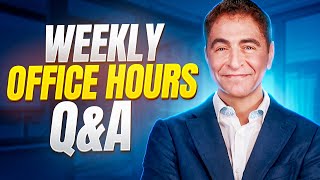
Chris Haroun answers rapid-fire questions on career pivots, business planning, and capital raising. He stresses writing a full business plan before launching a side hustle, using other people's money instead of bank loans, and focusing on AI-resistant trades like plumbing and electrical work.
Chapters
Foreign. Good morning, good afternoon, good evening, and welcome to our 327th weekly webcast. Now, if this is the first time you're joining us, welcome. If you've been with us before, welcome back. And so the way this call works is this is an AMA like you see on Reddit. Ask me anything you can ask me business questions, investing questions, career questions, personal growth questions, etc. And my humble focus and goal of this weekly call is to help you take your career, your happiness, et cetera, to the next level. Without further ado, let's begin and thank you as always. All right, first question I've got is from Orey, who wrote Bonjour Professor. Hope you're doing fantastic. Je ve le grace matinee. You wrote a couple questions on hedge funds. Sure. When you come up with a long idea, meaning buying a stock. Yeah. What's usually the first spark? A data signal, valuation screen, management commentary or something else? Same thing for a short idea. Yeah. So what I like to do is this. You got to be long term focused. Even if you work at a hedge fund. Most hedge funds are long term focused. The ones that do well, they're not day traders. So what I usually do is this. I ask myself this question. In five years, will this company that I'm considering investing in or the sector be more relevant or less relevant than it is today? And that stops you from getting seduced into buying value traps, meaning stocks that are cheap for a reason. Then once you decide, yeah, this will be more relevant and I get excited about the sector and the stock or the company itself longer term, then you start doing due diligence. Okay? Now the best place to start, whenever you're doing investment research is always with the management team. So I've got 100 steps on how to invest. And for those of you listening, on Spotify, I'm showing a 100 step template in Microsoft Excel. And there's three different categories of investment criteria that you're going to fill out for any stock. You got qualitative research, quantitative and then financial. Now with qualitative research, you always start with the management team because that's what a company is, a collection of great managers. And I personally never invest in a company if the founder is no longer running the company just the way I am, because bureaucracy sets in and there's no risk taking at all. Then after you analyze the management team and all these qualitative factors here, like what the company does, who the competition is, et cetera, then you move on to quantitative research where you look at the total addressable market. Now, you never want to invest in a company where the size of the total addressable market is tiny, because what's the point of getting high market share in a tiny market? It doesn't matter. In fact, when I used to work in venture capital, I partnered with a firm called Kleiner Perkins, and they would say they wouldn't usually invest in a company that doesn't have a total addressable market size of at least $20 billion. And the reason is because in the highly unlikely event that that company gets 5% share of a $20 billion market, that means $1 billion in annual revenue. Then after you look at all the quantitative stuff, you move on to financial research where you forecast the financial statements. This is what I teach my clients. And, and then what you do is you come up with a target price. Okay. And you come up with a target price using three different valuation methodologies, usually in order to minimize the margin of error. This creates a one page report for you. You can print out. This is just dummy data here. You can print out and bring to your interviews. Okay. Or put these stocks in your portfolio after you do the research, a detailed report as well as a massive investment research dashboard. Then, if you want to take your game to the next level, I created a new product here I released recently which will help you do forensic financial statement analysis using AI. Okay. And this is where you analyze the footnotes and many other topics in the 10K Meeting annual report. And what comes out of this is a one page executive summary. You can print out, bring to your informational meetings, or show your boss, etc. Okay. And what also comes out of this is a 24 page detailed report using any AI product you want. All right, let me go back and get to the next questions. And when it comes to a short, it's the same kind of methodology where you're trying to figure out if a company is going to be less relevant in five years. Now, a lot of hedge funds, they put on pair trades and what that means is you go long one stock, meaning you buy one stock and you short another stock that's similar to that one that might be losing share. For example, I think it was back In January of 2011, I went long Baidu and short Google. And the reason was that Google decided at that point in time, at some point, 2011, I think it was to pull out of China. So that meant that Baidu was going to get more share while Google lost share in that trade, for example. Yeah, and it's important to look at it that way as well. If you want to work at a hedge fund, because hedge funds have net exposure limits, meaning they're not 100% long the market. You know, some hedge funds I worked at, you know, we were market neutral, meaning we were only 10 or 15% net longer net short the market. So for every long, you have to sort of think of a corresponding short to offset your risk. And the reason it's called a hedge fund is because if you think of your backyard, you have a hedge around your backyard that's protecting your house. Your house. That's what we say in Canada, eh? Yeah. Okay. And hedge funds focus number one is capital preservation. Number two is capital appreciation. And Warren Buffett, who doesn't run a hedge fund, but he used to always say that there's two rules in investing. Number one is don't lose money. And the second rule is don't forget rule number one. Okay, next question is, what differentiates a good analyst from a great one in the eyes of a portfolio manager? Yeah, I would say an analyst that does extraordinarily large amounts of due diligence, similar to the process I just showed you, meaning the 100 steps, as well as ripping apart the financial statements and doing forensic financial statement analysis. That's what I would say. And a great analyst also is very, very long term focused. Right. Day trading does not work. And I know there's people watching this that are day traders. I love you guys. That's why I do this. I get down my knees right now, I'm going to say this, Please don't day trade. I promise you, you will lose everything in the long run. And there's a reason why there's no successful day traders that have been successful year after year after year. We can't name the. Because they don't exist. Yeah, Be long term focused. Longer the view, the wiser the intention. Yeah. All right, next question is what parts of your day in a hedge fund are most predictable versus reactive to news flow or market moves? Yeah, so usually the way it works in a hedge fund is you have. And I've created lots of videos on this on my YouTube channel, usually have a morning meeting right before the market opens. You know, it's half an hour or so and then all the portfolio managers and analysts sit in a room together and they talk about news that occurred overnight or investment ideas for each sector. So after I left Goldman Sachs In May of 2003, I spent some time at a hedge fund called Kingdon, where I worked for Mark Kingdon, who's a mensch, great guy. He later invested my hedge fund too. And what he used to do was in the morning meeting he to used would talk about a theme and then go around the table and see if the analysts covering different sectors had something to say about that theme. So back in 2003 and 2004 when I was there, he would say stuff like, I think that China is going to massively increase capex to build tons of buildings between now and 2008 to show the whole world by the time the Beijing Olympics take place that China is a player. I'm going to go around the table and ask each analyst what stocks we should look at. And so Mark Kingdom would go to the industrials portfolio manager, I think his name was Michael Carver. Nice guy. And Michael would say, I think we should invest in Caterpillar and Komatsu and these commodity companies. And when he came to me and I did software and Internet, I would say, well, perhaps we can look at Autodesk ticker a D S K because you know they make engineering software that goes into building stuff. Then after the morning meeting is done and the markets are open, you're back at your desk. You're reacting to news flow or massive volatility in the stocks that you follow. For me with software and Internet companies, and it depends on what time of the year it is. So if it's earnings season, you're going to be updating your financial models commensurate with the process I showed you in that Excel spreadsheet a minute ago. And then you're going to be staying and working very late hours because after 4pm AMC usually companies report earnings. Update your financial models as fast as you can. If it's not during earnings season, you're going to be doing a lot of investment research and maybe going to kick the tires and meeting with management teams, meaning companies that you want to invest in. You might be going to conferences, et cetera. And so I spent a lot of time then in the Bay Area meeting with software companies and that's why I eventually moved here. A big hedge fund actually called Citadel recruited my family and I here to the left, I mean the west coast, so I can be closer to the companies here, et cetera. Yeah, but I'd say that the analysts that don't do well are the ones that watch the ticker tape. Right. Meaning they watch you can't Jedi mind trick or will a stock to go up and down by watching it. In fact, I remember some of the top hedge funds, meaning that Tiger Cubs firms Like Maverick and Viking, they wouldn't let their analysts have access to Bloomberg. That's a smart thing. Don't watch the tape. Do your investment research. Always. And then the analysts would pitch investment ideas to their portfolio managers. And then the portfolio managers would decide from a risk management perspective if they should put on that position by looking at the risk versus reward, meaning upside versus downside, as well as looking at portfolio construction and risk management metric. Now, what we usually do is from a risk management perspective, in order to preserve capital and be diversified, we don't put more than 5% of a portfolio in any one particular stock. So that means if you have 100 bucks to invest, you got to have a minimum of 20 positions. Also, if you're running a general portfolio, meaning not just focus on tech, retail, healthcare, etc. If you're running a general portfolio, then you got to make sure that no more than 20% of your capital is in any one particular sector, like technology, healthcare, financial services, retail, commodities, etc. Yeah. Then you have to look at liquidity and a bunch of other factors that I teach in my programs, which you can get access to on my website. Go to the description of this video to find out more. And if you want to. If you want to work with us, actually, you can always go to. I'll make this quick, I promise you. Go to haroon mba.com and at the bottom here, it's kind of tough to see. There's a blue button called book a meeting. Yeah. And we have lots of programs to help you get a job in finance or to get a new job or new career in any sector, or start your own hedge fund like I did, or your own venture capital fund like I did, or whatever. Anything. Yeah. And I've got corporate clients as well, from all over the world. All right, next up, I've got somebody named Joseph Stalin with a picture of Joseph Stalin who wrote, is getting a PhD in finance worth it? I don't think so. It's going to chew up four years of your life, plus it assumes you have a master's. So that means six years of your life. I don't really know any PhDs that are extraordinarily successful in finance. They're a little bit more academic. Yeah. So I don't personally don't think it's worth it. Yeah. All right. PhD, I think, stands for plumbing, heating, and dishwashing, I think. Yeah. Okay. Moving on to Ray, who wrote. Hey, Chris, many thanks for the clarity. You're bringing some questions. Of course. My pleasure. Please do you have value stocks in your portfolio? And why? If I see an asset as materially mispriced, then yes, then yes. Yeah. So I kind of considered a couple years ago Meta to be a value stock just because it was very undervalued, it wasn't growing that fast as well. But for me, I'm more of a growth investor now. A lot of people, what they do is depending on your age, you'll have a different mix of value versus growth in your portfolio. And so the old school private wealth management rule is this, you take 100 minus your age. So if you're 80 years old, okay, that means 100 minus 80 is 20. That means 20% of your portfolio can be in growth, meaning riskier stocks and 80% in lower risk value stocks or AAA rated bonds, et cetera. And the reason is because you don't have as much time to make that money back. I say it's old school because I do believe there are people on this webcast right now that that'll make it to 150 years old. It's true. And if you don't believe me, just look at the statistics. People are close to 100 years old right now and they're still with it. They're working like Warren Buffet who's about to retire. He's basically 100 years old. In fact, the average life expectancy today versus the 1950s is 26 years longer. So that means you're all 26 years younger than you think you are. So I'm a 53 year old man child, clearly, but I'm actually 27. It's never too late to reinvent yourself. I have clients that are starting companies in their 70s. You can do it. Anybody can do it. Yeah. So I'm the eternal optimist. All right, next question is what will happen to the stock if Meta and Google break up? Yeah, so it's going to happen. And one of the reasons I think it's going to happen and the companies know it too, is because they rebranded themselves. So Google rebranded themselves as Alphabet years ago because they know it's only a matter of time until they get broken up. Certainly doesn't make sense to me that one company owns the two biggest search engines in the world, meaning Google owns Google as well as YouTube. The same thing with Meta. So Meta renamed themselves. They used to be called Facebook. And this is the the IPO prospectus from 2012. But they rename themselves Meta because they know they're going to be broken up into separate companies which will include Facebook, Instagram, what's up with that? And a bunch of other things as well. Yeah. So it's going to happen. Why hasn't it happened yet? Why is the Department of Justice not broken them up? For national security reasons, it's prudent to have very, very big and strong tech companies. You can read between the lines there if you want to. Now, at some point they will get broken up. But what the Biden administration started doing was instead of breaking them up and the Trump administration too, they've actually stopped these companies from making small and big acquisitions. Facebook or Meta, I should say, was even blocked from buying very, very small startups. The doj nix those deals. But when it happens, I expect that there's. There's too much smart money behind it. Right. Too many smart investment bankers or investment bankers, I should say. I think what's going to happen is when they get broken up, the parts are going to be worth more than the company was on its own. Kind of like when ebay got broken up, not for DOJ reasons, but when ebay got broken up in eBay and PayPal, the sum of these two independent bodies, market cap wise, was higher than ebay itself. Yeah. Okay. Ray wrote, who is the new Warren Buffett? I don't know. I really don't know. It's going to be tough to replace him. The guy's an icon. I love him. He actually guest lecture one of my classes at Columbia 8 million years ago. Actually, it was back in December of 1999. I love that guy. Will I be buying Berkshire Hathaway when he retires? No. It goes against my principle of investing in a company when the founder is no longer around the company. Yeah. And that goes for any stock as well. Like Nvidia has done incredibly well because of Jensen Huang. I'll call spade a spade. You know, he takes risks. He's a brilliant founder. But if he were to leave the company, I would short it. Yeah, yeah. So never invest in a company where the founder leaves at least tech stocks. Yeah. All right, next. Next question is. And Joe Baca wrote, love this channel. Go Blue Jays. Thank you. I'm very, very proud of my, my team. Dude, I remember. So I'm Canadian, eh? And I remember back in the early 90s, like all my American buddies would always tease me for being Canadian. And then finally we won the World series in 92 and 93. And I teased my American buddies and I said, see, hey, the American pastime, Canadians want it. And they're very witty. They said to me, so what Harun, your Americans beat our Americans. And I was like, yeah, it's true, I guess. Yeah. But I am proud. Next question is what stocks do growth investors own for the part that shouldn't be risky. Let's say 50% bonds, gold or what? Yeah, yeah. So I would say. I know what you're saying. So if you use that 100 minus your age rule, what should you own that's not growth? Yeah, gold I say is safe. So I own a lot of gold. I always have. I love it. I accumulate more when it sells off materially and I accumulate more when times are things are really scary out there. And so in 2008, when we were within 24 hours of bank machines not working, the biggest position in my portfolio at 5% max was ticker GLD. This is fake. Like I'm a fake teacher. And they say those who can't do, teach, and those who can't teach, teach gym class. And you know that's true, by the way, about the teaching gym class. I'm just kidding about the other teacher part. I love teachers. Aside from that, instead of buying individual bonds, what you can always do is you can buy bond funds or bond ETFs and you can always go to the website etfdb.com to do research on ETFs. That's etfdatabase.com etfdb.com yeah. Okay. And then in terms of what value stocks to buy. So some people have a pretty pretty smart investment thesis of buying what they call the dogs of the Dow. And what that means is this. They look at the Dow 30 components and they invest in the top five highest dividend yielding stocks in the Dow. Right. And that's kind of a safe way to invest. Yeah. And quick side note, I don't want anybody in this call, please, to ever invest in a stock because it has a high dividend yield. Do the research first. Okay. If you see the dividend yield of a stock is 25%, do research because that number either is wrong. Right. Or it was a one time payment only or the marketplace is predicting that that company won't be able to pay that dividend in the future. Do your research first. You always want to go and read the investment offering memorandum or go to sec.gov and read the 10k mean the annual report, which is fun to do. And I love to teach my clients, my 2 million students from every country how to read financial statements. Like a good book. Yeah. All right. Is it possible a person does research on 20 to 40 companies per year? What is the reasonable maximum? Yeah, yeah, it is possible, absolutely. I would say over 100 if you do it professionally full time. But when you fill out your investment research reports, I don't want you to buy the stock unless you complete the entire investment research report. And that's why I provide with all the templates. It's kind of like never, ever, ever start a company without writing a business plan first. And how do you know if you have a good business plan? Well, the way you know you have a good business plan that has a chance of making it is if you actually finish the business plan. And I provide this to my clients here, where I help you write your entire business plan really focused on the financials. And then from this you can print out your business plan as well as your presentation slides. And again, the way you know you have a good business plan that has a decent chance of making it is if you finish the business plan. If you start working on the business plan and I ask you 700 questions in that template I just showed you, if you start working on the business plan and after question 64 you realize this is a crap idea, then stop working on it, move on to another idea. It's the same thing with investment research. Don't ever buy a stock until you finish the entire investment research report. And my favorite stocks to invest in are what I believe are five by fives. And what that means is a 500% return within five years. Am I often wrong? Oh, you're darn tootin. I am. I'm wrong all the time, but I'm not that wrong. If I do a lot of research, perhaps it's only a, I don't know, a two or three bagger. And you can only do that in smaller and mid cap stocks. But you have to write the entire research report first using my templates. Okay. I'm not going to provide you with a fish you'll eat for a day and teach you how to fish so you can eat for a lifetime. All right, next question I've got here is should we have 20% of a portfolio in it according to GICS classification? Yep. For the S&P 500. Yep. Or can we diversify based on thematic offerings within tech like AI, cloud, cybersecurity. Yeah. Fintech, biotech. No, I still believe 20% tech. That's it. And the way you know if it's classified as a tech stock or not is based on the analyst that covers it. If that analyst only covers tech stocks, then that goes in that 20% bucket. Yeah. Next Question is, what AI tools do you use? Do you use Koifin, Numerai and others? Yeah, I played around with all those, but for me, I keep it pretty simplistic. I use chat GPT5. And then what I do is I use Deep Research. So I pay 200 bucks a month. It's worth it. It's unbelievable what Deep Research can do if you haven't tried it out. Try it out, please. For 20 bucks a month, you get, I think, 20 or 25 deep research queries, if you want. That's the best one. And all these other AI products that many people use, it's kind of built upon OpenAI, right? Or ChatGPT's engine. Yeah. So I use it for chat. We use it for summarizing meetings in my company and for many other reasons as well. Yeah. And I use AI so I don't have to hire as many people as well. You got to keep expenses really, really low. And I just hired an incredible team in the Philippines to help me for $1.50 an hour. It's unbelievable. Yeah. All right. And if you guys want to hire people in the Philippines or any country, what you can always do, and this will cost you a bit more than a buck 50 per hour, is you can go to onlinejobs.ph let's say you want to hire somebody that's going to be a virtual assistant. You click here and then what you can do is you can get access to people that will do it for three or four dollars an hour. Right. You'll see it does get lower here. 3, 10 per hour. And they all have bachelor's degrees. And it's incredible. Yeah, Very, very disruptive and deflationary at the same time. Okay, what do you think in investing in individual companies in biotech like crispr, tx, Intellia, Moderna, Is it too risky? Moderna a little bit less. So it's a larger market cap. But what I'll say with biotechs is you got to be careful because what happens with these companies from an investment research perspective is the one piece of information you don't have is whether or not they're going to get FDA approval for their drug, for example. And if they don't get FDA approval, they sometimes the stock can get cut in half, which happened to a large cap called Biogen ticker BIIB in 2005. And so what I tend to do if I invest in biotech is I invest little bits in a lot of smaller biotech stocks. So it's a pray and spray mentality or What I do is I just buy a biotech small cap etf. Safer that way. Yeah. Okay. All right. Do you think that while the overall market is at a record high, sectors like healthcare, financials, communication services and small cap stocks offer compelling valuations and growth potential? So I'm a bottoms up guy. I tend to look at, at the long term outlook for individual stocks. Like I mentioned earlier on today's call, I always start by asking myself this question before investing in five years, will this company and the sector it's in be more relevant or less relevant than it is today? Be long term focused, especially with your portfolios. Don't be a tourist, don't rent stocks. Be an owner and I promise you you'll sleep better at night. Otherwise you'll make the cardinal sin of investing, which is selling something because it went down. And Warren Buffett famously said the New York Stock Exchange is the only store in the world where consumers sell stuff and it goes on sale. Think about that. And so a lot of people earlier this year in April liquidated their portfolios, especially day traders, because they were worried about, about tariffs. And it was moronic because the Vix was getting close to 60 or 70, which is usually the telltale sign to go. Sign to go. All in, be long term focused. Tell yourself this. I don't care about the path, all I care about is the destination. And you'll sleep better at night. Be an owner. Be long term focused. Yeah. If an equity crash takes place, meaning the stock market crash takes five years to recover, as in the past, it may appear that a bond ETF has a better return than the S and P for a given period of 10 years, correct? I don't think so. I mean, you're not going to get massive returns on bonds unless you buy high yielding bonds or junk bonds as they call it. And those are a little bit too risky for me. So I like buying bond ETFs. I think equities will always outperform fixed income instruments in the long run. Now the only exception is this. If interest rates and inflation get close to 20%, like what happened around 1980, then of course you're going to buy bonds. Or heck, just keep your money in the bank. If you're going to get returns of 15 to 20%, that's extraordinarily rare. But if that happens, of course you vote with your wallet and you just buy bonds. But I don't think it's going to happen. I'm incredibly bullish on the S&P 500. I've said this many times before that. I think given AI's impact on cost cutting, I think the s and P500 is going to be up 15 to 20% per year on average for the next couple decades. There's going to be big down years, I promise you. But if you think about it, if companies. And I'm seeing this in real time, right. If companies use AI. Okay, so this is an income statement. Revenue at the top. That's why they call it the top line. Net income at the bottom, that's why they call it the bottom line. The red items here are expenses. AI can do a lot of this stuff, right? So general and administrative stuff, repetitive stuff. AI can do that, a lot of that. All right, so let's get rid of that. And I'm being extreme here. Okay. Wow. Okay, so this grows a lot. All right, what about R and D? Well, you can use AI to do R and D to replace a lot of it, at least. Okay, great. Excellent. Oh, look at that. Our net income is growing a lot. Sales and marketing, you can use AI to do a lot of that as well. You won't be able to replace direct quote of carrying sales reps. But the marketing stuff you can certainly do like copywriting, etc. Oh, wow, look at that. I'm exaggerating. I know. Whoa. Your net income is massive. Right. And companies haven't really focused on growing revenue with AI yet. Once that kicks in, when AGI, meaning artificial general intelligence, becomes a reality in three years, then watch out, man. Stocks are going to be great investments. Yeah. Just think long term. Okay, next question. Aren't bonds now undervalued? It depends on the particular bonds. I'm not an expert in that area, to be honest. Yeah, and it also depends on what you think the interest rate outlook is. Okay, so there's inverse relationship between bonds prices and yields. If yields go up, bond prices go down, then they're undervalued. Yeah. Yeah. All right, next up, David. Hey, David, great to see you. First time seeing you on the call. Hope you join us again. David wrote any suggestions for a Gen Xer like me with an outdated degrees in history and computers from the 90s? I ran for mayor of North Miami in 2023. Nice, nice. My parents actually live in Lauderdale half the year. You can always reinvent yourself. And so the way I view myself humbly is we're always here to serve others. That's my purpose. Makes you happy in life. You do that too. So I feel like David and all my students here, I feel like I'M your waiter. Okay? Now, and this is where I proposed to my wife 25 years ago. And my MBA program does not stand for married but available. Okay? But when you go to a restaurant, you look at the whole menu, right? But you only choose, you know, one or two items to eat. And so my job is to expose you to all types of jobs within business. And once we find out what you're passionate about, I will help you reinvent yourself so that you can change careers. Okay, you mentioned you're Gen Xer, so you're probably my age, 53. And I mentioned earlier that the average life expectancy is 26 years longer today than it was in the 1950s. So you and I are actually 27. So you can restart, you know, you can do David 2.0 starting now. Go to my website, haroonventures.com set up a call with my team and we'll help you. Yeah, and I don't recommend that anybody study computer science anymore. And the reason is because Jensen Huang, who's the brilliant founder, founder and CEO of Nvidia, he said that AI exists to replace programmers. We're seeing a lot of that here in the Bay Area. A lot of companies are firing entry level programmers, are not hiring them anymore. The biggest mistake you can make is trying to get a job as a developer. AI is replacing that entirely so you can reinvent yourself. And so what Jensen Huang recommends that you study instead is liberal arts. And Jensen said that he thinks the United States is going to pass the rest of the world within a decade in terms of education quality. And the reason is in the United States, unlike other countries, when you go to university, you don't declare a major right away. You study the liberal arts and then you declare a major in your second, third or fourth year. And by thinking that way and being educated in a mind altering way where you think differently, especially the qualitative stuff within the history major you mentioned you had, then you can be much more creative as well and think outside the box. I know it sounds elusive, but there's a reason why, you know, Steve Jobs at Apple used to say that Apple lives at the intersection of technology and the liberal arts. Yeah. What do you, what do you guys think? If you guys disagree with that or have thoughts on that, please share with us here. Thanks. Okay. If one investor is good or not should be decided based on his return. Correct. How many years one should be investing so that he decides for himself that he is good or not? Yeah. So I would say that the simple answer that is Are you beating a benchmark? So if you're investing in US Based stocks, if over a couple of years you outperform the s and P500, then you're a good stock picker. Otherwise, just buy ETFs. Yeah. UnitedHealth Group fell 20% after Buffett bought shares. Any comments? I'd have to do the research myself. I don't know. That sounds counterintuitive to me though. Yeah, falling. I think it should be going up, right? Yeah. Okay. Moving on to Ray, who wrote, could it be possible that the European technology sector could unlock value and catch up with with the American one? Only if there's risk taking. I really haven't seen that many hot IPOs in for European tech companies. Yeah, it's a shame. It's a shame. A lot of the innovation comes from the United States. And I don't want people to think I'm rah, rah, rah pro America because here in Silicon Valley where I live, you know, 50% of founders and engineers were born overseas, you know, born overseas in Europe, India, whatever it is. But there has to be more of a risk taking culture out there. So here on the west coast United States, if you take a risk and you fail, it's cool. Hey man, it's not shameful. And if you keep taking risks and you fail, fail, fail, that's cool because you only have to be right in business one time. On the east coast United States, if you take a risk and I'm from the east coast, from Toronto, if you take a risk and you fail, it's shameful. But if you keep taking risks and you're successful, that's awesome. And people respect you for it. There's some countries, and I'm not going to name them, where culturally, if you take a risk and you fail and then you take another risk and you're successful, all people remember is the failure. So a lot of it is cultural based as well. Yeah. Okay, next question is from Ray, which is what is a screaming buy? Any examples? Yeah, fill out that 100 step template I showed you and I'll let you decide. Yeah, but I love to buy stocks. I love to buy broken stocks, but not broken companies. What does that mean? Well, I get really excited when a company that I've done research on or that I know quite well has a stock that's it feels like you're catching a falling knife. And I love to accumulate that way. In fact, when I start putting on a position and recall, I don't make a position more than 5% of my portfolio. But when I start putting on a position, I usually buy 25 basis points, 0.25% of a position initially. And I hope I lose money on that. I hope it goes down. I know it sounds weird because this will give me the opportunity to eventually make it a full position. And so I don't really make technical analysis my number one focus. But if there's a stock, I've done research on the fundamentals, and I love the fundamentals. And that same stock, I've done research on my valuation or price target in five years, and it looks attractive. Then when I look at technical analysis, if I see it, the RSI, meaning relative strength index, is oversold at a reading of 20 or 30. I accumulate. You got to be a contrarian. If you buy the same stock that everybody loves and everybody owns, there's not that many other incremental investors to buy it, to push it higher. So you got, you got to really think differently. And, you know, as a proud Canadian, I have to quote Wayne Gretzky. So Wayne Gretzky, he was successful, humbly, not because he skates where the puck is, but because he skates where the puck is going to be. And I want us to think the same way. I want us to all buy stocks that investors are going to like. Okay, always do that. And that's why a lot of people like to look at catalysts when they invest as well, meaning a reason for people to get excited about buying the stock. So back in early 2012, we owned a lot of Lionsgate film ticker LGF. And the investment idea came from a good friend of mine, Brian Carter, who's brilliant. And the reason we bought it was because the, at that point, pardon me, I'd read the Hunger Games books. They were great. And we found out that LGF Lionsgate Films was going to make Hunger Game movies every year or two. And so those are catalysts over time to get people excited about the stock. And so right there, you're buying a stock that people are going to like. Think of it that way always. And that's why I like the five Year rule. In five years, is this company going to be more relevant or less relevant than it is today? That stops you getting seduced into buying stocks that are losers, their value traps like Yahoo or my beloved Research in Motion. Yeah. All right, next up, Malcolm. Malcolm, hope you're doing well. First time seeing you on the call. Hope you join us again. I love your last name. You wrote hope you're doing well. Chris, I'm Glad I could catch the stream. Once again, is Costco worth investing in for its high share price? Thank you. So you have to create a long term financial model on it. Okay. And the way to do this is you can use my templates or anybody's really. But what I want you to do is I want you to forecast what you think earnings per share are going to be in five years. Always look out long term. Then I want you to decide if the stock is cheap or not based on that number. So how do you value a company? Well, I'll give you a couple of very simplistic measures to use. So the s and P500, historically, and this is very, very rough, historically trades at 15 times earnings. And the S&P 500 historically has earnings growth of about 15%. So you take a P of 15 divided by 15 for growth and that's one price, earnings to growth rate of one. Okay? So within the S&P 500, if stocks are growing, have earnings growing at higher than 15%, they're going to trade at a premium. So if a company in the s and P 500 has earnings growth of 30% will probably trade it 30 times. And if a stock in the S&P 500 has earnings growth of 10%, it'll probably trade at 10 times. Okay, now with that in mind, when you forecast your find your model, your income statement, balance sheet, cash flow statement for Costco. Take our cost if between year four and five you see earnings growth of 20%, then that means in five years that stock should be valued at 20 times your earnings estimate in five years. So that's how you got to look at it. You got to ignore quarterly crap and be long term focused. That's how you value companies. Now when it comes to Costco, there's a lot of things you need to look at, including, you know, online competition, you know, from the Amazons of the world, etc. But you also have to look at turnover. So in every Costco, it's fascinating, but in every Costco, every item you see, and for those of you overseas, Costco is just a big box retail company, sells everything. But if you go into Costco, every item you see on the shelves is sold, every two weeks it's turned over. It's unbelievable. And at one point, 80% of their operating profit came from the annual membership fee. So you really have to focus on modeling that out longer term as well, looking at competition from online alternatives, etc. And look at the management team too. Yeah, all right. And I joke with my Kids, you know, I take them to Costco, and that's where I feed them dinner. Sorry, the samples. But I always tell my kids, if you can't buy it at Costco, you don't need it. Next up, Jasmine wrote. Good morning, Chris. Good morning, Jasmine. I'm thinking of getting my master's degree in data analytics. Is it worth it in 2025? Thank you. Yeah, yeah. Before you start, for anybody, before you start thinking about getting a degree, I want you to ask yourself, why do you want this degree? Well, if the answer is because you want to get a better job, then before you waste $100,000 on that advanced degree, I want you to set up 100 informational meetings using my methodology on LinkedIn. And if after those 100 informational meetings, you can't change careers, then consider spending $100,000 and wasting two years of your life. I mean, 100 grand in two years, your life. Getting that, that master's degree. Okay. And I also want you to look on LinkedIn to see if people that have that degree got the job you want. But networking usually works and replaces the need to waste money on an advanced degree. Yeah. Your net. Net worth, your network is your net worth. Relationships are always more important than product knowledge. Yeah. All right, next up, Alexandra wrote. Were your ancestors in Egypt also traders or from the business community? Yeah, so, yeah, so I'm half. Half Egyptian, proudly. My dad immigrated from Egypt to Canada in the 60s. And then the other half of me is, you know, I'm 25, Lebanese, and I got some Scottish, Irish stuff, whatever in me. I'm Canadian. Okay. Yeah. So my dad's dad, who passed away when my dad was 18, was an entrepreneur, a very successful entrepreneur as well. Yeah. So it's in the blood as well, I think. My dad, I remember growing up, we had nothing as a. When I was younger. And my dad's a great immigrant success story. He built up this massive company in Canada. He sold a private equity firm a couple years ago. He's a doctor, Radiologist, which means he fixes radios. Sorry. But the reason he started his company was because of frustration. You know, he worked for other people at the hospital, didn't treat him well. And for anybody out there that works for a jerk that's paying you this much money to make their dreams become a reality, I say the following with love, my heart. Good. Good. Because I want you to embrace that frustration and let me help you change careers. Or better yet, start your own company. That's the sweetest revenge you can get. Yeah. So Anyway, I said that with a lot of passion, right? Yeah, it's true. And I was. I worked for Jerks, man. Like, I had a lot of great people I worked for, but I remember I worked. I've never really. I don't think I've ever mentioned this, but I'm going to mention now. I worked for Accenture back in the 90s and there was this associate partner and I was working on the merger of Manulife and Confederation Life to insurance companies in Toronto. There was this associate partner and it was 10pm at night. It was September of 1995, I think it was. It was 10pm at Night. And this partner, I'm not going to mention his name, but he was from the Orange county office, this associate partner. I want to mention his name so badly. I'm not going to. And he asked me to print out a database report. And I tried really, really hard and I couldn't figure it out. And I went up to him and I said, I'm so sorry, sir. I tried my best, but I just can't figure it out. And he looked at me and he said, it's because you're incompetent. And then he turned around and he walked away. And I was like, wtf? You know? Why the face? I was so frustrated. I remember calling my girlfriend at the time really frustrated about it. And I'm glad that happened. I'm grateful to God that that happened. Because, you know, me getting belittled like that by that prick forced me to want to work myself. And if you're getting bullied at work like I was, or if you're being mistreated because you're so good at what you do that your insecure boss sees you as a threat, thinking they hired their assassin. Let me help you, you know, start. Start a new career. Or better yet, start your own company. Yeah. All right. Is there any threat when you jog in the morning in your place, have you faced a bear or a dog alone? Yeah. So actually, where I live at dusk, there are mountain lions. I live in, you know, California. There are mountain lions. Yeah. So there is that risk, I guess. Yeah. Not a bear. I've never seen bears here, but I used to see them in Canada when I was in Vancouver. Yeah. Okay. Moving on to Man Lam, who wrote what are some of the beginner friendly swing trading investment strategies you'd recommend? Yeah. So first of all, focus on fundamentals first and valuation. And then a distant third is technical analysis. I would say if you love a stock based on the valuation Fundamentals. And it's got an RSI mean relative strength index of 20 or 30. That's usually a buy signal. And if has an RSI meaning relative strength index of 70 or 80, that's a sell signal. But please be long term focused. Yeah. And there's other things you can look at as well. You can look at the 50 day moving average, the 200 day moving average, and then if the 50 day crosses up through the 200 day moving average, that's very bullish. It's called a golden cross. And if vice versa, it's bearish. Called a death cross, some people call it. And you look at support levels as well, if you want to. But I really want you to be focused on being a long term investor. Please. Yeah. Okay. Alexander wrote, I think stock market is information business where you do information arbitrage. The more you know, the more you earn in the stock market. Yeah. As long as you're very long term focused, you can certainly invest in lots of mispriced assets. But you have to create a financial model for the long run and value the companies based on your earnings estimates in five or 10 years. Okay. Then there's information arbitrage. And I remember when I worked in the hedge fund industry years ago, I owned Amazon. And people said, kris, you're cray cray. That's a widowmaker. I would say, why? They're like, dude, it trades at over 100 times earnings. And I'd be like, no, you're wrong. Dude, it trades at four times my earnings estimates in 10 years. You got to be long term focused. You'll sleep better at night as well. All right. Hey, Ted. Good to see you. Ted, give me one of your dad humor jokes. You haven't done that in a while. Please. All right, moving on to Martin, who wrote you. Don't you say don't trade. But there are successful traders and trading firms. Yeah. So give me the names of successful day traders that have been successful over the past five to 10 years that have outperformed the S&P 500. Just tell me their names. Thank you. Eileen, great to see you. Eileen is one of my students who signed up for my MBA program back in 2019. She's from Atlanta. Her last name is the most incredible last name on the planet, which is Deo Gracias, which means thank God. And her friend when she was a kid in the Philippines is actually my priest now here in the Bay Area. What are the chances? So Eileen wrote, hello, Chris. Just want to share that my daughter got an internship that she's been eyeing. And you wrote. Thank you. You're most welcome. We used insights from your networking book. She also scheduled a few informational meetings. Awesome. Excellent, excellent, excellent. I'm sure your husband Norbert is very happy as well. Good for you. Good for you. I think you mentioned your son was going to Georgia Tech or something. Excellent. Nicely done. Yeah. Setting up everybody setting up informational meetings works incredibly well. Every time you see a job opening online, you literally have a 1 in 250 chance getting the job. And the person that gets the job always knows somebody at the company. So those are the rules. Step one, make a kick ass LinkedIn profile or have my team or myself do it for you. Step two, set up informational meetings with people that work at companies you want to work at, have something in common with you. Maybe they went to the same church as you, or maybe they went to the same high school or whatever is. And then in those informational meetings, you bond before business and then you ask, ask them for the job. Okay. And I know it sounds strange and you might be thinking, kris, why the hell would anybody take a meeting with me? Well, let me sell it to you this way. Let's say it's 20 years in the future and you're way more successful than you already are today. And you get an InMail from somebody and the InMail says this John, or whatever your name is, hope all is well. I'm also a graduate of same high school you went to and I'm also a graduate of same university you went to and I live here in wherever you live. Please let me know if you have time for a zoom call. Thanks a lot. Sarah, would you take that meeting? Of course you would. Now you'll notice I didn't say why you want to meet and there's nothing unethical about that. If you said, I'm interested in getting a job, they're not going to respond because they feel bad they can't help you. But if you, if you send them that InMail, and by the way, every InMail you've received ever in your life, you've read it's true. Therefore, don't send emails, send inmails. When you get the informational meeting, you talk about what you have in common. You bond before business, you talk about, you know, is that jerk headmaster still there or is that, I don't know, that new store on Main street doing well or whatever it is. Then they're going to very nicely say, why are we meeting? They won't say it like that. And then you say, well, I'm really passionate about the industry you're in. I'd love to hear your story about how you went from our high school, etc. Your path to getting a job. And they'll tell you and they see you in them. Then you have to do the following. And remember that closed mouths don't get fed. Then you have to say, can you please tell me if you're hiring? I work for free. They'll pay you, of course. And if they say no, then ask them when. And if they say, well, in three months, we might be hiring them. Reach out to them. Three months. If they still say no, which means not yet, but if they still say no, then you immediately should say to them, do you know anybody else also went to our high school that works in this industry that you could please introduce me to? Please. And they'll do it. Asking, you'll receive. It's prophetic. It's been true since the beginning of time. Do this 50 to 100 times for every company you want to work at. And I promise you, I put my reputation on the line. You will get that job. Just stick it out. Okay? And again, you only have to be right in business one time. And my favorite quote is from the best basketball player ever, Michael Jordan. It's not LeBron James, folks, okay? Especially young people out there. MJ is number one. Why? He had six championships. That's right. But Michael Jordan once said, I failed over and over again in my life and that's why I succeed. Take a chance, man. You got nothing to lose. It's kind of like with my kids when they first started to walk, you know, they'd fall down like a hundred times. And I wouldn't look at my kids and say, you know what, Dylan, maybe this whole walking thing isn't for you. You want to be right in business one time. Same thing with dating as well. Yeah. Ask her out. You think she's out of your league. That's not true. Perception becomes reality. Don't beat yourself up. Don't ever self deprecate yourself. I think therefore I am. Okay? Nobody is smarter than you. Ask her out again. Again. Over and over and over again. If she says no, so what? The pain of her saying no, is this? The pleasure for life of her saying yes is this. It's kind of like risk, reward for stock. All right, so I left the door open. Give me one second, I'm gonna shut the door. Beautiful day, man. All right, all right. I gotta ask you guys a quick question, please. I want you guys to be honest. Should I wear T shirts on these calls or should I wear the formal old man clothes I usually do? So just say yes or no. Yes. T shirt or no? Yes. No. Just give me some feedback. Thanks. All right. Kevin, how are you? Good morning from Lakeland, Florida. Great, great to see. Looking forward to seeing you today at 10:00am Pacific Time. So every week at 10:00am Pacific Time, I do a 3 hour and 20 minutes Zoom call with my paying clients. If you want to join my program, just go to haroonmba.com, set up a call with us. All right, let me see the feedback. Yes. T shirt or no? Okay, so Vinnie. No. So this is no. This is yes. No. Malcolm. Yes. Go do stuff. Yes. Alexander. Yes. Ted. Both. Nicholas. Yes. Vaughn. Yes. Macker. No. All right, five to two. Okay, so I think T shirts. T shirt wins. Okay. Thank you for the feedback. Appreciate it. Thanks. Yeah, and then Dane wrote, mix them up. Keep him guessing. I might do that, actually. I think I like that answer. Yeah. T shirts are calm. Big A. Bees wrote no. Okay, Keep them coming and I'll tally it up at the end here. Thank you, Brian. Hart wrote no. Oh, Brian, thank you. I respect you big time too. All my students. Yeah, okay. Yes. But billions T shirt. T shirts are calm. Shirts are stressful. Look. Oh, it's a tough call, man. Okay. Oh, it's hard, man. It sounds like it might be 50. 50. I'm not sure. I'll add those up. Yeah. Thank you everybody for contributions there. Appreciate it. All right, next. Next question. Alexandra wrote, if you think like Warren Buffett to invest in a company for 10 years, would you research a lot before investing? It's the process that makes you wise. Yeah, absolutely. So Warren Buffett, you know, when he bought Coca Cola back in around 1990, which he still owns today, Warren Buffett told himself, like he always does, when he buys a stock, I'm assuming the market's gonna be closed for 10 years. I don't care. Yes. Be long term investor. You'll sleep better. Look, we've all made the cardinal sin of selling stock we love because the chart looked like this. And today the stock is up here like, stop the insanity. You'll sleep better at night. Be a long term investor. Yeah, definitely. Do your own investment research as well. Don't rely on me. I'll never tell you what to buy. And don't rely on any idiots on television to tell you what to do. Okay? Always do your own research. If you don't. If you rely on somebody else Like a buddy. Yours says, oh, I got a tip and the stock goes down, you'll panic, sell. If you rely on some schmuck on CNBC that tells you to buy a stock on a show like Mad Money and you buy it and it goes down, you'll freak out and sell it. Do your own research, please. Nobody's smarter than you. Yeah, and I believe that my whole heart. Nobody is smarter than you. I license that video from Steve Jobs that I end every one of these webcasts with. Okay, let me move on to the next question here. Okay. Xiaming, how are you? Xiaoming is one of my clients. Great guy. He just started Purdue University and he's interested in getting a job at one of the big four accounting firms. I'm looking forward to seeing you later today as well, buddy. So Jiang Ming wrote, hey Chris, it's always good to see you. Likewise, brother. I'm starting to watch E3.1. Yes, that's where I teach you the venture capital boot camp. Entrepreneurship session three, class one. Can you elaborate on how to do more research on the total addressable market about accounting in relation to international student tax filings? Yeah, I know what you're doing. You're starting a business that does international student tax filings. Yeah. So what I would do is this. So never invest or start a company that doesn't have a total addressable market of at least $20 billion. And what you can do is you can use ChatGPT if you want and say this. Get me the total addressable market of international accounting for international tax filing in the United States and use resources like the big four or well known consulting firms like McKinsey, etc. And you'll get the total addressable market. Now, if you can't find the total addressable market, then what you can do is this. Get the top 20 companies that are publicly traded in the world that focus on that market and add up their annual revenues. Okay. For all 20 companies. And that's a good enough proxy, especially in the tech sector where a handful of companies usually dominate. Yeah, great question. All right, next up. Vladika. Hey, Wrote, what do you think about Michael Saylor? Yeah, so he runs a company called Micro MicroStrategy MSTR. I used to short his stock and we called it microtragedy. I remember one of his earnings calls that we had with him. Some analyst asked a question he didn't like and he said, yeah, I don't want to do this call anymore. And he hung up on all of us. He's kind of emotional. So what do you think about Saylor and his company and his vision and price prediction for Bitcoin over the next 20 years? So I agree with him on being bullish on bitcoin. I own it. I've owned it for years. I set up an IRA years ago. I think bitcoin at some point in my life, I don't know when, I don't really care, but at some point in my life is going to be well over a million dollars per coin. Yeah. I don't know the path, but I know the destination. In terms of Michael Saylor investing in Bitcoin and his software company, I think it's irresponsible. Now when you invest in microtragy, I mean, microstrategy, MSTR is a ticker. You're investing in a software company when you have cash and short term investments in your balance sheet that's supposed to be low risk. Yeah. So. Yeah, and I know he's disclosed it, but I think it's a little bit disingenuous to basically gamble. Gamble with your company's assets in, you know, an asset class. That's risky. Yeah. All right, next up, Joseph Stalin wrote, I'm currently attending a state school majoring in economics school. I want to get into a top business school just for the sake of networking with high value people. I'm mostly good at publishing research papers and I've already published some in finance journals. Is it enough to get into a top MBA program? Yeah, I have a lot of clients that ask me that question as well. And I've had interns. I've gotten into Harvard Business School, Stanford, you name it, all the top schools. Even with just 3.0 in order to get it. If you want to go to a top business school, you got to work four years first. Your undergraduate grades have to be decent. And if they weren't, you got to get 700 on the GMAT. And here's a book I recommend to you. I want you to buy this book by Carpenter and Carpenter. It's a husband and wife team called Marketing Yourself to the Top Business Schools. Carpenter and Carpenter, Marketing Business Schools. You'll find it, search for it. It'll teach you how to differentiate yourself when you're writing essays, etc. Yeah, okay. Eileen wrote, with respect to interviews, my daughter now believes closed mouths don't get fed and your network is your net worth. I say it as often as money doesn't grow on trees. And then you wrote, you're the best. Thank you so much and God bless you. I'm so happy for you that your daughter networked to get a job. Your network is your net worth and everybody that the one harsh reality is this. So, sure, there are people watching this webcast that did really well in school. You kept your head down. You got good grades. You know, your parents are proud of you. Teachers didn't bug you. And then you started working and you keep your head down. You work hard and you think you're going to get noticed. And after a couple years, you get frustrated and you look around, you're like, dude, why are all these other people around me getting promoted and raises faster than me? Because they asked and they networked internally as well. Let me tell you guys how to get promoted, okay? The next time your boss comes up to you and says, great job on something, I want you to immediately say this. Thank you. Do you have time for a coffee? And then in the coffee meeting, I want you to do this. Okay? You're going to bring a notebook and a pen, and you're going to start the meeting off with this. If true, you know I love our company. We've accomplished a lot together as a team. Now, I want to ask you about something personal. As you know, it's very expensive to raise a family here in the Bay Area or wherever you live. And I want to provide the best standard living for my kids. So I want to ask you if you can please tell me what I need to humbly accomplish in order to be considered for a raise or promotion. Thank you. And they're going to give you the feedback, and you write everything down. Okay? Everything. And if you're at a coffee shop and the bill comes for the coffee, this is important. You have to do this. You have to do when the bill comes, I have alligator hands. I can't reach my wallet. And T. Rex can't do push ups. Don't do that. Just kidding. Sorry. So you're gonna get that feedback. Then six months down the line, when you're. When your boss says to you, job well done, you say again, thank you. Do you have time for a quick coffee? I'll pay this time. And in that meeting, you start off with, if true, you know, we've accomplished a lot as a team. Yada, yada, yada, all that crap. And then you say this, you know, six months ago, Six months ago. And you speak gooder than me. Six months ago, you gave me wonderful feedback on how I can be considered for a raise or promotion. And I know you appreciate this because you have kids, too. It's very Expensive to raise a family here. And I want to provide the best standard living. Well, I'm very humbled to say that I've achieved all five of the criteria you gave me. And I'd like to please ask you for a raise or promotion that. Thank you. Now, what you don't realize is that behind closed doors, all these schmucks you work with, these people. Sorry, you work with around you that have gotten promoted. The only reason they've gotten promoted and you haven't or raise is because they asked. Like I just showed you there. Ask over and over and over again. Be relentless, like a pitbull on a pork chop. And if you ask, using the methodology I taught you and I put my reputation on the line, you will get that raise. Ask and you'll receive. It's prophetic. It's been true since the beginning of time. Okay. All right, next up, Alexandra wrote, can you create an AI and answer our questions without us knowing? Yeah, I have that already. Let me show you. Okay. And I also have an AI version of me, a video version we've been playing around with. It's not perfect yet. It doesn't do dad humor. Yeah. All right. It's so funny because I do, when I do meetings with people, my sales rep will bring on a prospect with me. Some people say, is that AI? Yeah. So anyway, so let me show you my AI engine I built, and I'll show you exactly how I built it as well. It's really, really simple. So let's go together to learn.harounventures.com and then here in the bottom left hand corner is my AI agent. And all I did here, the large language model it's based on is just to close captions from 10 million characters of one of my courses. So I write here, hi, Chris, how to value company. And it's going to talk like me, sound like me. This is exactly how I talk, too. Yeah. Discounted cash flow. So it tells it all here. These are the three valuation methods I usually focus on. And if you go here to this 100 step dashboard, you'll see this is what I value. Well, PE price to ratio, price to revenue and DCF. Okay. So that's how it does it here. Yeah. And then you can say, where in curriculum do you cover that question mark? And I'm going to show you how I did this as well. It cost me 20 bucks a month. Okay. Yeah. So I talk about. It's called, my framework is valuation fundamentals and technical analysis VFT. And I cover an FA17, which means finance and accounting, semester one, class seven. Okay, now let me show you how I did this. So I did this with a company called Chatbase. And let me see if I can log in and show that to you. Chat base. Okay, Chat base. Here. Here it is. Here. All right, so let me log in and I'll show you exactly what's happening behind the scenes. So again, it's 20 bucks a month. Okay. And I can look at activity like chat logs. And I'll see that that was just asked as well. Yeah. Where See right here? These are the questions that I'm asked as well. All right. And then we can actually look at settings and we can tell it where to pull this information from sources here, I should say. Yeah. So what I did was I uploaded tons of closed caption files from, you know, many of my courses. And I also uploaded text right here as well. Somewhere here. I think maybe it's not websites as well to crawl. So right here as well. And then just general Q and A as well, which I think is somewhere here. Maybe not. I can't remember. It's that simple. So the large language model is just closed caption stuff. Yeah. Okay. All right. And then let me just block somebody here. Thank you. Okay. All right, next question I've got is Joe Baca wrote, I love this channel and go Blue Jays. Thank you. I love this. Love my team. Oh, dude, I forgot to mention this is important. Yeah. I want to thank Dave Wilson from the MBA class, my NBA class of 2025, for sending me this shirt. Okay. And Dave wrote this nice note. He wrote, hey, Chris. To a fellow Blue Jays fanatic, what a season we're having. I love it. All the best. Dave Wilson, NBA class of 2025. David, thank you so much for this. God bless you, man. And I'm looking forward to chatting with you as well on our 3 hour and 20 minute zoom starting in less than one hour. Thank you so much for this as well. And David is from Canada. Like me, he went to high school at Ridley, then he went to university. Close to where I went to university as well. Bishops, great school. Thank you. David, if you're watching. Okay, all right, next question. Alexander wrote, I think even normal job people are also part of the 1%. Some people who speak against 1% are themselves part of it, but they don't know. Yeah. So there's a really good book called Give and Take and I've got it right here. And I'll summarize this for you in a couple sentences. So Adam Grant, who wrote this masterpiece, he said the top 1% of people, okay, by net worth, that mean billionaires, etcetera, have one thing in common. And we know some of them are jerks. I get it. But they all have one thing in common. They're givers. They help. I'm not just saying give with money. I'm saying give your time. They help people. You know, giving, you'll receive. It's prophetic. It's been true since the beginning of time. Help other people. Mentor other people in your company or your younger, your kids, your cousins, nephews, nieces, nephews, et cetera. Because when you mentor people, when one teaches to learn, and you're reminding yourself subconsciously of the DNA sub fabric of what you define to be success. Help others. We're here to serve others. Yeah. All right. Peter. Hey, Peter. How are you? Peter Kaffen wrote. Hey, Chris. Apparently, the tariff average overall is 18% for imports in the United States, but there's been little impact in the s and P500, even though it's essentially a new tax. Why is there a disconnect? Yeah. So there's an acronym people have been talking about for a few months, which is taco, which stands for Trump always chickens out. Or as we say in Canada, Trump always chickens ute. Sorry. And my dad actually taught me, don't focus on what Trump says. Focus on what he does. And love him or hate him. And I did not vote in the last election because I don't support either candidate. But love him or hate him, this dude can get a deal done. Okay? Love him or hate him, he's helping with peace in certain countries around the world. That's a good thing. He can get a deal done. Now, when people usually negotiate, party A says, I want this, Party B says, I want this. And then they meet here in the middle. When Trump does it, it's different. When Trump does it, party A says, I want this, and Trump says, I want this. And then they meet here. Love him or hate him, this dude can get a deal done. And this is going to sound controversial, and I hate what's happening to my beloved Canada when it comes to tariffs. Drives me nutty. But I think that several decades, we're going to look back at Trump's deal making with tariffs and say, it was brilliant for America. Yeah, deals will get done. There's too much at stake. Yeah. So I think the marketplace is basically saying, focus on what Trump does and not just what he says. Yeah, yeah. And then you got to ask yourself, also, is a Trump Presidency good or bad for business? I mean, it's good in the United States. The corporate tax rate is still 21%. All right. Things are never as bad as you think. And things are also never as good as you think. You know, I try not to watch Fox or CNN much, but if you turn on cnn, it's the end of the world. If you turn on Fox, oh, my God, things are great. Perception becomes reality. Okay. All right, next up to Xiaoming, wrote in addition to writing my business plan. Sure. What 10 things would you pay attention to on Facebook's S1? I'm starting to read the prospectus to better understand the S1 filing. Yeah. So what I would do is, you know that 100 step template I showed you before? Just focus on those. Okay. And pick your top 10 criteria. The number one one, though is the management team. Okay. But the biggest risk with Facebook when you read this, it's all publicly disclosed, is the fact that in 2012, they did not have a mobile strategy. So back in 2012, you know, people didn't want to use the mobile app. And back then, you know, most of the money they made were up were on ads. There's not much real estate on a mobile device and they certainly reinvented themselves. So funny, whenever I mention politics, I see a big dip down the number of people watching. Okay. It's all good. All right, next up, Joe Baca wrote, I was a Blue Jays fan since Roger Clemens and Roberto Alomar. I love it. I love it. Yeah. Clemens, a member, had 20 strikeouts and he won back to back Cy Youngs and the Triple Crown both years he was in Toronto. Alomar is amazing. Just kind of a dick in real life, though. Yeah. Okay. I'm going to date myself. I've been a fan since 1977 and I have one of the biggest Blue Jay card collections of PSA 10s on the planet. Yeah, I have a set register online. A nerd. Yeah. Okay. And then next up, Queer wrote. So you would not invest in Apple because of Tim Cook. Tim Cook is great. And the reason he's CEO is because he was the best COO on the planet. Right. So he can increase profit margins. But Apple hasn't done anything innovative since Steve Jobs left this world. They made a bigger. A bigger iPhone, smaller iPhone, bigger iPad, smaller iPad, Apple Watch, which actually Jony Ives, who I've met before, did under the tutelage of Steve Jobs. They haven't really done anything. They created the Vision Pro, which has been a loser product, hasn't really sold that. Well, I have it. It's collecting dust. Yeah. Okay. And then Alexandra wrote here, Apple, Microsoft, Google founders had left, but they're still successful. Yeah, yeah. It all depends on who you select. Like, there's always going to be exceptions to my rule, but generally speaking, if you try to focus on investing in companies where the founders still run it, it works out well. So Steve Ballmer was one of the worst CEOs in history. That's right. And he was a great salesman, but he kind of ran Microsoft into the ground. And so the brilliant choice to succeed him was Microsoft's new business model, which is cloud. So Satya Nadella, who basically came up with Azure, was put in to run Microsoft. He's actually done a good job to be fair. Yeah, yeah, yeah. And I remember, dude. So I used to meet with Bill Gates, you know, every year when I would go to, you know, Microsoft's headquarters when I was an analyst. Sat beside him at lunch one day. It's pretty cool. He's different in real life, though, man. He's different. I could go there if you want me to, but I remember, I remember this. Well, it was 2004, I think it was around July or something. June, July. I can't remember the summer. And I'm at the analyst event at Microsoft's headquarters in Redmond, Washington, and there's 500 people in the room. And I'm sitting front row center, and right in front of me was Bill Gates, Steve Ballmer, and the cfo Greg Maffei, I think camera's name. And Steve Ballmer was up there talking. And it was 1o, 1pm Pacific time, and a lot of my companies reported earnings, including Citrix. I mean, citrix ticker s, CTXs. And I'm updating my financial model really, really quietly, right. As fast as I could. I was pretty good at it. Pretty fast, right? And I was doing quietly. I wasn't talking. And Steve Ballmer is up there presenting on Microsoft and he's. He's presenting. He's a bully. And then all of a sudden he stopped talking and he was, he was standing in front of me and I was like, oh, my God, why is he not talking? I'm updating my financial model. And I slowly look up and he stand there like that, staring at me. And I stared back. It was a staring contest. I was like, I'm not going to lose this. And after a while I got scared and I looked away. And then he continued. He's just a bully. That's right, yeah. Anyway, no filter Here I tell like it is. Yeah. All right, next up, go to stuff GDS wrote. Hello Chat. Hey, I'm back from a trip from Georgia to Arizona. Driving through LA and Texas showed me I should be in the oil industry 20, 20 years ago. Yeah. Yeah. Well, I don't know. A Saudi Aramco executive once said the reason a stone age ended was not because they ran out of stones. Yeah. All right. I think when the next administration comes in, there'll be a focus on clean tech again. Yeah. Just from a long term perspective. All right. All right. Jitter wrote. May I know when is the new Wall street pro reaction to Billions episode going to be uploaded? The one I'm working on right now is Wall Street Money never sleeps. Probably come out in a week or two. And this is part two of, of this. Yeah. So I'm working hard on, on this one here. Not as good as the first one. Yeah. In terms of Billions, I'll do them. I kind of got sidetracked doing other ones, like too big to fail. You know, I did the big shorts and then I'm also going to be doing this one here. Okay. Right here. And somebody saw it on my desk and they said, Chris, why do you have a DVD that says Sluts? I'm like, it's not a dvd. It says Sluts. It suits. So I'm going to be doing this one as well. There's been a lot of demand for this also doing Silicon Valley and then there's been a lot of demand actually for succession. So I'm going to be doing succession as. As well. Yeah. So it's a lot of fun teaching based on, on these movies and stuff. Yeah. Billions. I'll get to it eventually. Again, I kind of like the first. I did the first two or three seasons which I, I liked a lot more than the rest of it. Yeah. But they're all good. All right. And the co creator of Billions actually reached out to me and loves what I'm doing. And a lot of people that worked on Billions know behind the scenes, video editing, camera crew, et cetera, have contacted me and said thank you. Now I understand what we were doing. Yeah. All right. Thank you for that. All right, give me one second now. There's tons of questions I won't be able to answer all these guys. But if, if you're in one of my premium programs, I'll see you today at 10:00am Pacific Time for, for the zoom call as. As well. And if you want to join one of my premium programs, I want you to please Go to the following website. You're going to go to harounmba.com and then click Book a meeting here at the bottom, which I think is covered up, but yeah. All right, give me one second. So many questions. All right, next question is from Ben. Hey, Ben, may I ask what is your net worth? I don't disclose that. Sorry. Yeah, yeah, that or other questions. 3 inches. But is. Is how much money I have. Oh, my God, I'm an idiot. Okay. All right. You wrote. I've read that there are only around 250,000 people in the world. Sorry. That have over $30 million. Would you say you're above or. I'm not. I'm not going to go there. I don't want to disclose it. Yeah, yeah. I'm comfortable. Yeah. And I'm going to die broke. Yeah. And what I'm doing is I'm building a thousand schools in Africa just using profits from one of my companies I own. Yeah. All right. And then Ben wrote. Hey, Chris, can you explain how the table feature in Excel works? I've heard it can be a bit tricky. Yeah, yeah. I have a course on that. Just go to my website and let me show you and I'll be right back in one second. Here's a trailer for it where I teach you everything in Excel, including table. I'll be right back. Thanks. I don't know how to say it, so I'm just going to say it. I'm teaching a comprehensive course on Microsoft Excel. But let me tell you, Excel is a magician's hat that pulls out solutions to problems you never thought possible. As a former beta tester wizard from Microsoft, I've created more spreadsheets than stars in the sky. Come with me on a journey that will blow your mind. We're going back to a time when accounting was done with, well, sand. This is 5,000 years ago, when the ancient Mesopotamians ruled the world and clay tablets were the ultimate tech. They invented writing and spreadsheets before spreadsheets even existed. With wedge shaped writing called cuneiform pressed into clay tablets, they tracked their trades, taxes and loans like it was nobody's business. I think I'll add new shoes to the miscellaneous expenses column. And then came the paper ledger, the smartphone of the Middle Ages, the first tech revolution that changed the game for accountants and merchants everywhere. It allowed them to record several hundred financial transactions per day, a step up from clay tablets. I just want to seem like spreadsheets had hit their limits. A new technology emerged. Computers with raw power at your fingertips, programs like VisiCalc and Lotus 1, 2, 3 allowed for thousands of calculations per day. But with great power comes great responsibility. The undo function was yet to be invented, And today Excel can do billions of calculations per day. So next time you open up the app, remember the journey it took to get here. And who knows where we'll go from here? Join me and unlock your full potential to wield thousands of years of history like a true wizard. All right. Thank you for letting me take. Take a break. I try to finish one of these every single day. Just water with flavor crystals. I recommend you guys do the same. And I try to get 10,000 steps at a minimum. Closer to 20 is my goal. Using my. My treadmill underneath me here. Now I monitor everything. Using the Oura ring is as well. O u r a.com oura ring. Yeah, works out really well. So my age, my heart is seven and a half years younger than I am. I'm trying to get that down to 10 to 15 years younger. All that stuff. Anyway, my Monora stuff, it's fun to monitor. I am a freak when it comes to measuring stuff. Part of the Qs movement, Quantified self movement. All right, let me move on now to. All right, next question. Ben wrote, what's your favorite drink? And do you have a go to cocktail? Yeah, I don't. I don't drink anymore, but I don't drink any less. Yeah. Favorite drink. Coke Zero. Yeah. Or Pepsi Max, which tastes better. Yeah. All right, next up, tha Bo wrote. Good afternoon, Mr. Hoon. Chris, please hope you're doing well. Likewise throughout university. You majored in finance and software, if I'm not mistaken. Yeah, undergrad, I did a master's. I did. Sorry. I did a bachelor of Commerce majoring in Management Information Systems. And then at Columbia, I did MBA in finance. Yeah. Please stare your study chips on how you manage to master accounting. Yeah, absolutely. Okay, look, I got a D in accounting the first time I took it at McGill University back in 1990 or so, and I thought my life was over. The. The reason I got a D. And you're like, dude, why the hell are you teaching that? The reason I got a D is because I was memorizing stuff. You don't memorize stuff. You got to thoroughly understand it, like how all the pieces fit together. And if you understand why the pieces fit together and you rearrange formulas, then what happens is you retain it. So don't memorize accounting. Understand it? Yeah, that's. That's what I recommend. All right. Okay, next question is about A stock? I'm not gonna answer that one. Okay. All right. So Manas wrote last week you said Adobe or Adobe was in a tough spot as AI can disrupt editing and stock images market. What about CRM Workday? And as AI agents keep popping up. So cheap pennies on the dollar. Yeah. You have to create a long term model on it. What I like about both those companies, Mark Benioff is the founder of Salesforce. He's still running it with Workday. I don't think this, the founder is running the company anymore. I don't think so. Which makes me a bit worried. Yeah. But if you think about it, Workday is HR software. If we're going to be hiring fewer people because of AI, do you need to use their software as much? Yeah. Yeah. All right. And then just Salesforce growth is slowing. The problem with Salesforce right now is it's not growing fast enough for growth investors to love it like they used to. But it's not cheap enough yet for value investors to want to buy it. So it's kind of stuck between growth and value, which is investment purgatory. I usually stay away from the stocks. Yeah. Okay. Okay. And Ben wrote, Chris, where do you get all the data you've been talking about? Yeah, just. Just my head, I guess. Yeah. I don't know. My experience. Yeah. Or lack thereof. Yeah. Manas wrote, Trump purchased $100 million of bonds his family holding. What do you think? Just cautionary tales or he knows everything, which I. I don't know. Yeah. But I do believe that government officials should not be able to buy stocks or anything. You know, the only thing that they can buy are maybe ETFs. Yeah. It's not fair. I know a lot of you are thinking about somebody whose name rhymes with Ranci Relosi right now. Yeah. Okay. Oh, it's fun to live in the left coast, isn't it? All right, next up, gds. Go to stuff wrote. I'm going to advise my kids to buy a truck, travel, trailer and land. They can buy stocks and bonds while living instead of paying rent for someone else's investment. Yeah. So my grandfather, God bless him, used to always say, chrissy, buy land. They're not making it anymore. And I think real estate is actually a better investment than stocks in the long run. And so part of my program is I have the complete real estate course, exclusively available on my website, where I help you to do an investment write up on any piece of property or house, whatever you want to buy. I help you to analyze it as well, and value it using five different various methodologies. Get. Then I show you how mortgages, work expenses, all that stuff. I create an income statement for you, a balance sheet for you, tons of formulas, etc. And then you can print out a one page executive summary or print out a massive business plan. This works in every single country. Yeah. So I have a template for everything. Yeah. All right, so Ben wrote, Chris, are you 53? When is your exact date of birth? Yeah. So it was 4:00am, February 2, 1972 in London, Ontario. Yeah. And they named London, England after London, Ontario. Yeah. I don't know if you guys know that. Yeah. Okay. And my dad was a, was a doctor back then, I think working at one of the hospitals in London. Yeah. All right, next up, Alexandra wrote, if your son goes into politics, will you support. Well, if he's Republican, maybe. I didn't say that. Yeah. Actually I didn't vote in the last election, but growing up in Canada, I loved Ronald Reagan. So I came in the states and I thought, great, I can vote now. I can vote Republican, but I don't vote. Yeah. Because I don't support either candidate. Yeah. Yeah. But of course I'd support my kid. Whatever it takes. I would definitely do that. Yeah. Yeah. All right, next up. Oh, we lost lots of people there. That's okay. They were wrote, I'm based in South Africa and agriculture businesses are thriving amongst the youth and I'm really passionate about agriculture. However. However, the margins are horrible. What's your take? Thanks. Yeah, yeah. So, okay, so I don't recommend setting up a company without writing business plan first. I don't recommend starting a company where the profit margins are non existent. Right. So if you open a store, like a grocery store or something, or a retail store, you're competing with Amazon and your Profit margins are 1, 2 or 3%. Does make sense. Same thing with agriculture. Yeah. Instead of if you think the profit margins for agriculture is only 1, 2 or 3%, you can't scale it to increase margins, then maybe focus on serving the agriculture market, kind of like investing in the infrastructure, you know what I mean? So in the 1990s, a lot of people thought that, oh my God, there's an Internet bubble. I don't want to invest in these crappy companies. I'll just invest in Cisco Ticker, cseo, which provides the plumbing for these companies. Yeah. So maybe see if you can be a service provider, I don't know, maybe resell Komatsu or John Deere tractors, whatever it is, see if you can be A reseller where you might make better margins or parts or set up a Granger or a Fastenal to service them or whatever it might be. Yeah, I wish I can give you a better answer. Okay. But regardless, write a business plan first. Okay. And then Joe Baca wrote. Is that like Chewbacca? So I could say Chewbacca. Chewbacca wrote, those liberal arts degrees are not going to fix those AI robots when they fail. Okay, so you're saying, folks on engineering. I hear you. I hear you. Yeah. Go to stuff. Wrote Steve Jobs was. Yeah, not a. Yeah, it's tough call. I hear you. And then Manas wrote, what is the time to date and maybe find a girl and marry once I made a ton of money. Yeah. Yeah, dude. Okay, please be careful. Like, I don't want you guys to put your life on hold and say, I want to make a ton of money and then get married. You know, God wants you to be happy today. That's right. So I want you to smell the roses along the way. You can have it all, but you can't have it all at once. Focus on your daily happiness. Yeah. Don't put your life on hold. It's kind of like a lot of people will say, I'm going to work my tail off so that I can Enjoy the last 10 years of my life. F that, man. Screw that. Be happy today. And if you're not happy today, it means you're in the wrong profession. I know it's easier said than done, but what I want you all to do is this. If you're not happy right now, I want you to answer this question. If I give you 30 days off in the next 30 days, you can't go to work, you can't go to school, and you can't travel. What are you going to do with your time? Whatever that is, that is your passion, your purpose, your raison d' etre, and your career. And let me help you get there. I'm going to be doing this weekly call for the rest of my life. I love it. I do it when I'm sick. I'm just getting over a cold right now. What's your passion? And whatever it is, let's run after that, and let's make that your career, brother. Now, I know you're in my premium program, so in about 20 minutes, we'll get on the Zoom call today, and we'll talk about your passions, and I'll help you strategize on how to perhaps pivot into that sector. Yeah. Okay. All right. And then Moussa Ubraim, first time I see you on the call. Hope you join us again. Wrote here. I'm currently learning your course, the Complete business plan course on Udemy. Thank you. You're a great course. Thank you so much. I think I made that one in 2018. Yeah. And then he wrote, I'm starting a media and advertisement company and I believe mistakes people make is starting a business without a plan. Amen to that, dude. For those of you who want to start a company on the side of side hustle, please write the full business plan first. I have templates for you. Whatever. Or get somebody else's templates. I don't care. Because starting a business is one of the most important decisions of your life. And if you don't write a business plan, it's going to age you. Okay. You're gonna, you're gonna lose years in your life. You can't get time back. Your money is going to be drained, your happiness is going to be drained, your relationship with your loved ones is going to be drained, your friends, etc. And you always use OPM, not the drug, other people's money. And I've raised and managed over a billion dollars in my career. And I'll teach you how to raise capital as well. Never get a bank loan. You always want to raise money from high net worth investors where the sales cycle is quite short. Yeah. Write the business plan first. Always. Please, please, please. Yeah. All right. Yeah. Then you wrote, most business go dormant in the first year of opening. I hope I learn more from you over the years. Yeah, yeah. Complete that entire business plan. And if you want to take the premium products we have, just go to haroonventures.com and at the bottom there@haroonventures.com click, book a meeting. Yeah, yeah. And that means. Okay, I'll have to wrap up the call soon. I can take a couple more questions here. Yeah. All right. Thambo wrote, do you think electrical engineering is a great career path for the long run? I think it's decent because you're, you're going to be working with stuff that AI may not replace. Right. So a lot of money in private equity right now is of course not going to AI. AI is overvalued. It's going directly into stuff that AI is not going to disrupt, like plumbing companies, hairdressers, janitorial services, whatever it is. Very good friend of mine just sold his plumbing company for $40 million here in the Bay Area. There's so much money out there in Sectors that are not going to be disintermediated by AI. So remember the question that I met? I started this call with. Always ask yourself this. In five years, is this company going to be more relevant or less relevant? Well, plumbing is not going to be less relevant because of AI. I know it's a simplistic thing to say, but that's how you got to think long term with that basic question. Then do your due diligence. Yeah, yeah. But electrical engineering, I think you're safe. Yeah. At least it can teach you a way to think. My son Andrew, he started off doing engineering at Berkeley and then he kind of, he's like, dad, I don't know, I kind of want to party and have fun. I was like, dude, get good grades. He's got close to a 4.0, which is great. But he switched to economics. Yeah, because there's more girls. I didn't say that. That was a joke. That is not true. Okay, all right, moving on. Don't cancel me. Actually, I don't care if you do. All right, all right, next question I've got here is Peter wrote the U.S. oh, I just saw a dip in people watching. That's okay. I don't care. The US education industry, particularly colleges and universities, is too exposed to political interference. Plus US Border control is making the US More risky to visit. If you don't support a Dear Leader. Yeah, it's, it's, it's tricky. I see the same, I see the same media things. You see, you know, there's a Canadian that was visiting Mexico and was detained for a couple weeks in a prison for no reason. Yeah. So it's kind of scary, the current world we're living in right now. Yeah. Okay. Manasse wrote, Amazon got in quick delivery. Stocks like Kroger's Instagram are down. Will Amazon cannibalize this market? Absolutely. So I, I use, I get my, my groceries every week from Whole Paycheck. I mean, Whole Foods, which, which Amazon owns. Yeah. And I stopped going to Safeway because of that. And Trader Joe's as well. Yeah, that's how you got to think longer term as well. So maybe Kroger and Safeway, if they're not cheap enough, are Shorts. I don't know. Do the research. Okay. Hey, Sean, how are you? Sean and his wonderful wife Michelle are clients of mine. I love them both. I'm looking forward to meeting you both this September. And for anybody that's any of my premium products, there's a three day event you can attend this September. Just go to harounventures.com and then just go down to September 27th to 29th in person event. It's a three day event that you guys can attend. September 27th, 28, 29th. You get one on ones with me as well, if you're interested. But anyway, you can read about this on my website. Yeah. And that's where I'm looking forward to meeting with Shelley as well as Sean. Sean and Shelley. Cute. Okay. All right. So the question from Sean is. Citron released a report about Palantir saying they were super overvalued. And it looks like the market really responds to this. Totally felt like market manipulation. Yeah. The issue with Palantir, I know this company quite well. I invested in it pre IPO when I worked in venture capital. Yeah. So the issue with Palantir is that there's a dearth, meaning there's not that many investable AI investments out there. There's not that many pure plays. Right. Whether it's Nvidia, Palantir, who else? Maybe one or two others, who knows? And people are starved for AI exposure. Yeah. So we're in an AI bubble right now. It is what it is. Yeah. And for those you're not familiar with Palantir, it's basically an AI software company that the Obama administration used to find Osama bin Laden. And without Palantir, they would not have found bin Laden when they did. It looks at patterns of data and gives you recommendations. Yeah. It's a great company. Great management team as well. Yeah. Peter Thiel thinks one day it might be bigger than Facebook. Okay. Manas wrote. Where do you see Europe going without American help and backing? Can Europe win again and have zero tech companies? But SAP in Germany, they have some good banks, UBS, 2/3 of which is BS. Sorry. And Deutsche. Deutsche Bank, Sorry, but not a big fan. Yada yada, yada. Okay. Yeah, yeah. I mean, I'm still bullish on Europe in the long run. I am. Just they need a little bit more innovation through. I can't remember the last time there's a hot new tech startup in Europe. Yeah, yeah. I don't know, maybe Canada joins the eu. We'll see. And then man wrote, thank you for answering my question. I appreciate your time. Thank you. All right. Okay. Now, earlier on I said, give me examples of people that have been successful day trading and beaten the market in the past five or 10 years. And then you guys gave me names. Jesse Livermore. Okay. Justin Spiro, Steve Huang Shark SMB Capital. Takashi Kotagawa, AKA BNF Japan. Yeah. So, yeah. So for these people, what I would do is I would research if they beat the s and P500 for the past five or 10 years. Okay. That's what I would research. Yeah. But I've never heard of them, but yeah. Okay, Can you explain to me how a leveraged buyout works? Yeah, absolutely. So what happens is, you get a lot of money that you borrow, and then what you do is you take that debt to buy the shares in the company, if it's publicly traded, and take it private. That's it. And if management is involved, it's called an mbo, meaning management Buyout. And if you want a real example of that, what you can do is you can read a great book I read back in the 80s called barbarians at the Gate. And in that book, we have Henry Kravis, who basically started the PE industry. He's also a Columbia grad like me. He was a straight C student, and I got to actually meet with him when he presented all that stuff at Columbia 8 million years ago. But read that book because it gives a real world example of the Nabisco Company, and Nabisco stands for the National Biscuit Company. That's what I would check out. Yeah. And if you want to learn more about private equity in general, you can watch a great movie, an oldie, but a goodie called Other People's Money with Danny DeVito. Yeah. And maybe I'll do a review of that one as well. Okay. Conrad wrote. Hey, Chris, thanks for answering my questions last week. I appreciate your insight. My pleasure. My pleasure. Thanks. Go to Stuff wrote. MJ is the best. That's right. LeBron James is not, folks. Okay, all you young people out there. Six titles. MJ had six titles. Okay? Yeah. Hey, Gary. How are you? Gary is a very good friend of mine. My family loved meeting you as well when you spent a couple days with me. A month or two ago, Gary and I co created that course on forensic financial statement analysis. He's a great guy. He's done a lot in his five decades of work experience. You look so young as well. He's former investment banker, cpa. Love you, brother. I miss you. And I learned so much from working with you. It was fun. I hope we can work together again. Thank you. Okay. All right. And then Makhtar said, learn to pronounce my first name. Makhtar. M, A, K, H, T, A, R, MA. Please let me know if I'm pronouncing it correctly. I don't want to insult anybody here. And What I usually do, and I'm not sure how to pronounce somebody's name is I'll go to Google and I'll do a search. So I'll do that right now. And if I mispronounce your name, I do apologize, but this is what I do before meetings. How to pronounce Mo. Tar. Mokhtar. Okay. So Moktar. Moktar. Okay. Apologize if I mispronounced your name. All right. Okay. All right, Next question is from Kaheli. Oh, sorry, Shelley. Sorry. Good to see you. Okay. Okay. What is the best and worst thing about private equity and venture capital, including private equity in the 401k? Is that a good or bad thing? Yeah. So I'd say that the worst thing about those two asset classes is liquidity. Okay. So the cycles can be pretty extreme. If you invest in venture capital firms or private equity firms, you might not get a return for at least a decade. Okay. Yeah. It's feast or famine. Yeah. In terms of, should you be able to put it in your 401 per the new Trump mandate? I think yes, But I think there should be a cap on it, like no more than 5%. That's right. Of your 401k can go into illiquid asset classes. Yeah. Otherwise, what's going to happen is a lot of people are going to invest in startups and never have a retirement income at all. It's really hard, guys. So the top 10 venture capital firms in the world, only 1% of their portfolios are in unicorns, meaning companies have a market cap of $1 billion or more. Sequoia, it's 5%. Sequoia is the best VC firm on the planet, but most investments go to zero. And I think it's fiscally irresponsible for the government to allow us to put that into our 401k. They should at least cap it at like, 5% or something. Okay. All right, next up, Malcolm wrote Love from Nova Scotia. By the way, Chris, God bless you. My. My cmo, Cassandra Cox is from there as well. We've worked together for five years. Yeah, she's wonderful. Yeah. And if anybody wants to outsource CMO stuff, Cassandra is. Is the way to go. She's worked well with me, and I'm creating a marketing product with her later this fall as well. You guys get access to. And then you wrote, are you still fearful for Canada's economy? Is it still safe to invest in the country? I think in the long run, Canada's going to be fine. You know, Things are never as bad as they seem. Yeah. Right. I mean, things can't get any worse. Right. So if you think about it, immigration, okay, I'm going to call a spade a spade. But the Trudeau administration, which is probably the worst prime minister I've ever had, allowed way too many people in immigration is a beautiful thing. I'm a product of immigrants. I'm an immigrant to the United States. But he let way too many people in and that drove up the price of housing. So the price for housing in Canada relative to the salary people make in Canada is higher than the United States. It's ridiculous. I don't think that that's going to get worse. That will only get better. Can't get any worse. Also, with tariffs on the horizon, perception is it's the end of the world. So I'm looking at TSX stocks to back up the truck when the time is right. Yeah. If there's a crash in Canada, I'll be a buyer because I believe in Canada in the long run. Yeah. Remember Taco Trump always chickens out. Yeah, yeah. And I think what, what Canada can do, you know, as leverage, is say, okay, fine, you want it that way? We'll set up a free trade agreement with China. Yeah. Or Canada will join the eu. Yeah, I don't think so that they're going to be that bad in Canada. Yeah. But when you invest in Canadian companies, you still got to be long term, focused. You got to value the company based on your earnings estimates in five years. As. As always. Yeah. Okay. Manasse wrote. What do you think of Shop meaning Shopify? Because it can be disrupted by AI again. I mean, basically they provide a shipping platform and more AI can disrupt it. I love the company. Longer term. I do. I use Shopify. I sell on the Shopify store. I love the company. Yeah. But you need to do your own research to see if it's overvalued, undervalued right now. Yeah. Okay. Oh, goodness. If Justin Trudeau was your boss, what would you ask him? And why Pierre Potavier won again from Alberta. Yeah. So, yeah. The head of Progressive Conservative, which is the party, has sport in Canada. That's right. That's right. He actually lost. He is not Prime Minister for a reason. So what happened was this. As much as I didn't like the policies of Justin Trudeau, when the Trump administration came after Canada and Trudeau, it's like warfare, economic warfare. And I would see Justin give these speeches on Canada will survive and all that stuff. I actually started to like him a bit. I didn't like his policies, but I started to like him a bit. And then he used that momentum as well into Mark Carney, who is brilliant at economics. You know, he's the head of the bank of England, the bank of Canada. He came in and won the election. The problem with Pierre Prolivier, and my humble opinion is that he's a bit like Gavin Newsom. Not politically, they're on different ends of the spectrum, but he's a bit like Gavin Newsom to the extent that he comes across as a little bit arrogant. Middle America or Middle Canada doesn't like that. Yeah. Okay. All right, guys, there are lots more questions here. I'm actually going to wrap up this call right now. And for those you in my premium products, I will see you in four minutes for our weekly 3 hour and 20 minute Zoom call. And if you guys want to join, you can always go to. I'll show you here. Go to harunventures.com okay. And then at haroonventures.com at the bottom here. I think I'm covering it up with that black line thing. You'll see. Book a meeting and you can click here to book a meeting with my team to see if you want to join our program, etc. God bless you guys. This is a fun call. Please click the like and subscribe stuff. My CMO always reminds me to tell you that. And I'm going to end this webcast like I always do with a life changing short interview that I licensed from the Silicon Valley Historical association with Steve Jobs. God bless you all. Stay safe. I'll see you next week and every week. Thank you.
When you grow up, you tend to get told that the world is the way it is and your life is just. To live your life inside the world, try not to bash into the walls too much. Try to have a nice family life, have fun, save a little money. But life, that's a very limited life. Life can be much broader once you discover one simple fact. And that is everything around you that you call life was made up by people that were no smarter than you. And you can change it, you can influence it. You can, you can build your own things that other people can use. And the minute that you understand that, you can poke life and actually something will, you know, if you push in, something will pop out the other side that you can, you can change it, you can mold it. That's maybe the most important thing is to shake off this, this erroneous notion that life is there and you're just going to live in it versus embrace it, change it, improve it, make your mark upon it. I think that's very important. And however you learn that, once you learn it, you'll want to change life and make it better. Because it's kind of messed up in a lot of ways. Once you learn that, you'll never be the same again.
Sam. Sa.