Weekly LIVE Q&A #254: Your Career/Business/Finance Questions: SEE DESCRIPTION FOR CLICKABLE Q&A
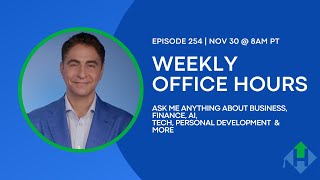
Chris Haroun answers audience questions on finance, investing, and entrepreneurship. He covers bond mechanics, IPO prospectuses, options trading pitfalls, real-estate investing, and his new AI-focused finance courses with Luca Anison, warning about AI hallucinations in financial analysis.
Chapters
Foreign. Welcome to our weekly webcast. Now, if this is the first time you're joining us, welcome. If you've been with us before, welcome back. The way this call works is this is an AMA like on Reddit, meaning ask me anything. You can ask me business questions, career questions, finance questions, any questions you want. And my goal is to humbly help you take your career, your company, your portfolio, etc to the next level. So further ado, let's begin and thank you. Good morning and welcome to our 254th weekly webcast. So the first question I've got here was from Rahul last night who wrote, can you explain underwriting in detail? Absolutely. So whenever an investment bank is hired to take a company public or to float a bond, so to speak, what they have to do is they have to prepare what's called a prospectus, which is like an S1 document. It's called. So this is the prospectus for Facebook ticker Meta. So back in 2012, when Facebook went public, the investment bank had to underwrite this, meaning they had to get the investment bankers to write this document with lawyers, including risks. And they underwrote. That's how you remember it. They underwrote this document. Then what happens is after they create this document by law, which has to hit sec.gov many months before the company like Meta goes public, then what happens is the investment bank like Goldman Sachs or JP Morgan, what they'll do is they'll set up meetings with their investors all over the world. And the people you see on the trading floor, those are salespeople and traders and sales traders. The salespeople on the trading floor will call all their biggest clients all over the world and say, hey, do you want to buy this stock? Facebook, for example? And then what they'll do is they'll do what's called a book building process, where they'll write down how many shares each hedge fund or mutual fund client wants and at what price. And usually what happens is IPOs are issued at a discount so that on day one they go up 30%, they have to be sold at a discount, otherwise nobody wants to invest in them. So that's underwriting in a nutshell. Okay, next question is why do governments issue bonds at a discount? Also, is the interest rate fixed on the return? Yeah. So there's two types of bonds. One is called a discount bond and the other one is called a coupon bond. So a discount bond means, for example, you buy a bond at 90 bucks and it will mature eventually many years in the future at 100 bucks, it's sold at a discount. If it wasn't sold at a discount, there's no point to buy it. And that's called a zero coupon bond, because there's no coupon. Think of a coupon like a dividend yield. Now, what other companies do and governments is they'll issue coupon bonds, meaning it's not a zero coupon bond. And those can be sold at a discount as well. But they've got the sweetener of a coupon, which is like a dividend yield. Next up, we have Renvier from Mauritius. Great to see you. You wrote. Can you please tell us the different ways people can lose money with bonds? Yeah, absolutely. So, number one, if a company has financial difficulties, then ratings agencies like Moody's and S and P, what they can do is they can downgrade a bond similar to how, you know, Wall street analysts downgrade a stock. And when a bond is downgraded, it goes down in price as there's kind of a bigger risk that the company could go bankrupt or not be able to pay back the bond. And think of the bond like a loan. Now, the second way that people can lose money on a bond is if the bond pays out, let's say 3% per year coupons, and inflation is 4%, then you're losing 1%, assuming the underlying bond price does not go up. And again, think of a coupon on a bond as being similar to a dividend on a stock. And again, if a bond does not have a coupon, it's called a zero coupon bond and it's sold at a discount, meaning you buy it at, say, 90 bucks and it matures years later at, say, 100 bucks, hence the name discount bond. Now, the marketplace decides what the price of the bond is after it's underwritten by the investment banker, similar to a stock. It all comes down to supply and demand. And we tend to think that government bonds are low risk, but they're not low risk because you can lose all your money if you invest in a government bond. For example, many years ago, the municipal bond for Orange county, which is located in Southern California, Orange county declared bankruptcy, and bondholders in Orange county bonds lost money, even though municipal bonds are often tax free. Now, the third way to lose money with a bond is if you invest in illiquid bonds. So when you buy a stock that doesn't trade that much, the difference between the spread where you buy and where you sell is wide. Okay? And this is referred to as liquidity and an illiquid Stock or an illiquid bond owns you in a down market, not vice versa. So if you invest in a bond that doesn't trade that much, then the spread between buying and selling is quite wide. And the fourth way to lose money on a bond is if you invest in a bond in another country and that country's currency exchange rate drops relative to your currency. So Renbir, you're based in Mauritius. Let's say that you invested in United States bonds, corporate bonds or any bonds in the US and the US Dollar changed materially. Right. If it went down a lot, then when you bring that money back to Mauritius and you convert to your currency, you're going to lose money there as well. That's an exchange rate risk. And the fifth and final way to lose money on a bond is if interest rates rise way above the rate of return that you're earning from a bond. Now, coupons on a bond don't change. But let's say a bond yield is 5% and interest rates increase to 10%, then nobody wants to own that 5% bond as they can buy 10% bonds, for example, elsewhere. And so investors sell that 5% yielding bond which drives the price of the bond lower. I hope that answers your questions. Thanks. All right, next up, I have got. Hey, Jatan, it's been a while, man. I hope you're doing well. You wrote yesterday, a friend of mine said, hey, your desk is so clean. I know you're going with this. You wrote, I replied, my mentor says, a clean desk is a happy desk. That's what I say. And then you wrote, I'm very grateful for inculcating so many good habits. I'll have to look up that word later. Thank you. Here's my desk right now. I actually did clean it up before this. Yeah. And as many of you know, I've got a standing desk here and a treadmill below where I get 30,000 steps a day. Yeah, helps me, helps me think better as well. Yeah. Okay, next question. It's great to see you. Next question is Alex P. From Utah. Great to see you as always. Alex wrote, Chris, top of the morning on the last day of November goes by faster. You wrote, it's been a minute since I've been on the call with you. What's new in your world? Yeah, a lot actually. So I'm launching my eighth annual one year MBA degree program, the golden platinum version. You can get more details if you want. That hyperlink down there. And that will launch January, January 29th. It's gonna be every Monday and Tuesday from 4pm until 7pm if you guys want to learn more, you can go to that that web address there. What I'm also doing is I've gone all in on AI and I've created a lot of AI courses that I'm going to be releasing and they're all going to be free for people that buy my MBA degree program. Let me actually show you. I've got this unbelievable course I just made with Luca Anison and this course actually let me tee it up here. This course will help you become a better investor using AI. Yes, you can make more money using AI if you use AI the right way to do investment research. So here's a very short trailer on what to expect from this. In this course we will teach you how to use AI products to help you with analyzing every single aspect of a company, including qualitative and quantitative research, financial model research, creating financial statements, valuing companies, and so much more. And this course is based on my knowledge of investing as I have decades of work experience at Goldman Sachs and at the top hedge funds in the world and also in the venture capital sector too where I had a pre IPO investment in Facebook in my company. Now I'm also partnering with Luca Anison here in this course as he is one of the leading AI experts and Google developers actually called him one of the top 150 machine learning and AI experts in the world. Together we will teach you how to take your finance and investment skills to the next level by using ChatGPT and many other top AI products. In this course we'll provide you with a massive research document with countless AI prompts that we created for you. So by the end of the course you can run circles around the competition when it comes to doing financial accounting, quality and quantitative research on any company using many AI products, including ChatGPT. Now, by the end of this course you will also learn how to create a comprehensive financial model on any company and also how to value and find a target price for the company that you're doing research on. Attached to the first lecture of this course is a comprehensive research report that we will create together that analyzes every aspect of any company using AI so you can work smarter and not harder. Also attached to the first lecture of the course is an Excel spreadsheet that will help you create and forecast financial statements and value companies in seven steps. Now, if you don't have finance or accounting experience, no problem because we're going to explain everything from scratch. And this course can help you become a better Investor, a better corporate finance executive, a better investment banker, and it will help you with any finance or general business career topics, whether you're just starting your career or you're already a senior executive. By the end of the course, you will have a complete comprehensive research report and financial models and valuation analysis of any company. As you will create all of this together, we'll provide you with every prompt and all of the tools that you need to analyze any company. We will also teach you how to use the top AI products to take your finance and investing career to the next level. And again, no prior business or accounting or finance experience is required to take this comprehensive course. Thank you and I'll see you in class. All right, our next question here is from Andre. How are you, man? Great to see you. Andre wrote what book do you recommend for public speaking and presentations? Yeah, there's one great book called the Presentation Secrets of Steve Jobs. I would check that out. And Steve Jobs, genius was. He was obviously a great salesperson and visionary as well. But he loved to keep things simplistic to the extent that you don't need an instruction manual to use any Apple products. And he came up with or he talked about what's called the rule of threes. And similar to when you look at a beautiful photograph, there's three different layers, like the classic picture in the beach where you've got the sky, the ocean and the sand. And he did that as well. In fact, if you go back to his presentation that he gave In January of 2007 when he announced the iPhone, you'll see there is three images on the screen, three bullet points, etc. So again, the presentation secrets of Steve Jobs. Less is more when you all make presentations. Never have more than three bullet points per slide, please. All right, next question is from Andre, who wrote what are your three keys when buying a commercial real estate? Yeah, well, when I used to ask my dad this question, my dad would always say the three most important things about real estate are location, location, location. But I'll give you three examples. Number one is location, of course. Number two, you want to look at the credit worthiness of that if you're going to be taking on debt as well. And make sure it's a highly rated bond by Moody's and S and P. And the third thing is the categories of commercial real estate. I would never invest in commercial real estate in cities. And the reason I say that is because cities are in secular decline. You know, the best investments you can make are in farmland. And I bought a lot of land over the past couple of years, a lot of it in Texas. And when I buy that land, I give up the mineral rights, so it's cheaper for me. But what Covid has taught us all is that we can all work remotely. So what's the point of going into big cities? It doesn't make any sense. You spend more than an hour commuting, sometimes two hours. You waste a lot of time. You kill the environment. You. You hurt your social life. You're not there with your kids. You're not exercising. It doesn't make sense. So no to commercial real estate. When it comes to cities, and this is evident in San Francisco, there's many other reasons why San Francisco has been having issues. But on Market street in San Francisco, which is the big street in the city, the Westfield shopping center just closed down. Nordstrom refuses to have locations in certain parts of the city, etc. Yeah. And there's other structural issues with San Francisco. All right, next up, we have Paul from Barcelona, who wrote Top of the Morning, Brother. Congratulations on graduating from my platinum MBA degree program recently. It was a pleasure meeting with you. I think it was back in 2018 in Barcelona when I brought my kids and they had that meltdown as we walked down La Rumbla. Great to see you. Jason, good morning. Good to see you. Yolanda from Texas, who graduated from my MBA program back in 2019 or 20, I wrote. Hi, Chris. I really enjoyed being in the first cohort of your MBA program. Thank you. It's good to hear from you. You wrote, long story short, I'm having major imposter syndrome. I just need a little encouragement to plow through. Yeah. I'm sorry you're going through this. The most successful people in business, they just don't care what other people think of them. And the second that you can get rid of those negative thoughts in your mind in terms of what other people are thinking of you from a judgment perspective, the second you do that is the second you start living your life in your own terms. And it will unlock unbelievable euphoria or happiness in you as well. Now there's the most successful entrepreneurs. They never care what people thought of them. And I want you to be the same way. You know, for me, for many years, I care what people thought of my career, the way I looked, etc. And that really, really hurt my confidence, and it wasted a lot of time as well in my mind. So I want you to do this for homework. This is homework for everybody. Shikudai, as you say in Japanese, your homework Is this. I want you to get a piece of paper and I want you to write this down. I don't care what people think of x. Do that 10 times and fill in a blank for X. I don't care what people think of the way I look. I don't care what what people think of the fact that I have a massive nose. And by the way, during COVID when I used to wear the mask, I would get more people checking me out. And then when I take the mask off, they're like, oh, brutal. Just kidding. I don't care what people think of my car. I don't care what people think of my job. I don't care that people criticize me for teaching and not being in venture capital anymore. Do that 10 times and I promise you, once you do that, then you'll live your life in your own terms and you won't be living with imposter syndrome anymore. I love you and I'll pray for you as always. Okay? And practice gratitude as well. So for me, whenever I wake up in the morning, I thank God for 10 things in this order. Gets me into a peak mental state. Andrew, Matthew, Dylan, Christine, my wife, my mom, my dad, my brother Jamie, my sisters Katie and Elizabeth, and all of you my students. I practice gratitude every day. Then I read a passage of the Bible. Gets me into a peak mental state. Okay, next up, Jason wrote, why did so many PayPal executives move on to great prosperous positions? Seriously, what's in the water at PayPal? Yeah, you're referring to what's called the PayPal mafia. So here in Silicon Valley, some of the best startups in the world came from executives that worked at PayPal. And we call this a PayPal mafia. And so the co founders of PayPal included Max Levchin as well as Peter Thiel, and eventually Elon Musk was co CEO along with Peter Thiel in that company. And then Reid Hoffman joined, who eventually started LinkedIn. You had Steve Chen, who eventually started YouTube, you had Sopelman, who started Yelp, etc. And it became self fulfilling after a while. Like I Remember back in 2005 when YouTube was founded, they were able to raise a lot of money, not just because of the good financial prospects of the company, but more importantly because of the management team. Venture capitalists here found out that hey, the management team at YouTube used to work at PayPal. Therefore they had a successful exit, therefore I'll invest in them. And again, it became self fulfilling. And Sequoia did the a round on PayPal or pardon me? Yeah, on. No, on YouTube. And the company I used to work at did the B round, but they did the B round before I joined. And so I blame my parents. Dad, if you're watching, if you and mom had had me five years earlier, I'd have money. Yeah. Yeah. But whenever we invest in companies, you always want to look at the quality of the management team first. The jockey is more important than the horse. Always. And the problem with traditional business school education is they teach you to analyze financial statements and all this stuff, but they won't teach you how to look at the management team. Always start with the management team. Always. Yeah. And there's a great book you can read on that called the PayPal wars as well, written by a guy that used to work at Accenture, where I used to work. Okay, next up, Manaz from India. Great to see you. And congratulations on all of your incredibly successful AI courses on Udemy, many of which are the number one bestseller in those categories. You wrote you launched a new course with Luca. What is it about? And how does that work? Yeah, so I played that. The trailer earlier today as well. So that will give you more details on it. But basically what Luke and I have figured out is we've created 100 custom prompts that will work to analyze any copy in all aspects of a company. These prompts that we developed work and are optimized for Google Bard, as well as Bing Chat and also chatgpt. And it's a real treat partnering with Luca. I love him. He's my brother. I miss him. He spent a couple months with me recently because Luca is one of the top AI experts in the world. He's got a PhD in AI. He's unbelievable. So he put a lot of work into creating those prompts, and I'm proud to partner with him. But whenever you guys use artificial intelligence, please be careful, because AI products will hallucinate. Right. Basically, what they'll do is they'll make up stuff, and this can really cost you a lot of money. And let me show you an example of this because it drives me crazy. But let's go over here to Bard. So Bard is Google's AI product, which doesn't work in all countries. So watch this. What was Apple's guidance for the past eight quarters? Okay. And so companies, what they do is they often offer guidance, meaning a revenue range or an EPS range for investors to look at in terms of modeling the company's financials. Now, Apple stopped providing guidance back in 2020, yet Google Bard here says, here's the guidance range. This is not true. This is. This is made up stuff. Apple does not provide guidance again. They stopped providing guidance back in 2020. So always double check the data. Always, always, always. Yeah, and if you guys have questions about Bard or any other AI products, let me know. I'm happy to give you my humble thoughts on how to use them. Yeah, they're confidently wrong. Okay. All right, next up, Renbir wrote. Hey Chris, thanks a lot for the AI courses. Thanks to you, I'm launching my AI agency next week. God bless. God bless you more. And if I can humbly help you, let me know. And I know that every week during our silver MBA degree office hours, we do the zoom call. Ask me any questions you want. I want to humbly help you if I can. Thank you. Okay. And when one teaches to learn, ain't that the truth. All right, next up, I have got Jason who wrote. Can you talk about your studio setup? Maybe it's in the MBA course. I haven't gotten to that yet. Yeah, I talk a lot about videography in the MBA course and the sales, marketing communications portion of it as well. So in terms of my studio, I've got two cameras. And the reason I have two cameras is when I'm recording a course, if I make a mistake, I can just re record that line. If I make a mistake, I can just re record that line. So having two cameras is key. Aside from that, in my studio I have multiple monitors as well. I have high speed Internet, two high speed Internet companies just in case one goes down. Because my business is based on high speed Internet. Aside from that, I've got professional lighting as well all set up. Everything is actually on bars on the ceiling, right? So and each rivet up in the ceiling can hold £300. So everything is either on the ceiling or on wheels, mainly on the ceiling. Lighting is, is key. Now whenever you're setting up your your studio, you really have to look closely at exposure. And I'm going to show you exactly what this means and how to do this. So let me just turn on on screen. Now. The human eye can never tell what exposure is. Never rely on your eye because it's always wrong. And the way you do it is you hold up a piece of paper, white paper, and then you see right here this ghostbuster thing right in the middle where my face is. You want to make sure that that is exactly at 80 and not above. Otherwise you're too bright or below you're too dark. So exposure is key and you don't have to have a professional camera to have this waveform thing right here. You can buy external devices on Amazon that can help you set that up. Aside from that, other best practices is I always have two microphones just in case one goes down. And so the microphone I use is the same one that Joe Rogan uses. It's a Shure SMB up here. And I've got a blue yeti is back up here as well. And I wear my Lululemon pants on the bottom because nobody sees this, right? Yeah. Aside from that, whenever you're giving a presentation or you're doing a zoom call, you know, having a good zoom presence can do the same thing for your career as a great Italian suit. And so you want to make sure your lighting is perfect. Your audio is perfect as well. On the wall, I also have ceiling tiles. Let me show you that. So the ceiling tiles on the wall and on the ceiling look like this. And you pull this off here, it's a sticker, basically. But this will make the sound quality much better as well. Aside from that, I've got curtains here. These are really cheap curtains. They're like 20 bucks from Amazon. And they'll block out the light and, of course, the sound as well. So you want to make sure you have these set up as well. Make your walls, if you can, black on the sides. Okay? Black walls here, so it doesn't reflect the light. And then just have a white back wall you can shine a light up into if you want to. Now, aside from that, when you give a zoom presentation for me, and this is just me, it's crazy, but I get really shiny. And when I give television interviews, there's always a makeup person putting makeup on you. So what you can do is you can buy a product called Stay Matte M A T T E by Rimmel. Maybe she's beautiful. Maybe it's Maybelline. And then what you do is you put this on as well to stop the shininess. Also makes my nose not stand out as much because it's huge, but it's a very, very aerodynamic nose. And if you guys have additional questions, let me know. Aside from that, because one meeting can really change your life. I use a product called Vocal Zone as well. And what I'll do is I'll put this in my mouth half hour before I go live is. Well, just my voice is clear. And there's many other tips I have. If you guys have specific questions on the equipment I use and how I use it, etc, let me know, because I'VE humbly made every mistake there is to make in the world. I want you to learn from me. Yeah. Okay. All right, next question is from Renvir from Mauritius who wrote. Chris, how would a hedge fund recover from a 50% loss? Yeah, it's hard. So if a hedge fund manages $100 million and they're down 50%, then they've got to be up 100% the next year. It's really, really tough. And what happened? And by the way, hedge funds don't get paid the next year unless they recover the losses. And that's called getting above your high water mark. And what happened in the fall of 2008 when we were within 24 hours of bank machines not working, was a lot of hedge funds were down 50 to 60%. And the ones that survived were the ones that put up the gates. And what that means is this. When you invest in a hedge fund that is massive and very successful in the contract that you sign to invest, which is massive, there's a stipulation that they can stop you from taking your money back. And so very large hedge funds, many of which are well known, you all know the names of them, they put up the gates and some were down 60% in 2008 and they recovered a couple of years later. Yeah. So. But usually once you're down that much, you can't recover. Yeah. And the problem is there's a moral hazard risk as well. To the extent that the portfolio managers at hedge funds, if they're down a lot, then the last couple months of the year, they'll swing for the fences and try to get that money back because they're going to be fired anyway. And that's why quite often during Q4, mean, the last three months of the year, a lot of high beta stocks, like software and Internet stocks can outperform. Not all the time, but they can because a lot of portfolio managers and professional investors are chasing alpha. And alpha is defined as how much a portfolio manager beats their benchmark buy like the S and P. So the S and p is up 12% and they're up 15%. Then they've generated 3% or 300 basis points of alpha. All right. And Moss wrote about post production tips. Yeah. Thank you for that. I appreciate it. Yeah, thank you. Gary. I miss you, Gary. How are you, man? Gary's from Atlanta. He's a former investment banker who worked at bank of New York. I think he also spent time in China as a teacher. He's a great guy. I miss you. On the weekly calls at 11:20 on Thursdays. So every time, please join us again. I miss you, man. I hope you're doing well. I saw that you sent a support email to my company. I responded, if you're having issues accessing that course, please let me know. And I miss you. How are you? So Gary wrote here. Good morning, Chris. Can you give us Your thoughts on OpenAI and Q Star recent events? Also, your thoughts on Charlie Munger? Yeah, I don't know what Q Star refers to. I'm sorry, I don't. But what Luke and I just released also is an OpenAI API course, which basically. And you have to know Python to take it, but basically what it does is it allows you to leverage the application programming interface from OpenAI so you can use ChatGPT on your website and in other applications. Yeah. Your thoughts on Charlie Munger? Yeah, God bless him, he passed away at 99 yesterday. Yeah. Very sad. Very sad. So tough day for Warren Buffett, for everybody. And a lot of times people are really worried about investing in investment management firms that are too reliant on one or two people. It's a risk. It's a risk like my company is a risk, you know, because I'm the teacher. So what happens after I move on, et cetera. It's really sad, but my thoughts and prayers are with Charlie for sure, and his family. Yeah. All right. Caroline wrote good morning from Nova Scotia. Great to see you. Thank you for my favorite emojis in the world as well. And I hope to see you at 10am today as well. I hope your cats Mimi and Moomoo are doing well. Moving on to Rahul, who wrote what is the difference between dividend tax on companies and dividend income on stocks? Seems like a basic question, but I'm confused. Yeah, yeah. So there's double taxation when it comes to dividends. You know, the company pays taxes on it and you pay taxes on it as well in terms of dividend income on stocks. Yeah. Just double tax taxation. Yeah, but everybody's tax mandate is a little bit different. If you invest in stocks in your 401k in your retirement savings program or your RRSP in Canada, for Caroline, then you don't have to worry about that. You don't have to worry about paying any taxes until you take that money out later. Also, for those of you that have kids or want to have kids, if you can do it, and it's hard, but make sure that you set up an educational savings account for your kids, it works the exact same way as a retirement savings program like a 401k, but it's better because when your kids are in university, if they decide to go to university, then you can take that money out without paying taxes to pay for university. And my son Andrew, very proud of him. He's at Berkeley right now. We, we all love the color blue because the Toronto Blue Jays. Okay. Okay. Yeah. Questions from an. About Coinbase and. And Binance and Ticker czeb, which. I don't know what that is. I'm sorry. Yeah, yeah. But I recommend that nobody puts their money into cryptocurrency exchanges or hot storage wallets. If you own cryptos, don't store them online. Store them on a cold storage wallet, which looks like a USB token. And I've said this since the beginning, don't put more than 5% of your liquid net worth in cryptocurrencies. And if you are to invest in cryptos, don't have more than 0.5% of your liquid net worth in any one crypto, because most of them are scams. Most go to zero. And one of the reasons is because there's no disclosure. Like, when you invest in a stock like Meta or any stock, you. You can read the annual report called the 10K, the quarterly reports called the 10Q, press releases called the 8K and the S1. There's none of this stuff with cryptos, because cryptos are not regulated. They're sort of regulated by the laws of mathematics, but not really. Yeah. And I think we need regulation. Okay, give me one second. All right, Give me one second here. All right, next up we got. Hey, Robert, how are you? Robert wrote, can public companies do a buyback and not issue dividends for organizations with preferred shares? What is your opinions on first shares for an investment? Yeah, yeah. As long as the board approves or blesses a buyback, companies can do whatever they want to do. Yeah. Now, preferred shares are usually better investments than common share. So when we all buy stocks, we usually buy what are called common shares. And if a company goes bankrupt, here's what happens. The first people to get their money back are the debt holders, like the bondholders, then the preferred shareholders who get preferential treatment. And then the lowest of the low. You can't see me here. The lowest of the low. Hey, there is common shares. That's why they're called common shares. Like commoners. Yeah. So if you can invest in preferred shares, do it. We usually don't get that opportunity. And quite often when you invest in private companies, you can invest in preferred shares in the company. And that means you don't get diluted as much as common shares. Yeah. Okay. All right, give me one second, guys. And if I skipped your question, just post again. I'm so sorry. Yeah. And by the way, if you guys put Internet addresses in YouTube strips that out for some reason. Yeah. Okay. Andre wrote, is the AI class available now? It is, yeah. Yeah. And we recorded so Luca Anison, who came here from Serbia, he's my brother from another mother. We recorded 10 classes together. Tech classes. Love them. And business classes. And we record. We finished recording the complete Python course, which I can't wait to release for you guys. That will come soon. Yeah. Certainly before the next Gold and Platinum MBA program launches in January. Late January. Okay. All right. Manas wrote, as a foreigner, how can somebody buy a Stock in the U.S. like Coinbase or Bit Farm, for example? Yeah. So what you want to do is you want to. And based on what country people are in, what I want you to do is do a search on the top five banks in your country by market cap. Then I want you to call all five banks and ask them, do you have a trading division where I can invest in stocks that are listed overseas? And most of them do. Yeah. And if you can't buy individual stocks, you can certainly buy ETFs. Okay. And then next up, Manasse wrote, J.P. morgan says the market will fall, specifically bank stocks, in 2024. While others contradict this, what is your thoughts on a rate hike? When will the Fed cut rates? As election is in 2024. Yeah. So the Federal Reserve, which is in charge of interest rates, is an independent body. It's not really supposed to be influenced by the president or elections. In terms of what I think the Federal Reserve is going to do, I actually think they're going to start cutting rates next year. And the reason is because of the many interest rate hikes we've had over the past year or two. We have actually seen a bit of an economic slowdown recently. For example, in the month of October, retail sales were down year over year for the first time since March. Also, unemployment is becoming slightly more of an issue and the economy is slowing. And so I think the Federal Reserve will end up cutting rates next year. Now, the issue with the Federal Reserve increasing interest rates is that you don't see an immediate impact in the economy. It can take 12 to 18 months. So just in case there's an economic slowdown, I think next year the Federal Reserve is going to start to cut rates very slowly. And the whole process of Cutting rates changes the money supply. So if I'm the Federal Reserve, when I cut rates, I'm flooding the market. I'm flooding the market with money. So the way it works is this. This is fake. Fake money. Like I'm a fake teacher. The way it works is this. I'm the federal government. You're all investors or banks or whatever. What I can do is I can sell you a bond, okay? A government bond. You buy this and you give me your money. I then take that money out of circulation. And when the supply of anything goes down, any product, the price goes up, and that means interest rates rise and vice versa. When I buy this back from you, I'm putting more money out there into the system. As the supply of money increases, when I cut rates, as the supply of money increases, the price of money goes down, meaning interest rates. It's fun teaching with props. Okay, next question is from Renvir, who wrote, if a bond is a loan, it is. Yeah. If you and I lend $100. Okay, so you're lending $100. I'm the government. Okay. So you're lending me $100 right here. And this make money. Then the price of the bonds goes up to $150,000. Does that mean the borrower has to pay $150,000? No, no. It's like a stock. If a stock goes up to $150,000, the company doesn't owe you anything. Okay. And that would likely happen if, if, if there was a change in interest rates. Yeah. Next up, and for those of you interested in learning more about bonds, go to the beginning of this call as I answered a question with. With five reasons why you can lose money on bonds or how you can. Okay. Manas wrote, will you run an election in your life, maybe a mayor or a congressperson someday, at 70 or 60s, which is coming up soon, what will you fight for if needed? Yeah, I'd never do it. I had Mike Honda over for dinner when he was congressman recently. And what I loved about him, he's no longer a congressman, is that he fights really hard for education. So if I was a congressperson, whatever, I would. Or politician, whatever, I would probably fight really hard to make education free for everybody. And if you want to learn more about that, watch my TEDX presentation, which I gave called How T Can Solve All Problems in the World. Tea, technology, education, and acceptance. It's why I do what I do. And the profits from what I do go to build schools overseas. So whenever you buy one of my courses or MBA program Thank you. You're helping to build schools overseas. Okay. Frederick Mendoza. How are you, man? Fred is based in the Tri State D.C. area. He graduated from my MBA program back in 2021, I think. Great to see you. He works in the healthcare sector and he met with Fauci before. So Fred wrote. Hello, Professor Chris. Amen. Did you take the gmat? If so, how did you do? I did well. However, the gmat, like the SAT or the LSAT or the mcat, these aren't intelligence tests. They're basically a game, like a puzzle. And if you study hard, you can destroy the competition. And so I studied really hard. So for those of you that want to go to law school, business school, whatever, med school, I recommend taking the Princeton Review, which is what I did. Princeton Review is owned by the. Owned by. I think. Is it the Washington Post? Or maybe that's Kaplan? Take the Princeton Review. It'll help you big time. I had to read the GMAT a couple of times. Yeah. And the first time. The first time I took it, I didn't do well. And I'm so open and transparent with all of you. I'll tell you exactly why. So I was at McGill University, and I actually. Yes. And I inhaled. And a couple days later, I wrote the exam and I did. Awful. I'm just being honest. Yeah, just being honest. I'm against that stuff. And as a parent, I worry about that stuff being free now. So I had to take it again. But I did well, humbly. And I can teach you all a couple tips on how to ace any exam. And I actually learned, because of the Principal Review, how to pass multiple choice questions. Multiple choice exams. Without reading the question. And I'm going to teach you how. So whenever you write an exam, what I want. Thank you, Andre, for the donation. God bless you. That $20 will go directly to the schools. Thank you. So whenever you write an exam or you look at a multiple choice question, I want you to think like a lawyer. Now, lawyers look for exceptions. Okay? So here's a multiple choice question. What is the color of this? And the answers are as follows. A is it's always gold. B is it's sometimes yellow. C is it's never yellow. What do you think the answer is? We got to look for an exception. Is it always gold? Well, no. I'm a lawyer. I can find an exception if I hold it in light. It might look yellowish. Whatever. It's sometimes yellow. That's the right answer. Sometimes. And it's never yellow. That's wrong. So whenever you See the words always or never, you can find exception for that. So it's wrong. So wishy washy answers are correct like sometimes or can be. Think like that and you can eliminate sometimes one, two or three of the answers, A, B, C, D. And pass the multiple choice test without reading the questions. Yeah, within reason. I'm exaggerating a bit. My mom told me. I told you a million times, Christopher, not to exaggerate. Just kidding. All right, next up, Salu. Hey, how are you Wrote Hope you're doing great. Likewise. What would be the most effective skill in the technology field nowadays? Yeah, I would say Python. Yeah, I mean there's explosive growth for demand for Python developers, which is why I spent a lot of time and money developing a complete Python course which will be out by January for my MBA students. Yeah, and by the way, if you want to learn Python or any computer programming language quickly, I recommend taking courses by Dr. Angela Yu on Udemy. And so Angela Yu is based in the United Kingdom. She's probably the best teacher on the planet. But take her course on python, web development, etc. She makes it fun as well and easy too. And she's great. Okay, next up, Manas wrote. How much data do you pay for? What's the cost per month on your bill? Maybe it's cheapest or as expensive. Yeah, so I pay, I mean several hundred dollars for what I do. I have corporate subscription, the Comcast, which doesn't have the best customer support, but they're getting better. Yeah. Okay, next question is from an Arabic name. God bless you. My dad is Egyptian. You wrote. And the only word I know in Arabic is hamsa because I asked my dad when I was five, how old am I? Hamsa. Yeah, Imshi. By the way, you at it. So the question is, how does options day trading work? Yeah. So a couple of things. Number one, please don't day trade. And I know it's not your question, and I say this with love, my heart, please, because you will lose money. The worst thing you can do is walk into a casino the first time, bet money and win because it's not repeatable. And that's what trading is like. Stocks go up and down for random reasons. You're fooled by randomness. You make money in a short amount of time. Every month has 20 weekdays or 20 days. The market's open, stocks go up and down for random reasons. Now, in terms of options, I wouldn't trade or day trade options, but if you want to buy options, and for those of you, my MBA program, if you go to FA4.4. That's finance and accounting semester four, class four. There's a 30 hour elective on options. You can buy calls or puts. Okay? If you buy a call, you put in a little bit of money, the stock goes up, you make a lot. The most you lose is this much if you buy a put. If the stock goes up, all you lose is this. But if it goes to zero or goes down a lot, you make a bunch. But all you lose is this. And the reason I'm talking about this is because I don't want anybody to underwrite or sell options. Because when you underwrite or sell options, you can lose 50 times the amount of money that you invested in that. Right. It's deadly. Deadly. And then Jason wrote. Thank you. You're most welcome. Thank you for being here. Okay, give me one second here. Ted, thank you for that comment. Yeah, yeah, my nose does cast a massive shadow. Yeah. But as I said before, I can beat anybody in this call in a skiing race because this thing is so aerodynamic. Same thing for cycling. As Sting said, it takes a man to suffer ignorance and smile. Be yourself, no matter what they say. What song was that from? What's it called? All right, Uncle Coco. Hey, first time seeing the call. Hope you join us again. Wrote here. Can you explain the fund? Financial structural? Yeah, I'm not sure exactly what that means, but whenever you invest in a mutual fund, for example, you're paying fees so that the portfolio managers can invest in a diversified group of stocks and they try to outperform whatever benchmark they're compared to. Don't ever buy mutual funds are a scam because the fees are very high. Instead, I want you to buy ETFs, meaning exchange traded funds. And the best way to invest in ETFs, if you want to learn more, is to go directly to etf database.com etfdb.com and what you can do is you can screen these ETFs, you can look at ETFs by sector, you can look at them by geography as well. So let's say you wanted to invest in Brazil, okay? But you didn't want to buy stocks on the Bovespa in Brazil. You can buy EWZ, this one here. And you'll pay 58 pennies per year in fees for every 100 bucks you invest. And this will give you exposure to many of the commodities based companies in Brazil, such as Petrobras, etcetera, Right here. Petroleum, Brazil ETF db. Yeah. Now the ETF that I buy My go to investment. Actually, if I go to Yahoo Finance, whenever I'm not sure where to put my money, I buy ticker. Come on, Yahoo Finance, I buy ticker. Voo. Voo. And the VOO is an etf, which has really, really low. It's common. Has really, really low fees. And as you know, I'm not sponsored by anybody, nor will I ever be. But if you buy the VOO here, the fees are next to nothing. The expense ratio is actually four pennies for every 100 bucks you invest. And you get exposure to the United States. Stock markets mean the s and P500. Yeah. And I think it's the best investment you can make in the long run because the very last company, so to speak, that will go bankrupt, it's all relative, is U.S. government. And the financial markets here are solid. And we have lots of problems here in this country, too, but. Yeah, okay. All right, next up, Kamal Kamal wrote, publicly traded companies disclose shareholders over their shareholders over 10%. What about under 10%? Is there a way to get access? Absolutely. Yeah. Yeah. So. So what you can do is if somebody manages a mutual fund or a hedge fund with over $100 million, by law, they have to disclose every quarter what they own. And you can always get this information for free and never pay for financial data, please. But I'm going to show you where to get this information for free. So let's go here to, I don't know, Apple. And what you can do is you can find out who the holders are. And they just changed this structure here. Holders right here. Yeah, the performance sucks of this, this, this new website here. But for example, holders, we can see here, Vanguard, a lot of that is in the voo, that index I just showed you. And then you got Blackrock and Berkshire Hathaway. Now, 40% of Warren Buffett's portfolio at Berkshire Hathaway is an Apple. But here you go, you can find it. This is Fidelity in Boston. This is Good Capital Management, T. Rowe price in Baltimore, etc. Yeah. But you can get all the information here. All right. Okay. Okay. Next up, Leticia. Leticia, it's pleasure to meet you. First time I've seen you here. I hope you join us again. Thank you. Lacheser wrote, I work for the government and have a tsp. Should I open an additional account, like a brokerage account and buy stocks or just put all my money into the TSP for retirement? I'm not familiar with the tsp. I don't recommend that anybody do their own taxes. I would always Hire an accountant. And the accounting profession exists because the rules change all the time and not. And doing your own taxes is like doing surgery on yourself. Instead of talking to a doctor, please call your accountant. Ask them. Yeah, okay. Renvier wrote, why would a company stock not go up if the company announces a 1 for 10 reverse split? Yeah. So when a stock splits. So say there's a thousand dollar stock and it splits two for one. Now it's $500 and there's twice as many shares. The market cap doesn't change. If a company has a price of $3.90 and it does a reverse split, what will happen is that stock could go up 100%. However, the share count changes, so the market cap doesn't change. The reason why that stock doesn't go up a bunch more is the re is because the reason they do reverse splits is because markets like the NASDAQ have rules that if your stock is, say, below four bucks for a certain period of time, you will get delisted. And that's why sometimes you'll see tickers go from four letters to five letters. Right. They're on the pink sheets. They're delisted. Yeah. And that might explain why a company might do a reverse split. Yeah. And where there's smoke, there's fire. Yeah. Andre, thanks again for that donation. God bless you. Okay. Ferenc wrote, hi, Chris. Hi, guys and gals. Good to see you. Okay, and then, let's see. Next up, Leticia wrote, which program is good to take for the CPA exam. I don't know. No, I'm sorry. Yeah. And then Renvier wrote, there's an international golf competition organized by a big Mauritius bank soon, where you're based. You wrote, I don't play golf, but I can assist the competition for a fee. Do you think it'd be worth going to. Yeah, I would. I mean, the best way to meet clients, if you can, is to play golf. I've met tons of clients playing golf, even at really cheap public horses, by accident. It's a great way to socialize. Relationships are always more important than product knowledge. And your network is your net worth. And when I was a kid, during the summers, I used to caddy, and I would get paid 20 bucks for four hours of work for carrying somebody's bag. And I learned so much just listening to business executives talk to each other. Okay. Just like Bobby Axelrod in billions. Okay. And Uncle Coco wrote, looking handsome and sharp. Thank you. Maybe I'm beautiful. Maybe it's Maybelline. You wrote, how Much is your suit and where'd you get it? You're always dressed up. Well, thanks. Well, my Lululemons are pretty cheap. Yeah. So where did I get this from? I got this from Sam Malouf M A L O U F on Burlingame Avenue or Boringame Avenue close to where I live. Yeah. Okay. Okay. And by the way, if you guys are ever worried about what should you wear to an interview or an informational meeting, just go to the LinkedIn profile, the person you're meeting with and see what they're addressed as. Or go to the website, see what they're wearing as well. And I tend to overdress as well. Like when I used to go to interviews when I was younger, I would wear a tie and I would ask at the front desk what people wear in the office, do they wear a tie? And if they said no, I just take the tie off. Yeah. And some people think that. And there's this whole psychology process of if you want to get promoted, you have to act and do the stuff that the person at the next level does. Also dressing slightly better. It does help perception becomes reality. Next up, Abel wrote. Hey, Chris, Hope all is well. Likewise. Great to see you. How does interest rate work when you buy a house? That's how we say in Canada, it's not house, Americans, it's house. How does interest rates work when you buy a house? Please explain the detail of banks. Yeah, absolutely. So when you buy a house, and the reason everybody pays really close attention to Federal Reserve statements about interest rates, because it impacts the 30 year rate and right now the 30 year rate on government bonds, the federal funds rate, I think it's between 5 and 6%. And if you want to buy a house, your mortgage is based on a premium on top of that. So right now mortgage rates are between 7 and 8%. But you're like, why is it 7, 8% if the fed funds rate in 30 years is between 5 and 6? Because we are more risky than investing in the U.S. government. And that's why everybody watches this closely. Now I'll talk about this really quick because I've done this before. But what you can do is you can go to treasury.gov to figure out what the yield curve looks like. Okay. And the yield curve is what professional investors pay attention to when it comes to modeling interest rates. What you need to do when you're looking at the risk free rate, when you calculate what companies are valued at. So let's go to the current month to see what yields are at. So Right now. And this year is a one month. This is the 30 year. I digress. It's actually 4.44%. So right now the short term rates are 5.5%. And the long term rates are. Oh, my God, that spread is massive. Over 100 basis points. And usually, but not in all cases, when you see long term rates lower than short term rates, that means that a recession is coming. And the reason is because the market is saying, oh, my gosh, rates are going to be way lower, you know, in 30 years. And if rates are going to be lower in 30 years, that means that in the future the government's going to have to cut rates, you know, to stimulate the economy. And this is called an inverted yield curve. Usually rates are lower now and higher later. That's a normal or healthy yield curve. But right now we have an invert yield curve. And basically, this here is what you look at to understand where mortgage rates are going. Yeah. So when the Fed speaks, it impacts all of us. Okay. All right. And thank you so much for that donation. It's an Arabic name. Thank you. God bless you. Thank you. Okay. All right, next up, Uncle Coco wrote. Sorry, my question was not clear. Oh, good. I wanted to ask, if you have a hedge fund, how does taxation work when buying and selling stocks? Yeah, yeah. So that is. It's a really, really complicated matter. So for me, when I had my hedge fund, I had an onshore and an offshore vehicle. It's called a master feeder structure. And my offshore vehicle was in the British Virgin Islands, bvi. And my onshore vehicle was in the United States, and they both fed into a master structure. And my lawyer, my securities lawyer, who's Jim Grant from the securities Law Group in the San Francisco Bay Area. Nice guy. He always told me, never give your investors any tax advice because everybody's tax mandate is completely different. Yeah, yeah. And the reason why I had offshore is because I had ABN Amron, a lot of European investors that wanted to invest but not pay U.S. taxes. Okay, give me one second here. And then the question is, how does taxation work when buying and selling stocks? It all depends. If you lose a lot of money this year and next year you make money, you're probably not going to pay taxes because you got a net operating loss carry forward. Always tell your accountant what your losses are or gains are from stocks. But that's kind of a moot point if you put it in your retirement account, which I recommend everybody do, as well as your educational savings account, which is tax free. Yeah, yeah. And Extraordinarily wealthy people. Not me, but extraordinarily wealthy people. One of the reasons that they're wealthy is because they pay less taxes. Like, Warren Buffett has publicly disclosed that he pays less in tax percent wise than his assistant does. And it's not fair. In fact, the 400 richest families in the United States only paid just over 20% in taxes, which is way below the maximum tax bracket. And the reason why billionaires also pay less in taxes is they hire tax lawyers at like a thousand bucks an hour to move their money around so they pay less taxes. And sometimes there's no taxable event, which is unfair. So for example, Jeff Bezos, in 2007, when he was already a multi billionaire, not only did he not pay taxes, but he got $4,000 back for each of his four kids at 16 grand when he filed taxes. And the reason is because he didn't have a taxable event, he didn't sell shares that year in his company, Amazon. And so I really do believe, like, I'm definitely a capitalist, but I think there should be some kind of wealth tax on billionaires. Yeah, I mean, for God's sakes, they should pay the same rate that the rest of us do. Yeah. God, I sound like Bernie Sanders. And the only good, the only good thing about Bernie Sanders being president is Larry David will go on Saturday Night Live all the time and pretend he's him. It would be the funniest. I love Curb youb Enthusiasm. One of my favorite shows. Okay. All right, next up, the Vanquisher. That's a cool name. Wrote, what's the best place to go for startup funds in skincare. Yeah. And I actually have one of my students, Myron Koros. She started a skincare company. She's doing really, really well. And so what I would do is contact Maren Koros and her name is M A R E N K O R O S and ask her how she did it. But it's like any other startup company, you know, you have to network like crazy, create a pitch deck and then talk to high net worth investors. Don't talk to venture capital funds because the sales cycle of VC funds early on is really long. If you talk to high net worth investors, the sales cycle is short because they're pulling the trigger. Always talk to the decision maker. And if you network with them, then what can happen is after a couple of meetings, they might invest. Don't forget to ask now if you want to learn more details about how to raise money or to get anything you want by Networking. What you can do is you can go to my website, which is harounmba.com and if you scroll the bottom, scroll all the way to the bottom, there's a book called Networking. Get customers a job, or anything you want, you can get for free. And I wish I knew about networking when I was younger. Man, it's everything. And every time you see a job opening online, the probability of you getting that job is literally one out of 250. So who gets that job? Well, it's ultimately somebody that knows someone at the competition. So if these are the new unwritten rules of commerce, then that's what you got to do. And in my MBA degree program, which you can learn about at this link here, in the first month of the program, I teach you how to network on steroids and how to get tons of informational meetings. All right, cool. All right, I'm going to take a very quick break. Here's a very short vlog that I'm really proud of about corporate bullying. Thanks. I'll be right back. If you bully people at work, meaning if you're a corporate bully, then I want you to keep watching this. Otherwise, don't watch the rest of this vlog. It's going to be out there today. But for you, the corporate bully, I want to thank you. I want to thank you for being such a jerk. And by the way, you peaked in high school and you're so insecure that you treat people poorly. I get it, I get it. You're really insecure. I understand. But you know what? In a bizarre way, and I think what you've done at work, treating people poorly is disgusting. But I think in a bizarre way, I want to thank you. Because you've motivated the people that you've treated poorly to quit and to join another company, or you've motivated them to start their own companies. You see, frustration in business can be a beautiful thing. And I say it with love, my heart. Because if you're frustrated at work because you're being treated poorly, and I've been treated poorly many times before, then that forces you to. To get outside your comfort zone and get a better job. Or better yet, start your own company. If I can be resourceful in any way, helping you start your own company, please let me know. Thank you. Not the bullies, just the people who are being bullied like I was. Thank you. I am Batman. I just powdered my nose, which basically made this almost empty. All right, next question is from Will. Hey, Will. How are you, man? Will wrote, how can I know how many stocks I have in a company. Yeah. So look at your statement. You get in the mail or online, whatever the dollar amount is for that stock, you divide it by the share price and that'll tell you how many shares you have in that company. And then he wrote here, I worked in a company for five years. I was contacted via physical letter to take actions. I only have the email name of the person who sent the. Your last word is let. Yeah, yeah. So what I would do is, is this whenever I need legal advice, and again, I'm not sponsored, I never will be by anybody. But whenever I need legal advice, I go to legalzoom.com and it's a great website to get cheap legal advice. You pay like, I guess 35 or 40 bucks per month and you can get like a half hour to one hour call with any type of lawyer you want to talk to, which is cheap. And they talk really slowly though. I'm just kidding. So I would go there, go to legalzoom.com. yeah, yeah. And by the way, never join a company without first hiring a lawyer, especially if it's a startup to read the employment contract. It's expensive to get somebody to read a lawyer, but I promise you it'll save you a fortune. So for example, for me, I worked in venture capital years ago and I joined a fund and I got a contract and I actually paid a lawyer seven grand. It was brutal. It hurt to take a look at the contract. And the contract stipulated that if we have an exit, meaning a liquidity event, if one of our companies goes public or gets acquired, then yes, I would get paid out, but it didn't say when. So theoretically it could be 100 years. And so that was the best 7 grand I ever spent. Yeah. Okay, next up, Kamal wrote, Chris, the example you provided are for big businesses of big funds. What about micro shareholders, including individuals, non corporate shareholders. Yeah, yeah. If you're talking about preferred versus common shares, it's the same thing. If I've misunderstood your question, please let me know. Thank you. Moving on to Jonas. Hey, Jonas, it's a pleasure meeting you. First time seeing you on the call. I hope you join us again. Jonas wrote. Hi, Chris, you're amazing. Thank you. You wrote Jonas from Botswana. Pleasure to meet you. Thank you. You wrote, I took your foundations of entrepreneurship course, World changing. Which one do you recommend I take next? Thank you so much for that. Appreciate that. Yeah. And there was a code, I think it's called Free Code Camp, which is some YouTube channel that has like 8 million subscribers or something. They asked me to put that course on their, their YouTube platform for free, which I did. You wrote what course you recommend I take next. What you can do if you want is you can go to where all my courses are. So that's learn.haroonventures.com and you can look through all my courses here. Now, all my courses have a 30 day, 100% money back guarantee. And if you find that through any of my courses, MBA programs, etc. If you find you're not getting a 10x return on investment in 30 days, I won't ask for your money back. But you can scroll down here and take a look at the courses, etc. Yeah. Or just watch this weekly webcast and don't buy my courses. Either way, I'm here to help you. Okay. Okay, let's see here. Give me one second. Jason, thank you for that donation. A lot of donations today. Thank you so much for that. That'll go directly to the schools that we create in Africa. Thank you. Okay. And then Ted, Ted, Ted wrote, by the way, I loved your interview with Brent Thill. I took notes and learned a lot. He's great. He's great. And Brent Thill, actually, he's incredible. I've known him for many years. I used to be his client when I worked at a big hedge fund called Citadel. And actually I got the job at Citadel partially because he was my recommendation. But Brent Thill is. He runs the technology team at Jefferies. And the institutional investor Anna Poll ranked his tech team first of all, tech teams. And if you want to learn a lot about professional investing as well as how to invest in AI and which stocks to buy, what you can do is you can watch a replay of that. It's a half hour interview. You can go to my website, haroon mba.com then weekly webcast here. And if you scroll down, you can click right here to watch this, this replay. He's great. Yeah. And I also interviewed Karen Rotter Davis, who's wonderful. She ran the operations for the Google IPO back in 04. And she's a very successful adventure capitalist. Yeah. And if you guys want me to do more interviews, let me know. Actually, let me know now if you can, please, if you guys want me to do more interviews or if you all want me to just do Q and A like this, or both. Yeah, yeah. And I've got, humbly, a very good Rolodex. And so I can ask the who's who of CEOs to come onto My. My webcast as well. Yeah. Which I haven't really tapped into yet. Okay, next up, the vanquisher wrote, is it okay if I let people see my logo and add pictures? I haven't protect them yet because I can't afford it. Yeah, yeah. If you want. It's. It's not that. So if you want to actually file your own copyright and trademark, what you can do is you can go to trademark.gov or uspto.gov I'm going to go there with you and show you how to do it. USPTO. And that's United States Patent and Trademark Office.gov and then right here, what you can do is you can file the trademark yourself, which costs less than. Less than $100. Just go to FAQs here. What you can also do is you can search trademarks to see if that trademark is already taken. And for anybody starting a company, don't get your web address or the website address until you first check to see if you can own the trademark. So, for example, if you. You search for heroin, they pronounce that here. It is here. So I've got a lot of them. Yeah. So these are all live ones that I've got. Yeah. So, for example, this here is my MBA degree program. I registered years ago. What I also did was I trademarked a lot of my courses. Now you'll see this one here is dead. It's abandoned. And the reason I couldn't get this one here is because YouTube, Google lawyers contacted me when I filed it, and they said, hey, we see that you're putting YouTube in the name of a course. You can keep that course. That's okay. But you can't register this because we own that. Right. And so the way it works is this. When you file a trademark here, and you can talk to lawyers@legalzoom.com or do it yourself, what happens is they'll file it and for about a month it'll be out there in the open. So anybody can look at it on this website. And if anybody contests it, then you have to talk to them and figure something out. So YouTube contested this. I'm fully. I disclose everything, and it didn't go through, so it was abandoned in 2021. And if you have additional questions about trademarks, copyrights, patents, please let me know. Okay, let's take a couple more questions. We can wrap up this week's call. Okay. Manas wrote, thank you for everything, my mentor, God bless you all forever and ever. Keep making this world a better place. And we'll see you next week and forever. And thank you so much. God bless you, man. You've been on almost every single webcast and I am grateful. Congratulations on your book, which I bought called Bonds Before Business. Next up, Solomon Cure wrote. Hi, Chris, I'm an old student of yours from Columbia. Hey, how are you? Excellent. My Alma matters. Yeah, you wrote. Thank you for your invaluable guidance. What is your take on the future of the construction business for short term rentals in the United States? Yeah, So I am not bullish at all on anything that touches cities because as I mentioned earlier in this call, the pandemic has kind of shown us that we don't need to be in cities. And if the Internet was invented and Zoom was invented before big cities, would we still have big cities and big office towers? Probably not as much. Yeah. So construction for me, is anything not focused on cities. I'm certainly not an expert in construction, though. But my exposure to real estate is through a lot of houses that I own that I rent out in a couple countries as well as through REITs. And if you guys want to invest in real estate, but you want to buy a house or an apartment, whatever, what you can do is you can buy REITs. R E I T S and that stands for real estate investment trusts. And they're like stocks, they got tickers. And by law, they have to pay out 90% of their profit in terms of dividends. They have high yields. Okay. And earlier I asked, what do you guys want me to do? Do you want me to do more interviews or do you want me to do a Q and A or both? And so the bankrupt wrote a Q and a. Thank you. Whenever I see your name, I think of the Punisher, which is my favorite comic growing up. And then Jason wrote both interviews. Maybe for future of green energy or mega projects. Absolutely. I could bring on tons of venture capitalists that work in cleantech. Hilda wrote both. Okay, cool. So I got a couple of data points there. Thank you. Thank you. Kamel wrote. Let me re clarify. Thank you. Say Chris owns 100 shares of Tesla and Cornell owns 90 shares. Joe Schmo owns 75 shares. Is there a ledger or database where someone can research all of Tesla's shareholders? No. So the only shareholders you can see are the ones that own massive positions. And usually it's companies that mutual funds or hedge funds that manage over $100 million, by law, they have to file a form. They have to file@sec.gov and the filing actually gets filtered through onto different websites. So I'll show you. So again, if you go to finance.yahoo.com and I'll show you exactly who owns Tesla. And let's type here, ticker, Tesla. And they just change this website. The response time is not good. Yeah, but anyway, you type in the ticker here and then once, once it loads. Whoops. Once it loads, then you can click on holders. Give me one sec. So just type tsla. And while I do this, I'll read future questions or more questions here. And then he wrote, my point is, publicly traded companies must maintain a list of all shareholders, not just the big 13F. Filings for SEC Form 3 for 10%. Yeah, yeah, but they don't publicly disclose. Like my mom or dad bought shares in Tesla. It wouldn't be publicly disclosed. Yeah, there are, there are privacy rules that kind of. Stop that. But right here, if you go to holders, for example. Come on. Here we go. You can find out who owns a Tesla. Right? So no surprise that you've got massive ETF companies. This is a custodial service in Boston called SSGI. State Street Global Advisors. Vanguard is a ETF company. BlackRock is the biggest investment management firm in the world. Morgan Stanley, et cetera. This is Fidelity, that sort of thing. Yeah, yeah. And then you can also look at top mutual fund holders here, etc. Yeah, but retail investors don't have to file. Yeah. Okay, let me take a couple more questions and then I'll wrap up this this week. Okay. And Ted, thank you so much. My goodness, a lot of donations today. You guys don't have to do this. God bless you. I thank you. And this, this will all go to building schools in Rwanda. And our next school we're building is actually in Kenya. I'm working with Myron Koros, one of my wonderful platinum students, on this. Yeah. Thank you so much. Thank you. Okay. And then Perry wrote, hey, Chris, thanks for all you do for us, your students. I suggest you do both interviews and Q and A. Thank you. And thank you for being here every week. I appreciate this has been a lot of fun. We've been doing this for more than five years now. I'm never going to stop doing this. I'm always going to be doing this. Yeah. And then Gary wrote, interviews, please. Thanks, Gary. Appreciate it. Okay, so it looks like there's a mix of both. So the bottom line is I will bring on more people to be interviewed, but I'm going to go for very high profile people as well. Yeah. And I exchanged messages actually with Bill McDermott, who's the CEO of ServiceNow. He was the CEO of SAP. I'm going to try to bring him on eventually. Also, I exchange emails with Frank Slootman who, who is the the CEO of Snowflake and I'll try to bring him on as well and many other people. Yeah. Okay. Next up, Salman wrote, thank you for answering the question. You're most welcome. You wrote, let me tell you that your guidance during my pre grad improved my capabilities moving forward as a professional. Thanks to you. Thank you for that. Thank you. Thank you. Thomas wrote, what do you think of the massive government investments in the United States? What national debt ratio do you consider healthy? Should the state invest massively as is currently the case? Yeah. So government should invest a ton of money in infrastructure and build out when the economy is not doing well. Because if you think about it, that's a way to prop up the economy. You hire more people. So I believe in government infrastructure projects when the economy is not doing well. In terms of how much debt can the US Government, for example, take on? Well, the United States was set up and Andrew Jackson kind of said this. He's on the $20 bill. He looks like Mick Jagger or Keith Richard, I should say. But the way the United States was set up from day one is they can lend money and they'll always pay it back, which they always do. And when you look at corporate debts or government debt or exchange rates or interest rates, everything in this world is relative. And the very last company to go bankrupt would be the US Economy, which is why they can have a ton of debt. Yeah. It's all relative. Yeah. All right. And then Fred wrote both interviews and Q and A. Awesome. Thank you guys. This is great. What a wonderful weekly webcast. Now for those of you my silver MBA degree program, I will see you at 10am which is coming up soon for our weekly one hour Zoom call. To learn more about my MBA degree program, please go to this link you see down here, all lowercase. I'm launching my next Golden Platinum one year MBA degree program, our 8th annual one year program on January 29th. God bless you and I'll see you all next week. Thanks for the wonderful questions. Thank you. One more thing. I usually end with an interview with Steve Jobs and I'm going to show you behind the scenes exactly how I'm going to tee this up. So I'm going to go here and what I'm going to do is I am going to click this to play this message. I license this from Silicon Valley Historical association. This is a 1 minute interview or a minute and 30 seconds at a life changing thank you. When you grow up, you tend to get told that the world is the way it is and your life is just. To live your life inside the world, try not to bash into the walls too much, try to have a nice family life, have fun, save a little money. But life, that's a very limited life. Life can be much broader once you discover one simple fact, and that is everything around you that you call life was made up by people that were no smarter than you. And you can change it, you can influence it, you can, you can build your own things that other people can use. And the minute that you understand that, you can poke life and actually something will, you know, if you push in, something will pop out the other side that you, you can change it, you can mold it. That's maybe the most important thing is to shake off this erroneous notion that life is there and you're just going to live in it versus embrace it, change it, improve it, make your mark upon it. I think that's very important. And however you learn that, once you, you learn it, you'll want to change life and make it better because it's kind of messed up in a lot of ways. Once you learn that, you'll never be the same again. Sam.