012 - The Koerner Office + Noah Kagan Live Stream
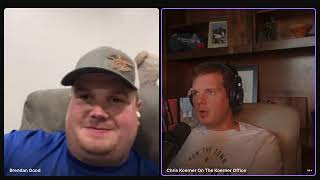
A live Q&A stream hosted by Chris Koerner with guest Noah Kagan (AppSumo cofounder), where several callers (Riley, Brian Summers, Matt Hannon, Brendan, others) present early-stage or scaling business problems. Topics covered include donor-advised funds (DAFs) and go-to-market for a fintech serving wealth managers, mortgage products for self-employed borrowers (bank-statement loans), a remote dental second-opinion service (mydentaladvocate.com), and small-scale woodworking/side-hustle ideas. The hosts give tactical, often low-tech growth advice (cold calls, referrals, targeted partnerships, testimonial placement, niche outreach) and discuss product/market fit, LTV economics, and distribution strategies.
Chapters
Noah. Chris. Corner. How are you, man?
At peace.
How are you?
I'm good, I'm good. I'm having a good day.
Nice, man, nice. Yeah, it's a nice day out here.
You're down in Austin, right?
I am, I am.
Where are you?
I am about three hours north. Dfw. Oh, are you.
Dude, how do I get a million dollar weekend copy in your background? Let's talk about that.
Well, I can. Yeah. How do we do that? I don't know.
Do you have a copy of it?
I don't. Not on me at the office.
Oh, but you have, you have a.
Copy of the book? Yes. Okay. I read the book. I love the book. Me too.
How are you today? What's going on with you?
Oh, good, man, good. I sorry. I trying to get this broadcast going.
Let's broad it, all right. What's your day job? You're like real estate? You own like mansions?
No, dude, I own the opposite. I own RV parks, mobile home parks and businesses.
You're one of these holding company bros.
I am. I'm like. I'm like the stereotypical sexy hold code that's really not that sexy or that big even.
I appreciate.
Well, let's.
Maybe you'll share about that on air. I'd love her honesty.
Yeah. Well, I've been doing this for 15 years and I've got shiny object syndrome. And I fought it for 15 years and now I'm like, this is. This is me. This is what I have. So if I have seven seven figure businesses instead of one ten figure business, whatever, I'm having fun. So that's my justification. Anyway.
So are we streaming this?
Yes, I'm getting it going right now.
Let's see. Yeah, I'm happy to try this out.
This is cool.
I'm curious to see how it. How it works.
Yeah, this is week two, week 12, and it's been. It's been really fun. I didn't know if I would like it, so I put it kind of an end date on it. But I'm having a lot of fun.
So, Hans, you like live stream it on your Twitter?
Yep. And on YouTube. And then I put it on. Then I edit it and put it back on YouTube and on podcasts as well. So do you see it showing up on Twitter? Not yet. I was.
Oh, yeah, there it is.
Okay. Yes.
Oh, interesting though. It's not like a Twitter spaces thing. Majigger.
No, it's like. Because spaces is really weird when it comes to video. So it's like it's through the producer portal to the API or whatever.
Dude, you have the biggest wedding ring ever. Did you just choose that or your wife choose that?
My wife did, actually.
I could tell.
She's like.
She wants to make sure everyone knows, like, I got this little, you know.
Come on. She's not worried. I'm an introvert. I don't flirt with anyone but her.
Dude, that's a smart man.
Whether.
No matter what kind of vert you are.
All right, all right. So we're live. Go ahead.
Yeah, we're live here. I'll do a little retweet. We're live. Yeah, we're just. We're out here.
Let me see.
You are light.
What do you mean?
It was a little hard to hear you. Not as loud as I thought you'd be loud. Not in a literal, but, like, literally, it's. It's kind of quiet to hear your microphone.
Is that better?
Yeah, that is better, actually.
Okay, cool.
So what are we. We're here to, like, give out free business advice. We, like, give free coaching to people.
Absolutely. Yeah. It's like Dave Ramsey, except actually tactical and strategic and not just, like, you know, make more than you spend. Hold on.
My wife's streaming my name. One sec.
Chris. Hey.
Hey, guys, Give me one second. I'm just jumping in.
Your audio sounds terrible.
Mine or his?
No, no, no, no. Your. Your audio sounds great. I can't hear Chris hardly at all.
I'll be right back.
No, can hear me fine.
You sound super low.
Well, he just said that, and I just turned it up and then he.
Said it was okay.
Now you sound a little bit. Now you sound way better. Okay. Okay. Sorry. That was it.
I'll leave now.
All right. Good to see you. Yep.
All right, let's do business problems.
All right. No, you hear me?
Okay, now it's still light as hell, man. Like, you sound light. I can make jokes while you get your microphone working.
How about now?
$800,000 microphone.
Is that better? We better now.
You're great placement. Okay, wait for it.
And I'm gonna. I'm gonna have impose it on the background in post production. It's going to look really obviously fake, so. Okay. All right, I'm gonna let in Riley, and then I'm going to intro you, and then Riley will ask his question, and we'll just get right after it. Cool? Hell, yeah. All right. All right, Riley, thank you for joining. So, Riley, before I have you talk, I'm going to introduce Noah Kagan. Noah Kagan has literally been blogging for a Quarter of a century. It sounds a lot longer than it is, but 24 years, right? 2,000. He. He's the co founder of AppSumo, employee number 30 at Facebook. I have not been reading his blog since I was 13 years old. I've been reading it probably since I was 23 though. And it's an amazing blog. And he just wrote a book called Million Dollar Weekend. And on one hand I love the book because it's really good and on the other hand I kind of hate it because it's in my head and it's like kind of the book that I wanted to write one day, but he beat me to the punch. So now I have to think of something else to write about.
We were going to put your name on the COVID It was gonna be Chris Corners presents Million Dollar Weekend, written by Noah Kane and Tol Ross.
I should have answered that text, man. I'm really bad about that.
You know how you gave me that voicemail that was four hours long and then I literally copied all of it into a book into audible.
That's it.
So be careful. Don't miss my lawyer sleepwalking and voice memoing. It's dangerous.
Anyway, thank you for joining, Noah.
Happy to be here.
Thanks. All right, Riley, you've got a. Just tell us what you've got.
Sure, I'll try and keep it simple. About a year ago I made a big transition from owning an auto detailing business to a startup in finance. And so it's been rewiring my brain to learn how to market a different type of business. So we are in the financial services industry. We to keep it really simple, we provide services to wealth management firms to help with their clients charitable giving. And so technically their clients are our customers, but really who we're marketing to is the financial advisors and we've pretty well dialed in our offer. It's pretty compelling and the hurdle really is trying to get in front of more people. And so we're growing, but there's always ways to improve. And so my questions are pertaining to one, I guess one last bit of context. Sales cycle is pretty long. Our business is seasonal because most people are doing all their charitable giving towards the end of the year in Q4. So we could talk to someone in January, it would go really well. But they're not going to need our services until December or November. And so first question is some tips on staying top of mind with prospects and existing relationships. And then the second one, just just looking for creative ideas for lead gen. We have a few different channels But I would love some ideas for cold outreach or stimulating referrals. And yeah.
So one, you literally were probably the first person ever who's like, I'm going to tell you simple. And you told it simple. Whenever someone does that, like, I'm going to tell you really quickly, I'm just like, okay, like, well done, sir.
Thank you.
Thank you. How's this business versus the auto detailing business?
It's, it's totally different. I love it because it's, we could, we could work with anyone across the country or across the world. Whereas my detailing business, it was in Boise, Idaho and it was hyper localized. And so the, the things that I really excelled at don't really apply to trying to reach someone in New York City or, or, or across the country. And so, but it's more rewarding because we're growing a company that could be huge compared to what a local business would be. So it's totally different, but it's stretching me. And so I love it.
Good for you. Good for, good for you to live your dream. Yeah, nice, man. So a few, just trying to, a few questions to understand things. So you bought it or you started it?
I, I just joined the startup, so I didn't start this one. I started the auto detailing business. It's called UI Charitable Advisors.
I literally just saw a company get funded for like $100 million yesterday, which has zero discouragement. It's just like, oh, what an interesting space. So you guys help wealth managers facilitate DAFs, physical sponsorship, field of interest funds?
Yeah, primarily it's donor advised funds or, or DAFs. That's like 90% of what we do.
So it's like I'm trying to make sure I understand the problem. So with these wealth managers, it's setting up a DAF for someone or executing.
Their DAF, getting them to use us to set up DAFs for their clients. So the client, a DAF is basically like a health savings account. Oh, do you have one? Okay, yeah, it's your charitable savings account. And so advisors are just a huge source of referrals for that. And what's unique about us is that the advisor can continue to manage the investment of the assets. And so they can manage it just like they would the rest of the client's portfolio. Charge their investment fee on it. If they want to make invest in a real estate fund or private equity, they can do that, which is unique in the daft space. And so advisors love us.
How big is the company or sales so far? Sorry, by the way, I don't Know how much time we have? Like, we can do more.
Good. Yeah, you're good. You're good. Okay.
Yeah, we got a team of 12. We have $350 million in DAs. So we, we're growing really fast. I mean, compared to our competitors though, like Schwab and Fidelity, they're in the, you know, $40 billion. So we're, we're actually a pretty small fish, but we're growing fast.
And yeah, it was funny. I was thinking last night, you know, one of the best companies to kick their ass is Google because they kind of like drag their ass on some of these areas that I think are opportunities. Like they gave up Google Reader.
That is gone.
And I was, I was just thinking about other areas of their business. Like, they haven't updated Gmail in forever. Right. It's like the same email thing for 10 years. So I like the idea you're going out because I did my daf, which for people, I guess, that don't know.
Sure.
You give, you give stock and then you get a tax write off on that stock. And they can. That stock now is only used to donate money to charity.
Yep.
And so I did it through Schwab, but it's kind of a pain in the ass. And then my wealth managers are facilitating it through Schwab.
Right.
So why would someone do it through your stuff? Through. Directly through their Schwab account with their wealth manager? Because most wealth managers use Vanguard or Schwab.
Yeah. So we offer a lot more flexibility at every step of the way. So we can accept more than just cash and stock. We do a lot of donations of real estate or privately held business interest, crypto, fine arts and collectibles. So we're much better at anything complex with how it's managed. The advisors can still use their own custodian. So if they use Schwab, they would still set up an account at Schwab. But instead of choosing from four different mutual funds to invest the money in the daf, they can do anything that they do in the normal course of business. And so it's much more flexible from an investment standpoint and for a user experience for their clients, we have a much better portal. And so it is a better user experience. The clients like it and it's the same price as Schwab, so there's no friction from a price point either.
Riley, what does your average client look like? Sure.
Average account size. Well, I guess our average advisor is independent wealth advisor. So we don't work with big box firms like Merrill lynch or Morgan Stanley. So independent wealth advisors, that's our, our target audience.
And then how have. By the way, your guys about page looks like the perfect family I've ever seen.
You know they are in Provo, Utah.
Yeah, we're in Utah.
So happy life. Anyone go move to Provo, Utah. We're real content. So I guess in marketing you guys have. It sounds like you have a clear playbook and you're executing and it's working. So, you know, my, my main answer would just keep doing that.
Okay.
I know you're looking for something new, but I think something old is more successful, which is. Sounds like you have a, you have a. How do you guys get a hold of these wealth managers currently?
Sure.
Kind of four main channels and the first one is hopefully going to be our biggest one eventually. But finding some formal integration partnerships which could bring in a lot of inbound leads to attending industry events, so going to conferences in the wealth management industry, referrals from existing advisors, and then cold outreach.
And you know, I think one of the big things in marketing. Do you have a clear goal? You have a clear goal for how many, you know, clients you're trying to see or is it the assets under management you're trying to target?
Both.
Yeah.
And then are you guys on track for your goal this year?
It's so hard to predict because most of the business happens in November and December. So we, in terms of generating leads and having those meetings, we are on track. But we were on track last year and didn't end up hitting our assets under management goals. And so even though we were generating enough leads, we didn't close enough of those, I guess.
But then you guys can accurately predict like, hey, we have this many leads and here's how much they generated. So you know what the actual new number should be this year?
It's, it's just so unpredictable because we could get, you know, $20 million DAFF come in the door out of nowhere, or it could be a bunch of $50,000 daffs. And so trying to predict the size and it's been really tough to predict.
Riley, if it's a $20 million death, what do you guys make on that? And how long do you expect that customer to stick around? Sure.
With the big ones, those. So we, we charge. The way that we make money is we charge an AUM fee. So it's based off of what's in the account. So if they donated 20 million and then immediately send it out to charity would barely make anything. But most of the, the larger daft so it's. It starts at 0.6% or 60 basis points for the first 500,000, and then it works its way down to 10 basis points, the larger the DAF. And so I don't even know off the top of my head what that would be on a $20 million DAF.
But.
Yeah, so assets under management fee.
I think.
I'm kind of confused, though. So you guys line up all these people, but someone like myself doesn't submit to my DAF until end of the year.
That's just what. That's just when people end up making their donations, at least the, the large bulk of them.
I don't know if I'd buy that because, like, yeah, I think it's like at the end of fiscal year. So you want to lock in the tax benefits. I think, like, is there a benefit for me getting it in now?
It would be the same benefit as doing it at the end of the year. But I think the reason why we see so much at the end is because people are having their, whatever, annual or quarterly meetings with their advisors in September, October, and they're looking at how much they made this year, looking at what their tax burden is going to look like the next year, and then that's what's pushing them to make a contribution before the end of the year.
Are you guys trying to get more clients that are super rich like Chris or like low rich like me?
We've seen the most success with the higher net worth just because our offering is a white glove, super flexible, lots of creative things that people can do. From a philanthropic standpoint, it benefits people in the lower income brackets, but it's more negligible to compare us to Schwab if it's a smaller daaf. But the benefits do really show up with high net worth people.
What's high net worth?
I guess I would say over 500,000. In the daaf, there's, you know, giving to international organizations. We see people that will, instead of just writing a check to a charity, they could issue a loan at no interest. So it still benefits the charity, but you know, just more creative ways to fund philanthropic endeavors. But it doesn't necessarily make sense if, if you don't have more than 500 grand in your gas.
Dude. I think my. The two pain points for me is one, my DAP is 12,000, so I donated all my intel stock.
Because.
Then secondly, the thing that was sucky about the way that it worked for me is when I donated the stock, it converted it into some generic, like Balanced fund. Is that how it works in all dapps?
Not with us. So you could keep it in intel. I mean we have people that donate bitcoin and keep it in bitcoin. It can stay how you donated it if you make an in kind donation like that and you can work with your advisor to invest it exactly how you want to. And that's, that's different.
So what can, what do you want? What are you hoping to walk away with from today?
Really? Some, some creative ideas, probably specifically with cold outreach. What are, what are some ways to stand out? There's so much we, we, we do a lot of email outreach and it's hard to get noticed, hard to get someone's attention. Once we have the conversations, it goes well. But it's that getting that first conversations that's the toughest.
I've got two ideas for you, Riley. One is, one is very boring. One might be a little sexy. So I love this business because if you have a million dollar daft, according to what you said, that's $6,000 a year, that gross profit to your company, right? 60 basis points. So they might stay five years, 10 years. So that's a, that's a valuable customer. And that might not even be the biggest customer that you could get. And so to me that, that means you can spend a lot of money to acquire them. And when I say a lot of money, I mean like more hand holding. And so the unsexy answer to this is just a boiler room full of cold callers in Provo, Utah. I don't know if you're calling geographically or not. Like if a lot of your customers are in the area because it's easier to sell to the close customers. I just think that would work. And it's just a numbers game and it's not sexy and it's the most obvious thing but, but sometimes the most, you know, the unsexy thing is the best thing. The sexy answer is research what Brex did with their growth hacking techniques. They sent bottles of champagne to corporate offices in, in San Francisco. I think you should lean into your geography being in Provo, Utah, like the highest density of Mormons in the world and like ship Diet Coke to these customers and just, just like a tongue in cheek. We're in Provo, this is what we do. Yada yada yada. A, it'll be a lot cheaper than champagne. B it's just kind of funny and it will stand out more. It worked for them and it's probably, probably a similar LTV Brex and you guys.
Yeah, I like that a lot. We definitely want to dominate Utah because it's just the most immediate thing to, to look at. And, and we, we do pretty well in Utah and there's actually. It's one of the highest concentration of people that have. Are giving a lot to charity and so it is a pretty good target market.
That makes sense because Chris did too. I'm only going to give you one idea. Let me just rip on a few thoughts. Like, I think the number one thing I've always done in business is like, how did you guys get your existing best customers and where did that come from and how did you get those partners or customers and literally just do more of that. I know it's like we want to try a lot of new things. It's fun. But like you probably got them through connections or LinkedIn or like not cold.
Sure, yeah. Most of it's from referrals.
The best one see, like, have you really gone through every single referral of the referral? I think there's probably a lot more on that bone everyone. Everyone for everyone, including myself. Two other ideas that I was kind of just, I don't know, goofing around on. One is where else are those people doing charity things? So like, does it make sense like charity auctions? Because I think it's like, where else are people doing charity stuff where they're like, hey, I'm. This is a benefit tax wise. Oh, there's other tax opportunities. It's more of an awareness thing. So I think that's one option that I think would be cool to just a lot of times in marketing do it in the same medium. The other thing I was thinking is I think a lot of people, maybe when you're in the, you know, like Chris in the, you know, nine figures.
But someone like plus nine figures including four decimal points. Decimal points, yeah.
Chris is European where it's like there's no commas, just dots. The other idea there that I was thinking about, I think there's a lot of information issue. Like for me, I love tax opportunities. So I love them. Like if anyone has some tax creative idea, like there's, there's a few lately I just think you need. Can you send people postcard, email, letter that's like, hey, do you know that you could save 50 in your taxes or you could save $20,000 this year and then maybe make it a little bit more target in your outreach. So like for appsumo, we email partners saying, hey, can we send you us $100,000 check. They're like, yes, I'll talk to you. So what's the equivalent of that where it's like, hey, do you know that you could have saved? So for me, I had like a $10,000 credit on my intel stock and the DAP has actually grown even though I've already been donating it. I think there's an awareness opportunity for you with very targeted people within your network. And then maybe I would probably try to pattern match these existing customers. It might be Mormons, like Chris is saying, but I think, you know, just pattern match them and, and then I, I would be more targeted.
Yeah, absolutely. That makes sense.
Cool. Well, thank you, Riley. Thank you. Yeah, fun, man. Have a good one. See ya. All right, we've got, we've got Brian Summers next. You ready? Another sip of tea. You want to plug it a little bit?
Yeah, let's do it, man. This is fine. It's interesting. It's good to get the brain juices flowing.
It is fun. Yeah. You never know. What, you never know who's going to pop up next.
How'd you find these people?
They just through my website. They just messaged me questions. Oh, really? Yeah, like, I mean, you get DMs too, right? Like, hey, can you help me with X, Y or Z? And now I just have my assistant go in and say, fill out this form and come on my show and I'll answer your question. So.
Okay.
Works out. All right, I'm letting in Brian. Brian.
Hello there.
How are you, man?
Doing well, thanks. How are you guys doing?
Good. Good. All right. So you have, you sell loans to self employed people?
Yeah, I started with a company and it's one of the things we offer and a lot of places don't. And so I just, I'm curious about creative ways of finding entrepreneurs and business owners and self employed people.
What do they use these loans? Is that what the number one thing you want us to talk about is?
These loans, are they mortgages?
Yeah, they're mortgages. So most, most loans, they have to go by what they, by what they claim on their taxes. So if they write off a bunch of stuff, they're screwed when they go in to get the loan because they have to go by what their taxes state. But these loans were able to go by bank statements. So we can look at 12 months or 24 months of their bank statements and then go by their revenue. If we can see that a lot of cash is coming in, then we can qualify them with that.
What do the rates look like?
Sorry, Chris?
Yeah, go ahead.
It's loans for kind of entrepreneurs.
Yeah, exactly. And self employed. Anybody that's self employed.
And then, you know my favorite question, where do you find, where have you found your existing customers?
So mostly I've done a different kind of loan, mostly VA loans, working with veterans. And so I was in a, I was in a company that specialized in that, and they would send out, they would send out mailers and we get calls in.
How do your rates compare to a normal loan or your fees?
So a bank statement loan is going to be usually a point higher than like a regular VA or a conventional. Conventional loan, and the fees are similar.
So the first thing that comes to my head is I saw a tweet about this a year or two ago and it was someone complaining about how hard it is as an entrepreneur to get a mortgage. And I've been self employed forever. And so I've been there and it's, it's the worst. And so I feel like you've got an amazing pain point to solve, one that it seems like a lot of people either can't solve or are or are unwilling to solve because they're higher risk. I feel like you could go through like guru business, micro influencers to talk about this. Are you legally allowed to give referral fees or affiliate fees on these loans? Because I feel like that would be sizable to someone with 10,000 business followers in the home service niche. If they were to sell five or ten loans for you, that could be. Be a good amount of income.
Oh, that's an excellent question. I'm not sure, but I'll have to look in and see if that's. If that's allowed under the current laws.
It doesn't seem like you would be competing with a lot of other offers. Like if you go watch YouTube, influencers of people like Noah, you're not going to see them talking about this stuff. They're not promoting stuff like this. And so that's either a good thing because you wouldn't be competing with others, or it's a bad thing because it's been tried and someone failed at it. Right.
Chris, does all of your advice come from Twitter threads?
Is that what you do from reading.
Twitter all day long? You're like, I saw a tweet that said send bottles. I saw a tweet.
Everything I know, I learned from Twitter.
I mean, I'm on TikTok. TikTok's how I run appsumo. Okay, who should I hire? Tick tock, Done ticket. And it's done okay, Ticket, Brian. So I, I think this is like, Brian, how are you not a billionaire? Because all entrepreneurs, even including myself, like I have a company, it's a C corp. It's like officially stuff. It's hard for me to get loans, you know. So like how are you just not printing? You just got, is this a new unit? You're just ramping up?
It's a new. Yeah, it's a, it's a new company I'm in. The last company I was in didn't offer it and I didn't even really know about it in the old, in the old company. And so it just seems like there's an untapped market.
I think what's challenging is these are mortgage loans, as Chris was asking. Yeah, it's like a very specific time for a very specific moment, right. So how do you find the people? It's like insurance, right? Either you have to add something bad or you have to, you know, there's some things that trigger the thought to make a purchase.
Right.
It's not like it's not food where you have to eat three times a day or something like that. So I guess how do you connect? When's the moment that an entrepreneur and where are, where do they go like, hey, I'd like to get a loan for a house, but maybe as an entrepreneur it's going to be tough.
Right. And so I guess what I'm hoping is that I become known as the entrepreneur, the guy who can help entrepreneurs. So when that, when that time happens, they know, okay, this is the guy to call. He's, he can get you through these, through these waters.
So I wonder, there's a lot of real, there's a lot of like mortgage loans, right?
Uh huh.
But I guess would they want to pass you guys the loans they don't take for entrepreneurs? I don't know. I guess the areas that I'm thinking about is when is someone thinking about getting a house? It's like they go to a mortgage person, right? They go to a website site, which that's expensive. Or they go to like try to get a loan and they're the loan person's like, yeah, I just can't do a good loan for you. But they may not want to. So one, I think they could pass your referrals, but that's tough. I think the other thing I would be curious about, could you connect with more people that have a lot of influence to solopreneurs? So specifically I was thinking about, are there incubators, are there accelerators Are there groups that have a lot of freelancers or self employed people making six figures probably, or close to six figures, so they can even afford a house nowadays. But I think it's like, how do you get your, your seed planted in these, these key areas?
So would this be like, would this be like local, local groups, are you thinking, or places on the Internet?
I think you, you know, one of the groups I would think about is like, you know, Dynamite circle, join Hamptons entrepreneur organization, ypo. People that honestly have money.
Right.
Because the, some of the, the smaller groups, it's not that they're smaller, but like I think you could hit up incubators. I would try that as an approach.
Okay. Yeah. Even Brian, what if you, you just bought ads on like lending tree.com, right. People go to apply for a mortgage and they're pessimistic because they're self employed and then they see your ad for the self employed mortgage guy. Right? Like that could be your name, that could be your brand. And that's to me, if, if it's such a problem, which I believe it is, as soon as people just see your name, they're going to be interested before they even see your content. That's, that's what my. Back to Twitter. I'm sorry. Sorry.
No, Are you doing one more Twitter reference?
I'm doing it. I'm doing it. Like when I first started on, well, when I started on Twitter on my, my newest account, I didn't start as Chris Kerner because everyone wants, no one wants to read what Chris Kerner has to say because they don't know who Chris Kerner is. But I started as the mobile home park guy because I had just bought and sold 25 mobile home parks. There were strip mall guy, there was self storage guy, there was no mobile home park guy. So I thought, okay, people are going to judge me based on the fact that they're going to assume that I know stuff about mobile home parks, not on the fact that I'm some known name. Right. And so if you go create a Persona online, people will read your content through a positive filter. They, they'll have positive confirmation bias as they read your content, assuming that you'll know what you're talking about and they'll be interested in you before they even read a word of what you say because of your name.
Yeah.
I would try that.
Oh, that's great. Yeah, thank you.
Anything else, Noah?
Yeah, There's a company, Ocho.com.
Ocho.
Yeah. Sometimes instead of like making your own party, go to where the party is. So Ocho has a lot of like self employed rich people. It's software for SEP IRAs and things like that. Like, I try to go to where the party is that has my customers, so I would. Sometimes it's tough though, because I hate kissing people's ass. I don't like people kissing my ass. It's a weird thing, but Ocho has a lot of sep IRA entrepreneurs. People that are financially minded that I'm assuming one day might want to buy a house.
Even though.
Yeah, honestly, real estate sucks. I'm selling all of my real estate. It's only like one place, but I'm selling it. I'm tired of this. It's annoying.
A tool shed? What's that? It's a tool shed in your backyard, dude.
It's just like there's like a lizard in my house or something. People were complaining last night. But I think Ocho, you know, there's people there. And I would also try to think if. I don't know if your. Your savviness is in the marketing or the sales or what area, but you can also look at what they're doing in their marketing area and maybe think if there's some playbooks in there for you to replicate.
That's a good idea. Yeah.
Ocho.com. i think they're now called carrymoney.com.
I think ESPN the Ocho stole that domain name from them. It's a shame. Did he?
No, I think that they own ocho.com.
You ever seen. Was it dodgeball?
Nobody thinks.
Exactly. Well, thanks for coming, Brian.
Oh, thanks so much. It was a big help.
All right, see you later.
Bye.
Bye.
All right, I think you'll like the next one. Matt Hannon, he has a. I think.
I committed to 2:30.
Yeah, if you got to go, you gotta go.
All right, I'll do one more for.
All right.
You're gonna like this money. You paid me.
I did, I did. In bitcoin.
Are you an Alabama fan, Chris Corner.
I. I did my undergrad there, so. So yes.
Where'd you do your grad?
Tcu.
Oh, nice. Yeah, dude, I was at. I. I was at an RV park on my honeymoon a few weeks ago. Yo, these places are expensive. These people are. And I'm like, so what did you guys do? Like, I literally just parked. Like, it's expensive parking. Like everything is like real estate and it's. It was interesting business. It's like very low maintenance and if you have desirable locations, like kind of interesting.
Exact 30% expense ratio. It's a great business.
Is it really, dude? I guess.
I don't know.
Mrr. But I'm tired of the software stuff. Should I sell appsumo and then go open RV parks?
Absolutely. You should sell it to me at 100% seller financing. I'll take good care of it. No, yeah, yeah. I need some operating capital.
Working capital. You need this.
There you go. All right, Matt.
And you do your consulting stuff with giving the free business advice afterwards.
Yeah, let's bro down.
Let's just throw out for a little bit, and then you can bring on Matt Hannon and, you know, give him crazy market every. It's so interesting in business. Right? Like, we all went like this, like, crazy marketing tactic. Like, you're gonna probably see it on Twitter.
What?
I don't know what you saw on Twitter. Whatever you see. But it's like, as much as that shit's interesting, like, the. The. The most. The stuff doesn't need to be sexy to work. Like, that's the. That's the point. Like, we. You know, at appsumo, we have. We do a half a million dollars a month in our ads and performance marketing. So ads and affiliate, we can probably, instead of doing new things, literally double our business or maybe at least 20 to 40 growth. Just improving that.
Yeah.
But all the time we're talking about, like, we should do a new thing. Let's send influencer boxes. Like, it's fun. Let's change our logo. You know, like. But actually, the meat of it is probably just doing more of what's working better.
I know. And a lot of times, the stuff that works best is the stuff that's not fun. So people are looking for distractions to not do the unfun thing.
Say that one more time. Because I was just so damn good if that was the whole show, like, I want to put that in a box.
Oh. I mean, my. My first business, we grew on cold calls. That's it. And I could. I could start that business over again today with cold calls. And it wasn't sexy. You had to put your pride aside. But it worked. Yeah.
Sexy is what works.
Right? Like, that's the.
That's the kind of interesting part of this is, like, sexy is what works. But I think what's appealing is the idea of, like, this. The fun part, which. It can be fun too, but not always, you know, very. It should be fun, but, you know, sexy is just, like, do the thing that works over and over and eventually just have. Pay someone else to do it.
Yeah.
Or Pay software to go do it.
Yeah. Amen.
Amen.
And it wasn't sexy. You had to put your pride aside, but it worked. Yeah.
Sexy is what works, right?
Like, that's the.
That's the kind of interesting part of this is, like, sexy is what works. But I think what's appealing is the idea of, like, this. The fun part, which it can be fun too, but not always, you know, very. It should be fun, but, you know, sexy is just like, do the thing that works over and over and then eventually just have pay someone else to do it.
Yeah.
Or pay software to go do it.
Yeah. Amen.
Amen.
Dude, I'm Mormon. Yeah.
What's up, guys?
How's it going? What's that mean, you're Mormon?
Yeah, dude, awesome.
I got four kids.
Here's the thing.
Low T. What's that? You're low T. Less man.
Less man. So here's one thing. I am low T. That's true story. Who told you? I thought my doctor with the hipaa.
So here's.
Here's like, a thing yesterday. You know, they say, good old Christian boy. I'm like, what a great brand. No.
Oh, that is a good brand.
That good old Jewish boy.
That'd be a good domain name. I need to buy that. Someone's boy. Yeah. Dot com, dude.
You know, that would just sell. They would sell polos and, like, water for grand for old ladies. Like, you just bring them water and you help them.
They could sell anything. It doesn't matter what they sell.
Dude, why are the Mormons competing so hard with the Jews? Like, Mormons and Jews are the same. We're identical, you and me. But everyone loves you.
Oh, well, yeah, the people love the Mormons.
Teach the Jews. I need you to teach the Jews. How do we get such good branding? Like, you guys. You guys have, like, the best brand of religion.
Oh, geez. I don't. Well, I mean, do you send 70,000 people out every year to knock doors? That helps. That's a good sales team.
No, no.
There you go.
You mostly hear us complaining. I think that's what you hear a lot of like, oh, look at Zuckerberg. He's a billionaire. You know, Sergey and Larry, Google billion. You know, like, you don't have us, like, doing the good stuff. You guys are doing the good stuff. So we need to send out salespeople.
Number one, pay 10 of all of your net income to the church.
So religious Jews do that. The Orthodox will generally do that. Sedak it. Like, they'll. They'll give that.
What are you waiting for?
I think also, you guys aren't partying hard, right? Like, no. You guys aren't out of control. You know what I mean? Like, the whole, like, not drinking, no drugs, like, some of the stuff, it's like, that means that you're making rational decisions consistently. Jews smoke a lot of weed. They're doing weed. They're like, oh, dude, let's make a movie. Oh, Seinfeld.
Okay, you know, this is a microcosm of what our first two callers were. Like, they come on, and they already know the answer. You know the answer. Like, all you have to do is donate 10 of your income, send out 70, 70,000 kids a year. And what was the third one? Oh, yeah. Not smoke as much weed and you're good to go. Then we'll be even. And then you can surpass us because you've got the media lockdown. We just have Salt Lake. You got.
I mean, Utah. I swear, and I won't swear to thank you is the best, one of the best, if not underrated state.
Oh, we losing.
I think we lost and got the.
Worst freaking place in the world. Yeah, the Jews. Why didn't the Jews take Hawaii? The Jews should have taken Hawaii. It's such a better place. We're like, let's get this little tiny speck across. Like, around in a desert, you know? Like, why couldn't you take Florida? Just give us Florida. But the Mormons. You're like, yo, we're Mormons. You're not gonna like us. We really like just being homogeneous. And you have an awesome state. I'm jealous.
It is a cool. It is a cool state. But hear me out. Brigham Young could have kept going, and he would have landed in San Francisco. That could have been ours. You've had perfect weather, too.
San Francisco's trash, you guys, because we didn't keep going.
It wouldn't be trash. We kept going.
Dude.
If the Mormons ran California, I would move back. I would just. I would leave tech. I would literally get in a wagon and I would go back.
That's amazing, dude.
You guys would run California so well. Everyone would be happy. Everyone would be friendly. It'd be super clean. You guys. Like, I'm sure homeless. The homeless are the happiest in Utah.
I'm sure Mitt Romney fixed the Olympics. We could fix California.
I like, I got a haircut in Utah. Friendly. There's pinball, my buddy. My favorite store of Utah ever is my buddy, Adam Gilbert. He's. He never drinks. I love drinking. And we Go. And we're drinking wine, and he never drinks. And he's like, dude, I'm not getting drunk. I love Mormon wine. And I'm like, I don't know how you're not drunk. Do we drink a bottle? Me and you? We shared a bottle. Because Mormon wine is all maxed out at 4%.
Mormon wine. That's the oxymoron if I've ever heard one.
But do you know that? Yeah, I did limit the alcohol levels of wine.
Is he Mormon or.
No, my buddy Matt.
Adam.
Yeah, no, no, he's a Jew.
Okay. Okay. He just drinks the alcohol in Utah. Got it.
No, no, we were on a guy's trip. We do an annual trip together, and that was one of our trips to Zion.
Okay.
That's where my. Dude. That's where my honeymoon was. It was in Utah.
You're. You're basically a believer. You're halfway there, you know, when people talk.
I just read the Bible.
Old Testament, too. What's that Old Testament as well?
It's the picture Bible.
Okay.
I don't know which story. You guys have so much. There's so many books, man. Like, I know it's. It's a lot of books, but I. My buddy sent me the picture Bible by Robert Crumb from Jesus or from whoever. And it's just a lot of stories, man. It's like crazy stories, you know, they're wild. So it's like all these religions have great stories.
I know. We've got the best, though.
You got the best. You got the best.
Oh, man.
So I feel like we've helped everyone.
Well, we got Matt here. Matt's got a question.
Hey, guys. What's going on?
Is Matt Mormon?
I don't know. Art. No, I'm Christian.
He's evangelical.
Hey, we're Christian, too. We're Christian, too. There you go. There you go.
That's fair.
That's fair.
I like God.
Can I join me, too? Absolutely. You're welcome.
And even Jesus, dude. Guy sounds like a good dude. He's just trying to do good things.
They killed him?
Yep.
I don't understand.
So why did they kill him? Like, he sounds like he was doing nice to everybody, and he wasn't causing no trouble.
They were intimidated. They didn't believe him. They thought he was blasphemous. Yeah, he's bold. He was too bold for him.
Yeah, it's crazy. He humbled himself to the king, right? I mean, that's. That's pretty legit right there.
I don't know, man.
If you Will let him do his thing.
I know, dude.
Do you think he could have stayed alive or.
He would have, like, if he didn't deliver his message. Ah.
Anyways, wild stuff. And I love all the religions. I think it's super cool.
It is.
Matt, how can we help you today?
And then I gotta go. Yeah. Okay, so here's. Here's the problem I have. So I'm a dentist. And, yeah, so I have this website, my dentaladvocate.com. and so basically, it's like a remote second opinion. So anybody could. Can log in, upload their X rays, fill out a brief questionnaire, and then I could review it and then get it back to them within 48 hours just for, like, 47 bucks. So I think the need, like, there's great value in it. I mean, you go to the dentist.
Now, and I literally got a root canal estimate my third one on Tuesday.
Did you really? Oh, man.
What was it? So there's two. There's a consulting fee. Like, let me pull it up. I'll just show you the bills.
Okay.
I was just like.
I was.
I'm not as price sensitive because I want my teeth fixed.
Sure.
Make sure it doesn't have any of my personal information on it.
So I don't even know any of this stuff.
I just gave him money. So there's like. That's the bill for the consultation. It was just a console. This is through an endodontics.
Yeah, 515.
And then the actual root canal thingamajigger, they're saying it's $1698.
Okay.
Insurance. That's not including insurance. That's just, like, what they're claiming.
So how do you feel about that? Are you in pain or why did you need it?
I haven't been able to chew on the left side of my mouth for two years.
Oh, okay. Okay, so there's an issue. So you're wanting relief. Yeah. Okay, so sometimes, right? Sometimes people go to the dentist and they'll be like, you need. You need three crowns. Right? And they'd be like, I just went to the dentist, like, two years ago, and my dentist didn't say anything about that. Like, I'm a little skeptical. And, you know, even just like, friends and family, right? Like, I'll interact with them at a party and they'll be like, hey, you know, what are your. What are your thoughts about this? You know, this too. I'm just unsure about it. And so it seemed like I was just always answering questions, which is cool, you know, But I was like, man, if Friends and family have questions. Why not just make it available to anybody? So, you know, I started the website with my wife.
Yeah, it's all good. You can keep going, Matt.
Yeah, so I started the website and basically it was getting like 30 to 40,000 page views per month. Just doing like SEO traffic, writing product review articles, blog posts, and actually doing pretty well just from like a revenue standpoint. Like Amazon affiliate was paying like two or three grand a month just from like product reviews. So it's actually like outpacing, like, well outpacing just like the second opinion stuff. But like Google's pretty broken right now, I think. So just with the, the March core update, it just really smashed like a lot of small publishers. And any kind of big media site or like big company can rank, but it's harder to rank now. So my question.
Yeah, what's the question? Because I got some ideas. Dude, you have probably the coolest business I've seen today.
Okay, sweet.
Okay.
In like, probably months. This is such a sick business.
Pun intended. Good, good.
Let's, let's figure out how we can like make it known to people. So anyway, my question is, so what are, what are some cheap ways to get in front of potential customers? Or like how should I pivot? What should I do different or what should I continue doing just to get the word out? You know, I know I could spend like money for Google.
Can I time you off for just a second? And I don't. Just give me a sec. Is it okay to interrupt?
Yeah, go for it, Go for it.
What's the revenue of the site? What's the revenue from like the sales versus the ads?
Yeah, so, so revenue. So I'm not spending anything on, on ads.
Basically it's coming from the affiliate stuff.
Yeah. So from affiliate site, like the Amazon affiliates, it brings in like two to three grand a month, the console stuff. So basically I just have to pay about, you know, one to 200 bucks a month just for like hosting some software.
How much do your consults make a month?
The consoles only, like, I'm only getting like two to five consults a month. And that's basically because like, I'm not targeting. So like the people that are landing on the site, they're landing on the site for the product reviews. Right. So I, I don't think the intention. Right. The intention is not there, but I think if I can get in front of people who actually need the service, they go for it, you know, so it's. So I'm getting traffic, but they're for product reviews. It's not for, like, people searching for, like, an online second opinion.
All right, I got two ideas. Not even two.
One.
This is so, so fucking rad. I don't know, you guys. This is so freaking rad. This is like, dude, honestly, such. So, so cool, man. I'm like, I'm so impressed.
Cool.
What do you got? What do you got?
So here's my two suggestions. Number one, I actually think you maybe have built a platform for other medical professionals. I think that's almost as interesting as what you've done. Like, instead of thinking yourself as, like, the dental person, you've created a platform where other dentists or doctors, or it's just in verticals. You can now replicate this business. You know, think about appsumo. I could create software or I can create the platform that promotes software.
Right.
Both can work, but, like, when I have the platform, I don't really care. So I think there's something interesting to think about where, like, maybe you can go abroad. Like, there's dental, there's like, doctor, and then maybe one or two other other ones that are big verticals. Now here's the other idea that I think is just as interesting. I think you have your free question. I think I would kill all of it.
Okay.
And it's only thing you do is it's a hundred dollars a year and you can have unlimited questions to your dentist, to this virtual dentist. I don't. I wouldn't give a free con. I can contact you for free. Are you freaking crazy? So it's a hundred bucks a year. And to me, I'm kind of like, my brother's a doctor that does insurance audits. So he does what you do, but for the hospitals. And he helps the hospitals fight their bills down with insurance companies.
Yeah.
So you're kind of that for a consumer side. I've actually been telling my brother he needs to kind of basically do this model. He's not ambitious. Like, like you are.
Right.
I know. I got the ambitious gene. He got the. I don't know what gene he got. He's a good researcher. He's a really good researcher. But I think there's something interesting about how do you position away where someone like Chris, who's rich, really rich. Right. Like, would Chris drop 100? So, Chris, let me ask you, would you drop a hundred dollars today to have unlimited consults around your dental bills and exams?
Yeah, if. I mean, I've got. Especially because I have four kids and a wife. We go twice a year each. Right, right. That's a great roi.
Yeah.
So, Chris. Yeah, hold on. Chris, how come you wouldn't sign up? Will you sign up today for my.
Dental advocate.com I would if he could convince me that I'd have a positive roi.
All right. So, Matt, I think that's probably the disconnect of people like me and Chris are like, okay, the insurance covers some and then we're dummies or we're just. We think it's, it's reasonable. So otherwise it's not worth someone like Kris, who has a ton of money, like super rich, like, doesn't want to pay. So I think it may not be a problem. But maybe the review stuff is the opportunity and you focus it more on that and then the question stuff is free and it's just a legion thing to your email list. Like if you're not making money on, I think, what people miss in business. And if you haven't gotten a copy of Million Dollar Weekend. Yeah, it's. Chris wrote it.
Actually, I did Ghost Friday $0 from I am not rich from Million Dollar Weekend, Only from any of those checks.
But I think what people get stuck on is they get stuck on like, well, I have to sell these, this, this consulting, but no one wants to pay for it. But they're doing over this. So you might want to think, well, how do we focus everything on the thing that's working right, and reduce the distractions on the other part. But maybe you can get these people to pay. But if they're not okay, I would get rid of it and then focus everything on the thing that is working and double down on it.
Okay, that sounds good.
Chris, you take over. I gotta go take care of my wife.
Okay. Thanks for coming, man. Appreciate it.
Matt. Dude, keep sending emails. I'd love to hear how you're doing. What a cool business.
Cool, man. Yeah. I'll send you an email.
Yeah.
Chris, thanks for having me on.
Yeah, thanks for coming, Matt. I think it'd be interesting if you reached out to dentists directly and, and use them for referrals. So they give out a quote, maybe the customer has a little heartburn and the dentist can be like, listen, if you want a second opinion, check out this website, right? And if assuming he's an honest person, it's not going to harm him to refer him out to someone else that's only going to charge him $47 only for that person to come back and now want the $2,000 root canal.
Right, yeah, that makes sense.
Have you tried, have you tried going through dentists at all or are you treating them kind of like a competitor?
No, I'm, I'm treating it. I'm kind of like the advocate for the customer, right. Because I think like I still want to hold dentistry in good light and so I don't want it to be like, you know, pit that, pit the customer against the dentist.
Right.
Like I'm trying to, I just want the truth, right. And I think if any, with anything, right. When you take your car into the shop, right. Like you don't know what they're suggesting, right? So like there's got to be a trust factor. But, but, but again, it's kind of relative. So like what you're saying is like, or just thinking about it, right? If you need one filling for 100 bucks, it may not be the best thing, but if you need like three crowns, two crowns are easily, you know, it, it's, it's well worth it, you know. So yeah, I think that my only concern if I'm going to dentist would be like they may, they may get a little, may think it's a little fishy or maybe skeptical regarding it. But yeah, you know, I, I was even thinking because I, I love how you keep talking about like outscraper and you know, getting emails. Like if I could just get it in front of the people that need it, right. Like hand it, you know, hand a card to like everybody walking out of a dentist office type of thing. I just need to figure out how to, you know, how to find that opportunity.
Yeah, it's tough because you've got great SEO, but this is a very time sensitive decision that people are searching for. They're not going to Google it on their phone in the waiting room it and most people are just going to get the quote and then buy it right then just by nature of how this transaction goes. I think one thing you could do to get more buy in from both the dentist and consumers is to put some testimonials front and center on their, on the site, emphasizing the ROI, right. Like I paid $47 to save 4700 or something like that. First name, last name, picture, maybe even a video or two. Video testimonials perform super, super well on the landing page. Put it as close to the top as you can because that's the most valuable real estate. So people don't have to scroll. I'm not seeing. I'm sure you have some sort of testimonials on here. Yeah, I see you have a tab. Those need to go front and Center. And then I definitely recommend using something like Outscraper to try to form some partnerships with dentists, even just friends that you have, and just say, hey, is this even relevant? Would this even come up in your everyday, everyday work and get some feedback and then see if you can get them to refer someone to. Shoot. Give them half of the. Half of the revenue.
Right, right, right.
Yeah. I was even thinking, like, even partnering with, like, a dental insurance.
Right.
Because then you could potentially save, you know, for them too. So it could be a cool angle as well. But yeah, no, I appreciate. I appreciate those recommendations.
Yeah, absolutely. Well, thanks for coming on, Matt.
Cool, man. All right, we'll see you.
All right, see ya, Brandon.
Hey, Chris, how's it going?
Good.
How are you on the show?
Good.
How are you? Good. So we've got one more after you, Seva. I think that's how you pronounce them. And let's. We're running short on time. So I understand that you. You're looking for something to supplement your income that you can take on before having to quit your job, correct? That's correct.
Yeah. I'm looking to build something up and then maybe potentially leaving the current job that I'm in.
What is your current job?
So I work a rotating shift schedule. I'm an operator in an oil refinery.
Okay.
I've been blue collar my whole life trying to look to possibly make a transition from being the worker to being the business owner.
Owner.
I understand.
Basically, it comes down to two things. Either have to have a lot of cash or a lot of sweat equity. I think I have a little bit of both that I'm willing to put forward before making that leap. But I'm having a hard time getting to. Getting to know what I actually want to do or is profitable for me.
I honestly, I don't think you need a lot of cash or a lot of sweat equity. I think you just need the right idea. I'm on this, like, framework recently that I can't get out of my head, where a lot of people call me and say, hey, I have this idea. Would this work? And I always kind of push back and turn it on them and say, is that the right idea? Because almost any idea would work. The Pet Rock worked. The Pet Rock worked. Like, stupid ideas work. Really comes down to the distribution. So question number one, is this the idea that I should pick? Maybe spend more time thinking about the idea and less time thinking about how to execute the idea? And then the second question is, how can I distribute this product or Service, AKA how can I sell it. Do you like home services?
Home services are okay. I used to actually be a plumber's helper. My uncle owned his own plumbing business. And when I was like, 19, 20 in college, I was helping him before I went on and did my own thing. But it seemed to me like the stress of running your own business, he was. He was running his own business and doing the work himself. And it seemed like it wasn't worth it because it just. It seemed like the business just consumed him all the time. I don't think he, like, he didn't really trust anybody to delegate his work to. Yeah, no, he did all the accounting himself, stuff like that. So it was really, really hard on him. And then throw a marriage with a kid in it, you know, it's just. It's just too much at one time. So I was kind of dabbling in that, I guess, but, you know, backed back out of it.
So I wouldn't recommend that just because of the licensing that it requires. I feel like there's dozens of other home services that you could tackle that are as promising, if not more promising, that don't require all that licensing and training.
Okay.
Usually when people ask me your question, they already are floating some ideas in their mind. Two or three ideas. So real quick, what. What ideas do you already have that you're leaning towards?
So you know what? I was thinking about possibly buying a woodworking machine and making, like, signs out of my garage, because I feel like that's something that I can do on my own time. Give, you know, I could say, hey, the sign will be ready in two weeks. Give me two weeks.
You know, make what types of signs?
Just like, you know, you ever walk into an Airbnb and it says, like.
Nashville or like a burnt American flag or something?
Kind of. But these would be like, more engravings, I guess.
Okay.
You know, so. Or like doing like, live edge for people or coasters or whatever for their bar.
Do you like woodworking bar? I do, I do.
I've done it. Done a little bit of carpentry actually, too, with my other uncle. He was actually a carpenter. He did, like, he hung cabinets for people and did, like, kitchen remodels and stuff like that.
Okay.
He was. He was pretty successful, but another story, you know, did all the work himself, all the accounting. Didn't really delegate anyone, you know, so.
Okay, I. So I think I have an idea. I think you should. You should go on Facebook Marketplace and buy the tools to do this. Right. Don't buy them new Buy them used, try to get them at a discount, try to get them at a price to where you could resell it the next day or the next year. Because these things don't depreciate that much for the same, if not more. Right. Because that at that point you're de risked. Also, buy a simple tripod. Do you have an iPhone? I assume I do. Okay, good. Buy a tripod, use your iPhone and just do me a favor and film everything you do. You might never put it on YouTube or Instagram, but just having the content will be incredibly valuable because. Because that's how you can take a business from, you know, $30,000 a year to $3 million a year by distributing that content. Like, okay, I forget the name, Blacktail Studios. But if you enjoy woodworking and that's an idea you already have, it means you're excited about it and I can give you an idea. But the chances of you latching onto it immediately are very slim. Sure. So I always lean towards your ideas. Right. Whoever I'm talking to, that's not like a new idea, which is, that's a good thing. That's why I love it.
Right.
You can sell them on, you can sell them on Facebook, Marketplace, in Facebook groups, local Facebook groups. You can sell them on Etsy, ebay, Shopify. I would just buy a machine, use, make five or ten things, experiment with it, start posting it on your personal social medias. Like just not selling, but just which do you like best? What do you think would sell best? What would you pay for this? Just getting feedback. And then these people in the process of giving you feedback, they're going to want to support you and they might become your buyers as well. And then you're not going to make a full time living off of selling to your friends and family on Facebook and Instagram, but you're going to get really, really valuable feedback that will help you scale this. And you're also going to learn without any risk because you're going to be able to resell these if you don't like it or if it doesn't work, you're going to be able to learn. Do you like this? Because a lot of times when we convert, convert a hobby to a business, we stop liking it. Yeah, that's something that most people don't see coming, but it just changes the whole dynamic. It doesn't always, but sometimes it does. So. Okay.
All right.
Well, yeah, I appreciate the feedback. I think that, I think it's something that could work and just, you know, it's a. I feel like it's a low barrier to entry type thing. My original plan, too, was making things for my friends for free. Honestly. And just saying, hey, man, here's a business card. If someone. If you have people over or whatever, can you please just.
Absolutely. I mean, it's free marketing hanging on the wall. Right, right, right. I mean, shoot. That's another idea you just gave me is start DMing Airbnb owners. Now, you have to be careful. I would create a new Airbnb account because Airbnb will ban your personal account if you dm. Too many people ask me how I know or don't ask me how I know.
Well, I mean, it's smart, though. Why would you not do that?
Why would you not do that?
You know?
And these short term rental owners are also. They also congregate a lot on Reddit and Facebook. So go find those groups, offer to send them to people for free just for home decor with some sort of like a QR code in the corner directed to you. Right. Or to your website. And it's just. It's. It's free decor for them and it's free marketing for you. Sure.
Thanks for the information, Chris. I really do appreciate it. I know you're short on time, but that information was super invaluable.
Yeah. Just promise me you'll follow up.
I will.
Maybe I'll send you a sign.
I would love it.
All right.
All right. Thanks, Brendan. All right, Bye. Bye. See ya. All right, well, that is it for episode 12 of the Kerner Office. Thank you to Noah Kagan for joining. He just wrote a book called Million Dollar Weekend, which is really, really good. I read it myself, and it's a book that I wish I would have written because it's more of a guide than just a novel or even a nonfiction book. It's a really good book. It teaches you how to start a business worth a million dollars in 48 hours, aka over the weekend. So thanks, Noah, thanks to Brendan, Matt, everyone else that joined, we will do this again. I don't know if it'll be on Wednesday or Friday or whatever, but this is week 12 and I'm having a lot of fun. And I will see you next week. Sa.










