Behind the Scenes of Accidentally Launching a Business
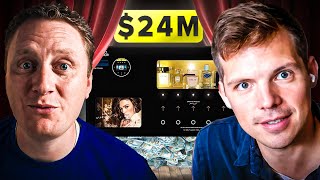
Chris Koerner and Nick Huber describe how a short Instagram/TikTok reel about a perfume vending machine went viral (≈8M Instagram views, ≈3M TikTok views) and immediately generated inbound demand. Koerner bought perfumevending.com, set up a simple form and automations (Carrd + Zapier → Google Sheets → Gmail + Luma webinar links) and collected 1,082 leads averaging 8 machines of interest each for ~$3,000 per machine (≈$24M in potential lead value). They are negotiating distribution with the manufacturer (Perfumatic), ran a webinar with 100+ attendees, and scheduled dozens of sales calls starting the week of July 29 to validate sales and close deals. The conversation then pivots to DM-management product ideas and a Netflix documentary (Dirty Pop) about Lou Perlman, using boy-band history and Ponzi schemes to discuss ethics and stress in entrepreneurship.
Questions this video answers
Approximately 8 million views on Instagram and 3 million views on TikTok.
1,082 leads with an average of 8 machines per lead.
$3,000 per machine; approximately $24 million in potential lead value (1,082 leads × 8 machines × $3,000).
perfumevending.com
Carrd (site/form), Zapier (automations), Google Sheets (data), Gmail (emails), Luma (webinar/booking).
Chapters
Everyone starts asking me, which always happens when things go viral. Where can I buy these? Where can I buy these? Where can I buy these? It's like, dude, I'm not the authority on perfume vending machines. I just posted a video and talked about them, but I'm kind of an opportunist. And so I reached out to the manufacturer and said, hey, look at this video. You want to make something happen? And they're like, oh, interesting. Let's talk in five or six days. And I'm like, this will not be alive in five to six days. What are you talking about? I went to Namecheap and I bought PerfumeVending.com and I put up an ugly form. Welcome to the Kerner office. It is Friday morning, and it's time for another Holdco Bros. FYI, Holdco Bros. Episodes will always be on Friday morning from here on out. So if you like them, you can count on them on Friday with Nick and I. Today, we talked about this perfume vending machine business that we accidentally fell into. We talked about it here on Holdco Bros. About a month and a half ago, and then I made a video about it on Instagram to promote it, and it went viral. And now we're in the perfume vending machine business. And I'm not exaggerating. So we follow up on that, we tell what happened behind the scenes, and then we talk about Ponzi schemes, believe it or not, and the boy band business and what happened in the 90s in Orlando and how that all blew up. It was pretty interesting. And we just talk about kind of the complexities of investor relationships and bringing employees along for the stressful ride of entrepreneurship, whether they like it or not, and how it can. Can get hard at times. So hope you enjoy. We'll see you next time. I just think it's funny in the life of an entrepreneur how fast things hit you, okay? Because a month ago, I was in Utah and we were talking on Holz Cobras, and I brought up this perfume vending machine idea. An hour ago, I pitched this idea to over 100 people all over the world that want to buy perfume vending machines from me. How do we get here? How do we get here? I don't know.
You're genius. Chris Kerner's genius is how we got here.
Adhd, chasing rabbits, saying yes to everything, saying no to nothing, not knowing how to focus.
No, dude, I was literally just talking to who's I talked Jess about this, where we're dealing with some stuff in some of our other businesses. Right now. And then I start talking to her about this, the perfume business. And I'm like, this is the genius of Chris. Chris does this post. It blows up. And instantly he doesn't wait like a day. Instantly he's like, I need to start collecting these emails. And so he. You create a website. You create a document for people to fill out and start tracking and collecting their information. And now we've got a list of leads that we're like, we're.
We're.
We're launching a business around this.
We have 1082 leads at an average of 8 machines per lead. And these are $3,000 machines. So we have. Yeah. What. What is it? What is that to 24,000 times. Yeah. So $24 million worth of leads.
Why don't you start back?
Let's start. Let's start. Let me back up. So, back in March, Sam Thompson, my friend, comes to me and says, look at this Instagram video. And it's a perfume vending machine. And I think, brilliant. I love this idea. This is super cool. And then I put it on the shelf. And then a month ago, we're talking on holdco Bros. And I go to my shelf and I say, let's talk about this idea. And I actually emailed with them back in March and said, how much do they cost? How much to be an exclusive distributor? Because I was interested in both placing these at businesses and selling them to business owners. Right.
Do you want to say when they responded to you at the time, of how many units you'd need to sell in order to be an exclusive distributor?
I don't know. Anyway, so we talked about it on Holdco Bros. And then I'm thinking, like, all right, how do I promote this podcast? Vending machines. So I make this quick Instagram reel. Took me five minutes, Threw it up, no expectations. Went massively viral on both TikTok and Instagram. Massively viral. 8 million views on Instagram, 3 million on TikTok, which was by far the best I'd ever have on both. Both platforms added a ton of YouTube subscribers, podcasts, yada, yada, yada. And everyone starts asking me, which always happens when things go viral, where can I buy these? Where can I buy these? Where can I buy these? It's like, dude, I'm not the authority on perfume vending machines. I just posted a video and talked about them. But I'm kind of an opportunist. And so I reached out to the manufacturer and said, hey, look at this video. You want to make something happen? And they're like, oh, oh, interesting. Let's talk in five or six days. And I'm like, this will not be alive in five to six days. What are you talking about? I went to Namecheap and I bought perfumevending.com and I put up an ugly form and then I pinned a comment.
Such a great name. Perfumevending.com.
It'S a great name. Perfume Vending. That's it.
How the freak was that even open?
I don't know. Well, probably because there's only one of these in the world and they have a patent and they. They didn't buy it. And so I pinned the comment on Instagram and I change my description on Instagram to say buy this. At Perfume Vending, I set up an automation in my Instagram DMs because I was getting hundreds of DMs where if I got a DM that had the word fragrance, perfume, or cologne, I would auto Reply with perfume vending dot com. Also, here's my YouTube channel. Also here's my newsletter. Right as well. Just throw it in there. You have to throw it in there. And so I start getting leads every three minutes. And this was last week. This was a day after I went viral. And they didn't stop it, didn't slow down the next day. Didn't slow down next day. Now it's been a week, and we're getting leads every 12 minutes. Over a thousand leads. Eight machines of interest, on average, some a thousand, some one, most one. And now we've had a half a dozen talks with the manufacturer, and we're working to become the exclusive North American distributor. And they're not even selling it in North America right now. And I just had a webinar with over 100 people from these leads, pitching them, and we have 30, 40, 50 sales calls booked next week. That's where we are.
I think this is incredible. And just like a display of your superpowers, I make the joke. Chris has the MIH gene. He's got the make it happen gene. But you post about a lot of stuff, and your stuff gets engagement. You posted about crumble. You post about pickleball courts. You post about pressure washing. And your stuff gets a ton of engagement. But with this in particular, to see your DMs start filling up with, where can I buy this? And then to have the idea, I wonder how I could capitalize on this. I'm gonna reach out to the distributor manufacturer. They have a lackluster response. So you're like, cool, I'm just Gonna buy perfume, vending machine, whatever the website is. What is it?
Perfumevending.com.
Yeah. Perfumevending.com and over the course of the last week, you've collected over a thousand leads representing probably between 20 and $30 million of potential business that we will now launch something off of. Dude, that's your superpower. That creating. Helping people understand where an opportunity is and then acting on the inbound opportunity quickly I just think is something you're genius at.
Well, thanks. And it is interesting because there's a lot of people that post about side hustles and businesses and entrepreneurship. So many people. Right. And like, what are the statistical chances that the random guy who happened to post this video is also the guy most qualified to sell these? Not. Those aren't good chances. Right. But then when you actually think about it, it's like, okay, I and or we have been importing multi thousand dollar hardware and electronics from overseas for 16 years now. Sorry, 14 years. 14 years. So there is experience. Like we're just distributors. We're not trying to call ourselves a manufacturer or an inventor. We're not trying to pretty this up. Right. Joe Dirt is Joe Dierte. Right. He's really just Joe Dirt. We know who we are. We're middlemen. We're middlemen. Right. But that's okay. I'm okay being a middleman. So. Yeah. So basically, without giving away too many details, they've given us a steep discount on the machine and we've signed an agreement where we can sell them. We can be an authorized partner to the manufacturer here in Canada, Mexico and the United States. And today the jury's still out. We've yet to sell one. We haven't. You know, all the sales calls start on Monday morning, which is July 29th. And so we'll see. Maybe we don't sell one, but we're going to know in a week what our close rate is and then we'll know if we have a business.
This will be really fun to update every week. So talk about really quickly.
All right.
We get all this demand. People are reaching out to the DMs. You set up a website, you're capturing this information. Great. What's step two? Like, what was the next thing that we worked on? Building out the website, talking to the manufacturer?
Well, multiple things at the same time, reaching out to the manufacturer. I told them up front that I was collecting all these leads. We talked multiple times a day, every day as this was happening. Once they saw that it was going viral. And then I went to Zapier and started setting up automations because Card C A R R D where the site is hosted is not great for collecting form responses. And so I had to piece it together with Zapier. So I use one Zap to basically pull it into Google sheets and then I use another Zap to auto email them a link to register for the webinar with Luma Lu Ma and then a link to book a sales call with us with Matt, who's one of our best sales guys next week. And I put in the email only book a call if you're very seriously interested because we're busy.
Right.
Like we, we don't want tire kickers. And so despite that we got dozens of calls booked. So it was, yeah, it was basically Zapier while talking to the manufacturer, negotiating back and forth because we could be an agent, we could be a distributor, we could be an exclusive distributor, we could be have a sales agreement. Like there's half a dozen different ways we could partner.
What's Luma?
It's what I use for the webinar recording or for the booking.
Okay, so there's one Zapier for Luma. What about the email? Like did we use Klaviyo? Did we use anything?
Just came from my Gmail. Just Zapier from my Gmail.
Just a Zapier from your Gmail. And how long did it take you to set up those automations?
Well, I don't know, an hour. But then they kept breaking as they do. It's been a. I've spent a lot of time in Zapier these last few days because emailed a bunch of people three times on accident. It gets a little hairy.
What are the next steps from here? Like where do we go from here?
We keep negotiating the contract and we start taking sales calls and send invoices and collect payments. Like we could start collecting money right now if we wanted to take a sales call right now. Like legally, contractually, ethically, we could do that. We're just starting on Monday.
Yeah. Chris and I have been through this rodeo once before, in particular with Mining Syndicate. And when this first happened, Chris called me and we had a conversation and they're like a couple different options. We could have actually just sidestepped the manufacturer and we could go to China because we have relationships in China where we could actually create this. We could be a wholesale distributor where we actually purchased the units and then sell them directly to people in the United States. Or we could be a sales organization essentially that works to generate leads, educate, sell and Then let the manufacturer deal with the shipping and the maintenance of these products. We were currently thinking about the middle route as being the main route for us to take because we don't want to have operationally intensive businesses to manage. That's the agreement we're trying to negotiate with the manufacturer, Perfumatic.
Yep. That's the lesson that took us many years to learn.
Many years and many dollars. But. But that's the thing is, like, you spend all these years learning, and then it's just one opportunity that can turn into a million dollars or $10 million pretty quickly. So this will be fun to update people on a weekly basis, like you said.
So, Nick, I want. Look at me right now. Everyone watching this. Look at me right now. You don't just compound your money. You compound your learnings and your experience. That has been my biggest takeaway. Every failure, every stupid, dumb decision that you make, every side hustle that you abandon, every bankruptcy, whatever it is, that's just compounding. And it's going to pay dividends for the rest of your life. So don't get too in the weeds about it.
And if we never talk about this opportunity again, you'll know that it failed and we're too embarrassed to mention it.
That's right, because we're too prideful to not mention our successes.
Oh, my gosh. I love it. So, anything else you want to mention on the Perfumatic stuff?
No, I'll follow up next time, see how it goes.
Cool. All right, can I talk about something?
Let's go. All right, if you are watching this clip right now, you are watching this on YouTube. And if you are a fan of podcasts, please check out my podcast while you're at it. Because sometimes I have podcasts that aren't on YouTube, and sometimes I have YouTubes that aren't on podcast. So check out the Kerner office on any podcast platform. Or you can go to tkopod.com Also, my newsletter will throw that in there. There are no ads. It's weekly. It's different content than my podcast and YouTube newsletter. Chrisjkerner.com you'll see the link and we'll see you there.
All right, I want to talk about a pain point, and I think almost everybody who's listening to this will understand what I'm talking about. Have you ever gotten a DM on LinkedIn?
Every day.
Every freaking day. Day. And how many times when you, like, accept a connection request, does it just turn into an automated DM? Why hasn't LinkedIn figured out a way to better manage their DMs.
Terrible.
And like, at least with Twitter I can say my DMs are closed unless I accepted your request. But with LinkedIn you can pay to automatically DM people. I find LinkedIn's DMs to be more spammy and less valuable to me than Twitter's DMs. Would you agree or not agree?
I don't know. Well, Justin just DM me and said, I'm currently in the process of expanding my coaching business. I'm currently seeking faith driven founders willing to help with a quick 10 minute user interview as I fine tune my approach as in exchange I got this yesterday. I'd be happy to offer a complimentary 30 minute coaching session to see if we could find some opportunities. Wow. So if I give him 10 minutes to do a user interview, he'll give me a 30 minute sales pitch. Oh wow, what a deal.
For some potential synergies.
Yeah, that's like walking, walking to the grocery store and they're like, if you pay $36 for this loaf of bread, I'll punch you in the face. What do you think?
I'm in. I love getting punched in the face.
Anyway, I agree.
So I think that there's an opportunity here for somebody who's enterprising to figure out LinkedIn DMs because what people currently do, people like me, I have an executive assistant. You have an executive assistant and she goes through and reads my DMs. She mainly focuses on Twitter, but she started looking at my LinkedIn DMs now. And we track them in a spreadsheet. Like, let me say that again, we manually track them in a freaking spreadsheet. It's a nightmare. But you never know kind of what nugget is going to come out of your DMs. That's my philosophy. Chris's philosophy is cream will rise to the top. I'm not worried about necessarily tracking these really closely because if somebody really wants to get to me, they'll get to me. So I think there is an opportunity here for someone to build something that allows you to better manage your DMs and filter for the right types of DMs. The problem is the APIs that Twitter and LinkedIn have and their permissions that will allow you to pull and scrape things. So like, as you know, it's hard on LinkedIn and Twitter to integrate some of these growth tools that you've that you use in the past, either using Zapier or some other API integration. What I think is someone could take a system that they've built out, like I've done with Kelly, and actually go out and offer a concierge service to people that first pre qualifies what exactly they're looking for and then only tracks the things that meet that threshold. Here's what I mean. Let's say somebody comes to you and they're like, hey, Chris, we want to manage your DMs. You're like, I don't. I don't really know, like, here, what's most important to you? Well, I only want to talk to people who have a business or have an idea that's been vetted. Okay, cool. Everybody else. I don't care about everybody else. Yeah, everybody else.
Great.
Then that person just goes through your DMs, and anything that meets those two criterias would bring them to your attention and pass them along to you. Because, like, I'm at the point now with my DMs, you know how I am with the email. Like, with DMs, I'm like, I'm not even gonna read it. I found a DM from this girl from the Ukraine three months ago, and I just randomly opened it because I saw, like, tennis in her bio or something, and it turns out she wasn't spamming me. She was like, hey, I'd love to come onto your podcast, because I think that I fit XYZ criteria. Like, I just thought she was a spammer, but she wasn't. And if somebody had actually gone in and read that and been able to filter that for me, that would have been fantastic. So I don't know of a better solution than to have a human filter do that, and then to offer this as sort of a concierge service to individuals who are looking for it. But I do think, weirdly enough, there's a market for this.
Go a couple of things. First of all, I think you got to take it a step further and kind of convert it to being like a chatbot, because it's easy to say like, all right, well, if they want to discuss a business idea, then click here. But most of the first messages isn't going to say, like, I want to discuss a business idea, right? And so I feel like it. It needs to be something that's like, something that talks to them is like, all right, what is your intent? Like, an automated filtering system? And I don't know if the API allows for that or whatnot, but that's what I think you might need. And I think a potential issue with this and I'm going to contradict myself in a minute. Is like, is this really that big of a problem? Right. Is this a big enough problem for enough people to be solved? Or is it a niche problem, but that's, you know, it's big enough to, to make some good money from.
I think it's a niche problem. I don't think it's like a mass market problem. But if there's somebody out there who is like, even if there was a tool that would allow me to filter my DMs, I would absolutely opt for that. There's just too many. And, and there, because there's so many that are just pitching me something, I don't even open any of them at this point. So I feel like I lose out on potential opportunities that way.
Here's your distribution idea to support your idea.
Okay.
You do automated dms to people with a ton of followers to sell this product or service, right? So if someone has 342followers, you. They're not a customer. If they have 7,364 customers, then you reach out to them with your automated DM. You're automating DMs to the people that probably get a lot of DMs to help manage their DMs.
That's pretty genius. And you could have a really cool, like, first line that's just like, are you tired of getting DMs? Let me help you clean up your inbox. Someone sent me that. I'd be like, well, that's interesting. Click.
The first line could be like, this is the last DM you'll ever get. Huh? Huh? Like, it's a spam. It is a spam dm, but it's the spam DM to stop all the others that are coming behind it.
I love that. Didn't Gerdly do a business like this?
Yeah, and I tried to be a customer and they shut it down. I just think they didn't have enough customers.
Was it exactly this or was there something different about it?
It was converting Twitter DMs to your inbox. So you get a DM and it shows up as an email, and you can respond through your email and it would respond to their dm.
And I actually, I think the reason you shut it down is because Twitter changed their API.
That was the thinking. But I talked to the guy who was running it, and from what I understand, it just wasn't like the API could have managed it, but it wasn't. It just didn't do well. But Twitter's much more niche than LinkedIn to support your idea. Right? That's much more of a niche idea than what you're talking about.
To me, it's LinkedIn. Like Twitter, I'm not even as worried about. LinkedIn, I feel like has actual professionals that are reaching out to you. The problem is, like, you can't differentiate unless you go through and read your hundreds of spam dms to find that needle in the haystack. So, like, it would just be nice to somehow call to the top. Like, I don't know why LinkedIn doesn't do this. I don't know why LinkedIn doesn't have an option for people who pay. What is that? LinkedIn Premium where it's like, if they send a DM to somebody, it shows up as like, not spam or something. Like just something marked as. I don't know. I would think that there would be a way where you could verify who was coming into your inbox. Anybody out there who knows how to build a tool, Contact me. I would freaking love to do something like this.
Yep. If you can build a tool, you contact this tool, tool squared. All right, I got a little. I got a little nugget for you. Okay. There's a new documentary on Netflix that we started watching last night I think you would love. Okay, first of all, I love this documentary because it has the perfect nature name. Okay? I. You don't. You probably don't know what I'm talking about. Okay. But I want to see if you can guess. This is right in your Q zone. I want to see if you can guess what the name of this is. It's a documentary about the dark side of the boy band era. The perfect name for a documentary.
The dark side of the boy band era.
Yeah.
Black Streets Back.
What? I'm just gonna tell you. It's Dirty Pop. It's called Dirty Pop. That's a good name, right?
It's a great name. Dirty.
Yeah, we got a boy band guy right here, basically.
Oh, I'm sorry, Chris, why don't you tell them your first thought when you saw me for the first time.
Sings good. Literally no other talents whatsoever.
I thought you said when you walked in, when you walked into the mission home, you saw me sitting down there. You're like, who's this curly headed Justin Timberlake in the foyer?
We started watching it. My wife's a big, big NSYNC fan.
Not bigger than me.
Bigger than you for sure.
No.
Do you know about Lou Perlman? Of course. What do you know? About him.
Lou Perlman was the original manager who discovered most of these boy bands. So he discovered the Backstreet boys, he discovered NSync, and the way that his contracts were written with them. Those boy bands, especially on their first couple of albums, did not make hardly any money. Lou made the majority of the money. And so he was like this loved and hated figure because he brought people to market and it got them popular. But then he exploited them on the back end. And when NSync released their album no Strings Attached, that was the whole thought and impetus behind it was because they were no longer attached to Lou Perlman. They could make their money, et cetera.
You're, like 80% right, but there's a couple important things that you learn in this documentary. I'm going to spoil it for you. So Lou Perlman, he saw New Kids on the Block, and he's like, I want that. That's gonna be hot. I want. He's an opportunist, he's an entrepreneur. And so he assembled the Backstreet Boys. And that was first. Right? And he put an ad in the paper in Orlando looking for singers. He found them, he sought them out, he put them together, and it was a dud to start because back at the time, it was Nirvana and it was Dr. Dream. Like, that was. It was grunge and rap.
Yeah, we're talking like 1996.
We're talking like 1993.
Okay.
Too. Yeah. Like, New Kids on the block was like, 90, and this was like 93, 94. So it just didn't hit. They went on all these middle school tours, and he had a million dollar bus, he had private jets. And so these guys were living in luxury as, like, high schoolers, which isn't normal. Like, everyone in the industry is like, you don't do this. You travel around in a grungy van and you eat Taco Bell every day. These guys were living in luxury.
Sounds amazing.
It sounds amazing. And so they go on this US tour, and it's just. Doesn't really resonate. Germany is like the king of pop. They go to Germany, they blow up. They blow up. They're celebrities. Like, they were absolutely celebrities.
Welcome to Germany. That's how it was when they got there. Right. He's just powering through. Okay.
They spend a year in Germany, they don't even go home for Christmas. Okay. They come back to the US and they're a huge hit. Right. They were just too early. And so anyway, long story short, yeah. Lou Perman's Lou Perlman is A scumbag. He's kind of sleazy, but he was not making much money on these contracts with backstreet boards or NSync. It was mostly BMG. He, like, completely screwed everyone just to get, like, the allure of BMG on their side. And they were making nothing. And on paper, he was making 43%. But the way the contract was structured, he really wasn't making anything either because.
He was just passing it on to bmg.
Yeah, BMG was just raking their fees from them. So that was interesting. But he had a couple interesting business nuggets in there. And he said he started Backstreet Boys, and he said when Pepsi started, Coke came behind him. And he's like, there will be a Pepsi to Backstreet Boys. Coke. He's like, why not me? And so, like, that's. This is what we were talking about a couple months ago, the illusion of saturation or of competition. Right. It's like he created more competition because he knew the market was growing so much. Someone was going to capture it. Why not him? Why not just make boy band number two? And it was genius. Which I don't think this was calculated, but it put a chip on NSync's shoulder because basically, anytime Backstreet Boys turn something down, this Disney showcase, like, we're too busy for that. NSync would come in, and they were always like the junior varsity. But that put this chip on their shoulder to actually, they're like, all right, we're going to focus on dance. Right. That's going to be our thing. And so it just became like their own brand. But anyway, Lou Perlman was an interesting character because you and I have talked about how, like, the bigger. The higher you go in business, oftentimes the more the line between, like, ethics and fraud is graded. Right. It is. Like, the line between Elizabeth Holmes of Toronto's and Steve Jobs is not as clear as people would like to believe. But Elizabeth Holmes was in health care, and the machine that she was lying to investors about happened to kill people. Right? Yeah.
Little distinction.
Little distinction. But, like, she was doing a lot of the same stuff that people in, like, if you're making apps do. Like, oh, yeah, our app's almost ready. It's almost ready.
Like, what you're describing is, like, the fake it till you make it.
Yes.
Mentality.
Yes.
Right. Like, oh, no, everything's good. We're on track. Yeah. Things are going well. There's like, this weird line between, like, are they lying?
Yeah.
Or are they projecting confidence? Like, I totally agree. It's like this weird space that people enter into.
It's interesting to watch these movies because the whole documentary is vilifying Lou Perlman. And I haven't watched the third. It's three parts. I haven't watched the third part. I know how it ends. So there's probably a bunch of nasty stuff I haven't heard yet. But, like, so far, the boy bands were, like, complaining, like, we're not getting anything. We're not getting anything. And it's like, dude, you're flying in a private jet also. You are nothing. Like, he made you, Right? Like, I understand, like, maybe your percentage, but, like, you're a national. You're a worldwide sensation now. So I'm always just looking at it from the business owner's perspective, which is. It's just different.
How much money were the boy band members making versus how much was it generating? Do you know?
They weren't even very clear with those numbers. But there was one quote where, I don't know. It was Aaron Carter or whatever, got his first check, and it was $10,000. And he was like, oh, my gosh. This is the most money I've ever seen in my life. And then one of the other bandmates was like, what do you make at Outback Steakhouse? You make, like, twice that a year. It's like, that's not that much money. And then they were like, oh. So, like, they totally thought. And even the people that they interviewed were like, yeah, like, I understand that. But they would be nothing without him, and you have to pay bmg. So I. I thought it was interesting just taking a different perspective.
Yeah.
And then there was another part where one of the, like, the business partners that was working with Lou, that had no business experience, he was just helping him. And things started getting hairy. They were raising money, it was getting ugly, and it was getting very, very stressful. And one of. He was basically an employee. He didn't have any equity, but he was feeling all the stress that Lou was feeling, and he ended up killing himself. This guy. Yeah. Just feeling this stress. And they were. They were like. They were saying, lou, like, this blood is on your hands. Like, you did this, Lou. And I was just looking at this, and I'm like, man, you know, like, as business owners, like, you go through so much stress. Like, we've gone through some stress this last month, and, like, you become kind of immune to it, and it becomes your new baseline. But the people you bring along, it's not like we've both been working with someone specific this last month. Who's been taking the stress pretty hard, right? And it's like they don't. It's a different incentive structure. It's a different, like they didn't sign up for this. So I had a lot of empathy for the young man that killed himself because I've been on, like, I've been on both sides of it. I felt that stress and then I felt the stress for people that I brought along with me that didn't really sign up for it.
Not on that part in particular, but. Lou Perlman, like, there's this quote in venture investing that says first time founders focus on product and second time founders focus on distribution. And I say it a lot because I really, really like the quote. But you see that represented in people in particular. Like first time founders don't have experience, so what are they focused on? Of course, it's the product. It's the genius of the product. It's how beautiful it is, it's what you made, it's how it looks. Right. And, and the product in this case were the boy bands. Well, how good was the music? How good did they dance? Oh man, they're doing everything. Holy crap. Why are they making so little money? But then after you have some experience. That's why the second time founders realize it's not product, it's distribution. Because you can have the best product in the world, you can be super talented, you could have the coolest technology, but if you don't have a way to sell that, you're nothing. You're never going to be found, you're never going to be discovered. So I, I also have a lot more empathy for the, the Lou Perlmans, I guess, if you will. Because without them, without that distribution, without the foresight to enter into a relationship with bmg, you would have never made anything. Now, do I think it should have been tilted the way that it was tilted? No, probably not. But that's a very common thing that once you actually get in and start running a business, you realize like, yes, product is important, experience is important. Like all we know that. But what you don't realize so much from the outside is how important the distribution is and how getting people to know your name and know your product and understand who you are, where they can buy, et cetera, is at least equally as important, if not more important than the product itself.
Well, and in this case, Lou had like, he had to distribute them three different ways. So first of all, part of the distribution was putting them together. He did that. Right. They didn't find each Other he had to find them. Then he had to raise millions and millions of dollars. That's all part of distribution, right? You can't. Millions. That gets into the third episode. Millions of dollars. And they would often sing to the investors. And then the third was he had to actually distribute their music and go make connections at BMG and fly to Europe and fly all over. And he wasn't married. He didn't have kids. He was with them everywhere. Everywhere. Like, they called him the sixth band member. He's in all the pictures. He was on stage. He was, like, in the weeds with them the whole time. And just to your point, like, I just. That if. If we were to look at this contract today, right now, we'd be like, oh, yeah, and. And like, yeah, those guys kind of got screwed. And especially when you've got, like, safety and numbers, like, oh, Aaron Carter just signed. Oh, AJ just signed. Yeah, I'm gonna sign. You know, like, oh, I mean, I'm nothing without this guy. So Carter, Nick Carter. So, like, they. He knew that he had all the leverage. He wasn't an idiot. Right. They were going to sign whatever. So I'm sure he took advantage of that in an unethical way. But, like, yeah, at the same time, they were nothing without him.
That's interesting, too, because there are a lot of. You and I both been in these types of relationships where you find an investor or a partner, and they're like, all right, well, the equity split's going to be 70% in my favor, 30% in your favor. Oh, okay, cool. And I'll bring the capital. Oh, okay. I'm not going to do any of the work. And those are really hard relationships manage over time. A, because usually the person who's doing the sweat equity doesn't really appreciate the capital because they haven't earned that capital yet. But B, I think more importantly, it's just lonely to be doing it all by yourself. And. And when it feels like, okay, I'm the one who got the ball across the finish line, it's hard to recognize, like, well, yeah, what? But you wouldn't have had the uniform or the venue or the ball itself to get across the finish line if it wasn't for that initial seed investment. And just always a hard dynamic to kind of manage the capital and the talent.
Let me tell you where that situation does work really well. I think another part of that that you didn't mention is recency bias. So if you make a deal like that, 70, 30, I put in all the capital. Okay, cool. Four years go by, that investor hasn't done anything by definition of the contract, right? He put in the money four years ago, which was enough. It. Everything worked. But in the entrepreneur's mind, this guy hasn't done anything for four years. I've been out here grinding, selling sleepless nights. It's just the recent. It's like, that was the deal, you know? Whereas if that deal lasts six months, it's not as bad. It's a defined time period, right? And so it's like the same deal, like, exists in hard money lending in like real estate loans. It's like, all right, I'm going to give you all the money, I'm going to take half the profit, but. But I'm not going to do anything. It's like, okay. And this guy works hard for three months. They sell it, they flip it, they go. They both are happy because there was no recency buys. It didn't last that long, you know. So a lot of times deals seem really logical and they make sense on the front end, but you have no idea how it's going to work out because you don't know how long that thing's going to be around.
I said this. Lou raised the money. It's totally different once you realize and we've, I mean, we've been investing now in some deals, once you have the capital where it's like, yeah, this was really hard earned capital. It's hard to earn and build up $500,000 of cash. That's really hard. There's not a lot of people who have that money. And then when you make that investment and it goes poorly or you, you put that money into something and someone, they don't value it as much because they haven't actually gotten to the point where they've made that money yet. It's just hard to have those conversations because at least one of you is not understanding the perspective of the other, because they just can't. They don't understand how hard it is to acquire that. And that's obviously in the boy band situation where it's like, yeah, of course they don't appreciate Lou because they don't understand how hard it is to acquire capital. They just think, well, I, I could have just sang and danced and I would have been famous. Like, no, you wouldn't. Especially back then. Like now we have YouTube and Instagram and like, you can reach people directly. But back then it was so controlled by, who owned the distribution? The record companies, mtv, whoever the TV companies were at the time that you like you had to play that game. It just was the game. Didn't matter how talented you were.
Yeah. To tie a bow on this, the way this all ends is like, you know, things get more stressful. NSYNC breaks off, Backstreet Boys break off. They buy them out for 64 million bucks. Right? They're on their own now. Yep, they're on their own. And Lou, it turns out, like, was orchestrating this massive Ponzi scheme. One of the biggest of all time. All of these companies that he owned, Transcontinental, this and airlines and blimps, like, he was committing insurance fraud. He never even filed entities for these companies. They were just like, existed on a business card. And it all turned out in the end it was a billion dollar Ponzi scheme. And they only ever recovered a third of it. Less than a third of it. And I've always thought about Ponzi schemes and like, how, like, not how could you sleep at night from like an ethical perspective, but how could you sleep at night from a stress perspective just knowing that you're not even investing the money. Like, you're taking $50,000 checks from little old ladies without even the intent of investing. You're just spending it on cars. Like, I've never understood how that computes. Like, the stress of that. But then as I watch this documentary and I see his baseline for stress increase over the years and how literally people around him that are feeling similar stress but not nearly as much, killing themselves, and he's just like, this is my baseline. Oh, you think this is stressful? Oh, no way. That's just that baseline keeps increasing. When I think of that, it's like, oh, like the potential to commit a Ponzi scheme is possible because that stress doesn't feel like that much stress at all at that point.
And you and I have talked about this before, too. There are times where I see Bernie Madoff or Sam Bankman fried, and I'm like, I could see that. Remember the guy who did the Fyre festival?
They just got out of control.
It's weird, but I'm like, in my mind, I'm like, I could see a scenario where that happens to somebody, right? Like, it's the fake it till you make it again with what you're talking about, with. What was her name?
Elizabeth.
Yeah, Elizabeth Holmes. Where you're like, no, this is going to happen. This is going to happen. I bet Lou was just continually putting it all on black thinking, Dude, I've got the Backstreet Boys and NSync, and I think he had 98 degrees. I can't remember. I'm going to pay off these debts. Like, it's made in the shade. I'm good, baby. This is going to be fine. And so he just kept justifying and justifying. Justifying the Fyre Festival is the same way. Like, oh, do we got all these people coming? It's going to be amazing. So you keep justifying and justifying and justifying, like, no, no. If we just push harder, if we just fake a little bit more, if just sell that one more investor and like, yeah, by the end of it, they're an unrecognizable character. But you can see the sort of slope and, like, how it starts. And it's just a weird perspective when all of a sudden, especially as an entrepreneur, you're like, yeah, I could see that.
Yeah. And in all of these cases, in their defense, like, how many times did they get close to the brink and then something rescued them? Right, Right. Like they're drawing on actual data points. Like, it looks like they're delusional from the outside looking in, but I imagine with the Fyre Fest, they ran out of money, like, 13 times and then found an investor at the last minute. 13 times. Right. So, like, why wouldn't he believe that he could eventually pull it off if he saved it 13 times in the past?
I think what you're saying is exactly why Ponzi schemes or whatever, those schemes get out of control. It's because they never, ever ran into an obstacle that they couldn't overcome. Like, you have to learn those lessons. At some point, you have to get fired. You have to lose money on an investment if, like, something has to happen and then you're like, oh, crap, this could actually all go away tomorrow. I could actually lose my house or I could actually lose a million dollars on this deal. And so then the next time you're in that situation, it causes you to act differently. And I think when you have these successful schemes running and you've never, ever actually failed and they keep being successful, that just perpetuates. It just snowballs from that point. Right. Like, had Blue or the Fyre Festival guy actually met a roadblock that stopped them in the beginning, like, they would have never gotten to that point. So it's almost like these. This combination of factors had to go perfectly. Right. In order for them to even get to the place where they could scam that many people.
Yeah. Or another thought is, how many Ponzi schemes out there never got caught? They're still out there and they're paying out dividends and it's a Ponzi scheme and no one knows. And maybe some of them even like exited successfully somehow. Right. They didn't just spend it all on boats and women. Like, it was a Ponzi scheme.
How fascinating would that be to interview people who pulled off Ponzi schemes? Although then you run into the issue where, where it's like Elon Musk, he pulled it out.
Yeah.
But if he hadn't figured it out, we'd obviously.
Fraud.
He bought Solar City. Oh my gosh. That was insider dealing. You know what I mean? Like, yeah, because he's like, entrepreneurs think, no, I'm doubling down, no, I'm gonna get more investment, no, I'm gonna do all this X, Y and Z. And they actually do pull it out. Whereas, you know, some people don't. I'm with you though. I, I would not be able to sleep owing that many people that much money.
I think from the outside looking in, it's easy to look at these guys and you can lump them in with like murderers even. Just people whose lives go spiral out of control. And you look at the Lou Perlman's and you're like, this guy, he just had it out for these kids from day. And it's like, no, I don't think so. I think he was an entrepreneur and he started with good intent and then it was a slippery slope and he made one slip up here and then a little bit of fraud there, a little bit of fraud there, and the next thing you know, you're full. Fraud or bust. And that's just how it ends.
I agree.
Okay, that's Holdco Bros. We'll see you next Friday. Please like and subscribe and share with your friends.










