Deep Dive on the Gas Delivery Business. HOLY PROFITS!
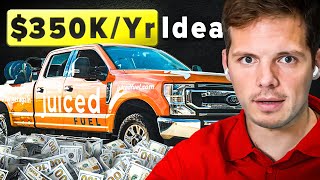
Corey McDavid started Juice Fuel, a Charleston fuel delivery service, after his wife got tired of gas station trips. Customers spend about $2,500 per vehicle per year and refill 3-4 times monthly. The company hit $350,000 in revenue this year with a 30-cent per-gallon margin and very low churn.
Questions this video answers
Corey McDavid
December 2022 (first full month early 2023)
Almost two years
$100,000
$40,000
Chapters
What is your churn? Like, if you get a residential customer, one of those deals where, like, they just fall in love with it. Like, I don't know how I ever lived without this. And they almost exclusively fill up with you? Or is it kind of like people try it, they use you sometimes.
There was no one who's taking care of both. No one's taking care of small businesses. No one taking care of personal vehicles. Before I did any of that, we run some Facebook ads.
What are your revenues? Like, right now, one family will spend about $5,000 with you over a year. How many refills do you do per month for an average family? Well, why don't we start by you just telling me who you are and what you do? Yep.
Corey McDavid. I am the founder of Juice Fuel. We are a mobile fuel delivery service.
Okay, and how long you been in business?
Almost two years now.
And what gave you the idea to start that?
So it started with, you know, my wife. We had just had her second child, and. And she hated going to the gas station. She drove a diesel suv. You know, there's less dies pumps. So a lot of times you're waiting on the diesel pump to open up and, you know, crying kids, you know, hot in South Carolina. She just hated the whole experience. But also, at the time, I was terminal manager for the bulk liquids terminal here in Charleston. That brings in all the fuel to the greater Charleston area. So my day job was literally, like, monitoring the, you know, who the suppliers were, who their customers were, which. Which gas customers could actually move the needle in the area. And that just got me looking into, you know, seeing how. How we could move more barrels across our rack. You know, that was. That was my. My main job. But in doing that research, I saw that there was really no one that was supplying fuel to the little guys. Like, if you're moving a ton of fuel, there's plenty of suppliers that'll bring you. Bring you gas. If you got a big tank on your yard because you run a big construction company or something, there are guys that will supply that. But there was no one who's taking care of boats. No one's taking care of small businesses. No one taking care of personal vehicles. And so when my wife was having this problem, I was like, I'm the guy to fix this solution and make it better for everyone.
Yeah, you're like, of all people, I'm the one most qualified to fix this problem.
Yeah. Yeah, do it.
No one can. Now, was there ever a moment where you kind of were Thinking about this idea, and then you saw a truck driving around doing mobile fuel delivery, and you're like, oh, this is a thing.
Yes. So when I started thinking about the idea, you know, of course you dive into research and you find. Find companies doing it across the country. And it seemed to be like it was a growing trend, but it was just like, it's just becoming popular. And I know people have tried it in the past and never worked out for one reason or another, but it seemed to be gaining in popular. I mean, certainly coming out of COVID like, you know, delivery services and convenience and anything that could, like, keep you safer and limiting interaction with, you know, things that, like a gas pump that everyone in the public has to interact with was becoming popular. And so we were kind of able to jump in on that, that trend. But, you know, mobility services and delivery has been a growing trend for, you know, decades now. And so why not gas? Like, why is gas not a part of that? It's something that we need, you know, every day. So.
Did you know of anyone doing it in Charleston?
No one was doing it the way that I envisioned, which is kind of what we're doing now. You know, I did. I remember one time, so I was also in the South Carolina guard at the time. And I remember, you know, making one of my trips up to Columbia, South Carolina to do my, my flying. I passed this truck, and I won't. I won't say the name of this company, but they're a small fuel delivery company. I was like, boom. Someone's thinking like I am. But it wasn't like, oh, they beat me to it. I can't do this idea now. You know, like, there's. There's plenty, there's plenty for, for us to all eat. You know, like, I can't service every customer in Charleston. Neither can another company. So plenty of, plenty of room to growth and plenty of room for competition.
How long after you saw that truck were you in business?
I don't really remember the time because it wasn't. There was some. There were some reasons why, like from. From idea to nap, you know, from napkin sketch to like actual launch was probably like a two year process. But that wasn't because I was like planning the whole time. You know, I had a career change and, you know, just put it on the back burner because, you know, life, you know, trying to de risk, you know, how I'm gonna pay for the mortgage and also, you know, start up this business. So that, that was really why I took the time and. But yeah, we launched in, we delivered our first gallons. December of 22. I always say beginning of 23 was our like first first month in business. And so we're coming up on two years now.
Okay. When you first started, did you quit your job? Did you do this on the side? What did that look like?
No, I do it on the side and fortunately I work remote and I'm able to manage both. I have a lot of support from my family and to able help. But yeah, literally the whole first year was me and my spare time making deliveries and just kind of fine tuning the equipment, the operation, our app, you know, the financials, all of that. And so then after that first year, my brother graduated from Clemson and I convinced him to come on full time. So now I got a full time guy doing that. And so it's allowing me to continue my, my day job and then focus on growing the business on the side without having to be in the truck making those deliveries.
Okay, so you still have your job then?
Still have my job, Yep.
Okay. Did you say you have an app? Yeah. Yeah. What did that look like? Like, how much did it cost to develop that and what all does it do?
We started through a call, we'll call it an incubator. That kind of helped me get going. And part of their, part of their offering was they would help me build the MVP version of the app. And so once I got that delivered to me, I remember it was very limited from, you know, what I had explained the scope to look like this was not it. Like I couldn't even actually take orders and process payment in it, but they were like, no, you just need to get it out there. And I was like, no, I can't even take payment on this.
It doesn't work.
But, you know, and messing around in the back end, I was able to. I don't know if the developer left an Easter egg for me or, you know, it was just there by accident. But I reached out to him and I was like, hey, wa. Do you want to come work on this with me? Like, just us. And he was all about it. And so he's still working with us today. And. But the app allows us to, you know, take orders, make requests, so schedule, send out push notifications. So how it works is a customer signs up, they can insert their fueled, their vehicle types, they can make a request, a driver will claim that request, they get notified that the request has been received, and then the driver will notify them when they're on the way, and then when they're Complete. And then they can see their invoice, you know, how much they were charged and all that. So.
Okay, so I would imagine your app is pretty simple. Like you're querying a database of makes and models, years, colors, maybe like plate number or whatnot or. No.
Yeah, anything that can help us, you know, get. Make sure that we're delivering to the right place. You know, we don't. We don't do just vehicles, so, you know, think generators or boats or, you know, excavators or something. So we have like a special note section where they can just put all that info in their gate codes for access to certain.
And then they can pay from the app and schedule it. Yep, okay.
Yep. Schedule and payments all done through this.
Okay, so when you first started, what did it, like, buying your first asset look like? Did you buy a truck? Did you buy a tank? How much did that cost? Did you retrofit a truck? How much all in did it cost, and what did that process look like?
Well, the first thing I bought was the. The app. You know, I had that first, and then I was able to kind of show people the idea and, like, let them play with this, like, functioning version of it. And so they. They could start to see the utility of it. And I was able to take that and my first call family, friends round, and we were able to raise 100 grand. And that allowed me to buy my first, which is the equipment that drops into the truck bed. So that gave me two tanks, pump, metering system, hose, all that, everything we needed to actually deliver the fuel. Then I bought a truck, I would say all in. It was a used truck. Paid like 40 grand for it, and the skid cost me, you know, another 20. You know, that app, that part of the process, we were probably 10, maybe 15 grand into it. So we were able to get going for less than 100 grand and start actually, you know, making money.
How many gallons is your skid?
Our current configuration, we can hold 400 gallons per skid. That come in 119 gallon compartments, separate tanks.
Four. Okay, so 400, is that like 400 on a truck then? Like in a truck bed? Yep. Wow. So that's like £2,500 worth of gas.
Yeah. 2600. Yeah.
Okay. All right, so you develop the app first. You get people playing around on it, trying to break it. It works. You get the truck, you get this kid, you're in business, you never quit your job. How do you get your first customers?
I guess back up a little bit. We had run some before I did any of that. We run some Facebook ads just to see if there was any sort of appetite this in our area. And we put up a landing page and was actually getting people like clicking on the ad and then submitting their information to try to sign up for this business that didn't exist yet.
And so love it.
Actually. I used that click through rate that we were able to establish over a few weeks of testing. I mean, modeled out the next three years of what I thought our business might look like.
Yeah. And how has that gone? Very accurate or.
No, it's way off. But yeah, gave me enough, you know, I felt like it was viable and so I was willing to make the investment. And then I did all the things we talked about. But so getting, getting my first customers was yes, start, start running those ads again. Except for, you know, we could actually deliver. And then mostly word of mouth. I remember like our first stranger customer. Oh my God. Like we don't know who this person is. Yeah. Yeah, that was really exciting.
How much time had elapsed between when you got the leads from the Facebook ads and you were actually able to deliver on them.
So gas is a, it's a weird one. And this is a, like, I don't know how. Not really unique, but a challenge that we definitely have to deal with is like, people hear about us and they're like, oh, that's a really great idea. I would love that. Oh, but I don't need gas right now, so don't sign up.
Who doesn't need gas right now? Like, you don't need it now, you'll need it in two days. Like what?
Right? And, and so then when they do need it, they're like, oh, I need it now. Like, I don't have time to like, figure out this app and make a request and wait several hours, you know. And so that was a unique challenge. Took some education to like trying to get, get people to change their habits of like, don't wait till you're on E. Get in there, make the request, and then, you know, your gas station experience is literally, you get home and press a couple buttons and it's done.
All right, if you are watching this clip right now, you are watching this on YouTube. And if you are a fan of podcasts, please check out my podcast while you're at it. Because sometimes I have podcasts that aren't on YouTube and sometimes I have YouTubes that aren't on podcast. So check out the Kerner office on any podcast platform or you can go to tkopod.com also my newsletter will throw that in there. There are no ads, it's weekly. It's different content than my podcast and YouTube newsletter.chrisj kerner.com you'll see the link and we'll see you there. So how much time was that then? Because I'm thinking like if I opt into some service like this from a Facebook ad and any more than like a week passes like it's out of sight, out of mind, it's going to be really hard to convert me at that point. Point.
Initial sign up to delivery was within days.
I mean even when you were just running the test to the landing page.
Yeah, we didn't have any sort of like funnel to like nurture these ads. It was like sign up, sign up and then you can make requests right from there. And so it was pretty instant. And I remember like initial launch, you know, we, we were able to get like our first dozen or so customers and then it was like, okay, now what? You know, how do we, how do we keep growing? And it was, it was just me spare time. So like, you know, how do we manage the expectation of the customer? You know, when I still had to work a job. And so we were really careful about not growing too quickly, but also, you know, keeping every customer happy. Because what we're really building is, you know, reoccurring repeatable revenue. Like gas is a commodity and it's low margin business. So you've really got to start stacking those customers and building that revenue. And so that's the most important thing was like getting our customers on board, getting their trust, getting them in the habit of making the request. And then all of a sudden all their fuel spend is now with us and now we can start getting new customers. You know, each. We found in our first year like an average vehicle is like $2,500 a year. So if you're a family of two vehicles, daily drivers, it's like five, five grand a year. So if our margin, you know, is, you know, 15, 20% on a subscriber like that, you know, you could do the math on how many customers you need. And also made us realize like, you know, the, the residential side was, was how we started, but that wasn't, that wasn't going to be viable long term. Like we had to start finding some higher, higher margin options and some bigger ticket items, you know, and that's when we started getting into the fleets and then ultimately into boats.
Okay, all right, so let's talk about your, your pricing and your margins and all that because 24 bucks a month, two vehicles, five bucks a month to add additional vehicles. Fuel price based off of lowest price within three miles. How do you mark the gas up? Do you buy it wholesale? What are your margins, like on both the monthly flat fee and the gas?
Well, I don't know how much. I want to get into the specifics of the gas prices. I mean, we certainly sell the gas for more than what we get it for.
I know that even a gas station doesn't make much money on gas. Right. And. And they buy a pretty big volume. So what is just. What does that look like for you?
The average margin on just regular gas is like 15 to 20 cents. We try to get that up to 30 cents. So 30 cents per gallon is the goal. It's tough to do on regular gas because, like I said, the replacement opportunities are so easy. There's gas stations all over the place, and the only differentiator between, you know, the gas station next door and the gas station a little bit further down is the price, you know, and so you're constantly competing with that price. And so my idea was, you know, keeping. Keeping the overhead extremely low and. And being able to, you know, make a little bit more margin because of that.
Okay, so one family will spend about $5,000 with you over a year. That's what you said. Okay. How many refills do you do per month for an average family?
Typical is like once a week, maybe once every 10 days. So three to four. Three to four refills a month. I will say some customers, you know, we didn't put enough guardrails up, so.
Like, they take advantage.
Yeah. One vehicle will fill up at work, one vehicle will fill it at home. So we'll get. We'll get requests for the same subscriber at two different locations on the same day. And I'm just like, come on.
Yeah. So since it says the fuel price is based on the closest gas station, basically. Are you. You're not filling up at a gas station, are you, and reselling it, or are you using, like, your. Your employer to fill up?
We're buying wholesale.
Okay. Okay. So you're just using that price to base what you charge them because that's kind of like the market price for their neighborhood or whatever.
That's right. And we're kind of getting away from that. We haven't fully, like, relaunched our pricing updates, but, you know, in order to match the lowest in your area, like, you're using software like Gas Buddy or, you know, Waze or somewhere that publishes gas and they're reliant on third party inputs that are either out of date, fastingered and then. Are you talking about cash price or credit price? It's too unreliable and so we're just going to start doing a fixed price.
Yeah, smart. I know there's like one or two nationwide brands. Is, is that how they do it? Because I've learned in companies I've started where I see like a big player doing, doing it one way and it's like, oh, what are they doing? Oh, they're so dumb. Like no one likes that. I'm going to do it this way. Like I'm going to, I'm going to be so innovative. I'm going to reinvent this market. And then I get six months down the road I'm like, this is terrible. That's why they do it that way. I should have just copied them. Exactly. I've learned that so many times. Have you had learnings like that?
Yeah, it's, it's, you know, I feel like the pricing on fuel is, is kind of, it's always like the secret sauce. Like you can't figure out why someone is pricing it this way. Like is it a loss leader for a gas station so that you come in and get a chicken sandwich instead? You know, and, and so I see other fuel delivery companies, they don't necessarily advertise their per gallon price and every market is very different. Charleston doesn't have a pipeline that comes to Charleston, so everything comes in by ship. So if you go further west and you're receiving barrels off the pipe, your pricing is going to be different depending on the season. We've really just run with that. What you just read is our pricing and store current pricing and it hasn't changed for the first two years because the price of gas is almost de minimis at this point. Like we are really building trust and a brand and getting that customer base up.
So what you mentioned boats, is that kind of where this is heading or are you trying to lean more into the fleet delivery stuff?
We're trying to do it all. Those are like our three business lines right now. It's, you know, I've got a team of four and we're handling all three of those simultaneously. At some point it will be, you know, marine fleet and then residential will have to be separate. The marine side is certainly like where I feel like that's our bread and butter. Like no one, no one is offering the service that we're offering. Being able to bring out the volume that we can. And deliver it out to a dock without your boat having to leave that dock. There's this. There's no one in town that can do that.
Yeah. Okay, what's next for the business? How do you see this scaling more trucks in Charleston? Different cities with more trucks, more boats, more fleets.
Yeah. So we definitely want to dominate locally, but we also plan on expanding. You know, I never, never meant Juice to be just a local brand. You know, we intend to grow this as big and as kind of starting that as wide as we can. Now, what does that look like exactly? You know, we're still, still trying to figure that out. We've, we've gone viral several times on our social media. We're very transparent about how we started this business. What we do day to day, we just share what we're doing and people love it. We have people copying us. We have people who want to do Juice in their city. And so franchising is probably the route that we'll go at some point because like I mentioned earlier, fuel was like very hyperlocal, the competitiveness of the price of fuel. And so you've got to like be in the community and know the community and know who could benefit from your services and be able to build that trust that, you know, hey, when you're bringing the fuel, you're doing what you're saying you're doing. You know, when they go out to start their vehicle, it's going to start the next day because you delivered the right fuel. And so the only way you could do that, I think, is by having someone from the area who is willing to put in that work in a local market. I see it as a perfect play for an owner operator. Think of a truck driver who, he might be able to make 80 to 100 grand over the road, but he's gone all the time driving here. He can still be a truck driver, but also own his own business. Potentially a lot more upside. So I feel like, you know, that is like the perfect, it's the perfect job for like, you know, an owner operator to be able to scale his own business locally. And I think that's where we'll go. But certainly regionally we're going to expand within our, our footprint as far as we can reach. Before I don't feel comfortable managing at all under, you know, original Juice Fuel umbrella. And then the natural progression is vertically integrate into the wholesale supply side, which, that was my background that makes the most sense once we're moving enough volume to justify being the wholesaler ourselves. Now we can supply all of our own retail locations.
What is your churn like if you get a residential customer? Is it one of those deals where they just fall in love with it? I don't know how I ever lived without this. And they almost exclusively fill up with you, or is it kind of like people try it, they use you sometimes. What's more normal?
The more normal is we have almost no churn. People sign up, they try it, they love it. Even the ones that don't use it very frequently. Like, I mean, you read our pricing. We're not. It's very reasonable.
Yeah, yeah.
And so it's almost worth it for someone to use, to have it as an emergency service. You know, if it's raining one day and I don't want to get gas or.
Yeah.
Or, you know, someone to just have that peace of mind that, you know, fill up my daughter's car instead of, you know, having to give her a credit card, you know, to go to, to and from school or whatever.
Yeah.
And so we, we do have some of those customers that don't use it very frequently, but rarely do we have someone sign up and just say, you know, this is too much of, of a hassle for me to make a request. You know, the tom slots are never available that I need that. That really hasn't been the case.
Okay, see, this is interesting because I, I would use this, but I wouldn't in a sense because I drive a Tesla and I. Aside from that, I love gas stations. Like, I walk into a gas station every time like a kid in the candy store. It's like, I'm going to get a Red Bull, I'm going to get some chips. Like, I eat like garbage when I walk into a gas station. So I would miss that. Are you planning to offer like, charging services at some point or how. Have you thought about that?
We certainly mentioned that, like, we're in the diligence phase of raising capital right now for our expansion. And so that very question has been asked. And we're building a logistics network. So it's easy enough to put a generator on the back of a truck and offer that service. That's just not where our focus is. Just like, you know, I think a marketplace for mobile services. Well, eventually, where we're heading to, you know, if you're in our app every week, every two weeks, making a fuel request, and every time you sign in, it says, what. What service are you looking for? Fuel, Tire oil, you know, and you're hitting fuel 95% of the time. By that time, you need oil change. Why are you not going to go back to that app and select oil change? So I think that is another way that, you know, we're, we're looking at going. But right now, gas is where we're focused and we want to be laser focused on that and do the best we can there.
Yeah. Okay, man. Well, this is an awesome story. I appreciate you sharing it and anything else that you would advise people to do. Like what if someone in Sacramento wants to start this? What. What would you tell them to do that you wish you would have done differently when you started?
I would start delivering the boats immediately.
Interesting.
If I could do it over again, that's what I would do. Just because at least in our market, it's a huge demand. That's, that's, that's unmet. And so the, the cell is a lot easier, you know, to convert someone. When getting gas in your boat on the water is A, really expensive and B, really inconvenient.
And you're in Charleston. So I mean, perfect market for that.
That's where I would have started. But I always say to, I mean, obviously this is for any, anyone interested in starting a business. It's like you just, you just gotta do it. You just gotta dive in and, and go out and you'll figure it out along the way. Work it all out on day one or before you start, you just gotta.
Dive in, you just gotta start. Yep. Okay. Well, Corey, thank you. Where can everyone find you if they want to reach out?
Best place is our Instagram. Follow along our story. Like I said, we, we post everything that we're doing every day. So very, very cool content there. So Juice Fuel on Instagram. Also, you can check out our website.
Juicefuel.Com okay, I did forget to ask. What are your revenues like right now?
We'll hit 350,000 this year.
Geez. Awesome.
We're up almost 500% from year one.
That's amazing. Very low churn.
Really looking forward to year three.
Yeah. Okay, well, thanks, Corey. I appreciate your time. Yeah. All right.
Nice to meet you. Take care.
Likewise. See ya. All right, what'd you think? Please share it with a friend and we'll see you next time on the Kerner office.










