ex-tesla guy turns school bus into a fortune
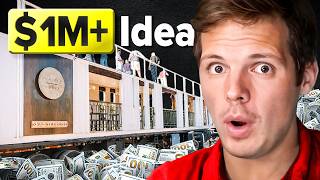
Kevin Throop left Tesla to convert a $3K school bus into Toasted Tours, a wine-tasting shuttle business. He spent $65K total and charges $139-$179 per person for 4-5 hour tours visiting three wineries. Insurance runs $40K yearly for the bus, but the operation now includes trailers and semi tractors that can move 80 people per tour.
Questions this video answers
$3,000
About $60–65,000 total
About 12 months
$139–$149 per person (initially)
$179 per person
Chapters
All right, so over the weekend, I saw this video that I could not get out of my head. It was a shipping container on the back of a semi truck with big, huge windows cut out of the side of it, and 40 people drinking wine, dancing, hanging out, having fun, driving across the California countryside. And it just broke my frame. Broke the mold for what safety should look like. It was a viral video, and all of the comments said, there's no way this is safe. You're going to get sued. This is so dumb. You're so dumb. And I'm like, okay, I'm onto something here. So I quickly pulled out my phone, recorded my thoughts on it, left that video on in the background, posted it a few days later. It had over 20 million views across platforms. This business is called Toasted Tours, and it was started by this guy named Kevin Throop that I just interviewed. He's amazing. He spent years at Tesla doing fleet sales for them to companies like Hertz and Alamo. And then he got laid off unexpectedly. And then he took a couple odd jobs until he decided, I. I am never going to let my fate be decided by an employer ever again. And so he took his life savings. It was like 65 grand. Bought an ugly school bus for three grand. Spent a year renovating this thing himself. And he just knew, if I make something amazing, awesome, beautiful, they will come. People will come. The product will sell itself. He took a ton of learnings from Elon Musk and Tesla because they don't do any marketing and design and providing a great experience. And he poured that into Toasted Tours. And now he's making a lot of money doing something awesome, awesome. And videos of his tour buses routinely go viral. Because it looks crazy. It looks crazy that this thing is legal in California, of all places, but it is. He's making great money. We talk about insurance costs, unit economics, growth, marketing, first principles, why you should do hard things, why you should tackle big problems, why you should break all the rules. You're going to love this. Please share it with a friend. I promise you're going to see these trailer buses all over the country, and it's all going to be because of Kevin Thrute. Enjoy. Okay, so how long had this idea been in your head? And what gave you the idea?
I got my master's degree or my MBA from a decent school in business. I had Tesla on my resume, and I thought, I want to do corporate. I want to do business. And then after kind of taking a look and getting the inside view, especially with a company like Tesla of the corporate world. I said, this is just not for me. I want to succeed or fail on my own terms. It's okay if I fail, but I don't want to fail because of something that's out of my control. And so I just got to a point where, you know, and it was, it was pressure on, like my marriage and, you know, even in my family a little bit where I just said, I don't care if I live in a cardboard box. I'm done working for someone else. I'm starting over and I just don't care what I have to do. So so basically as soon as that happened, I said, well, what are my options? You know, the shortest distance between two points is a straight line. What's my straight line to a viable business where, you know, I can feed my family? Necessity is the mother of invention.
And where were you living at the time?
We were living in Temecula. Yeah.
Okay, cool.
So the first thing that came to mind is, hey, something kind of service based. You know, we live in wine country. I wonder if I could do wine tours. If I did that, how could I start at this point? You know, I've drained most of my savings and everything. So I'm a missionary kid. There's no one in my family with money. I can't beg or borrow.
Same.
Yeah. So basically I have to start with the bare minimum, school buses. So I'm looking around. If I did a tour, how could I do it? School buses are reliable. There's a lot of them on the market. And the old ones, you know, I bought mine for 3,000 bucks. Didn't even look at it first. Bought it on eBay, three grand. Went and picked it up later.
Did you drive it home?
Yeah, I drove it home. Yeah.
Okay. From where?
Not far. Escondido. So, okay, yeah, like 30 minutes. But these two, the two semis that I have now, I drove those from the east coast. That was a fun time.
Oh, wow.
Yeah. So with the bus, basically took it home and then my angle was going to be, you know, to try to. I was going to put lipstick on a pig, basically. You know, it was my business model. Is always my joke. It's lipstick on a pig. How do I make it cute and desirable for someone to want to do a tour in it? Let's upfit it. Couldn't pay for anyone to do it, so I did it myself. I needed to spend an enormous amount of time on it. So I live in a track home and I had it parked in front of My house on the street, and my neighbors started calling. I started getting tickets. And so it got to a point where I was like, you know what? Fine. But I can't. I don't really have anywhere to take it, or I can work on it. And I was working, like, 16 hours a day on this thing. I suck with hammer and nail and screwdriver and everything else, or I did at the time. Now I'm pretty handy, but I was putting a ton of time into it. And so I ended up basically in this track home, pulling it alongside my house. I was two inches away from my fence and like an inch away from my house and covered it up with solar sails so that my HOA wouldn't see what I was doing. And I'm basically. I have this, like, hidden school bus in this track home that I'm desperately trying to hide from my neighbors and the HOA and basically built it out there, and it went really well.
Now, how much money did you put into it after that first three grand?
I only should have put in about 30 grand at the most, if I'm being honest. But because I'm so terrible with, you know, being handy, or I was at the time, I probably put in double that because I, you know, I had to do the floors three times. I had to do the electrical three times. I had to do, you know, all of it because I'm learning as I go.
You are a masochist. You're right.
I am a masochist. So, yeah, because I did everything multiple times, it ended up probably coming out to about 60 total for the whole thing.
Geez. Okay, so let's call it 65 for the bus and all that. How many months did it take you to make these renovations?
Took me about a year on the bus.
Okay. Solid 12 months.
That one was really nice because I put in about that amount of money. And then as soon as I got onto the market, you know, it was doing about 250 in revenue to 300 a year consistently. About 300 a year consistently, yeah. For. And I had no more overhead. I'd already sunk the money in my labor and, you know, the materials that I bought. But fortunately, Covid hit. But I was so. I had just no money. So I just remember when they sent out the stimulus checks and I got unemployment checks. I was waiting for my disbursement of the COVID stimulus stuff and my unemployment checks, and as soon as I got them, it ticked my wife off to no end. But I headed down to home depot and just bought all the supplies to build that bus. So, I mean, I really bootstrapped the heck out of that thing.
So before we get into your first year, which I'm super curious about, why wine tours, like, obviously you live in wine country, you see it, it's familiar to you, but there's got to be something else about it that just spoke to you, like, what is it about yourself, your, your background, your history that made this business idea stand out to you?
It was a crime of opportunity. So we're already here. It's service based, meaning there's not. You can just jump right into it and your, you're contributing value by your service. And I wanted to make it a little more defensible by having, you know, differentiation with the type of vehicle that I was bringing out there. You know, on the back end, it was really practical because it was extremely cheap to buy and build. And then on the front end, on the marketing side, you know, it's cute, for lack of a better word.
What were your competitors doing? What types of vehicles or did they use?
I played too much offense and not enough defense, but I basically didn't even pay attention to what my competitors were doing. I think I took, you know, a grand total of like 30 minutes of looking what the market was doing. It did occur to me that the, you know, immediately out in wine country, you'll see all these, you know, these blacked out buses that look like they belong in Hollywood at, you know, 1am on a Saturday night. They got the flashing lights. It looks like a disco in there. I thought this is just almost embarrassing. This is terrible. People are out here to see wine country. They don't want to be stuck in this. Stuck in this, like, claustrophobic, blacked out limo. So as soon as I saw that and that there really wasn't anything similar being done, I was like, well, at the very least, I'll be different and that'll make me stand out for a start. And it's not going to be as ugly on the interior as all the ones that are out there. So it was just easy. Yeah.
How did your pricing compare to the big fancy buses?
I don't set the price. The market sets the price right. So depending on what kind of demand I get, if I have too much demand, I'll up the price. If I have too little demand, I'll drop the price. And then wherever I land, that's, you know, that's your, your point on your X and Y axis. So basic economics, right?
Yeah. Okay, so how did you find those.
First customers Instagram and word of mouth.
So this was like 2019, 2020 when you first launched. Okay, cool. So you just created an Instagram account and you start posting.
I created an Instagram account and I just started posting. Can't recall if I even had a website yet. I think I just said, hey, if you want a tour, contact me. Let's do it. At some point, pretty early on, I got a website. I'm just setting up the basics, and people started contacting me. And I knew that because I don't have a lot of, you know, visibility out there. I'm new. Some people wouldn't kind of trust me, but I knew there'd be a subset of the general population that wouldn't look too closely. They'd say, this looks cute, let's do it. And that's what happened. And then it just. I basically had zero problems with demand ever since.
Did you have any social media skills or anything? Because I think a lot of people are listening, like, oh, you just create an Instagram account and you start posting, like, was there anything more to it? Or like, did you get all your friends and family? Did you tell all the people in your sphere of influence or I probably.
Should have gotten more help than I did.
Well, clearly not. I mean, you're doing great.
Yeah. I created an Instagram account and my focus was on visually making it look convincing. I wanted someone who is looking at it kind of with a cursory overview very quickly from the aesthetics of the Instagram account. You know, there are certain standards with like, with design, graphic design and that kind of a thing that make it look like you know what you're doing. It's much easier now than even when I did it. You know, I think I just jumped on. I use Canva, but they already have a lot of those really abstract design methodologies built into it. So you can take their template and you just try not to vary too much from that template. But I think I had enough of a feel that I was able to get away with it. I was also really open and up front with the kind of, the story of it. This is something that I did. I'm trying to start a business, built this out. We hope you guys will like it and trust us as we start out and support us as a brand new business. And people are sympathetic to that. If you're, you know, I'm a big believer in honesty and authenticity. I got nothing to hide. I'll try to convince you that I look like I know what I'm doing. Like I said, with the. With the graphic design and everything. But I don't mind telling you exactly where I'm at in the process, especially even if I'm at the beginning.
I don't know if you were cognizant of this at the time, but the more I kind of tie this together, the more what you did with Toasted Torres reminds me of Tesla. Like Tesla, they don't do any formal marketing. They're selling an amazing product, and the experience that that product provides. I'm a huge Tesla fanboy, Model S. I bought it the second I could afford it, so I'm totally with you on that. And, like, they don't market. They don't do anything. They just have a beautiful product, and the pictures of the product sell themselves. And on one hand it's like, you hear that and you're like, oh, it sells itself. And it's like, okay, come on. And on the other hand, it's like, when it actually does, it actually does. It kind of sells itself. So is that kind of. Did you take your learnings from Tesla and kind of put it into this without even realizing it, or did you realize it?
Yeah, I think there was, like, I took a lot of lessons from Tesla. One of the things I remember the most with Elon is I don't do partnerships because I don't dilute the brand. And that kind of stuck with me. I understood what he's talking about. You know, Tesla, hard times in the beginning. And then when we first came out and started being really successful, everybody wanted a piece, right? Even the clients that we really wanted, like Hertz or, you know, Enterprise, they wanted deals on our cars. They wanted to get big cuts because they're the big guys. And Elon basically said, nope, they got it. What you have to do in sales is you have to convince them that it's worth buying at the price that we have offered and that they're going to pay the same price as I'm going to pay and the general public is going to pay. So that really stuck with me. And I definitely saw that, like, when you focus on bringing value and making the best thing that you can, the market comes on its own. And then randomly. It's actually an analogy for general relativity of all things, like, in physics. But someone was trying to explain, you know, the relativity of time. And they basically said, we have a big trampoline, and you put a bowling ball or you throw, you know, a box of pennies on the trampoline. I'm explaining it now in the way that I'M seeing it. But with the original analogy, basically the bowling ball weighs down the trampoline in the center, and the, the fabric of the trampoline is kind of fabric of space and time, and then anything starts rolling towards the bowling ball. Yeah, yeah, know, in time. So that stuck with me from a different angle, which was basically marketing. So in my head, I'm thinking, look, if you, if you create a product that's really heavy and has a lot of impact, and then you have this box of pennies to represent customers, and you scatter the pennies all over the trampoline, you're trying to get them to.
You're to trying.
You're trying to get the pennies to come to you. The easiest way is not to go and chase the pennies down. It's to have this great product that kind of sinks into more impact.
Heavier bowling ball. A heavier bowling ball, more impact, Exactly.
And then the pennies are going to come to you. So a lot of people are like, okay, how am I going to market? How am I going to attract people to come to my business? How am I going to, you know, get those first initial customers? This, that, and the other thing? And to me, I honestly did not think about it at all. I just thought something that I would want if I were a customer, and they will find me eventually, they'll find me and it'll pick up, you know, pick up speed, and that's. It seems to work.
Did you take any inspiration from, like, Instagram accounts or Airbnb properties? That did really well. Like, where is it, where did you get your design skills? And is it the schoolie that I'm looking at? Was that your first school bus?
Yeah, that was the first.
Okay.
I have very little design skills to speak of, but I will say that another, another lesson I took from Tesla is the importance of design. Beauty is a universal language, and if someone sees something beautiful, it's magnetic, you know, and of course, that's the big lesson with Apple in the early days. So we're talking basic lessons by now that everyone knows from Apple and from Tesla. So I knew that I wanted to try to make something that was aesthetically appealing, and that would be the pole. We looked around and we, we found someone who would help to set that up and try to make it visually appealing. And she, she did a fantastic job. Name's Erica. And yeah, we were her first client, Tiny Lane Interiors, and she did it. She did a great job and I love her for it. Can't thank her enough.
So what did you use for, like, your first booking software or you just had an Instagram account. How were you taking payments? Was it Venmo? Like, what did the logistics look like that first year?
Yeah. So basically I just started with Venmo, and I think, okay, my first customers, I may have gone as, you know, caveman enough to just write down a contract on paper and say, can't remember what it was, but we're doing the tour. Sign here, you're giving me money, and here's a paper receipt. I mean, it was that. It was that old school. So one thing I learned in business school is, like, you can write a contract on the back of a napkin in a restaurant, and it's legally valid. It doesn't have to be beautiful. So in the beginning, I didn't overthink it very much. I'm like, this is a binding contract. They're giving me money, I'm taking them out. That was about it. And I think I picked Squarespace kind of as my platform. Haven't changed it yet because hasn't been that high on the priority list.
And what were you charging that first year? And how many people to a bus? How many tours per day? I'm curious about all that.
In the very beginning, I think I started at 1:39 or 1:49 per person. Eight people minimum, 20 people maximum.
And you were the driver?
Yeah, I was a driver.
Okay. Yeah.
So you got my licensing, you know.
And how long did the tours last?
We did four to five hour tour.
Okay.
And then on Saturdays, basically, I was barely able to squeeze it. Saturdays is where we made most of our money because you had to get a group of people together. And on a weekday, it's just not really gonna happen. So in order to basically turn one bus into two on Saturdays, we did two tours. We still do that, or we. We actually do something slightly different. But Basically we did two tours. 10:30 to 2:30, 3:30 to 7:30, and then we could get two in one day. And that worked out well.
Okay, so call it between 1300 and like 3000 per day, depending on how full the bus is. That's if you had one tour that day and then twice that on a Saturday. At least that first year.
Yeah, I. And I was doing two on Fridays in that first year. It was usually two on Friday, two on Saturday, one on Sunday, two on.
Friday, two on Saturday and one on Sunday, and then one during the week as well. Or only week.
It would be intermittent during the week. We would get some during the week.
But just based on demand.
Yeah, Hit or miss, you just leave.
Yourself open and see how it goes.
Yeah, pretty much.
Now what all is included? Are you including food and wine in that?
Yeah. So the way the industry usually does it is they include kind of the tasting tickets. So technically we're like brokering them, and then we can make a little bit of a margin there. The better rate we get for the wineries, obviously, the more we get to keep. So we broke it out. So you're basically paying for wine plus transportation. And then the beginning, I included food as well automatically, so it's like sandwiches. And I just built that into my margin.
So you still have to buy. I didn't know if, like, this was kind of like a marketing effort from the winery and they pay you or the wine's free or you're paying for the wine.
Basically pay for the wine or the winery charges us based on how many guests that we have.
Okay.
We bring the guests in, the winery serves them, and then the winery basically charges our account.
Gotcha. Okay. Yeah, I guess I forgot that minor detail, the fact that you're stopping at different wineries along the way. You're not just driving around looking at wine country.
Yeah, yeah. Three wineries, three wineries.
Okay. And that's been like, standard from day one, three, and four hours. So video is cool. But you know what's better? Long form audio via podcast and my newsletter. Tkopod.com go there to subscribe for free to my newsletter. It's one email a week, very tactical. And then go to my audio podcast, three episodes a week. Stuff like this, you're gonna love it. All free. No sleazy sales pitch.
Tkopod.com There's a real art to managing your risk when alcohol is involved. And so that was one of the reasons I included food. But, you know, human beings are in some ways kind of dependable machines. So even the spacing of our wineries, how far they are apart, how long we stay at each winery, whether they have food or not. And then of course, our policies, like, no hard alcohol ever. It. We're able to keep people having a great time, but not getting to the point where they're sick or dangerous. So it's actually kind of neat how we can keep it pretty predictable, controlling variables like that.
Now, did you have any. Any horror stories from that first year before you were able to learn how to control that variable?
No issues with guests. So I always kind of make the joke. I'm like, my favorite human being is not a zero glass of wine human being. And it's not a five glass of wine human being. It's about a two glass of wine human being. I love people when there are two glasses of wine and they can hold a conversation really well. They're coherent and they're friendly, you know, versus, you know, to this day, anyone that gets on a tour right at the beginning, nine times out of ten, they're very stiff, a little bit cold, you know, and alcohol gets a lot, you know, it's maligned quite a bit for health and everything. But I'm like, I think we would just be much bigger if we didn't have alcohol to smooth things over from time to time.
Well, that's, that's one way we differ. I've never even tasted alcohol, so I'll have to take your word on that.
Ah, teetotaller.
That's right. That's right.
Right on. Good for you, my man.
Thanks. Okay, so I want to get into the shipping containers and like the insurance stuff in a minute. But before, like, how hard was it to find insurance that first year for the school bus and what were those costs? Like?
It was pretty hard. And it's basically had to go with one of these old archaic, like ancient style insurance companies. And I think I paid 40 grand for insurance that first year.
Okay.
On the bus a lot, which was pretty darn high. Plus they charge interest if you can't pay the whole thing up front, which I had to pay. So. Yep.
Now is that just on the bus or the business and the bus?
You basically have to carry $5 million of general liability insurance when you have. When you're operating a passenger vehicle that has 15 or more capacity, which was pretty tough on me because I had no idea that was the case when I started. And I basically went over the number by. By one.
Yeah. Could you not have some change that, like retroactively? Was there any way to fix that retroactively?
No. They basically said, no, there's no way to do it. But that was definitely a consideration. I mean, there was, there were a lot of things that went into the semi, but definitely one of those things was, hey, look, if I'm going to pay astronomical insurance and let's go as.
Big as we can go.
Yeah, it's 16 or over. There's no top end on it. So I'm like, all right, well then we'll fit as many people on a bus as possible.
Okay, so 40,000 for that first year, which is a ton, but still workable. Right. That ended up being close to 10% of your top line revenue. How did your margins end up shaking out that first year compared to what you expected?
So I wasn't sure where the cost would be at, but again, on the economic side, I knew that I was in the ballpark. I didn't know. You know, I'm not going to quibble over plus or minus 10%. It was going to land where it landed. Ended up basically being able to do my. My variable overhead was, you know, something like $32 a person after my fixed costs. Everything else I was able to pocket. And then, you know, a lot of times people are pretty. Are pretty generous. So I would get tipped. Since I was the driver, I would get tipped more than my cost per person. Yeah. For the variable cost. So, you know, it was. It was good. It worked out perfectly.
So their tips just happens to, like, pay all the wineries and then some, and then you're just out of pocket for gas and insurance, basically?
Pretty much, yeah.
That's amazing.
Yeah, it worked out really well.
How many miles do you cover on a tour?
I think it's 18.
Oh, wow. Holy cow. That's not bad at all. And is it mostly kind of like country roads, like 40, 50 miles per.
Hour now with the semi even slower than that. But, yeah, country roads, 40 to 50. I mean, part of the attraction is you're. You want to see wine country. And at least for me especially, you know, it was quite a compliment. But a lot of times my customers were like, we want get some wine and hang out on the bus all day to drive us around. You know, I got all these requests constantly just, let's get some wine. Let's just drive around. And I'm like, well, that's wonderful. Thank you. I'm glad you love it. But, you know, basically, you're already paid for at these wineries. Let's go check it out.
Yeah. Do you think there could be something there just driving people around, or is that not really a big opportunity?
There definitely could be, but you only.
Have so many hours. Right. Per day, so it would probably be at the expense of what you're currently doing.
You know, at least for me, there's other. There's other opportunities that make a ton more sense. There wasn't much of a sightseeing component to up here in Temecula. There was, but it wasn't quite as much. The. The brewery tour that I do once a month in San Diego now with the semi is almost entirely a sightseeing route, and that is an excellent tour of the highlights of San Diego. And so even on its own without all the other elements, I think there would be people that would. Would want to do that. It's beautiful.
Yeah. Okay, so let's talk about your semi. So how did you go from just a bus to a semi, and how long did that take? What did business look like? Years? 2 to 5?
The calculus for the. For the semi was it was less out of desperation, and it was my opportunity to expand and do something that felt more like me. The bus was. Was. Yeah. Almost an emergency. So with. With that being successful, basically I had the luxury of sitting back and saying, okay, what's next? And so I had the option of. Of doing, let's say, multiple buses. The one that I had, that was great, and it was successful, and I knew I could make a ton of money off of it. I could either do multiple of those, or I could kind of change it up and do something different and maybe do one more instead of multiple. That was bigger. And a ton of people who I like and respect told me, hey, look, you already proved with your. With your skoolie, that's really successful. Look at the profit margins that you have. Just do that a bajillion times, and I could have. But.
But you're a masochist.
Yeah, but I'm a masochist.
You just wanted to keep growing, like, growing in your way or like, growing like you wanted a new challenge, not just to copy and paste your school bus.
That's exactly right. Yeah. Even though I knew there was a risk of, you know, failing, I just needed something that. That I loved. So thinking through that, I thought, all right, well, we already mentioned the insurance thing. You can go big there, and that kind of reduces the relative cost of your insurance. One thing with the schoolie that was a concern was that if that engine goes out, I'm super vulnerable. So I have a lot of risk there. It's my only revenue stream. I can't go from bringing home money every month to bringing home no money every month because I have a mechanical problem. So I felt there was some risk there, wanted to mitigate that. I needed to do something that was really unique. And I thought, okay, what's the biggest platform that I can have for transporting people that I can make unique and that I can make somewhat attractive on the inside? So, you know, there are other companies out here that basically run really nice Greyhound buses. So, like Grape Line, which is a fantastic company. They're excellent. They take good care of their employees. The owners are incredible, amazing people. They're wonderful, but they. Basically, all you have is transportation and nothing really unique about it whatsoever, but they can take large groups. And my thought was, that's not good enough. I need differentiation. So, you know, also another lesson I learned both from school and from Tesla is whatever you are, be different no matter what, just be different. And so I thought, well, it would be amazing if you, you know, the biggest platform that there is for transportation is, you know, semi trucks, 18 wheelers. But nobody out there is doing that. So, you know, I think that's. That is the point where maybe the way. The way that I think kind of came through. I do think most people would say, no, can't do it. 18 wheelers, no one's taken people in the back of that. Let me, you know, it's dangerous. It's all the things that I've been accused of, whatever. Recently there was a post that went out around the same time that you did a post that was, you know, I think about the same numbers. Like 6 million people were on there. But it was a really unflattering, you know, view of the semi going down the road. I'm going 35 miles an hour, and it looks like I'm a race car. I don't know why. Something about the perspective.
They sped it up or something.
Yeah. I still don't know why it looks so fast. But even I looked at that video and I was like, terrifying, but I'm like a snail in actuality.
Yeah.
But like, there's a million reasons when, you know, as I'm thinking of that, I think 90, 95% of people would immediately dismiss it because, you know, human beings, we're using, you know, heuristics to make decisions because it's fast. But it's like, I just think it would have been rejected out of hand by most people. But, you know, I'm a big believer in, in like first principles type thinking and breaking a problem down. You know, the Socratic method. Really, really be careful about the way that you think as reasoning by analogy is, Is not. It's not gonna make you very successful, really. So the most important question was, well, why not? Why can't. Why can't I take people in the back of a semi? My first thought was safety. So I basically did some research. I looked up the numbers and I said, okay, I wanted to find out, is this platform more dangerous than a normal bus? And at first I was quite alarmed because if you, if you pull up the notes or you pull up, you know, like a quick answer. 18 wheelers are involved with a lot more fatalities on average than Regular vehicles. But fortunately, I thought to myself, okay, why, why is that the case? It could be because the people who are not in the semi truck are the ones dying. Which is terrible to say, well, that's.
The truth, isn't it?
It's the truth. So it turns out that's why, you know, you're very. And semi trucks in general get into less collisions. So from that perspective, it's not unsafe at all. And then basically going through every other potential area of exposure. So I think, okay, what could go wrong here? What's the risk? Think about that question from first principles thinking and then decide if it really is dangerous, if it really is viable. And from what I could tell, you know, this platform is extremely reliable. Companies have put billions of dollars into developing this really sophisticated platform with all kinds of safety measures built in. This is viable from, from that perspective. And then my next two questions were, can I get it done legally and can I get it insured?
And when you say platform, you mean what the ship container is sitting on? Like the trailer?
Yeah. So sorry, when I say platform, what I'm really saying is it's technically a trailer bus. So under California vehicle code, something, something, something, they'll define a trailer bus in legal terms. And that's what my vehicle is, it's a trailer.
Okay. Trailer bus. Okay. What was the first call you made to figure out if this was legal or not or how you could do it?
California Highway Patrol. Okay. So I, I reached out, you know, I found a contact, don't remember how, contacted this lady. Her name was Karen Brown. Thank you, Karen. You're amazing.
Breaking the Karen stereotypes.
Oh yeah, she's. This Karen is incredible. And I basically didn't expect to even get an email back, but she, she emailed me back and she took the time, you know, I could tell just from the way that she was copy pasting, she took the time to, to look up each individual line of the law and say, okay, on seat belts, you're okay. You're going to need to have your fire extinguisher, you're going to have your emergency exits. You need to have these things. And basically this big long email of things that, you know, I would have to comply with this, this list of statues essentially stat statutes. And then at the end of it she says, but yeah, this should be legal. As long as you pass inspection and you do it right, it's legal. Just follow these, these, you know, these things here. So, and then I, So was that.
Sorry, was that one email like the 80, 20 of getting approved.
That was one email just to make sure that it was. It was potentially legal. I wasn't going to start on the project until then. So as soon as she said that, the next thing I did was I switched over to the insurance side. I asked my carrier, I had to press them really hard. And I just said, I need to know when I finish this. Are you going to insure it or are you not? I know you aren't going to. I know it's going to be expensive. I know you don't know where that's going to land, but is it insurable? And after pressing them pretty hard, she came back and she said, yes, you should be able to insure this. We just don't know what the cost is.
What's the closest corollary to this? Is there any other type of a trailer bus that transports people like this? Like, what's the precedent for this?
There's something similar in Mexico, which I didn't know about. Sometimes people compare it to Nashville, which I didn't know about. And I don't even know if when I started the project, these things were going. I'm not paying attention, honestly, to what other people are doing. At first, when I did a quick once over, I didn't find anything. Eventually, towards the back end, when I was getting my final approvals, I was desperate to find a precedent to basically use as ammo for the CH and the California, the TC Utility Commission to say, look, I'm not the first. There's a precedent here. I needed to give them a reason to say, we approve this. No one wants. I didn't want anyone at those regulatory agencies to have to approve it. And then it's their neck. I wanted them to be able to say, it's been done before, so we approved it.
Yeah, you were just like planning for a fight.
Yeah, I'm just trying to think ahead. I don't want anyone to have a reason to reject it. So I did find one example. I think it was the 70s. There were these three megabuses operated by Orange County Transportation Authority. They were massive and they brought people in from outside of LA to work inside of la and they were super popular, super successful. I think they took all of these reasons why it will be better for me on the back end as a business. So I have a backup truck if, you know, if my tractor unit, the pulling unit ever breaks, I can swap it in. I'm still going. I can do all that. It's on a platform that's already kind of been proven built out and there's a. There's a lot of tractors on the market. They aren't too expensive. You know, mine were only like 13 grand apiece for good trucks.
Oh, wow.
Yep.
California container.
Yeah. California. Yeah. The trailer was way more expensive. California regulatory stuff. They're hard on the emissions, and there was a little bit of risk in that. You could turn around and, you know, your. Your vehicle is all of a sudden out of compliance for emissions stuff. The. And then there are other. Other considerations, too, the amount of people I can get on there. And I thought that I'd be able to prove it was a great platform because even from a perspective of comfort, there's a. There's distance between the axles. So when you're going over bumps, it's good. All the extra tires kind of absorb certain bumps in the road, like potholes. You don't feel as much. And then basically every trailer, except really old ones, are automatically on air suspension. So on the comfort side, there's that. And there. There's a lot of other reasons, too, why I thought the trailer bus was great, even on the safety side. When I did my initial, like, analysis, I decided, I think this is a safer platform if you manage your speed and you manage the distance between yourself and the vehicles in front of you very well. This is actually, in my opinion, a safety platform, largely due to the mass of the vehicle.
Yeah. If you get hit, it's gonna have to be a pretty big vehicle going pretty fast for you to even flinch.
You gotta be hit by another semi, you know? I mean.
Yeah, yeah.
Just all kinds of thinking went into it. The biggest reason I did the semi, if I'm being perfectly honest, was not even all those things. It was about kind of sticking to my principles and doing something that was true to my style of thinking and proving to myself that I'm not crazy. I just sound crazy, you know, But I'm actually very cogent in. In the way that I approach life and that I can do it. I needed to prove it to myself that I could start from basically zero and I could build something that I love that was a reflection of me, and that was really successful. So, like I said at the beginning, the business, even the semi, which is a fun idea and awesome, you know, platform is just an afterthought of kind of a process of personal growth for me.
What did everything cost all in on.
That, on that bus, on the semi.
Yeah. And the trailer, shipping container and all that.
Also had a lot of trouble with the building on the container. Did everything myself. Again, of course, I don't think I'm gonna do that anymore. I'm gonna hire someone to build out my stuff from now on. Now that I'm. I'm there. I'm a tired man. I got welding burn marks all over body. My body. I had, like, shard of metal in my. Metal in my eye. Probably. Probably about 140, to be honest.
Okay, and then how much did that change your business? Do you have one of those or two? Like, do you just have that in the bus or. How many vehicles do you have total?
Yeah, for now. Yeah.
Okay.
Of course we'll expand and everything, but, yeah, for now.
When did you know that this was a hit? Like, this was a certified banger?
As soon as I got my final license number approved from the tcp, it didn't matter that I hadn't publicized it yet. I hadn't shown it to the market yet. It didn't matter. As soon as I got my licensing, honestly, I. You know, the process of getting the licensing, I lined everything up so that it was legal. You know, I crossed my T's, dotted my eyes, I went over everything ad nauseam with another CHP guy who was just incredible. This is an amazing organization. It's amazing. And despite that, I knew that because of how extreme the platform was, it could get political. It could get to the desk of some obstructionist in the government, of which there are many, and they could just say they could find a reason, it didn't matter what it was, to shut me down. So, you know, I built it myself over two years. Just did everything myself over two years. And that whole time was just one long period of anxiety. And I've done my thinking, but is it gonna work? Am I gonna get to the very end of the finish line? And, you know, some bureaucrat is gonna say, there's no way I prove this. So, you know, I can't even articulate how tough that was, but basically. And it went to the desk of the people at the very top of chp, apparently, the dude that runs the whole organization and potentially that.
The.
The person that runs that unit of the TCP as well, it was on their desk, you know, and they had. They had all of my work in their hands, my livelihood, everything. And I was just like, you know, please, God, let it. Let them say, okay, he's met the requirements. Let's pass him. And I did. So the. So, you know, I remember distinctly, I'm out working at the location where I work on the vehicle, and I saw that email come in And I got the approval. And, you know, it's like, making me emotional even right now. But I remember going, I had a shipping container that I used to store my tools and stuff, and I just wanted some privacy. And I just went inside my shipping container and just for 20 minutes, I just. I just cried. I knew I'd made it.
Yeah.
And from that point, it didn't really matter how I landed on the market, how quickly I sped up, how many customers I had. Right off the bat, it didn't matter. I knew it would be successful, and it has been.
Yeah. So how did you first get the word out about this? And how did that go?
Oh, I just posted it on my social media. Obviously, customers, come on, ask them, hey, everyone's taking photos. Everyone's taking videos. So I said, hey, please tag us. That's it. Please tag us. And then it's an exponential effect. So, again, I wasn't too worried about that. The one random thing that is extremely difficult is that, for the life of me, it's hard to get the right footage for this thing. You did a great job on your video, kind of piecing together what was available for footage. And like that other video, it's just a terrible video. And then we had a third video that went viral a while back. I don't know, 5 million views or something. 6 million views, about the same. And it's the worst shot I've ever seen. Just absolutely terrible. It's like horizontal. And she. She wrote over it and blocked the whole thing.
Well, that's why they go viral, Right?
Maybe stop trying to make nice videos. Apparently capturing the right type of videos, that will do Well, I can't seem to do. So I probably see seven or eight people filming me as I drive by every single day. Seven or eight people? Four, for sure.
Wow.
And nobody sends me anything. So if there's anyone out there who has video of me driving down the street, for God's sake, please send it.
To me, because I need to tag the man. So what did you do with the Schoolie when you started rolling these out? I mean, you told me you don't have another driver. How do you manage two vehicles if it's just you driving?
Yeah. So the schoolie is in the process of being converted to a trailer bus. The trailer bus is now my platform. I've basically done what I need to do, and I believe in it. Now I know it's a good platform. So my goal is to essentially fend off all the naysayers long enough until it's Kind of accepted by the public as a legitimate transportation option.
What did you do with your pricing when it launched? I mean, your demand went through the roof. So how much did you come up on prices?
We bumped it up like it's at 179 right now. And I was kind of trying to resist like everyone's raising their rates for, because of inflation, everything else. I was trying to resist that as much as possible. So I only brought it up. Yeah, I think I only brought up like 10 bucks which, which wasn't too much of a raise. But I have enough capacity on the semi that on Sundays and Fridays at least, like I will often get almost to the top, but not, not quite to the top of my capacity. Saturdays I have so much demand usually that I did something where I, I do two tours simultaneously, which lets me take 80 people at 80 people over a five hour period instead of, instead of 40 people over a five hour period. That works great.
How do you manage that logistically?
Let's say you have 80 people. I'll split them into, you know, Group Alpha and Group Beta. And then Group Alpha will meet us at 10:15. We'll load them up, take them to the first winery, let's say it's Mesilla. And then we'll come back and we'll have the second group meet us at the same spot where we do the initial pickup at 11:30 will take group Beta to Mesilla. And now both groups are at Mesilla, but Group Alpha is done and they're ready to go to the next winery. And Group Beta has another hour. So then we'll go. Yep. So we're just, basically we're shuttling them back and forth.
Yeah, a little more driving, but well worth the cost.
Yeah, keeps us busy. I like it.
What happened to your insurance? Like when you, when you had to switch to the trailer bus from 40 grand to what did that look like?
It's nuts. I need to calculate my all in cost for my insurance. But yeah, year one, somewhere around 75 to 80, something like that for the one vehicle for one year. Which is crazy, right? That's, that's, that's the cost of a Tesla every year.
Right.
You know, to insure one vehicle. So I gotta buy a brand new Tesla and pay it off every single year.
Yeah, yeah, I bet. It's like your capacity almost tripled. I mean, way more than tripled when you, when you're able to do 80 in five hours on a Saturday. So you, you net out ahead. But 80 grand a year Geez Louise. That's a ton.
Yeah. So over time. Over time, you know, that'll come down. The longer we're on the road, you know, we'll. We'll have to see how much. I'm actually in the process of, you know, coming up on our annual renewal for. For the insurance, and I'm just, uh. Oh, I'm just hoping it's different.
Yeah. So the video I posted across all platforms, it's got like 21 or 22 million views. Has that done anything like, oh, my God. Potential? Yeah, because it, like, Facebook was almost 10 million. Instagram TikTok six. Six each.
I didn't even know you posted on TikTok. Yeah.
Yeah.
Okay.
Has that brought anything or.
Oh, yeah, yeah, yeah. Thank you for posting that. Yeah, thank you. Really appreciate that.
No, it was great for me too. I mean, I got newsletter subscribers and it's. It's a great product and it's. You built it, so it's all things to you. What are your shiny objects right now? Like, are there any opportunities that you want to chase within this sphere or opportunities that you think other people could. Could chase within this fear that you're not?
You know, I was trying to think of kind of like your audience. What. In this space, how could I be helpful and, you know, maybe give some ideas? Generally, this whole thing took off by obviously chasing something that I was interested in. So that's number one. Anything that you think is cool, you can probably make cool and convince someone else. You know, you can make it into a business. You just have to. You have to love it yourself. Otherwise, don't do it. But that's your best barometer. Something I've definitely learned is that talking about recession proof or whatever, I think one of the most defensible businesses you can have, period, is something where people are having a good time. Have a business that helps people have a great time. You want to add something into that that makes you completely different from everyone else. It doesn't have to be as monstrous as, you know, my creation, but it just needs to be something where, you know, the way that human psychology works, it'll stick in someone's mind. You're the person that does this from this angle. I think I'd mentioned kind of on the aside, I've gone back and forth about, like, I'm not a greedy person. I want to see the trailer bus platform be adopted everywhere. But I've been cautious to tell people to do it because, you know, I remember Tesla days. People just aren't very like the public psychology is it works a certain way. So anything that's new is under a much higher level of scrutiny, usually an unfair amount of scrutiny. It's held to an almost impossible standard, but it's definitely held to a standard that, you know, competitive products are not held to. So, like when Tesla first started having battery fires from like a collision, usually something puncturing underneath, the whole public freaked out. You know, basically you had this giant percentage of the public saying, see? Told you so. Electric cars are garbage. They can catch on fire when they've been in accident. We shouldn't have electric cars. So it didn't matter that the percentage of cars catching on fire is less than, you know, percentage of cars catching on fire.
If they're, they're gas, it makes for a good headline.
Yeah, but just so you know, if you're driving a gas powered car, that thing can blow up, you know, in a big ball of flame. So I'm conscientious about the first time there's an incident or an accident on a trailer bus even, you know, depending on how it is. And there will be one one day.
Because, yeah, law of large numbers.
Yep, that's statistics. If it hasn't, you know, gotten into the public far enough yet, there's a possibility of some serious backlash and then that would basically shut down everything everywhere. But I do, you know, I've thought about that. I do think that this is a good platform. I do think people, if they're willing to get through, to go through the hell that I did, I would say do it. And I would just, you know, basically my approach is going to be anyone that does a trailer bus, I would love if they would reach out to me and I'll basically say, make sure to do these things so that it's safe and so that your business is legit and so that it lasts. I think that's kind of the approach that I'm taking. So I don't know if that answered your question, but.
So do you think trailer bus tours like this could work basically anywhere with anything just because of how polarizing it looks?
Yeah, anywhere. I mean, you'll get to a certain point where it's saturated enough in sort of the public mind that it's not a novelty anymore. But I've already kind of thought through, all right, if I ever get to that point, what am I going to be doing? And I'm already thinking about all kinds of different things I can do. So it's good.
It's like six months ago, there was one cybertruck in my town and it turned my head every time and now I see them all over but. So it's like the virality of it gets you from 0 to 1 but then it being just a good product gets you from 1 to 10 and beyond. You know what I'm saying? Yeah, exactly. I mean, I'm not saying anything I'm sure you're not already thinking of, but I see your future as selling these friggin retrofitted trailer buses all over the country for a lot of money to people giving tours all over the world.
Yeah, yeah, I think it, I think it should be done and we'll probably at some point, you know, I kind of have, there's tons of people that have interest. There's probably some point where we find the right partner. I don't know what it'll be but they'll come in, we'll like them personally, you know, they're more than capable of funding to the amount that I would like to basically, you know, spin out a company that does some form of franchising. I think what I, ideally what would happen is someone came in with funding, I franchise it out at a percentage rate that is more than fair so that anyone who wants to do a trailer bus they're going to be like, well you know, if it's 4 to 5% and that's it plus the cost of building out the product, which we wouldn't, you know, in my mind I wouldn't even charge a fee for like hey, I'm going to take a 10 or $30,000 fee for your, I can't remember what it's called for onboarding basically just take a small percentage of your revenues once you're, once you're in into the future. Doing that would kind of allow me to make sure that everyone is, I'd want to define industry safety standards, make sure that everyone's successful, has the best practices, you know, have economies of scale that I can use to leverage for anyone who's under our, our franchise umbrella basically so that it's way more beneficial for anyone who is looking at doing a trailer bus to just become part of our franchise versus doing it on their own. Not because I'm greedy, because I, it actually sounds like a ton of work and I don't, yeah, I, I have, you know, I have money and success now to the level that I need to, to be happy in my life. I don't, I don't need to, to go more, but more so, so that we can like I said, set those industry standards, bring it into the.
Keep it safe.
Keep it safe. Keep it safe until I don't have to be involved anymore. It's ready to go. So I think. I think that'll probably happen at some point. Maybe I'll. I'll post something on social media. Maybe I'll reach out to one of the people that's already said, tell me how I can be involved and invest in this or whatever, or, you know, who knows, someone on. On your show may call me, whatever. Probably do that, I think, maybe in about a year or so. But that's kind of where I see this going.
Okay, Well, I hope they do. And if they want to reach out to you, Kevin, or how can they find you, what's the best way?
Well, obviously, we got Toasted Tours is our Instagram handle, so that's great. And my information will be on there. Our contacts, our contact page. So, yeah, just get a hold of us through there.
Okay. Thanks for your time, man.
Yeah, thank you. This is amazing.
All right. Thanks for coming to the Kerner office. We'll see you next time.










