He Makes $4K/Day With This Weird Middleman Business
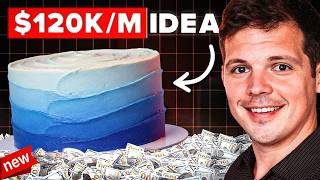
William Lindholm built a corporate gifting startup sending personalized cakes to sales prospects. An AI agent finds bakeries and coordinates deliveries across cities, generating $120K monthly with 35% conversion to meetings. He predicts physical gifts will cut through AI-generated noise online.
Chapters
So this month we're doing $120,000. Yeah, it's crazy. Our company's only existed for 6 months. I lived in a closet for the whole duration of that. In Norway, we're passively invoicing like $12,000 a month right now.
Wow.
I have my mom as customer service there.
It's on autopilot. Like, why cut off the revenue, right?
Exactly.
Mom needs a job.
Next week we're doing 1,000 cakes for one single company.
Wow. Tell me your thoughts on the dead internet theory, what that has to do with this.
The dead internet theory is that 99.99% of the content we consume on internet, emails, phone calls, videos such as the one we're making right now. It's all going to be AI. So in a world like that, we're not going to be able to send cold emails, we're not going to be able to send LinkedIn DMs or cold call anyone because there's going to be too much noise. So the way you cut through to someone in the future, which we really believe in, is physical gifting. Getting attention is absolutely everything.
A, it buys your loyalty. B, it's a cheap way to stay top of mind, which is harder than ever today.
I mean, sending an email wouldn't do that. In fact, sending an email would probably make you seem annoying.
Yeah.
One thing your viewers might find interesting is like how I have my agents set up.
Yes, yes, very curious about that.
I'm not involved in it. Every 2 hours it checks my email, it goes and sources 20 new bakeries, it responds to all the emails, negotiates with the bakeries until we have a deal. This sort of outreach would have been impossible just a year ago, and I can take that and do that with so much more than just cakes and bakeries.
So if someone's watching this right now and they're thinking like, okay, this works, this makes perfect sense, but I don't have anything to sell. What should I sell? So I come across this guy that started a business 6 weeks ago and he did $120,000 his second month. $40,000 of that was profit. What's he doing? Cold caking. He's doing cold caking. And if you've never heard of that, it's because it's brand new. In a world where cold calls, texts, and emails are less effective than ever, this is the strategy you need to make a bunch of money selling whatever it is you sell. This story is freaking amazing. This guy's gone viral a bunch of times, so I had to ask him all these questions for myself. Please enjoy. Well, William, why don't you tell us who you are and what you do?
Well, I'm William, and I help you get customers by sending cake. We started like 6 months ago saying we were going to automate birthday deliveries with cake. Did that in Norway, sort of blew up, and we decided let's think big and go to the States. So we moved to SF and said, let's do it in San Francisco as well.
So you moved from Norway to San Francisco specifically to expand your cake shipping business?
Yes.
I mean, I feel like if you could make a business work in Oslo, Norway, you could make it work anywhere.
Exactly. But actually, the fun thing is we came to San Francisco and then we tried to do the same thing, the birthday thing, and nobody in San Francisco cared because I think the American culture is nobody cares about their employees.
So, oh shoot.
Okay. Yeah. So we pivoted and yeah.
Well, first of all, like Norway is tiny. It's freezing. It's, you know, middle of nowhere, Northern Europe. And it's probably not very business friendly, I imagine. Right.
Well, it's definitely business friendly, but, but it's a smaller market, right? I mean, the whole population in all of Norway is 5 million people, right? So, oh geez.
So yeah, that's like a little bigger than Utah. Exactly. Okay, so tell me what your business started as and what first gave you the idea for this business.
Yep.
And I know your model changed when you moved to SF, so explain exactly what the business model started as.
The idea actually came from, uh, I've, I've worked in sales since I was 12 years old, so always been, been chasing that. And in Norway there was almost like a hackathon but for sales, so it was called the Norwegian Championship of Sales. And there's like 100 sales reps that show up. I'm like, stressed and nervous. I have no idea what I'm selling. And then I get a paper in front of me that says you're going to automate birthday deliveries with cake. Hmm.
This was just randomly assigned to you at a competition.
Yep. It's ridiculous. But that day I booked like 17 meetings in 4 hours, like companies like KPMG. So I was like, okay, this is big. People want this. And from there I started building a birthday solution.
Yeah. So First of all, how did you book those 17 meetings? Just outbound cold calling to a list that they provided you?
Yep.
And what was your pitch to them?
I don't remember exactly what I pitched back then, but I think it was something like, we started this new company, uh, we're doing something crazy, we got investors on board, and we would like to give you a free cake if you'd like to take a meeting with us. And then like I told them the idea, which was we're going to automate your birthday deliveries. And everyone laughed at that because you, you get so many cold cakes, but when, when someone or you get so many cold calls, but when someone called you and asked if you want a cake, right?
Yeah.
So it was like a very smooth intro into the call and yeah, just worked.
Okay. So there's like a couple different gifts going on here. Like you want to give them a cake to get their attention, right? But the, the quote unquote hypothetical startup that you just raised money for is something that automates birthday deliveries that like a large company would buy from you so they could better serve their employees. Is that right?
Right, so let's say you have 40 employees, and all of these employees, you want to make sure they, they feel seen. So you do something for their birthday. Maybe you do something every time someone turns 30, 40, 50, not every single birthday, whatever. You have to recognize these people. And so at least in Norway, it's very normal to do that with cake. And what's the worst that can happen, right? You remember someone but forget someone else. So we just figured, okay, let's just solve that pain and make that never be an issue again.
And was the idea to integrate with like Gusto and ADP and paychecks and use that data to automate everything?
Yep.
Hey, YouTube's fine, but what about when you're driving around? What about when you're mowing the lawn? You need my audio podcast, The Koerner Office. Just look up TKO Pod in Apple, Spotify, or wherever you get your podcasts.
I think that's also where we met the problem with it, because when we were cold calling people, we were very aggressive with like You have to sign up for this. And then we integrated with like 40 different HR systems and we said, okay, let's scale this when we get to the US. So we did that and we A/B tested like 40 different ads and none of them converted. So I think the good thing is this is a genuine cash cow business opportunity because the retention is really good. Like if someone signs up for this, they're going to stay there. But the problem was when we tried to really scale this and make this a big company, we met the issue of this not being a big enough problem for someone to actually sign in with their HR system, make sure everything's okay without a human person pushing them. So that's, that's why we pivoted. But like, we, we grew that to $150,000 AR before we, we pivoted.
Oh my gosh. Okay. I'm still confused about the competition aspect of this. Did at this sales competition, did they give all of the salespeople the same hypothetical startup, the same offer?
Yep.
Okay. So you weren't supposed to actually turn this into a business, is that right?
That's right.
How many people were at this competition?
Like, uh, 50. Yeah, I mean, there was like, uh, 1,000 people watching, but like 50 sales reps or more that competed. So they just put us in rounds. It was like, I think they divided the day into 5 blocks of like 1 hours. So you cold called for 1 hour, whoever had the least meetings after 1 hour, the, the 50%. Least got knocked out. And then they did that 5 times until there was a final. And then the winner got like $10,000, I think. So.
And how close did you get to winning?
Third place. I was one meeting away from first place. So.
Oh no.
So, but, but still, I mean, uh, I, I think I got $500 and I got the idea that made this happen. So.
So were you on a team or was it just you cold calling for 5 hours straight?
Just me.
Okay. Now, so of the 50 people. You were the only one that said, hey, like, I know this is just hypothetical here, but I'm actually going to start this business because I had a lot of success here. And you were comparing it to previous cold calls that you made and you're like, geez, 17 calls and 17 booked appointments in 5 hours for something that has high LTV, lifetime value, low churn. Like, I need to actually do this.
I just started doing the numbers in my head. I was like, okay, so wait, so if a company with 40 employees sign up, that's, uh, $80 per cake and then 50% margins, maybe I'm able to make that happen. Wait, that's like $5,000 a year. And then if I get sales reps to do this and I pay them $2,000 per client, then wait, the next year I'm just going to make full profit on that. So I just started doing the numbers and like calculating in my head and it just made sense.
So, oh man. And here's the thing, like, I'm a little surprised it didn't work in the States because I just filmed a video. It hasn't gone live yet, but with this woman in Dallas that does corporate gifting and a lot of what she does is for birthdays, but mostly it's like for, you know, high ticket enterprise SaaS where she'll send like the company will go to someone's LinkedIn and see they graduated from Syracuse and send like a highly curated box of like Syracuse alumni gear to someone in, the hopes that they'll get a call with the sales rep, and she facilitates the logistics of all these gift boxes, and she does very well. So like, obviously corporate gifting is a well-established industry here. Why do you think you couldn't break into that from with a birthday angle?
Well, that's sort of what we're breaking into now, but from a sales angle, right? I just think companies usually have two really large budgets, and it's sales and it's engineering. You always want to sell your product and get more customers, and you always want to build your product better so you get more customers. And so that's where the two largest budgets are, and everything else is just noise that you have to do to make the business go around. So I think it just wasn't a big enough pain for people to say, oh, I really want to prioritize this. Now, uh, it is to be said, after going like semi-viral with the cake thing, uh, the last couple of weeks, We have gotten inbounds from people who are like, oh, we want to do cakes. But compared to the people that's inbounding us and saying we want to do cakes or cold cakes, as I call them, it's just not comparable. And the same thing happened in Norway. We went, this is where, how I know like the, what we're doing now is the right thing is we were on all the biggest news in Norway, like all the time, because it's such a unique idea. And we got zero inbounds from that. Everyone thought it was cool. And when we called everyone, knew about us and it was easier to sell, but the pain wasn't big enough for people to reach out and say, oh, I've been waiting for this the last 5 years. I think that that goes for a lot of businesses, is it just isn't the biggest priority. Like, if you're good at sales, you can scale this and you can make it something you probably make like a million dollars a year off of, and that's fine. But I wanted to build a really big company, and I think the path we've taken now is even better.
Yeah, I mean, so the budget thing is smart, and this is similar, but you're more likely to sell a product or service that's most closely tied to revenue, right?
Yeah.
And so you doing this for salespeople to book more calls is directly tied to revenue. Therefore, it's an easier sale for you as opposed to like, help your employees maybe be 2% happier one day of the year. You know, it's like, eh, in Norway, the cultural, the culture, you know, benefited that. But in the US, it's like, How am I going to make more money from a birthday cake, bro?
You know, exactly. I'll let that be said. I never tried cold calling in the US. I just went straight to ads. So I definitely think there's someone watching this that could take this and run with it. I think, yeah, I think it's a great idea.
Now tell me your thoughts on the dead internet theory.
That's a great question.
And how that, what that has to do with this.
So AI is just getting better and better. I think we can all agree it's, it's not going to de- it's not going to stop evolutionizing itself. So in a couple of years, AI will be so good that it's literally impossible to tell the human from AI. And in this world, I can spin up a Claude agent that makes 10,000 UGC videos or 100,000 emails that all feel super natural and super human-made. And so the dead internet theory is that 99.99% of the content we consume on internet emails, phone calls, videos such as the one we're making right now, it's all going to be AI and humans aren't going to use the internet the same way we are today. It's going to be so much noise, it's going to be impossible to cut through. And I think like the first step to counter that is humans are going to get agents that like answer your phone or check your email and say, this is what you have to prioritize today. And then the second step is like the Elon Musk vision where you have Neuralinks and you're communicating completely off the internet, uh, the way we are today. So in a world like that, we're not going to be able to send cold emails. We're not going to be able to send LinkedIn DMs or cold call anyone cuz there's gonna be too much noise. So the way you cut through to someone in the future, which we really believe in, is physical gifting. If we can become the company that has the most data on what kind of gifts work, we become the next Apollo or the, the next like real big GTM engine.
So, okay. So I love everything about this. Talk to me about, well, first of all, dead internet theory. Like I do think you're, you're mostly correct, but also it's gonna be agents talking to agents.
Yes.
Like it'll be agents reading cold emails and sometimes an agent monitoring an inbox will get a cold email that's relevant to what the owner of that inbox actually needs. For sure. And that agent is gonna have credit card info and it's gonna go buy things while we're out like hiking and fishing and actually like it's gonna improve the quality of life in a lot of ways cuz we're gonna be sick of the internet, you know?
Oh yeah. I view this as a good thing.
Yeah. Oh yeah. The internet will be busier and more bustling than ever, but it's just gonna be computers talking to computers. Right. So you're saying like this breaks through that fourth wall, so to speak, the physical barrier. And, um, you, you can still use agents to send these cakes and to do all the outbound. Like you could, you could use an agent to do outbound cold email to get a physical cake in front of someone, and then you kind of marry the best of both worlds. Right.
Yeah. And this can also, like, the way we're doing it today is we have a sequence where we first send the email that says, hey, in 2 days I'm sending you a cake. Is this the right address? And then we send the cake and then we follow up either through email or phone and like an AI agent would respond to, there's a cake coming to this address. Is it the right address?
Yeah.
But the thing about the agents is they're never going to know what the human doesn't tell them. And a lot of sales. Is about making someone want something that they know they want it. And if you can't cut through the agent because the agent doesn't know the human wants it, then you have to like, you have to get into the face of the human either through network or through like just a physical gift. So, mm-hmm.
Okay. So let's talk about like pure A/B test. What have you done to, to test? Like let's say you get 10 people on the phone. And on 10 of them you just give them your pitch to whatever it is you're selling, and on the other 10 you send them a cake to then give them the pitch. Like, how much better of a conversion rate do you get from a cake?
Um, well, cold calling has like, what, 2-3% conversion rate? Maybe you can pull off some stats on this so you can correct me.
It could be all over the map, right?
Right.
If you're selling t-shirts, maybe 30%. If you're selling $30,000 a month software, could be 0.3%, you know?
Exactly. So, but there is like an average there. And, um, from the cakes we've sent out so far, 35% have converted into meetings, which is really just crazy. Wow.
Yeah, guys, tkowners.com. That's my community where people are building businesses. I do AMAs, Q&As every week live. You can ask me anything you want. You can have accountability partners. It's about 1,000 people in there building, starting, growing businesses. Check out TKO, as in the Koerner Office, tkowners.com. So you send out 100 cakes and you— and 35 meetings are booked for like— is it mostly software stuff, like Silicon Valley stuff?
Yeah, that's mostly what we're getting, but I'm also getting like accountants in Miami reaching out, real estate brokers, like really anyone and everyone is reaching out and doing this. There's like, there's the one part where there's software companies trying to sell to other software companies, but there's also like next week, this is crazy. We're doing 1,000 cakes next week for one single company. And this is a dentist software company, archy.com. They're just sending it to 1,000 dental offices in San Francisco, Florida, Houston, just all over.
Have they done the test yet?
No, it's, uh, well, the thing is, uh, they reached out and did such a big order volume because they did the same thing with pizzas last year.
Okay.
And it was a really successful—
that was their test, so to speak.
Yeah.
Do you know what the, the economics were on their pizza campaign?
Uh, like how much they paid and how much they converted? Yeah, I do. But I don't want to say because I don't know if I'm allowed.
It was good. It was good. It was good to spend tens of thousands of dollars to do it again.
Yes. Yeah, for sure.
Or is it, man, a thousand?
Yeah.
Okay.
So tens of thousands. Yeah.
Are they paying like $50, $60, $70 per cake for these at that volume? Clearly you're not in the cake making business. Are you just like dropshipping these from someone that ships cakes?
You could say that. I mean, we, we put software on top of it to make logistics better. What we do is we, uh, I have an AI agent, I'm happy to show you in a bit as well, that's constantly sourcing bakeries all across the US and London, Australia. And then it negotiates with the bakeries and says, hey, we're going to be buying all these cakes from you. Um, so we need a 30% discount. We've been in Forbes, we've been so and so on. And then they're like, okay, we'll take a chance. Uh, they give us a discount and then someone like Archie reaches out, they need cakes in 10 different cities. We make a, or we have a system where we just plot in all the 1,000 recipients and then we let them track all the orders, the, all the different bakeries are taking pictures per delivery and so on. So, so th—
this is like 1-800-Flowers, but for, yeah, for outbound sales basically, cuz that's what 1-800-Flowers does.
Yeah. Uh, I would say that's pretty accurate.
Now, are most of these cakes only traveling at like, you know, 30 miles or less because of the localization of it?
Yep. That's fair to say. Okay. I mean, for Archie, for instance, and we've done this a couple times, we did it for Rippling as well. They wanted a couple like really special cakes in like very niche areas where we didn't want to spend time finding a bakery, so we just sent a cake on a flight.
Hmm. So interesting.
That's possible as well.
Does it matter at all if the cake is any good? Is there any correlation to close rate or book call rate?
I definitely think so. I care a lot about the quality of the cake. We only partner with like organic French patisseries, make quality cakes because at least my opinion is, well, that represents the quality of your company. So nobody wants to do that. Yeah. And so we're very picky about the bakeries we end up working with. There's a lot of cheap bakeries. We end up just saying, well, this isn't the right fit.
So yeah. Do you have any data from your customers on the close rate being higher or lower once they get on these booked calls?
It's a good question because I, I don't—
here's what I'm thinking. Like, there's a direct correlation to the effort you put into something and the potential outcome. Like, if I film a video with a business owner and it's like this talking head, he's in one state, I'm in another, 50,000 views. If I film the exact same video with the same content and I'm in person and we're grinding stumps together, we say these same words, but the viewer sees that I had to get plane or he had to get on a plane. We're out there sweating and they take it more seriously. They take it more seriously. And I might get 500,000 views on that, right? So I would think that if I just, you know, dial for dollars, do cold calling all day to get these book calls to sell enterprise software, my close rate might be 15%. But if I, you know, if I use these cakes, I'm going to spend a lot more money, but A, my book call rate goes way up. And B, theoretically, I would think that your close rate goes from 15% to 25%, 30%.
Percent, you know, I don't have the data on that, but it sounds logical, right? So like one thing that's important is my cakes don't close you the sale. It just gets you the media and gets you the attention. The rest of the job you have to do yourself. But I think there is something very psychological about wanting to give something back when someone gives you something.
Yeah. The law of reciprocity.
Exactly. That's what they do in like the Turkish markets. If you've ever been in like Turkey, they, they're like, they— you come in their store and they start giving you candy and they're like giving you so much because it's psychology. Yeah. So it sounds logical.
If I were you, I would like hound my previous customers and say like, do you have any idea on what your close rate was on these that like the calls that came from these cakes? Because then you can put that front and center on your landing page and it's like, that is true. Increase your close rate, like increase your book call rate by 32% and your close rate by 64%. Like Yep. That'd be huge. Like it's a net of net, you will make, you know, 316% more money for every dollar spent on cakes versus cold calling or whatever it is.
Yeah, you're, you're spot on. And I think like this data is so important for us to collect because long-term, if this vision of the future becomes right, which I really do think it is, one, cakes are going to be overused. Everyone's going to get 5 cakes a day. So we have to do more than cakes. And, uh, when we get to that point, sure, we're gonna be a huge company already by then, but to become even huger, we have to collect the data on what works. Like maybe we send a cake, but the close rate only goes up so and so much. But if we send something even more personal, and we can talk about what, what that could be as well, but, uh, maybe the close rate is even higher, but the book rate is lower. So all of this data is super important. I totally agree with you.
Tell me about your numbers. So once you focused on the sales market in the US. What was your first month like, your first 6 months, year, et cetera, both from a revenue and profit perspective?
Well, we've, our company's only existed for 6 months, so.
Oh wow.
So it's young and promising still. Well, in, in, in Norway, the, the birthday thing, we're passively invoicing like $12,000 a month right now. Wow.
So you're, you saw that side of the business going.
Yeah, it is just running to, to, to be quite honest with you, I have my mom as customer service there.
It's on autopilot. Like, why cut off the revenue, right?
Exactly.
Mom needs a job.
Yeah, sure. So we have that going. And when we got to the US, we did zero sales for the first 2 and a half months. Like I said, we were just trying to figure things out and really felt like we were hitting a wall. I was almost about to like just put down the company because of that. I didn't see it becoming large enough. But then we Cold Caked, which I'm coining as a term, a16z, Sequoia, like a bunch of big venture capital firms. Yeah. And that went viral. That hit the news and we got so many inbounds.
What was the message to these firms when you sent them a cake? What was the pitch?
So this wasn't my cake or like we sent the cake, but we were in Founders Inc. And a friend of mine, Andrew Anderson, who's like running a crypto platform that's really taken off, he was fundraising. So he put his whole pitch deck on like a 100-piece size cake. Wow.
Yeah. Yeah.
And like, it was just a bunch of text of everything he was doing. And the VCs loved it. One of them posted it on X. They got like 300,000 views. That ended up in the biggest tech news in Europe. And from there, the ball is just like, it's been nonstop.
Were you linked in those articles?
Yeah.
Yeah. So it was amazing for him. He probably raised his round. Amazing for you. Great backlink. Win-win all around.
Yep. And that's also the interesting thing about what we're doing now is it becomes this marketing loop because if you send a cake to X company, then X company might take a picture of that. Not only will they book a meeting with you, but they might take a picture of it and post it on social media. And that gives you PR. And then they might think, oh, this worked on me because I just booked a meeting and posted on social media. And then they reach out to me and say, we want to do this as well. And that's what's happening, right?
Yeah.
Like I'm getting inbounds from people that have gotten a cake and think this is, this is cool.
So, you know, you guys should try is, um, what's it called? Like a, like a sing-a-gram when like someone shows up in person and sings to you.
You do like, yeah, like cold mariachi.
Yeah. They sing a pitch. Like they sing a pitch to them. It would cost a lot more than a cake, but the results could be a lot better, right? Because the effort—
I'm down.
Yeah. I love that you call it Daymaker because you're not going all in on cakes. I agree with you. At some point people are going to be getting too many cakes and it's just going to be a waste, right? Yeah. But that's fine. You just pivot. You do something else. So, okay, so first 2 and a half months you're hitting roadblock after roadblock. That goes viral thanks to a tweet. What do your numbers look like after that point?
So this month we're doing $120,000 revenue. Yeah, it's crazy.
6 months in.
Yeah. Or I mean, this pivot is 1.5 months ago, right?
So, oh my gosh. So 6 weeks after pivoting, you're doing $120 grand a month and growing double digit, I imagine, per month.
Yeah. You, yep. It's a lot of fun.
Listen, I need more people like this to interview on my podcast. So if you know of someone with a side hustle or a business that's unique and cool and super profitable, email molly@cofounders.com. That's one word, co-founders.com. Molly@co-founders.com. Tell her your story and we'll give you $100 if we end up interviewing them. What does your team look like? Do you have much overhead, like developers or anything, or are you profitable today?
No, honestly, we're cooked. I have a list of—
no pun intended.
Yeah, you're baked. Uh, we're baked. I have a list of 45 inbound leads right now from people that are like, we need cakes in Australia. We need cakes in Canada. We need cakes in Spain and Mexico. And we're just like, we can't sleep at this point trying to fulfill them all. So we just have to fundraise and hire and keep this momentum going.
So you're just putting all your money back into the business?
Oh yeah. I mean, I just came home from San Francisco after being there for 3 months, but I lived in a closet for the whole Duration of last—
probably all you can afford. It's so expensive there.
It is. It really is.
I would think you can get to this business to the point where you have a positive cash flow conversion cycle. You get paid on day one. You have net 30 payment terms with your bakeries, at least with many or most of them.
We're profitable right now.
So, okay. Well, like that could be, that could be your natural fundraising. Like that could prevent you from having to fundraise at all. Right.
That's true.
Especially after you send a bakery, a bunch of businesses, like, listen, Your cake's delicious. It's working. We love working with you, but we're cash-strapped. If you want to keep getting business from us, we need to be able to pay you in 30 days or else we're going to have to go to the bakery down the street. And then you guys would be rolling in it.
Yeah, for sure. Totally agree with you. We could bootstrap, but my vision is to be a lot more than a cash cow business. And I think to do that, I want to scale even quicker. Yeah. Like, for instance, there's a lot of company or there's a couple of companies that have done some deliveries now. They do one delivery batch, it goes successful. They order another one, it goes successful. And then they're like, okay, let's just make this recurring. Can you guys integrate with our HubSpot or Salesforce? So on and so on. There's, uh, they're asking, some are asking for ping pong tables, uh, instead of cakes. Yep.
It's wild.
So like, we want to be able to keep up with all of that demand and to do that, I, I think the right move is to fundraise. Yeah. But, but you're right. This, this could be a cash cow business for sure.
So on $120,000 in cakes. Were you profiting $40 grand, $50 grand?
Yeah. Uh, $30, $40 grand. Yeah.
Okay. Okay. So let's say a lot of my audience, most of my audience is not on the coast. They're like in middle America, 25 to 55-year-old entrepreneurial, either, you know, about 40% are business owners, 60% are aspiring business owners. So if someone's watching this right now and they're thinking like, all right, I want to start a business or grow a business. With something like this? I don't wanna start a cake delivery business, right? He's got that locked down, but I wanna use this principle to make money. What, like, and someone doesn't have an offer yet, let's say hypothetically, what types of offers or services or whatever could someone use with your cakes or with sending their own cakes or whatever to increase the likelihood of success based on what you've seen? Because if I sell t-shirts, right, it's like the unit economics don't make sense, right? But if I sell enterprise software, it does.
It does make sense.
That's, enterprise software isn't approachable to an individual that wants to start a business either, right?
So I think it is, to be fair. I think anyone can make anything today. I mean, it says so on your, your t-shirt, but I guess you're true.
It's true.
It's true.
But like, I'm saying like a $4,000 a month product, you know, like Salesforce or whatever, like agency services. Sure. You vibe code it out.
I totally get it. In 2 weeks we're doing, uh, like 50 cakes with an SEO agency. And what they're doing is they're putting like a video, they're recording a Loom video and they're putting a QR code on the cake. And then we're sending that out. So when people get the cake and they scan it, it's like a SEO audit of their website. Oh, that's cool. And that's cool. Also, there's just the virality moment of it. So I do agree if you're selling t-shirts, don't send cakes. But I think one of my biggest lessons building this company is do crazy things, post about it, and you're gonna go viral. And so for 100% all of our customers that have done like a huge amount of cakes, every single time it's, it's gone viral and it's ended up in the news and it's just been a positive PR thing for, for just both us and for our customers. So I, I think like one of the things we did is we, we had a unicorn, uh, cake that was huge. That, that went super viral. Another thing I did in here back in Oslo before moving to, to SF, which I, I think is great. This is unrelated, but I think it'll give an idea of how I want you to think is we hosted this founder dinner and we got all the best founders in Norway to be a part of this dinner. And then we're like, okay, how do we make this something people talk about? We hired or we leased a llama. So we had this big venue, we had a private chef, 7-course dinner, and then we had a llama walking around in the venue and we had a jazz band playing jazz. And like that blew up as well, right? So I think like attention is everything. Getting attention is absolutely everything. And the cakes is right now like such a great thing, a way to get attention because it's still new, it's novel and so on. But if there's one tip I have, it's just do crazy things that get people's attention and then post it. Yeah. And post it. Yeah.
So agency services, I think that's a great idea. Like, I have a community called PlaymakersAI.com, and I teach people how to be AI consultants or to start AI implementation agencies. And we talk a lot about customer acquisition and we talk about paid ads, all types of stuff. But this is like a no-brainer. Like, why not ship cakes to a medium-sized business that, you know, has $5 to $50 million in revenue? And instead of a QR code to an SEO audit, it's a QR code to their website that gives them an AI audit that says like, your business could be improved with AI. Call me, and then you just upsell the heck out of them.
Yeah.
Like, it's like—
yeah, you can do anything.
You're—
like I said, we have accountants and real estate agents doing this as well. So, uh, I think as long as you're— as long as you think there is marketing coming from this, and second of all, you have a high enough average contract value or LTV to make it make sense, like send some cakes. It's—
yeah. I mean, dude, if I'm a— if I'm a— if I'm a real estate agent, I'm gonna get a list every morning of properties that are expiring, right? They've been listed for 6 months and that the realtor, that's the listing agent, is about to lose, lose the listing. A week before that expires, I'm going to send them a cake, right?
There you go.
Because even if it's a $500,000 residential home, that's $10,000 to $20,000 net to the realtor. If they close 10% of those, then what's an $80 cake?
You know, also, like, one thing is the cold cake, which I mean, you're spot on. Another thing is the retention cake. So let's say you have some customers that you've had for like a year and then you're like, thank you for being my customer for a year. Here's a cake. And that's like, what you're doing there is you're just going over the bar of expectations and that makes them think about you and talk about you and refer you to more people. So you could do retention cakes, you could do cold cakes. You can, yeah, there's, there's a lot of things to do with cakes.
I mean, we hired a custom home builder for our home and paid him a whole lot of money. And every Christmas we get like a, a box of nuts, he probably spends $40 on them.
And you know what?
Anytime someone at church asks me, who'd you use for your home builder? I'm like, use him, use him, use him for, because, because of a $40 box of nuts, you know, it works.
It does. Yep.
It keeps, if nothing else, if A, it buys your loyalty, B, it keeps you top of mind. It's a cheap way to stay top of mind, which is harder than ever today.
Yeah. I mean, sending an email wouldn't do that. In fact, sending an email would probably make you seem annoying.
So yeah, this is amazing. Is there anything cool about this story that I neglected to ask you about before we wrap?
There's so much cool things about this story, but I think this was a great conversation.
Well, I mean, $120 grand your second month profitable. Incredible. I applaud you on what you've done. This is amazing. Do you know if any of the other 49 people tried to start a business like this?
Not as far as, well, actually there's, there's been a lot of people that have reached out and like just said, hey man, I'm going to compete with you. Like anything, it's, it's all about execution. Someone does want to start something similar, I encourage that. Uh, like heck, we might even partner, right? Maybe I go like, hey, we have this brand and you can have this area and we'll take a split revenue. We almost franchise it, right? So one thing your viewers might find interesting is like how I have my agents set up to find these bakeries.
Yes. Yes. Very curious about that. Yeah.
I meant, you mentioned you have like these, uh, AI agent agencies. So, so the way I do it now is, uh, I have like this super prompt in, in Cloud Cowork connected to a Superhuman MCP. Superhuman is like an email system. The super prompt says like how you're supposed to negotiate. It says how you're supposed to find good bakeries, like look at reviews, so on and so on. And then every single day, I'm not involved in it. Every 2 hours, it checks my email. And if I haven't found a bakery in the location I've told it to find it, it goes and sources 20 new bakeries. It responds to all the emails, negotiates with the bakeries and the initial email we send out is like an email that says, hey, we want to buy 200 cakes in 2 weeks. Can we make it happen? And that catches the attention of the bakery and they're like, yes, please. And then we go like, okay, you, you have to give us a discount. They give us a discount. If the discount is good enough, my agent sends that email to my personal email where I just give a thumbs up or a thumbs down on it. And if I give a thumbs back, it goes down. or back to the bakery, renegotiates more until we have a deal. Yeah.
Maybe that was complicated, but it's like, no, I, Claude Cowork, that's like, I can wrap my mind around that.
Yeah.
That's incredible.
That's how we do that. And, and that's allowed us to go from one bakery to like 15 bakeries in a month, which is wow. Like this sort of outreach and like partner networking would have been impossible just a year ago, which is why like nobody has done this before because it in reality, this is so time-consuming to sign up all these bakeries. And I can take that and do that with so much more than just cakes and bakeries.
So, yep.
Yeah.
The tediousness is the moat. It is, right? That's why, that's why Plaid is a billion-dollar business, because they went and made API connections with every random credit union and bank that had terrible API docs. They went and did the hard thing to do that. And now they're the de facto solution for connecting financial institutions, right? The tediousness is the moat, is the first mover's advantage, is your competitive advantage. It's amazing. William, thank you. This is awesome. Where can we find you if we want to buy some cakes or learn more?
Hit me up on LinkedIn, William Lindholm. Hit me up on Instagram if you're not on LinkedIn. That's also William Lindholm.
Okay. Thank you, William.
Nice meeting you, man.
Guys, I meant what I said about PlaymakersAI.com. There's about 300 of us in there and we are all doing the same thing. We're starting AI consulting businesses. We're implementing AI into small and medium-sized businesses. And we're having a lot of success. So check out PlaymakersAI.com and shoot, use a cake to go find some customers. We've got over 100 hours of recorded content, including 3 to 7 hours of live content with 25 different paid experts every single week. We'll see you there at PlaymakersAI.com. If you like this content, please share with a friend, hit a like or a comment below, and we'll see you next time on the Koerner Office.










