He Turns Abandoned Driving Ranges Into Cash Machines
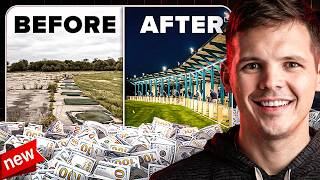
Chris Koerner talks with the founder of Golf Ranch about buying neglected driving ranges and turning them into membership clubs. They charge $20 a month for 40% cheaper buckets and events, license Toptracer technology for coaching data, and hit 12 million balls annually across four locations with 8,000 members. The goal is 50 locations, one per state.
Chapters
Old mom-and-pop-owned driving ranges are the most overlooked yet underappreciated small business in the world.
It's an old, dated industry, and so that was— the bar was actually really low. The major insight was there's a missing gap, which is more and more people are playing the game than ever.
How many members do you have across your 4 locations?
We've got 8,000 across 4 locations, 50 driving ranges around the country.
That's the goal.
One in every state is the goal.
I've always said that the overlooked businesses are the ones that are the most profitable. So what are your thoughts on like the rise and fall of Topgolf? Like happened to them and what are you doing differently?
We made a really huge effort at making this a really friendly place. Dress however you want. If you are here to have a couple beverages with your friends, we welcome that.
I'm going to talk to a guy today whose whole business is buying those outdated, overgrown, unwanted driving ranges and turning them into cash-flowing money machines. So let's get into it. So you went from 3.5 balls hit per year here 2 or 3 years ago to 12 million today?
Yes. Yes.
How did you do that? Like, what is that process like?
I think a couple of things. Traditionally, driving ranges, very unwelcoming, stale experience. A lot of the golfers complain about, hey, the turf quality isn't great, the ball quality isn't great. There's a lot of substitutes. Like, you can go to other driving ranges. We made a really huge effort at making this a really friendly place. We put the time and care into upgrading things that we thought were most important to golfers. So ran some customer surveys. Got tangible data to say, all right, where do we start? One of the very first things was ball quality. So high quality golf balls. This business, you're hitting balls all day, you're picking them up. What you're finding is most driving ranges, they're just throwing those back in the hopper. We go through a sorting process to say, all right, is this good enough to go back in? And then on top of that, we're just investing in replacing those balls. A little thing that requires capital, but I think it's more thoughtful of like, cool, You have limited resources, like where do you spend your dollars? Golf walls was the number one thing that we got back in surveys. Number two was turf quality. So I think something you'll see in a lot of older driving ranges is you're hitting off a mat, but it's got a hole in it. It's got— feels like you're hitting off concrete. And so again, small customer feedback loop where we were able to say, all right, let's invest in high quality mats. So went, bought every mat we could on Amazon, went and sourced and found individual smaller distributors and found the mat that we love. I think again, a small thing, but it's a very elevated experience from your normal drive. The bar was actually really low. Yeah, I think that was kind of our opportunity was the golfer had been underserved. Can you provide something like a little bit better and a little bit nicer around exactly what they want? And so I think that was a big insight for us to help drive this huge spike in business. I mean, the amount of volume that we were able to do was fantastic. I'll say another thing, like most driving ranges, you're limited by some weather constraints. I think here in Dallas, right, not as much as others. But what you may not realize is Dallas during the middle of the day is scorching hot. This is typically what you would have at a Dallas driving range, open, completely open air in the middle of your workday. You're not going to come hit balls during lunch. It's so hot you'd be drenched with sweat. So small adjustment, we added a covered tee line to our bays. If there's a hailstorm, which we had a couple of weeks ago, you need to have protection. And those are operating hours that you normally lose revenue on. Completely. Yeah.
So ball quality is central to everything you do here?
Super. Okay, super.
So when you bought this facility, uh, what was the previous owner charging?
So by the bucket, I think typically in, in driving ranges they have almost like a gift card model. So it's a prepay a certain amount and then that unlocks a certain amount of buckets. Cash flow forward, you know, that's pretty standard. And you're getting that discount on your per bucket model. So we took a little bit of a different approach and we said, hey, instead of prepaying for 10 buckets with one card, let's do a monthly membership model. So we have a model called Ranch Pass. It's $20 a month. That gets you exclusive pricing. Okay. So our whole thought there was getting people in the door at a more consistent basis and driving visits versus, I don't know, my experience with gift cards is like, all right, I get a Starbucks gift card. Money could be on there for like 3 years. It's not actually driving incentives for me to show up.
Yeah.
And continue visits. And so we started with this $20 a month model. We wanted to make it super flexible because look, it's seasonal and life changes. And so if you're not this serious golfer coming 2 times a month, you can cancel at any time. And what we found with that was that membership and commitment unlocked a lot of other things as far as membership. So whether that's tying in like events, we do a couple times a year Ranch Pass Classic events, which are competitions with members. We have exclusive pricing on our par 3, preferred pricing on lessons. And so for us it was let's go this membership model route. Let's get some sort of commitment from them, and then it's our opportunity to provide other programming to keep them along versus an old school driving range model, which is really hands off. It's kind of like you can pay in advance for a discount, but there's really no incentive for you to keep coming back. So I think that was, that was one of the things that we really thought about with membership is like not only some sort of commitment from your customer, but having a reason for them to come back frequently.
So what do they pay per bucket if they're a member versus not a member?
It's 40% less per bucket.
Oh wow.
Yeah.
What percentage of people here today would you say are members versus non-members?
I would say 40% are members. 40% are members. Okay. I would argue a lot of the membership comes in off-peak time, so we get a lot of older ladies and gentlemen who are coming in the mornings, which is traditionally for driving ranges like down off-peak time where they're not generating any revenue. What we find is that, you know, during the evenings, 5 and after, we have lights going into late night, which kind of opens up our revenue window. Typically driving ranges like sundown, the range is closed. This night traffic has been great to bring new people into the site. We've seen like dates as this like really interesting first date opportunity. Yeah, I think mini golf is like something that most people do as first dates. Now that's, you know, actually coming to a driving range and hit because we've got the venue to support that. So peak times for us are definitely after work, shockingly go really far into the night. I mean, during the summer here, We're up until midnight.
Wow.
Oftentimes we have to like kick people out because they're on the putting green and enjoying themselves. Midnight during the week, which is shocking. But I think most businesses, it's just such a luxury to be able to say, hey, we can just extend our hours and we still have demand to fill this. Most have the opposite problem, which is like, no, we can't keep staffing open because there's no one here.
Yeah. Do you do much business on the food side of things or is that—
Food is intentionally a very light part of the business. So 15% of the whole revenue. We looked at concepts like Topgolf, which are food and beverage forward. We kind of think of those entertainment concepts as like party concepts. It's like they're actually making their money on food and bev and events. There just happens to be golf there. We didn't want to like overextend on this, this expectation that when you're here, you're going to have a server bring you food. Yeah, food quality. Like these are all bars of expectations that frankly, like we thought of, we need to simplify the model. And it's, you know, we have hot dogs and burgers, very simple, menu items that can be served on a flat top. Doesn't require a huge kitchen build out. And then buckets of beer, seltzer, soft drinks. Yeah. Really things to, it's not the focus, it's just like an amenity that if you just to support the people that are here to play golf. Sure.
Whereas Topgolf might be the opposite, right?
Exactly.
Like hospitality first, golf is secondary. Exactly. You guys are the reverse of that. So what are your thoughts on like the rise and fall of Topgolf? Like what happened to them and what are you doing differently?
Topgolf attract also amazing business. Like, we have actually a lot of our, our founders, the founding group, a lot of employees from Topgolf. So they did an amazing job at like making golf sexy, making it cool, and they were able to drive a lot of people who never touched a club to playing for the first time. I think the big difference is the experience is a little bit more expensive, it's a little bit more occasion-based, um, it's a heavy emphasis on food and bev, and there's some parts about the experience that if you're not a real golfer, it's it's hard to justify a repeat visit. And so they get an amazing— like, their upper funnel is incredible. They're driving so many first-time visits. What their issue is, is getting people to come back. I think there's a couple things, like we were just talking about the, the first site visit, this sandwich, which we talk about a lot internally, which is the first 5 minutes of your visit and the last 5 minutes.
That's what you remember.
That's what you remember. Yeah, that is like— there's emotion being driven in those. So first 5 minutes of the Topical Health Experience is pretty amazing. It's like, whoa, high energy, beautiful place. I've never seen anything like this. I'm hitting a ball in the outfield. Super memorable. The last 5 minutes is not the best experience because at the Topgolf model, you're, you're locked into a certain time. So at the end of the hour, you're getting rushed out, you're getting a bill. It's typically a little bit more than what you expected. And so that last 5-minute experience kind of leaves this sour taste in your mouth. Yeah. One of the things that we tried to engineer here was like, hey, entertainment golf does this— pay for the hour and you're renting just time. And so what we found as opportunity is like, actually don't do that. Encourage people to stay as long as they want. That is a far more friendly experience. It's a far more welcoming leave. You, you, you walk away satisfied. Yeah. You don't feel like, oh, I paid this and I didn't get like the value out of the experience or the day. And that has been kind of a huge differentiator for us. It's super successful from like customer satisfaction. Yeah.
Hey, if you're liking this video so far, do me a favor and just hit subscribe. And give me some feedback in the comments on what I could do better or what you're liking about this video so far. Tell me about like the vibe that you're going for here.
Like beyond beyond the two things that we've talked about is like typically driving ranges, old school driving ranges, very stale experience. Music kind of frowned upon in golf. Golf historically, it's super stuffy. You got to wear the right clothes. You got to act the right way. You got to do the right things. We don't think that's necessarily the case and we think it's a little bit unwelcoming. And so dress however you want. You know, if you are here to have a couple beverages with your friends, we welcome that. If you're here after you just picked up your kids from school and they have to do homework on the picnic table while you hit a bucket of balls, we also welcome that and facilitate that. And so I think the through line is how do we be so welcoming in an industry that is traditionally very unwelcoming? That was a huge push for us. How we bring that to life? Light music. You don't think that really matters, but it kind of does. We don't have on right now, but you'll see at night is we added this, like, these string lights. Like, these are, you know, the same things you'd see on Amazon around porches. Lighting also sets a mood and expectation, right? It, it sets this standard of— if this were just like office lighting, um, doctor office lighting, super bright, it would have a different feel of the experience than this, like, mood lighting. It's a little bit more rustic and encourages this, like, I feel like I'm on someone's back porch.
They feel more relaxed too. If it's bright lights, they're kind of on edge and like, everyone's looking at—
everyone's watching me. Yeah, totally. It's a huge part of it. So Couple other things that we did, like, hey, it gets hot, we got to add fans. We also have heaters for when it's a little bit cooler. We've talked extensively too about patio areas. Like, hey, sometimes you're bringing a family member who doesn't love playing golf. Can they still have space to relax? If it's super busy and we're on a wait, do we have space for people to still enjoy their time? So putting greens and other amenities. I think the way that we thought about design was really, again, back to this, like, how do we be as welcoming as possible to as many people? And regardless of what you're doing at the facility, can you still have a— yeah.
So you said that you license this technology from, uh, Topgolf. They, they license it to you?
They do. So they— their product is called Toptracer Range. Their initiative, and actually kind of part of the founding story, was their goal was to go to mom-and-pop driving ranges and sell this into them. The issue with that is a lot of the owner-operators are in their 70s.
Yeah, they're not going to change.
Oh, I'm going to pay $200,000 to put in 50 of these just so that people can see their balls on a screen? Like, no, I'm good. This is making money.
This works.
This works. That future thing that you're talking about, that's not going to work for me.
So that was their original— that was Topgolf's thesis. And then they soon learned that doesn't work.
They soon learned it's very difficult to make that sale. It was right. It was very difficult. So the ones who actually made— were first movers on this, put this into their range, they saw increase in traffic. They saw increase in demand. That return totally paid off. And that was, that was part of the insight for us, which was, hey, this works. A lot of driving range owners are not going to go do this themselves. We should maybe jump that middleman, go out and buy these ranges and do that ourselves.
Yeah, so it's $200,000 upfront, or it used to be. What is like the monthly fee per bay?
Yeah, so, um, what the— there's an upfront cost to do the buildout. So if you notice, pretty big electronic unit here, so you got to run wiring, and then you got You run wiring to like a data center, if you will, kind of in the middle of the range. So that build-out is all included in your licensing fee. So you commit to, I'm doing a certain amount of bays, they've got a licensing rate per bay. I don't know exactly what it is offhand, but it's a significant investment. And they're coming in doing the infrastructure, and then you're on a multi-year lease that you're paying month-end more. Okay. And then they've got some additional things. So they have a— it's a brilliant SaaS model. I mean, they have the ability to upsell you to different products. So they have a Toptracer Coach product, which is if you're a golf instructor, you can save all of your students' information, you can upload drills for them. So if you were my golf coach, I could come to the range, I could hit my balls, I could see, hey, Chris left me a note to say, you need— based on your swing data, you should work on this. So when I'm at the range, I'm getting feedback and able to work on my game. So that's a game improvement thing that's kind of worked into here. Yeah, they've done a really good job of it. I mean, I'm sure the future of that is just like more data. They've got a mobile app. So as a customer, you can track all of your data. Again, like normal driving range does not have that. You go, you hit balls with no idea how far it went. There's, there's a real technological gap. It's like that is a very old way of doing things. As a modern golfer, this is a fantastic boat.
So of all the opportunities out there, why did you choose this? How did you get started in this?
The founding team, frankly, all the leadership team, big golfers, understood kind of the golf market really well. Understood the golf consumer really well, had an understanding of this, this rise in Topgolf, this increase in demand in the game. The major insight was there's a missing gap, which is more and more people are playing the game than ever. They're not graduating from entertainment golf to green grass. And so that was really the opportunity set. That middle ground between entertainment golf and real golf should be the driving range. It's not currently because driving ranges are just dated. So it's a, it's an old dated industry. And so that was really the opportunity. It was Could we build the driving range that we want? Went out and proved that with our first location in Connecticut. We said, not only do people want this, the way that we've added service and experience on top of this to just be a little bit more friendly than every other golf experience, that is the real differentiator. That's what keeps people coming back. That's what it makes like a, a third place between home and work. Like we've always thought kind of similar to a gym. Like gyms are very routine-based. If you remember at a gym, you carve out time in your week to do that. Driving ranges have the opportunities to do that if they're done right. Yeah, I think maybe the analogy is like you're not going to go to this really old crusty gym if a new gym around the corner opens up. You're going to be more excited to go to that. I'm not calling these old driving ranges old and crusty, but they are.
I'll call that.
And so I think frankly, the bar was low. Come in with a little bit more modern product. And what we found is like people work this into their routine. Yeah, it's amazing. You know, I would say another, another kind of insight generally is that golfers, our customers specifically, like it's not a casual sport. I would argue something like darts, for example, like darts. I'm a very— I love playing darts. It's a very like casual thing. Golf is kind of more of an identity for me. It's like my favorite thing to do. And so what you— there's this like level of obsession around the sport much like pickleball, I'd argue, like once people start playing pickleball, it does become part of their identity. They want to get better, they want to play more. And so from a business model perspective, it's like, cool, you, you're getting these like really loyal customers that aren't one and done churn customers. Like these people are going to be around for years on years to come. So I think that gave us a lot of confidence in like, hey, this is a really good customer to go after who just wants a little bit of a better experience.
Yeah. So how many members do you have across your 4 locations?
Yeah. So we've got 8,000 across 4 locations, mostly monthlies, annual members as well who want to commit to the full year upfront. We've got some tiered offerings for them. If they're committing to us, we commit to them as well.
Is the hope for kind of like your memberships to cover your overhead and then for the, you know, people buying buckets of balls to kind of be most of your profit? Kind of like Costco, right? Costco doesn't really make money on the stuff they sell. They really make their profit on the membership.
Exactly. Yeah. I think we actually stumbled into membership. So that wasn't the original intent. What we found was, hey, actually we had customers that were coming so frequently they were asking for some sort of membership and loyalty commitment. Yeah. So we stumbled into that. Your Costco analogy, like something that I think about a lot is I love loss leaders, right? Like I love, I love Costco chicken. I love Costco $1.50 hot dogs. So we thought about, hey, with membership, what are loss leaders that we could provide? Like food and bev, soda. Yeah. Very easy. Like high-value thing, similar to the Costco hot dog. Golf instruction, something that's really high-priced traditionally. Is that an opportunity for us to be a loss leader there? Yeah.
Provide this really— get more people in the door and get them more excited about playing golf. Yeah.
As you get better, you're going to be more excited about playing.
Yeah. So is that something you do, that you, you encourage instructors to come in here, introduce more people to golf? You're not really worried about making money on the instructors, but they're bringing in more new customers, more new golfers.
They're not only bringing in more new customers, they're like the best glue and salesperson you could ever have, right? Like, I would argue to the golf transformation of getting better and learning that from someone, you build this relationship that, that's like not someone we should 1099. It's a really integral part of our business. It is the face of our business, right?
Yeah, the instructor.
It's a huge— it's super important because this is like the, the most high-touch customer relationship is this instructor.
Yeah, interesting. So you have instructors on the payroll here?
We do.
Yeah, they're encouraging people to come here to take their lessons and They're salesmen and they're encouraging them to mention Ranch Pass and get them onto membership.
They're encouraging them to come to events. Smart. They're kind of like really the spokesperson behind— look, we have a front desk staff, which is fantastic. You can only build so much rapport with someone at the front desk. Yeah, it's amazing. The instruction thing is something I'm super passionate about because for me personally, me getting better throughout golf— another thing, I get a lesson from you. This person is now like your Sherpa in golf. And so right now we, we have their, their upsell, if you will, is membership. But honestly, like, if you were my instructor and you told me to buy this glove or this club, or that's a really powerful relationship. So I think like LTV in the future, it's like, how do you incentivize instructors to really feel like they're a part of the business and share in the upside of growth? Because they're the, the major cog here. Like, they, they hold that relationship and it's super important.
You know, most of my content is about starting a business, but a lot of people would prefer to buy one, like in the case of these driving ranges. If you're ever interested in buying a business, check out tkowners.com. It's my private community. Mostly people are in there starting businesses, but also there's a segment of people interested in buying businesses or growing their current businesses. So check out tkowners.com. Speaking of LTV, what is the lifetime value of an average customer here?
Yeah, so varies per site. I would say north of a couple hundred dollars. Our LTV to CAC is about 10.
Okay. So, so for every $1 you spend to acquire a customer, you're getting about $10 back in that first year.
Yeah. And, you know, these are a couple of our sites are only a couple of years in. We've seen that retention be really strong. So year one CAC is fantastic. Yeah. The real play for us though is like 5-year CAC. Yeah.
And you don't know yet, but it's looking good.
It's looking really positive. And that's part of the service experience. Keep them coming back, keep them super happy, overdeliver with loss leaders. Like that's really the genius of Costco. It's like my Costco bill is a couple thousand dollars a year. My wife loves that place. Yeah. We're not going anywhere. That is the true value. It's like the staying power. It's not just acquiring a cheap customer and they have to walk out the door. Yeah. Which I'd argue is like back to the flaw of the entertainment golf model. It's like do a great job of getting people in, it's for all of the key people around.
Yeah. Is digital marketing slash paid ads slash social media a big part of your customer acquisition strategy?
Huge part. Yeah. You know, I think the, I come from like 15 years of running paid ads. I was, I was running Facebook ads in 2011, like Bright Rail ads. Search, huge opportunity for us. Golf lessons near me, huge search term that are driving high-intent, highly qualified leads to the business. Another thing that we think about a lot is like the website. You know, you can drive all the traffic you want to your website. If it's not converting well, your, your spend is super inefficient. So is your offer really strong? One of the offers that we run at all of our locations is a free first bucket. So welcoming handshake, come try the place completely free. Stay as long as you want. If you don't love it, like, that's on us. We underdeliver. So I think ads is a huge part of what we do. Offers is also a really big part of what we do. And then we rely on you falling in love with the venue to get you to come back. Yeah.
All right, so talk to me about the logic behind the putting green.
So putting green's really expensive to build, really expensive to maintain. We got to water this thing, cut this thing. We make no money on this. On paper, this is a very bad business decision. What we found though is that this is an immeasurable benefit as an amenity. People who have driving ranges. People live closer to another driving range that doesn't have a putting green. They will drive past that 40 minutes to come here because we have this. Yeah. So this is a—
this is your $1.50 hot dog.
This is my $1.50 hot dog loss leader that is like a glue to attract real golfers.
Yeah.
If you're a serious golfer, which is our ICP, this is exactly the person we want to attract. This is really beneficial. Yeah.
So the more serious a golfer, the higher the lifetime value.
100%.
Yeah.
And, and if I can get someone to come to the range, even if we're not generating any revenue on them. We have a ton of customers who come, uh, two Bill and Clyde, two older gentlemen, come every single morning. They grab a coffee, they read the paper, and like, um, people watch. For—
I—
they're people watching. Yeah, for sure. They come and they'll putt for 2 hours and they'll leave. They transacted, they bought a $1.50 coffee. Yeah, they were here for 2 hours. This is like their home. Yeah, they're members at clubs.
This is their third home.
10 miles down the street, but they come here every single day.
Yeah.
So that's, I think, part of the value of investing in your facility. I would argue like any other business owner, you really have to ask yourself like, what else does my customer want that I can be offering? That's a reason for them to drive in.
Just ask them, right? What else do you want?
Literally survey them.
What's missing here?
Exactly.
Yeah. People don't talk to their customers enough. I'm going to put that on my tombstone. Like, talk to your customers. Don't just assume what they want, like, or need.
Also email every single one of your customers and ask for a survey. Like some will, some won't. Yeah. Your best customers, call them. Like build a relationship with them. You get them on the phone, ask them what else can we do better?
Yeah.
Those best customers are gonna give you the best insight. And a call is actually a way more welcoming way to, cool, I got a call from this business owner. Like this is amazing versus a standard survey. Yeah. But I think people give up really quickly. They're like, we surveyed our customers. Yeah. 10% of people answered. So we're never gonna do this again. It's like, no.
Yeah. Well, it's like Facebook ads. It's like, yeah, I tried that. It didn't work. It's like, let me dig into that. $100 budget? Like with terrible creative? Like—
Buy my thing? You told no story here.
Right. What did this place look like when you bought it? How different was it?
Okay. So we would be looking at just pure grass. The light poles were here and this was all grass. Golf course was kind of overrun. Like I think the grassy high areas were much tighter. There wasn't a lot of space. This building was here, but a little bit worn and run down. So fresh coat of paint. So yeah, patio install, sidewalk install. Shipping containers, which we found like this sets also another like casual vibe. It's not full building build out, but it's like a unique thing for us.
Yeah.
That feels a little—
Well, it doesn't look trashy. Like it looks nice. Like, you know, it's a shipping container, but it just fits.
It just fits. And yeah, it's like a fresh coat of paint on it. It looks just as nice as a standard building. So it was just all grass. I mean, pretty simple business model. I think another thing we always talk about is like the driving range business. It's simple. Simple doesn't necessarily mean easy. Like, there's a lot of things that you need to do right. And so don't conflate like, oh, that's simple, I could just buy this and do exactly what the previous owner did. I would argue like your audience and a lot of the businesses that you run, like the digital marketing side is such a huge leverage point, man. Like I've talked to business driving range owners all day. They haven't changed their websites since 1992. It has their address and a phone number in size 40 font. Not optimized for mobile. There's really simple things that if you're a younger entrepreneur, creating a website, running digital marketing, like that is kind of the lifeblood to bring in new business that most old businesses are not doing. Yeah.
Why is the grass dead out there? Is there a story behind that?
Yeah, it's, it's really hard to grow grass, um, in this heat and condition. So we seeded it. The— to run irrigation lines all the way out through the whole outfield, exorbitant expense. It's a million dollars. So what we said is we said, okay, what's actually most important? What's most important is the first 30 yards. What you can see right in front of you. And beyond that, sure, is it ideal? No, I'd love to have lush grass everywhere. Does it change the customer perception? No.
Yeah, they're not walking on it. It's different from a golf course, right?
Exactly. Yeah. If this putting green— now, if this putting green were patchy, very different. Then it's not even worth having this if you're not doing that, right? I think you got like a certain amount of chips as an entrepreneur to figure out, okay, like where do I invest and where do I pull back? And so we made a decision like, no, first 30 yards matters. After that, like doesn't really matter. At night you can't even see it. Yeah.
So what's something that you got wrong about this business? Any regrets or big mistakes?
It's a really good question. I think a mistake was assuming that who our customer was at the beginning to start the business. The mistake was, or maybe the naive interpretation was, if it's a driving range, then only golfers would like this. So our addressable market is just golfers. And I think what we found was through upgrades in the venue site layout, we were able to attract like a way larger market. We were able to attract family members, people who've never tried golf before. We had this hypothesis, but like day one, the focus was like, okay, we had to do everything for the golfers and everything else for non-golfers was secondary. And I think over time, through more venues, we realized like, no, the market's actually way bigger for this. The venue should be set up to welcome those people and accommodate those people.
Yeah. What percent of capacity are you at at this driving range today?
Here, I would say, I would say 85%.
Yeah.
But I think two things in seasonal markets when it gets colder, like golf is a seasonal business. So we do see seasonal changes throughout the year. And I think for us, the way that we thought about capacity is like, hey, we're actually open in the morning. We can serve a certain type of customer who wants a certain type of thing in the morning. And then at night, that customer might completely change and want something a little bit different. For us, expanding capacity is not just like hours of operation during the day. It's also like how many days is it raining or you would never normally play golf that can you set up an infrastructure that allows you to generate revenue on those guys. So yeah, trying to expand the capacity as much as possible, but we're at a really good spot. I think from like a digital marketing perspective, we're thinking about it as like we don't need a faucet of leads for this location. We need to stay top of mind, uh, to, to drive repeat visits and honestly just like give value through ads and content to our current customers. Yeah, so capacity here feels great. Capacity at a brand new location looks very different. The location we're opening up in Grand Prairie, that was an abandoned driving range, like The Google reviews from the last 3 years, which we went through this morning, was people raving about how much they hated the place. Like, hey, someone let this go. I paid and the ball machine didn't work. Opening up that market is going to be a very different challenge because it's not buying an existing and operating driving range. It's kind of starting not just from scratch, but like from minus 1 or 2. So that we've got to fill the boat quickly there. I think the drive is get people to site with free bucket, blow them away with experience. And then drive as many memberships and continue to give them value as possible.
So when it comes to buying a new location, what do you look for in the area?
I think we look for golf demand. Frankly, like the dream for us expansion-wise is to find driving ranges that people love already. They just need a little bit of TLC. Like right now, just buying a raw piece of land, throwing this up and hoping it works just doesn't make sense for us as a business right now. So we're really trying to go after, hey, what are really good driving ranges across the country that might need a little bit of a facelift? I think that's kind of the thing that we focus on from target perspective. We're also looking at the area. Hey, how many public golf courses are in the area? Are people playing and practicing there? Do they have practice facilities or are they just courses? And actually there's a need for a driving range in this market. And I think lastly, we're, we're constantly looking at like demographics as well. But you need a lot of the right people. And I think for, for our business, what we found is like families is fantastic. Like we are looking for moms and dads who like to play golf. Want to introduce their kids to the game. That's been a real sweet spot for us where I think maybe other golf facilities would say, no, we only need like the, the wealthiest people in the most exclusive neighborhoods, and that's like where we're going to put up land. Our model has opened up just a way larger customer base. Yeah, think about that different.
What are your growth plans or ambitions?
We would love— on our big board, we would love 100,000 members and 50 sites, one in every single state across the US. Okay, super ambitious goal. I think we can get there, and, and we're trying to grow as quickly as possible. I think the Thoughts for us though are growing the right way. Like, I think a lot of businesses like this see success, maybe take in a ton of capital and get over their skis on opening up venues that aren't performing the same way. I think about it similarly with like franchising. It's like, all right, if you franchise, cool, you could grow really quickly, but like, are there going to be the same standards and soul into what you're doing? And so we've taken an approach like, no, this soul is really important because that's the community and the membership base. And so growing as quickly as we can in the right way is super important. Yeah.
What are your big costs in running the business? Labor, note payments, land, taxes?
Land is an exorbitant cost. Infrastructure buildout's pretty big. Obviously, staff is really big. Water bills, enormous. Like, we're in the grass business, so growing this grass in Texas is hard. And so make sure you've got the right source. Are you getting water from the city? Are you getting it from a well? We've got a property that has a creek that we're able to pull from that the city allows. So I think about it kind of like the Sims game where it's like you gotta build your own city or your own empire. Things I never thought about, but like if we have to redo a parking lot spot, that's expensive. You know, there's real cost there. So ongoing cost of the business, water was very shocking to me and labor is pretty consistent. I think areas that maybe we invest that a lot of other driving ranges don't, which is refreshing balls. You know, the balls here at Richardson, we're gonna do 120,000 brand new balls every single year.
Wow.
And so what do they cost? You got to get the volume discounts, man. Those help. $0.50 to $0.70 a ball. I think there's balls on the higher end of price that are more performance balls that you're supposed to play with on the course. And so I'd argue those are really high end, but maybe they're not as durable. And so for our business, we've got to find the sweet spot.
The balance between durable, nice, but super performant.
We want the best performance, but we also want this ball to not get hit 3 times and then have to be thrown away. For a driving range, the type of golfer they're looking for is a little bit different than an individual golfer going in the store and buying one.
So you have like a Roomba that picks these things up at night, huh?
We have, we have the Roomba. It's amazing. So two things on that. Our picker, which picks about 10 times a day. I mean, he's running all day in the picker. We've got crews picking in the morning, picking at night. An issue with that is if it rains, sometimes we can't pick balls. So we've got to have enough inventory of balls, like a backlog, backlog in storage to be able to generate revenue the next day if for whatever reason we can't pick the outfield. Or the picker breaks. I mean, those golf carts break all the time. We've got to fix them. We do have the Roomba, which is amazing. It's like an automatic picker that you set a map area. You say, hey, go pick up these balls. They pick them up, they drop them off into a dispenser that automatically cleans them. And so those are great. We've also talked about— this is a spinoff of an idea that we saw from you, which is the coffee shop with the sandpit and then kids playing with remote control cars to pick up and move sand. We thought, hey, what if we had remote control cars that kids could go pick up their own balls and then they hit balls for free? So that is a pet project of mine to try to bring that to life because I would just love that. I think that kids would love—
I would love that.
It would be a really memorable thing.
So I'm more likely to pay you to come here and do that than actually hit balls. All right, so the second busiest driving range in the country. Over 10 million balls will be hit here this year. This is your— this is your golf ranch, right?
This is.
Thanks for coming. It's a beautiful— absolutely. Where, uh, where should people find you?
Driving Range Guys on Instagram, on TikTok, and on YouTube.
Okay. What about your website for this business?
golfranch.com.
That's a great domain.
Just acquired domain, just launched a new website a couple months ago. Yeah, check us out, golfranch.com.
All right, 50 driving ranges around the country, that's the goal.
One in every state.
One in every state. Well, thank you. Thanks, Chris.
Yep, really appreciate you guys coming. Yep.










