He Watched This Channel and Made $32K in His First 2 Months
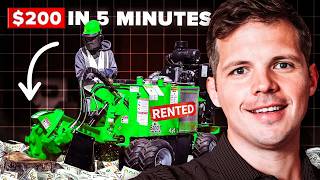
Tyler launched a stump-grinding business after hearing this podcast and made $32,000 in two months. He ran his first paid job August 3, 2024, charged around $300 per stump, and scaled from $9,000 his first month to $23,000 his second while managing equipment costs and finding customers through tree contractors and Google Business.
Questions this video answers
August 3, 2024.
About $9,000 (August 2024).
About $23,000 (month two).
Approximately $32,000.
$200 minimum.
Chapters
How much did you make before you even quit your job?
On this, I did nine grand of revenue with the full time, $32,000 in.
The first two months.
It's one stump sitting there. I have a $200 minimum.
200 bucks for five minutes of work.
I didn't even have a Google my business until like month four or five. And worst case scenario, this business, the grinders don't really lose value. Trailers don't lose value. I would have had a truck that I would have drove to my new job.
If someone's watching this and they're like, I'm broke, but I love this business, what is the most cost efficient way to start it?
You could rent the truck, you could rent a trailer, and you can rent a stump grinder by the day.
What were you making in your B2B job?
About 1,75K.
How do you find all these?
You scrape big lists throughout. Scraper.
I just find it incredible that you spent zero dollars to send a text, you spend zero dollars to call them, and that five minute investment pays you hundreds to thousands of dollars per month.
Can I tell you my number one contractor, how much he gave me this summer? Yeah, I think he gave me 25 grand. In four or five months, I'm out of here.
It's ridiculous.
Whoever said that money doesn't grow on trees never thought to check in the stump. So today I'm going to tell you about Tyler. Tyler is a 28 year old that one year ago was listening to my podcast where Nick and I were talking about the stump GR and how profitable it would be. He liked that segment so much, he listened to it 100 times. Two months later, he had quit his job and made $26,000 of net profit. And the best part, he has no employees. So today we're gonna cover how to do what he does, how to avoid any landmines, and most importantly, how to find customers. So today I'm gonna talk to Tyler, I'm gonna talk to Nick, we're gonna break down this business and show you exactly what you need to do to copy everything he did. So let's go.
Bandit. 2550 machine, good old diesel engine on my beautiful 14 foot dump bed trailer.
Is this the first one you bought?
This is the first one I bought, yeah.
You've had this for a year now?
Yeah. So it's actually the first machine that I rented too. When I started.
How many jobs did you do before you got like a big fancy trailer?
I had like 70k in revenue before I got anything wrapped or any branding or. I think before I even had to Google my business. Yep, yep, yep.
So this is the job site.
Yeah.
They've already cut you got a call from who?
The homeowner or this one was a homeowner.
Homeowner called you?
Yeah.
Really?
Yeah. How'd they find you? I'm like, number one on in Utah County.
Not to brag. How are you number one?
A lot of reviews.
So name of the game.
Name of the game. And I actually kind of backdoored some reviews. So this is kind of cool because it's a sub business to start. So everything, probably my first 50 grand of revenue was just from subs.
Explain what you mean by that.
Okay, so walking through this, a tree company came here one time and took the trees down. What the tree company hates doing is they hate doing the stumps themselves. They have to bring another trailer. They have to bring this whole setup outside of their chip truck. Their chipper. You guys get it. You guys have a tree company.
They hate doing the stumps for the same reason you hate hauling away the shaving.
Exactly.
It just doesn't go into your workflow.
It's another service not in the workflow. And so I approached a bunch of different tree companies and asked who was doing their stumps for them. Some of them had their own machine, some rented. Some were using another sub. The people that rented or using another sub are like my prime customer. Because if you're renting, hey, I can save you money and a headache of doing it. If you're using another sub, I can be better than your sub. Do it for maybe a dollar cheaper or do it better, be more on time, whatever it is.
What do you mean you backdoored into those reviews?
Oh, so, yeah, so that's how I got my first 50 grand of revenue, was doing jobs for tree companies. But the thing is, that wasn't my customer technically. But what the tree company doesn't know is I'm the last person here on the job site. So after the job, after everything, once I got my GME live, I would do the job. I would meet them first just to be a good sub and just say, hey, I'm Tyler. I'm with a different company. I'm here to do your stump. I would do the job and then walk up to the homeowner and be like, hey, if you felt like, I did a good job today, and, you know, I put on a little charm. So, hey, could you give me a review? They were giving the company that didn't even land the Customer review. And so that's how I got my first 70, 75 reviews. And then it's not the most competitive industry in the world so it's not super hard to get to the top.
Did you know that when you started or did you go with the thesis of like, oh, I'm going to go be a sub. That's how I'm going to get all my business.
I thought there was going to be a complete sub business. That's kind of the idea that I heard from your guys podcast and that was my idea going in. But slowly but surely I was, I was hearing about other guys getting jobs from Google. So I was like, oh, there has to be some revenue there. There's not a ton because usually people have this out when the tree is out. But if you buy a house like this customer did or, or whatever it is and, and you're inheriting like a beat up backyard, there's stumps and things that need done so they'll look up stump removal and I come up.
The crazy thing is, especially with the changes, you've got chat tbt, which is kind of eating Google's lunch on the search side. Yeah, but Google business profile, I mean that's the name of the game, especially for local business. That's not going away. It's only growing in popularity. Okay, so how big was this tree?
Didn't see the tree, but I'm guessing this was probably a 15, 20 foot tree. Just from that stump, from the look.
Of it, looks like a Kentucky valley hickamore.
I will say it does look like a pear tree. That's my guess.
Really?
Bradford pear? Yeah. And it looks like from the coloring here you can see some of this coloring. It looks like it's been dead for a little bit. So that's what went into my bid. When I first saw it, I was like, hey, this is probably dead in the middle. It's probably softer and so it's going to go a little bit faster.
Okay, so how do you bid this? Like I look at this, I'm like, I don't know what I'm doing. It's a. Yeah, It's a stump. $50.
It's a great question. So on a job like this where we're grinding and I guess we could show the job site here in a second, but we're grinding multiple things. You kind of eye it a bit more than you do full measurements. But if it's one stump sitting there, I have a $200 minimum. So if you want me to show up to your backyard, it's going to be $200. Whether it's this big or, you know, and then it's on a price per inch. So you measure the diameter of a stump like this here in where I live, I charge about seven bucks an inch. Down south, where there's more trees, I've heard guys charge as low as like 3 bu bucks an inch. But they're getting tons bigger machines and tons more labor. And they're year round, and they're year round and. Yeah, so there's different price per inches.
Are you guys numbers with like your phone or do you have an actual tape measure?
Yeah, just good old tape measures. For example, something like this would be like 18 inches from the widest point. From the widest point. I always try to eye the widest point be like 18 inches. So, Nick, you're great at math. Seven times 18.
Seven times 18 is $126.
Okay, $126. So if we were just showing up for this, it would just be 200 bucks.
But you want to measure like most men. You want to measure where you get the.
From the base.
From the base.
From the base.
Wow, that's interesting. I would have thought this would be more. So this is a small stump.
If this was the job alone and you don't have to get into a backyard. It's all open here. This takes me about five minutes.
200 bucks for five minutes of work.
Got to be careful because you're not just including your own man hours. Like, this is a very expensive machine and it depreciates. You have to price jobs well so you don't lose. So I came here, got a call from Google. It was close to me. A lot of times I'll quote things over text, but it was close to me. So I was like, I live five minutes this way. So I was like, I'll swing by and check it out. So we have this stump, and then I gave them a bunch of orange flags because they wanted a bunch of little small stumps taken out. So if you see through the job site, there's orange flags here, some orange flags over here. There's just tiny little guys. They wanted all of these gone. So we're getting all these little orange flags gone as we go. There's another stump there, and then there's one more over there.
Are you doing this bad boy?
Yeah, yeah, we're doing that big one.
So you don't have to cut this down. This is just ready to go.
Ready to go. And then there's one more tiny Stump right there.
How tall is too tall?
Too tall is about 20 inches. It depends on your grinder. But 20 inches off the ground? Yeah, there's a trade off. So the taller it is, the more chips that are gonna come off it. So if you're doing the cleanup, a lot of times you want to cut it as low as possible before you grind. That's why I have a really cool chainsaw with a three foot bar in the back of my truck, which is cool.
Instead of like turning it down or calling a tree trimming business, you'll just pull out the chainsaw.
Yeah. And my rule is I'll cut anything that's below 6 to 8ft.
Does your website have tree trimming, land clearing and stump grinding? Because you just described three different businesses right there.
Am I right?
That's right.
It's true. I do not. Reason being is I try to stay in my lane because so many tree guys give me so much business that I don't want to cannibalize that business.
Well, and you don't want to do.
That and I don't want to do it. But I have subbed out a few tree jobs now because my numbers around and so I've made some good money that way. My first job that I showed up to was about this size and it took me two and a half hours. If you guys weren't here, this would take me about 30 minutes. So we're getting a lot faster, a lot easier to do it. There is some things to learn with the machine, but you're not going to break it.
We know that's a 200 minimum. How much is this whole. How much did you.
350 for the job.
So 350 for 30 minutes.
Yeah. And not every job turns out that easy because sometimes I would price this the same if it was in a backyard and you had to get through a tight fence, you know, so there's other things. But yeah, for something like this is about 350.
How did you find this exact job?
This one came from Google. So they just found it. Just organic, inbound, top Google. I do Google guaranteed.
What's Google guaranteed?
Basically Google guarantees the service of certain businesses by knowing that they're insured and they have. They hit a certain level of requirement and then you pay per ad, but they put you at the top. If you look up a service on Google, they'll have at the top Google guaranteed businesses. And I come up there.
Is it the same as lsa?
Yes, similar. Yeah. Yeah. Okay. Yeah, I think it's the same.
You have to go through more of a verification process.
Yes.
Yeah. You know, if you're an actually person, guess what? He's grinding stumps.
Okay, that's. This is what I'm good at. So, yeah, we can. We can start here so I can kind of get this started. For something this size, we don't need to put a full net around it or anything. Not a lot of things to worry about here. So we could kind of just get going. So we'll scoot it up. You always want to start on a stump grind. You want to start in the dirt before it. So that means that you can get to a certain depth. You set your depth with the first cut, if that makes sense, and then the rest of the stump just going to that depth as you go through. So we'll move this. Move it a little bit forward. We're going to make our first cut right about at this line here. So we're going to push it up. This starts the blade here. Pull it. Start that blade up. We're going to rev it up really high. It's going to get real loud here.
So I have that. With your first time.
Yes.
Did you get training? Did you go out with somebody?
I Watched there's like seven YouTube videos of guys grinding stumps on YouTube. Most of them even have a remote machine, so it wasn't even applicable to this. And I kind of was like, all right, I kind of get it kind of. And then I just. I ripped it on a job.
Did you do, like, a practice job or anything? I drove up to your first paid job.
I didn't even have any. I didn't know where to get a practice job. And the tree company sent me one, and I was like, all right, let's. Let's do it. It was a backyard job, open backyard. I was very lucky with my first job. It wasn't super scary. Didn't have any complications, or else I probably would have quit the first day, but. But, yeah, I just kind of ripped it and we got it done.
That's a Kris Kuerner special right there. So I'm on the other end of the spectrum. You and Chris are like, oh, how.
Hard could it be?
I'm just gonna go freaking figure it out. I'm like, well, it's like a diagram show exactly what degree I need to lower it by. There's probably an in between. What would you recommend to somebody who's, like, just starting? Just jump in like you did. Or, like, should you get some practice first?
You can get Some practice, definitely. If you're starting, that's probably what I recommend. I love it. I love it.
He's like, you could.
He's just.
He's just being nice about it.
I don't think it's overcomplicated. If you really wanted practice, come shadow me for a day. Fly out to Utah and shadow me for a day, and I'll teach you. But actually, I think you can. You can do this job.
Practice is unnecessary friction to just launching. Don't practice, just do it.
I agree. I agree.
If you worry about practicing too much, you may never get to the thing.
Totally. I drove it around my parking lot that I parked the trailer at for a few times just to make sure I looked like I could kind of drive it. And then. Yeah, the actual cutting part, I. I figured out on the job. Well, I will say my salesman hated me, the one that rented me the machine to start, because I called him, like, once a day for a couple weeks. Like, dude, it's making this noise. He's like, yeah, that's normal. Oh, it's doing this.
He's like grinding a stump.
Yeah, yeah, exactly.
That's the Grinding a stump.
He made me feel very dumb many times. He was nice about it, but he. I was like, yeah, I'm an idiot.
And then one day you called him, and I'm like, hey, I'm flooding an apartment with a sprinkler. He's like, that's not normal.
He's like, I can't help you. And I was like, great. All right, we'll figure it out. Roughly what size are we talking? Are we talking a foot across, three feet across? What does it look like?
Maybe between two and a half and three feet across.
Okay, so they're good size. I'll get you an exact quote over text. But three stumps that are all like three feet across were probably somewhere around. Around $800 to grind those out somewhere. If. If they're that size. If I can just text you real quick, and you can text back a picture of the three stumps and just a diameter measurement, and if you get me that, that's all I need for a full quote, and then I can send that over to you, and then if we find a good price that works, we can get you on the schedule probably as soon as Wednesday this week. We're pretty busy right now, but we could definitely find a time to get you. Okay, awesome. Sounds good. Yeah, text me and I will send you a picture right away. Perfect. What was your name again? Emily. Emily. Cool. I'm Tyler. I'm the owner. Thank you.
How many calls a day do you get?
Two to three.
Probably two to three.
It depends. Contractors, jobs. I'm adding a day. I'm probably adding anywhere from like three to five a day during the busy season.
So two to three calls a day, how many jobs does that turn into?
Probably, I probably do a high close rate. 60% of my close rate. Most guys aren't answering their phone. Most guys aren't getting quotes pretty fast. A lot of, a lot of people I compete with are side hustle guys, which is totally fine. But if I'm. I can. I could beat them in pretty much everything.
Yeah. So you prioritize answering the phone.
Exactly.
How much did you make before you even quit your job? On this?
My first month was August of 2024 and I did nine grand of revenue with the full time.
With a full time job.
With a full time job. I did multiple jobs. In Utah you get the luxury of a lot of daylight. So I worked nine to probably three or four at that old job that month. I would do jobs before I'd wake up at like 5:45, grab the trailer, go do a job, go to the office, change in the office bathroom downstairs. I would park my trailer two parking lots away so that no one knew that I was grinding stumps because it was like I felt, I don't know why I felt embarrassed, but I felt embarrassed. And then I'd go to work the full day and then I'd have my grinder already at the parking lot, get in the truck at 4 and then go rip like three jobs after work. And then I was home by 8:30, it was still light.
So 9,000 before you quit your job. And then once you quit your job at the beginning of month two. What did you do that month?
That month just rocket fuel. It went to. We did 23k in the month of 20.
23,000.
Yeah.
I think that's such an important distinction because you crushed it while you had a job.
Yeah.
Which is awesome. That tells people that you don't need to quit. But then when you did quit and put all your chips in, you really crushed it. Right.
It was such a good example of that. And I just remember we had a pre planned vacation from before I ever started stump grinding to California is the end of August. And we talked that whole trip about me quitting my job. And I finally came home and I was like, all right, I'm gonna do it. And I walked into the office, quit my job. And after that I was like, all right, I have to pay for me and my wife's life. Yeah. Through this business, I worked like a.
What was that feeling like when you walked out of the office? Were you scared or were you excited?
Oh, it was electric.
It's usually not anywhere in between.
Right. Yeah. I drove my grinder to the office because I had a full day of jobs right after I quit.
You just rode on the grinder.
Yeah, yeah, exactly. Rode on the grinder.
I quit.
No, it was the most electric feeling in the world walking out of there, just knowing I didn't really like my job then. It was a good job, but I didn't like it.
$32,000 in your first two months.
Yeah.
How long did it take you to make more in your business than you were making in your job?
To replace my income, it kind of honestly is about to say right away, like, I don't know if I had the exact numbers, like, carrying across, because in business.
Well, in sales, it's lumpy.
Right. I didn't have the big commission checks coming in. It was more steady. Some things that I normally would have had as personal expenses were running through the business. So all in, though, it felt like.
Right away, basically that first month when you were full time in the business, you made more than if you had not quit.
I think so, yeah. Yeah. And I never felt like we ever took like a dip in lifestyle or anything. The reason I also quit wasn't just because I wanted to go full time. I was looking at my schedule for the next two weeks and I realized if I did every job that I had, I would not be able to keep my job. Every stump job you had to choose.
You were forced in a way.
I would have been fired for sure. I just had too much work. So she saw that on my schedule and she's like, oh, that sounds like a good opportunity. You know, made it easy on it.
It was also probably nerve wracking in the sense that you're in a seasonal market and you're going into the winter. Right. So you're like, all right, we could be really good through October. But then what?
Did you know that at that point?
Yes, I did. And I was very. That was the piece I was most worried about. We had a small amount of savings, so I was like, I think we could make it if we did. Zero.
How much savings?
We had probably 20 grand in savings.
$20?
Oh, yeah, 20. About 20. I. That's probably not exact, but it was somewhere around there. And I knew, like, what our costs were per Month. So I was like, ah, we could float till March of next year if we need to. But I didn't want to do that. I didn't want to come close. So I just worked, worked hard, and I actually found a lot of winter work. I mean, as long as snow is not on the ground, which. Utah. It snows a lot, but the snow melts in a day or two here, where we live in Utah County. So I actually found a lot of work.
Okay, so you were looking at that. You're like, I made 32 grand in my first two months.
Profit off of that was what, probably 26, 25, 23. Okay.
All right, so $26,000. You got $20,000 in the bank. So you're like, okay, we're sitting on some money. We can probably make it through the winter months. What was your, like, nut every month?
Fixed costs for this business at the. The time was probably like 2 to 3 grand.
Because you had probably payment on the truck trailer.
Stump grinder.
So stump grinder, you're renting. How much was that a month?
I bought it at that point. I bought it right when I quit. It was. It's 900 bucks a month. Okay.
So you finance it. 900 bucks a month?
Yeah.
Truck trailer.
Yeah. Trailer is like 170, and the truck is like 490. Cold outreach and to do some marketing, but that even came later. So I think early on, you're right. It was probably more towards 2K. So you're like, all right.
Overhead on the business. $2,000 a month.
Yeah.
We're sitting on this cash.
Was your wife working? Yes, she was. And that was helpful.
And she was cool with. Was she like, all right, I'll give you six months.
Yeah.
To figure this out, or was it like, no, you better be making money in October.
I asked her to give me a year. So give me a year. And I was like, I promise, like, if it doesn't work, I'll just go. I was good at my job before, so I had a really good network. I could bounce back into it.
So you reduce your risk by starting this before you quit.
Yep.
You reduce your risk by leasing a truck, leasing the equipment, renting a parking lot so you don't have to buy a big lot.
Yeah.
You did everything right, it seems.
Yeah. We kept it low. And the last piece of, like, de risking was. And I still feel this way a bit, is I did everything myself. I wasn't scared to go do the work if I. If this business would not have survived the winter if I Was like, I need an employee right away. I can't grind stumps. I can't go to that level. I was just like, no, I'm going to do everything. So I don't have that cost yet. And in the future, I want to scale and do it right. But early on I was like, it's something I don't even mind doing.
And it's fun.
It's fun. It's a blast. This is what I do every day. I listen to podcast in my helmet. And, yeah, I just, I hang out.
It's one of the businesses I love. Businesses where there's a stark contrast between before and after. Yeah, it's like, it's so obvious the before and after for business like this.
Totally. And I still some days feel like I'm playing dress up with, like, Carhartt and stuff. It is what I do every day, but, like, this is not who I was before.
Well, there's two types of guys that were Carhartt. People in Brooklyn and people that actually do work.
And I was the person in the tech office wearing Carhartt. So luckily I had those shirts.
You were ready?
Yeah, I was ready to go, but now they're actually, like, dirty and like, a little bit, you know, he was.
In the office playing stump, grinding video games. Carhartt.
I was. I was trying to act, like, tough to, like, the guy next to me.
Let's start this business. I already have the clothes.
Yeah, exactly. That's pretty much most of it.
You reduce your risk by buying Carhartt while you still at a tech job.
Yeah, and I got to get a truck. Talking about. Actually, I didn't have a truck before. I was wearing Carhartt in, like, a Nissan Altima. Nothing against Nissan Altimas, but you can't wear Carhartt in that.
How do you think this is going so far?
I mean, I think it's going well. How do you think?
Pretty good. I think people are loving this right.
Now, and I want to keep doing stuff like this. How do you keep doing stuff like this?
People need to subscribe.
Yeah.
What's your.
What's your podcast?
I'm the Kerner office. All podcast platforms and YouTube. What about you?
I'm Nickonomics. Same thing. All podcast platforms and YouTube.
All right, so what are you guys waiting for?
Like, and subscribe already. So you don't leave it like this, obviously.
No. So after this is done, that's what the hole looks grinded out. And we'll just push that whole pile with my back blade on the Back of the machine back into the hole.
Is that what you do with most customers or are they like, nah, get.
Rid of the wood about 20 to 30% half me hole and when I do it I upcharge for that. But of the time I just leave it like that.
Well, cuz like why would they want to haul that's going to leave a big hole in their yard, right?
Yeah. If it's a big stump, you're going to be left with like a semi load of of chips. And so they'll want the extra chips hauled and just leave it at grade.
What can you do with these wood chips? Do you like resell them? Do you sell them as mulch or is it too much dirt mixed in?
There's some stuff you have to do and I'm not a pro on this to make it into mulch that you sell and put.
So you just throw it away.
I give it to a landscaping yard that does that for free. They turn this into mulch and we have a great relationship that I dump for free rather than driving down to the dump. It's right here in Provo, but I don't currently do anything with it.
How inception would that be? It's like start a mulching business from the stump grinding.
If I had a place to just dump big piles, I would do that and have just mulch in my backyard for people to come shovel and charge them for it. So anyways, that's what it looks like.
So Chris knows this. He's a starter, I'm a buy guy. I've only ever started or bought businesses. Chris has started businesses from scratch. But I love this business because it doesn't require all of the personal guarantees, the cash down, the risk associated with buying a business. Yeah, you tested it as a side hustle and then you went into it full time. You actually looked at buying businesses, didn't you?
Yeah, yeah I did. I've always been interested in entrepreneurship and it felt like very unattainable. I'd like the how to's felt very unattainable because I didn't have an entrepreneur in my family that I really knew of. And so I, yeah, I was, I read Buy, then build the classic buying business Book Walker Divel realized I didn't.
Have a lot of money.
I mean I'm young, I didn't have a lot of money at all to buy a business. So I'm like why am I dreaming about this? And then I looked into franchises which felt a little bit more approachable but that felt like A big risk signing on the dotted line of a franchise. So when I heard this, it just kind of the light bulb went off. I like to always think about worst case scenarios. And worst case scenario, this business, the grinders don't really lose value. Very a ton of value. Trailers don't lose value. I would have had a truck that I would have drove to my new job. And that's, that's basically the downside.
If you would have bought a business that, like the business that you're currently doing right now, probably worth in the mid six figures, $600,000, you would have had to put $100,000 down, get an SBA loan, you had to buy new equipment, you would have the owner train you, all that stuff. But you did an approach that is freaking a Chris Kerner special, which is test iterate launch. Right. Like you tested the idea first. You didn't quit your job, you iterated along the way. First you were renting, then you decided to buy the stump grinder, and then you actually launched when you had enough data and information. And I mean, that's one of the things I've learned from Chris is test iterate launch, ready, fire, aim.
Absolutely. Absolutely.
What I love about your story is the fact that it was a perfect overlap of your interests and your skills. Right. You had sales experience. So you heard the podcast and you're like, oh, okay, I like that. And then you had, didn't you work on a tree company in high school?
Yeah, I did.
So you're like, oh, grinding stumps. That is a pain point.
But.
Huh, okay, there's something to that. And then the third side of that kind of Venn diagram was the fact that, that you were already entrepreneurial. You wanted to start a business or buy a business, but you had no money. So everything just aligned where this became like the perfect business for you.
Yeah.
And I think that for those listening or watching this, like, they need to find the thing that applies to them. Not something that looks sexy, but something they have an interest in, something they have a history in and a time in their life or a period of their life when they're ready and or willing to try or test something like that.
Well, and the other thing is, look at this guy. He's not afraid to get dirty. And when you get an entrepreneurship, you can't be afraid to get dirty. Lots of people are like, I want to buy a business and hire an operator. And for whatever reason, we kind of talk down to getting in the weeds. Yeah, you have to get in the weeds. You don't know what you're doing. You don't know how to manage a checkbook. You don't know how to collect. You don't know how to bill. You don't know how to take calls.
Like you just did.
You got to build the entrepreneurial muscle. You don't have the experience requisite to, like, quote, unquote, hire an operator. And if you want to be successful in entrepreneurship, you have to jump. And that's. Chris has the MIH gene, the make it happen gene. So do you. You're going to make it happen every single time. You can only look at a spread. You for so long.
You actually acted on the make it happen gene, though. There was years, many years before I actually started this thing that I felt like I didn't have the make it happen because either I wanted to, like, buy a business. I wanted to start a franchise. All these things I got cold feet in.
You're 28, dude.
I know, I know. I'm hard on myself, but from 25 to 28, this is what I wanted to do, and I wasn't doing it. So I was like, maybe I don't have that, you know, make it happen gene. But what you were saying, there is a business model that fits everyone out there. I truly believe that. But you have to have, like, a box around it, and once you find it, you can't be afraid to actually go and pursue it. And that was kind of my luck. Everyone thinks I'm like, this go getter, you know, just super brave. And there was years before that that I felt like the guy that would never do anything about it.
That's why we love these. Is because you didn't start a tech SaaS. Yeah, this isn't like, a sexy business that you bought. We just talk about how people can start any business. And that's Chris's whole thing is, like, you can start any business, you make money off of any business.
Yeah. And once you start making money off one business, like, your belief in yourself to go make money off of other things that you want to do just skyrockets. And that's what it's done for me.
Okay, so July 11th, Chris and I have a podcast where we're brainstorming this idea of starting a stump grinder business. Right.
So break down the timeline. How long did it take you to actually execute on that?
Yeah, so I heard that episode. I'm a fan. So this is kind of weird, like, being with you guys, but, like, heard the episode July 11. By July 12, I had kind of, like, tested it in my own market. Wow. And then by August 3rd, I'd done everything I needed. Insurance, all the equipment, everything to do my first actual stump job on August 3rd. And then that month, it was just off and running. We had jobs every day.
You did 9,000 that first month. You did $23,000 that second month. 25,000. $26,000 in profit.
Yeah. Yeah. I mean, it was. It was just off and running from there. I listened to your guys podcast over and over and over again because there was some things in there on how to, like, test my market. Yeah. And so I just listened to that specific piece probably 10 times, got every software you guys talked about, actually tried it. I was going to my wife, like, look, this works. I got a few texts back, and I was like, holy crap, I have a business. I didn't have a business, But I was like, I feel like I have a business. And I was just fired up.
All right, so we don't want people to think that this is all just rainbows and butterflies.
Yeah.
Tell us about some horror stories that you've had in this business.
Yes. And I'm not saying this is passive income. I'll look into the camera. This is not passive income, but it is income, and it's. You know, you work hard to make that income. But I've had a lot of nightmare jobs. Hitting sprinkler lines, hitting electric lines. One story from each of these. I hit a sprinkler line at a townhouse, Like a HOA Townhouse type thing. And it was really close to. To the window, and the sprinkler line was pressurized. Water just started spraying through their window. It was open inside the town. Open window.
Oh, man.
I had to. I started banging on the door, and no one was answering. And so I opened their door. It was open. I opened their door, and I was like, hey, anyone home? Like, there's water coming into your house.
Yeah, if the door's unlocked, it's not breaking and entering. That's kind of what I figured.
Yeah. And they ended up shutting the window, and. And it was okay. I felt lucky that I had insurance just in case, but we never even had to use it.
How much is your insurance?
It's like 400 bucks a month or something.
Hard to find.
No, not really.
Okay, so if you're watching this, you're like, what about insurance? You buy insurance?
Yeah.
You just buy insurance.
It's a cost that you have.
There you go.
And you pay it with a few jobs just like the one we Showed today and keep moving.
You never had any claims?
No. Never knock on? Nope. The only other time I was close was there was a private electric line going to someone's back shed. I call the city and they'll come out and mark electric and water and all these different lines, but they don't mark private, private ones. So they put this line in themselves. They told me about it. So this is completely my bad. And I was like, I probably won't hit it. Sure enough, going, hit it. Sparks flew everywhere. It was the scariest thing. I thought I got electrocuted. I didn't. I was like, am I dead? I didn't know. And then, you know, sure enough, I blew through their line. I paid for the fix. It wasn't that big.
Like, I thought. Sparks flying is just an expression. No.
Yeah. It was horrifying. It was actually so scary.
So the reason we brought that idea up was because we have a tree trimming business that Chris was passionate about. We launched that business. We had a whole, like, framework of tools and things that we use. But we had one pain point.
Yeah. We, like, we didn't want to grind the stumps.
Yeah.
So we'd have to go to United Rentals or we'd have to go find a stump grinder. And it was just a pain. It didn't fit into our workflow. So we started talking on this podcast of someone needs to start a business to business. Stump grinding business.
Yeah.
Right. Not business to consumer. Which wasn't really a thing. And it was just kind of a theory. And then you heard that, took it and ran with it. And from what I understand, your first customers came from B2B. Didn't you, like, scrape a bunch of tree trimming businesses?
Yeah, I did kind of exactly what you guys outlined in the podcast. I scraped a whole list of tree trimming businesses from all the surrounding areas from where we are here. And then I started reaching out to them. I didn't want to burn all the leads, so I didn't reach out to everyone at one time, but I reached out to 20 or 30 people, started getting hits back, and I was like, oh, there's something here. And it aligned really well with my skill set of I knew how to sell, I knew how to go B2B. So I knew how to get in front of these guys and paint their problems as something I could solve. And we started doing it, and sure enough, there's a market for it.
What is like your framework for finding customers?
Yeah, I call it a PRA framework. It's A little bit complicated. Basically, we're dive into that. Yeah, I want to hear that.
What I love about this home service business in particular is how visual it is. You've got a clear before and after. You've got a clear time lapse. And you've been taking advantage of that. You've been posting that stuff.
Yeah.
What has come from that?
Yeah. By small Twitter following, I was getting tons of DMs, like, how do you do this? How do you do this? Really basic questions. And I got really sick of hopping on every call, so I just typed it all up into a playbook and I sell it for a small amount, and it's. It's changed other people's lives. Like, it's crazy. 10 to 12 guys are full stump grinders across the country from a little thing I typed up out of my brain.
Yeah. I mean, there's so many people out there starting businesses that are the same, and we started TK owners so we could just have them put their heads together and not, you know, go through all these sprinkler inside the townhouse moments that. That you've had to go through 100%. That's.
That is freaking too funny, man.
Where are they?
Are they all over the place?
With. All over? Yeah. Virginia, Minnesota, South Carolina.
I saw one guy post, he's like, oh, I just quoted a 200 stump job.
Yeah, that guy.
What the.
Yeah, that guy's a man. He's an old guy. That guy's like, 65.
Really?
Yeah.
All right, so someone's watching this, and they're like, I love this business. I want to do this business. What would you tell them to do?
Yeah, first off, I'd tell them to go do something about it and actually just start it. The second thing I'd tell them to do if they want a little bit more hand holding, is I've put together, like, a small community playbook course kind of on. On how to get this done and to avoid some of the pitfalls that I fell into. I really wish I had someone to hold my hand and answer some of these questions early on. So that to save my time, because I'm out grinding stumps, I put this together for people to come together and learn how to do it, to do this in their market.
You've already had a hundred people who've bought your playbook and more than a dozen who've actually launched businesses in other markets, right?
Yeah. So we already know it works. We know it works in pretty much any market that people try it in. No Matter what the Twitter haters say. It does work in California, it does work in the Northeast. It does work everywhere. And yeah, it's amazing to see. There's been eight to 12 guys that I know of. There's probably more, but that are grinding stumps and. Yeah. Make an extra income with it.
Well, I mean, I filmed this video right here about appliance rental and hundreds of people started them and some of them are like, on top of each other in the same market. Do you offer any sort of like, loose protections on people? Like you won't sell to the same people that are in the same town?
Yeah. That's actually the only thing that really I feel like differentiates us outside of having a school with some really good information, is that I actually care about people. And if they're putting their hard earned money towards something like this, I don't want them to just have something that's already been done in their market. Yeah. So if someone's in Tampa Bay or if someone's in Cincinnati and they are part of our course or our school, we don't sell to another person in Tampa Bay or Cincinnati to allow the guys in our group to thrive because we want them to thrive. And that's. That's our whole goal.
I want you to be honest with me. What's the plan? Hire more employees, expand to new markets. What are you doing next with this business?
My honest answer to that is I think. Think I'm gonna move into a bigger service and never leave this behind. I don't want to say it's on autopilot because I do work hard every day, but it is not. It doesn't take a ton of brain work to get the revenue.
Getting the business is kind of on autopilot.
It kind of is. And so I could put a guy in my seat to do the grinding every single day and still make enough money to pay our bills and save some extra.
How much money? How much profit would you make per year today if you didn't grow it and you outsourced your operations?
North of. Of 115, probably. 120. Wow.
To sit at home, probably.
Yeah. Yeah, probably maybe a bit more, depending on where this is growing to. But currently, right now, if it just stayed where it is right now, probably about there.
The point I wanted to highlight is a lot of people think, oh, I started a business, now it's got to grow. Now I got to double it. Now I got to triple it. Like, you've gotten to the place where your business is kicking off good cash. You've managed it. You don't need to grow, but you've grown to the point now where your life is kind of where you want it to be, but you've gained experience as an entrepreneur, and so now you can move into something else and you understand, okay, how do I market? How do I price things? How do I manage people? What do logistics look like?
Right.
But you got that experience with a great business. You got your feet wet with it. You kind of know what you do and don't like, and you can move on with very low risk. Like, to me, that's the best example for someone who's getting into entrepreneurship.
And the freedom that I have now is, like, unmatched compared to when I was in a W2 job. I can go explore those other ideas that I have or businesses that my wife wants to start or is starting and say, oh, you need me for a half day to help you out with this thing? Easy. Like, I'll just not schedule jobs for Wednesday afternoon and go do them, or I'll take a full day off or I'll do this xyz. Once you get into the game, it's so much easier to, like, keep playing other games. That's what this is to me is I got into the game. I'm going to keep it as part of my game for probably a very long time. But I don't think this will be my only game.
I freaking. I love that.
I mean, that's the key word. Freedom. That's like, that's why we're all doing this, right? It's not even necessarily financial freedom. It's just freedom.
100%.
Chris has been a hustler his whole life. He's never worked work for anybody after college. Like, he's. He's just always done his own thing. I'm on the other end of the spectrum. I wanted to, like, have everything lined up. And what I've learned now is you learn by doing.
Totally.
And as you learn by doing, you can get into other things, but then you have freedom. Then you have control of your time, of your schedule. Anyways, your story is really inspiring, man.
Thank you.
Appreciate you.
All right, so what is your monthly overhead on this business?
Do you want line item by line item or do you want, like a big.
Just the big things.
Yeah. Big costs probably all add to, depending on the month, like 4 to 5k? Correct. Currently where we're at now.
So this storage lot's 100 bucks a month?
Yeah.
Your truck lease, trailer lease?
Yep.
Machine lease.
Yep. Or insurance.
Insurance.
Gas is probably my leading cost outside of all of that, just hauling it around and gas for the machine and then small things like teeth. I mean, gotta get the oil changed on the machine. You know, just all the classic business stuff.
What about things like marketing? What are you spending on Google, what are you spending on?
Marketing's pretty low. I probably spend 5 to 600 bucks total a month on Google. Like LSA stuff.
Your reviews are your marketing?
In a sense, yeah. My reviews and then contractors give me work. Yeah.
So if someone's watching this and they're like, I'm broke, but I love this business, what is the most cost efficient way to start it?
Most cost efficient? You probably do need some access to a truck is the only thing that you need access to.
You can rent a truck from Home Depot if you need.
If you have really scrappy, you could rent the truck, you could rent a trailer, and you can rent a stump grinder by the day. Yeah. If you want to rent a small stump grinder, most of like the rental places, there's one called Sun Belt here, they rent stump grinders. They're small, but they'll get the job done.
And I think it's important that people don't try to focus on making a ton of profit that first day, week or month.
Yeah.
They need to lessen their risk by renting this stuff because the unit economics honestly aren't great if you're renting. Right. But that gets you learning, it gets you traction, it gets you some good reviews before and after.
That's exactly what he did.
Right.
You had your full time job and you decided, I'm going to do this on the side. You didn't buy the machine right away. You didn't hop into, you know, large expenses. You tested it on the side.
Yeah.
You figured out what you're doing. You actually learned how to grind stumps.
Yep.
And then when September came and you realize you were booked out, you're like, all right, I should probably jump into.
This a little more.
Something a little harder. What were you making in your B2B job?
I made about it just depends. There's a lot of commission, but I'm at 175k.
Okay. So about 15 grand a month.
Yeah.
All right.
What are you making currently in your stump grinding business?
Probably higher than that. Probably like 15 to 20. Maybe 25 depending on the month is probably what we're walking away with.
How long did it say for you to get to that spot?
Second month.
Second month. Yeah.
Now there is a Seasonal part to this business. It's not like I make that every month of every year, but I have a lot more freedom to do what I want and achieve those things from. From doing this.
Okay, so unit economics, average revenue per.
Job, it's probably around, I would say, 300 bucks.
300 bucks.
Okay.
And then your average fixed costs per month that you gave us was about $5,000.
Roughly four to five. I would say it's four most months unless there's outsized.
Okay. So let's say it's $5,000, $800 on average. So you need about 15 jobs.
Yeah.
Just to get to break even.
Usually in week one of the month is how I think about it. I pay off my monthly expenses.
How many jobs are you doing a day, Able to do a day?
Depends. A 300 job, you could do 5 to 6 of those in a day.
Dang. Okay.
Yeah.
So you could stack it pretty quick.
Oh yeah, yeah. You got to be smart with your routes and stuff. But yeah, you can stack it up.
So week two, you're in a profit.
Yeah, oh, absolutely.
Would you say this is a competitive market?
You mean Utah itself or do you mean the stump grinding market, Utah? Oh, Utah is a highly competitive market. Very, very competitive. I've already had multiple people try to copy me with the same idea because I post on Twitter about it. Doesn't really bother me because I'm better than them. But like, I feel like if this.
Could be so successful here, it could be even more successful elsewhere.
Absolutely.
What do you feel like, though, is the differentiator. Like you said, you were better than them. In my mind, it's like a stump is either ground or it's not ground.
Yeah.
What do you think you do better?
What?
Like what, what's. If somebody's getting into this, what do they need to execute really, really well on in order to be successful?
For me personally, I could give you, I could give you tons of examples. But I'll give you an example. You're a, you're a tree guy. You're a tree guy and you only get paid for the job once the stump is ground. That means the job's done and you get the, you get the tree down Tuesday morning. If you're a part time guy and I say, hey, I need this stump ground now so I can get paid. And he's like, oh, I could be there Thursday afternoon because he's busy till then and he works a full time job, but I could be there Tuesday morning so you can get paid that day. Huge Advantage right there. For a tree guy that needs money, responsiveness is a huge one. Second one is having the equipment that isn't the rental equipment. Once you get to that point, and, I mean, there's quite a few other things that differentiate, but responsiveness is number one with contractors because they're just like me, they want to get paid.
The big reason a lot of people are watching this is, okay, where's my first customer? Where's my 100th customer? Do I go through the tree trimming businesses? Do I go through marry homeowner? Yeah, you talked about this PRA method. We gotta dive into that.
Yeah, absolutely. So the P stands for piggyback. So we want to piggyback off of existing businesses that have a pain point, which are tree companies that don't want to do stumps.
Are there other businesses other than tree trimming that dub out their work to you?
Absolutely. Landscapers, landscape install. You don't want the lawn guys. The lawn guys don't give you anything. Landscape installers do. And then fence installers, if there's a stump in the fence line. And then the last one is concrete guys. The last three are like more few and far between. But they still need a guy sometimes.
Yeah. How do you find all these guys?
You scrape big lists through Outscraper. Great website. You're very familiar with outscraper. Scrape big, big lists of these in certain geographies.
And you just call them, email them, text them.
I usually cold text in bunches, so 20 to 30. I haven't gotten a hold of every single ones on my list because some numbers they have aren't great for them. But that's the best way to get in the door. If they respond to me in any way, shape or form, I'll call them. Even if it's a no. Like, hey, cool, I know you're not interested, but this is what I'm doing.
So you're just copy pasting the same text 20, 30 times. What is in that text?
It's really simple. One, it's a picture of my business card, usually right in front of my Ford.
Shows authority.
Exactly. Ford logo on the truck. It looks like I'm out working. And then it's, hey, my name is Tyler, run a company called Grind Time. Stump grinding. This is rough. But I was wondering what you do with your stumps? Do you do them yourself? Do you sub it out or do you own them?
The in machine.
And they'll give me one of those three answers and then I can go from there.
What percentage of the time, do they.
Respond 30, 40%, which is pretty good. I don't do as much of that cold outreach. You're too busy. I did. I'm busy. And I get referrals. And I still do that sometimes, but it's just not as common.
Okay, so you launch with piggybacking, which. Finding someone who already has the distribution to your ideal customer. Yeah, but you don't do that anymore. So how are you getting business now?
All of those guys that were giving me jobs, they're still giving me jobs.
Jobs.
They're still giving you jobs?
Oh, yeah. So that's the start, right? You get your. I'm like, okay, I'm starting to get to like 15 grand months just from contractors. And then you start taking. This is where the R comes in. You start backdooring reviews from these same customers. So I'm the last one there. From what I know, all the tree guys I work for are totally fine with this because they love that the customer loves me. And so I introduce myself to the customer because it's after the tree got removed. I then do the stump job. And then after I walk to their front door and say, hey, I run a different company. I just started and I'm working really hard to grow my company here in Utah County. Would you please give me a review?
Sell your story. That's what you're doing.
Absolutely. If you do that every single time to a mom, dad, does not matter. They will pull out their phone. It's a little uncomfortable. I wait for them to pull out their phone. So, yeah, I would really like. It helps me grow the business.
If you leave. They're not going to do it.
No, they're just not. Would you please. It would help me so much if you give me a review. And then you just stop. And they go, yeah, yeah, yeah. And then I just wait. And then they go, oh, wait, like now. And they start pulling out their phone. And I'm like, yeah, I got the link right here.
Tactics like that, that really just make this. Like this video just makes it better. Because that matters. That matters so much. And what you said about the business card, like your shoes, your Timberlands in the background in the grass, or the shavings in the background of the picture of you holding the business card, it's not AI generated, it's real. You can go to Vistaprint and get those for free, mailed to you. Like, those little touches make all the difference, 100%.
Contractors want to know that you're out working and sweating with them. And so they don't want to think that you're some guy behind a computer. Yeah. Like, dude, that guy's in a backyard asking me if I want to do stuff. So I'm not actually in a backyard there, but I was in a backyard to take the picture. Right. You know, so that helps.
Well, I just think it's crazy to think about. You could have had two guys who did the same thing. Right. They got business, they went out, they fulfilled the job. They did just as good of a job. The customer was just as happy. But because you decided to be awkward for five seconds.
Yeah.
You got a review and somebody else didn't. It's like you're. You're uncomfortable for five seconds. You've got to sit in that discomfort for five seconds, and all of a sudden, it's a differentiator.
Piggyback P reviews are those drive all of your ongoing business. And before I even get to a. This is my ADHD talking.
Yeah.
I just find it incredible that you spent $0 to send a text. They respond, they show interest. You spend zero dollars to call them.
Yeah.
And that five minute investment pays you hundreds to thousands of dollars per month.
Oh, yeah.
As long as you don't screw it up per month.
Forever. Yeah. I mean, can I tell you my number one contractor, how much he gave me this summer?
Yeah.
I think he gave me 25 grand in four or five months from one tax. From a text.
It's ridiculous.
And he was like, yeah, I actually don't like my contractor at all, but I've never tried looking for anyone else. I'll try you out. Yeah, well, that's how the relationship started.
Even if you're nine jobs then and you really screw it up, they're gonna stick with you. Okay. They're used to the other guy screwing it up every other job.
Well, and right when I screw it up, I send a picture, say, hey, I just hit a sprinkler line here. I'm getting it fixed. Don't worry about it. But this is what has happened.
I got this.
Yeah. And they're like, yeah, dude, things happen all the time. They're tree guys.
They're contractors, too.
They take out fences half the time with trees. You know what I mean? They have big things that happen to them.
So anyways, before you get to the A, I want to hit one more thing on the reviews side. So my background's healthcare, and we have a saying with our clinicians. If you didn't document it, it didn't happen because we get audited all the time. And if the auditor comes in and looks and they don't see it in the notes, it doesn't matter how much good you did, you're gonna get tagged for that, Right? I think that translates to every business owner. If you didn't document, if you didn't get the review, like, it didn't happen. So like, yes, you got paid that one time for that service, but it doesn't actually translate to broader brand building. So I just, I love this. Like I'm going to get reviews every single time so that people can see I can build credibility, I can establish trust. And anyways, I can't, I can't emphasize it enough.
I will give you one more piece of sauce here. Reviews. I actually didn't start trying to get reviews. I didn't even have a Google my business till like month four or five.
Holy cow.
But I did have a big spreadsheet of every job I've done and if they get gave me the customer's number, it was in the spreadsheet. So I just ran a full blown, like text blast with, you know, text of, of my company, of selfie, of me, whatever it was, and just be like, hey, I did your stump job a few months back. You don't remember who I am? Totally fine. But we're getting started. And the day that I started my GMB, I think I got like 15 reviews that day.
And those 15 reviews on day one sends a signal to Google that, yeah, this guy's for real.
Oh yeah.
He's probably been in business before he ever created a Google business profile, which they're not using to. Right?
Totally.
So then they prioritize you in the algorithm.
Yeah, my SEO guy, he's a friend, so this is why he did it. But he kind of fired me. He was like, dude, you're at the top. Like you're getting reviews. Like, we don't. You don't really need to keep paying me for SEO if you want me to do other stuff. Like, happy to do that, but that was pretty fast.
All right, what's the a?
The A? So piggyback. You get reviews and then you answer the phone. You guys saw me do it on that job. I answer every phone call. My wife gets annoyed. I walked out of a movie last night because I answered the phone during the movie.
Really?
I answer the phone without fail. Contractor Google, you will not call my phone if it's my business line and get a missed call.
In your first month, what or first few months, what percentage of your revenue came from other businesses versus today. What percentage of your revenue is coming from other businesses?
When I started, it was 100%. And it was 100% for about six months. Like literally 100%, unless maybe a neighbor saw me or something. But it was 100% contractors that gave me the business. Now it's probably 70, 30, maybe 60, 40 of my own customers and contractors. Okay. So we're growing that side pretty steadily. And I think this is a pretty healthy spot to sit where I get my own jobs, but contractors filled most of my week, and then I put the small jobs that I get elsewhere.
Well, it's a trade off, because they're not recurring jobs yet. They're more profitable.
Exactly.
And you get two reviews for the price of one.
Yeah.
You get the homeowner's review and the business owner's review.
Totally. Yeah. So it's kind of mixed. Mixing the revenue. Right. You got your one offs. That is just the Google calls. And these are great, and they help you pump revenue. But if you don't have good contractor relationships, those days that you get zero calls from Google, you're gonna want the guy texting you that they have a job for you next week. So you want both.










