How to Build a $900k Junk Removal Business with No Money
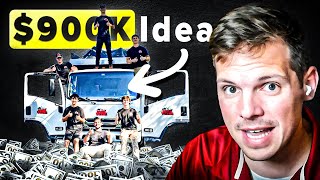
Two brothers started a junk removal business at 17 and 15 with no money, picking electronics from a dump and selling them on Facebook Marketplace. They pooled $4,000 to buy a used F-150, then built the business to $900k in year three using Nextdoor, door-knocking, and aggressive referral tactics.
Questions this video answers
$4,000 (used F-150).
They were 17 and 15 when they first started.
20 years old.
Wednesday ~8:00–16:00; Saturday ~7:00–16:00; Sunday ~12:00–16:00.
"How to Build a $900k Junk Removal Business with No Money" — host references a $900,000 junk removal business in year three.
Chapters
So on the 460 grand you did year two, how much of that was profit? And how diligent were you in record keeping? And welcome to the Kerner office. So I was on Instagram last week once again, and I saw a video of these teenagers doing junk removal. And they have a $900,000 junk removal business in their third year. Super impressive. They started it two brothers when they were 15 and 17. And I thought, I got to talk to these guys because the 15 and 17 year old can start a $900,000 a year junk remov and pay cash for a $75,000 truck in year two or year one. One of the two. These guys are impressive. That means anyone can do it. And I want anyone to do it. I want all of you guys to start six, seven, eight figure businesses. So if a teenager can do it, you can do it. Especially because they didn't borrow any money from their parents. They weren't raised on a silver spoon or whatever. They did this themselves. They're just hard workers. So I want you to hear their story and hopefully you're inspired by it. Share with your friends. Love you. Bye. Why don't we start at the beginning? Like, what first gave you the idea to start this business?
It actually all kind of happened on accident when I was exploring one day I was on a bike ride and I discovered the dump with my friend. And then we went to the dump and rode our bikes around to explore. And I saw this pair of speakers there that someone threw away. And they were really nice, probably like $50 speakers. And I just. I couldn't believe that they were in the trash. So I asked the guy if I could take them and he said yes. So I brought them home. And then basically after that point, I kept going back to the dump and finding cool items and valuable things. And it was more speakers in the beginning. And this is why it happened on accident. Because eventually I collected so many speakers from the dump that my entire bedroom, actually where I'm sitting right now, used to be a pile of speakers. And my mom said that I had to throw it all away. So at this time, I was working at a grocery store too, making $12 an hour and just finding speakers for fun. I didn't think it was like money I was making or anything. It was just a hobby. And when my mom said I had to throw them all away, I just. I couldn't do that because I went through so much effort to get those speakers here. So I ended up selling them on Facebook Marketplace. And that was My first time ever making money for myself, doing something that I loved. And then from there, eventually I got into the junk removal industry. And that's how I ended up starting the junk removal business with my brother was through that opportunity. It eventually led to me buying a pickup truck and then discovering junk removal and starting that business with my younger brother.
Okay, all right. Zillion questions. I love it already. So first of all, why were there so many dang speakers at this random junkyard?
There was the electronic section where people would drop off their old electronics, and that was my favorite section. So I would just camp out there all day until people would bring good stuff. And if I wasn't the one taking it, other people who were going to the dump would take the stuff. So it's kind of a common thing. It's called picking. Like, it's a picker. You ever seen the show American Pickers? Those are through the junk.
Yeah.
Like, that's basically what I did all day at the junkyard.
And how old were you in this when you first started all this, when you first found speakers?
15 or 16 years old when I was finding speakers and I was riding them home on my bicycle. This was before I had a license or anything.
Okay. And does entrepreneurship run in your family, or did it just come naturally to you?
Yeah. So my parents also own a business. They own a tree service. It's a home service business. They do tree trimming more on, like, not the heavy tree removal, but, like, more the artistic side, kind of like making your property look nice. Trimming. They do everything. But my dad specializes in tree surgery is what he calls it, so I was able to learn a little bit about the home service business through seeing their company. And I also used to work for my dad, too, so I did learn a little bit about business through them, but they didn't give us money to start. They didn't build the business for us. It was all us. They never really gave us much besides the knowledge and their advice.
Support.
Yeah. And their support.
Yeah.
But. Yeah.
I don't know if I told you this, but I own a tree trimming company as well here in Dallas.
Wow.
Yeah. Yeah. That's crazy. Yeah. So how long has your dad owned that business?
About 30 years. I think this is the 30th. Wow.
Okay.
Yeah.
So you just grew up around small business? Home services, specifically?
Yeah. Yeah. And there's also a lot of things I noticed with my parents business that I just, like, don't know why they're doing things a certain way that could Be done way better. But then there's other things that I'm like, wow, no one else is doing this. Like, this is really smart. So I just took what works and then what needed to be improved. And obviously it's a different industry too, so there's a lot of different things we had to learn, but that's what we did as well.
Now, would your family, like, actively talk about the business around the dinner table or was just something in the background?
My brother and I have always been obsessed about the business, so I feel like naturally it ends up being what we talk about at the dinner table a lot. My parents like to talk about it, but I feel like my brother and I are the ones that kind of engage that conversation more than my parents do. But, yeah, we do talk about business a lot as a family, too, and we all enjoy it too.
Yeah. Would you like asking questions like, hey, how much did you get for that big job? Well, what'd you make on it? Like, what's your profit? Would you clear. Do you ask financial questions like that?
My parents wouldn't always answer, like, super deep financial questions. Like, if I asked how much a job was and then asked them to break down the profits and everything, they would be vague with me. I'm not sure why. Probably just because they wanted me to learn through my own experience rather than, like, just seeing everything from them. And it's also a different industry. I think my parents are also more private a lot where, like, I'm more open on social media because they, like, I see the impact that I have on the younger generation. So it kind of encourages me to be more open because it. It allows people to see. And I feel like I can relate to more people that way where my parents don't need to do that. So naturally they're more private. I would go in and see, like, how much the jobs are for that they're doing. And that also gave me an idea of, like, okay, this is what they're doing in one day. Could I eventually see myself doing that with junk removal? And I could. So that's another reason why I wanted to do junk removal, because I knew I can make similar numbers or even better in the future, too.
Yeah. You're probably looking at it like, all right, I know this chipper cost my dad 20 grand, but with the chipper, he can make 2 grand a day. So if I buy this box truck and that's 20, you're kind of comparing. Even though they're totally different home service industries, you still need to buy equipment and do something that makes you sweat. Right. So in a way, they're not very different.
Yeah. And also observing how he manages people, manages the business, dealing with problems, like, all of that was helpful to observe at a young age too.
Yeah. Okay, so you pick up these speakers on your bike, Then you go back, like, all the time. You want to be the first one to get the best speakers. But what's funny to me is you don't immediately start selling them for a profit. You're just, like, hoarding them like Scrooge McDuck, and it's just awesome. You're just stacking them up, and then you first sell them on Facebook Marketplace. Was that. Did you sell them all at once or individually or how did that go?
So my mom wanted me to get rid of everything quickly, so I listed a few items just to see if. If people would even buy things like this. And literally the next day, I listed a Bose radio that I found and sold it for $50 the next day. And that was, like, such a shocker for me because, like, the amount of time that went into selling that radio for 50 bucks, like, all altogether, probably wasn't even an hour. And that's way more than I was making at the grocery store. So then after that, it really encouraged me to want to try to sell everything. Then I just listed everything, and not everything sold because I didn't really know what was valuable or not. I just saw speakers, and I would save them. So my room did look like a junk pile. Yeah, that's how I started selling things.
You probably learned over.
Yeah, I learned over time, like, what to sell, what was valuable. And eventually I stopped only selling speakers and started realizing, like, I quit my job at the grocery store to do this full time. And then I realized I could probably make more money selling other things too. So I started selling bicycles and lifting weights and all sorts of stuff that I could find.
Okay, so how did you go from that phase to buying a truck and getting into junk removal?
Yeah, so in the beginning, the truck was, like, partially influenced by the junk removal idea. But also I told myself and my brother, I was like, all right, if I had this truck, I'd be able to sell more things in a higher volume. It'd be easier for me to sell things too. But if I ever get a junk removal job, I can do that on the side too. So I'm gonna buy this truck. And I took a lot of the money that I saved up and went in on it with my brother. We spent $4,000 on our F150, which was our first truck. And the way I got introduced to junk removal was the guys who worked at the dump. They actually did it on the side as, like a side hustle. And they saw how hard I was working. I was literally at the dump from the minute that they opened to the. When they closed. And I would help the guys there too, not expecting anything. I would help those guys clean up, just literally to be in the environment. And they. Then they started saving stuff for. For me too. So they liked how hard I was working, and they just wanted to help me because I was helping them. And they actually brought me in to work with them, and they were paying me like, $50 an hour to work doing with them, which is kind of ridiculous. I just think they didn't really know how to run the business. But I saw, like, all right, if they can pay me this and still profit, what if I did this on my own? And I asked the guys, and they were totally fine with me trying it. So they gave me some tips, and I saw how the business worked through them. And then I just started going out and trying it on my own. So that's how I got introduced to it.
Okay, so how long was the junkyard open? All day. Like, what were the operating hours?
It was three days a week. Because this is a small local junkyard, like, only one town is allowed to go there. It's not like a big dump. It's like a small transfer station, but there's still a lot of cool stuff you can find there. And it was open from Wednesday from like 8am to 4pm Saturday from 7 to 4, and then Sunday, I think, also from like, 12 to 4. I think that was the hours, if I remember right.
How are you able to do that.
With school on Wednesdays? The second I get out of school, I'm just riding my bike to the dump. And sometimes on Wednesdays with our school, it was a short Wednesday every other week, so I'd get out early, be able to go. So it was good timing. But the dump was on the weekends. But managing junk removal with school was a whole different ball game.
How old are you today? First when you started this?
Right now I'm 20 years old. But when I first started the junk removal business, I was 17 and my brother was 15.
And your partner's in it together, right?
Yeah, we're 50. 50.
Okay, 50, 50 partners. So you buy the truck for four grand at f150, the most American truck you can find. And how do you get your first Customer. What does that look like?
Yeah, I think our first customer was actually a word of mouth referral from the guys at the dump. But then after that, we started getting customers from Nextdoor.
You started posting?
Yeah, we posted on Nextdoor. Facebook created business cards, went door knocking. Eventually we did yard signs too. But yeah, all of that is how we really started marketing.
What proved to be the most effective after the first six months?
Yeah, I would say being persistent with our customers and really leveraging every customer to go out there and market for us. Like following up with them after the job, asking if they were able to tell anyone about us or if they wrote us a review, a recommendation, whatever it was. Then also second would be Nextdoor, especially when you're first starting. And like, I think the community on Nextdoor really is just like wanting to support a beginning stage business especially. So that was huge too.
It's funny how true that is because a lot of people are too prideful or they have too much ego to want to go beg for business on Facebook, groups or Nextdoor. But they want to help. Yeah, especially if you're a new business owner.
Exactly.
Okay, so you think or you're finding that customer referrals are even more fruitful to you than anything else, including Nextdoor, but you have to be like aggressive and persistent with it.
Yeah. And Facebook was definitely huge for us too, establishing our presence in our local community through Facebook. But that was also a big part of leveraging every customer to spread the word on Facebook, because that's where all the Facebook moms and kind of our target customers are hanging out.
All right, if you are watching this clip right now, you are watching this on YouTube. And if you are a fan of podcasts, please check out my podcast while you're at it. Because sometimes I have podcasts that aren't on YouTube and sometimes I have YouTubes that aren't on podcasts. So check out the Kerner office on any podcast platform. Or you can go to tkopod.com also. My newsletter will throw that in there. There are no ads. It's weekly. It's different content than my podcast and YouTube newsletter.chrisjkerner.com you'll see the link and we'll see you there after you buy the truck. What was that first six months like? Were you crazy? Were you all over the place? Were you taking on any job? Like, what broke those first six months?
Yeah, those first six months. That's pretty accurate description already. We were doing whatever we could to make money with the pickup truck junk removal being One of the things that we knew how to do the most because we learned from the guys, and we also loved doing it the most. But we did little tree work jobs on the side, trimming trees, bushes, landscaping. We did moving jobs. We honestly did whatever we could with our pickup truck to make money doing side hustles, gutter cleaning, all that. I never knew about window cleaning or any of that back then. I feel like it became more well known after Covid as, like, a side hustle. But I probably would have done that, too, back then. And the reason why we stuck with junk removal is because for us, we had the most connections, we enjoyed it the most, and it was definitely the hardest. But I. With scaling, I felt like it could be the most lucrative, too. So even though it would have been the hardest and most competitive one, I just wanted to stick with that. But the first six months were definitely a lot of hustle and learning from mistakes. We had to be really confident that we, like, if a customer is like, oh, have you done this before? Even though we haven't, it's like, I mean, yeah, like, this is definitely something we can handle. Like, where we have all this experience, we can definitely handle it. And some. A lot of the times, like, when we're doing jobs, even if we've never done them before, we have the confidence as if we know exactly how to do it. And then we also deliver on that confidence too. Even if we made a mistake, we would do everything we can to fix it and just provide the best service we can. And we are confident that we could do that. So at the end of the day, we didn't have any dissatisfied customers, because even when we made a mistake, we would own up to it and fix it and learn from it, you know?
Yeah, yeah. The customer's like, so have you done this before? And you're like, we're confident we can get it done. Have you done this before? We're confident we'll do a great job for you.
Yeah, yeah, yeah, we're confident. It's like, you show that, like, oh, yeah, we get this done. Like, I could get three guys in here. We'll get this done in a day, that type of thing.
Yeah, I've totally been there. You fake it till you make it, and then when you screw it up, you just have to fix it and own it. Right?
Yeah.
Okay. So how were you managing school, both you and your. Your younger brother? Was this. Mostly after school in the summers, weekends, just planning around school?
Yeah. So we would definitely do the work.










