How to Find HUGE Customers
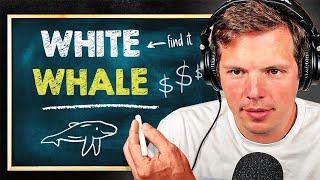
Chris Koerner explains how to find one transformational customer that dramatically increases revenue and exit value. He walks through a five-step framework with tactical methods like skip tracing and email discovery, then shares examples: landing Safran through a machine shop, contacting John McAfee, and buying a bitcoin-mining facility via BizBuySell.
Chapters
There's a 95.5 or 80, 20 going on here in this room as well, that most of us are like, this is just what you do.
Welcome to the Kerner office. Today's episode will be a little bit different. In April, I was the keynote speaker at an event called SM Bash, as in Small to Medium Sized business Bash. And it took place in Salt Lake City, land of my forefathers. And they asked me to be a keynote speaker on Saturday morning. And they said I could speak about whatever I wanted. And I felt thought I should speak about finding that one company, that one customer, that one business partner that could completely change your life to where if you find that one thing, let's call it a customer, a huge enterprise customer, that would 5, 10, 20 extra revenue, that if you were to find that thing, you'd be done. You could check out, you could retire at 23 or 53 or 13, whatever it is. I think that's a lot more possible. I know that's a lot more possible than what people think or realize. I've seen it, I've tasted it. You could also call it an asymmetric bet. I called it a white whale. And so I entitled this talk, you only need one white whale, because you really do. You only need one home run to be done. Not that you will be done, because business is really, really fun, but that you could be done. So I tailored this talk to the audience, which was comprised of people that had either just bought a business or were about to buy a business. And so the examples I used were for people that were about to buy a business. And I basically encouraged them to think bigger, take 20% more risk for a 200% bigger business with 200% bigger payoffs. And they really liked it. And I spent about 13 hours preparing it. And I had a lot of fun giving it, and it was a lot of work. And I might just write a book one day called you Only Need One White Whale, because I feel very passionately about this topic. So without further ado, please enjoy my keynote speech. And it's also available on YouTube if you'd like to watch the slides that accompany it. Enjoy.
All right, I'm gonna set the stage a little bit. I'm on stage. I'm gonna set the stage. So. No, we gotta go back. All right. I was in this building January 13, 2005. It was my 18th birthday. This is Bayside High School, not the Bayside High School from Saved by the Bell, Bayside High School in Palm Bay, Florida. I grew up on the space coast. So January 13, about 7pm I found myself this laid out flat on a wrestling mat, Florida sugar sand pressed into my face and a sweaty man on top of me that weighed exactly 286 pounds. I weighed about 200, about the same as I am today. And I was wrestling for my high school astronaut high school. And this guy on top of me was almost 50% heavier than me. And it was because of this thing we called murderer's row on the astronaut wrestling team. So at the time, the weight classes were 189, 215 and 285, but we didn't have a heavyweight, a 285. And so every now and then Coach Hackney would pull me aside and say, hey Chris, you gotta wrestle up, you gotta wrestle up. Which meant I'm going heavyweight. Okay? So that happened at Bayside. But this guy was an offensive lineman and he weighed the maximum allowable limit to legally wrestle in the state of Florida. Anyway, I'm on my stomach, I'm trying to get up because in wrestling you can get penalized if you're stalling. You're not moving, you're not working to a better position. It's heated, the gym is packed. At least in my head it was. There's probably like 14 people there and the other team is yelling, he's not doing anything. He's not, he's stalling, he's not doing anything. And the ref, who's supposed to be composed, looks back at the team and says he can't do anything. Look at him, he can't move. Anyway, I ended up winning the match like two to one, barely. And I wrestled heavyweight like 18 times that year. And so my point of this, oh, and so Kenny was my. He weighed about 190 pounds. And legally in Florida if you wanted to wrestle up, you could only wrestle up two weight classes. And so he had to take these five pound weights at weigh ins and tape them to his upper inner thighs and then walk into weigh ins with bow legged so they didn't clank together so he could legally weigh enough to wrestle heavyweight. So Kenny was very grateful that I wrestled heavyweight that day. So my point today is to talk about white whales, okay? Have you ever read Moby Dick? Okay, I probably got the spark notes in high school, so I didn't remember. So Chatgpt helped. So in Moby Dick you've got this guy, Captain Ahab, and he's pissed off because he chased this white whale and, and he lost his leg because of it. So Then he was driven by vengeance to go back and get him. And Ishmael tells the story from his perspective. And I won't spoil the end. I'll get to the ending at the end. But Ahab had one thing right, and that's he just needed this one white whale. He just needed one, and he'd be set for life. He had some other things wrong, but he had that right. And so I want to talk about that. And what is a white whale? A white whale is a business you're about to acquire or a business you've already acquired that could get a customer. That could change your life, that could change the trajectory of your business. Maybe you want to buy a $500,000 EBITDA H VAC business in Omaha. Maybe your white whale is a $1.5 million EBITDA H VAC business in Omaha. Okay, I want to show you specifically why and how, like, why you should look for a white whale. And I'm going to give examples for people that have already bought a business and people that have not yet, and how very specifically, strategically and tactically you can do that. And my goal is for you to have. So I'm getting thirsty here. So my goal is for you to have fomo. Like, I want you to be sitting there, and I want you to open up your laptops and start to do some research. Like, that's a win for me. If you're so excited that you just can't wait for this to be over, that's going to be a win. I want you guys to want to wrestle up like I did, like Coach Hackney made me do. So you can only, like, implant so much of that. And maybe you're thinking, I don't have the tools. I don't have the motivation. Like, I'm afraid what people think, but I'm going to help drive those tools into you and drive that fear out of you. I found this headline online, and I loved it. Study finds 100% of men would immediately leave their desk job if asked to embark upon a transatlantic expedition on a big wooden ship. So we crave adventure, but we're not. Like, we're just like, in spreadsheets all day, but we could still have adventure in spreadsheets. We could still have adventure when we call up a seller and we say, hey, I'm an NFL quarterback. Like, I loved that bit last night from Jeff where he said, I can get any call because I'm an NFL quarterback. But Sam said, we all have competitive advantages, right? We're just not thinking of what ours are like, what can we drop in that first call to the seller that can get his ears to perk up? So who knows who this first guy is? Brigham Young. Okay. Brigham Young marched into the valley a couple hundred years ago and said, this is the right place. Frankly, I wish he would have kept going to San Francisco. But that's okay. Salt Lake's cool, too. Okay. This next guy is my third great grandfather who, who was on that expedition. He was a pioneer. Like, I want to be in my own kind of small biz world, a pioneer. And he marched in alongside Brigham Young and said, this is a place for me too. And he raised a family here. And now here I am. And I named my fourth kid after him. And this third set of pictures. For a few years, I taught Sunday school every single morning to high schoolers. And as I was thinking about adventure and thinking about this talk, I remember back to a time when I said to them, there was about 27 of them, most of them were boys. And I said, have you ever had like a daydream or a fantasy about preventing an active shooter situation and being hailed a hero? And they were tired. It was a very specific question. They were tired. But as soon as I said that, every single boy had a smile across his face. And it told me that, like, we are all craving adventure. We all want to do one big thing that could change the outcome of our lives. But for whatever reason, we're not. Maybe we're insecure. Maybe we fear rejection. Maybe we just don't have the tools of creativity. Maybe we're worried about what people think. You guys have heard stories about people. They're in a competitive home buying market and they write a letter to the seller. And it works, right? Because selling sellers are people too, and they feel bad for them and they get the house. We hear about these stories and we think they're probably pretty common, but I think there's some survivorship bias going on. We're not hearing about the 95% of people that don't think to do that. They could do that. They probably have families, too. They probably really want it, too. So my thesis today is that there's a 95.5 or 80, 20 going on here in this room as well. That most of us are like, this is just what you do. You go to conferences and let's do 500k EBITDA minimum, and let's get a broker. Let's get them on the phone. Let's do it. Like I'm asking you to try to be in the 5% or the 20% or just to be a little more creative, to get a deal that takes 20% more energy, maybe 20% more time, maybe 20% more money, but has 200% more upside. So these are my two examples today, a $1.5 million EBITDA H vac business, as opposed to a 500K EBITDA H vac business. Or if you've already bought a business, let's say it's a 500K EBITDA machine shop. Okay? So I know we all want frameworks. We don't want to go full Tony Robbins here and just talk about fluff and feel good. I'm gonna give you some specific steps. Number one, we want to identify all of our former and future white whales. I added former in at the last minute because we've all done the white whale thing before in some way, shape or form. As I was planning this talk, so Kevin asked me to speak, and I thought, all right, what can I talk about? I like telling stories. I got a lot of stories. I'm going to talk about white whales because I've got two really cool stories that everyone loves at parties and that can take up half the time, and I don't have to spend as much time planning. And then I started planning, and I was like, man, I'm not even going to have time for those stories because this is a pattern in my life. Like, I try to find these white whale opportunities all the time. And I've gotten to the point where if I have an idea, I won't launch that idea unless it's a white whale. And if the white whale doesn't work out, then I won't ever launch whatsoever. So it's like white whale or bust. So think back before you start thinking about your next white whale, what that business H Vac business in Omaha looks like. Think about what you've done from age one to wherever you are today, and that will help build your confidence. That will help you realize, oh, I can do crazy things. Like, I asked that girl to marry me. She was the hottest girl in the bar, and I asked her to marry me, and she did. I could do things like, I've done things. Why don't. Why aren't I applying that to this? Identify your former. Then identify your future white whales. Let's say you want to buy for whatever reason in Omaha, Nebraska, okay? And there's 36 500K EBITDA H VAC businesses, and there's seven that are 1.5 million and above. Those seven are your white whales. Okay? You're going to generate ideas of how to locate and identify your whales. Because we don't just want, like, the office number or fax number. We want the owner's private cell phone number, preferably his home address. If you don't feel a little bit uncomfortable that you might be stalking, then you're not doing it right. Step three, generate ideas of how to kill your whale. Kill equals the offer. Because you're not just gonna waltz into a guy that has a 1.5 million. I gotta find a shorter way of saying that that has a bigger business and convince him to sell to you when he probably has a lot more competition at that level of revenue. Step four, execute until failure or success. So it'd be really sexy to say, just keep going until you get it, like, he might not want to sell. These aren't listed on the market. And so you have to get to that point where you realize that the additional time and money and investment is not worth it. If so, then just pivot. Go to the next white whale. Okay? And then if you succeed, find another whale. You only need one, right? We're talking about one opportunity that could change the outcome of your life. You only need one, but we want more. All right, so step one, identify all your former and future white whales. How to get to the number. Okay, so let's say we're at the 500k EBITDA number. Let's say we're having a conversation. What's your EBITDA? 500? Could you do six? Yeah, I could do six. Yeah. What about seven? It'd be pushing it. What about a million dollars? Oh, I don't know. I don't know. That's a lot because I've got to quit my job, and there might be a PG on the line and my wife and your number is your number, but it needs to make you feel uncomfortable. It needs to be a number where it's not going to bankrupt you, but it makes you sweat a little bit. And I don't know what that number is for you, but it's not just a goal. It needs to make you feel a little pressure. Okay? When you go after these white whales, you need to start from least to most critical. So we're in Omaha. We've got seven. Maybe one is right next to our house, and it's just beautiful, and we love it. We're gonna hit that one last because we want to practice with the ones that are still white whales. They still fit that criteria, but maybe we don't like them quite as much because we might screw it up. So we want to have the most experience. When we go to number seven, the next thought here is, you want to be like, you need to be intentional about the process. Think of the sardine fisherman. He goes out a mile or two every single morning. He slangs his cast net. He brings in some sardines. He goes to the market every single day. Every. Everyone knows him. They talk to him like, that's not you anymore. Okay, put that behind you. I'm gonna tell a story. My business partner, Nick, co founders. Nick, is right here. He had been working for the man for a while, and he said, I wanna buy a business. And he lived in Southern California forever, and that's his market. His wife loved the area. And he said, I wanna buy a business in Boise, Idaho, in medical billing. And he wasn't thinking of it as a white whale, but looking back, that's what it was. And he was like, it's that or bust. He looked, he found one. It was $3 million. He bought it. He did all the work. I was a tiny investor. He didn't even need me. I just wanted to be a part of it because it looked awesome. Two years later, almost to the day, he sold it for $7 million. And he wasn't even the operator. He gave an operator 10% from 3 to 7 in two years. So this is white whale. So I'm telling you, be intentional about this process. Like, be very thoughtful as you go throughout this process, knowing, like, this will change my life. This is gonna be a bigger deal than I expected, and I'm going to continue until I snag my white whale. All right? You want to generate ideas of how you can locate your whale. That can be the hardest part. So let's go to the machine shop analogy. You've already bought a business. Okay, let's say you have a machine shop in Dallas, Texas, that sells to hobbyists, small business owners. Your average customer gives you about 10,000 a year. Let's say 20,000 a year, 25% margin, and 500 grand EBITDA a year. You read an article that Safran, which is a publicly traded airplane seat manufacturer located an hour outside of Dallas in Gainesville, Texas. They just got a big Airbus contract, and they're gonna be making a lot more seats. And you know that you're FAA certified, which you have to be, but you don't really have any seat manufacturer customers. This is a publicly traded company, much bigger than your current customer base. But they are gonna be making so many of those seat back fasteners and they could use you for this. Okay, so this is your white whale. Because your average customer brings you about $5,000 a year in net profit. These guys would bring you $500,000 a year in net profit. They need you. Right? They don't know that you're tiny. They don't know that you don't have other publicly traded customers. They don't care. They want a good product and a good service, and you can provide that to them. I think back to the office of that episode where they're trying to snag that big customer and they show up at the front desk and they call the office and like, this is why we're different. Remember that episode? And they call and then Pam answers and they're like, oh, like, why? They're being creative. So this is specifically how you can find more contact information on sellers or on customers. Tlo. And we'll send out these slides. Afterwards. TLO is like really hard to get software. You're not going to want to mess with it. But you can go to upwork and you can find freelancers that have access to tlo. TLO gives you so much information on a person that you feel like you're breaking the law as you read it, which is perfect. Okay. CPAs, you've heard the phrase hire one to hire 10. Don't just go to one seller at a time. Go to one person that touches hundreds or dozens of sellers. They know their books, they know they have a good business or a bad business. You could skip the whole process of going directly to sellers. If you just went directly to CPAs and say, hey, do you have any H Vac businesses that might want to sell? They might be getting near retirement age. Upwork. Go to Upwork and just say, I want to skip tracer. They're very affordable. Search bug. I use Search Bug for mass validating phone numbers. It's like $0.03 each. You upload a list of phone numbers and it'll say landline, voip, cell phone. Okay. Outscraper I use to just scrape large quantities of businesses across Yelp, Google Maps or anything. Truth Finder is like a cheap background check service. Like a light background check service. Sly broadcast you can use for sending ringless voicemail drops. Let's say you have 400 white whales on your list. You could send a voicemail to all of their phones without their phone ever ringing for about 20 bucks. Email Sherlock. It's a way of like a reverse email Search where if you have their email but not their address, you just upload the email and it will give you everything else on that person. Phone validator is the same thing as search bug, but just one at a time. If you have seven white whales, just go there and type in seven phone numbers at a time. And then batch skip tracing is like tlo, but in bulk. I like to find sellers where they're not where they are, but they're not known. Okay, Strava maybe they're like, they're really well known on a social media platform, but they're also on Strava. And if you comment on one of their Strava activities, you'll compete with no one. So I get a ton of DMs on Twitter and I don't read most of them, but I just started on Instagram and like every DM is like, oh, I got a DM. So I read and respond to all those YouTube, find their YouTube, comment on their video. I know a lot of these boomer sellers probably don't have YouTube accounts, but they could be commenting on other YouTube videos. Goodreads. Anywhere someone has a username, you could find them and you can comment on them. TripAdvisor. I found a seller on TripAdvisor once and he was just a serial TripAdvisor guy just commenting on all these things. I found him there, paid LinkedIn ads. I read a story about a guy who really wanted this job and so he went, he found the guy that would be hiring him that was just getting mobbed. And he used paid LinkedIn ads to target ads with like his face pointing at himself, naming the hiring manager by name for and last name, and said, tell your friend John to contact me to hire me. And so John starts getting all these texts all day long from all these randos on LinkedIn saying, hey, what is going on here? Like, are you being scammed right now? PayPal, this is genius. Okay, take a list of email addresses. You don't care if they have PayPal accounts or not. You upload it to PayPal in bulk. You send them all five cents, two cents, a dollar, whatever. PayPal. If they don't have a PayPal account, even better, because PayPal is now hungry for them to make an account so they can claim their money. Okay, so PayPal will do all the follow up for you. And of course, like people doesn't know or care if it's 2 cents or $2,000. They want to play on you wanting that money. How brilliant is that? Okay, cash app Or Venmo, same thing. Find them there, Send them a dollar. Get their attention. Part two, Find all their usernames on all these platforms. Go to Google, search for their username in quotations, and Google will show you all the other websites, message boards, weird places, Reddit, where they're using this username that you'd never thought of. Okay, Twitter Advanced Search. If you don't use this, you should. This is my friend. He just posted about finding contact info here. You go to Twitter Advanced Search. There's not really an easy way to get there other than just Googling the phrase Twitter Advanced Search and then bookmarking that page and then just searching like contact info, yada. Skip tracing. So I did this to find John McAfee. Back in 2018, I had this idea. I thought I could predict where crypto was going. And John McAfee, the most private person in the world, the late John McAfee. I didn't know his email. No one knew his email. So I guessed it. You can guess his email. So I just tried jmacafee.com, john McAfee. They kept bouncing back. Oh, man, that was aggressive. And I found his email, and then I showed up at his house after he said I could show up at his house. Okay? It was 1:23pm on February 27, 2018, and we started business together, and we got 60,000 customers, and it grew really fast. And then crypto crashed, and it all crashed. And then he died in a prison in Spain. Classic story. We've all been there. We've all been there. But this guy. If I can contact this guy that does not want to be contacted, I promise you can find a guy in Omaha that owns an H vac business. Okay? I didn't use any of those tools. They didn't work. I guessed his email. Step three, generate ideas of how you can kill your whale, which is the offer. Okay? And I got quotes from Moby Dick on all these slides. From hell's heart, I stab at thee, for hate's sake, I spit my last breath at thee. Okay? You are going to get this whale. You're gonna get it. You need a good offer. You need to be creative. Okay? If you're not creative, then go to a friend. Someone in this room is really creative. Ask for their help. So this is your strategy? Pride. Get his pride involved. This is why you never want to say to a seller, what's your bottom dollar? Okay? Never say that. Because if his bottom dollar is, let's say it's a million bucks. And you'll pay 1.2. And then you're like, I really, genuinely, I can't pay more than 1.2. He already told you his bottom dollar was a million. Now his pride is involved, and pride is, like, the most powerful force on earth. And so now he's like, you don't want to compete with his pride, so just say to him, like, hey, like, what's a ballpark? It's my favorite word.
Ballpark.
What's a ballpark? He says, a million. Then it's like, okay, we could get to 1.2. Maybe he's not prideful. You say bottom dollar, and he says 1. He still comes up anyway, but don't mess with it. Flattery. You want to compliment him on his business? He will love you. He loves that business. He spent 30 years on it. Compliment specific things, like, you got a great business here. No, like, I love how you expanded to Lincoln back in 2017. That was really smart. I feel like the college is blowing up. I feel like college towns are a good place to be. Like, wow, this guy with a. With a vest really knows his stuff. Friendship. Are you more likely to get money from a friend or from a stranger? Become friends with them. Play the long game. He will be more likely to accept an offer that he would not be likely to accept. And if you're friends, okay. Storytelling. Tell them a story. What is your story? Went to Northwestern, had this investment banking job, 80 hour weeks. I hated it. My friend bought this H Vac business. I thought, man, I could do that. We talked every weekend. Like, tell him your story. Don't just say, yeah, this is. This is my buying criteria. This is my buy box. But the most important thing. Stupidly good offer. This trumps all of those. It's got to be a good offer. It's got to be creative. It has to benefit him. It's got to be creative, but not too creative. Because if you try to get into the weeds with this, let's do a jv and then we're going to buy back some equity, and then over time, we'll earn out. He's gonna be like, dude, how much do I get? So it needs to be creative, but simple. Right? Simple enough for him. You want to have an intimate knowledge of his business. Like, web archive. Go to the web archive and look at the history of his website. There's a good chance it's never changed. Okay, that's okay. And just try to do all this background. If you have seven white whales, you want to do as much research as you can on all of them. Why wouldn't you? If you have a hundred, then you can be more flexible. You can be more loose in your approach. False confidence is confidence. Okay? Jacob Becker, I talked to him. He had to fly home. He bought a business that was a white whale, okay? A Florida events business. It was way bigger than he thought he could afford. There were 28 people vying for it. And he was just like, I'm your guy. Like, I'm gonna. I'm gonna take care of this business. And luckily, the seller was also the landlord, so he knew they could be married for a time. And he bought it, and it changed his life. It completely. His growth trajectory went from this to like to that. Right? It was a white whale. False confidence is confidence. We talk about. I just got to fake it till I make it, and then I'm. And then I'm going to be confident. No, when you're faking it, that's you being confident. That's it. You're already there. And then just be transparent. Jacob said, hey, I'm like, yeah, I'm not most qualified. I'll have the money at closing. I'm not. I don't have the pedigree. I've never done an events business. But I will do the best job with your business, and I will come up with the money that you're expecting. Just like saying so much that you cringe at yourself as you do it. Also, this book is really good. I just. I recommend that book. So creative deal structure. These are the tactics. Even more creativity and positive. Rawr. I invented this acronym. And don't get on me, because there's an acronym that's actually real, that's similar. It means return on additional risk. Okay? So there are economies of scale here. So maybe this white whale to go from 500 to 1.5 million EBITDA, it could be 20 to 30% more risk, more headache, more heartache, but 2 to 300% more upside. Okay, you've got upside, more upside on the exit because you're starting from a bigger basis. Think about that. Your return on additional risk, that's where you land at your white whale mining syndicate. Another story. How long ago, three years ago, China backed out of bitcoin mining overnight. And all these enterprising Americans wanted to get in on it, myself included. And so Nick and I, we started talking about it, and we've had this conversation where this is a very short. If we can get in on this now, then let's do it. If not, then let's just Keep doing what we're doing. So we go to Biz Buy Sell. Believe it or not, there are still deals on Biz Buy Sell. We, we found two for sale. Two mining facilities. One was in Oregon. They were the same size. It's measured by megawatts. They were both two and a half megawatts. One was in Oregon. It was listed for $3 million. And one was 30 minutes from my house. Listed for 750. And so this is a white whale. I didn't have 750. And this guy was getting mobbed. Like bis by sell. They already get mobbed. And then it was. Bitcoin was going crazy. And then it was. China had just exited mining and this guy was just getting mobbed. But Nick and I just kept beating him up. His name's Josh. He lived in West Texas. I've never seen his face to this day. Never. He has such. I won't say his last name, but he has such a generic name. I've never seen him on social media, never met him in person. But I just kept calling and calling. We had a bunch of conversations. We became friends. He's like, hey, you remind me of me when I was younger. Yeah, I like you. We ended up doing a deal. We paid 700 grand down from 750. He seller financed 650 of it. We only put 50 grand down. We tied the repayments back to the price of bitcoin. So as bitcoin dropped and which it did, our payments got all the way down to zero and he would hold them. It's creative. And he could have sold all cash to anyone else. So this is possible. And now we're going to. We're in the process of selling this facility for a pretty healthy profit. Next story. Maybe you read this on Twitter. I went to Buc Ecky's four years ago. I said, man, these guys must crush it online. And I opened up my phone, there was no shop button. And I realized they don't sell it online. They were like a $2 billion company at the time across only 40 gas stations, believe it or not. And so I cold emailed. The CEO wouldn't answer me. You need to sell online. And I had an e commerce logistics company at the time. So the pitch was, we'll do it all for you. Fully managed. No response. So we said, what if we launched it for them and then maybe it becomes a business of our own. Maybe they buy us, maybe they sue us. It's a great story. We don't know. Or maybe it just generates A bunch of PR to drive to our E Commerce fulfillment business. It's asymmetric. So I took my family to Buc ee's. We bought one of everything. It cost $2,000. I documented everything. We listed it on a website. Cold emailed a bunch of reporters. They loved it. They called BUC EE's for comment. Said, what do you think about this website? They said, we've never heard of it. I want to talk to this guy. So then the reporter calls me back and says, hey, the bucky's in house. Counsel wants to talk to you. I said, here we go. All right, I'm filling the pantry. We're going to have a lot of snacks. And we talked, and he said, hey, I love this idea. We love E Commerce. We just don't want to do it. If you want to do it, pay full retail. Mark it up as much as you want. Just don't confuse the customers. There's this thing called first sale doctrine where you can sell any company's stuff. You just can't pretend to be that company. So we put some disclaimers up there. And we've been in business four years and do mid seven figures in revenue, and it's profitable and just growing steady Eddy. We're like the only website dedicated to reselling Bucky stuff. And it all started with, what if we tried this? Wouldn't that be crazy? So step four. Execute until failure or success. Captain Ahab failed for a very specific reason. Okay? He was driven by vengeance. He was driven because this same whale had taken off his leg and he was pissed off. Okay? You are not driven by vengeance or revenge. I assume so. Ishmael, the narrator of the book, was the only survivor. That's how it ends. He didn't kill the whale. Here I am talking about white whales, and it didn't even work in the book that I'm talking about. But it's because his why was off. He had the wrong why, and he didn't pivot. He could have said, all right, I tasted a white whale. He took off my leg. That's a lot of blubber. I can sell that for a lot of money. I'm going to go find another one. Or he didn't get out there and, like, was about to. Like, they had all kinds of crazy experiences, and he just kept going. He could have said at any point, let's just, this whale's a little crazy. Let's just try a different whale. He could have pivoted. I'm telling you guys, if the seller is just Saying no, go down the line, pivot. So those are the failures that he made. Step five, the last step. Rinse and repeat. Better to sail with a vengeance seeking captain than none at all. Chip on your shoulder. So when that first seller tells you or the first seat manufacturer tells you, then just let that be a chip on your shoulder and drive you to the next one. These are some of my white whales I wrestled up in 2005 in Hungary. I served a mission for my church and it completely changed my life. I left a gamer and I came back just ready to conquer the world. 2010, I was in college. I signed a five year lease with a personal guarantee for a store that was like the dumbest decision to all of my mentors at the time. I wanted to fix iPhones and they said, start in your dorm room, start small. And I was just like, no, I'm going for broke. And I don't recommend that. But that was my white whale and I exited and made a lot of money for a 20 something year old. 2014, I had another business and we were living in Alabama. We were happy. And I looked at all my customers and they were within a one day drive of Alabama. There's not a lot of big cities within a one day drive of Alabama. So I pulled out a map, I saw Dallas. We had one day shipping to all these big metroplexes. We moved my family to Dallas and my business went from this to this McAfee story, the Bucky story. And I just want to tell you guys like you're Ishmael. This is you guys right now, okay? And so I can give you a lot of ideas, you can write down these websites, but it's up to you to execute on this plan. So this is the acronym. It'd be great if it worked out to like this being a talk about having a bias for action yo now. But no, it's only. You only need one white whale and it's just, you're just taking asymmetric bets right? Over and over, upside down, your life completely changes for the better. Because right now you're probably thinking, I'm gonna buy a 500k EBITDA, do it for a couple years and do another one. Tuck it in, roll it up, M and A. It's like, let's just, let's skip a lot of that because it's really, it's not a proportional amount of risk to the amount of upside that we're talking about. Downside, you have a great story. I've got all kinds of white whale stories that didn't work out. I did a Kickstarter once. Completely failed. We took my family on a road trip around Europe. Serbia stopped us at the border and they said, you can't drive through Serbia. Turned around and we went to Italy and said, we're going to go from Paris to Greece. Anyway, it's a great story. I've got great stories. So I've always wanted to do this. Look under your chair and you'll see a white whale sticker. Okay, Seriously, I put stickers under every seat in here so you could put this on your computer, on your mirror, on your desk. It's not a car. It's not a Lexus. It cost me about 46 cents apiece, I will admit, but it could be a reminder for you to chase your white whale. Okay, and now you're accountable to all this. Now, like I planted, I hope I planted some sort of a seed. Maybe you've got a little bit of drive to just look at things differently now. You're accountable to that. Now if you go home, talk to your spouse, maybe your goal is the same, maybe it's different, but you're at least accountable to it. I've noticed in my life that all of these stories, they all started at the end of the sentence. What if we tried? Please try. Thank you.
All right.
I hope you enjoyed that speech.
Thank you for listening or watching. And please like and subscribe and share with your friends, and we will see you next time.










