How to Import and Sell Profitable Products from China
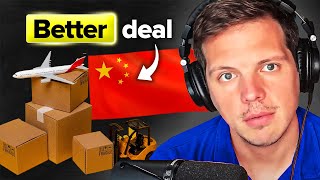
Chris Koerner walks through launching a hardware product from China: order samples on Alibaba, test with a small custom box run, sell on Amazon and local sites first, then scale with Shopify and Facebook ads. Use Jungle Scout for market data and test prices before spending on ads.
Chapters
If you're selling a 30 to $50 product, it's going to be almost impossible to really scale with Facebook ads because your cost per acquisition is going to be about the same. And so I would try testing just stupid price points. $30, $80, $150 and the same ads, the same copy to different price points on the same landing page. And it will just split your traffic.
Hey, Chris.
Hey, how are you, man? Doing good. Okay, so you're a tinkerer, you're an engineer, right?
Yeah, I would say I'm an engineer transitioning to a tinkerer probably. So I worked professionally as an Engineer for about 10 years or so and I've always been jealous of the makerspace people because they get to use that and change their own lives. And so I've been diving into that over the last couple years and in my little prompt, my kind of like moonshot idea is to come up with a product that's sellable, has a good addressable market, and then build a company around it. And it doesn't need to be right away, but.
And you have a W2 right now, right?
No, right now I have a LLC and I consult through my LLC with a couple of aerospace startups.
Okay, so you're self employed as a consultant, basically.
Yep.
And that, that pays the bills. That covers you?
Yeah, yeah, it's pretty solid right now. I'm actually, I have a little bit more work than I ideally would have because I would love to spend more time tinkering and stuff. But yeah, it's. It's a super solid gig. And part of the reason that I'm not in a rush is I don't want to jump into something that I enjoy less, which I think could be easy to do.
I love talking to people like you that are. I'll just, I'll simplify it and say you're a consultant. Is that accurate enough?
Yeah, yeah.
Because it's not all or nothing. A lot of times people have a W2 and they make a lot of money and they're like, I really want to do this, but I don't want to quit. And I'm always like, don't quit because I want to. I don't want to be the person to tell you to do that, but you have the flexibility of saying, ah, I don't really like this client. I don't really like that client. Let me keep these three core clients that it's the 8020 for me, and really build something on the side. Is that possible?
Totally.
Okay.
Yeah, absolutely. And I'm doing that a little bit now. I've done little ventures, and even. Actually the people that I work with are. They're, like, good friends. So they'll, like, let me get away with little interesting ideas. So one of them, for example, I do like structural analysis and design stuff, but I sold one of my clients a whole bunch of 3D printed parts that they wanted on a short time frame, and it was, like, a great return on investment. I got them to pay for me to get another 3D printer so I could, like, up my production rate enough to get all the parts that they wanted. And I. All this stuff, I decided not to do it again, though, because I ended up spending an entire weekend onboarding a new 3D printer and just running the thing all night. So I've dabbled a little bit with stuff like that and trying to figure out what are some other things that I could. Yeah, I. Super big P fan of your podcast because, yeah, I love all the, like, crazy ideas that you have, but thought it might be interesting to see what happens if you are thinking of that from, like, a tinkerer angle. Yeah.
No, I don't think I've ever had anyone ask that question. Like a specific physical product idea.
Yeah, totally. Yeah. Because everyone wants to do SaaS. Yeah. And I get it. Like, yeah, it's. And there's a lot of easier ways to make money. I totally get it. But I just have always had a passion for physical things, and I've always also had a passion for kind of trying to improve people's lives in these, like, little simple ways. Something that I just did that was funny is I got a. Like, a programmable outlet that you can plug in and you can put, like, a timer on it. And I hooked it up to a space heater. And then so my wife and I have been experimenting with using, like, a heater as an alarm clock, which was. I was like. At first I thought about that, and I was like, maybe that could be a product idea, but you can totally build it with two things from Amazon for 50 bucks. Really solved.
But I still think there's definitely room for product ideas that you can build with two products from Amazon for 50 bucks. Because that's friction, and you're eliminating friction is a whole business in and of itself. You're making it easy. And you can even make that the angle.
Right.
Like, you can make that the selling point, whereas there could be something else that does that exact thing. But their angle is an alarm clock.
Right.
That's their unique value. Proposition. Your angle is you're more of. You're a better space heater that also has an alarm clock. That makes sense. You're just framing it differently.
Yeah, that does. Yeah. And I guess I couldn't buy it. Yeah. One of the things I thought would be interesting to talk to you about is a lot of people that are in my position, they're looking at it from this angle where they're like, oh, what's the technology? I could invent and then I could patent, and then I could license the intellectual property. But I think today the. The kind of, like, threshold of effort that it takes to get into E commerce is so much lower that there's probably a whole field of things that are not really protectable from an IP side, but you could still move a couple hundred thousand units before all the imitators catch up. And this. That's a. Interesting thought that you had because I discarded that idea because I think it would be difficult for me to beat the bom cost of those two parts. But maybe I could just put a enclosure around, like the two highly rated things from Amazon or something, and mark it up. Yeah.
Look at it this way. I wanted a light in my bedroom, like a programmable light that I could. In our bedroom, we have four recessed lights, and I wanted the one right above my side of the bed to be able to turn on and off with my phone so my wife could sleep. And so my point is, I went and bought. There's hundreds of these on Amazon, and I bought one. And it has to come with a hub. So you had to plug the hub in the wall over there, and then you plug the light in. And so that's a little friction, a little janky. But I know that the technology requires it. I. What is preventing you from finding a box manufacturer that can make a different box that frames it differently and has your brand and your name on it? And then just getting a plug and a space heater and. And then getting instructions printed up and saying, here's how you do it. You plug this into the wall, and then you plug the space heater into this, and it's. You're just piggybacking off two products that probably hundreds of companies in China make. Both of them, get the ones that are the most generic looking, don't have any brands or logos on them, have them go in the same box, take a flyer on a container full of them and see if you can move them.
Hmm. Okay. So this is really interesting. I. I guess, like, the short answer is nothing. Right. Like I could just go first, go do that. So some of these ideas, if you need to like inventory $5,000 worth of parts that's like that, I could handle that. It would hurt a little bit if it all went nowhere. It just, I guess not really. I'd have to figure out what to do with all of them. So it's like stuff like that. I'm, I don't have the china, the like china manufacturer connections yet. I haven't done, I don't know like third party logistics or first party logistics. Like but it's, it sounds like you'd lean towards with this one if we did, if I did try this idea, just buy all the stuff, put it in a closet at my house and then go around and try and sell it around town basically.
So if I were you, I was trying to think of this as you were talking. I would not take a flyer in a container because that's going to be way too much money. So forget I ever said that. I would just go to Alibaba.com and just start DMing manufacturers of these two different products and get them to send you samples. First of all, they'll usually do that for free. So you're at $00. Find a space heater and a plug like it's just a smart plug, right, that you like and get a dozen of them. Most of them are probably free. Find two that you like. Then find someone in the US that makes custom boxes. They'll probably be one to two dollars apiece. Get the minimum order quantity of those printed, call it 100 or 2. So you're at a few hundred bucks now. And then order the same quantity of each, the plug and the space heater. And then just print up some simple instructions. Assemble them in your house, store them in your closet and then go to Amazon and find out what it takes to, to ship them minimum quantity of items and they're going to want you to label it specifically. It's kind of friction, it's a lot of headache. But once you do it, once you can roll any product into that same account and then you label them correctly, you ship them off to their distribution centers and see what happens. And it's obviously you've got some time because people aren't going to be space heaters right now. So that buys you six months to really to nail the timing on when people are actually shopping for these things. And in the meantime, list them on Facebook Marketplace, list them on Craigslist. People will be looking for used space heaters. So they'll find your just by nature of the search term, they'll find your new space heaters on Facebook Marketplace. You can do that at any time. Like you could list that right now and see if there's demand for it. And then it's just like the Facebook Marketplace isn't really going to be scalable because it's mostly local. Unless you, it could be if you do paid and, and you boost it and you ship. But I wouldn't. You're using Facebook Marketplace to get some feedback on the idea and on the product. And then I think it would also behoove you to make a video that you could plant with an influencer of some sort. Just like a 20 to 30 second video of just showing how it works. And I'm picturing you could even like you watch the Office.
Yeah.
So it's like that episode where Michael Scott puts the George Foreman grill by his bed because he wants to wake up to smell of bacon. And you could superimpose that in the video somehow. And it's like that, except for a space heater. And I think that would do really well on social media. But you'll need to find someone that already has a presence and just say, hey, can we take a flyer on this video?
Fair use, right?
Yeah, I, I, I don't know. I don't know. But better to ask. Better ask forgiveness and permission, but nice. And then find one person with 50, 100, 200,000 followers and just say, hey, I'll give you 10 bucks from everyone you sell. Most people will ignore you. Someone will say yes and see if you can use the social media angle as well. Because I do know a lot of people that have sent a random product to Amazon and just made a ton of money. There are also survivorship bias and people that have never sold one. You just don't know.
Totally.
And have you ever looked at Jungle Scout? No, I've never heard of Jungle Scout. Check out Jungle Scout. It'll enable you to do a ton of research on competing products and they will tell you with reasonable accuracy how many of those products that, that every company. It's really cool.
Yeah. I was literally like just wondering how to get this data. It's just basically like sales data for Amazon products. Yeah, Yeah. I was just, I was like on Amazon and I was just like, I was like, I guess they probably don't want us like, yeah, I don't know.
How Jungle Scout figures it out, but they do.
That is dope. That is really cool. Yeah. I love these suggestions. What do you think about combining Amazon listing with social media. So if we if because the, the Amazon seller like approach is nice because it's very hands off. So I just have to get my whatever their minimum quantity is, ship it off a couple times to get a couple distribution centers and then, and then I don't have to keep them in my house or mail it myself or whatever. So that's really appealing. But and then it. I would think that I could still do a micro influencer campaign and then just have people link to my Amazon page. And then additionally I think people are pretty comfortable with Shopify websites now as long as that's like the payment layer and everything. But Amazon's another way to make people feel comfortable giving their payment information. And I know, at least for me I have a bias towards things that show up on Amazon because it feels like it. I feel like I can trust the logistics more.
You're correct. But forget trust for a minute because what makes Shopify such a behemoth is the fact that you can really push paid Facebook ads to these websites. And we'll talk about Shopify for a second. I would go to Upwork, find someone that can make a one product Shopify site and they have one product Shopify themes too because it's very different to sell one specific product as opposed to just having a Shopify store that sells even two to 2,000 products. And it's a different look, it's a different feel. You want like countdown timers, you need some apps, widgets. So find someone, don't reinvent the wheel. Pay someone 4 or 500 bucks that can make a one page Shopify site that's optimized for specifically for Facebook ads. And then use an app, a Shopify app that can a b test your price points. Not enough people do this. They're like ah, it's not really a clean.
I love a B. Testing. Yes. Yeah, I. Yeah. Already sold.
Here's the thing. If you're selling a 30 to $50 product, it's going to be almost impossible to really scale with Facebook ads because your cost per acquisition is going to be about the same. And so I would try testing just stupid price points. $30, $80, $150 and the same ads, the same copy to different price points on the same landing page and it will just split your traffic and then see how that does. I wouldn't count on Shopify. This can sell well. Like there's so many not to offend your product dumb items out there that people.
I threw this one out because it's a dumb one. Yeah. This one can go on the air.
Oh there are things like a, a little cutter that like you take a pie and it's like a better pie slicer. And how often does anyone eat pie? They make tens of millions of dollars because people are stupid and they buy stupid things. Right. And it goes viral on TikTok or Instagram. So this is actually a utility like we need to stay warm in the winter. It's better than just a normal space heater.
I think you could do really right to have it kick on only that's true. Be awake. Yeah.
That's one of your selling points.
Yeah. Yeah. I gotta make. I could check and see if I didn't check. Super hard to see if anybody was already selling this. But you know it passed the five minute Google test. Probably not going to after the podcast.
Oh, I don't know.
No.
I would do this though for real and let us know how it goes.
Okay, that's cool. And then so what do you think about the single product shopify page versus try to come up with maybe three similar throwaway product ideas. Do them all at once. Jump up into this is like jumping into bigger scale. Do you think I'll that that it's. Most of the effort is getting one thing set up so that I understand the processes or do you think that like everything that I add is going to be a lot of extra complexity?
It just depends on what types of products. It could be a lot of extra complexity. But if you're in the same industry or if, if you're just importing space heaters for one idea and the other one you're like 3D printing a model and then you're finding molds in China that's they're almost two completely different things. So I lean just starting with this just to learn and then ideas 2 through 3 will go so much quicker because you'll have learned so much. But if you have seven months until winter then maybe do try two at the same time if they're not too complex. Okay. Yeah.
Right now my like prototyping lab is in storage. Cause I'm like house hunting and we like move states and stuff and so it's a better time for me to try this like fully external type thing. Import a space heater, import a timer, find a company that will do a casing for it. So. Or actually do you know any places to look for US manufacturers that are interested in these types of things? What I was googling before is I was. I found a few companies are looking for injection molding with direct shipment, but injection molding is more high run. It's expensive. Did you have. You were thinking maybe of some 3D printing companies or something like that? Yeah.
Have you looked at Thomas Net?
No, I haven't. I've heard of it though.
Yeah, I would check them out. There's. That's a great resource for all kinds of stuff like this.
Okay. Yeah. That's awesome. Yeah, yeah, yeah. This has been super interesting. Yeah. And really fun. Yeah. I've listened to every episode of your podcast so far.
Thank you.
This was funny how. Yeah, I've been like imagining this conversation for a couple episodes, so.
Well, hopefully I didn't let you down.
No, not at all.
Not at all.
This was really fun. Cool.
Best of luck, Clayton. And follow up, please. That's all I ask is that you follow up and let us know how it's going.
Yeah, I will do.
All right, man, have a good one.
You too.
See ya.










