How to Import Products from China with Almost No Money
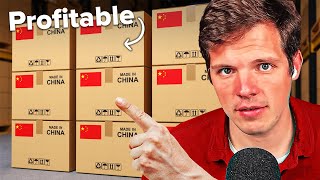
Episode 10 of the Kerner Office (hosted by Chris Koerner) is a Q&A-format podcast/video where Chris answers pre-submitted entrepreneurial questions covering early-stage customer acquisition for local/home-service businesses (gutter cleaning, window washing), gig-economy bookkeeping tools (QuickBooks, Xero), sales pipeline management (constant outbound hooks), finding technical cofounders, hiring and retaining employees in low-margin operations, raising capital in a tight market, building predictable cash flow (email lists/personal brand), importing from China (use vendor-referred brokers charging percentage fees), deciding whether to double-down or explore side hustles, managing tax stress as a small-business owner, and validating lead-generation businesses. Advice emphasizes overcoming pride, networking friends/family, creative low-cost employee perks, building email lists for predictability, using brokers/referrals for imports, starting service businesses for people-skills, and iterative testing of ideas.
Chapters
All right, all right. Welcome to episode 10 of the Kerner Office. This is it. First question. Started a gutter cleaning business on the side in late February. What's the best ways to find jobs and grow in the early stages? So this is a long standing question of any startup owner, right? How do I get my first jobs in the early stages? And I think there's an overarching principle here that people are unwilling to acknowledge, and that is pride. Pride, slash ego, is at the core of everything we do or don't do, whether we're willing to admit that or not. So if I'm getting asked a question like this about starting a gutter cleaning business, pressure washing, home detailing, lawn mowing, whatever it is, these are all things that our friends and family get done on a regular basis, which means that our, our customers should not be hard to find. The hard part is putting our pride aside to go ask them. To go ask them, hey, can you pay me to do this job for you? But there's an easy and a hard way of asking people this awkward stuff. I'm the king of anti awkward. I hate awkward. I hate it, I hate it, I hate it. But there's a way to do this, right? And so if I were this guy with a gutter cleaning company, I would get my, my friends and family on the phone one by one. I would not text them and say, hey, I just started this new business. I, I'm just testing right now. I just want to see if I'm any good. I want to clean gutters. I think this could be something I could scale, but I need some testimonials. Would you allow me to clean your gutters at half off, 20% off, 30% off, whatever. And just get those first few jobs and then once you have the job, they're going to love it. This seems like a very kind of binary outcome type business. They can't even see inside the gutters. So as far as they know, you did a great. Then just ask for referrals. And I tweeted about this a while ago, but there's a guy I spoke to in Australia that started what is now an $8 million window washing company. And he only started with his friends and family. That's it. And it just snowballed from there. Word of mouth. Because every person knows three to 400 other people. And if they're willing to give referrals to 1% of those 3 to 400 other people, then every one of your 20 friends can refer. 60 friends can refer 180 friends, so on and so forth. Right? So the long winded answer to your question is put your pride aside first, because I'm betting you're not here to. You're not here to clarify, but I'm betting that you haven't truly exhausted your circle, friends and family. So do that first and then ask for referrals. Shamelessly ask for referrals. If you did a good job, why wouldn't you? All right, next question. Gig economy. For a person just starting out in the gig economy and for those unfamiliar, just freelance work. Right. What software is recommended to create and track small invoices and take care of The Little Bookkeeping? QuickBooks or 00 is an Xero. Books is great from a dollar in revenue to $100 million in revenue. It integrates with your bank accounts. It's just, it's simple. Or you'll just use Google Sheets or Excel. Good on you for asking this question early on. It's not something I usually ask until a few months in when it's already really messy. But don't overthink it. I don't know of any other kind of magic, cool hacks, chrome, extensions or tools, But Xero and QuickBooks both do the job really well. Next question. Like everyone else, our business depends on sales and I'm really worried that one day the sales will just stop. Like at the moment I have four quotes with four different companies out. I need at least two of them to come in. And if none of them come in, then I have a problem. Man, I'm freaked out just reading this. This. Honestly, this goes back to pride, what I was just talking about. Pride can also be not being willing to do outreach. Okay. One of my favorite pastimes is jugging for catfish and trot lining. Okay, now jugging is something that most people have never heard of. It is when you take pool noodles or milk jugs or 2 liter bottles, whatever, you tie a string to it that's two to six feet long, you put a hook and then you have a bait on it. And then you take a boat, you take it out in a lake and you drop these pool noodles all over the lake, 20, 30, 40, 50 of them. And then you just watch for them to start bobbing up and down. And it is the funnest thing ever. And I really want to do it in the ocean because I think that would be even funner because you don't know what you're going to pull up. Trot line is similar. You'll find like an eddy or like a small river or creek leading into a lake and you'll take this 30, 40, 50 foot line that has hooks every foot or so and you'll bait all the hooks and you'll anchor each end of the line near the bottom and then you'll come back the next day or the next morning and you've got a bunch of catfish. It's like the most redneck amazing sport ever. Okay, why am I talking about this? Because you should not be paranoid that the money faucet will turn off because you always need to have hooks in the water. If you're telling me that you have four quotes out, if none of them come in, you have a problem. That's a problem. Because the statistical probability of none of those working out is pretty good. So there's a pretty good chance that you have a pretty big problem on your hands right now. And I'm betting that's because you've gotten complacent. You're relying on inbound right word of mouth. If it's not broke, don't fix it. That is wrong. You need to have a lot of hooks in the water. What are those hooks in the water? It could be your GMB profile, it could be asking for reviews, it could be a cold email campaign that's always running on autopilot. A cold text campaign always running on autopilot. It could be a ringless voicemail campaign, it could be mailers, email, it could be door knocking, it could be door hangers. What? You gotta have hooks in the water. If you have four quotes out, it could make or break your business. Then you're not consistently doing cold outbound. It could be Facebook ads, Google Ads, Etsy ads, I don't care. You've got to have a bunch of hooks in the water and magical things will happen. So don't rely on inbound, don't even rely on SEO. SEO is changing as we know it. Put more hooks in the water and you won't be as paranoid. Alright, next one. Looking for a technical co founder skilled in react web stack. So you need to go where these guys hang out and these guys hang out on Twitter, Reddit specific subreddits and indie hackers and hacker news. You gotta go start building a reputation and a community there. Start commenting on people's stuff, start posting your own stuff. Those are the best guys to co found projects with. You likely don't know anyone in your immediate circle that would be a good fit for this. And frankly, if you're going to co found a business with them, you might would be better served finding a stranger on the Internet. There's a lot of really interesting ways to structure businesses nowadays. Sharing a stripe account and just splitting what comes into that stripe account. It's trustless and it can work really well. But yeah, I honestly, I would just go to indie hackers and start hanging out there and seeing what people are posting about and DMing them or commenting beneath them and hopping on calls with them and going from there. Yeah. Or honestly, the more I think about it, why not just post to upwork? Looking for a guy in Bangladesh that can, that you can pay to do some work for you and then if he does a great job and he's really responsive and hardworking and then make him your co founder. Who said you can't find co founders off upwork? That's what I would do. All right, next question. How can I find and retain Rockstar employees in a business with small margins? I love this question because I live this question. I have picked the stupidest, hardest business industries in my life and I regret many of them. But it's made me hardened and, and it's made me have to get creative and it's made me qualified to give advice to questions like these. So I had a company called Send Eats and we were an E Commerce fulfillment brand and that is a brutal business. It was called pps. Pick back and ship. That's what the industry term is. People would send us a pallet full of goods and then we would connect our API to their Shopify store and then as orders would come in, we would pick up, pack and ship them out for them. You make money by marking up shipping. You make money every time you pick an item and pack it and ship it out. You make money on storage, yada yada. But it is just such a brutal business. And we are competing with Amazon, right, One of the biggest companies in the world. And there are some industries like 3 PL, third party logistics where the messy middle is very big. The messy middle exists everywhere and that is it's the size of a business where you're too small to be good enough for X, but you're too big to be good enough for Y. And so In E Commerce Fulfillment, 3 PL, you either have to be small niche, very expensive, or you have to be Amazon and have billions of dollars worth of automation and equipment and be affordable. So we were in the messy middle. We were like a 4, 5, 6 million dollar top line company. Not enough to buy automation equipment, but too big to really not niche enough to charge a bunch of Money, You've got to be in the right industry too. We were in Food Send eats. First of all, it's just a terrible category because there's not a lot of food shipped online, period. People think there is, there's not. Okay. We would take these customers that were big household name brands, their online orders were a fraction of a fraction of a percentage of their in store sales. And so it's not a big category and it's not a high margin category. As opposed to like supplements that are small, they're shippable, most of them are shelf stable and they have 80 to 90% gross margins. So if we would have been a supplement 3 PL, we could have been a lot more expensive because the margins are there on our customer side to justify those fees. But we weren't. We were in the messy middle. And so what we had to do was get really creative in our hiring. We were competing with Amazon's 23 fulfillment centers in DFW and they pay 17 or $18 an hour and we pay 12 to 13 to $14 an hour. How do you compete with that? We have culture. We let them listen to podcasts on their AirPods and that sounds like not a luxury at all, but in that space it is. We let them play music over the loudspeakers for everyone to hear. We let them choose their music, we played games with them, we gave them free lunch every week. These things that seem so basic to most corporations were not at all at this wage level in this industry. So these small things that we did had a 10 to 1 ratio of cost to value. Right? If you were to say what if you were to have a perk to your employees where, hey, if you get to work here, give you an extra 50 bucks a month. Okay, thank you so much, sir. Wow. Thank you so much. That's nothing. That's no value. But if you were to say, hey, for everyone that works here, we'll pay for all of your subscriptions, Hulu, all of your media subscriptions, Hulu, YouTube Premium and Netflix. Huh? That's cool. That might only cost us 50 bucks, but the value of that is much, much more than $50. So we were forced to think of creative ways to offer value to our employees that, you know, to offer perks to our employees that were much more valuable than the actual cost of them. So if you are in a business with small margins and you're a jerk or it's not a great place to work, or the manager is a jerk, you're not going to make it you got to have a cool culture, you got to have some cool perks. At least cool for the industry and you got to get creative. Another thing I would say is if you can't hire a Rockstar employee, then you have to build Rockstar employees employees. You have to be the one to take someone that shows promise but that is still affordable to you and mold them into what becomes a Rockstar employee. That's something that I've had to do over and over. Not even because I'm in low margin industries, but because a lot of times I'm just like, I have a hard time wrapping my mind around paying people so much money. And so instead of paying someone that's been in the industry for 10 years and is worth 180 grand, I'll pay someone brand new that looks like they'll be worth 180 or 280 grand in a few years. Pay them market rate and try to get them to that point. It takes more work, takes more headache. They're going to be rough around the edges. You're going to be frustrated a lot of the time. But beggars can't be choosers, right? This is the industry you chose. It's not a high margin industry. Then yeah, you got to offer these little perks. It's got to be a fun place to work. Or you have to build them into Rockstar employees. Next question. How can I raise money in this tough economy? All right, been here. I hate the saying, oh man, there's so much dry powder. Oh, there's dry powder on the sidelines. Oh, dry powder, dry. There's so much, there's so much money out there. That great, great for you. Okay, that's great for you. But it's not like that for everyone. And that is a very subjective thing that I think a lot of people say just because they hear a lot of other people saying it, but they're not actually experiencing it firsthand. For instance, in real estate, if you already have a fund and if you already have a track record and if that track record is good, then a lot of that dry powder finds you really attractive. And it's fairly easy to raise funds for real estate projects if you're brand new in real estate or if you don't have a track record or if your track record is subpar that it's not. The dry powder suddenly becomes dumb money and they want to give it to you anyway because they just need somewhere to put their money. You know, you got to fight for it. You got to Work for it. Back to pride. You got to set your pride aside and ask friends and family for money. Or you got to pick a different idea. There are so many ideas today that don't require any money. A service business. Go to YouTube, develop a skill, and start a service business that you can charge 500 to $5,000 a month for. If you're having trouble raising capital for an idea, then either keep working at it, ask people that you're uncomfortable asking, that know you and trust you as a person, or pick a different idea that doesn't need as much money. Next, I'm thinking about how do I increase predictable cash flow? What traffic channels can I use that are free and relatively easy to implement or have the highest return on time? At what point should I hire a va? If you're unsure about cash flow, how do you know if you can hire someone? So the most high leverage activity you can do to make your cash flow more predictable is to create a personal brand online. And I'm not just saying that because that's what I'm trying to do. I'm saying that because that's what I've done recently and it has opened my eyes to how powerful it can be. Whatever your niche is, you need to acquire targeted email addresses in that niche and you need to start sending them a ton of value every single week. Email is the one channel that cannot be taken away from you. Unlike any other social media channel, it is the most valuable. If you take TikTok, Instagram, YouTube, Twitter, all of them, email is the most valuable. So you need to start finding email addresses in your niche and you need to start sending them a free value. And you need to be patient enough to spend months doing this, or years because it will take a long time. If you want predictability, this is what it's going to take. Once you have that, then you can start selling products and services to that niche through your email list and it will become predictable. For instance, my company, Texas Snacks, where we resell Bucky's stuff, we have an email list of 130,000 people. I know for a fact if I hit send on an email to all of them, it's going to generate about $12,000 in sales. Sometimes a lot more, sometimes less. Depends on the item. If it's a niche item, maybe 6,000. If it's a seasonal item, hard to find item, maybe 25,000. But on average I could expect 12 grand from hitting send on email. That's incredibly predictable. But it took four year, four years to build that email list. And so if you want predictable, get an email list. The second part of your question was around at what point should I hire a va? You should hire a va, a virtual assistant, as in someone that works overseas for you at a highly reduced rate compared to our rates here in the US when you're swamped, you just can't. You're swamped with tasks and you're swamped with revenue. Right? That's when you want to hire a va. When you feel like you don't have any choice but to die of stress or hire not just a va, but an employee. Anyone. I see people make the mistake of hiring too early a lot more than hiring too late. Unless you're doing something incredibly complex, it shouldn't take too long to offload your brain into someone else. Especially with loom. That's what I do. I click on loom and I'll spend seven to 15 minutes making a loom and we're good. And that loom will exist forever. And they can refer back to it at any given point. So I need to figure out how to get my product from China to the usa. I have worked with customs brokers before, but the cost has gotten crazy. Hoping to figure out a way to navigate it myself or. Or at least get a better deal. So I've done this quite a bit. I've imported a lot of crap from China. You need to ask your vendors for a broker referral and you're specifically looking for brokers that will charge a percentage basis on everything you order. So I like to find one stop shops in China where I can find a guy that can negotiate shipping. He can manage all the customs for me and he can even help me find more affordable vendors. And so he is more than worth his 2, 3, 4, 5, 6% fee. Right? So let's say we're doing this. I'm buying iPhone parts from China. I'm going to go find vendors on AliExpress or Alibaba. I'm going to DM20 of them. I'm going to find a few vendors. I'm going to start getting samples from them. I'm going to find some that I like. I'm going to narrow it down to three or four and then I'm going to ask them, do you know any brokers that I can use to help with customs? They're going to refer you some brokers and then you're going to go to them and say, hey, I know I asked about customs help, but can you also help with sourcing other vendors? I want as many vendors as I can have because that means I'm going to get a better price. Find a one stop shop and ask them specifically can I pay you a percentage of everything I order? And at this point you already know what the market prices are so they can't really rip you off. It can get tricky. If market prices drop and your broker eats that margin, it doesn't pass it on to you, which is why you want multiple brokers, preferably two or three and definitely multiple vendors so you can compare prices between each vendor. But yeah, find a one stop shop, get a referral from your vendor in China and they will surely know someone and just make it very clear to them that you want them to manage everything. All the forms, all the duties, pricing, sourcing, everything to where you can just place an order and receive it at your warehouse. Do I double down on Legion from my current business that has consistently done pretty well but is exhausting, or shift gears into a side business that I enjoy more or keep both? Alright, I'm going to read something here. I just tweeted about this and I'm going to read it to you. Here is the tweet says I want to start a side hustle, but I don't think I have the time. Yes you do. If your side hustle works, you'll find the time. If it doesn't, you won't. And that is your answer. But you can't get the answer until you launch, until you act. Do I triple down on my current business or chase another one? The fact that you're even asking that means you need to find out. Chase that rabbit to find the answer. Shiny object syndrome is a feature, not a bug. You wouldn't have the thought if your current business was crushing it. What's the difference between spotting new opportunities within your current biz versus a new biz? All that matters is that you keep moving, that you stay in the game. Compounding doesn't care either way. Compounding rewards endurance, not focus. That's my answer. I would say that you need to chase that rabbit and see if this other idea has any promise, has any merit. There's a chance that other idea makes your current idea look stupid in comparison. If I never chased rabbits, I'd still be banging my head against the wall trying to make the third party logistics business work and trying to get my net margin from 4 to 5%. I'm so grateful that I was distracted enough to see better opportunities that were in front of me because I was looking. That's what I would do. Next Question I am in the ideation phase and the thing that keeps me up is how much risk can I take on to start something. I have a job for now but it is uncertain at the moment. I have cash to invest but I don't know how long my job search will suck my savings. I think I want to follow the advice of starting it while at a job. I love to say the phrase test everything except drugs, okay? You don't count on your job search yielding anything, okay? Because the job market is all over the map right now. If I were you, I would I talked about this in a previous episode. Listen to the wing Walker's code, right? The guys that walk on the wings of airplanes. They don't let go of a railing until they're holding on to another one. Use this opportunity while you're still employed to test all kinds of different startup ideas. Home Service SaaS look at acquiring a small business. Test all of them, as many as you can at the same time until you get to that point where it's this is a win or this is not a win. That's what I would do. Next Question I lost a lot of sleep last night since taxes were due. Basically I'm working a day job while also have a small business and investment income. I'm very happy with how much my business has grown in the last year, but after seeing how much I owe in taxes, I'm a little discouraged. Any advice? I have friends and family who made more money than I did last year but aren't having to pay as much as I do. Some are even getting a refund back. I really don't have anyone to talk to or get advice from. First of all, just because they're getting a refund back doesn't mean they're paying less in taxes than you. It means they were paying taxes all year and then they overpaid a little bit and so they're getting that overpayment back. It means they gave the government a free loan and you did not. Right now in small business you should be paying estimated taxes quarterly and then at the end of the year if you didn't pay enough, then you'll have to pay more. If you pay too much then you'll get a little bit back. But it's apples and oranges to Compare how a W2 employee pays taxes and how someone who's self employed pays taxes. But I wouldn't be down on your luck or feel like you're down on your luck or losing sleep or bummed out because it seems like you're having to pay more in taxes than anyone else. I would feel privileged that you have the skills to enable you to be a small business owner because that means you have unlimited upside. Okay, so think about it this way. The people that you're comparing yourself to have a very low ceiling. The chance of them becoming a millionaire from a W2 income is quite low compared to being self employed. So stop comparing yourself to them. Compare yourself to other business owners or to no one. I'm not a tax guy. I'm actually quite terrible at taxes. I have a tax guy. You've got to find a tax guy. You got to find someone that you know and trust that can give you actual good advice regarding taxes. But I can give you the advice to stop comparing yourself to someone with a W2 because it's not the same thing. All right, next question. I've been a college coach for the bulk of my 20s and 30s and growing tired of the field. Long hours, poor financial incentives and administrative hoops are really taking a toll on what has been a great career. I've changed a lot of lives and won some rings along the way. I just turned 40 and I'm thinking about a career change to entrepreneurship. Any large sports team is like a company. My current one involves over 100 people directly involved between athletes, staff and support. We raise capital, have tactics and sell like crazy. I'm the CEO of my team. What fields and opportunities do you think are best suited for someone like me wanting to get out of collegiate sports? Have you seen this pathway before? I've never owned a business but have ham fistedly executed a few ideas with friends and family. My schedule has been so tough in the past to really work on anything meaningful outside of my field. I understand hard work and problem solving. What should I do? So I love this question. I think the carryover between what you're doing and what small businesses do is there. I think that you are perfectly suited for a home service business because those are people businesses first and foremost. If you're motivating a team, recruiting, executing on a plan, you probably have great systems and processes. You're probably quite organized and I think that would make you a perfect candidate to start a local in person business. I would not suggest real estate because that's it's lonely, it takes a lot of capital and it's not really a people heavy business as far as like recruiting and organizing and motivating a team. And I don't recommend software or anything virtual or content facing either for the same reasons. So I would go back to those ideas that you have launched on and executed with friends and family. Make a big list of what you loved about that process and what you hated about it. Write down all of your best memories from that and what your worst memories were. Put them side by side and try to find commonalities. And then use something like ChatGPT to brainstorm ideas on what verticals you could get into. Maybe it's landscaping, maybe it's roofing. I think that being that involved in your community means that you're in a perfect position to start your business on the backs of referrals. I think it should be pretty easy for you to find your first batch of jobs. As I'm talking, I feel like it shouldn't be something like roofing pools because that's more niche and you're not going to get as many referrals because most people don't need a new roof or a pool at any given time. But I would do something more broad, something like fencing or house painting, cement work, stuff like that. I think you'll find success there. Next question. Looking into a carpet and floor care business, what are your opinions on this? It seems to be a non recurring business but maybe implement some recurring aspect to it. I don't like the idea of implementing a recurring aspect to a business that doesn't naturally have it because that's just a pie in the sky hope dream idea. And I feel like if there were a recurring aspect to the flooring industry then it would already be there and someone smart would have already thought of it and be implementing it and then everyone else would be copying them. Sure, you could try to hope to get creative and have a floor cleaning service or something like that where you outsource it or sub it out to another company, but I would just throw that away altogether. It sounds like you're looking to buy one as opposed to starting one. I think they're great businesses to buy. I think it's a very typical boomer owned business that are undercharging, not marketing, relying on word of mouth and inbound stuff. I would not start it. I would never start this business unless it could be the type of business like our tree trimming business where you're just a lead gen factory and you're subbing everything out to an actual crew. In that case, I do like it, but I don't like the idea of opening a store and buying a bunch of inventory when you could do another home service opportunity. That could be as much if not Much more big or profitable without all that overhead. Next question. When providing leads to businesses, how do you validate that they were successful? Asking them to tell you how much to charge them seems like an easy way for them to undercount. I love this question. So I assume what this gentleman Abraham is asking is. Let's say he's doing lead gen for the legal industry and he's asking, alright, let's say I get a car crash lead. Do I sell that for a hundred bucks, fifty bucks? Do I take a percentage of the revenue if it closes? There are pros and cons to all of these, but if you're starting from scratch, I love the idea of starting really cheap and getting your customers being the actual business that you're selling the leads to. Getting them addicted to your leads, right? Ensuring that they have a 20-50x ROI on your leads because that is an insane ROI. Get them to the point where they are calling you, hey, what's it gonna take to get more leads? You got more of those leads, that means you have them in the palm of your hand. That means you have the leverage. That means you can charge whatever you want, you can raise the prices to whatever you want, or you can keep the price the same and sell the same lead to multiple people. Of course, I suggest that you actually disclose that or else you're in for a lot of hurt. But it doesn't, don't worry about how to track if the lead closes, just worry about finding customers that will buy these leads first. Because you don't know if these leads are good yet. You don't yet know what the close rate is. If it's a 5% close rate, that looks much different than a 50% close rate. So just sell them at rock bottom price. But be maniacal about following up with your clients on how the leads are going. Have a shared Google sheet, like pester them to death about updating it. You're not going to be motivated to keep sending leads and they're not like, it's just, it doesn't work if they're not keeping a Google sheet updated that actually tells you how well those leads are closing or not. All right folks, that is the episode today. It was a little shorter than normal. And that's something else that I'm testing right now. I really want the retention of these episodes to stay high. So I feel like if I can shorten them a little bit, pack in a bunch more questions, hopefully a bunch more value, then the likelihood of you listening to the very end will be much higher. So I'm testing two things today only pre submitted questions and a little shorter of an episode and I would love love love your feedback. You can email me Chris co founders.com no-just Chris co founders.com please give me your feedback. I want to know, would you prefer to hear the voices of the callers? Do you love the back and forth where I just ask them a ton of questions? Does that really add to it or is it better for me to just read one to four sentences that outlines the question and then answers it and then answer it? So let me know what you think. Thanks for joining episode 10 and we will see you next week.










