How to Legally Avoid Paying (most) Taxes
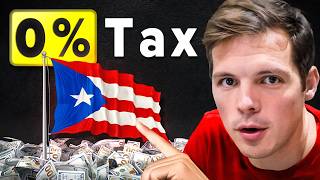
Brian Bourgery moved his tech startup to Puerto Rico and cut his tax bill dramatically. Qualifying residents pay zero tax on capital gains, dividends, and interest. The island offers corporate rates as low as 2% for businesses under $3 million, plus R&D credits worth roughly 50% of spending.
Chapters
So I was recently introduced to this guy named Brian. Now Brian has kind of a crazy story because he was living with his family in Utah and he picked up everything, took his startup and moved it to Puerto Rico. Why would he do that? Well, it turns out there's some pretty crazy tax advantages to moving your startup to Puerto Rico and he wanted to save some money after selling that startup. Brian now works for a non profit called Invest pr, as in Invest Puerto Rico. And so I wanted to learn what kinds of cool startups are there in Puerto Rico. What exactly are the financial benefits of running your company from Puerto Rico? Is Puerto Rico part of the us? How do taxes work? Yada yada yada. Super interesting stuff. Hope you enjoy.
I'm Brian Bourgery, I live here in Puerto Rico. Been here about seven years. I work with Invest Puerto Rico currently, which I'll get more into in a minute. But basically put I'm a tech entrepreneur and ecosystem builder by nature. So most of my life I've started different companies ever since I was little, whether it's on the side of the street selling magic cards or something or whatever it is. But I really started getting into a tech when I was younger. I think I got grounded for most of the summer one time and started building janky websites and stuff. But on that path I kind of been following a lot of new opportunities and I tend to gravitate towards less common paths for whatever that might be, whether it's schooling or business or something else. Long story short, after working through some technology companies with companies like Qualtrics and Crowd Engine and being deep in like the crowdfunding space and other things like that, I ended up in Puerto Rico with a tech company we were running. That company we made like plug and play home servers. We're really early in developing like where blockchain ties into secure hardware. Things like that really focus on security, privacy, ownership, control of your data, that sort of thing. Did some first in that regard, especially on the capital raising side where it comes to like we're the first one of the first reg CF companies to have raised capital successfully. First wanted to do that with a concurrent Indiegogo product pre order and had a whole strategy around there for converting customers to investors, investors and customers. So that was great. So that's a company we were running seven years ago when we ended up stumbling upon Puerto Rico, which is where I've been sent. So we had moved our company here for a number of reasons. The two biggest ones were the ecosystem and community were by far my favorite I had ever been in, especially for those who maybe like a little bit of ambiguity or 21st century frontier, if you will. And also in part because there's phenomenal tax incentives for business owners, especially entrepreneurs here on the island as well. For those who don't know Puerto Rico, yes, part of the United States, you don't need a passport, some currency, just jump on a plane, fly here. So yeah, that's one aspect. And I've been here ever since. So that company was actually acquired just a year into living here in early 2019. And I jumped into economic development after that. Well, I promised my wife I wouldn't plunge all of our money and everything into another company for a number of years. So I thought, what am I going to do that won't drive me insane? That's regular and stable. And that ended up being working with Invest Puerto Rico, which is a public private partnership. So it's mandated by the government to be in charge of new business and investment attraction. But it's not government. We work hand in hand with the government to bring new investors, new innovations, new companies to get set up, new entrepreneurs on the island. And that's something I've been passionate about. I run an ecosystem in a group with about 5,000 members in the entrepreneurial space as well on the island. So that just kind of fit. Always kind of leaning in on tech and some of my stronger standpoints. But it also opened my eyes to a whole different way of doing things because I was in Utah before this and I'm from Minnesota. I've lived in other parts of the world too. So it's just very interesting seeing how the environment of wherever you're living really can unlock, I guess, unthought of opportunities that, that you wouldn't have come across otherwise.
So what first tipped you off about Puerto Rico? Like were you reading something or seeing it? And what makes one go from oh, that's cool, that's interesting, or I could save some money there to let's move my whole family there.
On that note, I've been aware of Puerto Rico my entire life. I actually have some family who's lived on the small island of Vieques. And I had come here when I was a kid, although I never thought I'd live here, never thought about it from a business standpoint. So I was aware of things. I knew there were some tax incentives, hadn't gone deep, but it wasn't until late 2017. There's some news articles and we were talking to different people in the decentralized technology ecosystem. And there's already a lot of people congregating down here. So we're like, I think we should go down there and check it out, see what's happening. But it was funny because I remember I was just talking to my wife in the living room shortly after having a little kid, I think. I think she was maybe one at the time or first. And I just told her, I'm not going to be gone all the time doing all these crazy hours of different stuff. And as I'm telling her that, my business partner calls me and he's like, hey, we have to go to Puerto Rico. There's some opportunities here, and you gotta be there to make sure we make a good decision. I'm like. When he's like, tonight, I already bought your ticket. I'm like, oh, crap. Oh. It was literally, yeah, same night. So, like, six hours later, flying out of Salt Lake, and I'm like, oh, shoot. So I walked back in. And I think it's probably a miracle how all this happened, but I'm just like, hey, hon, how would you like if company flew to California to hang out with your family for a few days? And luckily, she took me up on that, so it worked out. We ended up bringing our family after that trip because within a few hours we had plugged into amazing people, service providers, accelerators, things like that, and just kind of like, fell in love with things. Even though it was right after a major hurricane and things were still developing, I'm like, if there's this much, like, energy and opportunity and things happening now, it's only better when things are back on its feet. And I really opened my eyes to not just the ecosystem and the unique aspects of a US territory that make doing business advantageous, but really into incentives and how you could structure things appropriately to minimize your taxes and maximize profits without having to do anything too outrageous. Now, in our case, we moved to an island. Some might think that's outrageous, but we've loved it. Some still here had three more kids since, so hopefully that says something. But that really opened my eyes to, from the individual side, being able to pay zero taxes on capital gains, dividends. Interest was huge. I was also someone who had gotten into cryptocurrencies early on. So I'm like, oh, well, if those ever go up, that could be beneficial. Being a founder, I was willing to bet on myself and our team and say, hey, if we're successful, this will pay off. Then on the business side, there's all these different incentives you can have at the time, like, a 0 to 4% corporate tax rate. And for those who aren't familiar, like, there are no federal income taxes in puerto Rico for US citizens, so you're really just paying 0 or 2, 4%, depending what you're doing. And that's great. Now, as a startup not making profit yet, that doesn't matter as much. But what did matter was for those who do, like, research and development and things like that is you can get 50% of all of your expenditures back in sellable tax credits here. So we were very R D heavy, creating new technologies, so we spent about a million dollars that first year. That would qualify for half a million dollars in tax credits. Now, as a startup losing money, you don't necessarily need tax credits, but there is open market, so you can sell them on anywhere for like 92 to 96 cents on the dollar. Very healthy markets to do that. There's even funds that will lend on those credits. The government will buy them back for 90 cents on the dollar. So, like, there's a very healthy market in that regard for cycling those credits, which obviously you can plunge right back into your operations of your company, which is phenomenal, minimizes equity or anything else that you got to give out.
So what was the specific circumstance where you had to leave that night?
He had just bought the ticket already, and there was. There was a couple events that he heard were gonna happen to meet some key people who are within the technology space that we were in. And just knowing my partner too, he likes. He liked to act quick. So there's that as well. I was like, all right, well, let's just do it. So we did, and here we are, never turning back. Yep. Yep.
Was there any, like, culture shock to you or your, your family when you moved there that you had to overcome?
Yeah, yeah. I mean, there's definitely differences. To me, I was like, oh, it's a very good mash of Latin America and the U.S. there is a really good mix. It's a bilingual Spanish first, but a lot of people speak English. They teach English K through 12 in all the schools and stuff. So people at least understand it even if they're not speaking it much. There's some things that are going to be the same. I mean, we have Costco, Walgreens, but then you also have a lot more street cart vendors and, and think, think more Latin American and Caribbean mix. So you have that in there. School system, although it's part of the US School system, is still a little different. Some things will function differently. Healthcare is going to be outrageously. Cheaper, like outrageously cheaper. But you also don't have any bells and whistles. Like when you have your kids to bring your own. Depending where you're at, may bring your own extra blanket or bigger towels because they'll have like cheap little chintzy ones. But on the flip side, we had twins here like four years ago and after insurance I think we paid $152. So there are definitely expectations you need to set. If you're not used to being far from home, find a community to plug into. And there's definitely phenomenal communities. Local Puerto Ricans are amazing people and friendly and everything in and of itself. So that obviously made things really nice and easy as well. And there's just a lot of smart people too. So you really get your eyes open to a lot of things that you wouldn't have really thought of before.
What kind of people have you met since living there that also not necessarily cool businesses or cool entrepreneurs, but people that specifically moved to Puerto Rico for the startup ecosystem and what kind of things are they doing?
So we have a lot of people who move down. They're just service based businesses like, like exporting of service. So something more digital or they're in management services. So, so that I'll break that into two chunks. So you have those who are maybe running a digital agency. Well actually have a lot of different podcasters and people who live here too. But people are producing something that they don't have to physically be out somewhere else. That's a almost a no brainer, Very low barrier to entry, digital nomads, things like that that I would also break into ownership. So that could be one of my friends. He owns a bunch of gyms in the southern part of the US a chain of those. So he manages everything, exports his management services to a stateside company, things like that from the island and is able to pay 4% tax rate and still buy back whenever he wants. It's not a hassle because it's still in the same country and everything. And there's been others like that who own maybe other franchises or restaurants or construction companies who the management might move here to the island and manage things and just go in as needed. So that's very common, a very low barrier to entry. We have a lot of very tech forward people. So I mentioned research and development. Obviously on the tax and capital side. It's a great spot for doing R and D and that could be software, hardware, agriculture, any type of research and development, discovering something new, set up very good for especially With IP being part of the US and things like that, but then not having to pay federal exit taxes when you sell it or anything, even internationally. Then you have a lot of the people who are investors who are moving down. So maybe they're fund managers like Pantera Capital is a very big one and some others, their management teams move down here for both personal and company incentive reasons. But then they're also with a bunch of other fund managers and investors who have moved down, which helps them find new LPs and investors and things like that. So it's kind of grown really interestingly so.
Video is cool. But you know what's better? Long form audio via podcast and my newsletter tkopod.com go there to subscribe for free to my newsletter. It's one email a week, very tactical. And then go to my audio podcast, three episodes a week. Stuff like this. You're going to love it. All free. No sleazy sales pitch. Tkopod.com in that regard.
And to this point, after, I mean seven years for me being here full time and more than that, that Puerto Rico's kind of been increasing, I'd say almost exponentially in like its ecosystem growth from like a startup innovation standpoint. Now there's just like a spattering of everything. There's people who move here and have no clue. There's tax incentives, so they're here for other reasons, or they want to have a beach life, or they want their family to be close and have an adventure, but they still want to be close to their family in the States, so they don't want to leave the country. So there's a lot of different, different pockets and mixes, which I kind of like. And that's what helped us start our group, Uncommon Entrepreneurs, which is just full of Uncommon Entrepreneurs, as the name says is people from all walks of life, from all parts of the world, locally born, born in Asia, born in the States, wherever, coming together and just being able to meet and see what's going on. So that's really opened my eyes to so many different business opportunities, investment opportunities I never would have thought before. And it's super accessible. One, you have a naturally awesome population that's really smart locally already. And then you have some of the smartest, most well resourced, well connected people in the world moving down. And in this case it's an island, so you can only get so far away. So there's just a lot of natural connections that happen. So I hear about people connecting and creating businesses or starting things all the time. Many times stateside it doesn't even have to just be on the island, just from the connections that they're making. So for me, that's like one of the most exciting, if not the most exciting part of living here.
Yeah. Now, I don't know if it's you're able to answer this question, but let's say I have a business in the states that does $1 million top line to 200,000 bottom line, and I can run it anywhere in the world. And I'm seriously considering Puerto Rico. Like what does that look like on a real dollar value for me? If I'm making $200,000 a year in profit, let's just assume I pull it all out as my own personal net income. What does that look like on a real dollar basis?
Yeah, yeah. So they'll depend on a couple things. So those would be if you're just applying for a business incentive and to run and essentially manage your business from the island, or if you're also applying for the individual or investor incentive, which is the zero tax on capital gains, dividends, interest. I'll set that aside for a moment. So let's just say you're setting up a business not worrying about the individual investor incentive at all. In that case, you'll come down. There's a couple different ways you can structure things, but one common way is you'll set up a Puerto Rican Act 60 tax incentivized company that will be a management services company, let's say, to service your already existing stateside company. So anything that you do as the owner and as much as you can can come through that. Now that might just be your management services. But if you do anything else back office, do any accounting or anything, customer support, sales, if you can do anything else from Puerto Rico, that's great because that's going to give you a lower tax rate overall. But if it's just owning and providing the services, if you're making, let's say 200,000 like you said, that's not going to be high enough to trigger a lot of the employee requirements. You don't have to hire other people when you're like over 3 million and stuff, then you might have to have two or three or how many employees. But in this case you just have yourself. You could pay yourself a modest salary, so maybe 30 or 50 or whatever thousand dollars. I'll leave that for your CPA to tell you specifically what you do. But there's a moderate modest salary that's going to be taxed at regular rates here, which depending how much you're making can be comparable to your state and federal combined. Since we don't have federal, we have a higher tax basis. But the nice thing is that as an owner of an Act 60 incentivized company, all your distributions you take are tax free. So I do this exact same thing with one of the companies I run. So I pay myself a salary for what I'm doing, especially for research and development, because I get half of that cost back, which is great. And then the rest I just take as a tax redistribution. So you can have a really low tax rate and you could be paying, be tax free, maybe on 150 of that 200,000, and then just paying, you'd probably still be in a lower bracket at that point at 50 grand. So whatever that might be, maybe in the teens. So that can pencil out quite well. And then when you take any other aspects of the business that could be done from here, even just having your billing coming and invoicing coming from, from Puerto Rico and structure things appropriately, that's just going to give you more bottom line at the end of the day because you're going to pay a lot less taxes than you would anywhere else in the states for those services that can be performed from the island. So, so that's a natural thing that we'll see is owners will come down, it's already great. But then they realize, oh well, if we hire accountants, customer service assistance, whatever, marketing, do all that from Puerto Rico, then they're actually saving a lot more money. And obviously as an owner can take more out if they want to or reinvest it.
So if I'm paying 30% federal income tax, then that just goes away. So 60 grand a year, let's say I'm. That goes away. And then in addition, I'm able to bring my 200,000 a year in net profit to say at 250, because I'm saving money. Right. So then effectively you're saving $75,000 a year.
Yeah. Then you can add on that if you applied for the individual incentive, then as the owner, if you ever think that you'd exit from that company, the nice thing is from the time you become a bonafide resident here in Puerto Rico until the time you sell that time, let's say you were running the company for five years and then you ran it for five more years living here, half of that from the time you move just kind of like a half split, half of that sale price of whatever you sell the company for would also be tax free. To you. So if you have an exit plan, that's a huge thing to also take into account. Many people will think, oh well, I'll wait until I'm about to have my exit in the two days before we move. That's not how it works. You do need to actually have time here living and things like that. So the sooner you get here the better, especially if you have that. So I do have a friend, he just had, I think it was like a nine figure exit, rolling up services, businesses and other things around the world, like consulting practices and stuff like that. I don't know if there's much physical businesses or not, but some. He had moved here and been able to structure things. And I think at the end of the day, even though he had started at stateside, he like 70% of all of his stuff he was able to get tax free instead of like 50 or 40 or whatever it would have ended up being. So that's like phenomenal.
Yeah.
So if you're willing to think and plan ahead, you can, you can structure things appropriately and have a really good setup. And we had that on our end, but we had sold to a New Zealand organization, so out of the United States, but because for tax reasons only Puerto Rico is considered foreign. For everything else we're like a state, but for taxes, foreign. We have our own tax code, things like that. So for that specific instance we didn't have to pay like a federal exit tax for selling out of the US or anything because for taxes we were already out of the US So we had all the benefits of having like IP protections and patents and everything in the US but we didn't have any of the downside from the federal tax burden. So that I didn't actually fully understand that when we were first setting it up. So it was just kind of like a bonus, but they happened. I also didn't know we'd sell to a New Zealand organization either. But, but when I, I found that out, I'm like, oh wow, this is great. And then when we sold that, that was just taxed as like a regular business activity. So if you have a 2% or a 4% tax rate, it would just be taxed at that. So not even at any capital gains tax rates or anything, just at like your really low rate. Which is one last thing I'll say on that front because I think this is useful for a lot of the business owners. And in this case you're talking about, well, let's say a million, top line, 200,000 bottom line, there's when you're applying. If you know what to do, it's not in your face. But if you know what to reference in the incentives code and you're making less than $3 million a year in your business, you can actually secure a 2% corporate tax rate for the next five years. So 4% is already good. That's the baseline. But you could secure 2% as long as you're not making more than 3 million that first year when you move and set up on the island. So that's another great one that most people overlook and don't even find out about till after the fact and then they're annoyed. Wow.
Geez Louise.
Now what?
What about like the potential downsides? Are there any cost of living increases that you could expect or just cultural differences that are like way outside of the norm?
Yeah, so. So some of the biggest things cultural is going to be something I think a lot of it can be overcome. And again, not everyone's going to move their family or business to an island. Those who tend to tend to be of a different breed. I say a little more open to collaborate, higher risk tolerance, more willing to network things. Like it's really important to kind of find a group and also know that although we're in island, there's still 3.2 million people. That's more than like 20 different states. So like there's different pockets and areas you want to go to. You can't just assume, oh, I'm moving here because my friend said that's a good spot. And then that's how all of Puerto Rico is. So I've had friends who have actually moved off the island or moved here, maybe not listened to advice we gave them to maybe find a community or a spot, first got like their dream home in the mountains or on the ocean or something, but then realized that wasn't a good fit. Their kids didn't like it because there wasn't anyone to play with or whatever. So I, I, I would prioritize finding and testing out the different areas, what type of lifestyle you want because there are different groups in beach life, mountain life, suburbs, city, all the other stuff just like anything. So that's one the other on the cost side. Dairy like milk is more expensive here than most of the stateside areas and yogurt and things like that. Cars are going to cost more. Since we're an island, there's import taxes essentially. Cars cost probably 15% more here than stateside just because we have to handle, we have limited space, so we don't have too many cars just riding around on the island. But so that's one thing that will be more. You're going to again, a lot will depend where in the country you're coming from. We're going to cost more in the metro area than maybe some of the cheaper parts of the continental US for housing and things. But that's just going to be again the more, more populated popular areas. But we're going to be way cheaper than most major cities as well. And if you go just outside of the metro area, you can get phenomenal deals like real life example. The first house we got we're in Guayanabo which is right next to San Juan. But we're in the mountains like a block into the rural part, but still is six minutes from Krispy Kreme and eight minutes from Costco. But we, we rented a house with an acre, had a big pool, gazebos, nine different fruit trees, chicken coop, all sorts of stuff. Two bedroom, two bath upstairs, two bedroom, one bath downstairs with separate entrances so we could Airbnb. I had that whole thing I think it after like paying for the pool and the yard cleaning and everything. It was like 1600 bucks a month.
Geez.
Which was phenomenal. It's more now admittedly prices have gone up since seven years ago, but you can still find some really good deals, especially outside of the metro area. And if you, if you don't have to live right on the ocean front because of course that's going to cost more and we have lots of ocean fronts.
Are there any cities or neighborhoods that are good for expats to live?
Yeah, although technically we're not expats because it's still the US but, but those who are transplanted here, there are some, some, some different ones. Again, depends what you like. I live in a community, it's gated, not like super ritzy or anything like that. It's called Camino del Mar right along the coast. Has a. Probably like only like 10, maybe 15% of the people are maybe from the States. But there's a good mix and there's of different professionals, very community centric. We have two parks and kids can freely play outside and it's safe and things like that. Higher end areas like Dorado, that's also where like Ricky Martin and Peter Schiff and a bunch of other people live. So depending where you're looking, that's definitely an area Dorado that a lot of people go to. Of course in San Juan there's different neighborhoods. Condado, Santur, Especially if you want more of the up and coming, startupy, artsy type area. Miramar is nice. Hato Rey is a business district. Then you have on the southeast side. Palmas del Mar is like a mega community with a bunch of smaller communities of all different types within it. And they have their own like marina and grocery stores and school and things like that. Those are good. Those who love surfing go to the west side. So everyone has their own thing. But there's a lot of different spots. But you definitely want to look around and. And know that just landing one day for a vacation or something does not tell you the story of Puerto Rico or how like half of our economy is manufactured. Most people don't know that. Or that we make more biomedical than the next two states in the US combined and stuff like that. So there's actually a very robust ecosystem here, especially for an island.
Yeah. Okay. Well, this is a lot like. This is a lot of really, really valuable info, Brian. Thank you for sharing. Where can people find you or invest PR if they want to learn more?
Yeah, for sure. So investpr.org a great place for a lot of free resources. I'm happy to connect on LinkedIn. We have a phenomenal team that focuses on all sorts of different types of businesses and things like that that you can plug into. We provide free services. It's a public private partnership, nonprofits in. In that regard. Anyone should reach out if you have questions and we'd be happy to help. So invest Puerto Rico or invest PR and pretty much all social channels. Okay. All right.
Well, thank you, Brian.
All right, thanks, man.










