How to Make $100k/Month From a Company Going Out Of Business
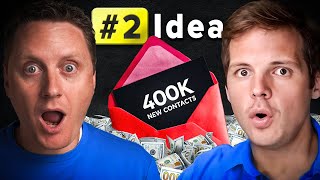
Chris Koerner and Nick explore three business ideas: scaling vending machines beyond perfume into helmets and cotton candy, monetizing The Pro's Closet's email list after its closure, and launching a pharmacy-benefits negotiation service that captures a share of the savings, similar to Mark Cuban's Cost Plus Drugs model.
Chapters
Welcome back to the Kerner office. It is Friday, therefore it's time for Holdco Bros. With Nick and I, we talked about three things today, quick and dirty for you. We gave an update on our perfume vending machine business, which is now called side vending because we're selling other types of vending machines. It's kind of a crazy story. We talk about a company called the Pro's Closet that just got shut down. Crazy story there. 300,000 email addresses going to waste. We talked about how you can monetize other companies email addresses. And then we talked about negotiations as a service or what I like to call I only eat. When you eat, you're going to love it. Quick. It's easy. Enjoy. All right, so time for a little perfume vending update. So over the summer launch of Real, it goes viral about a perfume vending machine. We start selling perfume vending machines. We sold a little over a hundred thousand dollars worth. And then our two rockstar sales guys left in the same month. One of them took another job, one of them started a company. And that's kind of the sucky part of having a company called co founders is that all these guys want to go start other businesses. What are you going to do? There's a trade off. Yep. So we went from sales every week to zero sales because zero sales people. But we just hired three salespeople, all of them rock stars, very excited. And we have three products now. We're no longer PV Perfume vending. Nick, what are we selling? What are we selling?
Nick, dude, what are we selling? All right, so we got perfume vending machines. People know about that. They're not really super popular here in the States, but they're popular in Europe. You go up to it, you pay money, you get a spray of a perfume. Then Chris had this post. It's a machine that cleans motorcycle helmets randomly went viral. And then we are also now selling. Drumroll please. Cotton candy vending machines.
Of course we are.
Most people are like, oh, I had an accident this weekend. Oh, what happened? Oh, I tripped in the yard while I was doing yard work. No, Chris is like, oh, I had an accident this weekend. Oh, what happened? Oh, I tweeted and started as a new six figure business. I'm sorry.
Or posted a video because that's more accurate lately. But cotton candy vending machines are just so obvious because it's so visual. It's. You're selling to kids. The margin is like somehow the margin's over a hundred percent. I don't know how that Math works, but it's there. And so, like, people want to post about it, the kids want to buy it, the thing's on wheels. So I posted a video about it and it went semi viral. And we got a bunch of leads and we got over 2000 leads on the helmet cleaning vending machine. And now it's like we've accidentally started a company that makes videos that drives leads to sell random vending machines.
Well, and what's crazy about it, to your point, like, when we first posted about this in August and we got a bunch of traction, we had sales guys, we didn't think we were starting a real business. It was like, oh, cool, we'll just capture this opportunity. And now we've actually created a proper business. We've talked about this all the time. It always takes longer than you think and costs more than you budgeted for. You know what I mean? Like, here we are now, almost November, and yeah, we've sold almost $200,000 worth of vending machines, but it still feels like we haven't even scratched the surface of the opportunity just because we've been creating the foundation in order to grow it.
Yeah, it takes longer than you think, it costs more than you think, and your projections almost never are hit.
Yeah, I think, I think there's like always two, in my opinion. Two ends of the spectrum.
Two of three.
Either you blow past your projections, you just freaking crush it. Like we did with Mining Syndicate, right? Like out of the gate, $10 million in the first three months revenue, and you're like, holy crap, I didn't even.
Think that was possible.
Or you significantly, like, undershoot your projections. You just, you took longer. It's not that anything went bad. You just don't know what you don't know at the time. That's why so many entrepreneurs are like, if I knew everything I knew now, I wouldn't do this business again. It's just because you don't know I had this conversation. I think ignorance can be a really good motivating force to get you to do something. Because if you actually knew everything, you would never start.
Yeah. My wife says, chris, you're ignorant. I said, but Nick said, that's a superpower. So did she say ignorant or ignant? I have to make the call.
Okay, I heard it.
I heard it. Anyway, so that's a quick update. It's a fun business. Yeah.
Shout out to the three sales guys. We got Gage, we got Terrell, and we got Jeff. Jeff calls his name G off, which is freaking amazing. And we are stoked to have them and building a really cool team.
That's right. All right, all right, all right. Little story here. Little story. So what happened during COVID I'm going to tell you what happened because a lot of things happened. Everyone bought bikes. Okay? Are we in agreement? Everyone bought bikes. Okay?
I don't know. I didn't buy a bike.
I. I bought bikes because you bought a peloton.
So I don't.
I bought all the bikes. I bought bikes, okay?
I went over to Chris. I've been to Chris's house many times. He's got a peloton in his room, but he's also got this, like, little contraption that allows you to take your real road bike, bring it into your room, and, like, it acts like a peloton. I don't even know how to describe.
It, but I'm like, well, what's the.
Point of the peloton? You're like, if I want to take one of the classes.
Hello.
Dude, when Rachel's teaching. Go, go, go, guys.
Okay.
17, 18. Feel the pump. Feel the pump. Coming down, coming down.
It's so obvious. What's different about these, Nick? On the peloton, you're taking virtual classes with virtual people. And it's, like, so fake. It's just fake and synthetic. But on the. On the Wahoo, which is the name of the contraption that you put your bike on where you connect with Zwift. For $15 a month, you can ride in a virtual world against people all over the world. Okay? It's much more real. It's much more real. It's totally different.
All right, so everybody during COVID bought a bike is where we landed.
So this is what I bought. I bought a peloton bike. I bought a peloton treadmill. I bought a bike to put on my Wahoo contraption so I could ride in the virtual world via Zif Zwift. Then I bought a road bike for the road to get outside course, of course. And then. Then I bought a mountain bike.
Right? Okay, so that's fine for the mountains in Texas.
Thankfully, all of this happened while Mining Syndicate was going from 0 to 10 million. And I had money for all this stuff because I have not bought a bike since.
And for people who don't know, Chris is the cheapest person in the world for. So for him to buy five essentially of the same thing, it just tells you how much discretionary income he had at the time.
Yes. Anyway, I bought my two real bikes from a business called the Pros closet. The Pros closet has been around for 12, 13 years. They're based out of Denver and it's pretty much like a carmax for bikes, but online only. You can sell your bike to them and ship it to them, or you can buy used bikes from them, also accessories, new bikes, et cetera. But really it is an eight figure used bike business called the Pro's Closet. Okay, they were doing well before COVID Then Covid hit. They were doing really well and they went the VC route and they raised, I want to say, $55 million. Now let's, let's be very clear, Nick. This is a Shopify store. It's a Shopify store, right? Period. And so what was interesting was if you, if I'm in Texas there in Denver, I want to sell my bike to them. They would ship me like a bike box and I could break down my bike and ship it back to them. But here's what they did wrong. They paid way too much for their trade ins because the value of bikes went crazy in 2021, 2022. They paid too much. And then everyone stopped buying bikes. But they paid way too much for these bikes. They couldn't unload them. They've got a glut. And I went to the website the other day to look for something. I hadn't been there in a year. And it literally said, we have one more bike left in stock. We're going out of business. It's been a great ride, great 13 years.
What?
And then this is on their website. They said, we have sold over 50,000 bikes. And then they didn't say how many accessories, but 50,000 bikes. And the average bike on the Pros closet is like three grand. So what's that? 150 million. 50 million in 12 years plus accessories, shirts, helmets, you name it. They went out of business.
Wow. How are they going out of business? Especially when you raise $55 million? Well, I guess when you just buy all that inventory, maybe that's why they're.
Going out of business, right? Because like no exit scenario was good enough to pay off their shareholders. Dude, that's so diluted. Isn't that crazy? Like, it's really easy in hindsight to be like, dude, what, what are you doing? Like, why? Why are you doing that? But nobody knew. We didn't know what was going to happen. Right? Like, I remember having conversations about E commerce, like, who's going to go back to the grocery store when we're all accustomed to ordering them online. Everyone went back to the grocery store. You know, like, yeah, Instacart's still there. It's, it's doing fine. But like, if you look at the E commerce trends, E commerce jumped forward like seven years during COVID and then it shrunk back like five. So it's still a net win for E commerce, but. Right. A lot of it just went back to doing what we were doing before.
Well, it's, I mean it's just a testament to how much money we had in the system. Everybody thought that their thesis was correct. They're like, oh no, no, it'll make sense. And even if we don't, if, you know, if we're not right, we have all this money to put somewhere and they put it into weird bets like this. That is such a freaking weird man. That's a crazy story.
And really it's the same conversation as Mining Syndicate because we launched that during that time of everyone having way too much money and China had just backed out of mining and the, the like, the mining profitability had never been higher, literally ever. So it was like the perfect storm to launch that. But really when we tell people we were successful because we're so good at.
Business, I mean, thankfully we didn't expand the way that we could have expanded and we had a lot of opportunities to really like do. Let's double down on this, let's build a facility, let's buy this company, let's, let's do all of these things. And we ultimately decided now let's be more conservative with it. And that's, that's honestly saved our skin. I think if we would have overstretched, it would be a much different situation.
I agree, but I'm not done talking about the Pros Closet. This isn't just me talking about something cool that I saw. There's opportunity here, Nick. There's so much opportunity. Do you remember in the newsletter business you, you know a good bit about the newsletter business? Roughly the revenue per subscriber you can expect per month if you send a daily newsletter, call it five times a week. Do you remember $2? It depends. Like it depends on a lot of things. Are you in finance? Are you in.
Probably, probably like $0.50.
Exactly. $0.50 per subscriber per month. And so how big is the Pros Closet email list after 12 years serving? So if, let's say they had, they sold 50,000 bikes and 50,000 accessories. A hundred thousand customers. What that doesn't account for are the multiple hundreds of thousands of people that subscribed and never bought anything. Like on my E commerce sites. It's like a 3, 4, 5 to 1 ratio of emails to actually paying customers. So they could have an email list of 3, 400,000 people, which would be a $200,000 a month newsletter. And you think you couldn't monetize a cycling newsletter? Like, cyclists are affluent, they spend money, they're passionate, they're like, it's the perfect demographic to sell to. So now you've got a 2.53 million a year business with 75% margins. It's not a 30, 30 million a year business, but it's much more profitable and easier to run.
They have to be doing that, right? I mean, if they took VC money, those guys are smart. They're probably stripping it for parts at this point, or at least trying to figure out where the asset value is.
I reached out to the CEO.
Oh, you don't care, do you? You don't care.
Am I in it for the game or the content? Nick.
Oh, I'm sorry, but Chris Kerner is in for office hours and he's ready to teach. Go ahead, Professor.
I just reached out to the CEO via LinkedIn and I was like, dude, what are you doing with your email list? I want to buy it. And he's like, we already sold it. So there it is, all this hype. If I can't live up to the hype, I gotta make it a little funny. I gotta make, Nick.
Yeah, make it a little funny. It's good.
But still, like, I, I, I wish I knew what they did and maybe one day I will know. My, my whole point is that name. There's 3 million Shopify stores. Okay, let's say 30,000 of those are big businesses, big being eight figures plus. And people would be surprised. Any one of those businesses could have a paid newsletter alongside what they're selling on their Shopify store. Why not?
I've told you this before, but I have like three goals in business. Three, like three of the goals in business. One, I want to become a professor. Adjunct would be perfectly fine by me. I'd love to teach at a university. I think that'd be super fun. Two, I want to buy a business out of bankruptcy. Like, I want, I want one of those stories that's like, so, yeah, I bought it for 500,000 and now it's a 20 million a year company. I, I just think that's really cool. And this is one of those types of stories. I think that there are a lot of other opportunities out there, but how do you find them? Like, that's My thing is I'd love to find one of these that are like going out of business or just shutting their doors, but what's the game there? How do you find them?
We talked about this like two months ago. You sell the one to sell the many. You go through the CPA or you just freaking tweet about it. And like people that have failing businesses are not going to be talking about it, but they will in the DMS if they think you can help them.
Dude, you know the third goal I have? I want to own commercial real estate. I know that's like stupid, but I just.
You have a fourth though too.
What is it? Did I forget it? What is it?
Yeah, I thought you wanted to own like a restaurant or something. Oh, no, like, no, like seriously, like something where. Like an ice cream shop.
Yeah, I mean, so my brother in law, Owen is a big foodie and we've talked about like when we retire and we're just done and we want something to do, it'd be cool to, to have a restaurant together that's just like small town. Maybe we sell ice cream, maybe we just sell like caramel apples or like it's, it's kind of specialized. It's not necessarily a, a big old restaurant. But I just think that would be fun to keep you busy. Like, I'm not thinking of that as like, oh, that's gonna make me money here. That's gonna be a bucket list item. That's a good one.
That's what I wanna do with barbecue. All right, if you are watching this clip right now, you are watching this on YouTube. And if you are a fan of podcasts, please check out my podcast while you're at it. Because sometimes I have podcasts that aren't on YouTube and sometimes I have YouTubes that aren't on podcasts. So check out the Kerner office on any podcast platform. Or you can go to tkopod.com also my newsletter. We'll throw that in there. There are no ads. It's weekly. It's different content than my podcast and YouTube newsletter.chrisjkerner.com you'll see the link and we'll see you there.
All right, we ready for me?
Yep.
I need a little rope here. Okay. I'm going to try my best not to talk that much, but this requires some explanation, so I need you to keep me on track. Are you ready?
Yes, sir.
All right. Have you ever heard of a pharmacy benefit manager?
I just fell asleep while you said those three were, so that's. No, let Me back up.
Do you know Mark Cuban?
Never heard of her. Absolutely.
Mark Cuban has a company called Cost Plus Drugs. You've heard of that company, right?
Absolutely. And also, also I will say we were talking about this type of stuff the other day and you were sounding really intelligent. And then I flew to Columbia and I listened to the latest all in podcast with Mark Cuban. And then I realized, oh, Nick sounds smart. Just because he listens to the all in.
Because it was like Mohammed cut this part.
It was like, it was really good and it was Mark Cuban. So I learned a lot about that type of stuff.
Okay, so Mark Cuban has this company called Cost Plus Drugs and this is going to be a play on that. But it's a pharmacy benefit manager. And what a pharmacy benefit manager does is you or I as an individual can't go to a pharmaceutical manufacturer and just buy our drugs directly because we couldn't afford the price. So the pharmacy benefit manager kind of acts as a middleman. They negotiate bulk pricing and then they sell to the end user. Typically the pharmacy benefit manager is working with a company. So the company utilizes a pharmacy benefit manager to purchase drugs on their behalf. I want you to guess how big the pharmacy benefit manager industry is.
I'm just going to sound like an idiot. I don't know. I don't know.
$30,590,000,000,000.
Muhammad, literally edit this out, please. I do have some pride left. I have some pride left. Dude.
It's massive. It's massive. So this, it's a massive industry. It's a massive expense to businesses. So on a yearly basis, companies spend on average a thousand dollars per year per employee on pharmacy benefits. And the way that it works is there are thousands of drugs, right? So like how do you know what price you've negotiated on what drugs is? They, they have this thing called the formulary. And I know I'm getting in the weeds here, but this is important. They have this thing called the formulary that spells out exactly how much each drug costs and then you purchase at that price. So, but there's a problem here. There's no transparency in the industry. Typically PBMs and manufacturers have non disclosure agreements. So they. Other PBMs don't know what other PBMs are necessarily purchasing those drugs at. Right. So when they go to negotiate with the manufacturer, there's, there's some asymmetric information that the manufacturer has that the PBM doesn't. The flip side, companies, pharmacies, they also don't know what other companies and pharmacies that are purchasing from the PBMs are paying for specific drugs. So the PBM has a lot of pricing power. So it's very opaque. You don't, you don't know necessarily what, what people are paying because of either non disclosures or these companies just want to keep the margins for themselves. Okay, so we went over, there's two ways you can buy drugs. It's either through the PBM or through the manufacturer. Some companies, when they get big enough, become self insured. Have you ever heard that word before? And what that means is like they're eliminating the PBM essentially in the, in this case, they no longer need the PBM to go negotiate on their behalf because they have enough purchasing power to go and negotiate directly with the manufacturer. But again, they have to negotiate the formulary. They have to set the prices first. And still the manufacturer has some asymmetric information. So enter Cost plus drugs. Mark Cuban's company publishes their formulary online. His whole thesis is, look, we're just going to mark up 15% so we don't really care. This is what we're paying for these drugs. And then we, we mark everything up 15%. It's now out in the open what a big company like Mark Cuban's company pays for these drugs. The average markup is about 30%. So if you, if you're spending a thousand dollars per year per employee, the, the pharmacy cost, if you will, is like $770 and the employer markup is $230. So you're paying $230 essentially of profit to the PBM who's in between you with Cost Plus. If it's still $770 for the pharmacy, you're not paying $115 difference. You're saving $116 a year per employee. So if you switch to far to Cost plus, that's how much money you'll save. Let's call it a hundred dollars per employee per year. Think about companies with a thousand plus employees, right? A hundred dollars per employee per year all of a sudden becomes a hundred thousand dollars a year in savings. All right, this is where I think the business opportunity is. I, I think you could start a business where you just reach out to companies and you say, hey, look, you negotiate your formulary every year, right?
Yep.
All right, and, and the company could negotiate with the PBM or they could negotiate with the manufacturer. It doesn't matter whether it's the middleman or the actual manufacturer. And you say, hey, look, I will help you reduce your overall spend on pharmacy, I just want you to, to pay me a percentage of what I save you. And they'll say, like, oh, okay, how are you going to do that? And you don't necessarily have to give away your secret sauce, but you can now go and see publicly what prices Cost plus drugs are charging. And you can use Cost plus as a stocking horse. You can say, hey, look, pbm, either you renegotiate with us or we're going to go to Cost Plus. Or you go straight to the manufacturer and you say, hey, look, I know this is what Cost plus is paying for, you know, buying for these drugs. I want it even cheaper. Use that data to essentially level the playing field. There's no longer this asymmetric information that, that they, the, either the PBM or the manufacturer are negotiating with, because now you've, you've leveled the playing field. And I think that there is a ton of money to be made just by reaching out to these companies and either saying, I can look at your formulary and show you which drugs you need to negotiate harder on, or I'll do this for you as a service. What do you think?
I love it. First of all, let me get my jokes out of the way before I respond to it. Hey, Siri, remind me to email the president of Marvel to make a new movie series where he assembles a cast of characters called the Formulary. Okay. I was muted. Right. What's up?
Love it.
Second of all, I think it's a, It's a good bit if, if you're talking to someone, like, at a dinner party and they say something confusing and like, you've heard of that, right? And you're like, oh, pbm. Yeah. All you gotta do is make it an acronym. They'll assume you know what you're talking about. Okay.
That's.
I'm like, well, okay, I've never called that acronym. And they'll.
And they'll assume you know what you're talking about.
Okay. Yeah, no, I love it. Like, this goes in line with the, our thesis of, like, what? You can't just, like, look at this guy's website because he's public. Why can't they just look at this guy's website? Because they don't know about his website. They're. That's not their sop. Like, they're, they're not thinking to. You still have to negotiate. Right, Right. Like, that's the hard part is negotiating, not just looking at the website.
And for many of these companies, it's such a small line item. That many times, like they don't even think about it. Right. Like if you're, if your company doing, let's just say $10 billion a year in sales and your pharmacy spend is a million dollars a year, that's nothing on the P and L to you. But for you or I, if we're starting a business and we're like, hey, I'll take that million down to 500,000 and I just want 20% of the upside and I'll do all the work for you, it's like, oh yeah, sure, no, no brainer. I'll, I'll outsource this to you. So I, I definitely think there's a ton of opportunity to go to larger companies and help them renegotiate their pharmacy formulary. So if you're like writing notes, pharmacy formulary, large companies, PBMs to me that like there's a massive opportunity there.
Wouldn't that make it hard to sell into these guys? If it doesn't move the needle that much, like eh, yeah, we could save money. I could see how it works. There's no risk but like that's not a priority.
Yeah, it totally could. But usually each one of these departments are mandated with a budget of some sort and, and the budget that they're focusing on for the most part is going to be on premiums or their, their risk pool for overall health costs. And pharmacy is typically a minority of their spend. The majority of their spend is going to be on pre existing conditions, surgeries or primary care physician like many other health services other than just the pharmacy benefits. So I think it's not the top priority. And so they would be incentivized to work with you because it's saving them money and saving them time. But it's not going to be something that they're necessarily looking at full time from their position because for them it doesn't move the needle as much as other things.
How could someone listening get their first customer doing this?
What I would do is I would just honestly go to someone that you know who owns a business, small business, could be a small business and just ask them, hey, tell me about your benefits. How does it work? I guarantee for the most part they'll be like, I'm not really sure. So I would start digging in if, because if you know nothing about the space, it's going to be useless for you to go to a bigger company. So just go to a local company that you know, start digging in like, okay, how does this work? How exactly do they negotiate the formulary okay, they're insured by UHC who's setting these prices. And then once you get a little bit familiarize with it, I would honestly go to LinkedIn and just look at people in your local area or your network that are working for large companies that are in a either human resources position or an executive position on the finance side, cfo, controller, et cetera. Message them and be like, hey, when you renegotiate this year for your benefits, please let me know. I have a program that can save you 30% on your pharmacy benefits for the first customer.
You said to get a business owner, what, like what type of business would he own, for example?
Well, they have to have some employees that they help pay for benefits for. So it's probably going to be somebody that has at least, I think the number is 20 employees. I can't remember what the Affordable Care act mandates but if you have somebody.
It'S like 26 or something.
It's. Yeah, it's somewhere in that ballpark where if you, if you have over a certain number of employees you have to offer health benefits. Otherwise your employees can just go get benefits on the exchange. So it has to be somebody who has a business that's like, let's just call it 30 employees or larger. And then after that it doesn't matter really what the business is. They just have to have a certain number of employees that cross the threshold that require them to provide health insurance.
So you could just like use Manta or some other generic business database and sort out all the ones smaller than call it. I think it's like 1 to 50, 50 to 100. Just sort out everything under 50. Start reaching out to them.
If you were just going to do it cold, I would do it locally because you want to be able to go meet with them in person. I mean, yeah, health benefits in particular are just a very intimate, I guess, thing to renegotiate. So I would look for local business owners that fit that profile.
I think I tweeted about this. I call it like the I eat when you eat. It's kind of like the idea of the FedEx savings. I don't remember where I talked about this, but this company that I use called 71 pounds, they would audit your, your FedEx labels and if anything was late it would automatically file a dispute and whatever they recovered they would take 30 or 40% of. And it was really time consuming and manual for a business owner to do this for himself. But they had automations hooked up where they could do it with Zapier Right. Just a beautiful business model. All right, so before we wrap up this episode, we want to do something new. We want to call it Marry, Date or Kill on these three ideas. So to recap, the three ideas, perfume vending machines, and what we're saying here is the general idea of using social media to generate attention for a high value asset and then reselling it an asset that someone else manufactures. That's the idea in general. The second idea is that of repurposing someone else's newsletter. Maybe it's an e commerce newsletter, maybe it's a manufacturing company. Anything to make like an ad driven newsletter out of it to monetize to the tune of hopefully $0.50 per subscriber per month. It could be your newsletter, it could be someone else's piggyback. And the third idea is pharmacy negotiations as a service and. Or cost savings as a service. Benefits negotiations as a service. And you monetize by taking a percentage of money saved. Correct?
Correct.
All right. Marry, date or kill.
I know it was my idea and I'm being selfish. I would marry the pharmacy negotiations or just negotiation of the service. I would.
Why? I'll tell you.
Hold on. Just let me.
Just let me.
Okay.
Yes, sir. Yes, sir.
I would marry pharmacy negotiations as a service. I would date Pro's Closet and I would kill perfume vending.
All right, so I would marry Pro's Closet. I would date pharmacy negotiations and I would kill perfume vending.
We both would kill perfume. Okay. Why would you kill perfume vending?
Because it's reliant on going viral. And that's 100%.
That was the same reason I had.
Yep.
Yeah. It doesn't work unless you have some way or some putty who can make something go viral. Totally agree. Why would you marry Pro's Closet over the pharmacy negotiations?
Because to me, it seems a lot more approachable. I can wrap my mind around it. It falls in line more with my background.
That is so funny. Cause that's the exact reason why I picked the pharmacy negotiations. Cause I was like, I just know that. So much better than going and repurposing somebody's newsletter.
Yeah, that makes sense.
Genius.
All right.
I love it.
All right. Part two of this episode will be a week from today on Friday, where we'll talk about GPT for Google Sheets and all the many ways you can use AI inside Excel or Google Sheets. We'll talk about an interesting dating idea and then we'll talk about a business called Water Finds that I think you will Water Finds. Interesting. Anyway, share like, subscribe, even though I have a lot of dumb jokes.










