How to Make Millions Selling Stupid Impulse Products
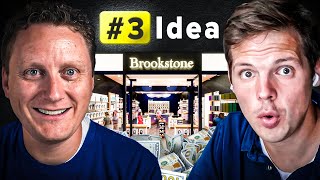
This YouTube conversation (Chris Koerner with Nick) brainstorms low-tech, impulse-buy product ideas and go-to-market plays that capitalize on parental peace-of-mind and viral distribution. Major threads: trampoline safety products (flags, tie-downs, weather app, hardware concepts, in-ground installs), a mattress "handle" idea for tornado protection, and building a rapid viral-trend detection/curation service (community + SaaS). Tone is informal and speculative.
Chapters
Welcome to the Kerner office. This is part two of the Holdco Bros. Episode that we started last week. Nick and I, we're going to talk about a kind of weird, funky trampoline idea business. Mattress idea. Building the brookstone of the 21st century. That weird store in the mall that has viral, stupid impulse buy products. And then we're talking about using creators to grow your business, which we've talked about before, but in a different way. And I think you'll like it. So please subscribe. Leave me a review. Share with your friends. Go check out Nickonomics. That's Nick's podcast as well. And we'll see you next. Okay, I have an idea that is a. It's a stupid idea, I'm tell you right now, so don't make me feel insecure, because I know it's stupid. Okay? But I don't feel insecure. That doesn't happen. Anyway, I'm really secure, but I want you to try to make it better. Okay?
Yeah.
Have you ever seen a video of trampoline? So us, you know, snowflake millennials. The trampolines that we buy nowadays have the big walls on them. And because we don't, you know, heaven forbid we fall off the trampoline, right? And the trampoline in my backyard has a protective wall around it. They all come standard that way. You ever seen a video of those, like, going airborne and just, like, completely flying away? They're like big sails that just sit there in your backyard. Okay.
Okay.
True story. I have 20 acres of vacant land to the east of me. 20 acres of vacant land to the west of me owned by other people. And. And the land to the west of me. You know, the wind is always blowing when there's a big storm, it'll blow to the west. Has exactly two trampolines on it right now from me. Because the wind. Yeah, the wind picked them up, carried them over to the trees on the other side of my property. And one time we got home from vacation and we're like, oh, our trampoline's gone. Oh, it's in the neighbor's yard. Okay, I guess we'll get another one. And I just never picked it up. It's still there. It's like an old relic from 2017. Oh. Because it was completely trashed and broken. So, like, one day I'm going to have to get those things because it's not my land and it's still there. Yeah. Here we go. Here we go. What's up?
I was asking, like, why didn't you go get it off of your neighbor's land? And you were like, you thought. My question was, why didn't you get it so you could use it again? And your answer was, because it was trashed and broken.
Yeah, if I could still use it, I would go get it. Right?
But since it's trash and broke, just like leave it on your neighbor's land. No harm, no foul.
I gotta quote George Costanza right now in the episode where he has inappropriate relations with the janitor of his office, okay. And his boss finds out and he goes, is that wrong? Was I wrong? Was that wrong? So that's my question. Is that wrong? Should I go get those trampolines?
Oh my God.
Somewhere out there, my neighbor is listening to this and he's like, what the heck?
What? I got two trampolines back there renting those out for $30 a day. You know how much money I could be making?
I mean, that land's been vacant for decades and no one's ever there. So I'll get them eventually.
Who's it hurting?
Anyway, my point is those things went airborne. And the second one I had staked down and it still went airborne. Okay? So here's the idea. And it's, it's not a business, it's a product. And I think it would sell, but it wouldn't be a big business. And I think it's dumb on the surface. I think you could. There's a world where you could sell like a trampoline safety kit, okay. Where it's like I'm picturing a flag, like a little flag that you attach to the top of the sidewall that's just heavy enough to where, you know, if it's blowing in the wind, then the wind is too strong and you should freaking get your kids inside or they're going to be airborne too. That makes sense.
Totally.
So it's like if it's 20 mile per hour wind or more, the flag is waving and no one should be on the trampoline. Watch out. Whereas if it's not, it's a little windy, then whatever. Or it comes with that. It comes with a tie down kit. Maybe 50, maybe $100. And it's just peace of mind for a parent to feel like their investment is safer and that their children are safer. And I think it would sell because you could use short form video of trampolines going airborne. Right? You could even make it a little funny or you can Photoshop some kids in there or something.
And.
And I think the fear would Sell? Really? Where?
Well, so we're going to brainstorm on this. I'm freaked out at the moment, though, because, like, is this a real problem? Like, are there, like, dozens of kids who die a year because the trampoline got picked up, moved to the other yard?
Well, let's find out.
Like, that is just crazy to me because my first thought is, I don't need to help them have, like, a flag to say it's windy. I'd be like, help them move out of Texas.
A moving company.
All right, so here's my first idea. I'm on board with the flag. Here's the problem with the flag. The flag is a reactive mechanism. You need to see it, and then it tells you to do something. What if instead, the trampoline maker charged, since apparently it's a problem in Texas. I don't know, 50 cents a month for an app. And all the app did was send them notifications when the weather was outside of a certain parameter. Let's say wind speeds hit.
Okay, okay.
Or like, lightning. Right. From, like, a thunderstorm or hail storm was coming. So. And everybody's been sitting in church when all of a sudden you just hear, and it's an Amber Alert. I would think that there's some way to allow your phone to notify you if something's happening, but that would be, I think, something that parents would be really interested in. It's like, okay, I'll pay a buck a month, 12 bucks a year. I don't. I don't know what it would have to be, but let's just say it's a buck a month, 12 bucks a year for the peace of mind that this app is going to notify me when there's inclement weather so that I can go pull my kids inside.
All right, Can I level that up with a distribution strategy?
Absolutely.
To me, this is like a white whale business, because you build an app, I don't think it would cost that much or take that long. And. And then you just need one customer. You need one or two customers, and you say, listen, we're not going to pay you anything, but your trampoline is now going to be better than all the other trampolines out there because it's going to come with this app.
And to be fair, like, how many competitors are there in the trampoline market?
Right. Yeah, right. Maybe you go to Springfree, right. Because they're like the premium option, and you say, do your customers not have to pay? But you're going to pay us a Licensing fee. So basically, anytime anyone downloads that app, you're going to pay us a dollar a month or a dollar one time or $50 one time or whatever. And that's going to enable you to sell more, more trampoline. Because it's going to come, it's going to be tech enabled. I think it's going to be hard to get a consumer to pay for this. I think it would be easier to find one decision maker that would pay a little bit for this, for everyone that downloads the app and actually uses it.
Interesting.
I just like it because it's like sell to one to sell to a million, right? You've got to get that one decision maker. You could do that before you even build the app, right? Yeah. Because it's almost ready.
I can't imagine the app's really hard to build. You just tapping into existing, I don't know, weather reporting sources and then notifying people after it exceeds certain parameters that you set for it.
You could even sell the app to other like outdoor kids product type companies. Right. Where it's like, you're all right, you're going to be the, you know, pay me this much and I'm going to sell it to all the trampoline companies. Or pay me this much and you're exclusive to the trampoline companies.
There could be a premium model for a physical product if you were able to, like, way out of my depth here, but install some component to the trampoline itself that was. That could easily recognize that it's airborne and then immediately again, this would cost a lot of money. I don't know how much it would cost, but like immediately disengage all the springs so that the mat itself just drops out so it doesn't become a sale. Does that make sense what I'm saying? Like, the reason it becomes a sale is because it's lifting up from underneath.
I think if you ignore physics, it makes sense. Why? I don't know how you would disengage all the springs, like, technically speaking.
Well, like you put together a trampoline, they come fitted with little slots. And so the springs are hooked on the one side to the metal base and then they're hooked on the other side to the canvas, whatever you want to call it. Like I could see a scenario if you built it out that there's a mechanism that disengages on the metal side.
Right.
Like it just elongates. I don't even know what, how you would do it, but just disengages and then makes the trampoline. So that tarp or whatever, the canvas just drops to the ground. And yeah, you'd probably lose the canvas, but at least your kids are not airborne. In the neighbor's yard.
I could see it being more of something like where the walls, like if the walls have enough wind pressure, they would just like collapse. Right. And so they can no longer catch wind. Because I bet you anything it's the walls that are making these things really fly a lot more than just the trampoline all by itself.
Well, the problem with that is, like the point of the walls is you don't want your kids to fly out of it.
Right, Right.
And so it was. If the walls were weak enough where the wind pressure would cause it to collapse, it's probably not going to catch your kids if they're flying off the trampoline.
Yeah, I'm thinking I'm picturing like a hinge. Like if the walls were on, like a hinge that only collapse when enough pressure was put on them. So even if the kids were like jumping on it and like the wall starts to cave in on them, it's like, oh, geez, yeah, better go inside. You know what I'm saying?
Dude, someone's gonna be listening to this yelling at their.
I know, we sound so stupid right now. We need to stop.
The point is, the point is, and I think there's a business idea here is finding things that parents are willing to spend money on in order to give themselves peace of mind. I would spend, like if I lived in Texas and that was a problem, I'd spend money on that because it's like, yeah, I want you to notify me if there's a twister, period.
Right.
And that's probably applicable sort of framework to use to find other business opportunities. What are parents going to spend money on?
Another way you could do this, Like a year ago I talked to the owner of trampolines.com randomly from Twitter. I don't know how he found me or I found him, but what they do is they sell, okay, they sell in ground trampolines, which are not susceptible to being blown around, and then they sell the install. And so I think he actually paid for a consulting call with me to figure out like, how to build a nation wide network of installers. Because that was their. Their problem wasn't selling in ground trampolines. Their problem was finding reliable people nearby to dig the frigging hole to bury the things. There's probably a play there where you could like refer business to these guys or I don't know.
Yeah, that's interesting because they've already got a network of people who they have actually sold to.
Yeah.
And it's like, oh, actually for everyone else that you go out to do this install and it may not work for them.
Right.
Because they're doing in ground trampolines, they're not going to be airborne. But like the idea is there are probably networks of these people who are doing installs of the treehouse or kids play kit or like swing set or other trampolines. And that could be an add on service where it's like, here's the distribution channel for you to sell and you'll get X percentage of whatever we sell.
This is reminding me of another dumb idea that I had from 13 years ago. Remember when the tornadoes came through Alabama?
What happened? I'm kidding. Yes, I remember.
I know.
Geez Louise, you bring it up like every week.
Oh, gosh, don't embarrass me in front of my friends. Okay, Muhammad, edit this out. Mohammed, if anything sounds me, makes me sound bad, edit it out anyway. So this is a dumb idea, but I think you can make it good. So tornadoes came through Alabama. What does everyone say when tornadoes come through? Probably don't know because you've never lived.
In your sister and your wife, same person, get in the cellar. Is that not what is a seller?
Seller. All right, you get a mattress. You get a mattress and you, you like get in the bathtub, you get a mattress, you put it over you. Okay. Or you get under a mattress somehow.
Really?
Yeah. Okay. Yeah. It's the thing. So when this happened, like you live in Alabama, everyone's heard that. But then the tornado actually comes and it's like, all right, let's we know what to do. Get the mattress. Have you ever tried picking up and lifting a mattress over you? Yeah, dude, I'm trying to think of an analogy. Like that's like saying, all right, if you get in a car wreck, you're about to get in a car wreck, just hold on to the wheel real tight. You won't go anywhere.
It's like, hey, if, if there's a hail storm outside, grab a sack of potatoes and you're going to run in the street for three miles in order to protect yourself. It's like one of those things where you never actually think about how it's going to impact you anyway. I get it.
If you're in a hailstorm, just don't get hit by hail. It's not that hard.
Oh, what the hell.
I saw that coming.
How to do it.
All right, if you are watching this clip right now, you are watching this on YouTube. And if you are a fan of podcasts, please check out my podcast while you're at it. Because sometimes I have podcasts that aren't on YouTube and sometimes I have YouTubes that aren't on podcasts. So check out the Kerner office on any podcast platform. Or you can go to tkopod.com also my newsletter, we'll throw that in there. There are no ads. It's weekly. It's different content than my podcast and YouTube newsletter.chrisjkerner.com, you'll see the link and we'll see you there. Anyway, so I thought, I wonder if you could like patent this very simple technology and license it to a mattress manufacturer where it's like literally just straps underneath the mattress, like a carrying strap. It's like, okay, for movers, it's easier to carry. And if for some weird reason you're in a tornado, it's easier to pick up and protect yourself. Just like a simple strap and you get it patented and then you license it and it's like, for every mattress you sell, gimme five bucks.
That would be interesting. Here's a problem with it. It's like, think about it like this. In an airplane, let's say that of all the airplanes in all in. In the United States, there are. You combine all the seats from all the airplanes and let's just say there's like a million seats. I'm just guessing. I don't know. I have no idea how many seats there are. And then you said, hey, let's just increase the length of the seatbelt by 6 inches each.
Yeah, okay.
That's 6 inches times a million seats. Like, it very quickly adds up to a lot. And these are like really low margin businesses. So I do wonder if the mattress company would be like, dude, in order for us to add the handles, you know how much that would cost? Like, this is how many mattresses we're producing each year. It's going to cost us an extra like $10 million. And that's like all of our bottom line. But I don't think it's a bad idea. I think it would be more suited. Like there's got to be like a shark tank product. Have you ever seen those? Have you ever seen those commercials with the guy who's like, this sticks to anything. Like water is gushing out of this tank and he like stops the leak. So I would think maybe you have those and you buy them aftermarket and it's Velcro and it just is really direct to consumer. Exactly right. And it's really sticky and it just attaches to the mattress itself. And so then you don't have to worry about convincing the mattress company. You just sell it directly to the consumer.
And.
And it's like, make this a part of your tornado kit. Don't forget about your handlebars. I don't know what you would call them. Tornado handles.
There's someone right now saying, oh my gosh. Tornado handles dot com. I have to buy that. I have to buy that. I wonder if the play is to go direct consumer. A, to make money. B, to show how much demand there is or not to a mattress manufacturer and say, hey, there's something to this. We've done the research. It's going to cost you an extra $7 per mattress. You. You can pass that on and we'll give you an exclusive to this technology.
That's a cool product. It's not a terrible idea.
It's not your worst. Thanks.
Thanks, Mom.
And Nick.
So you posted something. I can't remember if it was this week or last week, whatever. And I didn't read the whole post. I just saw like the hook and it was like this video got 80 million views. I think there's a business here. And this is what I would do if I was like, trying to take advantage of it.
Was that the mini jeeps?
It was not the mini jeeps. It was like the guy in a river and you would buy a bunch of inflatable stuff. I can't remember who it was. Anyways, like, the point of it was that you were finding this viral video and then you were telling people how there could possibly be a business based on this. And I thought that was really interesting to me of. And this isn't necessarily novel, right? Like, any time something goes viral, the hawk to a girl or founder mode or like anything like that, a product magically appears. So there's obviously people who are looking at the Internet and just like looking for virality in order to trigger a business idea. And they're just like trying to make money. It's like similar to the idea that we were talking about earlier where it's a fad like Nikita Beer and he made really good money in the short window of time. That's like these people's whole business model. I think that's stressful. I'm not like advocating for that. But what I do think is interesting is there are these businesses or moments in time that you can take advantage of. Perfumatic is one of those. You posted this video, it got a ton of views, people started reaching out and asking about it. And so we, we're building a business off of it. I think there have been some attempts at this. I can't remember the name of the app, but who's the guy that's always like, are you on TikTok?
Gary Vee.
Gary Vee. Gary Vee talked about this app where it shows what's trending and like Twitter has a trending tab and there's Break.
Break the web.
Break the web. That's what it is. There's like break the web. Twitter has the trending tab and it shows you like the trending topics. I think if there was somebody who just like really loved social media, they could build a community that very similar to the way these. Let me back up. You're in crypto and you've been in discords on crypto. Many of these discord groups are like kind of pump and dump, where it's.
Ain'T no kinda about it.
It starts in the discord group, it gains momentum and if you're a part of the right discord group, you can make $2 million because you caught the wave early and everybody else who's buying later has missed out on that wave. I think there could be something like a group that you could build that is just around virality. So you find out about founder mode in the first 12 hours, not four days later. You find out about Hawk 2 in the first six hours, not three days later. And you don't necessarily act on every single one of these ideas, but maybe you own a printing company and you see the hawk to a girl and you, I don't know, throw up a landing page really quickly and start selling some banners. I think there's a bunch of different ways that small businesses could actually take advantage of some of these viral trends if they were able to catch them early. Like that's the biggest thing is you have to catch it early because if you're catching it when everybody else sees it, there's already a landing page. Somebody else has already like staked out that opportunity. So creating a group that you charge for people to be a part of, where essentially you're curating viral content and then sending out updates really quickly when something is trending or like when something you're like, hey, this has all the markers of something that's going to go viral. I'm sure there's like a science to it. That some of these companies do take a look out for this. And so again, you're not acting on every single one of these. But if you're like you and I, it's like, oh, I think I could do this business because of this infrastructure that we've built. Boom, you jump on it and you make a hundred thousand dollars. What do you think?
I like it. So are you saying that you make money by arranging the community and charging for access?
It could be both sided, right? Like I, but I just don't know the community that currently exists. Like if there was a community that currently existed that we could join, that would tell us something on the uptick of it going viral. I think we would join that. I just don't know that it exists. It kind of exists with Twitter or Instagram just because it's shown to you in your feed. But something that's like, hey, this just passed 400,000 views and it's passed it in less than two hours. I think this is something that's going to hit 80 million, you guys, you know, you should hop on it. So I'm speaking more about creating community that sends out those signals as opposed to joining a community.
I like it. This must exist, right? There's gotta be people out there. Maybe the play is to find the WhatsApp, the Discord, the Facebook groups, the Twitter groups that are already doing this, to aggregate them into one, like the community of all communities. Because it's gotta be happening, right? We really haven't spent any time looking to basically be a secret shopper in each of these communities and to use an API to just push all the messages into one place. And then instead of it being an actual community, it could just be like a SaaS product, 10, 20 bucks a month. You just get a feed of what all these people are saying.
Or you could curate it and pay a little bit to people who are already known. Not influencers, but people who like see viral trends early, then they submit the viral trend to the group, right? So it's almost crowdsourced in a sense. It's not just, oh, we own the community and we are going to send you the stuff that's going viral, but the community itself is also sending things that they're finding that potentially could be viral. That would be hard because then it's like quality control. And like, how do you make sure it's not too spammy? Because like, how are you supposed to keep track of all these things that could go viral? But yeah, that could be a way as well to to get viral content.
I think you're spot on with the non scalable human aspect of this because I've looked for tools that do this and I've paid for some and I always churned a month or two later because they don't work or they don't work well. Like, even that break the web app, you pull it up and it's like, Paris Olympics. Paris Olympics, gymnastics. It's like, I know that's trending, but that's not what I'm looking for. Like, I want to find the Haktua girl, right? Like, I want to find something that's niche and trending.
Edit that out, Mohammad.
No. So I think there's something to that because I've been looking for that and I haven't found it. There are companies, you go Google it and they like SaaS products, they claim to do this and it's just not what we're looking for.
Like, you did something similar to this seven years ago when you built the algorithm, when you partnered with McAfee, right. Like, you were essentially predicting where the coin was going to move based on social sentiment that you were mining from Reddit that was based. Maybe Reddit and Discord. I can't remember all the groups. So it's like, if you were doing that seven years ago, there has to be something with AI agents that could be crawling the web and finding this stuff. Like, it doesn't necessarily even have to be all human in its input.
But anyways, I think why the human aspect is important is because everyone's on social media. Many people are on multiple platforms, but everyone has their one favorite, right? That they just know inside and out, especially if they're creating on that platform, Twitter, for instance. If you and I see a tweet pop up by Isaac French and we see in the first hour it has 300,000 views to 99% of people, that means nothing to us. That's like, holy crap, this is going to get 20 million views.
Right?
And they do. We just know what to look for because we're addicted and we're degenerates. Right? And our wives present us silently and our children don't really are like, we would be great. I just heard that we would be great candidates to contribute to a community like this because we know what to look for. Right? Right. And of course, you could find software that could say an if, then simple formula where if 100,000 views in the first hour, push it forward. But I'm not seeing.










