How to Make Millions Teaching Kids How To Use Heavy Machinery
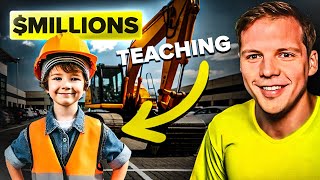
Jacob Robinson built Dig World, a Katy, Texas park where kids operate real Caterpillar excavators modified with safety software. He raised $3M, opened in March 2022 on 3.5 leased acres, and now runs 25-30 machines with 55-60 staff. A good day draws 450-475 visitors at $24.99 for two hours; he's planning franchises.
Questions this video answers
March 2022.
Approximately $3 million (total).
About 3.5 acres; the land is leased from the adjacent mall.
About 25–30 pieces of machinery, purchased from Caterpillar (machines are owned, not leased).
Roughly 2,000 square feet (modular/job-site units).
Chapters
To me, that's the brilliance in all of this, is that you're in a mall parking lot like you've got baked in traffic on day one. I just think that I can't get over that. That's brilliant. Welcome to the corner office. So every now and then, I tweet about a business that just seems really freaking interesting to me. And this business was Dig World, which is basically a theme park for kids to come and operate excavators and other heavy machinery. And I knew nothing about this business. This business didn't pay me to appear on this podcast or anything. I just wanted to learn. And I thought, why not hit record right before I learn about a cool and interesting business. So I interviewed Jacob today. Jacob answered every single question I threw at him regarding numbers, revenue, how many customers, what are their revenue lines, how much does insurance cost? Everything. I think you're going to love it. It's super interesting. It's a great guy. Enjoy. Jacob, great to meet you. I have no intent here other than just to learn about your business. As if we. We crossed paths at a dinner party and someone sat us next to each other and we were just talking business because business is all I know. It's all I love. It's like if you put me at a dinner party next to someone with a W2, I'm just going to eat my chicken and that's it. So I just want to learn.
Love it. Love it, man. Well, it's an honor to be here. Thank you for getting this set up. And I love talking about business as well. I love talking about Dig World. So thank you for letting me be able to do that.
Yeah, absolutely. So why don't you first start by just talking about your background pre Dig World. Like, what happened in your life that got your brain to the point where you're like, I should start Dig World.
Yeah, that's a great question. So I was born and raised all over the Southeast. I went to Texas A and M University. That's where I met my wife. We have a very traditional Aggie story. Dated all the way through college and moved to Houston. Afterwards, I tell people she had a real job and so I needed to follow her to Houston. She was. She's a cpa, so came to Houston and just stumbled around trying to figure out what I wanted to do in life and didn't really. Couldn't put my thumb, like, perfectly on it. And knew I enjoyed people and knew I enjoyed connections and talking to people and being busy and out of the office. Definitely not in the office. And so had a few jobs trying to get to where I ultimately landed. But in 2015, I was blessed to have some mentors of mine that gave me a little capital to start a commercial cleaning company. And so in 2015, started a commercial cleaning company that's still in existence today. And we're super proud of that company. But that really sparked my. What I now would call my entrepreneurial journey. I think even then, I probably wouldn't even consider myself an entrepreneur.
Right.
I would have probably just said, yeah, Mark and Jeff gave me some money and I'm going to try to start this company. I probably wouldn't able to qualify it or quantify it and put words around it, but just knew I loved it.
How did you get there? Like, why cleaning? Why Mark and Jeff? How did you get to that point?
Yeah, why cleaning? So I had one of those companies I had stumbled around trying to figure out what I wanted to do a little bit. I did operations for a cleaning company, knew I enjoyed it, enjoyed the space, enjoyed the people, the people I got to work with. Sometimes. I. Most of the time, I enjoy the people I work with far more than I enjoy our customers. But I loved that space. Then I went and sold insurance and did some other things. But why Mark and Jeff? It was really. Mark introduced me to Jeff, but Mark, I'm always telling people, get out there and do random things. I coached Mark's son in little league baseball when he was in first grade, and Mark and I just hit it off, and he was just an older guy I looked up to. And so we got lunch a few times. And that was a goodness. That was a journey of four to five years of just friendship and mentorship before it turned into investment opportunity. And even then, he's the one that spurred me on to do it. I, you know, people, I probably look at my story be like, oh, man, how'd you start that? Well, Mark told me to. Right. It was one of those things, like, he believed in me probably before I believed, or definitely before I believed in myself. And so he saw something there and just said, hey, go do this. And so we started it from nothing. And now we're super blessed and got about 400 employees. And we. It's a fun, fun business. But so that. That's what started this quote unquote, entrepreneurial journey. But really how we got to dig world is I've got three kids now. My oldest son was born in 2015. He. He was born four days before we started our cleaning business. And so that's A always a good motivator if you want to get out there and hustle, have a kid. It'll teach you to get there and sell something. But In February of 2017, my wife and I, we woke up our son Pierce unconscious in his crib. He was almost two years old. We found out after we rushed him to the hospital, he had contracted bacterial meningitis. He wasn't supposed to make it 48 hours. God had different plans. And we were in the. He was in a coma 12 days. He was in the hospital 75 days. And when we left the hospital, Pierce could no longer talk. He's in a wheelchair now. He's deaf. He has about 100 seizures a day. Mental capacity is probably a one year old. And so we left the hospital 75 days later with a completely different kid. And we didn't know what to do, right? Like our life, we. One day we're, we're talking to him, walking around, throwing the ball to leaving the hospital 75 days later in a wheelchair. And he's nine years old now and still has all those conditions, right? I haven't heard him talk since he was two years old. 100 seizures a day. He's still deaf. Lower IQ by our standards. But I tell you what, the kid is the happiest, most joy filled kid you'll ever meet in your life. And my wife and I always say, man, it's great to be pierced, right? You don't. He doesn't see the world. He sees the world the way we should see the world, right? He doesn't care about your skin color, doesn't care about your income, doesn't care where you, what your house looks like. He just wants you to be with him, right? Just wants you to hang out with him. And so from that, Pierce has always and still does love construction equipment, garbage trucks, dump trucks, the whole thing. So we came across this idea, my co founder and I, or Rick Bennett, and I said, hey, let's go build a theme park and let's. With the mission of bringing people together. Like at the end of the day, that's what we want to do. It may sound cheesy to some, and I would say I don't care. But really, at the end of the day, the thing that excites me is I can look out this window right here and I see people in lines and I just want to go talk to them all. And if we can have a chance to bring mom and dad and kids together, aunts and uncles. I just met a grandpa who's been in construction 30 plus years. And he wanted to bring his grandson so, so they could, he could show his grandson what he did for 30 years. That's why we do what we do. A byproduct of that is, yes, making money, no doubt, and, and creating a scalable business that we want to grow and grow across the country. But we really opened it with this idea of how do we bring people together. And so we started fundraising in 2019. I tell people all the time, the two things that worked against us fundraising was one, we have a crazy idea. And it's one thing to pitch people real estate investments, one thing to pitch people a cleaning business. Those are hard in and of itself, Right. Because you've got to show them people.
Can wrap their minds around it.
And so Rick and I, our joke always became we'd go into somebody's office, we'd say, hey, listen, we got a great idea. We're going to build a theme park. Okay, I'm interested. Where are you going to build a theme park? Katy, Texas. Okay. It's a great growing suburb. Young families love it. What are you going to do? We're going to let a three year old drive a skid steer by themselves and they go, get out. I don't want anything to do with that. And so we had that working against us. And then in 2020, Covid happened. That was working against us too. And so we finally got the. Through persistence and crazy nights and crazy dreams, we got the park open in March of 2022.
Okay, so. Okay, so a lot to unpack there. First of all, thank you for sharing your story. You don't know me, right? I'm just now meeting you for the first time. But we have a very similar story. My daughter contracted a terminal illness at age 3. She's still with us today. But life was never the same. Right. She had a lung disease. And then we moved to Katie for six months where you are, to get on the transplant list and she got a double lung transplant. So we have very fond memories of that area because we spent six, six months there on the transplant list. But I'm very much driven by two things. One is a chip on my shoulder from people that doubted me. Two, from that, like, I want to spend time with my kids, right. Because their time here is very limited. And it's just always in the back of my mind, like, you gotta do better. You gotta make enough money to where you can afford to spend more time with your kids because time is short.
Right.
So thank you.
That's a Beautiful buddy of mine sent me a tweet the other day. And cheesy, sure, whatever. But I think the point is true. He said, if you die today, your work will replace you in approximately two weeks, but your kids can't replace you. Right. They can't replace that time. And so I think it's one of those things like whether you own your business or not. Right. I think we look at that and we, man, work is the end all, be all. And I think we're absolutely called to work hard. I think that's what we're supposed to do, provide for our family and our loved ones. But man, at the end of the day, when it's all said and done, right, it's hanging out with the family that's the important thing.
Yeah, yeah. The graveyard is full of irreplaceable men. So I have to think that in 2019, when you had this idea someone on some other corner of the world was doing this, that you were pointing to investors saying, wait, but these guys are doing it. They haven't gone out of business. Like, was there another kind of template that you looked at when you launched?
Yeah, no doubt. There's a much bigger version of us up in New Jersey. They've been around since 2014. And so, yes, there was a bigger version. There was there all day. Our model's a lot smaller and we can get to that later. But there's is big park, you're 30 plus acres, you're there all day, full blown food and beverage kind of operation. But we would point to them and say, hey, listen, they can do it, we can do it. Right. Probably that little Texas arrogance of like, you can do that.
And I've done the same thing.
Yeah. Laughing and crying as we go on. But so, yes, there was a somewhat of a model out there that we could point to, but not necessarily our model. And so there's still a lot of question marks. And then again, right. Rick and I had never worked a day in a theme park. And so I think that was always the next question. Like, cool, I get it. How, what do you know about a theme park? And our answer would always have be, just trust us. Right, Right. We'll work hard and figure it out. And the vast majority did not take that opportunity. The overwhelming majority and the few that did, we love them dearly.
So it took three years to go from concept to launch, right?
Yep. Yep.
How much money did you have to raise and what did launch look like?
We ended up total raising probably close to $3 million and launch looked awful. So I tell people all the time, one of the things that I. I like to say I have in common with Walt Disney is the day that he opened Disney Disney World, they actually caught Black Friday. They were overrun with people. It was a terrible experience. People printed fake tickets, and it was a disaster. Now, we didn't have people printing fake tickets, but it was a complete disaster here. And that was my doing, right? I made the mistake there. I pushed us to open too early. We were. And what's sad about it is, if you look back on it, we were probably only 48 hours away from when we would have been ready to open, but we opened 48 hours too soon. Our all the technology wasn't ready. We. I was arrogant, and I'm like, hey, we'll figure it out, or, hey, we don't need everything up and running. And we were blessed that we were overrun with people. The problem is that we were overrun with people, and it was a terrible disaster. And so we made the decision that night to close the park down for a couple more days to get it right. And so I tell people as I go on, I would probably be the only theme park operator in history that says in one day I opened a theme park, and the same day I closed the theme park. And so. But, you know, we've been fighting that uphill battle ever since, you know, because the media is a harsh thing, right? Everybody covered our grand opening. Every news outlet covered our grand closing, and then nobody covered us when we opened again. So, you know, I ran into a guy a couple weeks ago at the grocery store. He saw my shirt and he said, man, such a shame you guys had to close down. Like, dude, we've been open for two years. But, you know, so we've been fighting this marketing perception, misperception for a while now.
Well, they say any publicity is good publicity, but I would think that would be one of the exceptions, right?
That is one of the. Yes.
Everyone found the exception closed.
That's right.
Geez Louise. So what specifically was going wrong? Was it your tech, like your point of sale system? Was it the machines?
Yeah, so it was. Actually, nothing was wrong. We didn't have enough machines programmed yet. And so the technology was working like we were able to open and people did some of the rides. So it was nothing that it didn't work. It was that we didn't have our technology on every machine yet. So therefore, we didn't have enough machines going. And so people got to do it, but they wait in line forever. There was only a couple machines operating versus now. We've got 30, 40 pieces of machinery out there operating today. That day it was probably like four. So it was again, nothing that was wrong. It just wasn't fully done yet.
Yeah. Okay, so let's talk numbers regarding your property. So how many acres do you own the land, do you lease the land? How many square footage is your building, number of machines? I'd love to hear all that stuff. Yeah.
So we sit on three and a half acres here. So what most people don't know is we are. We're actually a tenant of the mall that we're adjacent to. And so the piece of dirt that we sit on has been a grass field since 1999. And it's just set here. And so we came in. Rick had a great idea of reaching out to the mall. And so we came in and so we leased the land from the mall. So we're just like a normal tenant here at the mall. We built everything out here. So what's funny is we have a lot of asphalt around the park. So people think we actually were a parking lot. And we just put this in a parking lot. Actually, the opposite, true, is a piece of grass that we put asphalt on to build our park. So we sit on three and a half acres. We have roughly all in, probably about 30 pieces of machine right here, 25 to 30 pieces of machinery out here, all different kinds. And then our building. So we thematically, the nice thing about building a construction theme park is you can essentially put a job site trailer out here.
I was thinking. I was hoping you were going to say that.
Yeah, that's brilliant. But it's also. And it fits theme. Right. So anyway, we're sitting here, we have. It's four wise. I think it's like 2,000 square feet total. It's our office, but also our retail shop and areas where people walk through at the end.
It's like two single wides or it.
Is four units stacked together.
Okay. The same thing you would see on a job site, like a mobile home, basically. That's it.
Yep.
That is brilliant. And it probably helped with like construction and zoning and getting approvals for stuff.
Yeah, it was interesting on the zoning deal. A lot of red tape, a lot of hurdles because not many people build permanent buildings to be this.
Right.
It's dropped onto a job site. It's gone six to eight months later. So the bill that we had to figure out with the city, a lot of like, how do you grade this? Like, what does it look like to actually have it Concrete into the ground or strapped into the ground. So there were some. There was a lot of back and forth there for a while that, that held up this specific building. Our restrooms are made out of construction or shipping containers. And so we kept them there but cost down by building our shipping containers.
Okay, so when you were looking at the template in New Jersey for this, had anyone ever done this next to a mall before or were you guys.
The first at that? No. And really only, the only template I would say that we looked at them for was, hey, you can let young kids operate machines.
They are charging people for this and they're still in business five years later.
Past that, there was nothing on their template that we were like, oh, let's just replicate that and do that. It was more of like, hey, no, no, no, no. Trust me, Mr. Investor, you can take a three year old and put them on an excavator because they've been doing that. We again, our technology, all that's all our stuff that we had to invent from the ground up. Nothing from that template per se.
Okay. To me that's the brilliance in all of this is that you're in a mall parking lot like you've got baked in traffic on day one. I just think that I can't get over that. That's brilliant.
Yeah, it's interesting.
Yes.
There are definitely malls that are dying. No doubt. And as a whole, yes, I totally get that. The mall that we're at though, if you find the right mall. 12 million people walk through this mall a year. That's insane. And so just.
And that area is growing like crazy.
That's right. That's right. So you know, there's a lot of factors that go into when somebody says, oh, you're about mall. Malls are dying. Maybe not. Right. Both can be true. Yeah.
If you're in Houston, Texas, there's always going to be a market for indoor shopping. The worst weather. True. And anyways, also I, I feel like I have a framework with commercial real estate where it's like you've got froyo and froyo explodes and then it dies. But there will always be froyo places in the best locations. Right. You got like the cold stones and the marble slabs of the world. Same. You've got cookie shops. Like there will always be cookie shops in the best locations. There will always be indoor malls in the best locations and the ones in the so. So locations or bad locations will buy.
That's right. Yeah, that's right.
So, okay, so let's talk about your equipment. 30 pieces of machinery. Do you own these? Did you buy them new, used lease? What are we looking at?
Yeah, it's funny, I've had the privilege of reading through some of the comments on the tweet that you threw out there. It's funny, right? What people come in with perceptions and ideas of how things should be or not. And again, a lot of it's like people guessing, right? The only thing you can do logically, they have no. Yes, when you don't know the answer. Right? But no. These are to answer one of your person's comments. These are real machines. These can operate on a real job site. These are. We bought them from Caterpillar. They did not. These aren't refabbed or refurbed. These are out of commission machines. These are very much new machines that we purchased. So we own them. And then we put on our proprietary technology on the back of it to be able to operate in a safe manner to where kids can operate and.
Like a governor, basically.
Yeah, give or take that. Yes. On some of the machines, that's probably the oversimplification of it. But for example, on our excavators, right, they go only certain degrees to the right and left, only certain degrees up and down. They're stationary. You can't do anything to make that machine go forward or backwards. So the tracks are still. They're also on a timer so that when we activate the machine, the kid or adult gets to use it. And then when that timer is done, the machine keeps running, but the hydraulics are dead. And so that's how we get kids off the machine. Right. If not, I'd have to be pulling Timmy off the machine every five minutes. And so that there's a lot of components that go into that, but then there's override buttons and kill switches. Then we have the ability to flip it back when we need to do things around here, around the park, either move things, move objects. We can turn it back into a quote, unquote, what we call a real machine versus the dig world mode.
Okay, so do you own these or do you lease them?
Yep, we own them.
Caterpillar must love you guys, right? Like you're a brand new customer that didn't exist to them 10 years ago. You're exposing them to all of these kids that might end up operating or buying one in 20 years, right?
That's right. Yeah, that's right. So I think our park wins. And I'll be completely transparent. Accidentally, unbeknownst to Rick and I, it wins on A lot of fronts, right? So. So we win with Caterpillar because Caterpillar gets their brand out here. They get their name out here. They get kids thinking about yellow iron versus green iron, and they get to grow up with that image of Caterpillar in their mind. So whether they buy one for their self one day or they work for a company and they have the ability to buy, they want to buy Caterpillar. So they're working on brand identity. No doubt. The other thing, too is we have partners. I went to A and M, Rick and I did is we have partnership with A and M. They're incentivized to educate the next generation about construction working. Right. They know for a fact that they can get to a kid before they're in eighth grade. So anytime on that spectrum before eighth grade and convince them about construction work, they have a much higher probability of that kid going into that field. Because it's a lot like the military, right? You look at the military, people go, oh, I just shoot guns or fly planes. No, the military. You can do any job in the military.
Right.
It's a whole ecosystem. And so I think the military's got the same issue where they're going, no, no, we don't just shoot guns and fly airplanes. Like, you could go here and become a doctor. You can be a lawyer, like. And so I think A and M is incentivized and as well as other people in the construction industry to get kids at an early age going. Well, hold on, hold on. You can make a phenomenal living in doing this. You also aren't necessarily going to be outside pouring asphalt every day. You might, but there's also a thousand other jobs that go along with that.
Yeah. What does that partnership look like? Like, how are you helping each other?
Yeah. So A and M, for example, they. They provided us. They had a bunch of undergraduates and graduates write our educational curriculum. So when we host the plethora of field trips that we have out here during the school year, we go through this educational curriculum. Also, if you were to walk the park, you'll see signs everywhere of fun facts about construction. Right. This machine can lift this many buildings and this many elephants and blah, blah, blah and random things like that. They cultivated all of that curriculum for us and made those signs. And you'll see their brand around the park, Caterpillar. When you walk up into our park, you will see the big world logo and you'll see the Mustang Cat. They're our local equipment provider here in the greater Houston market. Mustang and so you'll see their name everywhere.
Right.
You come into our retail shop on the way out, there's a huge Mustang cat wall that talks about all their offerings and what they can do for you or your business.
Now are they paying you for that or did you get like a discount on the, on the machines for that?
We have two different deals. So we have a sponsorship deal. So they are a sponsor. And then we were able to. When you're buying, just like when you're buying fleet of vehicles, right. When you're buying that much volume at once, you can negotiate some deals. So we were able to negotiate that the price down a little bit. But also again, another thing that, that most people don't realize, when we were buying these machines, it was the tail end of the height of COVID Right. I mean there weren't machines to be had. And so I think going forward, as we open up parks around the country, we would, we'd love to strike a bigger deal with the Caterpillar or the local dealers because the inventory is back then Mustang, I mean they were phenomenal. They're phenomenal partners of ours. They're also hand strung back then, right. It was like, hey, this is what we have and this is the price because this is all we have. So we have a paid marketing sponsorship on top of that.
Okay, so was that one of your biggest startup costs was buying these machines back in 2020 and.
Yeah. So yes. And no construction costs, right. Of building the whole park. That's the, that's the main startup cost. Building something from the ground up. We can, we, we've been able to work in the equipment, the underwriting model through different financing routes, that kind of stuff. But the upfront big cost was obviously the construction of everything.
Okay, now tell me about developing the software to act as a governor on these machines. How did you do that internally? Was that, did you hire someone? Did you outsource it? Was that a very difficult process?
Yes, yes. And so we have an engineer that works with us and it's the technology he developed that we have the rights to. And so he is our guy. He was out here yesterday tweaking some things. But yeah, it was very difficult process. And again, can anybody do it? Yeah. Can anybody go pay somebody to do it? Sure. But finding the right person that can, you know, because at this day and age, it's like a car, right? These Caterpillar, these machines are computers, right? Like the car you drive is just a computer. Right. At the end of the day. Same with these machines. Yeah, they're still fundamentally the same thing that they were, but they're also computers now. And so we're essentially having to rewrite the computer that's in the computer to set our computer to it.
Yeah, that's interesting. I love this business because some businesses just inherently come with. It's like they have baked in haters, right? Like when you post to social media or I post to social media about you, you know there's going to be like two or three categories of comments. It's going to be like insurance. How. How is. How do you insurance insurance? Insurance liability.
What?
He must be an idiot. And then you've got all the people saying like, is this, like, is this even safe? Yeah, like, and then you've got people talking about the price and like, I just love the idea of launching businesses that are reverse engineered from the comments of other businesses, right? To where just a natural organic post from your business will generate all this negative attention that just tell the algorithms, hey, let's push this to a wider audience because people are talking about this, right? That that's what happened with Rolling Suds, the pressure washing company. Everyone comments there like, oh, you're just spraying bleach all over the. Is that even legal? Yes, it's legal to spray bleach in all 50 states. But people don't know that and so they all comment that and it just grows and grows and grows. So with that being said, what are your insurance costs? Like, is that a lot significant line, Adam?
Yeah, it's a lot. But I think it's in line with any of the business again. So I think the key to any business, right, is you hit the nail on the head. I've got a great friend who's an insurance broker. I said, hey, would you ever want to underwrite Dig Roll? No. No way. No way I'd ever do that. That's a crazy. And that's his perspective on my best friend who is our insurance broker. Man, if you find the right people that believe in you, they will hustle to find the right carrier that gets what you're doing, right? And so listen, it's always, it always cracks me up when people like man, ever get insurance? Well, hold on. How do rodeos get insurance? How do carnivals and malls insurance? How did water parks get insurance?
It gets a lot worse than this, right?
It's, listen, we've been very blessed. No incidents in two years, knock on wood. We, we continue to have no incidents. I think that one of the biggest misperceptions is, oh my gosh, These kids are just driving skid steers through the park. No, no, they're driving it on an enclosed track that we have. Double enclosed. We've got kill switches on the machines. Listen, our park is significantly safer than you going to a go kart park.
Yeah.
But it's a new concept. It's a new idea. It boggles the mind a little bit, which is awesome. Right? I mean, that's why we want to do it. And that's what, I mean, that's what we do. Right? Let's go do crazy things. And so finding the right carrier that goes, yeah, okay, I get what you're doing. Let's work through it together. Let's understand the technology on it. And so we're fortunate that the main carrier that we have, they underwrite those things. I just listen. Theme parks, rodeos, water. So they are risk tolerant. And get it. And again, when you understand fundamentally what we're doing and how we're doing it and the inspections that we go through, you go, okay, all right, I get. Now is it a big line item? Yeah, because I've got, I'm running the theme park. But I would argue to you that our insurance lines are proportional to any other theme park out there.
Are you able to say on a percentage basis or a real dollar basis what they are per month?
It's probably anywhere from depend upon renewals and things like that. Anywhere from 8 to 10%.
Okay. That's not crazy. You've got companies insuring tour guides that put people in shark cages. Right.
Like, right again, it's always the human psyche I'm fascinated by. Right. And what you said, right. You attract haters. You attract people that like champion you on. And you're like, you're the greatest person ever. Right? And like your tweet, right? Like we read that, we're like, man, dude, this guy, I don't even know this guy. Awesome. And, and so we love those things. But it's also funny to me when you have something new that is by definition brand new.
Yes, I know.
People want to talk to the other facilities that are out there now. The, the preconceived notions that people walk up with, right, of going, well, I don't think it should cost this much money or I think I should. Well, hold on, hold on, hold on. I, I love you. I love your opinion. I'm here for it. But I've got a water park right over here across the, the, the highway. You don't go up to those guys and be like, listen, this is what the price should be, oh yeah, it's because it's set in the end, it's set right. So there's also issues as you start things, right? That fine line as an entrepreneur. And I think people listening to this, it's super important to listen to your customer. It's also super important to know your model, right? And also my. We talk about the time the silent majority, the silent majority never speaks up, right? If we go through the park and, and we go through, say we go through a whole month, we see 5 to 8,000 people throughout the whole month, depending upon the seasonality of what month it is. I get three nasty reviews. It'll keep me up at night, it'll drive me, it'll bother me in my core. That's three people out of roughly 8,000 people. Now that doesn't mean that all 8,000 loved it. Sure, some may think it was stupid, waste of time, waste of money, whatever, they're never going to come back. So be it. But if I fixate on those three of the 8,000, man, I'm missing the opportunity. I listen to a podcast yesterday, a guy said he owns restaurants. He says, it's never as bad as they say and it's never as good as they say. And I like that kind of, that level headedness approach to it.
Yeah, it's funny, I have this framework where I say, listen to the haters if the hater knows more about your industry than you, right? Because when I launched my first business in college, it was an iPhone repair store. And this boomer was like, quote mentoring me. And he had just owned like a home inspection business his whole life. And he's like, this is stupid. IPhones are like, this isn't. You can't build a business out of fixing this new thing. It was 2010 and I was like, yeah, these guys in Louisiana are doing it. They're opening stores all over the place. These guys in Florida are doing it. Like, there's none here. It will work. It's like. And it's just like, I'm not listening to someone that doesn't know what they're talking about. But if that guy was in the industry and he had. And he's like, listen, man, I know it looks good, but here's what's happening. It's like, okay, I'm going to listen to this guy, you know?
Yeah, that's right.
It's funny because back to insurance, the most viral tweets I've ever had have always been about some sort of business that had an insurance Component. And I tweeted about a zipline business last week, and I was like. And I baited people on purpose. I was like, tell me why this wouldn't work. Insurance, Liability insurance. What do you do about insurance? And my response is the same. It's like, you buy insurance. That's your solution. You pay for it. And then I tweeted, and this lost me a few followers. I said, insurance is the warm security blanket that people use to never start businesses. It's like, oh, I can't. This is too much of a liability. I shouldn't. I should. It's like, dude, it's not.
Yep. Yeah. I think I'm probably unfortunate on the record too many times. And I've got buddies in both these spaces, so they've heard me say it to their face, so I can say it. But I think lawyers and insurance agents kill deals, right? And I think they both have their place. I think they're both super important. I think you need to listen to wise counsel of both. But, man, a good attorney and a good insurance agent will be like, my buddy who's a awesome, he said, hey, listen, you're gonna have to pay for this. We'll go find somebody that'll do it. Rather than, no, you can't. It's too crazy. Or, man, that's like, no, hey, listen, I'm with you. I see the dream. I see the vision. Same with attorneys, man. You can get. You can. We listen sometimes too many of those voices, and we in society, we put them on the a higher pedal because they're lawyers, they're bankers. I get that. But a lot of times, man, it's just finding the right person that. That goes alongside you and says, hey, it's hair brain, but I'll be right there with you. And if we get it done, we'll get it done.
There's always someone for every deal. Like, there's always a way to make any deal happen.
That's right.
So you're talking about prices. That was the central focal point of my tweet is how do you not charge more? And that's. I'm not like, this isn't a softball to get you to, like, sell yourself. I'm genuinely surprised how and why you don't charge more than 25 bucks for two hours.
Yeah, it's funny. What's interesting is that we've been actually debating your tweet in the office for a couple days. The psychology behind when you said $12 an hour. It's interesting because that's true. Right like it's a two hour minimum. You gotta buy.
It's not how you. It's not how you frame it on your website. It's how I stated it.
That's right, that's right.
But.
And both are true.
Right?
And so it was very interesting of like, oh, man, I like the way you said. Because what's funny when you say that, I get complaints often about how we're too expensive. And here's. So we did a lot of market studies. We did a lot of studies on the water park, Masada, some other family farms around us. And we felt like 2499 was a good deal for the average family for the experience that we believe that we're providing.
Now.
I've got technically competitors of mine that just opened up a facility in Tennessee. Their kid price is 55 bucks and their adult price is 70 bucks. And now again, different model, they want you there all day. Bigger food and beverage, bigger part. Totally different model. 24.99 works in our model. If I see a certain amount of people annually, we're open 12 months a year. So that helps too. We have other revenue streams like field trips and birthday parties that aren't just the 24.99 route. Some are cheaper, some are more expensive. But for us, what's interesting is the thing that gets held up. We talk about preconceived notions. Right. The number one complaint that we get at our park is, oh, no, no, no, no, I don't need to pay. I'm just here for Timmy to do the rides. Correct. Everybody that walks through our gate has to buy a ticket. Well, no, I'm just gonna watch. Totally understand that you have to buy a ticket. The same would be. Nobody would. Everybody would think you're crazy if you went over to the water park and you said, hey, listen, I'm not gonna ride into water slides today. Just Timmy's gonna do it. Yeah. So I don't need a ticket. No, you need a ticket.
Yeah.
Say we try to tell people the time. Same with children's museums. I added children's museum. At least the ones around us, it's cheaper for the kid to go. That is the adult. And I can assure you I'm not doing those activities. So it's interesting that the psychology we give some people like, no, no, I don't think I should have to pay. I disagree with you. And so how often do you get that? A lot. Oh, weekly. Yeah, all the time.
Okay. That's like a. Your number one complaint.
I would argue that is our Number now listen, it's the summertime. Our number one complaints about to be that it's hot outside.
That's your fault.
I have yet to figure out the solution to that answer. I know people always say just put more shade. I get it. It's still hot in Texas standing under shade.
How do you do that? How do you do that?
So that will become our number one complaint here in about a week or two. But consistent complaint is I think it's ridiculous that I had to pay and my kid just did the ride.
Huh. Okay. So if a grandma brings her grandson in, it's a 50 ticket price for you and you're really only serving one of those people.
In theory, yes. Yeah.
Okay. That makes a little.
What I tell people is 9 out of 10 times the people that complain about I watch they end up getting on the machines anyways and doing the rides now.
And they've already. They've already paid for that. Right? Right.
That's right.
They don't have to pay extra to get on the machine.
Correct. That's the other thing is we're not a nickel and dime operation. Right. That's the other thing we didn't want to be. So that's why that 24 we thought about, hey, you come in and every ride is five bucks. Or you know, we thought about that. We don't want you to think about it. When you come into our park. Every. You can do this every. Everything you want. A hundred times. I want you to do it 100 times. 24.99 for that. The only things that you would pay extra for is at your choosing. You can purchase a gym mining bag. You can purchase food and beverage. You can purchase a retail item. All three of those though do not have to be purchased to achieve the goal of operating machinery. And so those three things are outside of the core of what we're doing. And so we feel fine charging for that. Knowing that we can deliver the full experience for 2499.
I didn't realize you had a gem mining station. That's awesome. My kids love that. I think it's such. And you just buy the bags from somewhere else and that's right.
And all credit right there goes to my business partner. When we started again, none of us were in the theme park space. None of us knew really anything. And he went to a conference and he called me and said, hey listen, we're going to buy this. And it was kind of the I'm pulling the just trust me card.
Yeah. It's an asymmetric Bet.
Right, Right. And so even when it showed up, I was like, dude, I. I trust you, but I don't get it. Like, I don't understand how this thing even operates. And I tell you what, man, that thing is our number one. You know, I mean, it's obviously not our number one generator of revenue, because.
That would be just general outside of the.
Dude. I mean, kids live over there. Dude. That's where my daughter wants to be every time she comes here. And so it's a. It's a good product. I mean, I do believe it's a good product and you get good things from it. And kids are fascinated by. But it's hilarious to watch.
That's because it plays on our human nature. Like, it's. It's inherent in our DNA that we're treasure hunters. We always have been. We want to explore and find something, and that will never.
It does create a wonder in awe. Right. Like, you've got this.
Yeah.
You know, you've got this pile of dirt, then all of a sudden you run through water and all of a sudden gems appear. It's just wonder and awe sensation of it as well.
Do you have any numbers on what percentage of kids buy the gem mining as well? Do any come just for the gem mining?
It's a great question. To answer your second question. Yes. First one. No. You talk about the beauties of startup entrepreneurship is when you. When you're trying to piece together your right systems and technologies and tools. The company we were with on our point of sale system was good. It was good enough. Doesn't tell us enough data. And so the one we've just now switched to, we can start to get really granular. Like, I can pull your profile into how much you spent specifically on gym mining, all that kind of stuff. So we're starting to gather that data, but I would have to believe that is the majority of our guests. At least somebody in their party gets a bag.
Really? The majority of your guests?
Yeah. Again, that's me watching it for two years. Sure, sure.
That's anecdotal behind that.
That's correct. That's correct.
That's surprising. That's. That must have really moved the needle for you then.
It's a great. It's a great revenue driver, for sure. Great call.
You didn't even work that into your underwriting on day one. Right. That was just the cherry on top.
No, truly, our underwriting, literally, Rick and I wanted to make the model not work. Right. Like, I think that's important is figuring out what Breaks the model. Right.
Like overly conservative.
Overly conservative. And really our only revenue line items were general mission. We thought we could sell some field trips and we thought we could maybe like food and beverage, like just kind of like a big bucket for that. That was really the main revenue drivers.
Do you sell T shirts or hats or anything? Any merch?
Yeah, we got 1200 square foot merch store. Another thing that people, some have, it's always have a complaint. I force you out through the retail shop. Like you have to exit the park that way. And so parents either love or hate me for that.
Yeah.
But we force you through. It's an indoor. It's funny because like it's indoor, it's ac. So you come out of the heat. Right. So you're literally like, let's just stand here for a second. And then we sell toys, books, hats, shirts, flashlights, backpacks, you know, your typical retail items in there. But unique dig world things.
Is food and beverage a sizable line item?
Yeah, it's a sizable line item. You know, again, we only want you here for two hours. That's what we need for our model to keep people churning in and out. So we only sell pre packaged. So chips, candy, bottled drinks, ice cream.
It's kind of something you have to sell. Right. Like people literally need to eat and drink. It's not like you really want to make money on it.
That's right. And I. But I don't want to get into the as of right now at this park, this location. I don't want to get in the hot dog business or the hamburger business. So. That's right. We're going to keep it simple. And you can go to Chick Fil a when you leave here and get food if you need it.
Yeah, there's probably 13 within 10 minutes. That's exactly right. Okay, so we got general admission, food and beverage merch gems. Is there anything else? So let's talk about field trips. I want to know like how that plays into your revenue, how that's priced and what the strategy is there.
Yeah. So field trips for us, heavily discounted ticket for the kids. Right. It goes anywhere from $4 to $8. But you're talking massive volume. Right? So you're talking big volume, a couple hundred kids at a time. You're also talking about significant labor decrease on my side. Right. Because you're coming. So during the school year, our park is only open Saturday and Sunday. We're open on certain holidays, but for the most part Saturday, Sunday. And so the parks close Monday through Friday and so you can come and do a field trip on Tuesday morning at 9:00. And I only need to bring, gosh, a tenth of our labor. And so those are great margin items for us. And kids love it, right? It's unique, it's totally different. The park shut down, they operate machines, Teachers love it because we do all the, the quote unquote babysitting. Right. Like we, like the kids are in an enclosed area, they can run wild. So the teachers can just kick back and relax and enjoy the park. So it's a good line item for us. I want it to be significantly higher line item for us. That's one of the growth areas. And again, some things you don't know until you're in it. Right. You start the business, you go, man, we're going to be able to sell field trips like crazy. Yes. Ish. The problem is when you're dealing with a school that's been around for a while, every first grader has a first grade field trip, every second grade has it.
They've got habits, they've got traditions.
And so I'm, I have to essentially convince you teacher to go to your principal and change this structure that's been in place for years. So it was one of those moments that, like hindsight, we're like, oh, yeah, that's been a little bit harder than we projected. But it's starting to become a bigger and bigger line item for us.
Yeah, well, luckily you live in an area where they're opening new schools like every month and you can catch them early in that tradition.
Exactly, right, exactly.
I chaperoned my 8 year old's field trip and they go to the Dallas Zoo every year. And he looks, he's looked forward to that one field trip for years. And it would be really hard to tell all the kids and all the parents, we're not doing that anymore. Even if they're doing something that might be better, that's a hard sell. Are you, are you actively trying to grow that or have they just kind of come to you? Both.
So we have a great person on our team, Chelsea, she's actively trying to grow those and we're actively, I'm reaching out to people, trying to figure out different ways and different incentives to get people to come. But then a lot of it is organic because we have a lot of teachers that come to our park on the weekend and we have signs everywhere that talk about field trips. They go, oh, this is what I want to do. And so a lot of it's organic, but a Lot of it. We go out there and hustle as well.
You should listen. You ever listen to How I Built this? The podcast?
Oh, yeah. Oh, yeah.
Did you ever hear the one with the chicken salad chick founder? So she also. Yeah, that was like maybe my favorite episode. But she grew up in the early days almost exclusively by giving free food to schools in their break rooms. I feel like you could totally do that. You could get like a little display with small versions of your machinery and just. And buy them Panera or something. I feel like that would go a long way.
Part of our strategy is going in before major holidays, before Christmas, before spring break, before summer. And we give the school tickets to give to every first and second grader. And for free, right? Hey, it's a free ticket to chem. Because. Right, right. You're banking on park math. Right. Park math is if one second grader comes, the family of four. So I get three other tickets that weren't going to come, but they saw this free ticket to go. And so we've been different drivers. Like that definitely help.
Are you able to track any data on like a kid that came for the first time on a field trip and then came back with his mom or grandma later?
Now we will be able to. Yes.
Is that the whole idea with field trips? Or do you want field trips to stand alone as if none of the kids come back? You need to break a profit.
Both. So. So we definitely want understanding that most kids will never come back. But every field trip that leaves, we give them a free ticket to come back and where the goal is there. They go home and talk non stop to mom or dad about how great it was and then they bring the whole family on Saturday.
Okay, what percentage of capacity would you say you're at right now? Like if for the spot that you're in that 1 location, 0 to 100.
Our attendance is gone up every year and every year we feel different pain points, but then we work through them to where it's like, okay, that's not that big deal anymore. So I would say. Or I'll say it this way, I guess I asked the question this way. Our target would be to see 45 to 50,000 guests this year total annualized. Right. I know we can handle up to 75,000 pretty easily, but so that I would answer it that way. That kind of helps.
Yeah. Okay. So do you think you could see a hundred thousand at like max capacity or would you have to open it in the week?
I think we need to open maybe like on a Friday during the day to help for some of that. And then I would need to add a couple more machines for sure.
Yeah. Okay. What about your staff? How many staff do you have? How many are working at any given time and what kind of roles do you stop for?
Yeah, we have two full time people. Our general manager is amazing and our events and coordinator purser is amazing. And then we have anywhere. So in our system, we employ about like 55 to 60 people on a given Saturday or Sunday. Anywhere from 18 to 25 will be here. And those range from just people that are working our attractions all the way to. We have party coordinators that like Saturdays, like tomorrow, I think we got like 10 birthday parties we're doing. So we've got birthday party coordinators that'll help facilitate those. We've got a lead over admissions and we've got our social media person. And so it falls in that 55 would be all those jobs. Okay.
And then how many, like, what's a really busy day look like as. As far as attendees?
You know, a busy day, I would say we've gotten up to. Well, okay, a good day. If I look at the numbers, I'm like, today was a good day. We're north of 450 to 475 people. Busy day. We've had up to 800 people on one day. Wow.
And then are you doing anything to actively market other than what you already told me with the field trips, or are you just leaning on the mall for stuff?
No, quite the opposite. The mall's great. They're a great partner, a great landlord. But I would actually, again, another thing that we're trying to quantify this year is how many people went to the mall and then came to us. I don't think it's that high. And so it's more of we're just hammering the social media. Right. We're targeting mom. We're targeting people to try to. Who's making the weekend plans.
And a lot of Facebook and Instagram. That's it.
That's where we live.
Yeah. Interesting.
Yeah.
It's the mall idea. As brilliant as it is, you might have gone into it thinking, all right, this is going to drive a ton of our traffic. And then learned actually it's not. But we don't really need it because we lean on social media so heavily.
Yeah. I would say the nice. The biggest value added the mall is what you said earlier. We know people are driving to this part of town. Right. So, so therefore I'm not just way out in the middle of nowhere banking that like people will drive. Right. Because people. Creatures of habit. Right. Some. For some people driving 15 minutes is a far drive. For Houstonians, you drive 45 minutes to get to your breakfast meeting, you know, kind of deal. So I would say that's where the mall benefited us is we know people are driving here so therefore they would drive here to go to a theme park. Yeah.
Okay. Has there been like an unexpected marketing channel that performed really well, like word of mouth or something that's just really.
Surprised you as, as obvious as it sounds. And, and I would say we didn't probably weigh this enough when we started is influencer brand engagement. Right. Paying people or people that we do deals with that come in here and post about us reaching out to paid and unpaid. That. That has driven most of our traffic.
Interesting. That makes sense. Just the video of what you do is so compelling for people to watch.
Sure. Yeah. And I think that's the other thing too. Right. Is I think this is. With any entrepreneur, you get so used to your product it loses its sizzle to you sometimes. Right. Because it just is like, oh yeah, that's what I do. And oh yeah, it's so routine for me. Like, yeah, I can put my 4 year old daughter on the excavator, let her drive it. If you just drop that normal conversation, you're like, excuse me, hold on, back that up for a second. And so when you're right, when you just captivate somebody, go, what did I just see a kid driving a skid steer? Yeah, yeah, it, it, it helps spiral it out of control in a good way.
Yeah. So if you were to be able to go back in time, what would you have done differently from day one that you can't really change today? If anything, knowing what I think Rick.
And I, yeah, I think Rick and I would tell you the park layout, we would. We've learned some things of like pinch points at the park, different lines that, that we didn't realize would be much longer than some of the other attractions. So I, I would say a lot of just the, the flow. I think we would change a little bit of the flow of the things. I'm not sure I would fundamentally change a lot of what we did. I think we did a lot of ton of research for a few years. Right. We have some great friends that helped us a lot. So I think we, we get to skip a lot of the mistakes early on that we could have made. But I would say a lot of the, I would just say the design maybe would be Some of things that changed.
Okay, so with that in mind, what's next for Dig World? What are your world domination plans?
If you're listening to this, we'd love to hear from you. You can email us@infoigworldtx.com to find that our website. We are very close to starting to offer franchise opportunities. And by very close, definitely this calendar year. And so we'd love to find. Right. Partners that want to grow with us a great brand across the country. We truly believe in our brand and believe in our. The hospitality and the customer service that we're trying to deliver. And we're looking for good people that want to grow alongside with us and have that opportunity to. To own your own business and do it in your own community. And so what's next for Dig World is growing franchises across the country.
That's awesome. Yeah, I could. I think this is something. I think the whole experiential outdoor space is just at its very, very early days. Right. The more the world goes online, the more we're going to want to offset that by stuff outside. I think that we haven't even seen the peak of that yet.
That's right.
Well, that's all I got, man. I love learning about your business. Thank you for coming on. You've got an amazing story, and I'm really excited for people to hear it.
Well, thank you. It's an honor to be here today, and we'd love to hear from any of your listeners and keep the crazy questions coming. We love them.
Okay. Thanks, Jacob. Absolutely.
Thank you.










