How to Make Millions with a Hole in One Challenge
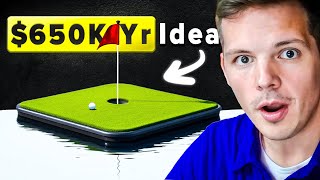
Chris Koerner explores a hole-in-one golf kiosk where players pay $1 per shot for a $10,000 prize. At 1-in-12,500 to 1-in-20,000 odds, he estimates roughly $650k annual revenue and $240-260k in prize payouts. He also discusses a kids' record-player kit with recurring licensed records as the real money maker.
Questions this video answers
"12, 13 million views across platforms."
Lake Taupo (Taupo), New Zealand.
111 yards out to a floating golf tee/platform (par three).
About $1 per ball.
"Statistically speaking, amateur golfers have a 1 in 12.5 thousand chance" (he also guesstimated "1 in 20,000" for casual/kid players).
Chapters
That could be money. Like, that could be a really good business. First of all, this should be everywhere. Like, to me, this is a no brainer.
Anywhere where games of skill are legal, this would crush. And I also think this basically takes the Dave and Busters of the world.
And dude, this could be a thing. Like, this could really be a thing.
You want to build the easy Bake oven of record players. The other best part about this too.
Is did you see my tweet about the hole in one challenge business?
I saw, yes, definitely saw the headline. You tweeted it during politics season and I think I got lost somewhere else.
Dude, this went so viral, like 12, 13 million views across platforms.
Really?
Yeah, it's this random lake called Lake Taupo or Taupo in New Zealand that has this little kiosk right alongside the road. You got a kind of a busy highway and. And then like 30ft and then a lake. And in within that 30ft, there's like six golf tees and a little wooden kiosk with an iPad. And they have 111 yards out, they have a floating golf tee on a platform. And you, it's about a dollar per ball. And you just, you try to make a hole in one, 111 yards out, par three. And statistically speaking, amateur golfers have a 1 in 12.5 thousand chance of making it.
Okay.
And like that's an amateur golfer. So like a kid or a casual golfer, maybe 1 in 20,000. And then it's like kind of weird. It's like on the water. So maybe it's moving a little bit. Anyway, they have a hole in one on average once every two weeks. Two weeks, but yeah, once every two weeks consistently.
Interesting.
And so that's 240 grand a year in prize money paid out. 260 grand. And I'm betting that they do about the same in profit.
What's the prize money when you get it in?
10 grand. Sorry?
Yeah, 10 grand for a whole. So if there's, if it's a 100, if it's a 1 in 12,000 shot, and we're assuming that those odds scale up, their margins are 2500 2000. Right. Roughly.
Wait, what do you mean?
On what, Sorry, did you say that to hit it in? It's a 1 in 12,000 odds if.
You'Re an amateur golfer. If you're a Pro, it's like one in 3,000. But amateur is not like an off the street golfer. That's like someone who like golfs regularly.
Right, okay.
Which I'm sure there Are people that try this that golf regularly. But I would think most people are like the top golf crowd.
So I think, I think that's the question, right? Like it's, it's. Realistically probably then what? 1 in 25,000.
That's. I said 1 in 20 like in my video. That's what I guesstimated.
Okay.
Which at that number then it's like 650 grand a year. Top line, 260 of that is prize money. So now you're at 400. You pay one employee, like they're probably doing two, 300 a year. Not bad.
Not bad.
Yeah. First of all, this should be everywhere. Like to me this is a no brainer. Like it probably costs $5 million to open a Topgolf versus what does this cost? 50 grand? 10 grand? 5 grand? Not much at all. You don't have to buy a lake, you don't have to buy land. You could lease this cheaply. I think this should be everywhere.
I'm curious if I'm even going in the wrong direction here, what is the legality of this? Because the first thing that comes to mind is like, damn. Every gambling. This week alone, I bet on the, the election in Robinhood.
Same. I did too. Right on Robinhood. It was the easiest bet ever.
Oh my God. I was like the free money. But everything is getting gamblified, you know, like gamified and able to win. And I know one of my buddies, he got into a business a couple years ago. It's technically like the legal term is called like games of skill or something like that.
Yeah, I was just gonna say that.
So you know about this? Yeah. So there's games of chance. Games of skill. Games of chance, slots, blackjack, whatever. Games of skill supposedly means that there is technically someone out there who could never miss on this, on this golf thing. Right. In games of skill are legal in the state of Pennsylvania, which is I think where he was doing this thing before. So I would say anywhere where games of skill are legal, this would crush. And I also think this re. This basically takes the Dave and Busters of the world and turns them into like adult friendly casinos. Right? Like you're, you're taking what was Vegas, which is. I'm gonna sit down, I'm gonna chain smoke a pack of cigarettes, I'm gonna order 10 Diet Cokes and I'm gonna try to blow a thousand dollars on blackjack and hope that I make it big. And you're saying, no, let's take people who want to gamble money and want, you know, the. The feedback loop of that, but put it into areas where there's actually more entertainment that isn't just the dopamine of winning chips. Right. And so I think, you know, the. The example that comes to mind for me, too, here is, like, fair games or, like, down in the Jersey Shore, like, you walk along a boardwalk and, like, you can, you know, toss the ball on the thing, you win, like, stuffed animal, whatever, but, like, essentially harder versions of that and figure out what the odds look like and then give yourself a house edge every time.
Just use math. Yes, right. And that's what one of the commenters said. He's like, this is stupid, because what if you get someone with a hot hand and you. You go bankrupt? And I'm like, that's statistically imp.
It's.
It's literally impossible. You know, like, it's just. It is like, there's a reason they have one every two weeks for 30 years straight now, because that's how statistics works. You know, I googled it while you were talking about games of skill, and it looks like in the four biggest states, Texas, California, Florida, New York, it's legal. And then in, like, in some of the really small states, it's not. And then I think everywhere else, it mostly is. But couldn't you just frame this, like, even at Topgolf, like, I went to Topgolf with my kid, and, you know, I paid 60 bucks for an hour. And if you give. If I give capital one, my email address and I'm entered for a chance, like, if. If I get it in one of the holes, which it was like, an easy hole to get, like, my kid did it, and I give capital in my email, then I have a chance to win X, Y, or Z. Like, what is the difference there?
100, right? No, no, I completely agree with you. I also think, like, this is where you can. You want to talk about, like, the nil side of things. How many athletes can you get that basically, like, turn into, dude, perfect, where it's like, if I can hit this full court shot with a baseball bat, I'm gonna win $5,000 and everyone goes out. So, like, I think the thing. I love this idea. I think the only downside I can see to it is you need a lot of space if you want to make multiple versions of this, right? And what you're saying, off the highway, 40 yards, whatever, like, that's money. That is perfect. Every time I think, I wonder if that is the best use of it or can you find versions that can go off of the casino model, which are still fun and entertaining and feel sport like, but take up less space.
Dude, I'm just so distracted because you said something that triggered me. And it's like you said off the highway. Like you said something that I said, but then I thought about it in a different way when you said it. And it's like you said off the highway right there. It's money. Like picture all the interstates in America. You know, I75, I15, whatever. How many times do they go by a big lake or a body of water that's privately owned? How many of those have billboards? Like billboards. I've purchased billboards. I've rented billboards on the highway. It's not as expensive as you think. It's like four to $700 a month oftentimes. Month to month. And the vinyl banner is included in the price.
Okay.
So you could put one of these platforms in a lake. You could lease that, that tiny slice of land and the tiny slice of lake from someone who probably hasn't even seen the property in years. So he's not going to charge you hardly anything. Put up some billboards. You put a little shed or a kiosk. These freeways, interstates get 30 to 200,000 cars per day. That's the whole marketing plan. That's the whole business. People are primed with, with a couple billboards, like Buc EE's right. Like they're primed for miles. And then it's like boom, right here, Arrow pointing down. That could be money. Like that could be a really good business.
No, I like that a lot. I feel like can you franchise it? Would then be my next question.
I think so.
We, we have the exact game, the exact system. It's called Money Golf. Whatever it looks like, we'll, we'll do the full dev. We get a maybe, maybe we split it 50, 50 the, the cost. You manage everything that way they have skin in the game. And now your next problem becomes can we find cheap land in areas with high drive by traffic? I like that. Yeah. Big franchise opportunity in the games of games of skill category.
Well, dude, I wrote about this in my newsletter yesterday, but you could like, you could do this business as a service. You could go into a neighborhood like an HOA in Texas. Every neighborhood has a big lake or a big pond or dozens of them. And you could literally. This sounds ridiculous, but the analogy I use in my newsletter is, you know, Phil Knight was using a waffle iron to make his first shoes. He was selling out of the back of his Pinto. So who cares? You could. They have on Amazon like 10 by 10 floating platforms. You could go buy for 150 bucks, anchor that sucker down, put a fake green down. And you could do this as a service and just charge a percentage of revenue. You could just charge up front once you could maintain it for a monthly fee. Like it could be a self serve kiosk, right? Like put a little vending machine up, it dispenses the balls. Those already exist. Swipe your card. There's a sensor in the hole. You could buy that from Amazon. When sensor is triggered, then that guy gets paid. It doesn't have to be ten grand. It could be a hundred bucks. It could be 50 bucks. It could be an Amazon gift card. It could be a draw that pulls people to a neighborhood, to anything. You could do it as a service.
I like it.
Yeah.
I feel like golf is the. Is an obvious example. Are there other styles to this that are as accessible or interesting? Like my mind immediately jumped to a hunting, like a shooting range that wouldn't fly.
Dude, Dude. No. Like, this is so SaaS statistics as a service, okay? You roll up into a neighborhood, People play basketball at this court all the time, and you say, hey, I've got a thousand bucks to anyone that could make five three pointers in a row. Oh, I could do that. I could do that. And you just, you just use math. You just use statistics. That's it. Okay. The average guy off the street, how likely is he to make a three pointer? Say 20%. Twice in a row it's gonna be 5%. Three times in a row it's gonna be 1%. Right? So five in a row it's gonna be.05% of making it or whatever it is you got to pay. It's $5 to play. It's like a carnival game.
It's. It's 100% a carnival game. The other best part about this too is you're combining two things that guarantee virality. It's sports challenges meets big money prizes every time. It works, right?
Meets pride. Meets like ego.
I was going to say the famous quote, Adam. I don't think it's. I don't think it's above a quote. Somebody. Somebody had it. Which is like the lottery is a tax on the stupid or something like that. It's like, I wouldn't say that this is a tax on the stupid necessarily.
Right?
Like it's, it's gambling and like you think you can do it, whatever, but like Definitely more of a tax on the cocky or tax on the ego.
But it's great because, like, they don't have to win. They're having fun, Right?
Exactly.
Like, they're. They would pay money to go play golf anyway.
Exactly. Right. Yeah. The. The activity, right. This is if you take out the money that you can make from blackjack, slots, whatever, people would hate it. Like, you're sitting there pulling a lever, you're dealing cards, and, like, maybe you get the rush of winning, but, like, if the chips aren't real and kind of boring, like, any past time. Yeah, poker is fun because it's just an excuse to catch up with people. But, like, this already doesn't have money associated with it, and now you're adding money, and so, like, it makes it way more fun.
Yeah. I think that the trick would be finding the challenges that sound really easy on the surface, but are statistically very hard.
It's better, you know, I'm better. Fair games. Yeah, fair. Like, all I'm thinking about is, like, throwing a ball and trying to knock three blocks off a shelf or, like, tossing a ring over a bottle. Like, stuff where I'm like, ah, with a bucket of rings, I could probably get one. But, yeah, I agree.
And the hard part would, like, with my rolling up in a neighborhood example, you need volume. Like, that's also how statistics works, right? Like, you're gonna roll up in a neighborhood, charge $5 to five people, and then pay out $100 because one guy happens to win. That doesn't work. Where's.
Where's your. The YouTube video that you made about this again? Where. Like, where was that?
It was a short. It was, like, four or five days ago.
No, no, I'm sorry. I mean. I mean, like, was this in Texas? Was this in Dallas?
Oh, like, the original company doing this. It's in New Zealand.
Oh, New Zealand. See? So I would figure out what their traffic looked like and how they're making it popular. And, like, I like DFW suburbs. Like, people make money off ax throwing, so you can probably. Probably make more money off this dude.
Like, when I started writing about this, every now and then, you know, I talk about a lot of ideas. It's like, I kind of want to run outside and try this right now myself because it's so, so good you can do.
I am jealous that living in dfw, like, like, that area, you can do the more physical stuff. I have the same thoughts all the time with service businesses in particular. And then I flip my camera around here and you just see Manhattan sky rises all behind me, and I'm like, ah, probably like, but that's.
It's not like you have less opportunity in Manhattan.
No, no, no, no. You definitely have more. But, like, the issue is. And maybe this is an ego thing too. Like, I don't want to get out on the street in front of my apartment with all of the guys. Definitely apartments, selling stuff alongside the street and be like, hey, who wants to buy my knickknacks? And then my girlfriend walks by, she's like, this is what you do all day. And it's like, there's a. There's a. There's a misunderstanding, dude.
Funny story about that. So I. Did you ever see my post about the guy in New York rock Times Square that has the 360 photograph? Yeah. So I recycled that. I made a reel about it for the first time, like, a month ago, and I recycled it on Twitter. And the real. The real did like a million views or something. And the guy in the video, someone sent it to him and he DM me, and I didn't see it. I don't. I don't check my DMs. And then he found my phone number and he called me and he texted me, and he's like, bro, I gotta talk to you. Like, you gotta take that down. You gotta take that down. I'm like, what? So I. I called him back. We spoke on the phone, and it had been like a year and a half since I had seen him, and there was no communication sent. So I'm sure he woke up to all these dms and, like, that probably wasn't fun. All right, if you are watching this clip right now, you are watching this on YouTube. And if you are a fan of podcasts, please check out my podcast while you're at it. Because sometimes I have podcasts that aren't on YouTube and sometimes I have YouTubes that aren't on podcasts. So check out the Kerner office on any podcast platform. Or you can go to tkopod.com also, my newsletter will throw that in there. There are no ads. It's weekly. It's different content than my podcast and YouTube newsletter.chrisjkerner.com youm'll see the link and we'll see you there. He's like, dude, you got to take that out. I'm like, why? Like, I. Literally, everything I said is factual. I asked you if I could post it. Like, you loved it. It went viral a year ago. You loved it. He's like, well, because I Don't want people to know I make $2,000 a day. Because then, like, people. I'm not actually the owner, which I think is a lie.
And he.
He was just nervous. Like, he just didn't know what to do. And. And so then he went back. Like, he completely did a 180 on the phone. He's like, actually, just tag me. Just tag me. I'm like, yeah, I don't mind tagging you. I don't care. I didn't know you were on Instagram. And so I tagged him. And then, like, it kept going viral. And then he DM me again. He's like, I changed my mind, man. Take it down. Like, I don't like it. I'm like, dude, stop.
Anyway, I wonder if he's afraid that, like, five other people are going to show up at the same thing as him in Times Square tomorrow.
Maybe. I did get a DM from a guy that started it in Puerto Rico based on my tweet. And he's like, I just made a thousand dollars today.
That's pretty cool. I still get messages, shout out. If you people are listening to this. And they're one of the people messaging me. I still get messages on the daily about the Botox idea that we had talked about a couple months ago. And yeah, to anyone who's listening to this that is still messaging me about it. I. I kind of want to put you guys all in a group chat because, like, I realize I don't have the time to do more right now. And you guys should all still do it, but it can't be me, so.
Okay, that's good to know. All right. And we have your info in the show notes. Here's an idea for you. I'm going to put you on the spot. So, record players. You see my tweet about that? Nope. Okay, so I have a record player. It was sitting right behind me, but it's in the kitchen now. And I. I never listen to it. I've had it for 10 years. I have some records, but for whatever reason, a couple weeks ago, I pull out a record. Emo record from 2003. I start playing it. My kids just, like, come here in the office. Like, what is that? My record player. How's it work? I'm like, let me show you. Pull up a YouTube video. He's like, what? It's like, there's notches and grooves. It's freaking cool. It's quite amazing that we invented this thing. First of all, we invented the technology for a record player. Like, in the 1800s or 1700s, but there was no way to play the music until the 1900s.
That's crazy.
Like, yeah, like this dude put a bunch of charcoal on a piece of paper and then like blasted sound at it and like noticed a correlation between the waves and the sound. And so like, that was the big unlock. But he had no way of actually playing that back for like another 200 years. Right? Crazy. And so one kid came in and he's like, oh, can we listen? And like, this is music that I play on Spotify all the time, same songs. And like, some of them like it, some of them don't. But on the record player they're like, and they never left my office. And I was like, oh, my kids want to hang out with me. And then another kid comes in. Oh, what? How does this work? I'm like, show them the same YouTube video the other kid. And like all four kids are enamored by this record player. And it was like, light bulb. There's something special here. Like there's something special about music that you can see, that you can feel. That's not just on Spotify. And I realized, like, this is, you know, this is no respecter of age or generation. What is the opportunity here do you have? And I went to Amazon. I'm like, record player for kids. And there's like a fake record player for two year olds to like bang on and put in their mouths as they're teething. And that's it. There's got to be something there, right?
Do you think that the opportunity, opportunities, record players or the nostalgia and like technology?
Because I think any of the above.
I think it feels like the latter more. And I feel like even like I remember growing up being a kid and like my dad would take me like the Thomas Edison Museum in Jersey, whatever. And like we see like all these cool inventions and like see like Alexander Graham Bell, like the first telephone stuff. And that was really cool to me as a kid. And I think like, if you're a curious individual and you like the building and the stem and like how things work, that's the cool part. Like if you, I wonder what the interest level would be if you never played the YouTube video. Like, oh, just a box that plays music and I'm busy and I'm doing my thing. Would they have stuck around? No, maybe not. But I think they stuck around because you're like, I'm going to show you how this thing works and I'm going to walk.
I think they were interested, irrespective of the YouTube video.
Okay.
Because like, once I saw they were really curious and interested, then I showed it to them. But like, so they're just watching it spin and the needle and like. And they're not like, these aren't like three year olds. 8, 10, 12, 14, you know, so.
I don't know because I'm thinking too, like, I've seen stuff before that like there are lights. I think you can buy them on like, like Temu or something like that. Definitely, definitely a Chinese product where the lights change based on the music. This is to going back to your point on visualizing things, the lights will change based on the music. There are other ones where it's like little water fountains shoot up based on like the bass and the tempo and the beat and all of that. So I think to visualize it would be super cool. I also wonder, like that that would be my first response is like selling visualized sounds or something like that. My second response would be probably a subscription box company of nostalgic goods that you could introduce your kids to. And that would probably be the second thing. I don't know. I. I see. I also think that like, just like the, the kits, like, I mean, I'm bringing this back to my own childhood. Like, I just like to build stuff whether it was like the Pinewood Derby cars or like a kit on like connect, you know, connecting two light bulbs together to figure out how that all works. And I feel like, I don't know if that happens as much with the iPad era. Like you've got kids, so you would know.
Okay. You just gave me the idea, okay. Because I, I really, I didn't have like a. I didn't have a period on this thought. I don't know if it's nostalgia because I don't even know if my kids knew that it was an old thing, you know, they just thought it was cool, you know. And so I do know that there's very few moving parts in a record player. And so what if. Let me back up. Did you know that record player sales, record vinyl sales, have they bottomed out in 1987, the year I was born, because the CDs were becoming more popular and tapes. Tapes were becoming more popular to replace them. They bought them out in 87 and they've been climbing ever since. Yeah, because they're in volume. Do you know? I don't know about that. I could be wrong. I don't know if they've been climbing ever since 87, but they've been climbing for Like a decade plus now, sales going up every single year. And so there's, there's something there. And I was talking to someone else about it and like Polaroid cameras are making a comeback. Like, the pendulum is swinging, right? We want something we can hold and touch and feel. And it's interesting because it's like, is the pendulum ever going to swing back to where it's like, I just want digital now? I don't know. I don't, I kind of don't think it will. Like, it's not like digital will slow.
Down, but this completely contradicts all the NFT stuff. But like, I think physical and in person is going to be seen as incredibly high status. And I'm thinking, like, I've been thinking about content a lot, like, as kind of as we're jamming before we press record here. And this is going to sidetrack the conversation slightly, but I think people will find it interesting. And even this podcast, right? In an age where anyone can have a podcast and jump on the mic and send a zoom, like, this is easy and successful. Now if we were in a room and we took the time and energy to set up proper cameras and get good lighting, whatever, it becomes incredibly more interesting. The same exact conversation, but just seeing us both in the same screen in.
The same space, 100%.
And I also think, like, this goes to a social media strategy in an age where it's never been easier to conduct AI generated text. And soon to be the. I know it's kind of already here, but like soon to be AI generated video, having in person photos of people doing things like, like just you walking around like, like vlogging, even if that's what it is, whatever, it gets to be really, really valuable versus just the home office set up and the, you know, Claude and perplexity to support on the text and research side. So yeah, I know that's not where we're going at from like a product standpoint, but I do think that in person and physical will be seen as higher status. The Polaroids people love, even like every wedding I'm going to now, people buy like 10 disposable cameras and like just hand them out to guests all the time. So I do think that's going to be really valuable.
Dude. Okay, first of all, yes, a hundred percent agree. Reminds me of a framework I have. And every time I remember a framework on a podcast, I try to say the word framework because I'm using AI to pull out all my transcripts. And every time I say framework Put it in a spreadsheet because I want a record of them all. But it's like the harder way is usually the better way. And it's like, yeah, you could think of all kinds of exceptions. That's why I say usually. But it's like the harder way is usually the better way. I think of this podcast, it's talking head, super easy. You hit record, I hit record. Pull out a mic, Anyone can do it. And the, the ceiling for podcast episodes like these on YouTube is very low. Right. You go look at my first million. They've got 600,000 subscribers and their average video gets 30,000 views. 5%. Me, I have 60,000 subscribers. The average video gets 3,000 views. 5%. You go look at Cody Sanchez, other people that do out and about, and I don't know a better word for them, where they're out there like on a garbage truck and, and it takes eight hours and you have a film crew, it costs four grand to edit it. And it's hard. And it gets hot outside, it rains. Those videos get millions of views even though it's a video about a garbage truck business. Yeah, because it's harder. It's so, it's better. So totally on board.
And I was even thinking about this too because I was like, damn, it would be so much fun. Like my, I think my ultimate dream goal would be some form of podcast series where it's almost like Anthony Bourdain parts are known for local businesses and it's like almost like Marcus Lemon as the prophet, but like maybe traveling around a little bit more action based. I think the. I agree 100% with your comment, harder is better. Like if you have to learn how to act, you have to learn how to look natural on camera. I bet, like, you know as much criticism as like politicians get when or people who are on like these reality TV shows get like hard and so like it's hard to look normal. It's hard to like think of something clever to say when you're on the spot. And it's the same way that like people think that stand up comedy looks easy till you're on stage. And so I agree with that entirely. When you want to take to the next level. Inverse of that framework. Right. It's like to be good. So to be good. Do the hard thing to get started. Do the easy thing.
Yeah, because like the reality is it's accessible.
Right? Like, like we're both here saying, hey, in person. Podcasts are better. They're better to consume. Like, I just watched a 45 minute video of Chris Williamson and Mike Israeli working out in a gym in Austin. Like, and they're basically discussing just. They're having a conversation. I was like, damn. I kind of feel I'm just like a fly on the wall in this gym right now. But it's cool. It's really cool. And that's also hard to film a podcast when you're out at a gym. I'm thinking about it this way though too. On the status side, in person stuff, physical consumer stuff, is seen as high status online, probably low status in person to a degree. Like, if I see a girl vlogging and like taking an excessive amount of photos in person, I'm like, that sucks. That seems really annoying. Whereas if they're very discreet about it, they do it behind closed doors. Whatever. Like, still seen as high status in person, maybe like, not as distributable online. Yeah, I don't know. That's a random tangent, but. But it's interesting to see how it's going.
So one funny side note, and then I got to actually get to the idea for the record player because I think I have a good one based on your feedback. You watch the Office, two of like the best, funniest throwaway moments or lines came from Aaron, the redhead that was dating Andy. Right. So she. She gets that. You said disposable camera. She gets. She takes all the pictures and she throws them away. She's like, I still don't understand how this works. It's disposable. So good. Right? Maybe my all time favorite non Michael Scott quote was when Erin was talking about previous jobs and she's like, yeah, I mean, I used to work at the Express Taco Bell, but then they upgraded to a full service Taco Bell, and I just couldn't keep up. It's just so good.
So good. That's good.
So there. So that's my funny anecdote. Now back to the idea. Okay, record players for kids. Here's what I think it should be. So record players have very few moving parts and they're very cool. And sample size of 4 kids. Put that aside. I guarantee you that this is not just a Kerner family aberration, that kids think record players are cool. They move, they have grooves, they play music. How does this play music? It's just a needle on a thing. How. How is that possible? Okay, I think there's a world where you could find a very simple, cheap record player in China. Someone's already making it and you could reverse engineer it. Maybe It's. It's as like, grunt workish as ordering them in bulk, taking them apart, and then repackaging them in, like, a package for kids. And then it's like, build your own record player. And it's literally like a few screws, you know, cheap, disposable screws. It all comes in one package. They build it themselves, so they own it, and then they plug it in and it's awesome and they love it. But here's the moneymaker. All right, with Disney, maybe, yes, but not where I'm going with it. The money maker is they buy the records from you. Like they're a certain size. Like, they want Taylor Swift. It comes from you. Like, there's something about it to where it has to be. Like, they have to buy specific records that can only come from you for the recurring revenue.
So I can. I can put a title to this segment if you want. You want to build the Easy Bake Oven of record players.
Oh, there it is. There's the hook. There it is.
The easy.
That's it.
Easy Bake Oven for record players. Record sales are $2.17 billion. Market. Kids love them. Vinyl enthusiasts are coming back, I think, doing that and then combining any form of licensing rights that you can with, like, you know, I don't know your kids, but, like, you know, you get Elsa from Frozen on one of those records, and that is a slam dunk.
Mm. Dude. Oh, that is so good. Like, they're gonna listen to it because they built it. They're gonna listen to it because it's cool. And even if they didn't build it, it's cool. And then they're gonna wanna buy records for it because it's cool in four different ways. And then they're going to have to buy them from you.
Yep.
This could. This could be a thing. Like, this could really be.
I'm not going to lie. I didn't love the idea until we got to that Final element Record for kids. Specifically. I'm wondering how much. How valid this is beyond your family. But. But, like, based on what you're talking about, I like it a lot.
Yeah. Oh, man, this is good. This is a good podcast. This is what I like, where it's like, you just kind of. You start with, like, here's a thought, and then you end with something really cool.
To recap, we got Easy Bake Oven of record players. We've got Hole in One Golf. Good pod.
Yes, it's good, man. Thank you for coming on. All right, what'd you think? Please share it with a friend. And we'll see you next time on the Kerner Office.










