How to Make Millions with Sledding, Massage Chairs and Candy
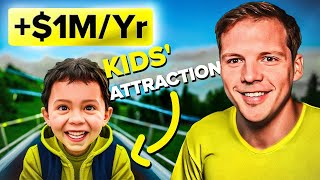
Matthew built Pigeon Forge Snow, an indoor sledding facility, plus a mountain coaster and other tourist attractions in Tennessee. He explains the costs, staffing, pricing, and how he hit high margins once the business scaled. The conversation covers what worked, what didn't, and how to replicate the model.
Chapters
I'm not exaggerating when I say that this was the best episode I have ever recorded of the Kerner office. I interviewed a guy from Twitter you've probably never heard of. He lays low. He lives in Knoxville, Tennessee. His name is Matthew. He owns a bunch of really freaking cool businesses. An alpine slide, an indoor snow facility where kids can go sledding, all kinds of really unique businesses. And you would never, ever, ever, ever have heard of either this guy or his businesses if you weren't listening to this right now. I promise, every minute of this episode gets better and better the more you listen to it, because we get more comfortable with each other. We keep talking, we're ideating. We're coming up with ideas all over the place. This isn't just like, a ploy to get you to listen to the end, but it gets better as you go. And we're going to talk again in three or four weeks. Let me know if you want to have him on again, because we only got to, like, a third or a quarter of his businesses. This guy's freaking awesome. We came up with amazing ideas that you can copy yourself. I hope you love this episode.
Let me know.
Email me if you do Chrisofounders.com and I will have him on a second, third, 30th time. Whatever you want. Anyway, enjoy. You go by Matt or Matthew?
I get called both, but usually Matthew is what I say.
Okay. It's funny because you own so many things that, like, I'm looking up to you.
Right.
Like, I want to talk to you.
No, no, no. I appreciate that. It's something that I feel like, just watching your stuff, that we are very much alike in terms of just, like, enjoying new things, enjoying making things how things operate, definitely how things tick and exploiting opportunities when it makes sense. Yeah. I don't know. That's the vibe that I get from you. And hopefully I'm close to. Right?
Yeah, no, that's it. I'm just curious. And I'm too impatient to, like, to not find answers to things. And then once I find an answer, that's like, oh, this business could work. I'm too impatient to not try to make it work, like, right away.
And, yeah, like, I even. I wouldn't call it impatience, but, like, when you set this up, I was like, yeah, let's connect whenever. And then you're like, 3:30 or 2:30 or whatever. And just that directness of like, well, let's just do it now, let's do it tomorrow. And that catches me off guard. A little bit in a good way. It's just I could do some more of that in terms of just making things happen and pushing things forward and. Yeah. Just even appreciate. Yeah. How you went about that.
Yeah, well, thanks. Yeah. And transparently, when I have an opposite reaction, like, all right, well, let's. Yeah, let's explore that at some point. It's like, I'm just not that interested.
You know, there's an endless amount of cool things, cool people, opportunities, and so, yeah, if you don't, like, get in front of that person or whatever. Yeah. People find other things. So. Yeah. So anyways, I have admittedly not watched your show. Mainly that's okay because it, get. It would get me so, like, anxious where it's just like listening to you or reading your stuff or like listening to a great podcast. I start having so many ideas and it's like, I can't do that right now. I'll save it for later. Focus. Yeah, yeah, yeah, yeah. And I've got a lot of catching up to do in terms of your videos and stuff. I definitely want to get through them all over time or whatever.
Yeah, Well, I just want to hear, like, why don't we start with you just telling me everything that you own, like everything that you're doing that you're comfortable talking about.
Yeah, of course. So, yeah, just as, I guess a disclaimer. I am totally fine with whatever question you want to ask or whatever. And worst comes to worse, I say we'll save that for later or something. But, yeah, feel free to ask about anything. And I was thinking about how to explain where I'm at and what my history is and bowled it down to. I grew up in a very, like, entrepreneurial, free household where I was allowed to build and experiment and fail and all this stuff. And so what that has led to is, is this isn't planned, but I feel like every two or three years I do like some major, major project. And each time I do a major project, it's bigger than the last one, whether that's good or bad. And then mixed in, there's all these little. Whether they're experiments or one offs or whatever. I think part of that is I just love the novelty, I love the creation, I love just trying new things. And so anyways, yeah, so the big stuff, I think we originally connected on Pigeon Forge Snow, which it is an amusement in Sevier County, Tennessee, which, in case people aren't familiar, that's home to Dollywood. And yeah, it's a total tourist town. And that provides A lot of opportunity to be unique in terms of creating amusements and restaurants and even lodging that people haven't seen before. And so anyways, I built Pigeon Forge Snow. Built it in 2017ish and opened in 2018. It is a 35,000 square foot building that is indoor snow complex. It's open all year long. One thing that is really unique about it is it's something called temperature independent. And so basically when you go in the building it ranges anywhere between maybe 65 degrees and 6072 or whatever. It is not a, what they call sub zero facility. We're open all year long and yeah, it's a pretty big operation. We've got depending on the time of year, we've got 30, 40, even up to 50 employees. We staff around the clock. We've got a morning and day shift that leads into the afternoon and evening shift. And then when we close the public, we have a third shift that comes in that blows snow all night and we do it all over again. And for the most part, yeah, we're open up 365 days a year unless there's something crazy. So anyways, I guess my baby. And before that, I guess the major project was I built an alpine coaster or a mountain coaster right around the corner. Yeah, yeah, just a couple of miles down the road. And that was maybe 2014, 2015 and. And I had never even heard of a mountain coaster. It was brought to me through a group of people in town that were also amusement operators and owners. And they sent us video of this other business, this alpine coaster. And there was like an hour long wait all day long. I was like, where is this one?
Where was this one at?
So it's on where's Valley Road? But it's. It was the first one in the area. It's called Smoky Mountain Alpine Coaster and it's just a couple miles away from Pigeon Forge now.
And wait, so I. Sorry, I meant the one that they brought to you that had a line out the door was that one in Pigeon Forge.
Yeah, yeah, yeah, yeah. And I think you would agree with this. Sometimes the best opportunities are, you know, being inspired by other people's work and being respectful of that. But yeah, understanding that there was a market there and trying to capitalize on it. And so anyways, this group formed, there were 10 people with me included. And the big thing was, hey, these alpine coasters, they take a lot of area and land is at a premium in that area. You need the elevation change to make the uptrack work along with the gravity of the downtrack. And so there's just not a lot of places that you can build something like that, Zoning, all that kind of stuff. There's a place right up the road, just coincidentally of that competitor that was identified. And we ended up leasing part of this guy's property to build it. And it was awesome. Like, it was such a cool experience. The, the company that, that builds most of these coasters, they're out of Germany and they just, they're incredible with like their precision and their engineering and everything. And so basically you write them a big check and they build all that in Germany.
How big of a check are we talking?
That. Okay, so now keep in mind, this was 2004, 2015 numbers. The coaster itself was probably maybe 1.6 to 1.8. There was maybe half a million in terms of shipping and that kind of stuff. You had to build it, which was probably another million. But it's a mile long track, six or eight foot sections at a time. Steel. Yeah. And so it's a giant LEGO set, basically. But still it's a lot of work. And, but it's a pretty simple concept. All. It's basically again, it's. There's a loading station and there's single carts. It holds two people, but typically it's just one person. It connects to a cable which takes them all the way up the up track. Just like maybe a traditional roller coaster. Get to the top and then gravity does the rest and they zip down about a mile. And what's really cool about it is you can control your speed. You've got handles and you can go fast, you can go slow. And we capped ours around maybe 30 miles an hour, something like that. And when you're a couple inches off the ground at times and going 30 miles an hour, it feels way faster. I have seen grown men scream and stop and all kinds of stuff. And so anyways, it was and is a great ride. We went into this alpine coaster boom where after us there were a lot that were popping up in the area. But everyone's kept doing more and more money. It was just something that. And it still is something that really resonates with people. The whole family can do it. Personally, I don't like riding roller coasters. I get motion sickness. So even with me, you just go slow and you enjoy the view, or it's a great date or with kids or young, old, everything. And so it really, really resonates with people. It is the, the most shocking thing was when this first one opened up it is. They were about 15 or $16 a ticket. And. Which doesn't sound that bad, but that's.
For one ride, right?
One ride. And that's four, five, six minutes, depending on how fast or slow you go. And there's a discount for a second ticket. And you would see people get off the ride, smiling ear to ear, buy another ticket, even at a discount, but then go get back in line for sometimes up to an hour or two to just do it again. And so it was just something. It's. They're great, they're fun. I always recommend them to people.
You didn't foresee that. That people would ride that many times?
I ride and. I don't know. I think I'm frugal at heart. And so it just like. And then you start thinking, how are.
You spending this much money?
Yeah, yeah. And it's something that. It's something. Families, four or five. I believe you have several kids. Is that right?
Four. Yeah.
Yeah, yeah. So you know better than I do.
We went. Yeah, we went in Pigeon Forge. I don't know if it was yours.
Or not, but do you remember the name or.
I. It's probably in my email. I've been thinking, no problem.
So ours is very easy because it's, like the most obnoxious one. It's. There's an existing business there called Goats on the Roof. That is a shop that literally just has goats on top of it. And so, anyways, you would definitely remember if you went to ours.
No Goats.
Okay? The no Goats and not us. No big deal. There are so many in town now, but, man, they're just great. They are these turnkey businesses, believe it or not, you have the capacity to write a fairly large check. And if you have the spot to put it, it is. It's a good business. Pretty easy. It's a giant assembly line, and it doesn't take that many employees. You can.
Especially compared to your Snowplace, right?
Oh, yeah, definitely. And so anyways, we had success there, and I learned a ton. I was the largest shareholder there, so I felt like I had a responsibility to do everything from marketing to operations to. Yeah, I'd be working a ticket booth when somebody wouldn't show up. And. And so anyways, I was also by far the youngest in the group. And the group ranged from, like, me, who was probably late 20s, maybe 30, and the oldest guy there was maybe like 88 or 90. And so there was, like, huge mismatch there. And whether it's right or wrong, I think I developed a Real chip on my shoulder of that. I was the kid or didn't know what I was doing or all this stuff. And so as that ship grew and grew and grew, I reached a point in a couple years of running the coaster as, like, I need to prove to, like, the whole world that is not true, that I am creative and I can succeed. And that's when I started thinking about Snow. And again, I can't stress it enough. There was nothing like that at the time. And so real quick. Yeah.
Can I ask a couple questions before we move on to Snow? I've got like a zillion questions.
Ask all you want.
What made them want to come to you in 2014 to be a shareholder? Had you already done cool stuff or.
Not cool by probably their definition, it was a money thing. And that's a whole nother lesson of the group was broken down between some sweat equity in terms of putting the deal together. And obviously, at some point there has to be money. I'm a little rusty on the numbers, but I think we. I think the group put in maybe a million dollars all in all. And we borrowed, I want to say, 2.4, 2.2, something like that. And. And so anyways, my family is fairly well known in the area. I come from several generations of entrepreneurs in the real estate space. And so anyways, I think it was just something that the name was known, and that was how that connection was made. And at the time when that got brought up, the plan was like, okay, let's invest 25, $50,000. Let's just buy a lottery ticket. Sure, whatever. And things kept happening where maybe somebody else dropped out or they couldn't find another investor, and one thing leads to another, and it's like, oh, my gosh, here we are, like, writing bigger and bigger checks. And. But then it's like, the sunk cost fallacy is like, men this deep, let's just keep going. It's not going to be the end of the world if it doesn't work out. But this was not the original plan. And so anyways, that's how that. That wound up.
Okay. So that probably also put a chip on your shoulder where you're like, listen, guys, I'm more than just a check. Like, I could do this myself. I don't need all you.
Right? Yeah, yeah, yeah.
Was the. The number one thesis like, hey, man, this alpine coaster just opened. It's the first one in the area. They're crushing it. They can't keep up with their demand. There needs to be a second. We could be the second. Was that kind of the whole thesis?
Yeah, definitely. If anyone's even vaguely familiar with kind of the Pigeon Forge, Gatlinburg area, it has this bad rap of that's just go kart tracks and T shirt shops or whatever. And a couple decades ago, it definitely was that. But the reason it was that somebody opened up a go kart track. And there's wild stories of especially for credit cards are prevalent. Just massive amounts of cash, a lot of probably shady. Yeah, accounting and taxes and stuff. And so you see somebody doing that, and then somebody opens up one beside the street, blah, blah, blah, blah. And it seems like there was just this demand for go kart tracks and T shirts. And so that's why we wound up with so many things like that. But obviously, people want more than just to ride a go kart track. But a go kart track is something that anybody can comprehend, how that business works. It's very easy, very familiar. And then maybe you add. You spice it up a little bit and you have a tunnel or something. And the coasters were very similar model. And I think the main reason it exploded like it did in our area and across the US Is because, again, it is, believe it or not, very turnkey. It's engineered. This company from Germany, you pay them to come out, they'll drop site, plan all this. If you hire construction crew to build it, then it's just like go kart track 2.0. And so, yeah, I think it's just very accessible. And that doesn't seem that intuitive. It's like very turnkey. And so anyways, I think that's why I forget what you asked, but I think that's why that was popular and that resonated with entrepreneurs in the area.
Okay, so you and a few others put in seven figures. You borrow seven figures, you probably takes one to two years to get open.
Or so we. About a year we had hiccup after hiccup and ended up getting close to the end and ran out of money. In hindsight, the guy that put the budget together, it was like on the back of a napkin. He was just guessing on stuff. And we're like, okay, yeah, that sounds right. And so then when it's like, man, like, you didn't include like, the cost to pave the parking lot or whatever. And so we. I think we were short maybe 400 to 500,000. And I don't know the attitude of the bank at the time, but they. They extended our loan that amount. I think they were probably also like, hey, we're this deep in it too. And so anyways, yeah, so yeah, we put in about one and probably ultimately borrowed two and a half, maybe 2.75.
What did opening week look like? And I also want to know like first year, what did that look like? And then as more competitors, what did it look like last year on a revenue traffic basis?
Yeah, so I, I have always loved marketing, especially like growth hacky little like tricks. And at the time Facebook had this ability to where you could download these tools and stuff and basically go to a competitor's business page, download all their users. And I've done. Yeah, yeah, yeah, it's. It was amazing.
And then you retarget to them.
Yes. And basically uploaded all of the competitor, who the competitor was doing and still is amazing. They have, they went viral so many. Anyways, and so their Facebook page, that was when Facebook was really popping off too. And so I, for months I ran these ads against their list and basically said something like, if you like them, come check us out, whatever it said. And we also came in at a lower price point too. I don't know if that was good or bad, but we're angled the cheaper one. And so I.
Are you still.
The cheaper one Marketed pretty heavy. So fast forward a little bit. I sold out in 2021, 22. But yes, they are still, I believe, the cheapest one.
Okay, so you marketed pretty heavy.
Market heavy. We opened up in like a nasty February day or whatever. And I remember we opened up and we advertised a $5 ride for our first couple days or whatever, which is really cheap. I remember we did like, I don't know, eight or ten thousand dollars and everyone was like, oh my gosh, what'd you expect? The weather was so bad. It's kind. It was kind of in the off season and I don't know, maybe, maybe a few thousand. But I wasn't really familiar with that, the amusement business yet. I remember that whole week I worked the ticket booth and so somebody would come up and say, I'd like whatever, four or five tickets. And I punch it in and I'd say, okay, your total is, I don't know, a hundred bucks or whatever. And when I would see the hundred on the screen before I told the customer, I was like wincing because it's like, oh my gosh, they're going to say no. Yeah, they're going to yell at me, all that kind of stuff. And it was just amazing. Like people on vacation have a different mindset. And so we were very heavy in cash. In ter. We were probably 70% cash, 30% credit card. And you just see people open up their wallet and just toss you a hundred bucks. And I remember the first night we didn't have a safe. We didn't have anything. And I used to always carry a backpack around. And so I just. That night I just shoved all the cash. Like seven grand. Yeah, yeah. And my kitchen table, just lay it all out and whatever. And it was very. In terms of the operations, very hacked together. Very. Just build and iterate fast. And that. I love that. That is so me. It's the best and. Oh yeah, definitely. And it's something that first year we probably did, I don't know, maybe $2 million, give or take. We just sold two things. No, sorry. We sold three things. We sold a ticket, which was adult ticket and the child's ticket, which is $12 and $15. Then we had a Reride ticket which was $5, which is very popular. And then we also had a photo booth that would sell people their photos on the. And so anyways, that was 100% our total revenue sources on the property. Like I said, there was an existing business, this kind of gift shop and food and goat food and all of that. And so I don't know his numbers. I would guess he definitely, revenue wise, had to be over a million dollars. And so on the property there was probably three, maybe $4 million changing hands. Obviously I didn't have access to part of that, but anyways. Yeah, that kind of gives you a kind of a. Yeah, a range. And so our first year we did really well and we continued to grow. We. We built the coaster pretty much ourselves. Like as in somebody in the group had a construction background. And, and, and so anyway, so we. Every year we paid the price in terms of. You. You've got this massive steel structure on the side of the mountain. This mountain. And we would get. When I say shifts in the track, I'm talking about 4 inches here, 6 inches there. But this. The design was so precise that if. If you. If it started to get out of whack, you just got grinding and wear and tear. And so basically what where I'm getting at is we close maybe every year for anywhere between a week to three or four weeks to fix stuff that I don't think other coasters went through. And so that always, I feel like shot us with having that like just blowout year. And. But we all. We were very consistent. We just. We had a lot of things working against us, but. But profitable. But just you want to see that growth. You want to double every year, whatever. Yeah. So pair that with like literally some years. There were two coasters being built that year and every year there was a new competitor. Wow. And yeah, I think the area. So Sevierville, Pigeon Forge, Gatlinburg, I think they're up to maybe 10 coasters now. Wow. And I know of at least two that are planned and I assume going to get built. And I studied the competitor, the original one, Smoky Mountain alpine coaster, so much I would go down to their parking lot and I'd sit there on my phone and just kind of do the. Yeah. Count how many people. And man, like they never slowed down. And it's still to this day the most baffling thing to me that especially them, it was almost like the more competition that came in, they were doing even more themselves. And, and, and, and so anyways, that industry is very strange in terms of the demand and the supply. It's something that I keep thinking that it's going to be saturated. Yeah, yeah. But it doesn't seem to. And the profit margins are incredible. And so it allows a lot of room for error there. The fourth, maybe fifth coaster that went in the area. I remember I knew some people involved with it and I can't say 100% sure, but I think their budget was about 8 or 10 million. And at that time, and even still this day, I was like, that amount of money, that is insane. But they print and so it really shows that if it can support a build out like that, regardless what their terms are, whatever. Yeah, it's just impressive. It just shows that the demand is there, it's still there. They're all, I think, doing well. And so it's a super interesting business. If you haven't done a deep dive on them, like, oh, I'm planning it now. Yeah, yeah. And I've thought a lot about where are other areas that you can do those. And they're all around the.
Kind of got to have the terrain.
Right. You have to have the terrain, which. So something really cool is the German company, their name's Wiggins. They were innovative enough to figure out how they can build these without having these massive uptracks. And so basically what they do, you still have to have quite a bit of area and elevation, but they chop up the uptrack. And so maybe instead of 1,000ft or whatever of UpTrack, they might do 3 or 400ft of a smaller up track, do a smaller down track, do another up track and so on. And so forth. That coaster I was referencing earlier with the 8 or 10 million dollar budget, they have 4 up tracks and that was the first one to do that. And I thought it would fail because the best part of the coaster is the downtrack. And so you would go up and then just when you start getting going and you're smiling and you're going fast, you're stopping again and you're doing another okay, let's slow down, do another up track. To this day I do not understand why people resonate with those, but they do.
Do they like or are they just in business because they don't know what they're going into when they buy a ticket?
I thought the same thing. I was like, ah, they will, they'll burn out because word will get around and blah blah, blah, blah. Man, I was wrong on that.
I, I, what do they charge more? 3 times as much, right?
Well, sure, they're probably, I don't know, $18, something like that. The best scenario is when you can put two people per cart. It's just wildly more profitable. Almost all of it is automated and has gotten way better over the years. And basically the operator is responsible for helping the customer get on the cart, making sure they're buckled in. And then past that the computer kind of takes over. And so basically a perfect scenario is a cart leaving the station maybe every 20 seconds, 18 seconds, something like that. And I've done this. You can work backwards on the math there. Even the best of the best coaster, they're capped at whatever that is. And there are definitely times that we operated, a lot of times that we operated every 20 seconds. That does take some skill. That is not just and, but then you're always going to have, you're going to have somebody that's up on the down track and freaks out and goes really slow, slows the whole thing down. This and that. Yeah, just a bunch of crazy stuff. And the carts are really cool because they developed a system that basically it's an automatic braking system where they cannot, they cannot collide. And so if it senses a cart going slow in front of it, it will slow down too. Now some people get really pissed when they're halfway up and they're slowed down to crawl the rest of the way because grandma is just enjoying the view. But minus those things. Yeah, like you can again, you can work backwards on revenue. You're very weather dependent. Summer is by far the best season. They made these, I call them rain shields, but basically like a plastic covering and I don't know I don't think that really resonates with people. People do it, but they're going to be way slower when it rains. But the insane thing is there are a lot of people that still want to do it in the rain. It feels terrible as it's just pelting you in the face. And it's something that they'll sit there and wait for the rain to clear and do it again. And so anyways, weather dependent, temperature dependent, there is no worse feeling than when it's 30 degrees and you're going 30 miles an hour down that hill. Your face is just frozen. There's still people that do it. And so anyways, you got to hack together somebody's revenue. If you give good estimates for those categories.
I just said, and what are your net margins? Like either yours or the industries?
Yeah, yeah, definitely. It's something that with all these kind of amusement businesses, you're really heavy on initial investment and really depends on how you like amortize that or how you're accounting for that. But you know that. And then your cost from there, you've got next to no utility costs, minus bathrooms and a little bit electricity. You've got a little bit of a repair and maintenance budget and ongoing. And then staffing wise, you can run the coaster with three or four people. Probably good to have six or seven. But so anyways, when you kind of work backwards on that, once you get over your hurdle rate of just as debt service and stuff like that, there were definitely times we were over 50% margins. And then. Oh. Oh my gosh, yes. And you just got to think the cost of selling one more ticket once you're over that, like it's nothing. Yeah, yeah, yeah. And your staff's already there. The electric's gonna, the lights are gonna be on. And so it's about. Can you be somewhere that you have enough demand. Yeah. To get that hurdle right, I would be interested in doing another one. Not in my area, but I think the cost now to do it. If somebody asked me to look at their budget and they were thinking about doing one, if they were less than $10 million, I would be asking a lot of questions. And so you know that hurdle of 10 or 12 million dollars, however you acquire that money or debt or whatever, that adds up. If it percent interest rates or whatever, they're still doing them. So obviously it works. But I would be a little bit more hesitant on that. But I've seen other areas where people have put these in. There's a little, there's a little town in Georgia, Helen, Georgia. And I think there's a couple there that do okay. Branson, Missouri has several. I think they do. Well, I've never seen a coaster close. We'll put it like that. Yeah, yeah, yeah. There's some out west in the Rockies, I guess, that are beautiful, like insane views and. Yeah. So if you can find an area that makes sense from just a demand wise. The elevation is tough, but not impossible if you're in. Well, even like I. I've brainstormed ideas like, how could you do it without any hill if you're in like Kansas or whatever. I don't know if it'd work, but I've got.
It's just a roller coaster at that point.
Yeah, yeah, yeah, yeah, yeah. And so especially if you did it like in Kansas, I know nothing about the Midwest like that. But you'd really want to be confident. You've got the demand. But that's something too. It's like if you're in an area that there's not a lot to do in terms of like for kids or birthday parties or whatever, like it. I think it'd be such a hit. And so, yeah, I love coasters. I think they're great businesses. We were really big on safety, just running a really safe operation.










