How to Start a Digital Detox Business in 2025 (+4 more ideas)
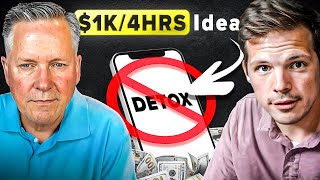
Chris Koerner and Shannon Jean discuss five small-business ideas for 2025: digital detox programs for families, a licensed-recipe kitchen model, AI integration services for local businesses, and a business-in-a-box product for accountants. Each idea includes pricing, starting small with free trials, and examples of how to borrow credibility early.
Chapters
Welcome to the Kerner office. Today I had Shannon back. Shannon was on our July 19th and July 12th episodes and he was so good that people begged for him to come back. So here he is. Shannon's a lot like me. He started a zillion businesses. He flips high ticket items, handbags, watches, cars, trucks worth of iPhones, you name it. He started a lot of stuff and he has a ton of experience. So I wanted you guys to learn from him some more. So today, Shannon and I spoke about a bunch of cool business ideas from digital detox centers for kids and adults to kind of like a ghost kitchen concept, but not a ghost kitchen. You'll really like that one. And then we talked about integrating AI in boomer owned businesses and charging a pretty penny for that. So enjoy this episode with Shannon and to next week, a week from today, we will have another episode with Shannon. So come back and listen to that one as well. See you later.
I tell you another thing that is happening, at least in California, I don't know about in Texas, but public school districts around here just starting to ban smartphones at school. They finally hear, hey, this is crazy. So I really think there's an interesting opportunity in a digital detox retreat. Whether it's virtual or, you know, they go for a weekend and all these learn ways to manage, especially teenagers and kids learning how to manage these devices. Because, you know, a lot of parents, they just hand it, here you go, all the things that you need on there, like the safety stuff and parental notifications and all those kinds of things. I think it's a really interesting opportunity and I think the timeliness is hot. I've been thinking about this a lot lately, coming up with ways to do.
It, you know, swinging back, swinging the other way.
So let's teach these kids how to use this amazing tool, how to protect themselves, what the do's and don'ts are when to use it, how to do it. It's a tool. 2007, when the iPhone first came out. So you know, over a decade of time, 17 years about. But there's a whole, like my kids were a little older, so I was so lucky or fortunate that they were already in high school by the time that they started getting smartphones. But now I was just on a trip with some family and you know, one of my wife's nephews, she's like 8 years old and he's got an iPhone 12 and just doing his thing, you know, and so there's, I think that's an interesting opportunity. Very easy to get into. You can use ChatGPT to create you a whole course, a whole set of curriculum, and then you go through it all, learn it. One of the ways I think it's to get started, too, is to do things for free, is to offer your services for free. And I think you could do that with that. The digital detox, it's like, hey, you know, our school is going off. I created a digital detox course. Here, take it. No charge. Let me know your feedback. And I'm going to do a little webinar this weekend, or I'm going to be down at the park and I'm going to talk through all these things and see how it goes. They will tell you what works and what does not. Right. They'll teach you. That's how you can get started.
My brain is flooding with ideas right now. All right, I'm going to sit up in my chair. So I love this idea. It's very relevant because I have four kids. My oldest is 14.
He.
He just got his first phone. And we are very much in the camp of, like, if you make it taboo, then they're just gonna wanna do bad things.
I agree with you on that.
Yep. And so it was like, you have an iPhone at 14, it's locked down, but you still have access to certain things at a certain age. Maybe 17, he'll get Instagram. Like, he has no social media. Cause if he never uses social media while he's in our house, then who knows what he'll do when he leaves. Right. And so I don't wanna get onto soapbox about all that, but I think it's very interesting because they have digital detox stuff for millennials that's been around for five years. Right. Where it's like you pay $10,000 or something crazy. You go in the woods with no phone and, like, you meditate in a cave for a week, cold turkey or something.
Yes.
Yeah. And then they have summer camps for kids. And a lot of the summer camps don't allow phones. And they're out in the woods and kids have a fun time. They do great. But I don't know of anyone doing this where it's like, it could be a day thing, it could be a week thing, like a summer camp. But it's not framed as a summer camp. It's framed as a digital detox camp. Right. And I'm picturing it like you've seen the show Scared Straight.
Yeah.
You ever seen that?
Yeah, I love that. Yeah, yeah, yeah.
You could probably take different angles at the same camp where it's like, on one hand, it's like a softer angle and it's like, here's the science behind it. Let's be responsible. And on the other hand, it's like a Scared Straight where it's like, watch this video of these kids that all lost their best friends in car accidents.
Invite these kids that have went about it the wrong way or. And then invite these parents, because you'd have multiple sessions, you'd have the kids session, but you have to have a parent session as well. And you. Then you have parents that come up and say, yeah, you know, I didn't under. I just handed my kid the phone. And. And this because I would hazard to guess that most parents that are very busy and they're not paying attention to what's going on, and the kids figure it out, man, they get these apps to hide them someplace and they go around and all these kids want to be on social media, but they don't. The guardrails that need to be in place. And you have to teach it in a way that respects their intellect. You can't talk down to them. They're smart. Young kid. Hey, look, we're gonna. I'm gonna teach you how these things you can do with it as you will, but let me show you the repercussions. And this is what you wanna save, you know, you wanna protect yourself and all that stuff. I love that concept. I do think it's very timely right now for kids.
I talk to my kids about this when we were driving. It's like, here's how a cookie works or an algorithm works. If Instagram sees you click on this cute girl, then you refresh the screen, it's going to show you 10 of those. If it sees you click on a guy fishing, it's going to show you 10 of those. Like, it doesn't care what you look like or what you look at. It just wants you to stay in the app forever, Right? So just know what's happening behind the scenes. Like, something like that would be so valuable, right? Very, very.
And people complain like, oh, my, the X is just a cesspool. My feed is full of stuff. And it's like, well, yep, let me show you how to fix that. You know, here, I don't want to see this. I don't want to see this post. This post is not relevant. And it takes only a few hours. And all of a sudden, oh, wow, I'm seeing really valuable, you know, content in my feed. So these kids don't Understand it. And it's like, okay, and how do you manage what's a reasonable amount of time that you could spend on it? And this, all those kinds of things. I think it's a, I think parents would spend a thousand bucks like that to have a four hour course down at the park. I think it's a home run, big time.
And then the kid comes home with like a, basically like a plan of action or a roadmap for the next five years of their life. Right. Like you recommend that at age this they get Instagram, at age X they get Snapchat or. And it's like, well, I don't want them to ever have Snapchat. And it's like, he's going to get it at 18.
They're going to get it, right? Yeah, they're going to. Yeah, that's right. And you know, it's the same thing, that mentality. When your kids go away to college, they're going to experience stuff that you probably don't want them to. So you got to start loosening the reins because I would rather have them experiencing some of those things while they're in high school, still living in my house. So I could walk through that and help them and be a resource for them. So. But I love that. The other thing I really like is this. We see this more and more out here in California where you have people that want to start a restaurant, which I think is a horrific. I don't know anything about it, but it sounds like a horrific business. But the concept that I do like is, and I have, my neighbor owns a couple of these, is licensing the name and the recipes of another restaurant having a very small, almost like a ghost kitchen. We just had one in my town. They took over a small. It used to be, I think, a, I don't know, a cheesesteak shop or something like that. But now when you go there, there's all these restaurant logos on the window and you walk in and there's just a flat screen menu and you say, what restaurant do you want to order from? And you go, okay, I want this fried chicken place and I want their sandwich great. Or I want this vegetarian. Boom, boom, boom. And the kitchen's right there and they have all the ingredients and the recipes from these local restaurants that are well known. They pay a licensing fee to them. So it's additional revenue for the bigger restaurant. But your family can go to this place and order five different things. You can order it online, go and pick it up. There's no. Well, there's maybe there was a couple of little tables. But I love this concept because it's borrowed credibility, which I'm talking on the Business Brain podcast on Friday. I'm talking about this concept of borrowed credibility. You instantly have an audience that's searching for these restaurants. They've been around for a long time. Maybe it's a national chain. I don't know if it's a national chains if they would license or not. But certainly regional. And you get. It's like, look, all we want to sell is five of your best items or whatever it is and we'll pay you x X dollars per month and then you have your ingredients that you can share. Because ingredients are, are the killer in those businesses. Right. Things that go bad or you know, stale or vegetables that, that don't last. So you've spread your risk across 10 different restaurants that you are selling this stuff for. I love it. And the one that we have here locally to us is awesome. You go in, it's like a big flat screen. It's like, I don't know, 20 inch vertical thing and it's like really nice. Nicely done. And you can pick and pick and like I want to cheat. It's called Local kitchen. This is ours. Is. There's a bunch of them. Yeah, Local Kitchen. If I want a cheese, a double cheeseburger and french fries. But my wife wants grilled asparagus and so.
Great.
And allows you to do it and pick it up on the way home. Or you can order it online. And of course they do a massive doordash business right. That people are coming in and it's cool. I think it's an interesting concept. It's different.
It's like a ghost kitchen that you go to.
It is. Yeah.
It's also kind of like a food hall, but you just order everything from one. Like at a food hall, you walk around, that one has a shorter line, that one has a longer line like I really want chicken, but the line's too long. So I'll go over here. So it's not a food hall, it's not a ghost kitchen.
It's kind of in between.
Yeah, it's most similar almost to Gold Belly. You familiar with them?
No. What is that?
Goldbelly.com is a website where you can order like the most famous iconic restaurant food in the world.
Oh, that's cool.
Like, yeah, mail order to your, you know, ribs from Alabama dish pizza from Giordano. It is like that. And yeah, it's very expensive because you're doing this Stuff like, yeah, a brisket is like $200 from Franklin's. Right. But Gold Belly is like $150 million company. They do great.
I learned about this on the flip side because my neighbor who owns like three food trucks and a couple of standalone restaurants, and he licensed their best selling things to this local kitchen. And he's like, yeah, it's great because it generates revenue for us that we wouldn't otherwise have. It's probably the best ROI they have. Right.
Do you know what he pays?
I don't.
Or do you know what he gets?
I don't know what he gets.
Interesting.
Yeah, I can find out. You know, I'm sure every deal is negotiated differently, but I can't imagine it. It's got to work. Obviously there's, you know, like I said, the restaurants kind of rotate. I do notice that where you'll go over there and say, oh, man, they don't have this anymore. And I don't know if they do that intentionally to keep it fresh or, you know, they've negotiate. They do a six month trial and something changes with a certain restaurant. But that's what I would do because the cost structure I think is much better. There's only like three or four people in the whole. In this place, and that yet they make, you know, a hundred different, you know, 10 restaurants, their top 10 items. And then, okay, great. And then the guy goes and does all that stuff.
It's pretty.
It's fascinating. They pick these meals they want based on ingredients.
So, like, we want to have to fit a profile.
Yeah, it's a certain profile that says, this is how I would do it. I don't know if they do it. I'm speculating. But yeah, we want to do chicken, but we have. This is the amount. This is how we want to do it. We don't want to do this with the chicken because we can do these five other things with it or something. Some produce or that kind of stuff. It's cool.
Yeah. All right. If you are watching this clip right now, you are watching this on YouTube. And if you are a fan of podcasts, please check out my podcast while you're at it. Because sometimes I have podcasts that aren't on YouTube and sometimes I have YouTubes that aren't on podcasts. So check out the Kerner office on any podcast platform. Or you can go to tkopod.com also my newsletter will throw that in there. There are no ads, it's weekly. It's different content than my podcast and YouTube newsletter.chrisjkerner.com youm'll see the L and we'll see you there. Are you familiar with Jack Welch's management style? Have you heard about that at all?
Yeah, a little bit. A little bit, Yep.
So he. Basically at GE, like, in the 80s and 90s, when they had their heyday, Jack Welch was the CEO. Their policy, every year, they would fire the bottom 10%.
Yeah, yeah.
All familiar with that based on a performance review, no matter what. And then they would promote the top 20%, and then the 70% in between just stayed. I feel like that's what Costco does with their products. That's what you always see new products at Costco because it's like, didn't make the cut. You're out. I wonder if this restaurant does that, and if they don't, they should. Where it's like, listen, buddy, we got to see 10 grand out of you every month or you're out.
There's no. No reason. Yeah, there's no reason to do it.
And then, like, the top 10%, it's like, we're going to move you to the top of the menu because people clearly are looking for first thing.
Yep. And just think about all that borrowed credibility you get when they search for, oh, this place is like, we have a place here called the Hangout that has unbelievable fried chicken. Well, you're searching for that place. And in addition to the results for their restaurant, Ghost Kitchen place comes up there, too. Local kitchens. We offer, you know, the Hangout fried Chicken, you know, oh, what do I want to do? Go eat at the restaurant or just go walk in and, like, take out that kind of counter, if you will? It's kind of cool.
Do they offer brands that, like, don't have a. A presence or a name, or is it only stuff that you would have known.
Heard of locally that you would know, but not nationally? It's all typically local, regional, I would say restaurants.
Yeah. Because a lot of Ghost Kitchens just have a Kelsey's Pizza, like just some generic name that's not actually a local brand. So it doesn't do, like Applebee's, but it also doesn't have generic names. It's like locally known foods.
Yeah, yeah. It's pretty much locally stuff. Yeah, yeah. Regional.
Interesting.
It's cool. Yeah. I think people sleep on this because online there's a lot of the AI is crazy. Whatever. But I think the opportunity to help small and medium business owners with AI is unbelievable. I think that if you're a people person and you're comfortable Reaching out to just start in your area. If you walk into these businesses and say, hey, you know what? And I would do it, something for free at first to get their attention. It's like, how do you learn about AI? Just go to the AI and have it teach you. Go to chatgpt.com, get a paid account and just say, how do I use you? What are the prompts? It'll tell you, it'll tell you how to do it. And yeah, but something I love is lots of these sites have tremendous opportunity, these local businesses, to integrate AI into their systems. Whether it's creating a chat version of all their policies or their knowledge base or their FAQs. That's just low, very low hanging fruit. You could do that instantly, within minutes and you could give it to them for free to get their attention, on and on. Just keep talking about it. That all the ways that they could do it and the data, data that can be analyzed if you can do it. I think, I can't remember if we talked about this last show, but I had a client that they just wanted to find more customers that fit this profile. And I just took those customers and uploaded them to the AI and said, Find me 50 companies that meet the same profile but tell me what the profiles are first and then do it. So if you could show that to. It's like, hey, if you give me some data, like if you. Only if you're a service provider, I don't know, residential, and you only want, where's your sweet spot? People's homes that are over $2 million. You can just automate that with AI. So easy. And we always talk about boring businesses or the Silver Tsunami. All these older people that own businesses, integrating this stuff certainly makes their business more valuable. And the systems that you have. So when you're ready to sell, you can go, oh yeah, look, we've got these AI systems built in that are generating these reports, automating these systems, created this, created that. I think it's a huge opportunity, man.
Huge. Yeah, I want to play out, take one thing you said and add to that, and that was take their FAQs and give it to them for free. Right? Like run it through AI, do it for free. I think you could also, let's say you only attack businesses that are listed on Google, my business profile that have over a hundred reviews. There are, there's already software out there where you could export all those reviews, just a couple of clicks for a dollar into a Google spreadsheet like we were just talking about earlier. And you could say, you could automate all of this. Where you upload a list of businesses in Modesto, California that have over 100 reviews. You don't care about the industry.
Yeah.
Upload it to ChatGPT and say, I want you to give me the top five things that each business can do to improve their business and make it more profitable. Solely based on. On the reviews.
Yeah, that's huge.
Then you take the output of that. When you scrape these, you're scraping their emails and their phone numbers as well. You cold email it to them and say, hey, and you're very transparent about the AI up front. Like, I used AI to do this. You're not trying to withhold anything. Because I was just talking about this on another podcast. So I don't want to be too repetitive, but it's like AI will always need someone to click the button. Right. I don't care how much it automates, there's gotta be an operator. So your competitive advantage is the AI. Like, I used AI to do this, and I can use AI to implement these five suggestions. Yeah. Number two, might be garbage. I agree it does need some fine tuning, but I can help you. And that at least gets you. Gets them on the phone when you close the door.
Absolutely.
It's gonna be 2,500 bucks a month.
Yep. Whatever.
They see that you have credibility already.
Credibility is giving them this, hey, look, here's this information. You know, give it away. Show them value first. Because they get called all day long by people that want their money before they give them any value. Hey, if you pay me, I can get you X. But you're coming back and saying, hey, look, you don't have to pay me. I'm giving you Y. If you want X, I'm here to help and I'll explain it to you. And this kind of thing, it's just a different approach. I just think it's local, non scalable. Don't think about scaling right now. Just go local. And maybe you can only charge. Who knows? If you could charge 2,500 bucks, maybe these smaller companies could only pay you 500 bucks. But you just have some different layers of things that you could do so they can ease their way into it. Say, look, it's $500 and I can produce this, this, and this. And if you want to subscribe after that, it's, you know, whatever per month. It's a huge opportunity, dude. Huge.
I agree. Back to the pricing. I was like, how do you first charge 2,500amonth? Because That's a big ask. That's a lot. And he's like, for what I was offering, he was doing, like, SEO or something or Facebook ads. He's like, basically, for the same level of service I was offering, other companies were charging 900amonth. And I went in there and said, I'll do it for 150. And it took me 20 hours to do that. So I was making, like, seven bucks an hour. But then the next person, I said 250. The next person, I said 350. And really, I just started gumming up until I had my first. And he didn't get a no for, like, 12 people. He's like, a month. Like, I don't know. It's like, all right, 900. It's like, okay.
Yeah.
Like, that was his pricing strategy, right?
That's it.
So you could do that same strategy with anything.
Yeah. Or free.
Like, I'm not against free, too. Like, to get your. To get your first testimonial, I think that's also smart.
Oh, yeah. Because, like, for me, this concept of borrowed credibility, like, I had no testimonials. Zero. A few months ago. And that was one of the things. Like, you really got to get some testimonials. So I just gave away free calls. You know, hey, can we jump on a call? And then we'd talk, and if we hit it off good, and I felt like I had added value, I just ask him, say, hey, if I sit, can I send you a link? If you felt I added value, would you leave me a testimonial for the call? And boom, boom, boom, boom, boom, boom. And so you build that up because you're giving first. Giving first is huge. One of the last things I'll leave you with that I really like that. I've noticed more and more and more there's a lot of energy that people that want to be entrepreneurs, they don't have the nuts and bolts. Stuff that we've generated over decades where you learn how to file this paperwork and you get this resale permit, you get this business license, and you get your. Your employee identification number, and you do all these. If you're, like, a detailed, oriented person, and maybe you're not the swashbucks, buckling pirate sales guys, you know, that want to come talk on a podcast, but you're super detailed. This business in a box that you could offer an entrepreneur I think is a great confidence builder for them. Where you just had all this stuff here, this is what you need, and you either create it and they can follow the steps. But I would argue that a lot of these folks that are, they're very smart. But you know how it is. You get up on this government website and you're like, I don't know how to answer that question. Am I cash or am I cruel? I don't even know what that is. What is this and why do I need to do it this way? Am I a sole proprietor? Am I llc? I just see it more and more, is that people that are very intelligent and are taking action on pushing them, Go, go, go. But there's. They get tripped up with the small stuff.
Yeah.
So if you're like an accountant, background, let's say a bookkeeper or just a detail oriented person, you could create and you could use AI to help you if you wanted, but you could create this whole package, this business in a box. It was like, look, I'm going to drop this right in your lap and walk you through these things so you can focus on the stuff that you're excited about, whether it's Etsy or Digital Detox or I'm building a restaurant or you're going to start a. Whatever. This is going to be with you all the way along and I'll have all these instructions for you and we'll meet whatever once a month and go over it with you. Or I'll give you access to me in Slack and I'll answer questions. Think that's a, a really big opportunity.
I agree. I'm gonna try to level it up. By the way, that's what. I'm not pivoting, but I've been going in that direction on this podcast where we'll start with a business idea. Maybe it's like, maybe we're saying up front this is a stupid idea. I know it is. Don't judge me. Here it is. And then you say, all right, well, what if you did this? And then I said, okay, I like that. It's like a yes and to a business idea. And then by the time you're done with it, it's like we have an amazing idea.
Yes, absolutely right.
And it's all like, there's no prep work. It's improv. And it's like, that's what's beautiful about it, is that it all happens in real time.
I love that idea and I think it's very approachable. Other people that see it happen, this is how it happens, dude.
So I like that idea and I particularly like framework of sell to 1 to sell to 10. So it's like People say in software, it's like, build once, sell a million times. But that's why software is cool. This is like, sell to one to sell to 100. And so instead of selling to a wantrepreneur. And I don't use that as a pejorative. I use it as fact. Someone that wants to be an entrepreneur, you can sell it to him or you can sell it, and this was your idea to a CPA or a bookkeeper or an accountant. And you could say, hey, you've got 136 clients, varying levels of success. One guy might own a $50 million lumberyard. One guy might have a $50,000 barbershop. Right?
Yep.
And so you use your best judgment. But how easy of an upsell is this, Shannon, where every February, you mass email all these CPAs or tax prep guys, and you say, hey, you're about to send a bunch of invoices. You're about to make 80% of your revenue. I have this business in a box that is customized for. Insert state name here. You got Texas, Illinois.
You do industries.
Insert city name and insert industry here. And you're using chat GPT to go look at all of the headaches that people have on the. Like, the Texas website to file an LLC is. I swear it's from 1988, like, before the Internet was invented. Somehow, I'm telling you, this website was launched before the Internet. Somehow. I don't know how they did it.
Yeah, yeah.
And so it takes all those nuances, and it could be like, I can outline a title page, and it could be like 10,000 words, right? Yeah.
You could have some loom videos in there, maybe that you walk through, like, hey, this. And do that. If you're this. If you do this, you do that. It could be an incredible curriculum that you created. Once you change some of the stuff up based on your state or whatever it is or the industry you're trying to get into, I think it's. I think there's definitely a need for it right there. So there's three things we talked about today.
Not quite done.
Not done. No.
No, I'm not. We got to price it. So, yeah, sell it to them. And it's like, hey, you can mark this up as much as you want. I recommend that you just tack it on to their tax return bill. Say, hey, all right, it's going to be 380 bucks. But I have this business in a box thing. It's specifically for the plumbing industry here in Illinois. It's an extra hundred bucks what do you think? So it's like I'm going to sell it to you for $40 or 50 or 80 or whatever. You mark it up however you want. But I recommend that you attach it to the tax return because it's an afterthought. It's like, oh yeah, okay. Yeah, roll it in there. That'll really help.
Yeah, I love it. I think it's good. I think that at the same time you do that, then you also have it and you're pushing it out, you know, everywhere for that people to buy it on their own. So you're basically white labeling to exactly these other accountants, but other administrative type people. You've created it one time and, and created some specialized parts of it. But yeah, I think it's a great opportunity. I think it's huge.
Yeah, I'm excited about that one.
Yeah, I get excited about too. I love talking about these things and that What I really enjoy with talking with you is boiling it down to making it accessible. It's like, yeah, I don't have, you know, all this cash to go buy a restaurant. But we talked about a guy that bought an old cheesesteak shop and moved some stuff around, added a few things and came up with interesting idea to build kind of a quasi ghost kitchen for regional or the detox thing where you could do it in the park. The cost is minimal to build some curriculum. You could even include one of those. What is that yonder sleeve that they lock those phones in? The parents get that sleeve so when the kids go to bed at night. Oh, this stays in the sleeve until the morning. You know, there's just all these upsells that you could do and, and bifurcate into that and the business in a box. And then I same thing as don't sleep on marketplaces. Etsy, ebay is the greatest ab product testing, sell selling place in the world. And it's huge. It's huge opportunity surrounds us. And if you keep that positive framework and if you understand starting small is the way it. That is it. You're going to make mistakes and mistakes are tuition. You'll kill it, man. That's how you get started. And that's excites me. I love helping other people's get going, get other people get going. It's killer.
I'm still hung up on this local kitchen idea. Like I feel like there's so many ways you could make money there. Like you could reverse engineer what they do, right? You could go get their contract and you could get the whole system down because, like, there's a million guys out there that want to start a restaurant that's right now. Get in their Facebook groups where it's like, people own a food truck or people that want to start, and then you start, like, whispering in their ears, like, all right, I know you want to start a barbecue restaurant, but for this price, I can sell you a template of starting a. You can't call it local kitchen. No, starting a local kitchen where.
Yeah.
You basically go knock doors of some local restaurants that have good reviews in your area. Let's say you get four, and then your barbecue restaurant that no one's ever heard of is number five. That way, like, you're taking 80% less risk for, like, you don't spend any more in kitchen materials or any of that. It's more complexity. It is more complexity.
Yeah. And you're using their credibility. They've spent years. And their reputation. They've spent years developing. So you obviously have to convince them that you can cook it, that you can make it, that you have a decent chef. And maybe you have to say, hey, we're making this. Maybe you have to invite them over and say, hey, can we cook you your top five dishes? So you could come taste them and work out a deal where you could, you know, it's a novel idea, but it takes action. That's the key to getting started. Action research. And it probably won't wind up the way you think it is, but that taking action and planning and getting that stuff going, that's the key.
Yeah. I love that you said it's a novel idea, because that just gave me a new framework. It's. The best ideas are novel ideas that are working well in a different market. Right. Because, like, I don't like novel ideas in a vacuum. I don't want to start something new. I don't want to revamp the wheel, but this is working in California.
Yeah. You could do it anywhere, you know, and pop it up and start small and see if it works.
Yeah.
Find a place that already has the kitchen and all that kind of stuff. Don't go spend, you know, $100,000 building it out or go borrow somebody, borrow some time in a kitchen. I don't. You know, I don't know. I don't think about the restaurant business, but so it's awesome, man. I love talking about this stuff. I could talk all day long.
Yes, me too. Well, this was really good. Where can we find you? Shannon, I appreciate your time again.
Yeah, of course. So you can come follow me on X. It's just at Shannon Jean. S H a n n o N J E a n. You can subscribe to my newsletter, my website, shannonjean.com subscribe. I love doing this. Anytime you want to chat, man, it's great. And I love helping other people, and I feel good about it, and I feel like we're adding value.
Agreed. Thank you. All right, don't forget to come back in one week for the second half of this episode with Shannon. I'm sure you'll love it. Please like and subscribe. You know what to do.










