How To Work 4 Days per Year with a $200k Fireworks Stand
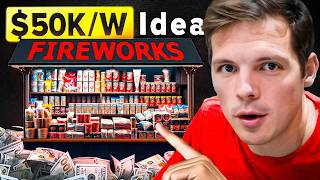
Daniel Astleford bought a fireworks stand for $150,000 and runs it four days a year alongside his CPA firm. One location generated an $80,000 single-day deposit, with margins around 50% per stand. Texas zoning limits where he can operate, and scaling requires finding new locations that take years to become profitable.
Questions this video answers
$150,000 (seller stated non-negotiable).
An $80,000 deposit on July 5th (shown to buyers).
About $100,000 per season (seller claim); two seasons cited to imply $200,000 total potential revenue across seasons/stands.
Approximately 50% margin (seller claimed about $50k take-home from $100k revenue).
Around $100,000 total for those assets.
Chapters
He ended up showing us a bank statement that about knocked us out of our chair. $80,000 deposit on July 5th of coming in on one day. Any stand that does 20 is worth keeping.
Pretend I'm not so busy and I'm going to go do this. Is that doable for someone like me, or is it just not the best and highest use of someone's time?
He told me the number is 150,000. He's like, if you go a dollar lower, I won't ever talk to you again. It can make in revenue 100,000 a season if you do it right.
Well, let's just get into it. So, Daniel, why don't you tell me who you are and what you do and what business you got on your hands there.
I'm a CPA and kind of operate two business realms right now. So my main business is building a remote CPA firm. As I started building that about two and a half years ago, about the same time I bought a firework company, which is really more of a side hustle, especially in Texas, where it's only legal to sell, you know, a couple days a year, and. And maintained my W2 job until about two months ago. So really built those businesses kind of side by side. But emphasize fireworks more for the first two years of it. Last six months have been emphasizing more of the CPA firm just due to scalability and then also having a business partner and, you know, juggling the balance of aligning our visions while also wanting to do what I want to do and build what I want to build.
So you have a partner on the fireworks business, the CPA business, or both?
No, fireworks only. So, yeah, fireworks. I have a 50, 50, 50 partner. Silent partner. He, you know, he doesn't publicly share what that we do it just because we, you know, want to keep it private for him. So, yeah, we're 50, 50 on fireworks, but CPA wise, 100% me.
Okay, so tell me about this business. Where did you see it for sale? What did you pay for it? What was your thought process on buying this?
I had a client at a CPA firm I worked at. Right. So I had positioned myself at that firm to be the guy who was taking the new client calls. And what that did, and I highly recommend this for young entrepreneurs, is get yourself in a position to do something beyond what they try to cram you into a corner and do. Right. As an accountant, they're going to try to get you to prepare as many tax returns as possible, or if you're on the audit Side, they're going to try to get you to cram as many numbers as possible. I got myself in a position where I could take the phone calls, and one of the clients was calling about a different business. But he said, hey, you know, yeah, I'm a businessman. You know, I have this firework company that I run as well. I'm like, oh, really? Like, what's that? Like, so, well, it's just two little firework stands, nothing crazy, you know, I'm looking to sell it. You want to buy it? He said jokingly, Right?
Yeah. You're like, maybe, yeah.
That conversation, it's one of those moments where I remember driving home and I was just jazzed. I was so excited. I was like, man, like, that would be so cool. But it, you know, it just wasn't going to come to fruition at that time. This is like middle of the pandemic. We had just had a third kid. Like, we had no money. Like, there was no way this is going to happen. And it would have been a conflict of interest. I was, like, really loyal to my boss at that time. And, like, if I even indicated I wanted to do something else, I feel like it would have, like, cut off the good opportunity I had. Anyways, I ended up leaving that company. And then after the following tax season, I was at a new company. I was like, man, I. I want to do something more. And I remembered the guy's email, and I sent him an email and he responded same day and turned into buying a firework company.
What did your email say?
Yeah, so I was like, hey, Mr. Firework, you probably don't remember me, but I did some tax work for you at this other company. You had mentioned wanting to sell your firework business. Is there any chance in heck you're still interested in that and could I meet you up sometime to talk about it? And we had lunch two days later.
How much time had elapsed between those two conversations?
A whole year had elapsed from when I had originally started doing some stuff for him and when I reached out to him again. But then two days from hey, any chance you want to talk about this? To sitting down and having a lunch meeting about it.
Okay. And then how did the lunch go?
Yeah, so we. We met at this place. I'm in San Antonio. And so up on the north side of San Antonio, it's a place called. Called Grumpy's Mexican food. This place is not Mexican food. Like it is, but it isn't. It's so Tex Mex, right? Yeah. Yeah, it's bad.
It's bad food.
Yeah. And they sell like breakfast stuff. But it's like a niche little restaurant, this little town. And that became the headquarters of where we had all these meetings. Like I always say, I bought a firework company in a Mexican restaurant. The lunch went well. My thought was that he was going to want like some number that was just going to like be so big that it, you know, it just wouldn't go anywhere. Right. I was thinking like 300, 400,000. Like, I knew nothing about buying a business, but just in my head it was like, yeah, it's going to be some big number and there's just nothing I can do. But in that conversation, he told me the number was 150,000. He was just, okay, that's what I want. He's like, if you go a dollar lower, I won't ever talk to you again. He's like, this is non negotiable. I know it's worth more than this, but that's my number. He's like, I had one guy come in and try to lowball me. I don't want to deal with that again. I'm not going through that again. 150,000 or it's no deal.
That's actually quite refreshing. Like, that takes a lot of pressure off of you.
Yeah, right. Yeah. It's kind of like buying a car and you know exactly what you need to shoot for.
Yeah. The question, you don't have to worry about that other stuff. You could just focus on that structure.
Right. And wasn't worth it was, you know, I had no idea how to gauge that at that point. Like, don't get me wrong, I'm a cpa. Like, I've done taxes. I've seen a lot of profit and losses. Like, I had some idea of what it meant, but like, I had never, you know, up to that point, I'd watch Shark Tank. That was like my education on what a multiple.
So no entrepreneurship experience, Right?
Yeah. At that point. Wow. I had a little bit in college, I used to buy and sell iPhones. That was like my. Okay, that was like my first venture that got me through school.
I've done that.
I went to byu and out in Provo, there's. And out in Utah, there's a company called ksl. Right. Like a Craigslist type company. You can buy and sell things.
That's what everyone uses. There's no Craigslist in Utah. It's all ksl.
Yeah. And I, I bought a phone and then sold it and it took like three weeks. I made like 15 bucks. I'm like, yeah, there's not a business there. I tried one more time, and that one, I bought the phone. But before I had ever purchased the phone, I had already sold the phone.
Smart.
Like 50 bucks on it. And that was a lot for a young college kid with that's wife and one kid who was making like 12 bucks an hour. And so that set off.
That's one of my. That's one of my mantras. Sell it before you have it.
Yeah. Yep. So that was it, though. I never acquired anything for sure.
So when he said that offhand, you want to buy a business, like, you weren't even really looking right then. It's just something triggered in you, you know?
I loved firework as a kid. Fireworks as a kid. I grew up in Indiana, and, you know, every. Every state has weird firework laws. Well, when I was like eight, a governor of Indiana. His name is Mitch Daniels. He's like the president of Purdue University now. So random person, like, oh, he is. He's a fairly popular politician, but one of the things he did. Illegalized fireworks, right? And as a kid, that was like my first political thing. Like, that's the first thing I cared about. Like, this guy was legalized fireworks. And I was like, mom and dad, you gotta vote for this guy. Yeah. So he legalized them. And we went to a fireworks store the first time they opened, and we went on like, July 5th, and it was buy one, get three free. Right? Bottle rocket. We shot those bottle rockets all summer, though. We bought over a thousand bottle rockets and we just. We fired them all summer, me and my brothers. And I had the time of my life, so I had these fond memories of. And I don't know, when he said, hey, do you want to buy a fire? Because. And some of it was the numbers too, right? Like, oh, you can only be open. The way he made it sounds like, oh, you know, you're open a weekend and you make like, you know, tens of thousands of dollars. It was like, what? Like, it's a lot of money.
Okay, so let's. While we're talking numbers, let's talk numbers. He wanted 150 grand. What were the revenues and profits?
Yeah, yeah. So he wanted 150 grand. And I said, okay, you know, I want to check your profit loss. And he was like, yeah, I don't keep books. I was like, oh, yeah, okay.
Is this like a boomer? Like your typical. Yeah, Texas boomer?
Yeah, yeah. Real, real nice guy and an entrepreneur at Heart, you know, like 65 and still working like 50 hours a week. Not because anybody told him to, but because he loves it. That was it for that meeting. He just said, he said, look, you know, it makes it, it, it can make in revenue about 100,000 a season if you do it right. Two seasons. Right. So 200,000 revenue was kind of like what he said it could make. He's like, this last year it actually did better. He's like, but we, we'll call it 200,000 in revenue. And that was all I had to go off of.
And pretty split 50, 50 between New Year's and, yeah, Fourth of July.
He said New Year's was better, which blew my mind. I, I, I had never, I had seen one or two like big New Year's things in San Antonio. New Year's is a big fireworks season. Everybody shoots it off at midnight. It's real cool if you're ever.
Well, because it's not a thousand degrees.
Exactly. Yeah, but he said New Year's was better. I thought that was weird. It's turned out to be fairly true. After that, I had to kind of figure out how to come up with the money, Right. But I still hadn't seen any, any numbers or done any due diligence. But he ended up showing us a bank statement that about knocked this out of our chair once. And this is once I had a partner, you know, he showed a, he showed a bank statement with a eighty thousand dollar deposit on July 5th of whatever year.
Jeez.
Just eighty thousand dollars coming in on one day. And we were like, okay, yeah, that's proof, that's proof enough for us. He's like, you got to trust me. The rest is cash. I don't keep track of it, but you just got to trust that the rest is cash.
We were, you know, that's interesting because the best deals I've ever done involved some trust there. It's just like, you know what, this could be the deal of a lifetime. But there's some hair on it and you just gotta, you gotta swallow the hair or you're just gonna deal with a mediocre deal.
You're spot on. There's a lot of good businesses out there like that too. The issue is you always gotta figure out is the business the owner or is the business the business? Right. Yeah. Because you don't want to go buy a service based business like that. And then it turns out the person is all the relationships and he, you know, he sells you the company. But then everybody's still Calling him to come out and repair their roof or whatever it is.
Now. What time of year are you having these conversations?
This was April. It was right after tax season 2022.
Okay. So you couldn't be any further away from either holiday. So you can't like, you know, observe how it goes on July 4th. Well, kind of just got to.
That was the key.
Keep going.
So he, he tells me in that first conversation. He's like, he, he then drive. I follow him over. He takes me over to where he stores everything, right? You can't store him in a warehouse. You have to store them in shipping containers. He shows me the operation. He says, look, this is the type of business where once you know it, you know it. And I'm not going to tell you anything else unless you're showing me money. By May 1, this was April 18, and he wanted an answer with some money behind it. By May 1st, I knew the asking price is 150. I had a grand total saved of $0. And so the question became, how the heck am I going to come up with 150,000 in 12 days?
Now, I may have missed this, but remind me again what the profit was. 200 grand revenue.
Yeah. So he, and he didn't have a good profit and loss, but he basically said it's, it's like a 50 margin is what he claimed.
1.5X multiple.
Yeah, he claimed. So he claimed that, you know, if you, if you make a hundred thousand in a season, he's like, you'll take home about 50 of that.
Now is that you work in the booth.
That's, that's with you working. Working the booth.
Yeah, working. There were two of them, right?
Yeah, there were two stands. So hindsight's 2020 in this conversation. Because he wasn't wrong about the main stand, right? His main stand. And we still own the main stand. And that, that is our best performer. We've grown it from 2 to 5. And what we found is that to replicate what he does at that main one and what we now do with that main one is going to take five plus years at each location. So the margin is that good at that stand, but not that good. Once you create a new location, you.
Can'T just like copy and paste it. You just gotta, you gotta. People have to be familiar with you and it takes time.
That main location just has the perfect storm surrounding it. It's close to a couple of the really big companies. It's right off of a main highway anywhere you go in San Antonio, if you Want to recreate that? There's already a bunch of other people there. He just happened to be. He got there 10 years ago before anybody else got there.
Okay. Is this the one by the coffee. Coffee shop?
Yeah. Yep.
I'm just. I want to look at it on Google Maps.
Yeah, yeah, one by the coffee shop.
North of San Antonio, you got a huge neighborhood across the street. You got it like a substation right next door. All right, so it's like, is it a four or six lane highway?
Four lane highway.
And then who owns the land?
We rent from a guy who rents from the owner. So it's a sublease from a subleaser. And.
Okay, yeah.
So but as far as we know, it's just some family, you know, who's had the land for years and worth a lot of money.
And then what do you pay for that?
Yeah. So firework stands are interesting because you really don't pay monthly. We just set a price with each of our landlords. I'm not going to say it. The only reason I can say it is that, you know, if a landlord were to go find the podcast, I'd hate for us to want to go get a new location. A new location, you got to start low. We pay premium for that one. But like, a new location, like, the minimum is usually about 2000 a season.
Okay.
Yeah.
So it's not like a percentage of sales at least.
Right. And somebody might want that. And if it was a good enough location, you know, I mean, we're usually pretty open to anything, but we've usually just settled on like a standard number, like, all right, we'll pay you this per season. We try to negotiate the pay after the season just because it's, you know, we only make revenue twice a year. A couple of the landlords have been pretty okay with that. Other ones have been like, yeah, no way. And. And that's fine. You know, you just kind of have to factor that into saving up from the prior season.
Could you not speed up the process of like, making a really profitable location by just, like, really investing time and money into finding the best intersection or location possible? You probably.
But the zoning laws for fireworks, that.
Was my next question.
Yeah, you can only put a fireworks stand. They can't be inside any city limit inside of Texas. So any incorporated city limit, you can't be inside. So you can only be in the county and unincorporated areas. Texas has very aggressive zoning laws, though. Right. So San Antonio is one of the largest cities just by land mass, like in the United States. It's just a massive city. And when you compare the city of San Antonio to the county it's in, it's like 98% of the county. You have to find the spots and then it's just a matter of finding the rent that someone who will rent it to you. And then a lot of people don't want them there year round. Our main one, we're able to keep their year round, but most of them we have to pay somebody to bring it in and bring it out. And that's usually about 1500 a season to, to move a stand in and out.
Okay. So two grand per season, like I know that's like a minimum, it's a range, but it's a, it's a single digit percentage of your revenue. But it's hard to find locations. They can't be in the city limits. Ideally you're able to leave it there year round, but usually not. Do you leave the, like how many fireworks are left over? I know they don't really expire. Right. Do you leave them there on site or somewhere else?
No. So they have, they have like a five year shelf life, which is great. We usually store them off site though, because theft is a huge thing in the firework business. So you really don't want to leave any fireworks at your locations. And so we don't leave any at our locations. We store everything.
Kind of got to hide them then.
Yeah, yeah, yeah.
Because you can't put it in a storage unit. It's got to be in a shipping container. But it can't be obvious. Some unmarked shipping container somewhere.
Yeah, yep. And that's exactly what we do.
Okay. So you learned pretty quickly that one location was just amazing. It's kind of the 8020 rule. Right. And the other one was just new and small.
So we bought the business from the guy. Right. With the one location for certain and then the, the second location. He ran it that season. Right. So he brings us in July. That was the deal. Pay me a down payment, watch me run the business, and then I'll teach you everything from there and then pay me the rest of it at the end of that season. And you get nothing from this first season. He had us at a location and he was like, up front, he's like, it didn't do well. And the summer of 2022 was a really bad drought. So overall he just didn't do well that season. So, like pretty concerned. Right? He did like 30% less in sales than he had showed us. And it was like he, he, he like, gave us an out. He's like, hey, if you want, I can give you money back. I'm regretting even wanting to get out of it. We're like, no, we want to stick with it. December comes along, right? And we think we're going to have these two locations and we get in contact with where we're going to go back to. And the guy was like, oh, hey, I don't want you guys back. We're like, wait, what do you mean?
He's like, wait, back up real quick. So you ended up buying it after July, then, like officially?
Yeah, so we made a down payment before July and then. And then made the second payment in, like August. And then that's when you brought in hands and everything gave us.
Okay. And you brought in a partner to help fund it because I imagine it's cash only.
Brought in a partner to fund it and then. And then made a seller's note with the seller.
Oh, nice. Okay.
So he took some seller financing. But yeah, I brought in a partner, me, to personally get the money. I had to do a bunch of hocus pocus, you know, second mortgage lending, getting some money from friends and family. It was. It was a stretch, but I made it work real quick. I'll just say I not understanding anything about margins. I'm really glad I didn't know then what I know now, because what I know now, I might not have. I might have got too scared. You know, there was too much risk. But the obliviousness and the naivety has.
Really profit superpower Ignorance is bliss.
I heard you say about. With the atm, the I that on the ATM Guys podcast episode, you know, he's like, the margins ended up being better than they thought, thankfully. And there's some truth to that.
Interesting. Yeah. Sometimes it goes the other way, you know, a lot of times it's worse, in fact, usually it's. It ends up being not as good as you forecast, but sometimes it's the opposite. Okay, so you, you. You scramble all this money together, you close in August, and then you just sit on your hands, I assume, until December.
Yeah. And at that point it was just, you know, a lot of the little things, we, we switched, you know, we. He saw inventory left over, so we had to count all the inventory to pay him for that. Right. He just gave it to us at cost, you know. Yeah. And then just getting used things. We had to do maintenance. He had some deferred maintenance he hadn't done, but yeah, we. We thought we were going to have the one that was always where it was at. And then we thought we were just gonna. He had even offered, hey, I'll move it back to the other location for you for one season. And like we hadn't even had the fathom. Like, how do you move these things? They're 10,000 pound metal boxes, right? Like he had done all of that. He had a truck that he did it himself. Right? So December, like 14th rolls around, right? Like 10 days before the season. And we're like, hey, we're going to go to that spot. And he's like, yeah, let me just call the owner. And he didn't call him. And so the next day I'm like, you know, I'm just going to call this owner guy. I call him. I'm like, hey, I'm the firework guy. Yeah, we're just making sure we can move in next weekend. He's like, no, I, I don't want you back. What do you mean you don't?
And this was the more or the less profitable location, the less profitable one. Okay, okay.
Which was a brand new location the summer of 2022. Anyways, long story short, we, we don't get that location. Luckily the old owner comes through. He has another spot he had once had. He makes a deal with the guy and we get into that spot, but it was like thing.
Well, what was his reasoning? Why didn't he want you?
It was on the property of a restaurant and he said he felt like the local people didn't like it there. And we had seen some chatter in the, in a Facebook group where they're like, why do they have that ugly fireworks stand there? And this is a small community. Keep it quiet. I think he didn't want it to tarnish his brand.
I totally get that. Like, I have a shop, like a small warehouse, and I said no to 60 prospective tenants because it's like, no, I don't want any signage. I don't want any customers. Like, I was so picky. It took me like six months, which is, you know, tens of thousands of missed rents because, like, I just didn't want to mess with it, you know, the reputation and just looked, I didn't want it to look bad.
So I get that in total respect for him. And I'm really glad it didn't work out because it forced us by. By January, you know, January 3, 2023, you know, we're six months in this thing. We now have to find a new location before July. And at that point we had fully paid off the other guy. Like we're separated from him. We're on our own. We got to figure out how to move these things. So then we, then we really got into the business mode. We stopped holding our hand and we had to just go in and figure out everything.
Okay, so the backup place that you got, how do you think it did compared to how the old place would have done?
A little bit better, but not much better.
Okay.
And we could only be there for three days, so we had to move it in like December 28th and be gone by January 1st. It was like. Whereas the other one, we could have been there for two weeks. So it might have done a little bit better, but it was a decent location and he had been there before. So people knew there had been a fireworks stand there. So overall that one did okay. That season we were, we were happy with how it did, but it was.
Just for one season.
One season. We tried to go back later and the guy said, absolutely not. We now are about a half a mile from there. We have a location and we kept the same color stand so people know it's us and. But our first season at the new one was our worst. That was our worst location this last season.
So.
Wow.
What do you think made it so bad?
When you're there for the first time, you're, you're hit or miss on if people are going to be receptive to you. Right. Fireworks is like, it's not like any other business. You know, people don't even really like, they might Google fireworks near me, but because you pass these places and they're, you know, the big indoor stores are so visible year round, most people just know to go there. When you put in a pop up stand, you're kind of betting on the fact that people are going to come try you. Maybe they know you have better prices. The, the big guys charge.
Yeah, it's kind of like the boy who cried wolf in a way because people drive by you for 359 days a year and you're not open. Out of sight, out of mind. And then their brain is supposed to flip over to, oh, I need to buy from this person.
Yeah, just.
It doesn't compute.
Yeah, you're, you're, you're spot on. And I mean I, I have people who drive past my fireworks stand every day. Like they go to the coffee shop and I'll be like, yeah, I own the fire extent behind the coffee shop. And they're like, oh, that's a fireworks stand. It's like, yeah, oh, I guess I don't buy fireworks. So I didn't even realize.
Yeah, they don't even see it. And it's right there. Okay, so then you went to a new location and it just totally bombed. And are you thinking like, we got to move again or.
So this is the interesting piece and sorry, maybe there was a little confusion there. Right. So January of 2023, we. We had done the one time location. We now had to go find our own location. So the place that's like a half mile from there was actually this last season. Right. That's when we have five locations. We go to a place down the road from the one that we had been kicked out of. But it's a popular place where there's a big bar and people are there all the time on the weekends. Right. It's just like in Texas is really popular. You know, it's always hot here. They'll have. There's these big bars that have these big outdoor areas and they'll have like mini concerts there.
All right, if you are watching this clip right now, you are watching this on YouTube. And if you are a fan of podcasts, please check out my podcast while you're at it. Because sometimes I have podcasts that aren't on YouTube and sometimes I have YouTubes that aren't on podcasts. So check out the Kerner office on any podcast platform. Or you can go to tkopod.com also my newsletter will throw that in there. There are no ads, it's weekly. It's different content than my podcast and YouTube newsletter.chrisjkerner.com you'll see the link and we'll see you there.
And we contact that owner and we say, hey, we think we could be a good firework stand location there. It takes five months, negotiations, and we finally. They finally said yes, we had us there. And that one did pretty good.
What is good? Like 40 grand.
Any stand that does 20 is worth keeping, right? 20 is kind of like the baseline. Yeah. You know, if you can do 20 at a spot, it's worth investing in the spot. This one did like double that. And so it was like, okay, nice. But see, at that point we only.
So I GUESS I said 40. I said 40. I was right. Yeah.
At this point we have two stands and one of them is doing much more than 40. Right. That one just does bonkers. And then we have one that does 40 and it's like, wow, okay, you know, we can repeat this. And that's where we run into our competitor when we're returning our U Hauls that we use to. To Haul stuff. We run into our competitor, we see him, we go up and shake hands with him. We had heard of this guy. He had originally been a partner or worked with the guy we had bought our business from. We had heard a lot about him. And we go up and shake hands and he says, hey, I'm ready to get out of this business. Do you guys want to talk about buying what I have?
We said, let me ask you this, like, sorry, why like this to me, I'm sold. I love the business. I don't care that it's seasonal. Why does he want to get out of it? Like, can't you like eat crap for seven days a year?
Yeah. So the issue is it goes back to a twenty thousand dollar location. One that can do that is okay. But you know, just imagine, you know, 20,000, right? That's your revenue, your product cost, let's just say is a third of that. A third of the 20,000. Okay, so what, 6,000, right? So 2,000 for rent, you're down to 18,000, 6,000 for the product. All right, so you're down to 12,000. Your labor's four grand. All right, so you're down to 8,000. It's 1500 to move them in. All right, you're down to 6,500. You got to buy a U haul to move everything around. All right, you're down 500. You're down to like 4 to 6,000 bucks that you make on a location because it's.
You're not to scale. You need good locations.
Yeah. And if all you're making is that, then it's just not good. And his locations used to do well. There was this boom for fireworks during the pandemic because everybody wanted them. And he had seen the boom. And after the boom was over, it just wasn't as good. And he had started another business. And he was like, hey, I'm ready to get out. I want to focus on my other business.
I get that.
In his locations, it started doing badly and it reflected the fact that he had started putting less time into it.
So this was a competitor. And how many? So you had two still. You started with two. How many did he have?
He had two operating, but he had an additional stand that he just didn't use. Okay, so he had three, but even then it was like one and a half operating because he was really only doing the work at one of them. And. And he had just leased the other one out to some other fireworks stand owner.
Gotcha.
Okay. At this point, we're at July of 2023.
Okay.
And he. We say, hey, how did your season go? And we had just done 40 at our brand new location, and he had done like 20 at his. And he was like, I'm done.
Yeah.
And then he had just let somebody else run on the other spot for like a thousand bucks. So he. He just wasn't making the money. And so we come in, we buy all three of his. He has the two locations. We say, we're going to run on that other location. And this is where we learned that the business is more difficult to scale than it really was. Because the main one, we thought, oh, if he did 20, we can do 30. We only did like 23. He had just leased to somebody else. That one did. Only did like 8,000. It bombed. We lost money on it. But once again, we. When we just put our minds together and we, me and my partner, we were really good at finding locations. When we put it on, we put that third one that he wasn't using as all on its own location. And that one did really well.
What did it do?
About 30.
Okay.
That first season.
And we're talking this was January 2024, basically, correct?
Yep.
Okay. And what did you pay for these? For the business, for the three locations?
Yeah, we paid around 100 grand.
Okay.
Which was a good deal because we needed to grow and we wanted to grow. It wasn't as worth it as the first acquisition was.
Yeah. Still a good deal. Not a great deal. But you want to scale. And I kind of look at this a lot like the vending industry, where it's like you're also paying for a location. It takes time and money to find a location.
Yep.
Okay, so you've had one season with five locations, or you did and now you've just had your second.
Yeah.
So how did that go?
So July 2024. Right. So three or four months ago, we get rid of the one that only did like eight. We just move out of there completely. And there's a whole story for that. I could tell you a great story about that. The owner of the land put his own fireworks stand right next to ours. That's why it did so bad.
Just because the lease was probably like one page and didn't protect you against that.
Oh, yeah. None of these guys are good at keeping leases. We've had to overhaul the leases.
What did that one do when he was right next to you? Did you leave it there?
That was the one that only did 8,000. Yeah.
What did it do the season before?
We don't Know, because he. That's where he had just leased it out.
Okay.
Yeah.
How did that conversation go when you. You roll up one day and you see another one right next door?
Yeah. You'll love this. So we bought the. We bought the. The second bit. Like, we acquired our competitor about August 2023. Right. So 14 months ago on, like, October 5th, we get a call. This is from the guy we had been acquiring it from. And he says, hey, look, I feel real crappy about this, but I'm just going to tell you how it is. The guy at that one location, he's putting his own fireworks stand on there. He says that the lease is null and void because I moved off. Turns out I can't even find a copy of it. And I'm sorry. He's just like, look, I'm sorry. Like, if. If this is a deal breaker, guys, I'm sorry. Like, I can give you your money back. Like, he. He was genuinely remorseful, but we were like, you know what? Like, crap happens. Like, if we're going to be business people, you know, like, crap's gonna happen and we're just gonna have to learn to deal with it. And so he's like, if you want to make a deal with him, he's willing to offer you one season to see how it works. You. But you have to show up tomorrow with $3,000. We're like, tomorrow? He's like, he's giving you till tomorrow.
I don't understand. 3,000. This is like the landowner that's about to compete with you. He wants 3,000?
Yeah.
To go away or what?
No, he wants 3,000 for us to be able to be there for that season. Otherwise we're going to lose season location that. That. That guy had been operating on for five plus years.
So he wants $3,000 and he's going to compete with you no matter what.
Yeah. Now, the caveat there is, is that he said he was going to compete, but he's one of those guys who's kind of all talk like, he didn't have a stand. He hadn't bought his license. He hadn't done anything to that point. And we're in mid October, so we thought maybe it was all talk. So we went over, made a deal with him. We told him exactly. We forced them, though. We were like, we want to be exactly where we've been. You can't be. You need to be at least 20ft from us. We. We got some of the things we wanted from it. Enough to say, you know what? Like, let's just, let's just do this. And yeah, we, we had to show up the next day with three grand and do the deal. It was do the deal now or don't get off my property.
Yeah. And in retrospect, you would have not done the deal.
Yeah, sure. I mean, in retrospect, like knowing what I know now. Yeah, I would. No, I would never. I would never be on the same property as another stand again. But with the time constraints we had, it's. It takes a long time to find a good location. Like, people don't just, hey, I'm gonna bring my fire, extend over and shake hands with you. Like, we've found it takes an average of like four to six months to just do a deal. Like, you have to approach someone, they got to think about it, you got to explain it to them back and forth and back and forth and back and forth until they finally agree and you write them a check or give them cash.
See, it's. This is tough. It's tough because it's like I like baking asymmetric bets, right. Where I can like invest ten dollars and get a hundred or, or lose all ten. That's asymmetric, right?
Yeah.
This is like an asymmetric bet for the landlord in the wrong direction. Like, downside versus upside. His downside is, you know, and like, this probably isn't realistic, but if they don't know the fireworks industry, they're thinking this thing could explode. I could get sued. He's thinking, that's the downside. And his upside is 2 grand, 3 grand. Like, it doesn't make sense. So is there anything you could do to align your incentives better be like, listen, this thing can make a hundred grand. I'm going to give you 10% of that. My success is your success. Is that a thing?
Honestly, it could be. It would, it would be contingent on, on having a location where somebody wants your. Your thing on their property year round. And we've found the best locations. That's just very difficult. So one of the new ones, we found it, we. It's on the property year round and it's great and it's a good location. But the reason they let it be on the, on it year round is they're not doing anything with that land. It just happens to be at an intersection where the owner of it is a. A company that might build a restaurant there someday. Any stuff off a main highway. There's already so much demand there. They really don't. There's just not a lot of room that they'd want to bring a fire extended.
It's like the look, you know real estate. Everyone wants the highest and best use. This is like the lowest and worst use.
Yeah, yeah. Yep.
Okay. So how much does a license cost? And you need one per location.
Yeah, you buy, you buy one per location. Surprising. Licensing is not, not bad. You're getting a state license and then you're getting a county license. So it's only a couple hundred bucks per location.
Is there any other red tape other than just zoning?
Ton of it. Any other place. Right. Like you can. Most other states you can do a pop up tent. Right. If you ever go to get fireworks in most states, you know, around 4th of July there's tents outside. Walmart parking lots, Kroger parking lots, malls. There's always places in Texas you can only sell out of a enclosed container, preferably a shipping container. If not, you have to build it out of like a certain material. It has to fit all these things. The barrier to entry is tough. You have to have certain electrical and then, and then it's county based. Right. So like one county's fire marshal will have one set of rules, or at least he only enforces three rules. Then we have one county where the fire marshal is like enforcing like all 25 of the state's guidelines. And like if you don't have everything to a T, they shut you down.
What are like the most difficult things to adhere to?
Just that the fact that you have to operate out of the container. Right. And then moving the containers. It's just, it's just not an easy business to like dive into. Right, yeah. You know, I mean, how, how many people do you know who can pick up a shipping container and move it?
Oh, I've had it done before. I've got, I've got some stories about that man.
Yeah.
Oh, geez. I could tell you shipping container stories, but. Yeah, yeah, I agree. You don't have power there on site, do you? Or do you, you got it.
You gotta do it from a generator and then you don't have bathrooms on site for your people. So you know, do you get a porta potty or do they go, go.
To the coffee shop?
Yeah, the coffee shop doesn't have bathroom.
Oh, wow. Oh, it's just like a drive through.
Drive thru only place.
Okay.
Yeah. So this last season was the best one we've had so far. Just overall, operational wise, we've, we've got it where we have managers running each stand. We found a good fifth location. So now we have five solid Locations. Two of them are year round. The other three were moving and moving out. But now we have a, a season under our belt of each one of them. This will be the first season where we have all five locations, not a single one of them new. And at this point we're just, we're both really enjoying just wanting to build it the way it is. We, we don't really see ourselves wanting to grow anymore because I'm very focused on building my CPA firm. My business partner is very focused on his career, our families. You know, we both got kids, multiple kids. And so for me, I see it as a, as a good cash flowing asset that I hold. And then I think the biggest key is that it keeps me true to my brand. Right. What I love about what you're doing and your podcast and your channels is you're true to that co founder's brand. Right. You're true to these scrappy guys coming in there. I'm assuming from probably not much, maybe a degree that your family maybe helped you with. I don't know your whole story. And you're building the American dream in multiple ways and you're helping others do it. And for me, that's one of the reasons I think I'll just probably keep Fireworks as a piece of my assets, put it under a holding company for the future. It keeps me true to my brand. I'm a small business guy. I'm a scrappy entrepreneur. And I can look an entrepreneur in the eye as their CPA and say, hey, I know what you're going through. I know what it's like to have somebody cancel your lease two days before you're supposed to sell. I know what it's like to have an employee steal money from you. I know what it's like to have bad accounting. I know what it's like to have a landlord compete directly with you and have absolutely nothing you can do about it.
Most people do not know what that's like. I don't think I've ever experienced that.
Yeah. And I, so I love it for that aspect. It's, it's helping me grow. What, what's going to be a small business entrepreneurial empire of my own that all started with a fireworks stand and a phone call at a CPA firm when I was 25 years old.
That's awesome. It's kind of like, it's kind of like the professor, the entrepreneurship professor or business professor that never had a business.
Right.
It's like, ah, you're speaking from a textbook and you're like, hey, I'm speaking from real life. What do you think you'll do in revenue this year? You're, like, optimized. You've got five. You got solid locations. What are you hoping to do in December?
Yeah. So that season, the. The goal is to get up to 200,000 for five locations, right?
Okay.
Thinking back to the beginning, it was a hundred thousand for two. Our thought was, oh, you add two more, you're at 200,000, you add five, you're at 250 or something. It. It's been a struggle to get the two. The goal is to get the two. We want to get 200,000 in revenue for the five locations. I don't know if we'll get there this season, but I would bet the election might affect it. Right. If the election goes one way, we. We very well may have a. The best season of our life. And it's crazy to think that that could happen like an election affecting me, but it could.
What about Diwali? Is that an opportunity?
You know, it's funny you ask. Diwali is a cool season, and we really want to sell for it, but the state allows you to sell, but your county has to give you permission. And we were denied by the county due to. We haven't had a lot of rain, and they said due to the drought conditions, they. They didn't want to let us sell. But I think Diwali could be huge. Like, I've. We've thought of just building out a whole company being the main one to do Diwali because the big guys don't do Diwali because it's not. It's not worth it for them.
Yeah. All right, let me ask you this. So pretend I'm not so busy, and I'm gonna go do this right? Because that's what I do. I chase shiny objects. And I've been importing stuff from China for 15 years. I've been to China a couple times. Doesn't scare me. Let's say I bought shipping containers before. I'm going to buy a shipping container. I'm going to buy some fireworks. I'm going to get my licenses, find a location. Is that doable for someone like me, or is it just not the best and highest use of someone's time?
It's doable. The reason that I'm not even a huge proponent for every business doing acquisition entrepreneurship. In this one case, I'm really glad we did it that way because I think it would be really hard to go have a really good Profitable season, just doing it cold turkey. But you might if you can find the right location and if you're scrappy enough, you know, maybe nobody's doing great marketing for fireworks. There's a, there's a guy in Kansas who's developing a whole marketing company for firework companies. The marketing is really tough. I mean, how do you do. You can't advertise. Nobody will let you advertise fireworks because they're considered firearms and lethal. How do you advertise?
Yeah, man, I've been literally, that's been in the back of my brain as we've been talking. Like it's such a, such a location driven business. I would experiment. Everything's a test, right. So it might not be profitable. But I would love to have someone out there by the road in like the week leading up to it for just like rush hour, morning and afternoon, maybe two hours each with a massive sign, like a countdown sign. And it's just like seven days until we're open, six days until we're open, five days. And then get like, you know, you see like the inflatables, they've got like big inflatables like for marketing and then they've got like massive ones that are like 30, 40ft tall. They probably cost a few grand. I'd buy one of those things and just like let my freak flag fly for the week leading up to it.
When you looked at it on Google there a moment ago, did you see the van with the arrow on top of the. Just go back and Google it real quick. And I guess anybody who's listening just Google big arrow fireworks. There's a reason we're called Big Arrow because the, the owner. I kind of had a McDonald's moment, you know, Ray Croc, seeing the golden arches when I first saw the big arrow. It's a 23 foot arrow that he mounted on top of a van.
I don't see. I'm looking at the one next to Apollo.
Yeah. So go, go to the website bigarrowfireworks.com.
Okay. Okay, I got that up too. I see it. Yeah, that's massive. But it's like something has to be dynamic about it or you just, your eyes get used to it. Right.
We've got some big blow up rockets. We've done. There's something, I've almost lost the, the, the passion to go, you know, get, get out there and wave signs. But we've done some sign waving. But yeah, you know, there, there, there are some major things you could do with marketing. I Think that really bring in a lot of people. And maybe I just need to kind of have that, that Chris. Chris Kerner energy and say, you know what, let's. Let's freaking do this. Let's invest some money into just going crazy and getting people to come in.
I mean, here's a couple ideas. So when I had my iPhone repair shops, my third location was bad. It was a bad location. It was in Huntsville, Alabama. It was the busiest intersection in the. In the county. 60,000 cars per day went through that intersection. And it was like an L shaped shopping mall. And I was in like the elbow of the L, like, far from the road, tucked back. My signage could only be like, so big. And so, like, despite being in an amazing intersection, it was a bad location. If we didn't have a sign spinner out, our sales in a day would be like $200, which is like three iPhone repairs.
Yeah.
But when we put a sign spinner out there, it would be like fifteen hundred dollars. It was just like night and day. So clear. This is effective. This works. You can also buy for like 2,500. They have like, mechanical robots that you plug in with an extension cord and they hold a sign and they just like, rotate.
Yeah.
And it looks kind of creepy. You could do something like that. If I were you, I would even. And I know I'm looking at the. The signage of the arrow on your website, and it looks very affixed, but I would find a way to weld that off, remove it. Like, you could be doing yourself a disservice. Like, I know it's convenient and affordable to be there year round, but to appear that you're there year round, you know, because it's like you want people to be in the habit and to remember that you're there every year, which is the strength of being there for years at a time. But you want that cue to be triggered when it's almost time to buy. So they're not like. So their eyes aren't so used to seeing that arrow.
Yeah, that's a great point. And what you're getting at there is it's the classic business dilemma. You can never. You can never underestimate the value of having a interaction with your customer. And that includes that the arrow is moving versus not moving. Catching those eyes, I think that's huge. And I think it's easy. We've had five seasons now, and we've seen that it's been pretty consistent across the seasons. And I think it's been easy to kind of be like, oh, okay. Well, you know, it just sort of happens and it does.
Yeah.
Maybe we need to have a little more faith in.
Dude, you just gotta get wacky with it.
Adding some flavor.
Five. Five locations is like, not an A B test, but it's an A, B, C, D, E test. Like, you could test five different marketing angles at all five locations and then just compare those sales against July.
Yeah, Not a bad idea.
Wow. This one was up 5%. This one was down 5%, which tells us the marketing didn't do anything. This was up 30%. We need to do that at all five in the summer.
Yeah.
You know, I'd love to say, like, oh, you need to do Google Ads. You need to do email. But like, no, I don't think so.
You can't do Google Ads. The email thing, that. That's what this guy in Kansas does. He's. He's helping companies get good email lists and good text lists and, you know, just getting back in your business.
That is interesting.
And what I've seen people come in, sometimes they want to do a deal, right? If they want to spend $1,000 on fireworks, they want you to throw in a few things. And I've been wanting to teach the managers who we have to really get a little bit better at the negotiating thing because you don't want somebody who is unskilled in negotiating, like, oh, hey, they bought a thousand, so I gave them 500 free. You know, like, yeah, that's not good. You know. Yeah, yeah, but. But at the same time, like, you. You want to do things that gets people to come back. And we've had it where we got some emails of people, we sent them emails and a couple of them came back. So I think I need to have a little more faith in that too. Maybe a QR code or something like, hey, we have a high Google review count because we, you know, get a free firework if you leave a Google review. Maybe we need to do that for the other stuff too. It's just the one last thing I'll tell you about fireworks is you. Everything you learn and everything you're like, oh, I want to do that next season. All that's on your mind on July 5th. And if you don't record those feelings, then by October 25th, which is today, it's all feelings you used to have. And it's hard to get. Get those back.
I'm going to completely walk back what I said about email. The more I think about that, because I think if you were to do something kind of quirky, like have delicious cookies there, like chocolate chip cookies or something or, or ice cold water or soda or something. It's like, hey. And like don't involve the fireworks at all. You don't want to touch your margin. But it's like, hey, if we can get your phone and email, you can have this free soda or free cookie and asterisk. We are only going to reach out like a week before the holiday. Twice. We'll reach out to you twice a year. We don't want to spam you. We just want to remind you, like you're just being totally transparent. We want to remind you that you're here. I bet you that could make a massive difference.
Yeah. And when people buy fireworks, they want to get the best quality and the best deal. Got to have faith to get in front of them.
Man, this is good. Thank you, Daniel. I appreciate your time. Where can people find you if they want to reach out?
Best thing, you know, bigarrow fireworks.com obviously for this one spelled like it sounds on LinkedIn, it's DanielAstelford. I'm pretty active on LinkedIn, you know, 4,000 followers. Looking to grow that to 10 by the end of next year. So Astleford. It's like Castle and Ford. No C, so A S T L E F O R D hassle Ford.
Never heard that.
There's only two of us in America in the world. So wow. There's me and he's the CEO of a hospital. The other guy. But I'm sure he doesn't want to hear hear from you.
Well, Daniel, thank you. This was super interesting. I'm excited to release it.
Cool. Chris, thank you.
All right, what'd you think? Please share it with a friend and we'll see you next time on the Kerner Office.










