Q&A: How Do I Grow My Local Business? (+5 others)
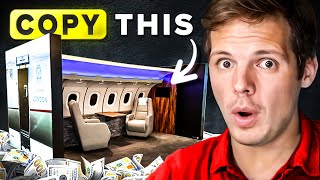
Chris Koerner answers six listener questions on starting and scaling local businesses. Topics include location strategy for a photo studio, running a service business while employed, when to form an LLC, evaluating a $50,000 e-commerce acquisition, and cold-email follow-up for personal training. The closing mantra: "Now, not how."
Questions this video answers
$40 to $200 per rental session.
A 20‑foot shipping container (noting it may be tight) and moving it on a flatbed for about $500.
Approximately $300 to form plus roughly $50–$100 per year to keep active (speaker gave these ballpark figures).
If $50,000 is a 20% downpayment, that implies a $250,000 business; at 3x multiple that corresponds to about $80,000 net profit per year (speaker used that illustrative math).
Chapters
Welcome to the Kerner office. I'm going to make today's episode short and sweet because it's Christmas Eve and I'm smoking some ribs right now and I'm about 30 minutes away from having.
To put more logs on the fire.
So I'm going to do some listener submitted questions real fast and then I'm going to give you some pump up.
Language for 2025 at the end.
And I hope it helps. Let's start with the first question.
Hey Chris, My name is David Hayes. I'm serious about starting that private jet photo studio here in the Dallas Fort Worth area. But curious to get your take on how I would decide location. I think people would drive an hour to it, so I don't think it's that important to be in Dallas. What do you think?
All right, David, great question. So most of you probably never saw this, but on social media I posted a reel of a private jet studio business and there's only a couple of these in the United States, New York, Louisiana, maybe Atlanta. And it's going to make you sigh and shrug, but it is what it is. People pay 40 to $200 to rent out a private jet photo studio so they can flex on social media. It's dumb, it's cringe, makes me a little sad. But if they're going to do it, then let's find a way to monetize it. That's what my reel is about. So David wants to do this in Dallas, where I live and he said.
That he thinks people will drive an hour to do that.
And maybe he's right, I don't know. But if I were launching this in Dallas, I would first go reverse engineer.
The ones in LA and New York as much as I can. Where are they?
What types of locations are they? If I were really serious about this, I'd probably fly to both New York and LA and and see them in person and get a feel for the neighborhood. Are people walking in spontaneously? Do they have to book an appointment? What does it cost, what's the booking.
System like, et cetera, et cetera.
Then I would go to the web archive, I'd go to whois.com, i'd look at how long their social presences have been around, their websites have been around.
What does their website look like? I would do all that first.
I think people would drive an hour to take a picture in a private jet photo studio. But I think you're going to lose a lot of people if it's far.
Away from a city center.
So I think you should try building one of these in a 20 foot shipping container. Might be a little tricky because it might be a little tight in there. But I think you'll save a lot of money and it'll be portable. You can pay 500 bucks to a flatbed to move that around town.
You can go find an outdoor shopping area like Legacy west or Waters Creek.
And see if you can get permission to post up your portable private jet photo studio. Get it wrapped with some cool branding so when people walk by it, they know exactly what it is. Because I guarantee you, if you take 100 people at random and bring an iPad up to them and say, I have a private jet photo studio.
It's an hour away, you can book it right here. Here you go.
Verse those same hundred people. I have a private jet photo studio. It's right there, right next to you. Same price, same everything. You're going to get significantly more people. And that sounds obvious on the surface because, well, of course you will. It's closer. But no, it's not as obvious as you think because it's the difference between a planned purchase and an impulse purchase. And the extra narcissistic folks out there that really want to flex, they'll drive an hour.
But you don't want only them.
You want the mass market. You want to get as close to the mass market as you can. So you want to make it as.
Accessible as you can.
Put it in a walkable outdoor shopping.
Area like my buddy did with his.
40 foot shipping container escape room business. He was able to move that around and he was able to a B test locations. Guess what? In retail you can't just ab test locations. You can't. You sign 5 year or 10 year or 20 year leases. But with this you could. So if you put it in a 20 foot shipping container and you find that walkable outdoor shopping areas aren't great.
For this, then at least you can move it. You could move it inside a building if you had to.
But location wins always. Don't skimp on cost on location when.
It comes to a retail business like this.
Next question.
Hey, Chris, Roberto Garza here from Oklahoma City. I'm really interested in starting up the tree trimming business idea. But the only issue is I'm currently working for a company that I'm on calls like from 9 to 5 and don't really have the capacity to go out to homes and give quotes to people that want to get their trees trimmed. I'm wondering, do you see any path to stair step into that while also maintaining like, you know, a high quality service for clients in the tree trimming business? Or are there any other suggestions for business ideas for folks that can't really commit to a second business because they're extremely busy in their 9 to 5?
Okay, Roberto, great question. Roberto wants to start a tree trimming business much like the one that we started where we used cruise to do all the work.
We didn't own a chainsaw, yada yada yada. You've heard this story before and you.
Could really copy this model with any.
Local home service business.
He's got a full time job, a.
9 to 5, he's got zooms, he's got things he actually has to do during the day, but he really needs to be going and quoting jobs during the day.
Eventually you can work up to the.
Point where your crews go and quote jobs and and you don't have to.
Worry about them circumventing you for the.
Cash because you're the one only interfacing with the customer.
But for the first few months, you want to quote jobs yourself at least so you know how to do it.
And you know the industry well enough to not get screwed by your subcontractors.
So yes, you can still do this. Of course it's going to be harder, but you can still do this. If you literally have a 9 to 5, then try to book things before 9 or after 5, even if it's.
In the evening with a big mag light.
Or try to quote jobs only on Saturdays. Or try to line up your marketing to where every two weeks you take.
An afternoon off or a full day off and you line up all your quotes for that day.
That'll get you by for the first.
One to three months without interfering with your regular job.
And then as you're quote working, as you're on Zooms, you can be playing with Angie's list, thumbtack, sms, realtor referrals, anything else you need to do to.
Grow the business that needs to be done from a computer.
So yeah, you can get creative with it. The fact that you have a full time job means you'll have to get.
More creative with it.
And in a weird way, it's kind of an advantage because it's a constraint.
And constraints breed creativity, as I often repeat.
Hey Chris, I'm wondering if you're doing an LLC for every single one of your business ideas or do you experiment separately before you decide that it's worth investing in an llc? Is there a way to put all your experiments into one llc? Or are you just not worrying about it at all? Mostly I just want to make sure that if I'm swashbuckling with some other businesses in a B2B experiment, my only asset in my house is protected. But I'm looking at this in California and it is surprisingly expensive for even one llc. So I'm wondering, do I even need to care about this? Or is there a loophole or a cheaper way to do things? Is it fine to just go to LegalZoom and just click Next and fill out the minimum wizard here to get what I need? Thanks for your help.
Okay, awesome question. I have countless LLCs and they're $300 apiece, plus, I don't even know, 50.
To $100 a year just to keep it active.
But theoretically, if I filed an LLC for all of the 70 plus businesses I've started, I would have a lot more LLCs. I don't file LLCs until a couple things are true. Number one, I'm sure that this is.
Going to be a real thing.
This is a thing. I'm going to be doing this a year from now, six months from now, six years from now. And I already know that because the other qualifier is the fact that I.
Have already received revenue for this and it's repeatable revenue.
It's not just friends and family revenue. If I'm slanging pizzas at a farmer's market for funsies, I'm not going to.
Get an LLC for that unless I have to for regulation reasons.
But if I start with that and then I realize, oh, I can hire someone for 20 bucks an hour to.
Do this for me and still make 500 bucks every farmer's market.
Yeah, I'm going to get an llc, especially when I start hiring. So it's like there's certain triggers there, right? Hiring, Absolutely. Generating repeatable revenue. Not recurring, but repeatable revenue. Like, you're pretty sure this is going to keep going?
Absolutely.
Actually, I won't say absolute. Most likely. Okay. Depending on the circumstance, am I going to be doing this for a while? Is this a thing? Is this going to stick around? Have I proven the model? There's product market fit, there's demand, then yes. And it sounds like on the surface that you might file an LLC in almost every instance, but no. In fact, usually the tests don't go very well. Your launch doesn't go very well.
I mean, that's life. That's the reality of it.
And you're just not that enthused by.
It, and you're not sure.
So at that point you either don't buy an LLC and abandon it or.
Or you just keep going and then buy an LLC later if you think.
It'S something to keep working on.
So.
Hi Chris, hope you're doing real well. I have funds to invest, like let's say about 50,000. And I want to buy a fully functioning, up and running e commerce website and I want to have someone else manage it. I basically want to have the passive income and I have the funds, but I'm looking for someone who has time and expertise but no funds and I'm looking to kind of match up with them. What do you recommend as far as finding that type of person, hiring that and just putting my excess funds to work in a non correlated way with an e commerce site that's already up and running. Really appreciate all you do man. Thank you. Look forward to hearing your answer.
Thanks Jim. Thank you for the question. First of all, this format of people recording questions and leaving them for me to answer, I just realized another reason.
Why I love it so much.
Because if I were talking to Jim right now on the phone, I don't like confrontation, I don't like awkwardness. I know I would kind of dance around it, be like, well, you know, and that's not helpful to me or to Jim. That's something I got to fix. I need to be more direct. Okay? So with this being a recorded call in show, I feel much more free to be direct. And no, you don't have to be.
Rude to be direct.
So first of all, Jim, I just don't like the phrase passive income. I've heard, you know, it doesn't exist. It does exist, right? With an asterisk. Passive income exists after many years of hard work of getting you up to that point. For instance, if I invest in t bills at 5%, that's very passive, that's very safe. But I have to have money to.
Invest in those T bills and I.
Had to presumably do a lot of work to get that money to get to that point to where that income is actually passive. And even though it is passive, it's not a lot. The investors in my RV parks, they enjoy passive income. But after years or decades of hard.
Work to save up $50,000 to invest in an RV park. So I would not consider investing in an e commerce store passive income by any stretch of the imagination, even if you are not the one operating it, which is what we're discussing here.
I've had eight plus ish different Shopify stores, some small, some Big.
I've lived in Shopify since 2012.
To be frank with you, Jim, I just don't really like this idea. I'm curious, what got you onto this.
Idea, investing $50,000 into an E Comm store? Specifically, there's a selection bias at play.
Let's say you find a partner that's a great operator. Okay, Then let's say you find a good deal where you only have to put down 20%. Maybe SBA, maybe seller finance. Well, I wouldn't suggest SBA for a small deal like this because if you.
Have 50 grand and you're putting down.
20%, that's only a $250,000 business. If you're going to go through all that hassle of an sba, then you.
Want it to be seven figures, right? To make it worth your while.
So let's say you find a seller finance deal. They finance 80%, you put down 20%, 50 grand, $250,000 business, three times profit.
Means it's making $80,000 a year in net profit today.
And you're buying it because A, you think your operator is great and he's going to pull some levers to increase the value, increase the profit of the store. B, you believe in E commerce for.
Some reason as an industry.
C, maybe you really like the niche.
That you're buying in.
Let's say it's golf or pet supplies. I don't know how you would structure this deal with the operator, but there's a selection bias because if he's really, really good, then he's not going to be wasting his time on a business that has a net profit of 80,000.
That he has to split with you somehow.
If he's not really good, then he's going to be excited to do this deal with you because it'll be a.
Great opportunity for him.
But the trade off with that is he's going to have to learn on the job with you, which means this will be less passive than you expected. So the more passive you want it.
To be, the better operator you need.
To partner with equals. The bigger of a business you need to find equals. The harder it's going to be to find that great operator. Because he's probably already tied up either working for a big D2C brand that's VC funded or building his own brand on Shopify. So at that investment level and the desire of passive income, it's just going.
To be really hard to find what you're looking for.
Not impossible, of course, but hard. Where would you find a business like this Quiet Light, Flippa, acquire.com, bizbysell.com, those.
Are the big four.
Shopify used to have their own marketplace.
For buying and selling Shopify stores, but they closed it down for whatever reason.
So Jim, this is tough because if you use a 3 PL for this business then there's not going to be much profit left. But if you fulfill products yourself, then.
Especially won't be passive and you're going to need a warehouse or some sort of a facility.
Unless it's a digital product, in which case it's probably closer to a SaaS.
Business or an agency business than a pure e commerce business, which is what you want.
So that's my hard truth, but I hope it saves you some heartache.
All right, if you are watching this.
Clip right now, you are watching this on YouTube and if you are a fan of podcasts, please check out my podcast while you're at it because sometimes I have podcasts that aren't on YouTube.
And sometimes I have YouTubes that aren't on podcasts.
So check out the Kerner office on any podcast platform or you can go to tkopod.com also my newsletter will throw that in there. There are no ads, it's weekly.
It's different content than my podcast and YouTube newsletter.chrisjkerner.com you'll see the link and.
We'Ll see you there.
Hey Chris, this is Bill in Orange Beach, Alabama. Big follower of all your stuff. I really appreciate it, learning a lot. My business is online personal training and I'm kind of specifically targeting male high performing real estate agents. My question is after the first cold email goes out gets opened but no replies. You know what's a reasonable follow up? I know three to five days I'm kind of using upticks IO for everything but I'm just not sure once I've sort of captured a quote unquote lead what to do with it. Should it not reach out and say hey yeah, sound like a product? What do I do next to kind of keep them on the hook? Also got a Facebook page and opening up a LinkedIn page. Just sort of curious how you would proceed. Thanks again and appreciate your work.
Bill. Thank you for the message. Thank you for being a fan. Thank you for living in Orange beach.
Because that's one of my favorite beaches.
On the planet and if next year.
Goes well I'm going to buy a house down there.
Anyway, I love that you're selling online personal training for high performing Real Estate agents. Oh I just love A good niche. And I'm sure that you're in that.
Niche because you found something special there. And good for you, Bill, because you deserve it.
All right, you asked about generating customers from cold emails.
Specifically, what does the follow up sequence look like? Okay.
Of course this could be different based on the industry, but what's worked well for me is initial email with at least two points of personalization. Keep the subject line very, very short. Two words, max, first name, pitch, pitch, pitch, yada yada, yada, less than three sentences in the body. End it with a question. Don't put a question in there and then end it with a comment. Always end it with a question because that question is a call to action. Any question is a call to action.
You're asking them to respond to you. Okay.
Always end your first cold email with a question. Keep it simple. Don't put any links in the first email because it could not will, but it could affect deliverability and you don't.
Want your results to be blew up.
What does it take to get from that to that? That's going to be the most specific.
And relevant thing you can do for your market.
And this applies to any local service business. And I guarantee you, if your competitor has grown fast in D.C. a lot of times we're like, oh, what are they doing? They must have made this amazing hire. Yada, yada yada. And a lot of times, honestly, the.
80, 20 of it, it's just Facebook or Google Ads. That's it. And they're not even wizards at it.
They just found a good offer paired.
With a good video or a good picture, a good coupon, whatever. And they just scale the heck out of that ad and it works.
Or it's just for local.
It could just be Angie's List.
They give Angie's list $30,000 a month.
Right.
Or thumbtack or whatever. Or sniff spot. Right.
Or one of those dog walking marketplaces. That's another thing you can do is go to those marketplaces where you can find jobs and who has the most reviews and how did they get there? Maybe they're just exploiting one or two marketplaces and getting all of their customers from there, giving them all of their marketing dollars and they're not using Facebook or Google Ads at all. You got to reverse engineer it.
All right, well, that wraps up the.
Q and A section.
I want to end with just a couple minutes of advice for 2025. I might do another episode. It's the 24th. We have another week for like end of this year. Beginning of next year.
I don't know yet.
But I just thought of this framework recently, and by nature of my job, people come to me a lot and they're like, all right, I want to do this. I want to start this side hustle. I want to start this business. Or they come to me and they said, I quit my job. I started this business. Like, just trust me. By nature of my job, I hear about people every single day that want to quit. They want to start something, they want to sell something. Side hustle, full time business, whatever. And I will tell you this truth. I've never talked to anyone that was on the fence about starting a business.
Or quitting their job and did it.
And then say they regretted it.
I shouldn't have done that.
I should have kept my job. I didn't realize how good I had it. Are they out there?
I'm sure they're out there. Absolutely. People declare bankruptcy, they fail all the time.
But given a long enough time horizon.
Even the people that fail don't regret quitting their job because of what that failure ended up turning into. Okay.
And that's just a framework for life. We don't usually regret things that we do. I'm excluding things, like terrible life decisions, right? If you go rob a grocery store.
You'Re gonna regret that, right? So I'm excluding that stupid stuff.
We don't usually regret stuff that we do.
We regret stuff that we didn't do.
Think back to your own life.
What do you regret?
It's probably something that you wanted to do or that you were doing, and then you quit and you're like, I shouldn't have quit. Like, I wrestled in high school. It's silly. It's a silly little thing. But I've talked to so many people. They're like, oh, I started wrestling and I was. I was kind of good at it, and I quit. I shouldn't have quit.
Or.
Or I was really good at wrestling, but I. I never ended up playing. Like, I've talked to so many people.
Like, we regret the things that we.
Don'T take action on, not the things.
That we do take action on.
So take action. And that leads me into my next piece of advice.
I was hanging out with this guy named Mitchell Cohen. And if you've heard of AppSumo, he does all their content, and he's awesome. And he was at my house right here where I'm sitting yesterday, and he filmed a video for their YouTube channel. And we were talking about.
He works for Noah Kagan. Noah Kagan. Owns Appsumo, It's a software company. And Noah Kagan had a book that came out. He's on this podcast six months ago.
And this book is awesome.
And the first chapter of his book.
Is called Now Not How.
And that idea, that three word phrase.
That I've come to love over these.
Last 24 hours, came from Mitchell, their head of content who was at my house. He gave the idea to Noah. Noah credited it to him in his.
Book Now Not How. Okay.
And Mitchell thought of it while he.
Was out for a run one day. Don't get paralyzed.
Don't have analysis paralysis. Just do. Just take action.
Collect revenue by the domain name Move forward.
Move the ball forward a little bit.
Every day in 2025. Now not how.
Thank you so much for listening. This is the first year of my podcast. It's been 10amazing months. Really, really, really appreciate you guys.
Thank you for sticking with me and we will see you next time.










