Stop Buying Things. Start Buying Assets that Pay for Themselves
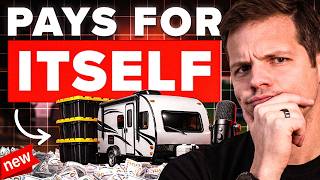
David Stilson built three rental businesses with minimal upfront capital: moving-tote rentals marketed to realtors, RV rentals that grossed $7k in the first season, and podcast-studio rentals. He sources inventory wholesale, uses existing platforms like Outdoorsy and RVshare, and reinvests profits to scale.
Chapters
What I love about small rental business is you can start easily with very little capital and you have an asset that you can rent out again and again. You're not selling something and then you have to go source more goods. I started looking for boxes and found tote rental was a thing. Worst case, we have totes for the rest of our lives. Best case, the thing takes off and we need to go buy more totes. We immediately had to buy another 120 because we overbooked. And the rule is we only buy when we oversell.
What do you know about the rental business? Not real estate rentals, but renting other stuff, moving totes, podcast studios, RV rentals. Well, I met a guy from Fort Wayne, Indiana that does all kinds of different rental businesses. He's a multipreneur. So I sent out a poll to my audience and said, what types of rental businesses do you want to learn about? You guys told me loud and clear. And so I found a guy that's running businesses in these spaces. The rental business is great because it's low overhead. You learn a lot of different skills while doing it. You can scale it. You can use platforms to grow it like RV Share, Outdoorsy, or you can use Facebook Marketplace to grow it, or you can push paid ads to your own website to grow it. Many ways to skin this cat. So please enjoy this rental business episode with David. All right, tell me about tote rentals. Why is that an opportunity?
Okay, so as we grew the rental business, we decided we're going to buy a new house. So we need to move. So we put our house on the market. When we started packing the house to stage things, I started looking for boxes. I'm one of those that I, I don't want to find, get used boxes and go to grocery stores and I'm like, I'm just too lazy. I don't like hodgepodge boxes. So I started looking at like wholesale boxes, loosely exploring like, could I do a box selling business? And found tote rental was a thing. So there's a company in Chicago that does it, which is near us. Indianapolis has one. It's really big out west, but Fort Wayne didn't have any providers that, that did it. So I was like, okay, well, how much is a, you know, I was doing the math in my head. I'm like, I could buy, you know, those yellow top, you know, industrial totes for $7 a pop. They were on sale. I could buy, you know, 100 of those, $700, rent 'em out for $2 a piece. And I was just doing some basic math with ChatGPT too. And like, how viable would this be? The cogs are really low. And so I just threw up a website immediately and was like, this is us. Yep. Totes on Loan. So what we ended up doing instead of getting like the consumer grade totes at Home Depot is we found us a, there was a random video on YouTube where a guy was like, I run a tote rental business and here are my suppliers. And he was like a real quick snap of like 3 wholesale suppliers of totes. So I paused the video, looked up the companies, found out they cost about $12 a piece.
Okay.
But you have to buy 'em by the pallet. So it's like 120 totes to get the price break.
$1,500 or so per pallet?
Yeah, with shipping. And I also found out one of their warehouses is an hour from me. And they always have about 1,000 totes on stock at any one time. So I'm like, okay, let's buy a pallet of totes. Worst case, we have totes for the rest of our lives for any time we ever move again. Best case, the thing takes off and we need to go buy more totes.
Yeah, it sounds like me at Bucky's. Like, worst case, I'll fill my pantry full of junk food for a year. Best case, I have a new business. I mean, yeah, a lot of awesome businesses start out with that kind of hypothesis, right? Yeah.
And let's just test it. And so it was admittedly a little slower to start. Like, I didn't get immediate validation. We put up some Facebook Marketplace posts before we even had the totes. Um, I was doing the— this is when I was deep, deeper into your content, was like, sell it before you have it. So literally like, hey, we rent out totes. Hey, Nano Banana, make a bunch of images of me carrying, carrying this tote. Download product image. You know, picture of me. You know, it looked— it, it was obviously AI. And that kind of didn't do anything. So we took a more manual approach and started actually networking locally with realtors and moving companies. And that's when we actually got traction.
How did you get their attention? Because Everyone wants a realtor's attention.
So there's a magazine in our town called Real Producers.
I love low-tech marketing tactics.
Yeah. And so Real Producers, it's a very niche magazine that highlights, and they're in every town. You probably have one in Dallas-Fort Worth area. They highlight the top producing real estate agents and then they also run networking events. So monthly they'll have one or two events where you can show up as a vendor. And just rub shoulders with realtors. So that's, we leaned into that heavy. So the magazine gives you a printout of like, here's, you know, 50 realtors, here's the volume they did, here's the average home sale price, here's, you know what I mean? Like awesome data that you can just snap a photo of and say, hey, let's build a campaign around contacting these realtors. And then my wife would just reach out and say, hey, let's do coffee, da da da. And she would go to all the networking events. One of the things our real producers manager of the, of the magazine for our area said was like, you guys gotta have a subscription program. You need recurring revenue. And he is like, and realtors love to give gifts and they love unique gifts. So we're like, okay, let's make a realtor gifting program. Now we have realtors signed up on a monthly basis that pay basically a subscription to gift moving boxes to their clients for closings.
So realtors are paying you on a monthly subscription. Mm-hmm. So they can gift that subscription. To their clients.
Yep.
As like a housewarming gift.
Yeah. Here's 20 totes for your move. And then we have like a pouch on the side of the tote and we make a nice printout. This move is powered by so-and-so from Coldwell Banker or whatever real estate firm. And we deliver the totes, the people move. We don't want to handle any of the moving or packing.
Yeah.
And then when they're done, we go pick them up.
Logistically, how does it work? So How much is a, a realtor paying you every month on average for something like this?
So we do 2 per month and 5 per month packages. So if they did 2 per month, we discount it heavily. So you'll see like we charge $99 for 20 totes, they pay $60 and we do 2 at a time. So they do $120 a month at the base, you know, tier, and then they can go up to like $300 or $500 a month, whatever it is for 5 rentals. 5 times 6 is, I can't math right now, $300. We had one realtor immediately that was like, well, I just want to pay for the whole year. We're like, okay.
Yeah, cool.
So, and we had to build like a way to track that. So I've, I've built software around this whole business.
Okay. So if a realtor's paying for 100 totes a month or whatever, what happens when they want to gift some of those out? Like logistically, what do they do?
Yeah. So we built a claim portal, so they have their own agent login that they can go in and see how many credits they have. They can create the gift order in our system.
The credits roll over. Over if they don't use them?
Yep.
Okay.
When the customer redeems it, I built an upsell mechanism. So the customer gets 20 totes free because they probably need more. They might need more. So what the way we did it was your realtor gave you a $100 gift. So the realtor paid $60, you get $100 to spend towards a bigger package if you want more totes, basically is how it works.
So you open the magazine, you see the high producers, your wife reaches out to them via text. And what does she say?
She actually meets them in person at the events. Like, we— they have a monthly event. We haven't actually done any cold outreach yet.
Hmm. Interesting. So she sees who they are beforehand and then shows up in person at the event, hands out a business card. Here's who I am. Here's what we do.
Let's have coffee. Let's talk about it. I want to show you more about what we do.
Yeah, man, that's brilliant. Do you have any numbers on like what her success rate is or close rate is?
Oh man, I wish, I wish we were that sophisticated.
I have to think it's pretty high if you're doing it in person and they're high volume. Like, it's not just a realtor, it's a realtor that is already paying for gifts. Mm-hmm. So you're just asking them to be a little more unique and pay for your gifts, right? Mm-hmm. Real quick, please subscribe to my channel. I know it's kind of lame to ask, but it means a lot. Thanks.
If they haven't subscribed, they— what we've seen so far is they will try us out.
First.
So like, can I just buy one? It's a slow real estate time of year here too, so there's not a lot of closings happening right now. So they'll be like, let's try one, right? And then it's like, then the light bulb clicks, because it's like customers rave about it. They're like, oh, these totes were awesome. And the realtor loves it. We had one realtor say like, I love how hands-off the gift was for me because you guys just took care of it. You delivered them, you picked them up. Like, I didn't have to do anything. I just gave you the info and you took care of it.
How is this going? Are you booked? Are you expanding the business?
We started with those 120. We immediately had to buy another 120 because we overbooked. Wow. And so now we're up to almost 400 totes.
That's amazing.
And the rule is we only buy totes when we oversell.
Yeah. Yeah.
And hopefully we don't oversell on a weekend because we can get the— I can get an order from the warehouse that I mentioned within 24 to 48 hours.
Yeah. What do you love about the rental business? What do you hate?
I love that we can start small in rentals because my wife has always wanted to do property ownership and like, you know, go that route with being a landlord and renting out property, but that's a substantially larger investment and a lot of risk. What I love about small, small rental business is you can, you can start easily with very little capital. And you have an asset that you can rent out again and again. It's not, you're not selling something and then you have to go source more, more goods and, and whatever. I like that aspect of it where it's, and I like the, I guess, niche nature of doing several small rental businesses as opposed to being like Sunbelt Rentals where we just rent everything, right?
Yep. You could add anything to this. Like you could start renting tables and chairs to weddings, right? Or stuff like that.
Yeah, it's been interesting, people, how they use the totes that we didn't foresee. They find uses for them. Like we had, um, a wedding planner call us and say, hey, I've got a bride who, they have a venue. We have to bring all of the centerpieces in for the tables and, but boxes won't work because they're, you know, for whatever reason. But like, yeah, I mean, it's a great use case. We had another guy, he moved a 180-gallon fish tank because all of his coral and everything had to be like, you know, in water and his fish, obviously. So this is obviously don't work for that.
Yeah. I would think that like your biggest quote unquote competition for this is just the fact that people don't know this is a thing, that it's possible, right? My mind doesn't go there if I'm moving. Mm-hmm. Yeah.
Awareness marketing is kind of the, cuz nobody's searching for this. The best search term I've kind of latched onto is like moving boxes.
Let me show you something. I just went to Google Trends. I typed in tote rental, 2004 to today. And look at that. Oh, for those listening, it's basically up until 2011, there were, there was zero search volume and then there was a good bit in 2017. And then it is up into the right as of right now. Like the relative score is 100 out of 100. And some people misunderstand how Google Trends works. This doesn't mean that like, oh, we've peaked. It's going down now. It's like. No, like if 10% more people searched tote rental next week, then it would, next week would be at 100 and then this week would be at 90, right? So this is exactly what you want to see in a Google Trends chart.
So it's amazing.
Tidal Wave is on your side. I mean, I think people are sick of throwing away Amazon boxes. It just doesn't feel right. You know?
Yeah. And we tried to price it so, you know, you can buy box kits from like Home Depot for 300, 400 bucks. 4, you know, they have like a 4-bedroom box kit. It's different sizes and things, but you know, you still have to get rid of those or, and you still have to tape all the boxes and put 'em together. We actually had a box open up on us when we moved last, so it's just like we, we were done with it. We like, we just don't want boxes anymore.
Yeah. So you started with buying an Ember pull-behind RV for yourself, for your own use.
Yep.
And you financed that through a bank and through your 401(k). And what is your monthly payment on that, give or take?
It's about $400 a month.
Okay, $400 a month payment. And then you came across this Facebook group for people renting out RVs and their first bit of advice was don't rent your own. So you went on the hunt for a second RV that could use, you could use only for business and you found a Jayco Class C, right?
Jayco Jay Flight travel trailer. So it's another pull behind.
Okay, another pull behind.
Yep.
And you paid about $20,000 for that.
Mm-hmm.
And you financed that one as well. Mm-hmm. Okay. What's your payment on the Jayco, your business?
So it's about $400 a month. Yeah.
Okay.
It's about $600 a month for the Ember.
Okay. And how long did you have the Ember before you decided to start doing this as a business with the Jayco?
So about a year and a half.
And then you leaned on this Facebook group for support on like how-to and insurance and all that?
Yep. There's different ways to run this business. Some people are very hands-off, you know, you're renting the bare, the travel trailer. Like it has a mattress, we don't give you bedding, we don't give you towels, just bring your own everything. And then there's people that are like, no, this is Airbnb on wheels. We like set you up with, you know, cookware and cutlery and all the linens you need, towels, toilet paper, everything you basically need to go camping.
Yeah.
And that's what we did. Or the latter. Yeah.
Yeah. Smart. Remove the friction, the confusion, keep it as simple as possible. Okay. So you buy it, what do you do next? What are your first steps after buying this thing?
So, uh, it was kind of the end of season, um, that's why we got a decent deal on it, which in where I live, camping season ends November 1st. And so we bought it at the very end of September. So the very first step was take pictures, put it on Outdoorsy and RVshare and RVezy, all the marketplace sites, and just see if we get rental, create Facebook Marketplace posts, point people to those. We got one rental in the fall for Halloween weekend. That was our very first customer.
And you're in Fort Wayne, Indiana?
Yep.
How long did it take you to get that first rental?
It was within a couple weeks.
Okay. Are you able to share your screen and show us what your, what the Jayco looks like?
Yeah. Let me pull up my website.
Did you hire a photographer for the pictures or did you take them yourself?
I took these myself with my iPhone.
Are those the same pictures you have on the listing today?
Yep. So this is from my website. So basically just your kind of every, every feature.
And can you pull this with like a Ford F-150 or do you need something bigger? Yep.
Yep. You can pull it with a, with a regular pickup truck or a large SUV. I think this trailer weighs in at about 4,800 pounds and about 500 pounds of tongue weight.
What made you decide on this? So how, how long is this one?
So this is a 26-foot bunkhouse. Uh, it was 9— yep. And it was important for us to do the bunkhouse, um, per recommendations of the group, because a lot of people were like, do people want teardrops? Do they want— is it— are there a lot of couples camping? And pretty much unanimously everyone said the best sellers are bunkhouses.
Okay, most Yep, because you don't really pay a lot more for the bunkhouses, but you, you broaden your market, right? Much more people that might want to rent it. Okay, so that's why you ordered the bunkhouse. What made you decide on like a 20-something footer this year, this price range, etc.? Did you do much, much research to land on that?
I kind of missed a little bit of the story in the beginning because, um, before I— we went out and bought a camper, I actually went on Outdoorsy and found all the travel trailer listings in my area and saw what the, what they were charging. 'Cause it's really important to know what your market can do. In Florida or out in the mountains in Colorado, you can get $200 a night, but in the Midwest, Indiana, you know, we don't have amazing, you know, state, you know, national park destinations. You're, you're camping in state parks and festivals and concerts and those sorts of things. So did market research on what listings were out there and then I actually started messaging people that had listings and people that had multiple campers listed was like, hey, how are you doing? Like, what kind of sales are you doing? How, you know, it looks like your calendar's pretty booked up for the summer. Would you mind sharing with me what you're doing in revenue and whatnot? And the feedback I got from a couple owners was like, we reliably do about $5,000 every, every season per camper.
Okay. In rent per camper. Per season. Okay.
Yep.
How many people were willing to talk to you about this?
Two people. Well, there's the people on the Facebook group, right? Once I found the group and there's lots of people in that group, but everyone that I reached out to about this on Outdoorsy was, was open. So there's a couple, couple people. I didn't go super deep.
It was just like, yeah, whenever I'm doing research on like RVshare, Outdoorsy, or Airbnb, I like to run a search for the unit I'm curious about for like this immediate weekend and then one for a year from now. That way you can see like, all right, there's 3 available this weekend and there's 30 available next year. Wow. Okay. It's 90% occupied right now. The market is 90% occupied and then you can change it like, all right, let's look at a Class A RV this weekend and next year. All right. There's 6 this weekend and 8 next year. It's like, well, that's not great. You know, nothing's taken. So did you do any stuff like that?
I didn't go super deep. I kind of went out on faith. It was just like, yeah, this will work.
Yeah.
I could sell $5,000 and that would cover basically the payments. And then I know I could do better than that. Or at least, you know, optimistic me was like, they're not even on, you know, Facebook Marketplace. They're not even on RV Share. They're not like pushing ads. These, you know, they're just putting it on one platform and it does that.
So yeah. Did you know you can build a six-figure business with only a 10,000-person email list? I just talked to the founder of Beehive and he told me that there are people with 10 to 15 with around 15,000 subscribers making more than newsletters that are 10 times that size. Here's how. Well, this one design newsletter with around 15,000 subs doesn't just sell ads. They run 2-week online cohorts 4 times a year that generate 6 figures. And on top of that, they're charging companies $20,000 to $30,000 to get in front of their audience. And that's on one small focus list. This is not about going viral anymore. It's about owning a niche and monetizing it correctly. And Beehive gives you exactly the tools to do just that, like surveys to understand exactly who your readers are, or a built-in recommendation network to grow automatically, paid subscriptions, digital products, sponsorship tools, and you keep 100% of the revenue. You don't need a massive audience to run a successful business. You need the right system. So move your email list over today and try out Beehive with 30% off for 30 days with code CHRIS30, because this might be the simplest, highest leverage business that you can build right now. Just go to beehive.com/chris. To learn more. That's beehiv.com/chris. And when you say a season, you mean like March to October?
Yeah, our season, we really started booking like mid-June till the end of October. So November 1st is when the, the state parks all winterize here, so they shut off like the dump stations and that kind of stuff.
So your season doesn't even start till June then?
Yeah.
Wow. Okay. All right. Now, how, how long ago did you first start this?
Last summer was our first full summer, so it was the year before that. So it would have been 2024, end of '24.
End of '24. All right. So your first season was the beginning of '25.
Yeah.
Or the middle of '25. What did you end up doing in revenue that season?
So we did about $7,000. Wow.
Okay. And you went into it thinking $5,000 is base case. I think I can beat that. Mm-hmm.
Okay. Yep.
What were your payments across that same timeframe?
Like total?
Yeah, I guess $400 times 12? Yeah. $4,800?
Yep.
Okay. And then insurance?
Yep.
How much is insurance?
So insurance is about $30— let me see, $60 a month.
Oh, that's nothing. All right. So you're at $5,200, give or take, and then other random expenses. So you made a profit?
Yeah.
Effectively.
Slim, but— Yeah, approved it, approved out the concept that it would work for one unit at least.
Yeah. And that's your first season. That's like with very low, what's it called? Like you don't have any reviews yet. You don't have any track record. You don't have any repeat business yet. Whereas season 2, this season, it should look a lot better, right?
Yeah. And then in fact, we're already, we already have 3 bookings.
Wow.
On, you know, for July, um, that are repeat customers, right?
All 3 of them? Mm.
Uh, yes. Yeah.
Wow.
So our very first customer, the one I got that October Halloween, end of that first season, she booked again. So she was our last customer this year, or last year, I guess. And that was a big thing for us was we treat the platforms like they're a lead gen source because they— Outdoorsy's pouring a ton of money into ads.
Mm-hmm.
We can't outspend them. There's, they're just everywhere. Right. And they take a pretty large cut. Um, they take about 25% of the rental fee. So, and they charge the customer for extra insurance and ancillary fees and, you know, all, all the things. So we built our, our own site to do our own bookings and the customer saves a ton of money and we make a lot more money because we charge the same nightly rate.
Yeah.
We just don't pay the fees. So those repeat customers are coming back direct.
Yeah. So is that $7,000 before or after fees?
That's after fees.
Oh, nice. So closer to $10,000.
Gross.
Yeah. Okay. So you're happy with that. And did you have any like stressful moments? Because I, you know, I've been in this business and I'll never forget it was spring break. We were at the beach. My RV was rented out. They took it to the Grand Canyon all the way from Dallas. And I'm trying to relax on spring break and they call me, you know, the Grand Canyon gets very cold even in March. It's very cold. And they said the heat The heat went out. What do we do? And I'm like, I don't freaking know. Like, I'm in Florida, you're in the Grand Canyon. Like, I, I don't know what to do, man. I didn't know what to do. Like, I kind of walked him through a few things and I hung up the phone and I felt bad. I wasn't a jerk to him. Like, I felt bad for him, but I also didn't know what to do. Like, I'll, I'll pay for your hotel. I'm sorry. And I hung up the phone and I looked at my wife in bed and I was like, we're selling that thing. Got it. Right. Cause it was like, A, it was a Class C. And so there's so much stuff that can go wrong. For those listening or watching, like a Class C is a, it's a motorhome. It's a vehicle and a house. It's like the two things in the world that break the most together, except it's very rickety because they have to be light, you know?
Yeah.
But I really feel like if, if this were a business, like just a business RV, and especially if you hit scale, like if you have a few units and you can outsource calls like that, it's a really, really good business. I've been on the record several times. Saying, I love this business, this industry, which is why we're talking today.
Yeah. The mentors in the group that I joined, that Facebook group, some of those are, you know, they have 20 to 50 units. Like they scaled it. They have their own yard and they have staff that turns everything. And for us it was about having good process and good training and doing very thorough walkthroughs with the customers. A lot of our rentals are actually deliveries because not everybody has an F-150 or a larger vehicle. So we have the benefit of removing that as a risk on a lot of the rentals because I'm the one driving it. So if they have an issue, risk probably. Yeah. Yeah. Especially from an insurance standpoint. So I can set it up, make sure everything's level, make sure everything's operational before I leave the campsite, which is, you know, game-changing. And then occasionally we'll get a call that's like, hey, we can't get the stove to light. And it's one of those, like, it's a weird tricky, you know, you gotta kind of like push and hold and I have to explain it. And, but other than that, Everything's, you know, knock on wood, has been smooth sailing.
Yeah, I know with, with our unit, we went out and used it ourselves first, and I got to know all the quirks of it because they're all— a lot of them are the same, and but they all have something that's just a little bit different. And so after I really learned it just by living in it for a few days, I had my wife hold my phone and I just made an unlisted YouTube video and I just walked people through the unit. Here's the outside. Here's how you do this. You do this. Here's how you flush out the thing to do. And then anytime they book, it's like, watch these, like you must watch these. And if I could go back in time, I would use AI to make like a quiz, right? And it's like, do not come pick up this unit until you've passed this quiz. You know, honestly, like I need to know that you know what you're doing for both of our safety.
Yeah. And a lot of that is spelled out in the, in the supplemental rental agreement that we got. And it's huge that it spells out all of those things in writing and they do sign. And agree that like, especially when it comes to dumping the tanks and things that go into the waste tanks, that's a big deal. That's where I see a lot of horror stories in the community.
Okay. So theoretically, if this season goes about as well, if not better, then you'll have this thing paid off in a few years, right? You'll own it outright.
Yeah.
And then your profit will be much, much higher. Do you want to scale this business or are you trying to buy more or what's the future look like?
We, we want to, the, the issue we ran into was we live in a HOA on a cul-de-sac with no, no driveway space and no property with like rules like don't have a camper at your house more than 48 hours. So yeah, it, yeah, we're like, it works now. We need a new house.
Yeah, yeah, yeah.
So that's kind of the journey we're on right now is like, do we scale this? Do, Uh, we, for a while, some friends of ours had a little teardrop camper that we took on as like a consignment. So then we didn't have to buy it. We just split the nightly rate with them.
That's a whole industry in and of itself, right? Mm-hmm. Just renting out others' RVs.
Yeah. So if we did scale it, that would probably have to be the way where it's like we find people that have campers relatively close that live near us that we could go get it, prep it, split the nightly rate, and then we're not out another $20,000.
Well, what's cool about this business is that even though this is your business unit and you have your own, on any given night where it's not booked, you can take it out for free, quote unquote for free, right? Like those are just bonus nights. Did you guys take advantage of that at all or did you use your other RV for stuff like that?
This camper is solely business for us. Like we don't even, we don't use it at all. The closest thing we've done to using it ourselves was we took our neighbors camping because they've always wanted to go. And they don't have a, a camper and we're like, well, just, we'll take the rental.
Yeah. All right. So if you were to buy another one or when you buy another one, what type of unit? Pull behind, longer, shorter, Class A, Class B, Class C?
We really like the bunkhouse. It was huge for us to make sure whatever we got doesn't actually have any slide outs, which is a really popular thing that people love cuz you have a ton of space inside. But that the number one failing part on an RV is a slide out motor.
And it, it increases the risk of water leaks as well.
Water leaks, the motor fails, you can't get the slide out back in when you need to return it.
I also realized like a lot of potential renters don't even know what a slide out is. They don't know it is called that. They don't know what to look for. They don't know to ask for it. So you're paying out the butt for this feature that breaks, that leaks, and people don't even need it or want it or know that it exists, right? They don't know what they're missing.
Yeah. And that's another thing. Um, we're always looking for things that are feature light. So like it has an AM/FM Bluetooth radio, but that's about like, there's no TVs. There's no, like, some people are like, do you provide wifi and da da da for your, no. Like, cause that's just another thing that can break and we have to support and get that phone call at 3 AM. So like the basics.
Yeah. And like things are trending away from that anyway. Like a lot of airlines aren't even selling TVs anymore because people have their phones.
Yeah.
Okay. So love the business. Would you recommend it to others?
I think I would. If you, if you had some kind of cash to, to end this and the ability to, to pull it, like you do need a truck, or if you're, you know, unless you do a Class C or like a Sprinter van, you know, what do they call it? Class B.
Class B. Yeah.
If you have like a driving unit, you know, you could probably pull it off, but they're just super expensive. I mean, you get into Class Bs and they're like $80,000 to start with.
Yeah, guys, I hate to break it to you, but you're not very likely to actually start a business based on something you see or hear on this podcast unless you spend a little more time with me and with other people that are doing just that. So come check out TK Owners. That's tkowners.com, where hundreds of people are launching, starting, testing, experimenting with business ideas that they heard from this podcast. If you want to go fast, go alone. If you want to go far, go together. Check out tkowners.com. We'd love to have you. Yeah. So just for those listening or watching, Class A is like a touring bus, right? Like Dave Matthews Band, they're in like a Class A. It's huge, it's massive, it's diesel. You can't park it. I would not recommend it. Those can be hundreds of thousands to even millions of dollars. There's a world where that's a good business. People do rent those, but like not for the faint of heart. Class B is like your decked out Sprinter van, like the nomad lifestyle. If you go to like Moab, Utah or whatever, you're probably renting one of those for a ton. That's a whole industry in and of itself. It thrives out west, especially, um, not so much in like the Southeast, but anywhere there are mountains. And those are, like you said, those are really expensive, but they rent out for about the same amount as a Class C. So when I did this, I did all my research and everything screamed at me Class C motorhome, which that's, that's a motorhome. That's kind of what, what you're used to seeing. You drive it. It's all one unit. It's nice because the family can walk around. It's just all there. You don't have to separate your vehicle from it and you can even tow a vehicle if you want. But the trade-off is they usually have slide-outs. They break, they leak. There's a lot that can go wrong on that thing. And they're not very safe.
Honestly.
And my, my family saw all 50 states, well, 48 in a Class C in 48 days. And then we saw Alaska and Hawaii, we flew there, but, um, it was very reliable, 13,000 miles, but not super safe. And then you have a pull behind, like, like what you have where you just attach it to the hitch and then you have like a gooseneck pull behind where you need, like, uh, you need a gooseneck truck. Like you need the, what's it called? Like when it's on the bed of the truck.
Yeah. Fifth wheel.
Yeah. Fifth wheel. Fifth wheel. Mm-hmm. And then you have what they call toy haulers. Which is like a pull behind, but the, the back third of it is just a big open room to put like side-by-sides, ATVs, motocross, et cetera. Did I miss any categories? Is that about it?
Uh, teardrops.
Teardrops. Yeah. Like the rounded aerodynamic type.
Mm-hmm.
Mm-hmm. Airstreams. Is that a teardrop?
No, Airstreams is, they're technically just a travel trailer, but it's just a really nice, they're a unibody, like aircraft grade thing. They're, they cost $130,000. They're. I would totally, that's my retirement camper. Like when we get there someday, that's what I'll get. But teardrops are great cuz there's like a couple can take it, you know, on a road trip sightseeing and just kind of camp along the way or you know what I mean? They're just very small and you can pull 'em with anything. They're, they're super light.
Yeah. And then they have like popups, right? Popups. Do they make those anymore?
Yeah, they do. I would probably, I was just actually talking, the couple that we rented their teardrop, they're, they're selling it and they're, cuz they had a baby and so they need something bigger. And so We're advising them on what to buy and because we want to rent out their next camper. And I'm like, okay, if you get a pop-up, get like the A-frame ones that are hard shell and not like the canvas, because dealing with the canvas is kind of a nightmare. If it rains, it gets wet, and when you bring it back, you have to set it all back up and dry it out and it gets— it can get moldy. And there's just a ton of issues there.
Yeah. Well, let's move on to your podcast business. Podcast studio business.
Sure.
When did you launch that and why?
Okay, so we started a YouTube channel called, uh, My Dad's Radio and, um, in the process of that, bought a ton of gear for the studio, uh, mostly as a hobby project. I'm a lifelong musician. I had this idea, let's create a collective of, of like 30, 40 people that come together randomly and we record and, and we put out videos on YouTube. And I worked at Sweetwater at the time, so I, I got a really good employee discount, so it was a little bit addictive. So I just had a bunch of gear. I had the studio, and so I just opened it up to bands, people that need mixing, mastering. And that's— it's more of— I would say that's definitely more of an inside hustle territory. It does a— on a bad month, I'll do about $200 in revenue, but I've done up to like $2,000 in a month. I produced an audiobook for an author, who didn't want to use AI. He, he was a autobiography. He had written about his brother with intellectual, uh, and developmental disabilities, and he, it was from him. It, you know, he wanted to read the book, so that was a, a nice good paying gig.
So, so this is kind of like a passion project. You're not trying to make millions of bucks, but you wanted to build this out for yourself anyway.
Yeah.
So why not monetize it now? Yep. Do you, you make money by renting it out per hour?
I'm trying to figure out what the market will take. I'm in a unique town. Fort Wayne is home to Sweetwater, and I don't know if you're familiar with Sweetwater, but they are the largest retail music store in North America. So they're directly competing with Guitar Center. Okay. So they sell, you know, the thing, our microphones, pro audio gear, guitars, lighting, band and orchestra instruments, billions of dollar company. They employ a sales staff of around 500 people. And I say that to say every sales engineer at Sweetwater has a recording studio. So there's like, what, 400 direct competitors to me?
Yeah. In my town. Yeah. The worst place you could do this. Yeah.
And Sweetwater itself has a world-class recording studio, like on campus. So the slant I'm trying to take is like, I don't just do audio. I, I do video. So I've had video production companies in the past. I have a lot of the gear and the know-how, so. If you want to do like live recorded videos, band demos for, you know, booking shows and those sorts of things. That's kind of how I'm trying to position this space is like, bring your band and we'll do a live recording on video for Instagram and YouTube and all those things.
Yeah. What about renting it out to podcasters? Do you think that'd be viable?
I think it would. We would probably need to do some, some decorating just to like make it, I guess, visually appealing space. Rather than like a music space, right? Yeah. But I think that's definitely an option.
Do I dare ask how much it costs to build out that studio?
Oh gosh. Oh no. Let's say we're sitting at about $30,000 retail of gear in here.
I just built out my own studio upstairs and it was about the same. Yeah.
So I'm curious because I've heard— I've heard you mention the studio upstairs now. Is that because you want to do more in real, like real life podcast style things.
Move away from, from virtual stuff. Yeah.
Okay. Yeah. I love those, those videos where you are going on site with people and in their business. I think I even commented on one of your videos. It was like, I love this format when you did like the washer rental.
Yeah.
Yeah. Like, this is awesome.
Yeah. Thanks. That was the most viewed video ever that I posted. David, is there anything that we, that we missed that maybe people could or should know before getting into any of these businesses?
I think just you can start low tech. You don't have to be fancy about this stuff. Do some research around what you think you can rent out. See if there's other people doing it. I mean, I did a similar thing, like I went on Facebook Marketplace even, and on a wide area in my region and saw that people were renting out totes. And I even, I did the same thing I did with RVs. I reached out to those people and said, hey, I see you're renting out totes, like, how's it going? And I've done the same thing with like, I found a company called Bin It. There's another company, I think it's Bins on the Move out your way, like Blue Bins. He actually is a moving company as well. Don't be afraid to reach out to people that are already doing it because you'd be surprised how open and friendly people are and helpful to help other entrepreneurs in the space and kind of give you a leg up. On what you should think about or what you should do. Just like that Facebook group I joined for the RV rentals, like full circle, same thing. Like, what do I, what am I, what do I not know? What, what are the, what are the risks? What are the nightmare horror stories I'm gonna deal with? Yeah. How can I avoid, you know, those things?
That's beautiful. Thank you, David. This is awesome. I love multipreneurs such as myself. If people wanna learn more from you, where can they find you?
So I'm on X at David Stilson.
Perfect. Well, thanks for coming, David.
All right. Thanks for having me.
All right. What'd you think? Please share it with a friend and we'll see you next time on the Koerner Office.










