“Stupid Simple” Apps Are Making Millions While You Overthink
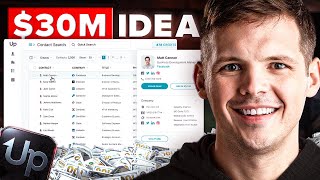
Will Cannon built multiple seven-figure businesses by keeping products stupid simple. His first SaaS hit $1M ARR in year one, growing from $2k to $10k MRR in months, while Signaturely scaled to 1.9M users on a freemium model with 800k monthly visits.
Questions this video answers
Approximately $2,000 → $5,000 → $8,000 → $10,000 per month in the first months; reached $10k–$20k MRR within ~4–5 months.
About $1,000,000 ARR in the first year (he said 'we were probably doing a million ARR first year').
About 1.9 million users (mostly free); roughly 800,000–900,000 website visits per month.
Typically high six figures to low seven figures in profit, depending on the year.
Every‑US realtor list ≈ $500; California realtor list ≈ $200 (bulk).
Chapters
The barrier to entry is a lot lower. To build a business where you're making 10 grand a month, which is life changing for 99% of people in the world. I went to a website, kind of like a biz by selling. There was a company for sale and they weren't for sale for like 200 grand. And that's kind of one of my skill sets is researching and copying. I was like, you know what, I think I can build something similar to this. Didn't have a mentor, didn't have a rich dad or anything. So I'm just learning on the fly on my own. And within two or three months that business was doing like 30, 40, $50,000. We were probably doing a million ARR first year.
I just want to emphasize how valuable it is. Go window shopping on bizbycell.com or whatever website. You can learn so much it costs nothing. Sell it before you have it.
Amen to that.
So I just came across this guy on Twitter. His name is Will Cannon. You may remember him from my episode on Cold Emailing here recently. Will is an expert in scraping and selling leads and he's also an expert in cloning other software businesses. He's a serial entrepreneur, but specifically he's built two software businesses doing millions of dollars a year. He's a bootstrapper. He didn't grow up rich. It's very scrappy and he has an amazing story. So if you've ever been interested in starting a software business and you don't know how to code and you'd like to just copy what works, this is the episode for you.
So my kind of story is grew up poor, single parent household. Mom and dad got divorced when I was one year old. Dad left, never saw him again. To this day, we grew up with little, just me and my mom, roof over the head, food in the mouth, but didn't have, weren't able to have the nice thing. So ever since I was a kid, I was like, okay, lemonade stand. I remember in high school it was like CD burners just first came out. So I was like, oh my God, it was Napster and limeware. So I was like, my friend got a computer with like a CD burner. I was like, you can make your own cd. This is amazing. And so I was like, I would sell CDs at school, right? I'd have like a, like a book late and I'd say, hey, Write down your 10 or 12 favorite songs. They'd write them down, I'd go home, I'd download All the songs on Napster, I'd burn them to a CD. I'd sell the CDs for 10, 20 bucks a CD and I'd make a hundred bucks a week or whatever it was. And at that time I was like, this is amazing. So I've always been an entrepreneur from the start. Had a couple jobs, did, worked at Sears selling warranties to people that bought appliances. Worked in it, had worked in a collection agency. So started working at 16 full time right out of high school. Me and my then girlfriend, who's now my wife. I said like, what are you going to do? She says, I'm going to get my real estate license. I'm going to get your real estate. I said, okay, I'll just get into real estate too. Let's do it. And we didn't know, but timing was amazing because this was during like subprime mortgage boom right before the crisis. So got into that, got a license, started working for a company. First month of work for a company selling mortgages. I made that company $100,000 and I got a 10,000. I thought I was the richest person on earth. I thought, oh my, my life is changed forever. Like, this is amazing. Like, I'm going to work here forever. One day I'm sitting there, I get up to use the bathroom. I get back to my guest and he goes, hey, where were you? I said, I was using the bathroom. He said, no, no, no, no, no, you need to be on the phone. It was like, and, and what am I doing? And I was like, I just made you a hundred thousand dollars last month. Like, I know. I looked at the numbers like I, I made you so much and like, you're like on me like that. And so, and they, and at that time, the, they were like, the owners, they were like crazy. They had every Rolls Royce, every Lamborghini, every everything. And so it was like, it was like, well, I want the 100k. I don't want the 10k. So I was like, you know, I was like. I called her up and she had her license. She was working for a different mortgage company. I said, hey, what if we just start our own mortgage company? And she's like, let's do it. Let's like, let's do it. I had a broker license, so actually I could take the next step. And so that was my last day I called him. I left him a voicemail and said, hey, I'm done. We started our own mortgage company. And at that time, we didn't have enough money for an apartment. And an office. Because we were kind of just starting to pick. We got to pick. So we started the mortgage company out of the apartment to start, and then we started scaling, and we're like, hey, we need employees. But employees aren't going to come to our house. Like, we got to get an office. So we got an office, but we didn't have. It was. It was. We're struggling the first few months. It wasn't easy to kind of build it up. So we got an office and didn't have enough money for both. And we said, you know what? We're going to just live in the office. So we're going to get an air mattress. When the employees leave for the day, we'll pop out the air mattress, and we're going to sleep in this office. And so that was a really difficult time. But it was exciting, though, because I'm young, I'm in my early 20s. I'm like, hey, let's build this. So started building it up and eventually got enough money for, you know. But the story there, which is crazy, is showered in a bucket in the bathroom of our office. We had a bathroom in the office, stood in a bucket. Jerry rigged a handheld shower device to the office bathroom. Showered. Like this was with my girlfriend at the time, who's now my wife, built. We built everything together. And so just crazy story coming from nothing. And then started making every. We started making so much money, we couldn't believe it. We were like, what? What? You know, this mortgage boom time.
So how are you finding customers? How are you finding all your mortgage customers?
Straight cold calling. Just boiler room. We had boiler room. Literally at that time, people were. You know, the housing prices were going crazy. You could. Anyone could get a loan. So you could get a loan. Yeah, yeah, whatever. Any. Anyone. You call someone up, if they had a pulse, they were getting a loan.
So, yeah, anyone was, hey, I've seen the big short.
I'm an expert. Okay, well, so, yeah, I mean, really, we were just literally just cold call homeowners that meet certain criteria. We're calling them, hey, do you need 100k? Do you need 200k? You have all this equity, you know, and they were. Everyone. Everyone wanted a new car. Everyone wanted a new remodel, whatever it was. So, you know, it was. It was difficult because we had a sale. It was product market fit, product timing. This is what I've learned going back is, like, timing is so important. So start. Bought four houses, bought a bunch of cars, went crazy, and boom, 2008 happened. And literally Went from we were on top of the world back to nothing. I mean, back to nothing. I mean, within a matter of months, we went from making so much to basically nothing. And we were like, we're done. We were upside down on four houses that all went down in value, 40, 50%. It was really bad. It was four foreclosures. It was my cars repossessed. My prized possession of time was my S class Mercedes, which I loved as a kid. Boom. Watch the, watch the tow truck take it away. It was a really, really, really hard time. And I was. We were like, hey, we just got to go get regular jobs. Like, we'd be on it. Like, we're screwed. And so how this leads to kind of the story, which is at that time when we were building the mortgage company, we're hiring a bunch of loan officers. And to hire those loan officers, we were buying lists of realtors and loan officers in California, and we were cold emailing those loan officers with a pitch to try to get them to come in an interview and come on our team. And so I had a bunch of lists. I had a list of realtors, I had a list of loan officers. I had these lists. And I had people in my office adjacent offices to me at the time that were like, hey, do you have that list of realtors? I was like, yeah, I'll sell it to you. I'll get. Give me a hundred bucks or whatever. So I was. It was like, it was like, it wasn't a big deal, but I was like, okay, there's like, there could be something here. So I went to a website. Yeah.
Were you just buying this from other people or were you scraping them yourself?
No, not yet. Buying from other people. Just buying from websites.
You're middleman.
Yep. So I went to a website I saw on a website called, I think it was called Biz Ben. It's kind of like a biz buy sell and it could be still available today. I saw on the website that there was a company called list guy.com for sale and all that company.
That's a good domain.
Yeah. All that company could be slow in business today. And all that company did was sell lists. He had a realtor list, they had a dentist list, they had a chiropractor list. Every industry broken down, there's a lot.
And there's a lot of websites that do this. I've bought from a lot of them.
Right. So I, I thought in my head, hey, I already have a couple of these lists. I have some Internet marketing knowledge. Ish. Maybe I can buy and acquire others. Maybe I can find some more and I can build a website like it. So I, so I saw that business was for sale and they were doing, I think I want to say like $10,000 a month in revenue or something like that. And they were for sale for like 200 grand or something, like something in this range. And I, so I think I may have signed an indie or I may have not, I don't remember. But I kind of inquired. I started digging a little bit and that's kind of one of my skill sets is researching and copying, if you will.
And so it's fun too.
It's so much fun. I love it. So I digged a little bit and I was like, you know what, I think I can build something similar to this and let's see where it goes. If it goes nowhere, we're going to get regular jobs. We're already applying, me and my wife, regular jobs. We're just like, hey, this doesn't work.
Can I side note you for a minute?
Yeah.
I just want to emphasize how valuable it is to go window shopping on bizbysale.com or whatever website and dig into businesses like whether you want to buy it or not. You can learn so much digging into their due diligence docs. It costs nothing.
Just.
I'm not suggesting Anyone like breaks NDAs or does something unethical or steals proprietary info, but you can just learn. Like I remember I did the same thing. I was shopping on Biz by Sell and I saw this company that it enabled people to buy shipping, like e commerce brands to pay for shipping with crypto. It was like they were doing 300,000 a year in profit. They were selling for like 600,000 a year. And I just thought, interesting, like I could copy this. I could, I have a list of E Com brands. Like they only have like half a percent of the market and like it just gets your gears turning, you know, 100%.
Yeah, I mean you can, you can figure out what margins are in general for a certain industry. You can figure out where they acquire customers. If they have more detailed analytics, you can find out what channels are more profitable for them. I mean, there's so much you can find out. I wasn't maybe as in depth about it at the time. I just thought, hey, I have some lists. This guy has lists, he's making some money. I think I could do it.
Fun fact, 80% of the people that watch my YouTube videos are not subscribed to me. And most of them Think they are, they see them in the feed but they're not subscribed to me. So please, it'll take half a second, just click subscribe and it would mean.
A ton to me. So we started a website, it was called the Data Supplier. So we started that, we started that website and we were like, hey, we're going to, we're going to buy a bunch of other lists. So we had a couple already, we're going to buy a bunch of others and we're going to package these based on industry and we're going to sell these lists. And I want to say within a short handful of months, maybe two or three months, that business was doing like 30, 40, $50,000. It was just out of nowhere. It was, how are you finding customers again? Like at that time it was kind of gray hat SEO. So we were ranking number one for email lists, Realtor email lists, every email list thing you can think of. We started ranking number one in no time from our on the borderline gray hat SEO at the time. And then we were cold emailing people. So we were cold emailing businesses. I don't think we were cold calling at that point. We're just cold emailing and doing SEO and that just started blowing up. And so we were like, okay, we're onto something. We don't have to give her a good job. This is amazing. And so that kind of parlayed into the agency. So that's the backstory of how we started the agency that kind of parlayed into the agency that we had, which basically worked with so many customers. Still had some Fortune 500, but a lot of them are small, medium sized. They needed a clean list of their ideal prospects. We provided that and yeah, that led to that kind of 10 year run ish of being kind of self employed and kind of just selling B2B data and doing kind of cold email and cold calling stuff.
Oh man, that's amazing. So when you say you were working ton of hours a week, you were basically just like manually scraping, manually putting together these CSVs, emailing the people. And the whole time you're thinking this needs to be automated, this needs to be a SaaS. But it's hard, like it's hard to get over that hump. Especially when you're making money. Like you have to make a significant time and money investment to get there. And then when you get there, you don't know that it's going to work. You know, maybe people want that personal touch. Right? What was the tipping point where you Were like, all right, we're done with this agency model. We're going to go full SaaS. Did something happen to make you really make that decision for good?
Yeah. So, I mean, I knew it. I knew it the whole time because I remember in 2000, I want to say 11 or 12. So I started up late in 2017, but five, six years PL prior, I knew that that's where I wanted to go. There was a site called. I think it was called Elance. So it's kind of like there was like. Yeah, it was Freelancer.
They were Freelancer and Elance. I think they merged or something.
Yeah. So Elance. So I found a team on Elance to build the first MVP of what I thought was going to be my first platform that was going to do. I think it was called Sales Leads or Sales Leads plus or something like that. It was so that we had the domain, we were ready to go, we paid them and they just took our money. They just literally took our money. Didn't build a thing, Couldn't even get in contact with them, couldn't get support, didn't even get our money back. It left such a bad taste in my mouth. I was like, look, we're making good money this. It's hard work. It's a lot of, you know, but it's at the same time we can have a life together. We can, you know, figure things out. Yeah. So it left a bad taste in my mouth. And it took another five years, which, looking back, like, oh, my gosh, I would have started then, but you never know. But it took another five years for me to kind of get the guts up to say, you know what, let's try it again. Let's try it again. And so I remember trying it again because the other one was going to be B2B and B2C data. At the time, there was a company called Sales Genie owned by Info USA. They had both B2B and I remember C. And so the second time around, I was like, no, no, no, it's just B2B. Let's focus on B2B. Let's get away from the B2C stuff. Yeah, we just took. Took time for us for me to want to pull the trigger, obviously, that back five or six years we accumulated a lot more money or we had a lot more assets. So it's a little bit easier of a swing. Hey, if this doesn't go well, it's not. Doesn't wipe out everything we have. That's kind of what happened. And was. It was Also just the, the hours of just like, hey, I remember like Sunday, Sunday nights I was like, I had 100 emails. So I was like, I'm due to draft everything before Monday morning. I was up late at night. I'm like, this is just not the life for me. So I was like, at one point I was like, you know what, we got to just try again. And then we tried again.
Well, necessity is the mother of invention, right? Like you push yourself to the limit and that was what you needed to do to finally automate all this during those five years. Like what were you making in profit per year with the agency model?
Yeah, it was, it was probably depends on the year. Some years are better than others, but it was probably high 6, low 7 figures. Wow. For those years, really good living in profit. Yeah, really good living. But nothing too crazy. I mean we're in Southern California and cost of things crazy, but yeah, still really good living. I could have just done it forever. I, you know, it wouldn't have been a. It's still not a bad business to this day. People can do that and start with that. So good living. Yeah.
Now how were you ensuring or were you ensuring that people weren't getting the same leads or like that the same leads weren't being hit up a thousand times, Right?
Yeah. There was no insurance and that was that. That was the great part of it is like, hey, if I have a list of realtors and let's say I verified that list and it's fairly valid, right? Customer A comes today, customer B comes tomorrow, Customer C comes on Thursday. It you're selling the same list over and over, especially if they want to at that time. A bigger bulk list, right? So that's the beauty of it. You're. You have a one time cost to create or build it. You have some small costs on going to keep it as accurate as possible at that time. You're reselling it over and over and over and over to, you know, to however many people. If 100 people come to your door tomorrow to buy it, you're reselling the same thing 100 times. It's a digital file. You upload it, you send a link. It was hard, but it wasn't because there's also a lot of people that came. They don't want just every realtor, they want something very specific. So I'm manually manipulating CSVs. I had a team build a software to try to do it as where I could do it as best I can. But you're joining files together, you're appending data where it's like, hey, I have these fields, but now I want to add a phone number, add an email, add a date of birth out of whatever. So there's a lot of intricacies to building out strong list and then keeping them clean is the harder part. And that takes a lot of time and effort.
Were you continually like revalidating the phone numbers and the emails or no?
Yeah, the emails, yeah. Which are easier to verify and they have a smaller cost to verify versus Phones. Phones. We had a call center in the Philippines where we take a subset of the list. Let's say the list is 10,000 people. We take maybe 500. Randomize it. So randomize 500, send it to the call center in the Philippines. They would hand manually hand dial every person and give us a disposition report. And that gave us a rough estimate of what that full list would look like in terms of accuracy. And so we want to have a certain threshold there as far as number of disconnects, number of wrong number, wrong person, et cetera. But yeah, I mean, verifying phone numbers is a little harder.
Now what. Let's just say theoretically, you have a list of 10,000 realtors. What did it cost you to acquire that list and what were you selling something like, like that for?
Yeah, next to nothing. I mean, at that. I got sophisticated enough where I had relationships with so many people in the industry. I could get a. I could get a list of, and still can probably of every consumer in the US with just about every data point, minus, you know, maybe a few. But like literally like your name, your data birth, your address, all your interests and hobbies, your phone number. And I can, you know, 200, 300 million consumers for like a thousand bucks, like because of the relationships I had. So like literally next to nothing. So you're buying a realtor list for a hundred dollars to some small amount and then you can resell that same thing for that same amount 20 times or infinity amount of times.
Yeah. And what would you sell them for? Like. Yeah, so per lead or like we.
Kind of try to double end it. So I ran a company where. So me and my wife were running this. So she had her own company and I had my own company. I had a company where I'd sell in bulk. So I'd say it's a realtor list. Every realtor in the US it's 500 bucks and you want California list, it's 200 bucks. Some just bulk list. She'd have a business where she's selling on a per Lead model. So it could be anywhere from 50 cents.
Yeah. Retail and wholesale.
Yeah, yeah. So. And people would come to her and come to me, the same person, they'd say, I want this.
Yeah.
And then the next week they'd go to her. So she had her own business that was selling on a per cents model. Per cents per lead, depending on quantity and type and everything else. And I'd have a bulk one. And so we both would, we'd hit them for both ends.
People need to understand, like I've purchased realtor lists a dozen times for, you know, I've launched 80 businesses, right. So sometimes I want to cold email them, cold call them, cold text them. Sometimes Bismarck in North Dakota, sometimes everyone in California. I would reckon that most people that buy these lists from you never end up even reaching out to a lot of them. If not most of them, if not any of them. Right. Because like the initiative dies down or they, they can't figure out the cold email software or they lose steam. Like so it's not like if you sell a list a hundred times, those hundred realtors are each getting beat up 100 times. That's. It usually doesn't work like that, right?
100%. Yeah. I mean we still see that to this day. Where, you know, there's a lot more to the list that goes into a successful outbound sales campaign. Right? Yeah. It's the messaging, it's the timing. Is it. Do they have intent? Is there's all these other factors, how you're sending, it's your product or service, you know, are you targeting the right icp? There's so many factors that go into this that. Yeah, I mean most of the smaller SMBs or mom and pop shops aren't successful with these type of campaigns. And so there's a lot of factors that go into it for sure.
Now I know that you got tempted to start another agency to like actually do the outbound for these guys. Did, did you ever get tempted to.
Do that or did you do that within the agency? We did. We. So we, so we, we did some cold email stuff. We did some cold calling stuff. You know, it's more work. And we found with there was enough revenue on just providing the list itself that we didn't need to. Yeah, I was like I was going to hire, I have to hire these people and do all this extra work and then email servers and deliverability and there's all these things that go into it. And I mean I have some friends now that do done for you. Cold email. And it's like, you know, if you do it right and you're. And you're on top of your game, you can, there's 100%. There's a business in itself right there that anyone can start. But yeah, we just found there's enough money on the, on the, on the side, B2B data side. We can just focus here. We don't need to go and add all these extra things into it.
Yeah, I mean, I remember I paid a guy on upwork one or two thousand bucks to build my own custom bulk texting software built on Twilio. And then I paid another guy in Turkey to scrape Zillow every single morning for for sale by owner listings to get their phone numbers. Because that, that was like the owner's cell phone number on the Zillow listing if it was a fsbo. Right. And then I would bulk text all of them every morning and, and I would take the Zestimate and then I would subtract like 40% from it and just say, hey, I see your house is listed for 100,000. I can close fast. All cash, 60,000 today. And 98% say, screw you or no. And 2% are like, let's talk. You know, and like, there's just so many amazing things that come from bulk scraping, bulk outreach. Like, the world is just completely your oyster. And for guys like us, oh, there's a lot of rabbit holes to go down when you start doing that.
For sure. For sure. Yeah. That's amazing. So what happened with that? Did you end up.
We ended up buying a few houses in other states that we never saw in person and we completely lost our shirts and it was a huge mistake and I'll never do it again. About this house in Mississippi for like 40 grand that. Oh, I just, I've got stories anyway.
Yeah. Because I thought about doing that too. I thought about if you want to call it lowballing, but yeah, I thought about that too. Like, hey, like, let's, let's, let's scrape. Let's build out a list and then let's just hit up everyone with a specific kind of variable percentage down from what they're listed at or kind of. We, we can, we can append some or what we think the value is and then go 30, 40 or some percent lower. And then what's the harm in reaching out to all these people and saying, here's an offer, take it or leave it. And if 1% accept and the numbers.
Work, boom, here's the problem. Like, this is something that I Learned that makes me short. Like Open Door is the fact that you just cannot replace that local knowledge. Like, if I'm a realtor in this random rural Mississippi town, I know that like that house is in a bad school district or it's about to be rezoned into a bad school. I know things that ChatGPT doesn't know, AI doesn't know, the Internet doesn't know. Like we think the Internet and AI knows everything, but AI has not captured 99.9% of conversations. Right. It's not there, it's not listening. It just captures what's already on the Internet. But one on one conversations are not being recorded and there's a lot of gold in those. Right? So if you got Zillow trying to buy and sell homes, they lost their shirts and they have all the data. You've got Open Door trying to do it for like 13 years now. I don't even think they're profitable yet. I could be wrong. Obviously the stock's going crazy because it's, it's kind of like a GameStop, a GameStop stock at this point. But like, it is just really freaking hard to buy and sell homes profitably unless you are a local. Right?
Yeah, I agree. Real estate is very local. And one more, you know, you might see like, hey, home prices are going up, home prices are going down, but there's specific local areas where they're, you know, they're doing the opposite. So totally agree with that. Yeah, yeah.
All right, so you're printing money with this agency. You switched to the SaaS. What did like your first three to six months look like on the SaaS model? From revenue and profit wise, I think.
It was like 2,000amonth, 5,000amonth, 8,000amonth, 10,000amonth. It just started going, it just right.
Off the bat, were you still doing the agency on the side? Like, you didn't turn that off at first?
Yeah, for the first, I'll have to look back, but like for the first 6ish months I was still doing that. So you still had that kind of revenue stream. But then once we hit till I think like 10 or 20 mrr, it was like that was in short order, that was four months, five months in. It was like, hey, this is recurring revenue. This is not recurring revenue, this is different. And so yeah, I just put pivoted all started pivoting all my time into that. And we got our first customers through cold email. We were using our tool to build out lists of people. We were cold emailing your Own dog food in our own dog food, which we still do to this day.
So you said your first months of uplead revenue, 2k mrr, then 5k, then 8k, then 10k. Within a few months, once your mrr hit 10 to 20k, you shut down the agency. What happened after that point in the uplead story?
Yeah, I mean after that point. So me and my wife still running the business, didn't have any employees, obviously had to outsource. Dev team, didn't have any employees.
Right now is actually the perfect time to start something. And you guys know I'm always talking about starting local newsletters, local newsletters for your city, job listings for your field, a weekly roundup for your hobby. You know, just taking whatever you know and sharing it with people who want to learn. This is one of the lowest risk ways to build something that pays you over and over. And Beehive is by far the easiest way to do it. You can monetize and grow your subscribers with their built in ad network. You can sell digital products or paid subscriptions directly to your audience. And yes, they've even got an AI website builder and a podcast integration. Now I've been using Beehive for two years and I cannot wait recommend it enough. It is not just a newsletter platform anymore, it is the entire creator infrastructure. So don't wait for January start. Now head to beehive.comchris for 30% off your first three months. That's B E H I I V.comchris.
So our son is three or four. We're driving him to preschool. I'm in the car, you know, we're in the car doing customer support. It was just, you know, bootstrapping it, right? And so it was like, hey, let's, we're gonna grow this business. And it's growing and the revenues are growing. We have financial ability now to start bringing in some people. So that's when he started bringing in people. So he brought in our first person, customer support. He's still with us to this day. And so like we started bringing in people. We knew that if we're going to scale this business, we're going to need really good people. So as Binion was about, and this is what most people find out is when you start to grow businesses, it and you know, the people are such, such a big part of it. So it was trial and error on bringing in people, bringing in a salesperson, bringing in this person, okay, that person doesn't work. Figuring out processes for how to bring in all these People how to train them, which I hadn't ever been in a big organization so I have any experience in it. So just learning on the fly. So it became about people. I mean but look, part of it was our timing was right. I had a skillset to acquire customers profitably. So the revenue just kept going. I think within the first year we were probably doing a million ARR. First year. A big part of that was by through cold emails which I shared kind of the script that we used for that and there was a bunch of follow ups. It wasn't just one.
Tell me about your like E signature business. How did that come to be? How did you find customers for that?
Sure, definitely. Yeah. So. So 2020 came Covid everything shut down and you know, I'm here in California and it was. I honestly part of it was I wanted to test myself. I said I had. So by the. By then I believe it was three years old. I don't remember we're doing a revenue at the time. Maybe we were at 2 million ARR or something. Some small millions in AR. I said, you know what? I said I want to see if I can test myself and if I can build another SaaS company. So I started looking at what I should do and I, what do I do? I go to G2, I start looking at all the categories in G2. I said okay, I want to do something similar. So I want.
Sorry, explain to people what G2 is.
Yeah. So back in the day we called G2 Crowd. Now it's G2 and that's basically a review site for B2B software. So software companies. So you can go there and you can see different categories and then you can go into the categories and see all the different businesses, how they rank in terms of people reviewing them publicly and you can see what people that have reviewed them well say about them. You can see what people have given one star, two star reviews say about them, what they do bad. It allows you to kind of do some market research, allows you to see what's going on in specific industries. So I went to G2. I knew I wanted something similar to what I did with uplifting and zoom info. I wanted a fragmented space. I wanted a big market, right. So I wanted there to be at least one or two companies that are doing that are worth over a billion. And I want it to be where there's a lot of winners. So I looked at a bunch of spaces, I looked at you, you're saying like QuickBooks. I looked at that space, I looked at a Bunch of spaces. And I saw the E Signature space and so I thought that was interesting, especially because of the timing where you can't be face to face, at least at that moment. It's harder to be face to face to do signings. So people were sending a lot of stuff electronically for E Signature. So I, then I started looking at the, the market dynamics. I saw, hey, right now, globally, at that time, I think it was like this was 20, 21% of documents. All documents worldwide that are signed are electronically signed. I said, what, Wait, what do you mean? 99% are hand. And it. To me, it was like, what the. Like there's, there's room for this market to grow. But that was. That's. That. I don't even know if that's true, but that, that's what I found at that time. And I was like, whoa. I was like, I thought it would be 20% for eSign, for 30% or something, maybe just because I'm in software. But so I saw that and I was like, okay. I was like, there's a market here. It's. That gap is going to change. It's going to be 991 and then 8010 and eventually it's going to fall. So I was like, hey, it's a long road here for this market. But then here's what I did that most people don't do. Most people at this point say, okay, I'm just going to build this software and test it out. I said, no. I said, I want to make sure, and I want it to the best of my ability that I think I have a. The ability to acquire customers profitably before I build the business. That's the hard part. But so I started doing, I started diving in deep. And so what I found was a lot of the companies at that time and still today were a lot of their business was from these tools and templates. And HubSpot pioneered this or, you know, five companies before that, but they're building these free tools that they're giving away. And as part of the funnel of those tools, they try to get you to sign up for their software or they're giving these free templates away. And so for the E Signature space, it was these online signature tools where I was like, hey, I can hand draw my signature, I can type my signature and I can create like this kind of signature that I can use for documents. And on the template side, it was these contract agreements, marketing agreements, landlord agreements, all these agreements. So every company or most of the companies in this space, in that space space were doing this and they were SEOing for, for these phrases. And so I knew at that time I had an SEO advantage because at that point I had driven, you know, I don't know, tens of millions of website visits from all the sites I've built throughout, through, through all this time. I've done a lot of gray hat blackout SEO, learned a lot from it, moved completely to do just things by the book and had a lot of success doing things by the book, especially now then proly. So I said, you know what, I think I have a advantage here and acquiring customers profitably. So let me try this. So found the dev team on upwork. Same dev team at that or sorry. Well, we had a dev team for the business that up. We built. We hadn't brought a team in house yet. So use that same dev team that we had originally found on upwork to build MVP for signaturely. I use the word company signaturely in part for the SDU advantage of having the word signature in the domain. And I said, you know what, let's do it. So built the MVP and launched it. And the other side of it too was like, hey, how do we price this, right? The idea behind signaturely, because it wasn't just like, I can acquire customer profitability, I can build a E signature business. It was, how do I put a twist on it? So at that time I started reading all the reviews on gc. I started reading all the reviews on all competitors. So DocuSign was the biggest. There's Adobe Sign, which they've now changed the name a bunch of times. But it's like, basically, whereas Docusign and Adobe are the two big companies, right? Adobe's big. DocuSign just says E signature. They're big. Started reading all the reviews on them. Bad reviews, good reviews. The thing that kept coming up was they're too complex. It was like very hard to use or they had a lot going on, right?
And so probably because they're building for enterprise, enterprise clients too, but you're not even trying to do that.
They have their strategy there. SMBs. There's a lot of churn. SMBs, there's, you know, they're price sensitive anyway, so I was like, okay, let's, let's build something so simple to use, so stupidly simple that your, my grandmother, you know, your grandmother could use it, right? So, and that was our first kind of tagline was stupid simple signatures. Like just. And like we're talking like bare bones simple. Like upload document. Who needs to sign. No API, no contract, life cycle management, blah, blah, blah, blah, blah. Like no, it's like just stupid simple signatures, like the easiest tool that anyone could use. And so we ran it by a bunch of people, ran family, like, hey, there's like. We kept iterating, iterating, got the MVP going. And that was the. That was kind of the start of signaturely.
And how's it doing today? And how did you get your first thousand customers?
We started doing some cold email stuff. We knew we wanted to target some really small businesses, so started doing some cold email. And the SEO as planned took off. And so we had a freemium model, so you can sign three documents per month completely for free. And if you want to sign more than that, or you need teams or blah, blah, blah, more access, business branding, blah, blah, you can upgrade to a paid plan. And it started taking off. Crazy, but from a free level. So revenue wasn't crazy. Revenue wasn't like upbeat, where it's the first year millionaire in the second year. It wasn't crazy, but the user base was crazy. They loved it. And they also didn't need. Most of them didn't need to sign more than three documents. These were just like mom and pop shops that were using it here and there. And so we started growing in users really quickly. I think we had maybe over a hundred thousand first year or two. I put most of my time into uplead because that's the bigger business. So I wasn't putting a lot of time into this. And it was continuing to grow, and it still is today. So Today we have 1.9 million users. I think we're gonna pass a few million any minute now, probably. But 99 point X percent of those are on a free plan. They're free. Users that use the platform, love the platform and the platform. And we get a ton of traffic. We probably get 800,000, 900,000 visits per month to the website. And a big part of that is the tools and templates that we built. Those drive a lot of traffic. Those people go through a funnel. So it's not a huge business in terms of revenue, but it's a big business in terms of a user base that loves it. We eventually moved to a free trial model where you put your credit card, there's a free trial. If you don't cancel the seven days you're getting billed, it's a free trial model. So we eventually move to that, which bumped the revenue up a little bit, but not drastically, because a big portion of these people want the free. So we still have free. A backdrop like a backdoor offer to a freemium plan. So it's a great business. And I always look at it like if I build up the big enough one day and I do want to sell, which I don't want to sell right now, and I get offers all the time, want to sell, but if I did, at some point, I would have this other business I could pivot to and put a lot of my time and efficient energy to. And that's already built, has a base and it has some customers, and so I can. Then I could push and really grow that. And that's how I look at that business. But yes, a great business and great customers. And we're still building and we're excited to keep, you know, keeping it simple. You know, we have an API now. We have things now, but still keeping it very simple and offering the best support to our users and helping them. A document sign and moving away from DocuSign.
Yeah, that's amazing. What are some business ideas that you're seeing in the Legion space? Like, stuff that's, like, tangential to what you're doing that you think someone needs to capitalize on, but you're too focused or too busy to. To capitalize on. Is there any other, like, agency plays you see? Maybe it can be built on top of your software or alongside it, et cetera?
Yeah, I mean. Well, what I mean, where our space is going eventually with everything that's going on is, you know, right now you're going into a zoom info, you're going into an up lead, and you're saying, here is my ICP or title industry, et cetera, et cetera. Maybe you're uploading some list of domains or look like customers, et cetera, and you're running some signals and you're gathering some data, you're pushing those into systems, and those systems are sending emails or making calls or you're sending to your reps, et cetera. This is slowly getting automated in a way. Right. You know, in the future, it's. You log into Uplead, Uplead has access to your CRM, Salesforce or HubSpot or whatever you use. We know what, who your best customers are, what they look like. You know, emails are being sent and eventually calls are being made on your behalf and your calendar is being filled with appointments without you literally doing anything. Like, you not even going into a software and saying, oh, here's my icp. No, it's like just click, click a couple buttons, close your eyes and meetings are on your calendar. Like that's where it's going. And it's hard, you know, if people are building that and people are trying to build that, but it's not perfect yet and, but it will be 100%. You're not going to need to go have your prop, you know, SDRs aren't going to need to look, there's still going to be a space, a market for that. You're still going to be able to make cold calls and get into accounts and it's. But things are being automated in a way that, you know, they're just going to look a lot different in a year or two or five than it is today for sure. So that's one, that's one of the things I'm seeing. I also have a lot to talk about about that like a QuickBooks competitor because one of the ideas that I had was around there's a lot of services in and around being a QuickBooks competitor that are profitable other outside of just the software itself. And these are things like for example, for that business, it's like payroll or health insurance or credit card processing. And you know what's funny is a lot of times those other ancillary services around the software are sometimes a lot more profitable than the software itself, right? Because if you think about it, think about like, let's just say you're going to build a CRM for, I don't know, dentists or pick any industry, right? It's like if you have, if you created a CRM for dentists and maybe you use Lovable or Curse or something like that, maybe you use an outsourced dev team, maybe you use Go high level or some other software and kind of white label, right? You build a CRM for dentists and you build everything out for that, whatever the industry is. And let's just say you built a business where I'm giving this software away completely for free. There's no charge. This is a free CRM for dentists and I'm making it or whatever industry and I make it the best CRM possible for that very specific niche vertical. But as part of that, you have to use my xyz, whether that's my credit card processing service or my, you know, my payroll, my health insurance. Because a lot of times those other services make more than the a hundred dollars a month you're going to make per user on the software. And so I think there's a big business there that hasn't been tapped because as software costs to create software is coming down, it's in some way race to the bottom. And if that is the case, how are you going to monetize that? Well, in certain areas, like the CRM area or whatever, even like a QuickBooks competitor, there's other services in and around the software that you can make a lot of money on. And you can give away the software for free.
Guys, I hate to break it to you, but you're not very likely to actually start a business based on something you see or hear on this podcast unless you spend a little more time with me and with other people that are doing just that. So come check out TK owners. That's tkowners.com where hundreds of people are launching, starting, testing, experimenting with business ideas that they heard from this podcast. If you want to go fast, go alone. If you want to go far, go together. Check out tkowners.com we'd love to have you.
You know, I haven't really seen anyone doing this, but I've seen like, for example, Squire. They have like, I think that's a CRM for barbershops. They have like all in one tool. For barbershops. They raise, I think, 100 something hundred fifty million dollars. They're worth a billion or whatever it is. And they're building the best software they can just for one vertical. Just for barbershops. If you're a barbershop, you have to have this. But the thing is, they're not even giving you up for free. They're charging for the software, but they're also getting all these other things. The credit card processing, the health insurance, the credit, the payroll, all the other stuff in around it. They're building it all in one. I think there's a big market for building these all in one tools and giving software away completely for free, knowing you're going to make money on all these other areas.
Yeah. Well, let's break it down real quick. Let's say you're a dentist, and not unreasonable for a dentist to do a million dollars a year. Top line, Right. That's very conservative. Let's say it's 1.2 to keep the numbers easy. So a dentist is doing a hundred thousand dollars a month. Let's just say they're pushing it all through credit cards. Okay. Let's say today that dentist is paying 300amonth for HubSpot. I mean, that's. That could be reasonable, right? 300amonth for HubSpot. You come in there and say, hey, I've got a CRM. It's better than HubSpot. In fact, it's a CRM only for dentists. In fact, instead of it being 300amonth, it's free. Cool. Awesome. What's the catch? Well, there's no catch. I just need you to bring your credit card processing over from whoever you're with to me. What is it per month? 3%. Right. Same as Stripe or anyone. But what you do is you just white label someone else's credit card processing and do what's called interchange plus pricing, which means for the 10% of customers that use American Express, you're not going to make any money. For the 80 or to 90% of customers that use debit cards or other credit cards, you're going to make between like 0.2% and 2 and a half percent. Right. And so then if you're doing 100,000amonth in credit card transaction volume and let's say you average 1%, you're making $1,000 a month from this client that like their CRM is now free. Their credit card fees didn't go up at all. But a small percentage of that is just coming to you. And so you're making three and a half times what HubSpot was making for the same thing. But it's a win, win, win all the way around. Is that what you're saying?
A hundred percent. A hundred percent. And then obviously you could layer on the other services, group health insurance, payroll, et cetera. I mean it's also a good idea for a company that's already like an insurance company or a payroll company or a credit card processing company. If I'm a credit card processing company. Right. My, instead of just saying, okay, I'm going to go to this walk in this restaurant, try to get their business and business, this is a like a whole nother section of area they haven't explored. I'm going to build a CRM for restaurants or I'm going to build a serum for whatever and I'm going to give it away for free because I want their business. So it's. Yeah, I mean, look, it's a no brainer. Like you said, if you're a dentist, if you're a chiropractor, whatever, you, it's about an industry and you have someone come to you and it's, hey, this is completely free, it's going to save you XYZ a month. You know, you have to use credit card processing or you have to use other services, but the pricing doesn't change there either. Or maybe in some cases you have some Relationship where you can get even better pricing there. I mean, look, yeah, every single dentist that you approach isn't gonna. But if a small percentage of those do and then you're, you're ingrained, right? They're not gonna then go pay for a CRM after they're getting it for free. And especially if you're narrowing down to one vertical and you're, and you're serving that vertical really well. And there's probably like, that's why Swire. These others are doing well because there's no one that was going after Barbershop CRM. No one. There's. I mean, there was, but there wasn't anyone doing it in a real way, putting all their time and energy into it. Right? So it's interesting if someone's listening to.
This and like, okay, well, first of all, I'm not going to start a credit card processing company. We're saying you don't have to go Google white labeled CC processing service. I just did it. There's dozens of them, right? You can just plug into their system. They'll take a little cut. You take a little cut and then you're thinking, well, how am I going to build a CRM? You don't even need to vibe code it. Just use High level, right? Just use High Level. You have a 3 to $500 a month agency account and, and you can have unlimited sub accounts for free. And oh, dentist is too oversaturated. Copy and paste it. Do it. Chiropractors, barbershops, whatever you want, right? So you don't need to build the, the CRM. You don't need to build the credit card processor. You can use the same service, High Level to do the outreach to find them. You could be eating your own dog food to find these customers. I love this.
Yeah. Yeah, I think it's amazing. And, but let me also say too, you know, there's a lot of talk, right, on X and podcasts, everything about how. And look, I love Lovable and Cursor and Repl and all these tools. I love them and I think they're amazing and I think they're lowering the barrier to entry to build software. And we're in a crazy time today. So things are changing a hundred percent. Let me just say that first. But let me also say the notion, and this is coming from someone that has built SaaS tools to compete with really big companies. The notion that you can just like, hey, I can build DocuSign in 48 hours and I could, and I can get to 1020 million AR. This is easy. I can, I can. I can, you know, I can buy code, this, whatever. It's a lot harder than it looks to get to scale in, like, millions of, like, let's say 5 or 10 million plus in ARR. Look, getting to 100k in ARR is a completely different than getting to 10 million in arrow. And I just want to say that for anyone listening that, you know, because there's people that just think it's just really easy to do to get to scale. And obviously, everyone has their own definition of success. Right? Some people, 10k a month is that's all I need. I'm freaking. I'm. I'm mind is blown. And some people, they want to get to this next level. It's. As someone who's tried and still trying, it's very hard because it doesn't. It's not just. It's. It's easier to do now because it's not just the software, but there's things that come. There's other parts of the business. Acquiring customers profitably, building a brand. There's all these other things that you need to do to be successful. And so I don't want to make it seem like it's just easy to do, but it's a lot easier to build. And if you have a skill set around acquiring customers or you're willing to. You have a drive to go learn, like, that's my whole life, right. I. I'm learning from reading books, from watching YouTube videos, from listening to podcasts. Didn't have a mentor, didn't have a rich dad or anything. So I'm just learning on the fly on my own. And if you have the drive to do that, you very well can be successful. And it's a lot. The barriers entry are a lot lower now.
Yeah.
But also, let's not get it twisted and think that building a $10 million AR business is just easy. And I can build this no code tool, and boom. And I'm up and running. Because, you know, there's a lot of talk around SaaS is. SaaS is dead. And, you know, everyone's displacing and. Yeah, like, SaaS is probably on a downturn, you know, compared to where it was in 2021. But at the same time, you know, people choose Salesforce, for example, not just because. Well, in part because they're the market leader and every sales team just know them. Okay, great. But, you know, are you sock to compliant? Are you. You know, for Docusign, like, there's all These things that go into the business that people should be aware of when they're going and they're trying to start and compete against a big competitor. It's a lot easier said than done, but it's possible. But it's a lot easier said than done to get, to get to a massive scale.
Yeah. I just want people to know that they don't need to build massive scale.
100%. Exactly. Right. They don't.
Like you just don't.
Yeah. The barrier to entry is a lot lower and to build a business where you're making 10 grand a month, which is life changing for 99% of people in the world, like, like that should be your short term goal. And then obviously, yeah, try to scale from there. But like barrier to entry is a lot lower than it was. 100%.
Yeah. Last question for me. What tools do you use to copy others? Like if you're cloning another website or another SaaS, another business, are there any like cool tools or tricks that you like to use to do that?
There's not a lot of tools or tricks that I. That we use.
Or frameworks. Kind of like your framework of you went to G2, you saw that everyone hates how complex it is, stuff like that. Like, how do you look at cloning other businesses?
Yeah, I think you have to look, you have to know your angle. Like, I don't think price can be your differentiator because eventually, like I said, there's going to be some software that's free, that's making money on slavery services. So I don't think price can be differentiated. I think you have to have that one angle. Right. Whether it's ease of use or something else, but also everything's being copied. So just be, you know, you come up with, oh, I'm gonna offer XYZ and I'm gonna do this. That other people aren't doing well. Now all the other people see that, that if people want that, they're just going to do that. So features aren't. Can you can really be a differentiator. So I think at the end of the day, this is why it goes back to building the brand. Because what I see, most people, they have companies in their mind that are shortlisted when they're going to buy. And so if you're going to buy XYZ software, payroll or whatever it is, you already have QuickBooks and one, or maybe maybe one other. And you're in your brain, in your mind. And so building a brand is such an key part of how you differentiate on the copying side? Yeah, like look, anything can be copied now, but the harder part is acquiring the customers profitably. Do I have a skill set or a way I can acquire customers profitably and can I eventually get it to a point where I build a mini brand so I'm in customers minds? And so I think those are the two areas that you should focus on. Like look, if you're, if you're, if you're building a QuickBooks a competitor, you can go on QuickBooks and site and you can go on G2 and there's a, there's frameworks and things you can do. But at the end of the day, if you can't acquire customers profitably, none of that matters. And if at the end of the day you can't build a mini brand and be in some people's minds, none of that matters. So I think those are the more important areas someone should focus on when they're copying is not just because you can go on every competitor's website, you can run it through ChatGPT or some AI to analyze everything and figure things out, but figuring out what your differentiator is going to be, your short differentiator, whatever that may be, and then figuring out, and even pre selling before you build. Like for example, if you can cold emails, you can cold email people right now for before your QuickBooks competitors built, you can run, you can start cold email campaigns right now and see if you get some yeses. If you get some yeses, then go build it. Figure out how to acquire customers first before you go build the thing. A lot of people are like, I'm gonna build this, I'm gonna do this. And it's so exciting and they get so much hype and they build it and they're like, what do I do now? Acquire customers, how do I do that? And like, no, just start the customer acquisition, run Facebook ads, test right now before you even have it. Throw up a landing page, do whatever, see if you can get people to through a funnel right now before you even have the thing and then go build it once you have proven out you can acquire customers profitably.
Amen. You're preaching to the choir. We don't have to wonder anymore.
Chris is like, I know this, I, this is easy.
No, easy money, great. Like, no, it's like we, we don't have to wonder if people want our thing before we build it. Like we don't have to. Yeah, sell it before you have it.
Sell it before you have it. Amen. So that, that's, man, I mean, that's, that's what I recommend.
Will, you're the band. Where can people find you if they want to find you?
Yeah. So I just started a YouTube channel. You can push Will Cannon or it's.
I will collab. We'll do a collab link on that.
Perfect. We'll do a collab link on that. I built my personal brand website. I am willcannon.com built that have all my playbooks there completely free. So I wrote a playbook on SEO. I wrote a playbook on code email. I wrote a playbook on Legion. I wrote a playbook on everything. And it's not just like a chat GPT written playbook. This is like all my 20 plus years of experience building out all these businesses. I put everything I know into these playbooks and they're completely free. Not selling them. You have to give your email to download them and I'll put you on my list. But not selling them, giving them away completely free. And go check me out. I am Will Cannon. Yeah. I'm on Instagram, I'm on LinkedIn. I'm everywhere. Yeah. Hopefully people got value. And I appreciate you having me on, Chris.
Absolutely. Thanks, man. What'd you think? Please share it with a friend and we'll see you next time on the Kerner Office.










