The Easiest Way To Start A Business That Almost Never Fails
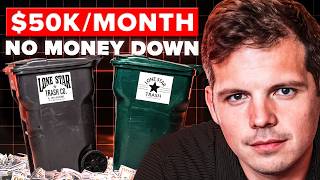
Spencer Scott built a trash hauling business with 200 pre-sales at $105 each before buying a single truck. He financed a $35k used truck with no money down, sourced carts on Facebook Marketplace, and scaled through dense routes and city contracts.
Questions this video answers
$50,000 a month
About 150 signups in ~15 days and roughly 200 in the first year; approximately $15,000 in pre-sales (200 × $105 for three months).
$35,000 for the truck plus about $5,000 shipping.
200 used polycarts purchased for about $10,000 all‑in (including shipping).
An early financed truck payment was about $700/month; another (later) truck payment cited was about $1,700/month.
Chapters
What if I told you there was treasure in this trash? Well, as luck would have it, my friend Spencer started a trash business with almost no money that does $50,000 a month.
And so I bought the truck, started making payments on it, never took a dollar out of my pocket.
How much revenue does this one truck generate?
9 times 800 would be your number.
I still can't get over that. Wiley, Texas, would be $10 million a year on the two trucks. $210,000 a month. That's good. That's 40% margin. It's one of the magic things about what you're doing is you're not only getting 100% financing for these trucks, but you're buying them for discount.
So we've never had a customer cancel. Oh, my gosh.
So today we're gonna break down how he finds customers, how he finds contracts with both neighborhoods and cities, and how he finances trucks like this for almost no money down. So let's get going. All right, so you're a software guy. How do you go from software to trash?
I think trash is software, right? Subscription based, I guess. So that's basically the thought process. So have one or two software. Well, technically two software companies. And when this just popped up, it felt like it landed in my lap. I think you would think the same thing. Neighborhood doesn't get trash, doesn't get picked up. There's 400 houses in here. You know, the cris cornered rain goes, Hmm, 400 houses, 35 to $60 a month.
12,000Amonth.
Yeah. It gets out of control quickly and you're like, I wonder how hard it would be to get people to sign up. I don't think my brain ever flipped over to like, do I wanna do this? It was more like, let's just see if it's possible first.
Well, how hard is it to just post something to Facebook, right?
That's exactly right. So I was like, how can I make this like a no brainer? Which stole that from Hermosi, which was like, all right, everyone, the common sentiment is everyone hates the existing trash company.
Why did they hate it?
So it sold to private equity. Expenses got cut. I'm assuming some drivers quit, but, like, the customer support was miserable and so people just started quitting in droves. And in our neighborhood, something happened where people just, they didn't pick up the trash. Like a week or two, and people were irate.
That's all it took was a week or two?
Yeah, yeah, I think it was more than that. So it was week or two, didn't get picked up. And then there were emails coming out that the billing was changing. People were getting double billed in the handoff from one company to the other. And then I think the nail in the coffin was they said, we're not picking up anything outside of the bins. And depending on where you're at watching this video, you can see why that would be. Right. You just don't want to have to get out. Right. The effectiveness and the scalability of this truck in particular is being able to use that claw and tip it without having to get out. And when you have to get out, it crushes you in this truck times two. Because in a normal truck, you toss it in the back, you keep moving on this one, you gotta come up with creative ways to load it. Nine feet.
It could be the difference between servicing 400 homes in a day and 100.
Oh, shit, that's it. You nailed it. So basically, with this truck, you can do 15 seconds a house. If you're doing a rear loader, it can get up to a minute. And so, like, if you just times that by drive time and then 400 houses, it gets out of control quickly. So anyways, we got. So you go to go to Facebook. And I'm trying to put an offer up. And the offer that I wanted to put up was supposed to be no brainer. And I'm like, listen, they're gonna service this neighborhood no matter what. So the first part of my offer was like, hey, I'm gonna. If I can get 200 customers to sign up, there's 400 people who live in here. I figured, hey, if I could get half of them, that would be huge. Yeah, if I could get half of them, that'd be huge. And if we don't hit that number, 100% refund, there's no risk. Like, you either get your trash pickup or you get your money back.
And that's somewhat risky to you because if you refund everyone, stripe or whoever will keep all the refunds.
Yeah, yeah, yeah.
But it's. It's a small risk.
Yeah, it was a percentage risk, basically. So now to counteract that. I'm glad you said that, because that's something most people don't catch. Yeah, we put in stripe, you can extend the escrow before the money gets transferred to you. So we extended it as far as it would go.
Mitigate that risk.
Mitigate it. So before they transfer it to your bank account, they ask you, like, how long do you want us. You know, do you can have it same day? Or you can have it and you pay more money anyways. So to mitigate the risk, we kept in an escrow as long as we could. And we ended up getting, I think in 15 days, something like 150 people. And then ended up getting, like, in the first year, about 200. Oh, my gosh.
So you hit your goal.
Yep. So we hit the goal. I didn't have to refund everyone. That was part of the offer. It was like, hey, if we don't hit the goal, I'll refund you all the money, no risk. And then if we do hit the goal, we're going to use the cash to go buy a trash. Trash truck. Now, we did ask for three months in advance.
Yeah.
So $105. So we got basically 200 people to send us $105. Now, that was over probably a 45 day period for the 200. We got the initial 150 in like 10, 15 days.
So that's like 15,000 bucks.
Yeah. In like, pre sales. 15,000 in pre sales. And if you really look at it, it's like five grand a month in reoccurring. Yeah.
Well, what's crazy is you were like, totally transparent with them. I've never owned a trash business. I don't have a trash business. I know that these guys suck. I could do it better. How hard could it be? Most people would be tempted to be like, listen, my brother has a trash business. You know what I'm doing. But you were like, hey, all the cards on the table, but you made it risk free for them. That's what offset the lack of experience.
Right. I think deep down, I've always wanted to do a pre sale.
Yeah.
And so, like, this was like, you always hear people talking about, like, Noah Kagan is a big one on, like, oh, do pre sale. And I was like, you know what, let's try it. So I think the initial thing was like, can I make this work?
But people don't do pre sales for garbage businesses. But that's what I love. I love taking like, software concepts and.
Putting it in a sweaty business. Right. And so part of me wasn't even like, thinking about the trash ass. And then I was like, okay, let's do this. I think the first day it was like thousands of dollars. And I started to my pants a little bit. And then at one point we had like, I said 15. I think when we hit 150, which my goal was 200, I turned to my wife. I'm like, dude, we got $15,000. And we've got to decide. And this window, I think it was like 60 day window. It's going to get put into our bank account and then if that happens, the refund fees get hit because you're now you're doing a double truck, 3%.
And they charge a fee.
Right. Unless you kept it in the escrow.
Yeah.
Right. So then you can send it.
I didn't even know that. That's, that's clutch.
Yeah. And so I was like, you know, what do we do? So then I started googling how to buy, you know, where to buy trash truck and all sorts of stuff.
Yeah.
But yeah, that's how we started.
All right, Spencer, so how do you go from 15,000 in pre sales to actually fulfilling on this service?
Yeah, I think it started with like googling garbage trucks for sale. Okay. And then I ended up basically seeing like everything was so expensive. And then I wanted to start asking people for help. So I went on to Facebook Marketplace, typed in garbage truck. There was a bunch of garbage trucks on Facebook Marketplace. And here's what I learned. Anyone who's selling a garbage truck owns a trash company. So I end up having conversations with these guys who are selling garbage trucks and I start saying like, well, where do I buy these at? Yeah, where do you buy them at? And one of the guys goes, well, why don't you join the mom and pop trash group? And I'm like, never heard of that. That didn't pop up in the search. What a weird name.
Yeah, that's for operators.
Yeah, for operators. And so look it. So I joined that. And he goes, if I were you, I. One of my recommendations would be to be to buy a side loader. You don't have to run two trucks or two employees. Side loaders will robot arm grabs it and tips it. And his words, not mine, were, if you can buy a side loader, that's under cdl, that's the Holy Grail trade truck.
CDL means you need a special license.
CDL means you a special license. And special license means you get paid more.
So a holy grail truck is you only need one employee or no employees. And you don't need a special license. You could be operating tomorrow.
Right.
Okay.
And so coincidentally, one popped up on Facebook group by this guy in Tucson, Arizona who I think bought later on, I learned, bought it at an auction house from the city.
So he was flipping it.
He didn't tell me that, but yeah, he was flipping it.
Okay.
So anyways, I bought it sight unseen and he just sent Me videos. And we agreed to a price.
What was the price?
It was 35,000. Okay. And then ended up being 5,000 in shipping. We agreed to a price. I said, this is going to be crazy. I was like, but can I send you half now, half later? Because I don't know anything. I don't know you. I didn't see the truck. Like, I don't know anything about this. He goes, no problem. Which made me trust him more.
Yeah.
He goes, I've never done a deal like this. I'm like, I never bought a garbage truck. So we're in this together. And so anyways, we bought it. I sent him the wire. He sends me of a picture of it being loaded onto a shipping truck, logistics truck. And I had it shipped. Here was about five grand. We ran it for 40, and I 100% financed it. That's the fun part. So from software, I opened an Amex. I'm like, let's get those points. Let's get those flights. And Amex sent me an email for, like, just being a good customer. And it said, hey, do you want $40,000 in personal loan? They, like, just send that email. And I was getting it, like, every month. And I was like, I. What am I gonna do with this? And then the opportunity was there. So I clicked accept, thinking I was gonna get a call from, like, you know, approval and, you know, financials and all this stuff. The money just got put in my account. Literally one click in, like, three hours, I had 40 grand in my bank account. And I was like, I think it was actually 30 grand because I. That was the price of the truck.
Yeah.
I ended up having to pay 5 for the shipping. And so I bought it. And the payment, it was good, terms of 7%. And it's not tied to the equipment. Yeah.
So they can't take it.
Yeah, they can't take it. And so it's tied to me personally, which kind of sucks. But it's $700 a month payment. And since it's tied to me instead of the truck, it's like 6% interest, 7% interest, 7% interest, 10 years. It's like the greatest loan ever.
You make your one payment in a day's worth of work.
Yeah.
Less than a day.
Yeah. And so we were making five grand a month at the time, doing one day a week, four days a month. And I'm like, $700. Like, we can afford this. And so I bought the truck and started making payments on it. Never took a dollar out of my pocket.
So when it rolls off the flatbed. I mean, how do they get it here?
That's another story that we can go into. There's logistics companies that sell you the last mile.
Yeah.
So there was a guy in Tucson who was coming back to Dallas and had no route. They call it empty route.
Yeah, yeah.
And I called a broker and the broker's like, I got three empty leg guys. Guy picks it up, takes it to like a, you know, truck yard. I had to go meet him over in Wiley. And we just drove it off the trailer, which is another problem. The battery, they left the lights on from Tucson to here, so the battery was dead.
How did you learn how to operate this thing?
Well, it's a under CDL truck. I mean, I didn't. Basically the guy gets here and I go, can you show me how to drive this? He goes, what do you mean? I was like, I've never drove anything like this. He goes, what do you mean you just bought a guy? I was like, I, I peasant.
Yeah, I'm saying, idiot.
Can you show me how this works? And he showed me how to drive it. And this trucker who delivered it, this.
Guy who has no business showing you how to drive it, he's not obligated.
Paid just to deliver it, is showing me how to drive it in the parking lot of the trucking center. And then I had, I got it to my house, which was parked right there. I had to figure out how to work the ARM because there's no guide to that. And the truck, by the way, is a 2006 with 200,000 miles. And so anyone who's in the trash industry is like, oh, I've never touched it. That you're crazy. I'm like, I don't know this stuff.
That can be a feature though.
That can be not a bug. I don't know what you're talking about. Like that's a high risk truck or that's a lot of miles.
That's a good framework to touch on because if you would have like done this market research, which a lot of people do, they do that to feel good. Let's go talk to a few business owners. They would say, dude, get out, get out of the business.
It's hard.
Your guys won't show up for work.
Don't buy anything. You're gonna go through tires, that truck's gonna break, you're gonna be stranded.
I'm telling you, sometimes the people in the industry are the worst people to talk to.
100%.
Ignorance can be. Naivety can be a superpower 100%. Now, if you paid 35, what was it worth on day one?
Yeah, I think I could have sold it for, like, 60.
Wow. So you bought it, right?
I think he bought it for, like, 10 or 15 at an auction. It is an old truck.
Yeah.
But any under CDL truck that has an automatic arm, people kill for those.
And you're still running that?
It's still running, yeah. Yeah.
A year and a half later, we.
Passed it in the video.
In the video, how many miles are on it today? After 18 months?
Two. 15 probably. And it's, you know, we keep up with the maintenance, do the oil changes. I think the engine straw. I think the hydraulic. The trash compactor part will fail before the engine does.
All right, so tell me about these bins. How'd you get your hands on these bins?
So we had to get bins in, like, less than 30 days. And what's. Dude, if you Google, like, buy trash cans, it doesn't, like, Home Depot pops up.
Yeah.
So, like, it's really hard to find. They're called polycarts, Chris. Okay. So Facebook group will tell you kind of what to call them. Did some Google searching and stumbled across a company called Cascade in Michigan that makes bins for everyone. Okay. We called them, and I was like, I need it in less than 30 days. She said, not possible. Not for us. Maybe somebody else said, where can I get them? She goes, there's this company called B and G Sales in Grand Rapids that buys used trash bins as, like, liquidation. Like, trash company sells. They don't want the branding anymore. And so they had an inventory of, like, I think 500 used bins. And I bought 200 of them. And I want to say they were. It was all in for, like, 10 grand. I think it was 10 grand with the shipping. And then during December, like, the 24th, like, the day before Christmas, and like, two days before, there are 200 used trash bins in my driveway with a wall of trash bins, and they were not clean. Like, it was like they took them. Some of them still had trash in them. They delivered them, and they delivered them to my house, and we unloaded them in my driveway. And 200 trash bins is way more trash bins than you think it is. Like, the whole driveway is full. And most of the neighborhood was fine with it because they knew what I was doing from Facebook. And then each day for, like, a week, I would pull out, like, 20 of them and power wash them in the driveway. And something that I didn't Calculate was like, I had to rebrand them. So we ordered up and they didn't get here in time, and I couldn't wait. So I put out bins with someone else's name on it from Tucson, Arizona. And everyone who had signed up knew what was happening, so they did not care at all.
You built a community.
Yeah, yeah. They were part of. They were invested in the story. And so what I ended up doing was the stickers got here, I put them in the garbage truck, and each day I would at once a week sticker the bins until we had them all stickered.
Yeah.
I think the whole all in startup cost, you're like, you know, finance the truck at 700 bucks. The bins were 10 grand. So that was where I probably made a mistake. I probably could have financed the bins or took some of that cash.
Put them on a credit card.
Yeah, put them on a credit card. I could have done that better.
Yeah.
Because what we ended up doing was like, cleaning out the 15k or like 10,000 of the 15,000. Quickly.
Yeah. But really, if you consider the $15,000 in pre orders, you're like, cash flow positive even after you buy the bins. Correct.
Yeah, yeah, correct. And so we had some cash left over, which covered the dump fees for the three months in the gas. So arguably, if I'm trying to clickbait. Yeah. There was no cash out of pocket. And then it just, you know, word of mouth grew from there. We rolled out a referral program. People were, like, invested in the story, which I think is, like, one of the harder things to keep going. So, like, if I could have everyone in Texas sign up based on the story, I think we would landslide everyone. Now we've reached a point of scale where, like, they're like, oh, I just saw a random Ben on the side of the road to sign up, and they have no clue who I am or who the story is or.
Yeah, just reach the story. Got you to that point.
Right. And I wish that, like, I did a better job or if there is a better way to, like, get people to sign up from the story.
Yeah.
Because I think people buy from people they like.
Yeah.
And if it's this or that, the story might get people to sign up. But here's what I'll also say. No one is signing up for our trash service because they're like, that's outside of the story. They're like, that Spencer Kidd. And those reviews, you know why they switches? Because they get pissed at their vendor.
Yeah.
I can't Win business just to win business.
Yeah.
You have to mess up for me to win the business.
Luckily, a lot of people are messing, right?
People aren't. Just the big common misconception is, like, you could name this whatever and just be there when somebody messes up, and you'll get the business.
Yeah. It's timing.
That's what I've learned.
Yeah.
Just have a couple reviews, have some neighborhood word of mouth. But the reviews and neighborhood word of mouth isn't enough to get somebody to switch. It's just not. And that's something that you have to wait for them to mess up and then be there.
Yeah. These videos take a lot of time and cost a lot of money to film. So if you want to say thanks, just hit subscribe, please. You might think you're subscribed to me, but about two thirds of my viewers are not subscribed. Hit subscribe. It would mean the world. Thank you. Okay, so pre sales are cool. Getting all this money up front is cool. How do you sustain the business once you exhaust this neighborhood?
So referrals is the first, like, key thing that we leaned on.
You ask for them.
Yeah. Yeah. And we rewarded them.
Yeah.
So I would say, like, a secret. Not. Not these. Actually, maybe the secret is referrals, because, as we might have mentioned before, people won't just sign up because they like you. So if your neighbor tells you that your trash company is awesome and they start bragging on you, like, oh, dude, they send me these jokes. They're a really great company that helps, and somebody will switch for that. So we created a referral system that gave someone a free month of trash every single time they refer a neighbor.
Okay.
All they have to do is put their name in and we'll put a credit on their account. Yeah. And they. So we've had somebody refer up to 16 houses before and got a whole year's worth of trash. Just crazy. So, like, that's the best, right? Because I don't have to pay for that. Yeah. I'm paying, what, 35 bucks? But then my margin is cooked into that, so, like, you know, it's the best way to get business.
Yeah. All right, so Facebook ads.
So Facebook ads. Basically, I met a kid who was doing 50 grand a month power washing trash cans.
Okay.
And he was like, 26, 27. And I'm like.
Like one of those bin cleaning.
Yes. The can man. Yeah. His name's Cade. And I called Kade. And I'm like, dude. And I just wanted to talk to him because I saw his Stickers were on my bins.
Yeah.
Remember how they arrived? Dirty. I put some of them out dirty. So people hired him to come clean them. So now I'm seeing his stickers on my stuff. Yeah. So I call him and just. Kid, normal conversation. And then, you know, start asking him about his business and stuff. And he kind of leaks to me that he's doing really good. And I'm like, what? How? Like, this is such a commodity. Like, you could be defeated by a $50 power washer.
And it's such a low ticket.
Yeah. And like I told you, it's hard to get people to switch to my stuff. Imagine that. Yeah. And so anyways, he goes, facebook ads. And I'm like, what do you mean, Facebook ads? He's like, dude. He's like, we put out Facebook ads, people sign up, and we've got the unique economics work.
Yeah.
And I'm like, no, dude, I did Facebook ads. They don't work.
Yeah. You know, and I've heard that so many times. Oh, I tried Google Ads. Doesn't work.
It doesn't work. I spent money. And he goes, you didn't set them up, right? And I was like, okay, what do I do? Teach me. And he goes, all right. He goes, the algorithm has to learn who your ideal customer is. And most people never spend that number to teach the algorithm. And that sounded crazy.
Cut it off too soon.
Sounded crazy to me. And you have to set it up. Right. He goes, so here's what I want you to do, Spencer. He's like, he gave me a guy on Fiverr that just was, like, responsible for installing the Google Pixel, which I'm a software guy. That should be easy. But part of it was having a success page. So we'd send them to Stripe to check out to track the conversion, right? Yeah, Right. That's the big thing. So you send them to Stripe to check out.
It wasn't optimizing for conversions.
Right?
Optimizing for conversions.
It was just spending my money. It gave me what I wanted.
Yeah. Yeah.
It gave me what I wanted. So he puts in a success page that tracks the conversion through Stripe. So they would leave our website, but when they get back, they hit the success page. It tells Facebook that they're doing a good job. Now it comes down to getting enough of those people in the system. So what? We ended up data points. So, yeah. So what Cade said was, I need to spend $300 a day for like five days or a week. And for a cheapo like me, dude, yeah, yeah. I'm like, counting my. My shillings. I'm like, oh, I don't know if I can do this, because you're thinking.
I need to get 10 customers for that.
Yeah, yeah.
You're not.
You're not gonna get that. No. You're gonna get your face kicked.
Yeah.
Basically is what happened. And so that's kind of what happened. So we started getting our face kicked in a little bit. And I'm dying every day. It's like watching, like, a slot machine just take your money. And I'm like, going, oh, except there's no fun, right? There's no fun. Yeah, yeah, yeah. I wasn't getting free drinks. And so anyways, finally we got a customer, then got another customer, and then we got it to the point where it got it dialed in, where it was a hundred dollars a customer.
Yeah.
They had spent 105. So in my head, I'm like, I.
Figured it out, and, you know, they're going to stick around for years.
Yeah, yeah.
They move. So 100 bucks to acquire a customer is good.
Right. I was like, I figured it out, but the truth is I didn't because I still got to buy the bins.
Right.
There's a bunch of expenses on. But in my head, I'm like, I spend 100, they spend 105. The paid ads have paid for themselves, and like you said, they don't churn. So, like, I should keep. I should put all my money into this. Since then, we've spent more and more and more and more money to the point now where we've gotten it on certain months down to, like, $35 to get a customer.
Now, let me ask you this. Like, your biggest competition is customers moving away. Do you know yet how long a customer will stay with you?
No, because it has to. We haven't had somebody cancel since we started. Now, we are not that old. Right. We're not even two years old yet.
That's silly. That's just silly.
Well, I say that like, we've had people move and cancel, but we leave the bins. We've never had somebody cancel because of our service. I like to say the people who left us, we fired. Yeah. Like, it wasn't a good fit. You didn't like us, we didn't like you. We'll refund you all the cash. And so we've had, I think, that happen twice.
If you take everyone who's moved in a year and, like, divide and do all that, do you have any idea how long people are going to stay in their homes? Like what your churn will be based on people.
I think I'll sell the company before they turn. Because when the bins are at the house, if they leave, we still keep that customer.
Yeah.
Does that make sense?
Yeah, yeah, yeah.
So, like, unless I just start really doing bad, which I don't plan on doing, I don't think there's a reason for somebody to switch because they're not gonna start taking it to the dump themselves.
Customer moves, there's a really good chance you're going to get the new.
Right.
The new resident as a customer.
Right. So we close their account, but we keep the address open. So then when you're like setting up a CRM, it's like, how do you. Do you do it on the address or the customer? Like, we do it on the customer.
But I think I read that people stay in their homes like four years on average. So let's just say hypothetically, if we're trying to calculate your monthly churn, that you have a hundred customers. It's static, right?
Yeah, yeah.
Every year you're gonna lose 25 of them.
Right.
Because you divide by four. And then let's say you're able to keep half of those because you just, you send a flyer or whatever and you convert them. That would be like 12 and a half percent churn per year or 1% per month.
Right. I'm telling you, I think if you.
Look at a software business, your churn's gonna be 10 to 20%. This is like 1%.
Yeah. And I would argue that if you leave the bin there, it's gonna be even lower. Cause then they're like, well, now I gotta call you to come get it.
Yeah, yeah, yeah.
And now I gotta call them to bring it.
Put your number on the sticker. Sticker on the bin.
They're gon. Well, we don't. We make our own bins now.
Yeah.
So we manufacture it from scratch, have it hot stamped with our logo on it and put it in that driveway. When they cancel, we don't come pick it up. We're like, we'll leave that bin there. Yeah, well, yeah. No, what happens is the new person will move in and they'll just call. They're like, hey, here's our trash company. And now we're to the point where we're on the hoa. We're in the utility districts. The neighbors are telling you who to sign up for when you move in. So it's like a snowball effect because you're putting out little billboards in Front of people's house every single day. It's one of like if you were to just drive down a street, you don't really know who the roofer is. You don't really know who made the mailbox or mowed the lawn. Maybe the lawn guy will put like the, you know, spray sign on. But the trash is like very obviously branded.
It's true.
So the referral marketing, it's like sheep herd marketing almost where it's like, hey, 2, 3, 5, 20. And it really kind of scales. Well that's the best way because now we're not paying for those ads. So the bins probably are our best source. But they don't tell the story like your neighbor would or a Facebook ad would.
An old wise man once said, if you want to go fast, go alone. If you want to go far, go together. So if you want to build a business like this sweaty startup Internet AI, it doesn't matter. Check out tkowners.com it's where me, people like Spencer and Builders entrepreneurs, wantrepreneurs is where we hang out. We're building businesses. So come check us out. You won't regret it. Alright, so if conservatively 1% or less of your customers leave every month, that means that the lifetime value of one of your customers is $3,500 and you're spending 30ish to get them. If it's a referral or a hundred ish to get them from Facebook ads, that's crazy. Like you're putting in a dollar and you're getting back a hundred. What's stopping others from starting this business?
Oh, nothing. I mean we passed a guy at the landfill earlier today who was driving, pulling a trailer full of trash. So like that's the easiest way to start it. I mean if you were to really blue trap this, I think the pre sales thing I was lucky with, I don't think everyone can do that. Unless there's a perfect storm of like a business sells and the new buyer sucks. Yeah, right. So that was a perfect storm and I'm lucky. I'll call, I'll be the first one to call it out. I'm sure it'll be in the comments. But if you wanted to start this on your own, you could definitely start it for like next to nothing. Right? So like you don't get the cash influx that I had cause of the pre sales. You could buy a trailer and start it there. There's a guy on Twitter that I follow right now, which is funny because he's starting a Trash company. And he started with just bulk trash pickup, like a truck and a trailer. And he would then moved into dumpsters.
Like, 1-800-got junk type stuff.
Yep, 100%. Basically, he was just picking up people's crap on, like, Facebook. Like, that's the lowest entry. And you can start with a truck.
Yep.
Maybe not a cybertruck. You know, you can start with, like, an F150, but, like, you can bill for that, like, 600 bucks, whatever. And that can be how you start. And then you get a trailer. And then that trailer can not only take stuff to the landfill, but it can pick up bags. That is the easiest and cheapest way to start, I think. I don't know if I personally would have done that just because it's a lot of work. This felt like I could cut the start line and do it without, but that's how I would do it. Yeah. I would start with bulk pickup. Facebook will pick up your trash. Then I would go to trailer. Then I'd go to trailer, drop in, and then I would build. I think a big part that we talked about is, like, building a brand. If you can tell a story, this is where people get lost. You don't have to be a good storyteller. Just say, like, hey, I'm gonna start picking up trash. And here's why. I didn't like this. We're doing this. So I'm gonna start picking up trash. And then you just keep doing that. And then what happens is this weird kind of snowball effect happens where you get branded bins. Now the bins are out. Now you've got 10 customers, and you just say, hey, hey, if you don't mind, can you refer your neighbors? I'll give you a free month of trash. And now you've got two snowballs rolling. And I personally think that that's a good way to go about it, because if you were to exit subscription, businesses tend to sell more. Because instead of, like, running a plumbing company or H Vac company, where I'm not knocking them, it's a little bit of a brand.
Only as good as your next deal.
Next month. Next month. You have to start over every single month. Yeah. Where I might not grow as fast as them or have the ticket volume that they have, I would love a $15,000, you know, H vac. Install our stuff. Snowballs.
Yeah.
So if I. They might win in the short term. And if you don't save a bunch of that money and tell a good story and do branding and, you know, radio ads. And everything this I can not tell as good a story. But after 30 years, if you look at the two businesses, I bet you could be wrong. It's all based on the operator. But subscription businesses, much like software, sell at a multiple.
Back to the presale thing. I feel like if someone's watching this and they wanted to do the presale, they could proactively join 10 to 20 neighborhood Facebook groups in their local area and just watch. Just sit in the background and watch. Then you start, you go in and search for the term trash pickup, garbage. Are people already complaining? And just start planting seeds. And then one day, eventually a contract's gonna come up for renewal.
Something's gone. Yeah, yeah, yeah, yeah, yeah.
They're gonna sell the private equity equity. You don't have to sit here and wait the whole time, start launching the business. But you could, like, you could set all these hooks in the water on next door groups. Facebook groups.
Maybe I was subtly trying to convince people not to compete with me. I'm just kidding. No, you're 100% right. With the Facebook groups, you have huge distribution. Right. So like when you start just, you don't have to necessarily even wait. You could just say like, hey, I'm starting. Tell your story here, tell your story there. I think some stuff that I would have done different, like I didn't put weight on Google reviews at all.
Yeah.
And LSA ads, that's something that I don't think enough people talk about. For the first year and a half of this business, we did not do a Google review. And that was a mistake because when ChatGPT came out, what ended up happening, in my opinion is Google started prioritizing local businesses. And so I think Google reviews, number one, was something I would do different. And then the LSA ads, for those who don't know, LSA ad, you only pay when you get the lead versus like Google pay per click, where you pay to be top of the rankings. Lsa, you just pay for like when you get a customer.
Yeah.
And like I set that thing at like $50 a day.
Yeah.
And just let it go. And so I think that's a, that's probably one thing I would redo. When you first ask that question, I'm sitting there going like, I think we bought the truck. Right. It's still running today. And in the route, I think we bought the bins the cheapest way. Maybe I would have financed them. I think if you have a subscriber base or you're building a subscriber base, have the customers pay for what your needs, not you. So even if it's a bad loan terms, if it fits inside of the business model, you could, you know, the accountant, you know, pencil pusher guy is gonna tell you you're paying whatever interest rate, and you can kind of look at it and be like, am I though? Because the customer is paying for it. And so I think there's a world where it's like, if you can keep the most amount of cash you can, eventually it'll be paid off. And that way you can invest in marketing, get more customers to help pay it off faster. I think any bulk purchase can't. If it can be avoided, it should. Yeah, it should be financed.
All right, so what could be a hang up in this whole business model is the fact that many people live in an hoa. The trash truck is ugly and big and unsightly smells. Yeah. Where do you even keep it?
Yeah, so we keep it at a RV storage facility, which is kind of funny because there's just a bunch of RVs and then a garbage truck.
Yeah.
And, yeah, we couldn't. We. So we tried parking it in front of the house. It was here for four days before we got a letter.
Okay.
And then it was like, all right, let's get it out of here. So we went and rented an RV storage facility down the road, which I think it's about four minutes door to door.
Wow. And what does it cost per month.
To keep it there? So I think we're at like 200 bucks a month.
That's like your fixed overhead. Right, right.
And that's for two trucks.
And 200 bucks for two trucks.
Yeah. And then we have another storage facility for the garbage bins, which I guess we're weird because we put the garbage bins in covered, you know, like actual storage unit. Like a 30 foot storage unit.
Okay. But you don't have any other lot or building or warehouse Soon.
I wish.
Just your house and 200 bucks a month. Okay.
Yeah, yeah.
Now I kind of think that's one of the magic things about what you're doing, is you're not only getting 100% financing for these trucks, but you're buying them for like 70 discounts.
Yeah. Yeah.
Can we go see that storage facility? And then you can break down that secret sauce.
100. You're gonna love this place.
All right, let's check it out.
All right, so you'll love this, Chris. Municipality truck, Facebook, Marketplace Group. There's trash truck groups.
Oh, sure.
A ton of them. There's like four or five of them. There's a used trash trucks under cdl. Trash trucks, four wheel trash, you know, crazy trash truck group.
And you're in all of them.
All of them, of course. And we totaled a garbage truck, which sucked, and I was looking for a new one. Okay. But anyways, so I needed a truck immediately because our backup truck was running the daily routes and we had outgrown it. So in these Facebook groups, I'm just scouring, looking for used trucks. I want something that can take a whole truck, a whole day's worth of trash instead of like half of the day. Because if you have to go to the dump twice, it's an hour there, hour back, you're wasting three hours.
That's the name of the game is route density.
Route density. Route density. And then one trip to the dump is huge. So I was looking for something bigger. And I'm scrolling through Facebook and there's a guy in there saying, I'm having a municipality auction. And this is where the, you know, the Chris mindset starts going in Wichita Falls.
I know where that is. Right on the border.
Right on the border. Wichita, Texas. Yep. In person, live auction.
That sounds like a value to me.
Oh, my God. This was. I tell you what, scrap together, like 10 grand and go to an auction. It's gonna be the greatest time of your life. So we drive out there and he puts the inventory online. He had two of these. So this is a 2020 Mac Diesel with. This is called a Heil Durapack.
Okay.
And it had 50,000 miles.
How is that for like a trash truck? Is that high? Low?
50,000 miles is nothing, dude. 50,000 miles is like a test drive in my book. Yeah. I mean, it's got a Cummings diesel and it's set up to pull trash. Like this thing should go for 300, 400,000 miles. Love it. And so long story short, they had it posted. They had a 2019 and a 2020 and we're like, shoot, let's drive out there. I called a. I didn't have the cash. Which by the way, is something I didn't know that you had to have cash and pay right then.
Wow.
And so I called a credit card or a equipment financing group and they got me Pre approved for 150 going out there, which is way more than I was even. They should not have done that. It was probably predatory almost. So we go out there and this was the last thing with the auction. We get to this truck and at this point, this was the very last item in the auction, we're there for four hours now. We talked about just buying the Ford Explorers. Yeah. They were stripped and we're like, let's just race these home. Like, this would be hilarious. Like you could just turn around and put it on Facebook marketplace and make money immediately. I mean, they're going $1,500. Like these Ford Explorers, Ford Explorer police. They pulled out like all of the police stuff.
Yeah.
And it's just like a torn down Ford Explorer with like, I think they were all 20, 20 and above. So I'm sitting there and I'm like, man, I have no clue. This thing could go for Facebook marketplace. This exact truck is selling for 190.
Yeah.
So I'm like, I don't want to pay that much. How much can I pay? Like it's a whole game in my head. We got it for $60,000.
What was it worth?
Oh, yeah, it was worth 190. Like if I would have just taken it right there and put it on Facebook marketplace, it would have been worth 190. Oh my gosh.
100, 130 grand profit.
Look at, look at this. Yeah, yeah. So I'm sitting there, I haven't even pulled the tag off it yet. Like, I had to write, I had to scrub the stuff off the windows because they had like lot 207 price.
And these auctions happen all the time all over America.
So this is the side hustle that you and I need to do immediately. Every municipality that services their own trash buys trash truck Plano as an example. There's not many municipalities that do that, but there are some. I don't know if it's better or for worse. That's another story you can talk about. But what is happening is every five years they're auctioning the truck's off and they're getting a new and it's budget free for them. Right. Because they're tax dollars. It's city based stuff. The trick here, we need to get a couple people in Philippines and we need to call every municipality in Texas, probably not that many, and say, hey, where do you auction your trucks off at? And that's it. And then we'll just have, you know, buy a list. Here's the trucks at, at this time. And where they would easily default that. Cause they want more bidders, they want more money. And then we can find where all the trucks are going and then maybe see if they're good or bad. The bonus ones are the ones where it's in person only because no one, no One from Florida is flat. I mean some people are. If they want a deal, the pros are, are flying in and then getting them for cheap. And so the other thing is I only buy. There's a truck company or a garbage company called Heil H e I and they have an office here in Dallas. And I only buy hio because I can make a phone call right now in 24 hours, have somebody out here fixing the truck. And so they could. I could buy these trucks and just have them repack them or actually repack, refurb them and then just pedal them. And I think you could make dumb money doing that.
And this could be an eight figure business if you just bought and sold dump trucks.
Yeah, that's it. Easy. And then if you put the work behind it that no one else is doing, which is literally just calling me municipalities, say, when are your scheduled auctions for the year and what inventory are you getting rid of?
And they have to tell you that information.
I don't know if they have to, but they want to because they want more bidders.
I think legally they have to publicize it.
Yeah, yeah, probably. And so that would be a sweet business, I think. And if you really wanted to do it in like a low cost way, you just list it, do the listing, inventory listing. You don't even buy them. Right. And then you sell the list. Like, hey, here's the municipality auctions, here are the trucks. And what I love about it is it's a high ticket item.
Yeah.
Like you could probably charge thousand dollars for a list or if you did, you know, and then you could. For me, the reason I want to do it is then I can go and get these. Get your own, get these cheap trucks and then keep the best. And then once I get one in the one in the rear, I can sell off whatever I like. I could go buy a smaller. I don't. This is a little bit big for what we need.
What is your payment on this?
So this is 1700. A month. A month.
What's your interest rate?
It wasn't too bad. I think it's like maybe 8%.
Okay. And you didn't have to put anything down.
So that's the thing. I've put nothing down on this. So I could have literally flipped this and made it a boatload of money because I financed it. Right.
How would they feel if you did that? Do they want you to pay it off early or do they want you.
To just keep it the financier? Yeah, no, these equipment financers, like they don't want you to pay it off early.
How much does it take for the actual average Joe to get approved by one of these equipment financing companies? Do you need good credit? How much do they pull? Or are they just gonna. They're just using that as collateral. And they're gonna yoink it back if you stop making payments.
It's that. So they're gonna yoink it back. It depends. I would say it's impossible to get approved, but then I'd also say it's easy. So we haven't been in business for two years yet.
Yeah, they always want to see that.
And we haven't. So they don't see that. And here's the kicker. It is September when this is being recorded. I still have. Have a couple more days to file last year's taxes, right?
Yeah.
So I technically don't even have taxes for the first year, like, papered up.
Yeah.
So they couldn't really look at that and be like, all right, we can finance this guy.
So they want a pulse.
They want a pulse. Exactly. And it's a little sharky. Like, I would say, be careful, because I talked to, like, four other people. They were really sharky. It was like. It wasn't even a load. It was like, if you. You. Let's say I had the cash to pay it off, I had to pay the whole thing with the interest. So, like, I'm like, that's not a loan. Like, if I can't pay it off early, like, this is just now. If the business supports it and you're a risk taker, fine.
Yeah.
But this one doesn't. This loan doesn't have that. And so they were obviously pumped to see me get a $200,000 truck for 60,000. So if they have to take it back, they'll probably make money.
Oh, sure.
More money taking it back than me paying it off.
If your payment's 1,700amonth, let's say this had 100% route density. This truck was full.
Busy.
As busy as it can be. How much revenue does this one truck generate? Could it.
Chris, you're not allowed to hit me with that. So, like, I think it holds about 400 houses.
Okay.
Before going to the dump. And if you had, like, insane route density, you could do 800 or more, maybe in a day. Yeah. Well, think about, like, just go, stop, go, stop, go, stop, go, stop.
So total hypothetical. I'm not saying this is realistic.
Yeah, yeah.
Let's say two trips to the dump.
800 trips in a day.
Let's Say for some weird reason, you're doing 30 days a month.
Yeah. If you broke it down per week, it's like $9 a house per week. Right.
Okay.
So nine times 800 would be your number.
So 7,200 a day. Yeah, let's say 7,000 a day times 30,000. That's 200 times 30 days. $210,000 a month in, like, max potential revenue if running and going.
Yeah, yeah, yeah.
Like, I'm not saying you would do this.
No, yeah, I would do it if I could. I mean, it's a sales.
Right, but in that case, it would be, like, your payment on this would be less than 1% of your revenue on this.
Yeah. I mean, it would be less than one week. Right. So you just said 7200 a day times 30 days. Right. But the payment is 1750. So it covers itself in a day. Right. Yeah. And if you ran it five days.
A week covers itself in three hours.
Yeah, yeah, yeah, yeah. And so I called the city of Wylie, which, if you're watching this, I want to win your business. We're here in Wylie. Service the people your tax dollars are. Yeah. Heck, yeah. And so I talked to the previous city manager or mayor. He's a customer. Okay. And I was like, what would it cost? Like, what would it take for me to do Wiley? And he goes, the current vendor, who we do not speak their name, does it with two trucks five days a week. I thought it would have been way more than that.
And there's 60,000 people in WY. Yeah, let's call that 20,000 homes. Yeah, 20,000 homes. Two trucks.
Yeah, two trucks. But they're running five. They might run seven days a week. I sometimes see them on the.
According to the numbers we just broke down, like, that's totally doable.
Well, so here's the thing. You win one of these city contracts, and this goes from, like, a fun YouTube, you know, side hustle to, like, the city of McKen, I think was $20,000 or $20 million a year. It was like, 100. And I think it was 150. 50,000 houses.
Yeah.
And I buy the bins from the same company. She's like, yeah, we can't get you bins this week because we're doing the city. Or this month or three months because we're doing the city of McKenna. And that's an order of 300,000.
Yeah.
City of McKenna just ordered 300,000.
If you got the whole city of Wylie, 20,000 homes, 40 bucks. We're talking 800,000amonth.
Yeah, yeah, yeah.
20,000 times $40.
It scales well if you can the density. Right. If you get into these cities. So, like, we have. We've got one city contract right now that's like a micro city. And so we're trying to, like, just get good reputation there.
Yeah.
And use that. And then. But the thing is, like, again, the city of Wy can't have an outage. Right. So, like, it would be a risk for them to do business with us. Like, I can't, like, not pick up trash one day. So, like, we got to get a little bit more scale.
Yeah.
Maybe more trucks, more employees. Like I said, we haven't even been in business for two years, so I don't even know if they would, like, open our application. And here's how this works. There's, like, three companies that can bid it. Right. So there's like, Republic and Plano. There's waste connections and McKenney. There's CWD and, like, Irving. But CWD has been winning everything. So the CWD guy is my North Star. And that's why I won't say anything bad about him, because there's rumors. Not rumors, let's call them jokes going around in the trash industry. It's very incestuous. And when you talk to these guys, the CWD guy started, I think, like, 1980, and he's just been. He only services Dallas, and from what I hear, he's got just 200 million in just trucks alone. He has his own recycling facility, and he wins every city contract. The joke that I was kind of alluding to is he's like a secret billionaire.
Yeah.
Because he's privately held. No one knows who. If he has any investors. He started truck and trailer. Just did time, you know, put 40 years in and you'll be a billionaire. Right. Just obviously. Got it. There's a lot of that happens between now and then. But he's driving from, I think, like, Irvington, Nevada, like, service them and then having his guys drive back. Yeah. Like, he hasn't opened other lots or anything. Like, so CWD guy is probably the good North Star because you can become a billionaire just doing the trash in Dallas.
All right, so let's break down the numbers of this business. This is your second year. You're wrapping up. What did you do in revenue and profit your first year?
Oh, you hit me with the profit revenue. I know we were in the 300 ballpark.
300,000 ish.
Which was. Yeah. ARR. So I could subscribe, which is great.
Annual Recurring revenue.
Right. Which means that money without churn would fall over to this month or this year. I don't think we made really any profit because we were buying bins and buying the trucks. I think the other thing was I stopped operating in the business and started operating on the business. Look at that.
You started hiring people.
Yeah, yeah, Hired. That's the word.
Yeah.
See how I buzzworded that, man, I've been brainwashed. Yeah. So we hired a driver. I think if I would have stayed in the truck, I probably could have made 50, 60, 70 grand.
Yeah.
But it would have taken away from what I was already doing. So instead we basically hired a driver, kind of set that salary right at that point.
What do you pay your drivers?
So we pay 25 right now for our main driver who drives a big truck and instead of being hourly, he's salary. So fixed costs. Boom, boom, boom.
50 grand?
Yeah. Yep. 50 little. Probably more after like bonuses and tips and stuff like that. Which tip your trash driver. Okay. I think more people need to do that. And then we hired another one part time and I think he's at 17 or 18.
Okay.
An hour.
And so those are your only two employees?
Only two employees. And my whole like take on the business is like reinvest everything.
If for some reason you wanted to milk all the profit out of this and do it all yourself, could you hop on on a truck and do all the customers you have today?
No, by myself.
Yeah, it's just if I did like.
14 hour days probably. Yeah, it's too many customers. And then the bigger truck that we were in today isn't suited for like some back roads. Okay. So we have a smaller truck basically right now that runs strictly like the difficult houses. And then the bigger truck does the, the main bulk, the density houses. So like if I did it, I would either have to hop in and out of a truck truck or I would have to go to the dump a bunch of times. Like if I had the littler truck.
Yeah.
Because it would fill up. So it's like, you know, we've kind of figured it out on that sense, but I don't think, I think it would be a 14, 16 hour day. So we get started at 5:30 every day. Okay.
What's like the most revenue you've done in the shortest amount of time? Like when you really fill up your routes Monday to Wednesday or whatever. How much revenue do you do?
Wednesday is good for us because there's 400 houses on a Wednesday. But when you talk about rent revenue, it's subscription. Right. And then it's billed three month increments.
Yeah.
So I could hit you with a crazy number.
Well, just hit me with good, bad, like realistic.
Right. So like a crazy number is like when those first 200 houses signed up. Right. So that's 20 grand basically getting dropped. And now we've been doing this for over a year. So it's more than 20 grand. So like if I'm doing let's say 40 grand a month and then that 20 grand hits, there's. There could be a 67, 70 thousand dollar month. But then I gotta milk that for three months. Right. So like you can really do good and then you got, but you got to manage the money.
Yeah.
I would say like a Wednesday is. Wednesday is how we started. Wednesday's still the best because we picked up this neighborhood in a neighboring neighborhood right next to us. And that truck holds up to 400 houses. Right now we'll do 350 probably in that ballpark with one trip to the dump. And so my driver today, you. It would make you smile. Basically he can do. I've had him do 400 houses in like four hours. And then he'll go to the dump and be done in a five hour day. That comes with like a lot of practice and doing it every day and optimizing the route. But yeah, he can, he can do 400 houses. I would say he could probably do 400 houses in four hours.
So that's like if it's nine bucks per pickup.
Yeah.
That's 3,600 bucks in four hours of work.
Yeah, yeah, yeah.
$900 back to Route density. Like you could like if you were doing 40 hours a week of just picking up trash, that'd be like a thousand bucks an hour.
Yeah.
In pickups.
Yeah. Yeah.
That's incredible.
The density is everything. I didn't know that when we started. And then when you do a neighborhood like this. So like we can do some surrounding neighborhoods. We can do three cities in a day. And that's not like a brag. That's like you're driving too much.
Yeah.
Like I would rather have a neighborhood with 400 houses.
What are your insurance costs?
Run insurance costs vary. So like right now I think we're at like $1,600, like $800 a truck.
Is that like liability insurance or just insurance on the truck?
That's a good question. So we have general liability insurance of like a million dollars. And I think that was twelve hundred dollars for the year. Oh, wow. It wasn't Wasn't.
So the real insurance costs are just on trucks.
If he hits something, if someone hits him. Yeah, we've got to cover their accident. We've got to cover our accident. And you know, the insurance goes through the roof when you're operating heavy machinery.
So you've got one truck, that's 700amonth in payments. 1, 1700. Right. So you're looking at 2,400. And then you got 1600 per month per truck for insurance.
Yep.
So 5,600amonth just in your trucks and insurance. Then you got gas.
Yeah. So we're spending about depending. Let's call it 200 bucks a day.
In gas per truck or total. What is that per month? Because like how many days are you driving?
Driving? We're driving five days a week.
Okay, so 20 days. So 10,000amonth in gas.
Yep.
Plus 5,600. So 60. Call it 16 grand. And then you got your monthly storage. 200 bucks, so. And then you got your salary. So 50, 50 to $60,000 a month in revenue and about 30,000 in costs, including your salaries.
Yeah, yeah, that's good.
That's 40% margins.
Yeah, it's. I would say there's other stuff that's not being calculated. We got a tire replaced today. We get a tire replaced every. Every two weeks. Yeah. Oil changes, repairs and maintenance. Obviously these bins will eat your life away because they're about $50 to buy. Pick them up, take them to the storage unit. The storage unit where we store the bins at is 400 bucks a month.
Okay.
And then we gotta deliver them where we pay for that, we pay the drivers. And then obviously the marketing costs on Facebook and that can vary from $30 a customer to, you know, $100 a customer. So we're spending a couple thousand on that. And then Google pay per click. So it slowly adds up. And then little things that you'll get nickeled and dimed with. Like I say nickel and dime with. We have a work phone in the truck with a GPS tracker on that that tells them the routes and where to go. And then I went ahead and installed. They're called Samcera. It's a GPS tracker in the truck. And that'll give me the OBT2 sensor. So like if there's like high temperature engine light comes on or something like that. And then we have forward facing dash cams that record for like a month storage.
Yeah.
In case something happens. Yeah, yeah, there's a lot. I would say there's a little bit of nickel and dime stuff that kind of adds up with time.
Yeah. So if someone's watching this and they're excited, they want to try this, where can they go to learn more, to get help from you, et cetera?
If somebody wanted to reach out, they could go to AK SpencerScott.com and the reason I'd have them go there of instead of Lone Star trash is because you're going to fall into my ad strategy. And I don't want to waste money on people who just want to see ads.
It's too bad because they might want to buy a T shirt.
They might. You could buy a T shirt. Yeah. Shop Lone Star chop. We have a bunch of fun merch.
Okay. Well, thanks, Spencer.
Yeah, definitely. Nice to see you, neighbor. Yep. Sam.










