The Koerner Office Live Stream. Riffing on Business Ideas with Nik!
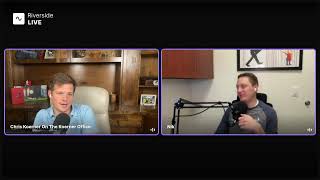
Chris Koerner and Nik riff on business ideas including Danny's paid service selling leads from local Facebook groups, AI-generated daily podcast summaries for niches, and acquiring service businesses. They trade stories and jokes throughout.
Chapters
Don't even worry about that.
You really don't care, do you?
Nope.
Okay. Okay.
Okay.
So excited.
Get this started or what, dude?
Let's get this party started. Chris.
Okay, you wanna, you wanna lead us off here?
No, you freaking texted me like you were coming off of a manic high, and I don't want to get in the way of a freight train. I don't want to get in the way of a Kerner freight train. Okay, so you start us off.
Well, I was so excited about this episode that I ran in the kitchen about 20 minutes ago and read all my jokes to my wife, and she was just like. She's like, oh, like, as if I'd never got to the punchline. So. But it sure doesn't have our humor. She doesn't have our humor. That's the problem.
Well, if it makes you feel any better, that's a better reaction than my wife usually gives me. Usually my wife is like, why are you inside? I thought I locked all the doors, so I don't know.
All right, so do we start with the funny or do we start with the business? What are we doing? Let's start with the business. Let's start with the business.
I want to start with the thing you're the most excited about. Yeah, right. Let's do it.
Okay, so have you ever heard me talk about on Twitter or wherever, how it's very advantageous for people to go into local Facebook groups and talk about, hey, I'm a young guy, or, hey, I just started a business, I'd love your support and generating leads that way. You kind of seen that bit. So I talked about that a lot.
Absolutely.
Fast trick here. And that's how we got our first jobs. James went into these local Facebook groups and said, I'm James, I just graduated from college, yada, yada, yada.
And.
And you're. You're basically playing on everyone's pity gene, right? Like, they want to support you, they like supporting entrepreneurship, and it works. And so I met this guy recently.
I don't. I don't think it's a pity gene. I don't think it's a pity gene, but I think it's like, I want to help out the next generation. Yeah. Yeah.
So I met this guy named Danny and he productized this based on my idea. And he's charging 750 bucks a month to business owners to log in to local Facebook groups on business owners Facebook account. So they'll share their login info. And he goes in there and basically gives that Pitch systemizes. It sends everyone to a Google form and generates leads for the business owner for 750 bucks a month. What are your thoughts?
Shut up. Are you serious? He got this idea from you?
Yeah.
What royalty are you getting?
You know that kid that emailed us about his billion dollar landscaping idea?
Yeah, yeah, yeah, yeah, that's him.
That's him. That's him. Yeah. So no way this model to scale a landscaping business nationwide with, like, college students. And I think there's a lot of merit to this. There's a business around the corner from me called, I mean, we all know about college honks hauling junk. There's one. There's one around the corner. They have, like, wrapped purple trucks, and it's called oh, geez.
Something about, like, the purple company. Purple Nerpal.
Pay my student loans. Let me see.
No, that's an only fans, I think.
I don't know what you're talking about. College fund.
He's just steamrolling through it.
College fund landscaping. So these guys okay a bunch of acreage on a busy road with a ton of rap trucks out front, which tells me they're doing really, really well. And I think that they productized that little hack of playing on people's supportive gene or pity gene or whatever you want to call it.
So here's why I want to talk about the idea in particular in a second. But first I want to say this is why I love Facebook. I know a lot of people younger than us in particular are not big on Facebook, but who is really big on Facebook? People our age and older. In particular, boomers. And when you look at their, you know, that demographic, they have money to spend. They are more likely to spend their disposable income. So you are going to a group of people where they're gathered that have actual money to spend. And when you go to these Facebook groups with these owners, it's like shooting fish in a barrel because they just have no idea about technology. They have no idea how to optimize things. And how many businesses have you done? Like you bought a Facebook group with one of your companies that I won't mention that you ended up turning into a funnel for business just by buying the Facebook group and then funneling them to your business. I think there's a ton of opportunity with these Facebook groups. The second thing in particular, it's genius. Sorry, go ahead.
No, keep going.
I. I just think it's genius of him. He listened to your hack that you've used, and he applied it in a way that you hadn't used it. He's productizing it and selling it to business owners. Boomer. Business owners that don't know how to do it anyways. And charging them 750 bucks a month. I think it's freaking genius.
I know. I think it's funny seeing people pick up with stuff that I talk about, and it's. I see them launch it and they're successful, and it's just like, man, if I had more time, that would be me. I might not be doing it as well as you because this kid's crushing it, but I could totally do that. So I just. Yesterday I was looking at a business called. What was it? After Dot Com. I think it's After Dot com.
Okay.
It's these guys out of Provo. They raised a bunch of money to product. Oh, brother Nations Human cremations. And so they partnered with cremation facilities around. Around the country. And they have just like three products on their website. 900, 1200, 1500. And what was interesting was I went into similar web and did some digging on where they're getting their traffic from, and it's all. It's all From Facebook because 60, 70, 80 year olds on FA are on Facebook, so where else would it come from?
That sounds way better. So you just turned up your volume. It sounded. I can hear you.
Is it better now?
Much better now.
Okay, well, someone in on YouTube is commenting that. So I'm like, I'm talking to him right now. His name's Rizzy Riz. So Rizzy Riz, please.
What's up?
Rizzy Riz, if this is better.
Oh, dude, you need. You need to go get your own YouTube account called Crazy Riz Chrizzy. Rizzy. No, Chris. Christopher Riz Kerner.
Well, dude, I tell the kids at church that my legal name is Ristopher James Kerner. And they love it. Every time. Every time. I just keep saying it over and over and it stays just as good.
Brother Kerner. No, it's Brother Ristopher to you. Okay. What are they doing out of Provo? Like, they have a cremation company that they're. They're providing the cremation services for or they're just.
They're helping human cremation services.
Okay.
Yep.
Okay. Geez Louise.
Anyway, my point was they're getting all of the traffic from Facebook because that's the demographic. Right. But I'm thinking.
What do you think if you. If. If you want to talk about it, what do you think of Danny? Is his name how he's Pitched us launching this college landscaping company using this method because he. So for those who don't know, Danny just reached out to us, cold sent us an email. I responded back to him and said, hey, seems like a cool business idea. Why don't you actually put together a deck and send us a proposal? So he put some time into it and actually sent over a deck with the proposal. And like anybody who's on Twitter, he wrote a good hook. It was like billion dollar idea, sent it to us. And Chris and I have looked at it, but we actually haven't had a chance yet to actually debrief on it. And if you don't want to talk about it now, we can talk about it, you know, offline. But what do you think of, of his idea and what do you think of like actually partnering with him to launch something like this?
I think there's just like universal law in business where it's like more headache, more logistics, more potential scale, more potential profit. And I'm like, I'm this old boomer, 37 year old, that's like less headache, less, less profit. I don't care. I just want, I'd rather do 12 things with less headache than two things with much headache. And so I, I kind of want to partner with him on this lead generation thing and just find a bunch of people to generate leads for through their local Facebook groups. Right? Like that could be a billion dollar.
Almost like, hey, forget about the land, forget about the landscaping idea because there are just so many operational things that you have to manage in order to execute that. Well, he's talking about using college students in all these different towns. Essentially it's a franchise, right? Whereas with this, you don't have to franchise it. You can be central, you can find these businesses and you can scale it fairly well. I shouldn't say fairly easy. Much easier than you could having to go through college students. I agree with you on that. I love the idea of utilizing the college students. And he reached out to us because we have over 35,000 applicants to our co founders program. And he's like, hey, we could use the co founders network in order to launch this. But yeah, I think it'll be more profitable and less operational headache to launch something that's helping these essentially boomer Facebook groups. Yeah, maximize Facebook.
Let's take, we're talking about landscaping already. So let's just go down the line and I want to talk about that guy on YouTube who has a channel with millions of subscribers that just mows people's lawns. For free. And he films it and then he posts the videos and his whole pitch is, hey, let me launch it for you. Why would you do that? Well, because people watch it on YouTube. Okay, weirdo. Sure. I feel like this could be. You can do this with any industry, right? You could. And there probably are people doing it in other industries that I just haven't researched yet. But you've got, you've got negative CAC for those that don't know what negative CAC is, negative customer acquisition cost.
What did you just say to me?
You take someone like Kevin Espiritu, who has the epic gardening channel and YouTube pays him to sell raised planters on his YouTube channel. So this customer acquisition cost is less than zero because he's getting paid to market to his customers. I feel like this is like a different version of negative, negative cac. And I almost look at my show the same way where it's like, hey, I want to consult for your business. Well, how much? Well, it's free. Well, why would you do it for free? Because people are going to listen to it on the Internet, right? Like that model, I think is in its early, early, early days. And you could apply it to almost anything, especially to things that are like ASMR or things that are relaxing to watch. Like even like an assembly line video or the how it's Made show, right? Like just monetizing, taking videos of cool things. Like, do you remember that episode I had, episode two or three, the Tesla wheel repair and then Tesla car washing one. You remember that one?
I know it's an episode, but I never listened to it. Yeah, I know which episode.
This guy basically said, why aren't there people washing Teslas at every supercharger? And it's like, yeah, why aren't there. You just sit 30, 40 minutes. And the haters, aka the rational people, the. What about insurance people, they would say, well, you can't. Like, actually those people, they would say that, you know, you car while you wash it, but you, I mean, you can put, you can put rovers on Mars. We can figure out how to do that. It's like a plastic bag or something, right? So if they can give my grandma.
A bath in a skilled nursing facility without taking her out of the bed, okay, like, we can figure out how to wash a Tesla without frying its circuit.
We can do it.
Hey, and I just, I just want to say. I just want to say, I'm going to go tell this to my wife tonight, actually. So it's actually the smaller the cac, the Better, right? Is that not.
I'm sorry, I'm just gonna. I'm just gonna power through that. We're gonna call this our power through it.
No, I. We have a power through it segment every five seconds, which actually five seconds is a really long time. But I think what's interesting about what you're talking about is he wouldn't have had the negative CAC unless he had the distribution. So. So, like, I can't remember his name. Espiritu on YouTube. Or the guy who mows lawns. Kevin. Kevin. Or the guy who mows lawns. Like, nobody's gonna care to watch their lawn mowing video at first. They've got to like build up an audience and then when they go mow the lawn for free, they're able to essentially monetize off of it. Let's brainstorm. What are some other industries you could do this for? I know you've got like one on the tip of your tongue.
Honestly, I didn't do a lot of research on this topic. It just kind of came.
Well, it's okay, I'll jump, I'll jump. I'll jump in because that's fine. It's kind of similar. Power washing for sure, you know?
Power washing for sure.
Oh, gosh. Yeah, it's got to be. It's got to be a visual. Like there's got to be a visual component to it, right? Because that, that just captures eyeballs where. Oh, man. This is the before and after. So power washing falls into that. Mowing falls into that. Probably tree trimming would fall into that.
Oh, gutter. Gutter, Right. Just like the act of gutter cleaning would be one of those gutters or the visual of the water, like coming out the downspout.
Oh, dude.
And like it's something that anyone could use. It has to be a service that any homeowner could use at any given time. So like roofing doesn't.
Have you ever watched, Right. Have you watched those YouTube videos? It's called Primitive Builders.
Oh, yeah. Oh yeah.
It's these guys. Yeah. So it's these guys in like Thailand who go, you're a red blooded nowhere, and just start.
You've stayed up late watching those videos. Okay.
Like, my, my kids have like love those videos. But the cool thing about it is, like, you just see them build over time and there's no talking because none of them speak English. You could have a YouTube channel that's cleaning gutters with no talking. Where like, it's like the mix of ASMR and. And the video where it's like, you know, the washing and then the unclogging and then whatever the guy's swearing when he smashes his finger. But okay, I like. I like the gutter cleaning. You know, what else would be a good one? And they've actually done these before, like, the before and afters of guys who have, like, disheveled beards or, like, bad hair.
And.
And you're a hairstylist. And you go.
So one of the commenters on YouTube right now, Audie, he said salon. So that's. Yeah, exactly. What's up, Audi.
He gets me. He gets me. I like this. Obviously, home services. Home services makes a lot of sense.
Yep. Let's.
Cool.
Let's talk. Let's talk about AI generated podcasts for a second. So tell us, Nick, what you learned, what you learned today, what the background is.
All right, so Chris and I both launched podcasts in the last few months. Months, to be specific. Chris launched his pod podcast on February 22nd. I launched my podcast on April 28th. Gosh, can I talk today? Oh, I like my PP. I launched my podcast on April the 28th. Before Chris launched his podcast, we had an experiment back in. Started in August of last year with Brandon, who's on Braden. Sorry, Braden, who's on Twitter as well, where we said, could we create a AI generated podcast? And it was pretty simple. We cloned Chris's voice and then we went and found stories, and I'm using we liberally here. It was Chris, we went and found stories online that had lots of views and that were popular, that Chris had kind of compiled in a library from all these different places that he read them and fed the text through a filter and then used the cloned AI voice of Chris, combined those two. And we. We created these five minute segments called Startup Gems. They were just quick stories, and we released those every single day for about four months. And it was cool. We had some traction. We were getting, I don't know, 10, 20, 30 downloads a day. Chris probably in that range.
Yep.
And. And when Chris and I decided to do podcasts, we had the conversation. He's like, hey, do you care if I transition Startup Gems to now beat the Kerner office? And I didn't. I didn't care. I was like, well, it's your voice and most of your stories, so whatever.
Two downloads a day too. Like, because we purposely didn't want to push it. We wanted to see could we just keep uploading and could it grow on its own? And it could not.
And so there was this content library of, I think 90. I think there's about 90 episodes. 88, I think, maybe. Anyways, 90 episodes that were there. And then Chris launches his podcast on February 22nd. Well, I track our, our downloads every single day, and I like to look at what percentage of the people downloading are listening to old episodes, because to me, that says people are binging on old things. So I pulled up Chris's metrics today and I was like, why is it so freaking high? People are listening to a lot of his old episodes. And yesterday, about 10% of the downloads for Chris's podcast went back and were listening to these AI generated podcasts that we had created. And they're. They're the perfect kind of fit for his audience. Right. They're five minutes, they're business stories, they're engaging. It's his voice, and they're just really quick to get in and out of. And it was just kind of an aha. Light bulb moment for both of us. Not even an aha, I should say a validating moment for both of us because we believed in content. We believe that building a library of content is valuable. And it was the validation of that thesis by looking and seeing. Oh, man, 130 people listened to this old podcast that we kind of forgotten about just yesterday just because we're continuing to put out content.
Yeah. So I think that AI generated podcast should be more of a thing, but it should be done in a different way where the business owner or the podcast owner discloses up front, like, this is AI generated, which is why you're getting so much of it. It's more of a quantity game. And I think you could do it really interestingly with things like, like let's take Seinfeld, Seinfeld fans. Right. You could get AI to. To review every episode or to summarize every episode or something. And it's just. It's just programmatic. It's automatic. Every single day, every a podcast is uploaded. And it's. It's very asymmetric because Your cost is $18 a month. That's what you pay to host the podcast. And your time is. It's a zero time. Once you get it set up, you could have Zapier auto uploaded every single day. And you're not trying to trick people. You're telling people it's AI generated, but you're basically feeding them content that when they get to the office, they're seeking out anyway. So maybe it's just a summary of yesterday's news. Right? Dude, maybe I Just hyper.
I just had this.
It's a. It's a. Like a summary of. I just had home health and hospice news from the day before. Go ahead.
Dude. Dude. I just, I just had this idea. You should take all this, the startup gems, podcast episodes, or I will, if you don't want to do this, and upload them to your YouTube and put them on a playlist. Like, people would binge on those. They. They would. They would totally binge on those. And it's sticky and it keeps people there and it doesn't necessarily confuse your episodes. Not, you know what I mean, Necessarily. But I think that would be a genius idea because what you're trying to do is you're trying to get people to trust you. You're trying to build trust at scale. And what builds trust is like, you have to get to know somebody. And that's why podcasts and news newsletters and Twitter and YouTube are so valuable, because it gives you a platform for people to get to know you very intimately. So, anyways, I think that would be a genius idea.
Another thing you can do on YouTube, I don't know if you knew this, but when you upload a podcast or when you upload a video, you can elect for it not to show to your subscribers. So, like, if you just want to kind of a b test something and just see if the algorithm picks it up, but you don't want to spam your subscribers. You just check a box and you upload it. So I could see it working.
What about a service? What about a service that takes the tweets from the people that you have notifications on for? And this could be any social media platform. Instagram, Twitter, Facebook, whatever. And then like every morning it's auto generated to say, like, here's the recap from yesterday right here. Here were the most popular tweets.
Here's.
Here's what's going on with Twitter. Because how do you find out what's going on right now is like you just kind of scroll and it takes time for you to get caught up on what's going on. And it's, it's not proactive, right? Like, you have to go out and seek it out. But that would be kind of cool to just give people a daily, hey, here's what's going on. Hey, here's an update on your industry. Hey, here's what's going on in this community that you're. That you're working on, right? It could be, I'm on this WhatsApp group with these other healthcare entrepreneurs. And I missed like two days worth of the conversation. And in those two days, they had a ton of where they just went through. And I was like, I'm not going to go back and read this. You know what I mean? I could do it on my family texts too. I'm like, my mother in law is texting me about the baby photo that she took 35 years ago. I'm like, I'm not going to. I'm just not going to look at it. I don't, I don't. I'm not going to read this stuff. So I just kind of check out. But it would be, It'd be nice to be like, hey, can you just AI. Can you auto summary the last 50 texts and just tell me what I missed? That would be so helpful for me.
Instead of just ghosting people back to the Twitter idea. You could even have Zapier say, hey, I only want to see. I want. I want you to read me tweets from people that I follow that had over 50,000 impressions. Just read me those. Let me filter through all the crap that no one else thought was interesting either. Then you could block Twitter on your phone.
Do that. That's super interesting because then you're kind of combining the clubhouse air chat phenomenon, where people like, we like to listen to audio with Twitter, right? Where it's like, just read me the tweets. You could even like record your own voice. You could have it recorded in somebody else's voices and it was like, you know, it'll be like. That would be funny to read those tweets though. Could you imagine? Hey. Hey. Siri, read me the tweets from yesterday. Sure thing. Here's a text from Nick. Tweet from Nick Hubert. If you have blue hair, I will not hire you a married man on any man on Instagram.
Red flag.
I hired overseas talent for my tenant tenants.
I added $400 to the monthly rent by adding a deck. It doesn't even look dangerous. Wouldn't you agree?
I. I read 17 hours worth of Nick Huber's book so you wouldn have to. Here's what I learned about self motivation. A thread.
Hey, so this is, this is the premium service that we offer. But then the.
Oh, did I cut out or did you cut out?
I. I don't know, I just, I. Did you hear?
Sorry, that was probably me. No, you said the freemium version and I, I didn't hear anything.
So the freemium version of the service would be, you know, free. And the premium version before 99amonth. And it would include the new and improved Huber filter, where you can filter all that crap out.
Well, he. He probably just needs it for himself because he's like, I own a real business now. I can't be just, you know, crap tweeting at everybody. That would be funny. He, like. He, like, gets on his phone, he's about to tweet something. Nick, don't tweet that. Take me to the island. I want to go to the island with you. All right.
Sorry, we're going off the rails.
I really like that idea, though. I really like that idea about somehow utilizing AI to either put out, organize, summarize content information that is that. That currently is not in an aggregated place for you to go look at.
Yeah.
Do you remember that new services could use that.
Do you remember the Robin Hood snacks podcast I used to listen to? I had those two guys. Yeah. It was a daily podcast. It was like five to 15 minutes, and they did not skip a day for like two, three years. And it was. It was. It was live, it was real. It was. It was basically financial news from the day before, and they would record it like at four in the morning every single day. Like, even the day after they got married. Everything. I feel like you could do something very similar, but automated, like a daily summary of X, Y or Z niche news. And it just. It's all automated. It updates automatically, generates the info automatically. And.
Well, dude, you saw, I think Thomas Newell created a custom chat GPT bot for co founders for you and I. Like, he took our episodes and he fed them through an LLM or whatever. Like, whatever it is, you could do the same thing. You could train AI on you. And I, like, upload all of our episodes and then have a separate thing go and scrape news. And it's like, here's the five minute, you know, co founders news for the day. And then marry those two things with our personality, clone our voices and have the data being scraped every day. We should stop talking about this and take this offline. This is a. This is a billion dollar idea.
I don't know. Margaret, clear my calendar. We have ones of people listening right now. They're probably stealing it right now.
Oh, my gosh. It's incredible. All right, all right, where are we going next?
You got some notes for me?
One thing that. Yeah, I have one note that just says Jess, apparently. That's funny. One. One thing that I've been thinking about this week in particular, and it kind of goes along with this AI piece is you know who Chamath is from the all in podcast, right? Yes. He's launched this, he's launched this fund called I think it's 8010. And the idea behind the fund is we're going to use AI and we're going to essentially copy any of the major tools out there. We're going to get you 80% of the functionality for 10 of the cost. So it's like, oh, you use Salesforce, but they're really expensive. No, with AI now I can use whatever a developer team gets you 80% of the functionality for 10% of the cost. And so like his whole bet is software is going to become a lot more tailored to individuals as opposed to it just being this big enterprise platform that you pay hundreds of thousands of dollars to then tailor to your specific company. So I'm really interested in this idea right now. And one of the areas that I think that it applies is in staffing. And I know that, that you feel this way, but being on Twitter, it's like, oh man, the global talent market is saturated with people who are finding talent and then placing them here in the United States. There's so many companies that are doing it, but when you zoom out, there's not really that many companies doing it. It's growing like crazy. It's a space that people are investing in and that is only getting more and more saturated. But it is by no means saturated. I think that people can sort of stake out their claim by niching down in that space. So what I mean by that is right now you, you know, you and I have talked about this. Could we launch one of these businesses with our distribution? Yeah, but then we'd have to, you know, we'd have to go out, we'd have to actually find a team in the Philippines. We'd have to, or, or whatever country we're sourcing them from, we'd have to manage them, we'd have to get a pipeline. We don't have a sales team. Like, it's a whole infrastructure build out that you'd have to get. But what if we didn't do any of that and we just niched down and said, hey, we want to provide global talent specifically for leads. That's it. That's the only thing that we do is we do lead generation or. Exactly. Right. Or I want to do outsourced talent specifically for video editing and content creation. That's what Sahil Bloom's new company is. Or we home services. And in that model, I think somebody like us could launch it and then white label it with an existing international company. So we're like, we're filling the niche need of people who want a specific type of employee, but then we also don't have to build out the infrastructure on the back end. I actually think that's what Sahil is doing. I could be totally wrong, but when Sahil posted about, hey, I'm launching this company, Nick Huber, like, very next line is like, man, you're gonna crush it. I'm really excited for you. There's space for everybody in this market. Nick doesn't do that crap. Nick is like, very. He gets butthurt very easily. He's very competitive. Like, he doesn't like people labeling it being in his space. I think. I think there's. I think there's something potentially there where he's white labeling it with Sahil. And so Hill's generating all of this stuff, but then it's just funneling for back. Back office fulfillment to. To support Shepherd.
So I think you just.
Anyways, that. That's one thing that I've been thinking about.
Yeah. I don't know how I didn't notice that, because I saw his comment and I thought, that's kind of weird. Well, they're friends, so whatever. But think about their revenue models. They're totally different. Shepherd charges, like, it ends up being three to five grand one time, and Sahil's is charging three to five grand every month. And so if shepherd says, hey, we'll give you. We'll give you 40% off. So it's going to be 2,200 bucks per placement. You're going to make that back in month one. And then Saheel's company doesn't have to do any work whatsoever. And Huber's thrilled because it's just more volume and their margins are 80%, so a little less margin on those, but it's. It's just a bonus.
Well, and like a little. Little inside baseball here we have a friend who knows people in that space, knows the Huber Sanchez space. And he posted something. One of those influencers liked it and reposted it. And then they took it down because Huber reached out to them, was like, hey, could you take this down? It's competing with one of my. But he felt like it was competing with one of his businesses. Right. So if he's that petty about something small, I can't see him being, like, cool about Sahil launching something. So friends are not in my mind.
Agreed.
Yeah. Yeah, friends were not.
So.
So that's one thing that I'm kind of interested in right now.
It's funny because the Shepherds of the world got their start by unbundling upwork. Right. Upwork leads the pack. You unbundle upwork by doing it more in a more niche, different way. And now people are unbundling shepherd because that's all Landed is doing. Yeah, they're just so. It's just the unbundling never stops.
Right, right. And it makes sense because, like, the more niche you can get, the faster you can grow. And then, you know, eventually when you're so niche. I, I talk about this a lot where in software, there's this concept of land and expand. You get into a service offering and then you start offering adjacent services. Right. And it's the same in business. You start an agency doing, I don't know, pay per click, and then you start buying other companies that are now doing SEO and other companies that are doing Google my business and other companies that are doing lead generation. Like, they're all adjacent to what you're offering, but you're using that central piece, cash flows to start buying other businesses that can. That you can gobble up and piece together. I. I think it's the same thing. Like, they're doing the unbundling to start, and then they grow into being able to offer a bunch of different services.
Yeah. Because I think the secret sauce with shepherd is the fact that they don't have to just go post to upwork every time they need someone. They have their own internal database now. And so Landed is skipping the line by leveraging their existing database. They don't have to worry. All right, this person that Shepherd's handing over, are they going to be any good? They're pretty sure that that person's already been vetted and maybe working for them on other projects for the last two to three years. They're good, right? So the quality. So they have quality from day one.
So I know the answer to this question, but for people who aren't, who don't know and that are listening, what is landed? I know it. I know what it is. I know what land it is. I just. For them. Will you explain to them what land it is?
That's the Hills company that we've been talking about.
Oh, gosh. Muhammad, edit that out, please. I'm so stupid. I don't, you know me. I like, read like three words in a post and I'm like, okay, cool, I got the gist. And I. And I move on.
No, yeah, it's Close. Called. It's called autism, and I know you. It's all good. It's all good.
I'm an artist. What do you want me to say?
Speaking of that, I have a retraction I need to make. I gotta make a retraction. You ready for this?
Okay.
Yeah. The last time we spoke, we mentioned. We talked about our. Our pet cremation business, Sunbeam Paws, and, okay, Stephen Hale, our close friend at HCare Advisor, guy who lives near me, who was in my house.
What's the hail?
Yeah, when we bought the van. This sounds, like, really serious, but I'm actually just trolling Stephen right now, so I'll bury the lead. I bought the van with a loan. Remember, we talked about the loan, and then the lender said, this is. There was some weird quirk on the title, and. And they were like, you can't buy this as a business. You have to buy this as an individual. So then Stephen stepped up and he said, I'll buy it. And so then he listened to our podcast, and he's like, you didn't tell everyone that I bought it. You saw them that you. So let me. Let me. Let me be very clear. Stephen Hale bought the van cash because he is a rich and attractive man, and I was wrong in our last podcast. Podcast. And I genuinely, genuinely apologize to him. There you go.
Oh, my gosh. I'd be freaking so butthurt. I'm actually, like, butt hurt for him because I'm, like, sitting here, I'm like, chris took the loan out. He took a slug signing that pg. Hey, guys. I just. I just felt like it was something I could do to contribute.
Okay.
I felt like it was something I could do to contribute.
Spoiler alert.
Stephen paid cash.
I'm a value ad guy.
It ain't much, but it's honest work.
And that's pretty hilarious. Now that we're talking about burning dogs, I want to talk about some of the KPIs that we have. Okay?
Okay.
We got our DBPM dogs burn per month. Tracking very closely our CPF, that's cats per Fahrenheit. If we want to know how fast the incinerator is running, we're tracking our ttp. Tails turn to powder. These are the KPI. I just wanted to get you up to speed because I know we haven't touched base on this business for a while. I'm sorry, did you start.
Just name those one more time. Name those one more time.
Db, dbpm Dogs Burn Per Month. Cpf Cats Per Fahrenheit. And ttp Tails turn to powder.
Oh, my. Okay, what about pbm?
What's that, one puppies burn per month? Well, we are always.
We don't track puppies.
We're trying to optimize for our rob our rate of burn so we can have our PBL dial, which is our pause before launch. So. What's up, Chris?
You wrong for that?
We're canceled.
That's pretty good. That's pretty good. All right, what do we got next?
All right, so I. I wanna. You know how I have that Apple notes folder on my phone where I write down stand up bits? Because one day I'm gonna do a stand up bit.
Yeah.
I want. I want you to. I want you to them on a scale of 1 to 5. Okay. Okay. For me. All right, so just help me out.
One being it's not. What's five for you? What's a five for you?
Five is like Chris Rock, Nate Bargadsy, Netflix Special. Oh, one is like. Hey. Okay, just leave that out. Leave that out. All right, you ready? Okay, so.
Okay.
Yesterday. Yesterday I went to the bathroom at the office, and I went to go.
To the one bathroom.
That's not fair. And it had not been flushed. Okay. I don't want to be too graphic, but someone went number two.
Sure.
Bathroom. Okay. And I was just like, oh, man. But I didn't have a choice. It was my only toilet. Okay. So I was just like, this is disgusting. And then I thought about how silly that is. How if you take the average person, you put two toilets. Died by side. Side by side. You're going to elect to poop in the one that doesn't have poop in it already. Right? And it's like the one that has poop in it. It's like the mindset is, ah, somebody pooped in this. Oh, it's disgusting. As if the one that doesn't have poop in it has never been pooped in. What do we. What do we think? How do we feel about that?
Also two. It's two.
Okay.
I think you could refine it a little bit.
I don't even like that one.
Refine it. Refine.
Okay. All right. Insecurities on full display.
It was stupid. Scratch that.
All right, you're gonna like this one. I'm gonna. I'm gonna take a risk and I'm gonna overhype something because I'm. I'm that confident in this one.
Oh.
So our. Our good friend Stephen Hale, who I was just talking about, we went to dinner our. Us and our wives Went to dinner a couple weeks ago ago, and his wife was talking about her grandma. This was a couple years. It's kind of an older story, but her grandma woke up one morning and her husband had died through the night. Okay, okay.
Who hasn't been there?
We've all been there. And she was. He was. He was kind of old.
We've all been there.
And so she. She looked over, she saw him. She could tell that he had passed. And she went back to bed. Okay. Because she was just at peace with it. And she's like, he's in a better place. And so that.
Elmer, are you dead or asleep? Are you dead or. Oh, he's dead. I'm going back to bed. That's going to take like 30 minutes to get all the police out here. The ambulance, pronunciation of him being dead. I gotta rest up first.
Sorry.
All right, keep going.
It's the first time he hadn't snored in 38 years. Anyway, so I'm getting some Z's in. So she's telling this story and it was a light hearted mood. All right. It was a light hearted move mood. We were all cool with it. We're all friends, of course.
How could you not be light hearted with that story?
Sure. We were just all talking about how crazy that was. And I just kind of looked around at everyone at the table and like, I just had to feel it out because it's like, are we that close? Are they going to be offended? Is it that kind of a crowd? And so I said. I said, man, talk about waking up with a stiffy. I lost it. I felt so bad. I immediately felt terrible. But they laughed. They laughed. They were cool with it. He hasn't talked to me since, but he laughed in the moment.
Oh, gosh.
Oh, so is that it? Is that a good one? Should I put that in there?
That's a good one. That's it. That's a very good one. Yeah. Yeah. That's really good.
Okay.
Oh, I need a second. Is that it? Is it just those two?
Yeah, I'm not. I wanted to end on a high note, so that's it.
Oh, you ended. You ended up here. That was like a three, dude. Solid three.
Oh, that was awesome. Anyway, what else you got for me?
I want to hear about your online journal that you discovered.
I discovered my online journal from 2003, 2004.
Okay.
20 years ago. I was a junior in high school and I was. I listened to emo music, as you can see, in. In that right there in my video. I says 100. Emo. And my friend made it for me in wood shop. So we're talking Taking Back Sunday, Yellow card, dashboard, confessional. Like, to this day, those are my favorite bands. Okay. And I never really knew that I actually was emo. I thought I just liked emo music. I'm an optimist, right? I'm. I'm a cool guy. People like me. I'm not emo. I am. I was in high school.
Yeah, you're pretty.
So you're pretty. Yeah, I'm.
Was it Live Journal? Is that what you had or. What did you have?
It was. It was. It was. It was the lift to Live Journals. Uber, if you will. It was blurty B-L-U-R-T-Y.com and I had to go through the web archive.
Never heard of her.
And I. I put it all in my Google Drive, but it was pretty good. I had 30, 000 words in that thing, and it brought up some good memories.
Not surprised.
Yep. I did a. I did a Best and worst albums of 2003, and my favorite line was on the worst album section. And it said, offspring, the album Splinter. This CD is the king of all suckiness. Come on. With lyrics like, I'm not the one who acted like a hoe. How good could it be? I should be working for the New York Times or something.
You really. You really, really should. Oh, my gosh. I can't wait for, like, little. Little nuggets out of your journal.
Yeah, it was good.
Over the next few weeks, it's gonna be freaking amazing. I have one. I have one last thing. Are you out of things?
I'm out. My well is dry.
Okay, I got one last thing. So we recently hired a chief of staff. His name is Kamal. He's freaking awesome. And we've been giving Kamal little projects. And one of the things that Chris and I decided a couple weeks ago is that this year we're going to buy a business. And we have kind of the size of the business. It's going to be at least $750,000 in EBITDA. But we were still going through the ideation phase and trying to figure out, okay, what kind of business are we going to be focusing on? And Kamal has done some research for us and made some recommendations, and I thought I'd go through some of these with you if you're. If you're cool on air.
Absolutely.
So the first thing that we talked about was products versus services. How do you feel about selling a product and a product being like A widget versus a service. Where do you fall on that continuum? Do you like products or services?
I would probably prefer service, all else equal.
Okay.
Why? I feel like services in general are less operation. Things we likely won't have to have much overhead. Or a warehouse. I feel like it could be done remotely more easily. Easily. And it could scale more easily for those reasons.
I agree with that. So we're on the same page there. What kinds of. Well, I'm not going to tell you ask you what. Here's here what. He kind of drew up global talent. So job board, staffing, placements, a course, buying a business or being a business owner. So essentially this would be a business. It's like a meta business. It's a business that helps business or that helps people get into businesses. So think about like a payroll processing company or HR or SOP creation or payment processing or CRM. The third one was a franchisor. So buying a franchising franchisor and then the last one kind of or not second to last category are agency businesses. So these are going to be like content, lead generation, SEO, pay per click, digital marketing. And then the last one which is my favorite are zombie businesses. So these are going to be software companies that raised it really high valuations. But now, I mean there's still businesses, they're still doing well, but there's just no way they're going to hit that valuation anytime soon. And these venture capital companies are, are divesting of them. As I'm talking about this, are there any of those that are like, I really like that category of businesses.
Zombie businesses scare me because I just, I've never done that. I've never taken a VC backed business that's failing and turned it around. Like it sounds really sexy but I think in practice that could be really, really ugly. And I'm no Carl icon, right. I'm not. I don't like awkwardness.
Well and, and to riff on that, I have experience with turnarounds but in healthcare services businesses, right. Like it would be getting into tech and a turnaround. It's like two things that are both difficult at the same time. I think that would be a steep learning curve. So I agree, I agree with that.
I global talent, I feel like that's just something we could start more easily. Like I if we buy something, I want to, I really want to skip the line. I want to, I want to buy something that we couldn't easily recreate. I still like the payment process. To stripe. Stripe is flat fee, 3%, an interchange plus payment processor that basically charges cost plus 10, 15 basis points. I like that. I like buying something like that because it's a long sales cycle and it takes, it takes a lot of work and time to get all these businesses as customers. Once you have them, they almost never churn. Right. Whereas if we start a payment process from scratch, it's going to be a grind to get to that point.
Is there an adjacent business we could buy that would have the same types of customers as a payment processing company without buying the payment processing company? You know what I mean? Like, the customers would be easily convertible into payment processing.
I'm sure there is.
That would be. I'm gonna write that note down.
What were the other categories? Global talent.
So global talent. The, the buying a business for business owners. So the payroll, hr, etc, franchising and then an agency.
I like, I like the franchising business a lot. The, the franchisor business because of what I just said. Right. Like it's a lot of, it's a lot of money and it's a lot of friction to get to that point. On my Aaron Harper episode, we talked about that and you're looking at 1 to 2 million bucks to launch a franchise and then you got to sell the things. And I feel like a lot of people that listen to this or read our content, they're on the fence between starting buying or buying a franchise. And I think it could play really nicely to that. But it's operationally heavy.
I agree. Yeah, that's again, that's my, that's my hang up with. It is it's operationally heavy. I think I'm just, I'm becoming more convinced that even though I like operations and I think we could be good at operations, I'd rather pick something that's operationally light and that we can scale quickly. That's why I like the idea of that I talked about earlier, right. Where it's like, okay, you white label support shepherd, or you white label these other services or like Dan's idea. Okay, forget about the college students. Just go with the agency. Focus on, on small business owners. I like those easier. I like those a lot more because you can scale them much quicker. In fact, I'm writing a note to myself right now of like, okay, cool, Kamal, let's just like, we don't need operationally intensive businesses. We need light operational intensity that we can scale up quickly. So. Yep, all right, this is good.
This is good. I had fun.
I loved, I loved today. I love you. I love your family. Sometimes when I'm alone at night. I think about you. I think about you forever. All right, we'll talk next week.
Well, yep.
Not before then.
All right, that's it. And his wife was talking about Rub it in her grandma. This was a couple years. It's kind of an older story, but her grandma woke up one morning and her husband had died through the night. Okay, okay.
Who hasn't been there?
We've all been there. And she was.
He was.
He was kind of old.
We've all been there.
And so she, she looked over, she saw him. She could tell that he passed and she went back to bed. Okay. Because she was just at peace with it. And she's like, he's in a better place. And so that.
Elmer, are you dead or asleep? Are you dead or. Oh, he's dead. I'm going back to bed. That's going to take like 30 minutes to get all police out here. The ambulance, pronunciation of him being dead. I gotta rest up first.
Sorry.
All right, keep on.
It's the first time he hadn't snored in 38 years. Anyway, so I'm getting some Z's in. So she's telling this story and it was a light hearted mood. All right. It was a light hearted move mood. We were all cool with it. We're all friends, of course.
How could you not be light hearted with that story?
Sure. We're just all talking about how crazy that was. And I just kind of looked around at everyone, the table, and like, I just had to feel it out because it's like, are we that close? Are they going to be offended? Is it that kind of a crowd? And so I said, I said, man, talk about waking up with a stiffy. I lost it. I felt so bad. I immediately felt terrible. But they laugh. They laugh. They were cool with it. He hasn't talked to me since, but he laughed in the moment.
Oh, gosh.
So is that a. Is that a good one? Should I put that in there?
That's a good one. That's a. That's a very good one. Yeah. Yeah. That's really good.
Okay.
Oh, I need a second. Is that it? Are. Is it just those two?
Yeah, I'm not. I wanted to end on a high note. So that's it.
Oh, you ended. You ended up here. That was like a three, dude. Solid three.
Oh, that was awesome. Anyway, what else you got for me?
I want to hear about your online journal that you discovered.
I discovered my online journal from 2003, 2004.
Okay.
20 years ago, I was a junior in high school and I was. I listened to emo music. As you can see in. In that right there in my video, I says 100% emo. And my friend made it for me in woodshop. So we're talking Taking Back Sunday, Yellow card, Dashboard Confessional. Like, to this day, those are my favorite bands. Okay? And I never really knew that I actually was emo. I thought I just liked emo music. I'm an optimist, right? I'm. I'm a cool guy. People like me. I'm not emo. I am. I was in high school.
Yeah, you're pretty.
So. You're pretty. Yeah.
Was it Live Journal? Is that what you had or what did you have?
It was, it was, it was. It was the lift to Live Journals. Uber, if you will. It was blurty B-L-U-R-T-Y.com and I had to go through.










