The Most Profitable Solo Business You've Never Heard Of
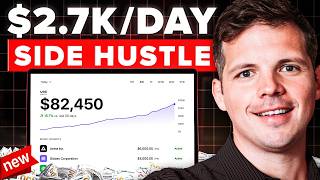
In this interview, host Chris Koerner talks with Brett, the solo founder of Design Joy, a productized design agency that generates roughly $1 million in annual revenue while Brett works alone. Brett explains how he launched the business in 2017 by building a website in a weekend and launching on Product Hunt, quickly earning $10 k on day one and eventually scaling to $80 k‑$200 k net profit per month with minimal expenses. He details the productized agency model—selling design services via subscription, low time‑to‑value (TTV), and a focus on speed over traditional agency overhead. The conversation covers his pricing evolution from $449 to $8 000 per month, client capacity, churn, and the importance of branding and design as a moat in a market flooded with AI‑generated products. Brett shares how AI tools (Midjourney, Krea, Claude, ChatGPT, Runway, Nanobanana Pro) augment his workflow, from prompt generation to image/video creation, and offers prompting hacks such as using ChatGPT to write prompts and rule‑sheet templates. He discusses opportunities for new productized services—AI‑first design & development, branding, copywriting, short‑form video, thumbnail design, and podcast editing—highlighting low‑cost, low‑risk startup potential. Brett also advises non‑designers on leveraging AI, the limits of taste, and the future of AI‑augmented agencies that combine development talent with AI to deliver fast, affordable solutions. The interview ends with contact details and a call for other founders to share their stories.
Chapters
Do about $1 million a year just myself. These are low effort, low cost, low risk startups that you can just spin up a website tomorrow and then you're set, right? Which is a huge opportunity right now because AI is so dang good that you could take something like that and scale it to the moon and back. Everyone needs it. Usually you get instant customers with it and it's totally free. On a Friday I had the idea, on a Saturday I built the thing, on a Sunday I launched it on Product Hunt, and on Monday my life was It's not, not ever the same.
Did you have an audience then?
No, no audience, nothing. I was completely anonymous. Nope, nope. I think it was about $10,000 the first day. It was side income for me. I held my full-time job until I was making $80,000 a month and then I quit.
$80,000? Holy crap.
Yeah. And I was making $75,000 a year at the other job. I kept a full-time job for 4 years while running Design Joy.
So you were making more per month in profit than you were per year from your full-time job? I held it back.
Yes, I was.
Yeah. Oh my God. Oh my gosh. What is your net profit per month?
I think the peak was $200,000 a month, but it usually averages somewhere in the $60,000 to $80,000 a month. It's probably about $1,000 a month in expenses.
Oh my gosh. That's wild. What productized agencies right now you see out there in the world that are very successful that other people could copy? Yeah.
Is it okay if I give two?
Oh, I want as many as you got.
Okay. I think there's two primary ones right now.
Meet Brett. He's making about $80 grand a month in net profit all by himself. No team, no contractors. This guy launched an agency on a Sunday and had $10 grand in recurring revenue by Monday. No audience, no followers, nothing. He was a nobody in a town of 500 in the Midwest. Not just that, but he kept his day job for 4 years while running the business, making more per month in his business than he was making per year in his day job. And today he works 30 hours a week and his clients pay him $6 grand a month before they ever talk to him. So we're going to talk about this thing called productized services, and not just his, but other productized services that you guys can launch in all kinds of different industries.
Enjoy. One of the important things, like, noting, like, who might be watching this is, like, I don't want this conversation to totally be focused around just design. These, these principles and, like, what I've done here can really be applied to any sort of, like, mainly digital skill, whether it's marketing, copywriting, You know, maybe you're running social media for a brand or something like that and it's small. Like any of this stuff can be technically what I call productized, which just basically means selling it off the shelf, right? So instead of filling out a form on a website, getting a quote, jumping on a call, having, you know, 3 or 4 meetings to discuss pricing and proposals and estimates and all that sort of stuff, it's just you go to the website, you buy the service, you pay for it then, and then you can consume it. So it's really I like to call it like lowering the, the TTV, which is time to value. So when you purchase, getting that thing back as quickly as you possibly can. In my case, it's design work. In somebody else's case, it's maybe it's, it's a blog post copy or something like that. I think it's the model that serves that best in terms of lowering that TTV, which I think is, is key more now than ever. You know, a lot of companies value speed over quality, as weird as that is to say. So that's where Design Joy comes in and this whole model really, I think, flourishes. So I run what is now, you know, called a productized design agency. So basically selling design services via subscription. I guess one of the more notable things is I do it all by myself. So I've been running it since 2017. Do about $1 million a year via that, just myself. So there's very little cost involved in other than the, you know, the time that I invest in the startup. Yeah, so it's what I do. I do design work for software, product, branding, like, you know, you name it, I do it. I keep a certain number of clients at a time on basically a retainer, and, and that's that.
So, okay, so 2017, what prompted you to launch this?
Yeah, so the company that I worked for, they were hugely disrupted by Uber and that, that whole boom. It was a transportation company, and I saw the writing on the wall. So while I knew I had time, I started building something on the side just as a safety net. And I actually, story goes, you know, on a Friday I had the idea, on a Saturday I built the thing in Webflow, on a Sunday I launched it on Product Hunt, and on Monday my life was not, not ever the same. That's the way it went. Yeah. It was that, it was that quick, just like a few days.
And then did you have an audience then?
No, no audience.
Nothing.
I was completely anonymous. Nope. Nope. No audience. I literally shared my story on forums. That's it.
Yeah. Explain to people what Product Hunt is if they're not familiar.
Yeah. So Product Hunt is, um, it's primarily for tech products. There are some physical products on there, but essentially what you do is it's called an upvoting system. So every day the list refreshes and you could submit your startup to it, your product, whatever it is. And in my case, I had to get friends and family to upvote me. And the more upvotes you get, the closer to the top you get. And the closer to the top you get, you might go on the homepage, right? And there's people like me who are product obsessed. We like to discover new products. We like to figure out what's, what's next and what's new. So we go to Product Hunt as consumers to check out what the new products are. Well, if your product happens to be there, you get quite a bit of hits. Usually you get instant customers with it. And it's totally free. You just have to have the network of people to upvote it. In my case, literally it was, it was my personal network was my friends and family I went to school with on Facebook. That was all I had at the time. And I got Design Joy to $1 million a year that way before I even started tweeting. I started tweeting 4 or 5 years after I built Design Joy.
So how high up on Product Hunt's list that day did you reach?
Number 4. Yeah.
Number 4. How many? Were you competing with that day?
Total numbers from that day, the, the unique website visits were about 36,000, which for me from starting just the day before was insane.
To your page?
You had 36,000? To my page, 36,000 unique visits.
All spurred from your, your just friends and family from a hometown, Newburg, Missouri, 500 people.
Yep. Yeah. 36,000 uniques. I can't remember quite the exact figures on revenue. I think it was about $10,000 the first day was I got what you would call recurring revenue. It's a little early when on the first day to call it recurring because you don't quite know how it's going to go, but it's technically recurring. So about $10K and then I rode that wave for about a year at that, at that level because it was side income for me. As the story goes, I held my full-time job until I was making $80,000 a month and then I quit. So, and I was making $75,000 a year at the other job.
So, oh my gosh.
They kept giving me raises and raises and raises. To get me to stay. So I was like, okay, at this point I'm only working, like I did most of my Design Joy work, like during my meetings that I had at that job. So I was managing both very simple. I mean, I took on as much as 50 clients at a time at Design Joy. So like one client at my full-time job is literally peanuts to me, you know? So it's super, super easy to get it all done. So yeah, I kept the full-time job for 4 years while running Design Joy.
So you were making more per month in profit than you were per year from your full-time job that you held at the same time?
Yes, I was, by about $5K.
Oh my gosh. Hey, YouTube's fine, but what about when you're driving around? What about when you're mowing the lawn? You need my audio podcast, The Koerner Office. Just look up TKO Pod in Apple, Spotify, or wherever you get your podcasts.
Anyways, I quit my job, and then 2 months later, revenue doubles from $80,000 to $160,000. And that's when I had my first, like, oh crap moment. What do I do here? How do I manage this? And then I had breakdowns. I had price increases. Every time I would double my price, I thought this will finally, like, curb the demand, but it just exponentially increased it because it just put me into another category, which is a lot of things people don't understand about pricing that I had to learn. And then, yeah, so I stayed at that for a while, worked myself literally into a hospital, like almost to death. Like I, I was dying. I was working so much. And then, yeah, right now though, I've, I've gotten my systems faster. I've gotten better at what I do, more selective with my clients. And so now I have a very easy life. I work less than a full-time designer.
So what were you charging per month per client those first few years?
Ooh, good question. So I started out at a measly $449 a month. Day one. Wow.
For unlimited design.
Unlimited design, one at a time. I hit my first big wave that increased to $849 a month. And then I went from that to $1,299 to $2,500 to $3,200 to $4,000 to $5,000 to $6,000, all the way up to $8,000. Then I kind of dialed it back a little bit. So every time I felt like I was hitting a wall and wanted to shut things down, I just, my, my gut reaction was just like, I'm just going to increase prices and see what happens.
Yeah. How many hours a week are you working?
Now it's about probably 30. Okay.
And what is your net profit per month nowadays?
So it varies. So one thing about my business is MMR, monthly recurring revenue, like it swings a lot. Like I can have $50,000, $60,000 a month swings. And one of the reasons is because you have churn, you have people pausing. So on average, it's about $70,000 to $80,000 a month. My total expenses outside of taxes, which I won't include in this conversation because they're astronomical in my sense, because I don't really have many expenses outside of taxes. It's probably about $1,000 a month in expenses.
Oh my gosh. Yeah, that's wild. So you have $40,000 months, you have $120,000 months, but you're netting out, averaging out $70,000 to $80,000 a month, which is basically net profit. Yep.
It's been as low as $40,000 per month. It's been as high, I think the peak was $200,000 a month. But it usually averages somewhere in the $60,000 to $80,000 a month, but you'll get those peaks and valleys.
As a design agency owner, like, what does that actually mean? What are you designing on a regular basis?
Yeah, in my case, I do a lot of branding. So logos, you know, just the overall aesthetic of what these brands look like. I do a lot of websites, you know, design and development of these websites. I do a lot of, you know, social media stuff. I do a lot of, you know, presentation decks. You name it, I pretty much do it as long as it's, it's digitally focused.
So how would a productized service like yours, specifically a design agency, how does it differ from traditional design agencies?
Yeah, so in a lot of ways, right? So if you just want to talk pricing, for example, traditional design agencies are, are relatively very expensive because there's a big headcount involved, right? So when you have a website project, you're not only paying the salary of the person actually working on that, you're also paying the PM, you know, the project manager. The CEO, the CFO, you know, these companies are, they have to pay these people. So their prices are significantly higher. In my case, it's just myself. And in other cases like design, like companies like Design Joy, it's like a few people, right? Very small kind of intimate agencies. So pricing is usually much more affordable. Speed is the big thing. So with traditional agencies, if anyone has ever hired one to embark on, whether it's a brand project, a website project, these things take weeks to months, in some cases to years. In my case, if you, if you were to subscribe to Design Joy, you would have a, you know, let's say a homepage back tomorrow. So it's very fast, no contracts, no calls required. You could decide to sign up today and get designs back tomorrow. So it's like Fiverr, but like on steroids and actually like good, good work, right? So yeah, that's the main thing. And it's a subscription. So One of the big things right now is the economy, right? So it's like people are very hesitant to hire full-time people, especially in the tech world. So they like to use contractors, but even then, if you, as long as you know, if you don't have work for them, you're still paying them. With a model like Design Joy, you can subscribe and pause anytime you want to, meaning if work dries up and you don't really have a need for it, you can just pause your subscription. You're no longer paying for it and you come back whenever you do need more support. So it's very flexible in that regard as well.
Now I'll ask you a question that you're completely— you'd be completely biased on answering. On these vibe-coded apps and websites that kind of all look about the same, generic, could that be not fully but largely fixed with better prompting, screenshots from other websites that have good design? I know like the answer to that could put you out of a client, you know, but like, sure, is it not prompting or is it just like AI is just not there yet and it maybe won't be for a while on the design side of things?
Yeah, I may not be as biased as you think here because I'm not so naive to think that everyone requires top-tier design to be successful, right? The majority of people out there could get by with launching with something made from Claude, right? Like, it's good enough. Where I like to exist is the tier above that, where it's like, we're not fine with just being like good enough. We want to separate ourselves apart from everyone else doing this and everyone that will come behind us and copy us. The only way to really do that is to layer on a design layer onto that, that separates us from a branding perspective. You know, branding is still just as important, if not more important than ever.
It's more important, I think. Yeah.
Yeah. And so, you know, the second you build a successful product, you have to assume that there are 300 people behind you that could spin up something like that within a week. If they have a team, probably days, right?
Yeah.
So what is it that you're going to— what's the moat that you're going to build around that product? One of those moats is distribution, of course, you know, you understand that more so than ever with, yeah, because now it's easy to build the thing.
It's harder than ever to sell the thing.
Exactly. But moat is, is obtainable. You can hire distribution partners, things like that, but it's still, it's still a huge moat and a huge advantage. The other advantages is branding and design. So those two things I think will be increasingly more important.
I'm having like this realization as we're talking that like design has never been more important. You know, it has just like— distribution has never been more important because it's so easy to build the thing. And like, you and I, we go to websites every day that all look about the same, and you're like, let me guess, Lovable. Let me guess, Windsurf. Let me guess, Replit, Cloud Code, you name it. Like, we've all seen it. And so now it's more important than ever to stand out. If you look at the number of websites that are live on the internet, it is like parabolic these last 3 years. Yeah, because it's so easy to make a website and When you think of like, you might agree, disagree with this, two of like the companies that have really, do they call it design-led growth? Is that a thing?
I've heard of that. Yeah. Yeah. I can't speak on it, but I've heard of that term. Yeah.
Yeah. I mean, it's Airbnb and Apple and maybe even more so Airbnb because the two founders are, were designers at heart. And I feel like the best products, the best digital products are incredibly complex under the hood, but incredibly simple on the surface. Right. That's in my opinion, that's what good design is. And that's what Airbnb is. It looks so simple, but there's so much going on there. And I hate it when people bring up Craigslist as an example of like, pfft, design's overrated.
Look at Craigslist or Amazon. Yeah. Either one.
Yeah. Dude, Craigslist died. Like Craigslist is dead. Go look at SimilarWeb. They went from hundreds of millions of views a month to like 4. Like Facebook Marketplace ate their lunch. So it's like, that's not a good example. I think, yeah. And then Apple, like, and Tesla, right? Those are design-led companies and it shows in their market cap. They're trillion-dollar companies. Not that correlation is causation, but I'm terrible at design and it's something that I've always neglected because I'm very much like a done is better than perfect, move fast and break things, like ship it, you know, sell it before you have it, all that. That's my whole thing. And so by the time it comes around to design, it's like, eh. We're working, you know, it's working.
Yeah, it works, right?
Yeah. But it's like you just never know how much better it could work with better design. I'll ask you a question that it's probably one of the most frequently asked questions you've gotten these last 3 years. On one hand with AI, it's like we can vibe code, we can prompt anything, we can design anything easier than ever before. Right? So that would be a notch against you, against your business model, right? On the other hand, like we just talked about, these things need to be designed. They need good design, at least after a certain point. Most websites will never get to that point. Because most businesses fail, which is fine.
Sure.
So like, it's a rising tide situation, right? Your TAM, your total addressable market, has gotten bigger than ever. At the same time, the tools have gotten more user-friendly than ever. So for your business, net of net, has this been a net good for you, this AI these last 3 years, or a net negative?
For me personally, again, just speaking anecdotally, it's been a, a definitely a net, a net positive. It's a net positive for 2 different reasons. It's a net positive in the sense that there's more businesses and startups being built more than ever before in human history. You know, a day is equal to a 6-month period, you know, a couple years ago. So there's more need, there's more entrepreneurs, uh, there's just more things being built that require design more than ever before.
Guys, tkowners.com. That's my community where people are building businesses. I do AMAs, Q&As every week live. You can ask me anything you want. You can have accountability partners. It's about 1,000 people in there building, starting, growing businesses. Check out TKO, as in the Koerner office, tkowners.com.
The second way, and obviously design comes into that, so I get to kind of ride that wave. The second way is just my internal abilities have grossly expanded in terms of what I'm able to produce internally and how quickly I can produce and the type of assets that I can produce now that I would have had to turn away because I didn't have the talent on the team. The team is me. I didn't have the talent. But now AI does enable me to do a lot of those things. And then when it comes to like product work, like, man, like the way that my system works is there's not, like I said, there's not that like high-level synchronized communication that's available. So when I embark on a huge product design request, and I mean like, you know, a piece of software, maybe it's like a medical, medical software that's very intricate and that does oftentimes require a lot of conversations. And a lot of like requirements gatherings. I don't need to do that anymore because I plug in what it is they give me. I work with Claude to come up with all the requirements, all the features, all the flows, just myself in isolation from even the client. And then I have a— I can just bring that, pull that into Figma, and then just start designing. It does a lot of the UX thinking for me, so it just allows me to speed up things and not have to really even think that much.
Yeah. What AI tools are you using in your business right now?
Yeah, good question. Midjourney a lot. Uh, again, I'm a designer, so image generation, video generation is huge for me. So I use Midjourney a ton. I use Krea. Krea is like my, one of my favorite ones cuz it plugs into all of these other AI model, you know, image generation, video generation models. So I use that mainly for that. I do a mix of those for image generations. For, for coding and prototyping, I primarily will use Claude. That's kind of my go-to right now. But again, you ask me tomorrow, it's probably gonna be something different. So it's just the way, the way it goes right now with those. I use AI inside of non-AI products, you know, like Photoshop and Loom, even like a bunch of stuff. Like there's all these like, you know, AI features, but those are the primary AI products that I use currently.
Okay. For the non-designer, like someone who's design illiterate, such as myself, what AI tools do you suggest they use if they can't afford you?
You can get away with using ChatGPT for almost everything. Right. So, or Claude, I think Claude is better if you're looking to like not hire a designer. Claude, there's Magic Path, there's Magic Patterns. Those three are probably the best at getting you the closest to what a, like a true designer would output. They're not quite there yet, but again, they're good enough for probably most people watching that don't have high design standards.
What about Nano Banana?
Oh, so for image generation, so there's two things here, right? So image generation is like, there's either you're looking to generate artwork, like vibey, super aesthetic, like artwork that you really want, like a really unique style. Like I do, I like to play a lot with like Renaissance, like themed artwork. I do a lot of that sort of stuff, kind of like Shopify's latest, like page that they did. Midjourney is great at that. Nanabanana Pro is like better at like specific things. So like if you're looking to generate, you know, a model holding something, go Nanabanana Pro all day long. It's so freaking good. So yeah, I would say Nanabanana Pro for 90% of people listening.
Okay, what if someone's vibecoding a website or an app in Replit or Cloud Code, any of those vibecoding apps, and they really wanted to have amazing design? What should their tech stack be? Should they go find, you know, apps and websites that they've they find personally beautiful, screenshot it, send it over there. What kind of prompts should they put alongside it? Should they ignore Replit for Design altogether and use something like Crea? What would you do?
Claude is the best. Like what I, what I often do is I do the simple approach where I will screenshot. Let's say I want to add a section below, you know, the top section of my landing page and it's just like testimonials, right? Or something like that. I'll oftentimes just screenshot a testimonial section that I like. And reference that inside of Claude, say, hey, referencing the screenshot that I've attached, you know, generate a testimonial section. And that, that gets you like, it's gonna be okay, right? That's, that's what I would do. That's the simplest approach versus like explaining how to use these, how to connect Claude to Figma and do all of that, right? It's gonna be over people's head.
Can you give me the names of some websites that you designed that you're particularly proud of, just so we could show people what you consider to be good design?
Yeah, so Origin Finance is one that I've recently done that's really big. Um, there's others that I wouldn't necessarily classify them as the best designs, but they, they work for what they were built for.
So yeah, is it this one here? UseOrigin.com?
Yeah.
Yeah.
And so again, like design is completely subjective, right? And, and this isn't necessarily what I would consider like the pinnacle of design, right? But it's clean and it works and it converts really well.
Looks pretty great to me.
I've done other things like the T app, the dating T app. Have you heard of that?
T-E-A?
Yeah. Did you ever hear about all that?
No, I've never used a dating app in my life.
Well, I know, I know, but it was all over X because they, they, uh, yeah.
So, oh, this is like a Gumroad vibe.
Yeah. So these guys, I designed this literally like 3 years ago and crickets. I thought it was dead as, dead as all get out. And then all of a sudden it's number 1 on App Store. It's number 1 on the Google Play Store. But they had a data leak. And it was not good. No, I was not a part of it, but they— hugely successful app, like just beat everything by a super wide margin. I did— I did— basically killing it on the App Store, on, on the iOS App Store. They're still on Google Play, but I mean, they got millions of users on like day one. It was everywhere. And I was the guy that, that designed it.
That's cool. Did you design the app too, or Yes. The website.
Yes. The brand, the app, the whole, the whole shebang. What was it? Buy Me a Coffee. I've done a ton of work for, I'm sure you've probably seen the Buy Me a Coffee buttons around for creators and things like that. I don't know if I've done a lot of work for them.
Oh, that's great. And they're all so different, but I do.
Yeah. That's the thing is like, you know, a lot of these projects as a designer, it's really hard because you, you are oftentimes very constrained.
Any other like prompting ideas or prompting hacks when it comes to design that you would recommend?
The biggest prompting hack that I can give to people, and this may sound very common sense to some people listening to this because they're like, obviously I already do that, is to use ChatGPT to write your prompts. So prompt—
whether you're prompting within ChatGPT or any other LLM.
Exactly. Yeah. Especially in, in other LLMs. So if I, if I go to make a video in Runway, which Runway is a video generation AI tool. Or if I go to generate an image in Midjourney or an image in, in Nanobanana Pro, the first place I start is typically in ChatGPT. And I'll say something to the effect of, hey, write me a prompt for Nanobanana Pro that does this XYZ, right? Very generic, very generic. And what it spits out is very specific. It's better than what I could write as far as a prompt goes. It used to be like we had these prompt engineers, like that was going to be a job. And now AI prompts better than people can. So lean on, like, use AI to do the AI stuff that, like, you need help with. Like, you shouldn't have to sit there ever and, like, write your own prompt unless it's just something really quick or whatever. But yeah, use, use ChatGPT to write your prompts.
Why, why is ChatGPT better at writing prompts than, say, Claude, which most people I think today would argue that Claude is a better LLM?
So it depends. If you ask these people, it depends on what they're doing. So If you're prompting perhaps like a, I don't know, let's say Bolt, which Bolt is a, it's a text-to-app platform where you can just say like, you know, write, create this app or whatever, kind of like Claude is. So if you're writing something more technical, I will use Claude for that. Or if I want to write a script for my Webflow site, like a piece of code that like does this special hover effect on this element, I'll use Claude for that. If it's something more of like, uh, image generation or more creative or just personal use, even like I want AI to analyze a tax document or whatever it is. I've just personally anecdotally found ChatGPT to be better at writing more conversational stuff versus Claude being very technical. So those people that usually say like Claude's better for this, they're usually much more technical use cases for that. But they're both, I mean, honestly, they're both good, right? Like you can't really go wrong. It's just a personal preference.
Well, to me, there's two big unlocks there in what you said. Like I've been doing that for a while, right? Ask it what to ask it.
Cool.
But like, hey, I wasn't using ChatGPT to do that. I've been using Claude. To ask Claude what to ask Claude, right? So that's an upgrade. And B, I haven't been telling, you know, in the LLM, in the prompt, I'm going to do this in Nano Banana. I'm get— this is a— I need you to give me a prompt for Replit, for Lovable, for Claude, whatever, because the LLM knows how those LLMs want to be spoken to, right? So theoretically, it should give you a better prompt that's more befitting for that LLM, right?
It will. Like, an example is like Midjourney. Midjourney uses parameters, so there's style parameters, there's ratio parameters. So ChatGPT ChatGPT will need, will know that. You can also, one unlock too is setting up a rule sheet in ChatGPT so that anything you prompt inside of this project will reference a rule sheet. So like when I'm generating Runway videos, Runway takes into account the type of camera you want to use, the type of zoom lens you want to use, the type of cinema color grading. So I can feed that into the rule sheet. So anytime I prompt a Runway thing, it'll reference all that, include all of those parameters inside of that. So it just expedites the process and gets you a much more precise fine-tune prompt for whatever tool you're using.
Yeah, I love that. Listen, I need more people like this to interview on my podcast. So if you know of someone with a side hustle or a business that's unique and cool and super profitable, email Molly, M-O-L-L-Y, at co-founders.com. That's one word, co-founders.com. Molly at co-founders.com. Tell her your story and we'll give you $100 if we end up interviewing them. What is your productized service shiny object right now? Like, what What service out there you think is ripe for the picking to be a productized service that you're too focused on to chase after that you think other people should chase after? Yeah.
Is it okay if I give two?
Oh, I want as many as you got.
Okay. I think there's two primary ones right now. The one is more general. It's AI-first design and development. That is the big thing, right? Because it's easy for us technical people to sit back and say, just use Claude, it's super easy. But the second you have to connect that to a database, or the second you have to connect it to Stripe, or the second you have to actually host the thing, most people who are non-technical, that's where they stop because it's easy to build it, but actually distribute it out is a whole other thing, right? So a lot of these companies will like, are right now, um, Offmenu is one of them, for example, that they, they've transitioned and pivoted to something that's like AI-driven product design and development. So let us run cloud for you and then let us distribute it and let us build the thing and let us host it. Let's take care of all the complexities. I think that's a big, big thing. The other thing on a bias front would be branding. So not product design, not website design, just branding. That is, if I were to create another agency, given my skillset today, that would be, I think, where the next big, big thing will be inside of actually the design industry specifically is branding. So. Those are the two biggest.
I love it. If you were to go with a branding agency, let's say I'm not inherently creative, I don't have good taste, I don't have an eye for design. Is AI to the point where we can lean on that, where with some good prompting Claude can like give us something to at least start with? Claude or anything.
So first off, like, I hate this, I hate this word. If you're on X a lot, you hate it too if you're in my world. But taste, right? Like, taste is— if you don't have taste, you're, you're only going to get so far with prompting, right? So If you take somebody with actually good taste, and good taste is obviously subjective, but there's generally this in the higher tier of these industries, there's agreed upon what good taste is. It'll get you there for something. Where AI is helpful is photography generation. So you don't need to go out and hire photographers anymore. If you have a, let's say a cosmetic, a cosmetic product, like you can get super, super high quality photography done with AI. Just general background images and supporting assets for blog posts and illustrations and things like that, iconography. AI is fantastic for that as well. So I like, what I do is I will bring on a tech company, I'll assign an aesthetic to them. Let's say it's a Renaissance theme and that's just like, it's Renaissance imagery with their product on, overlapped on top. And that's kind of like their aesthetic, right? It's like this old age kind of whatever, neo-Renaissance. I can set up a system for them in AI to be able to replicate and build images out in that style for them to use on their blog posts. And that's all very easy to do. So AI. For that sense is really good with the branding side in creating this cohesion between assets. Yeah, but it's not so good at other things.
Now break down a little bit more the AI agency, like what, what would that look like?
Yes.
Let's say I, you own that agency. I come to you. What need do I have and what solution do you want?
Yeah, absolutely. So let's say like, for example, you want to build out in your case, I'll give you a specific case. Like you want to teach other aspiring YouTubers how to do what you've done, you know, get hundreds of thousands of subscribers. You want to build this very comprehensive system with resources and connecting class members and things like that to each other. You could go to Claude and do that, right? Like you could maybe get something done, but like you're going to probably hit a point if you're not super technical and you've never actually launched a full product yourself with development, you're probably going to hit a point where you, you just get stopped or you get in these like vicious endless loops of like trying to have Claude troubleshoot. You're just burning through tokens and spending so much money on tokens, right? All of these things happen all the time. You don't hear about it, but like, Everyone runs into this issue that's non-technical. Instead of you doing that, why don't you just hire someone that they have, they have actual developers on staff. So when they actually need developers to plug into the AI, they can do that, but they can, they know how to leverage AI to get that thing up in like a month, right? Or like a couple of weeks. And so for you, it's like, okay, money's not really an issue. So you're like, I might as well just have someone who knows what they're doing, who knows how to leverage these tools at the right time, at the right place, in the right way. but also has the resources in-house to be able to have people that oversee this to make sure it's all done up to par, right? Like security's up to par, payment management's up to par, all that sort of stuff. And I have a resource to go to if something breaks. So that's where like, that's where you'd hire somebody like that. And I think that, that is the future of agencies. Inevitably, it's not going to be like individuals building their own software. I don't think it'll be companies building their own software. I think it'll be hiring someone that uses AI. To get it done at a 10th of the time, but done well, right? And so that's where these AI agencies, I think, are going to plug in. They're already, they're already popping up everywhere.
So what would you be able to charge for either one of those?
Probably a lot. And you need to charge a lot because tokens are not cheap currently, and I don't think they're going to get much cheaper. So that's the, that's kind of the unspoken thing about this is like, yeah, it's free. You're doing it yourself, but a lot of people are spending thousands of dollars a month on tokens and running into the limits and stuff. So you'll need to charge a lot. If I were to give a range, it would be somewhere like, if I were to do it, it'd be somewhere in the $10,000 to $20,000 a month range. If I did like a retainer for people.
Yeah.
Now a lot of people don't charge subscriptions. So it's going to be one-off pricing, which could be anything depending on the scope of work.
What productized agencies right now are like, don't tickle your fancy, but you see out there in the world that are very successful that other people could copy?
So Off Menu is one of them that does, that does more of like development and design. If you want something built like that, they're doing, they're doing pretty well. Done pretty well. Hunter Hammonds runs that. We're buddies. He's a cool guy. They run a really cool operation, have a really talented team. What's his name? You would know who exactly I'm talking about. Dang it. But they run one for copywriting actually, which is a huge opportunity right now because AI is so dang good at copywriting that you could take something like that and scale it to the moon and back and not have to hire too many people. Everyone needs it. Like it's sort of, oh, Alex Lieberman, you know who that is, right?
Oh yeah. Yeah. Yeah.
Yeah. So we, we had a chat. Uh, he like pinged me on DMs. He was like, hey, can we hop on? I'm thinking about building like a productized copywriting agency. And then we had that chat and then I swear like 2 months later he was like just crushing it with it, you know? And I think they do more than that now, but there's another one right now called Viral Cuts. I think they're still around.
Yeah, I know them. Yeah.
Yeah. So they, that's Hunter Hammond's thing as well. So they do it for short, short videos for content creators like yourself, which is obviously a huge industry right now. So they take your long-form videos and clip them up and cut them into, into different short-form clips that you can leverage. And that does really well. YouTube thumbnails. I can't think of the name, but there's somebody that does YouTube thumbnails as a subscription, which is one of the best use cases for it because I agree, unlike branding, which is really a one-off thing, you get to capture that revenue, great, but it may not recur. Things like short-term video, short-form videos, podcast editing, or thumbnail design is, is a recurring need.
Yeah.
So those, those type of things do really well, and you can keep going on and on and on.
But there's a lot of justification for making 10 to 20 thumbnails per video because Finally, A/B testing is now native within YouTube. So we're making tons of thumbnails per video.
Oh, sure.
And it never stops. Like, we might make new ones a month after it's been published just to see if we can fire it back up again.
And it was a good business model before AI. Like, I pushed that before even AI was really a thing. But now with AI, it's even more so. Like, the ability for you to scale now is wilder than it ever has been before. Like, if you were to talk about thumbnail design 5 years ago, like, A team of 2 or 3 people could crank out hundreds of thumbnails a day if they needed to, right? So these are low effort, low cost, low risk startups that you can just spin up a website tomorrow, figure out how to get distribution, and then you're set, right? Like there's service-based— I love service-based businesses because there's not, there's not that like risk of if it fails, okay, so what? It's basically just a website and maybe a couple of like processes that I set up, you know, it's not anything crazy. So.
Brett, I think I'm out of questions, but this has been excellent. Thank you for your time. Where can people find you if they want to find you?
Yeah, just on X. Um, I think it's @Brett2TsFromDJ, from Design Joy. Yeah.
Brett from DJ.
Okay. Yeah.
Thanks, Brett.
Thank you.
If you like this content, please share with a friend, hit a like or a comment below, and we'll see you next time on the Koerner Office.










