Chris Webb argues reparations aren't about personal guilt but collective responsibility. Slavery and Jim Crow created compounded wealth gaps that persist today. He uses a board game analogy: equal rules don't work when one player starts twelve spaces behind.
Chapters
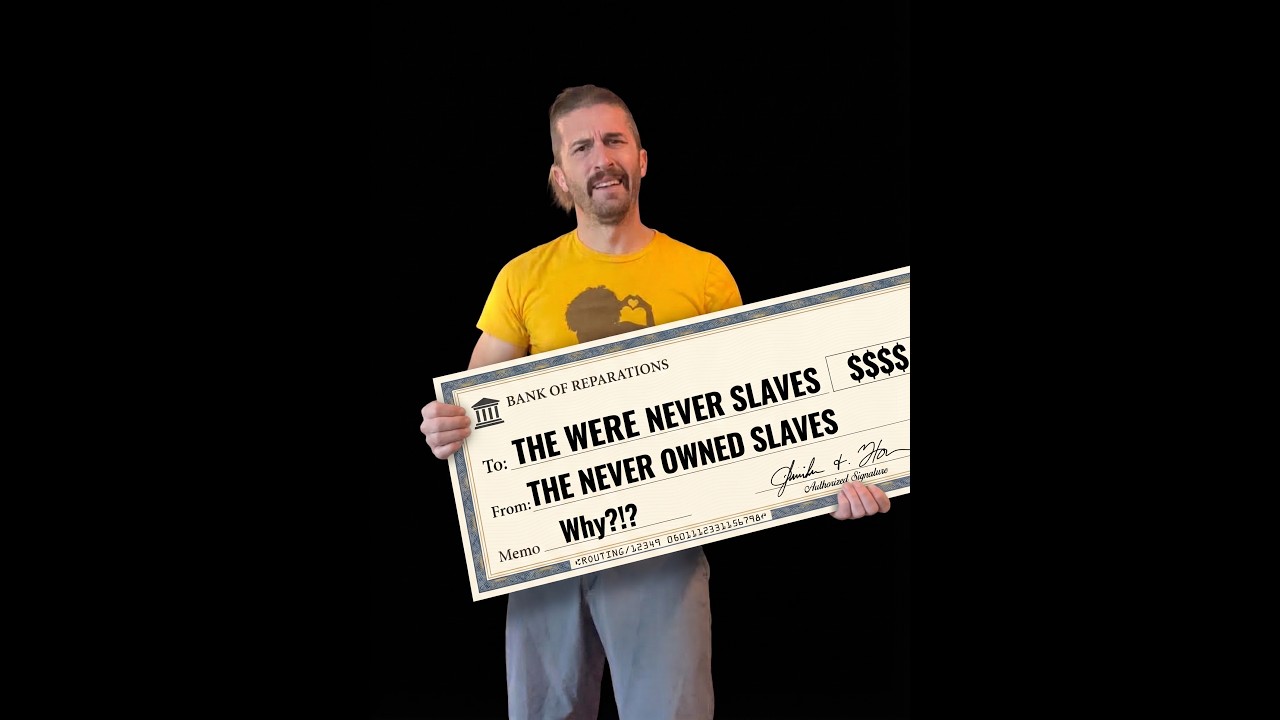
People who have never owned slaves should pay reparations to people that were never slaves. More simply said, from the author's vantage point, I never owned slaves, therefore, why should I have to pay this person that's also never been a slave? If we really want to think about this, I want to look at it like what happens when, you You know, our parents pass, one or two general things happen from a financial standpoint. We either inherit benefit, and we didn't earn that, we didn't do anything for it, but we gladly accept it, whether it's a down payment on a future home or something that we're using to invest and compound interest and build our own little nest egg, whatever that may be. But let's say we inherit an obligation. Debt, credit, something along those lines. We're not responsible for that either. But since when do we get to pick and choose? Shouldn't we be responsible for all of it? When we think about what's happened in history, imagine 2 children. One child grows up with money, Savings, access to good schools. Their parents put money in an account for college. They helped get them into college, and they get out with perhaps a degree and an ability to get after it. What about another child that lives in unstable housing, an overcrowded situation, and doesn't have the ability to have money to go towards college. They might incur a lot of debt just to try to do that thing. So is it safe to say that they're not in the same starting point? And you could use a simple board game analogy. If you have to start negative 12 spaces beyond start in the game of life, and I'm already up ahead getting a job, I'd say I have an unfair advantage. And I'm not making a statement to say that every white person is rich and every Black person is poor. That is not at all what this is about. But starting points matter. And when we think about advantages, receiving an inheritance, getting college paid for, having access to more resources, We gladly accept those things when they happen. Why do we conveniently dismiss, disregard, and not really consider the disadvantages? Food for thought. So another point from this author, they're making it feel personal. I don't think it should be about personal guilt about, you know, this person never owning a slave, for sure. and folks today that are not enslaved. I get that part of it, but that also implies that there's no long-term effects from slavery. And we'll get to showing how that's not the case in just a minute, but it really should be more a matter of public responsibility, don't you think? So, you know, personal guilt says like, what did I do? Whereas public responsibility is, what did our country's institutions do that allowed a system like slavery to continue to thrive and to hold people back? So we already have this idea of a shared responsibility when it comes to roads. I pay into roads that I may never drive on. Emergency services. I hope I don't have to call an ambulance. I have no children, but I pay into the schools, infrastructure, all these things. So national defense, disaster relief. Are we willing to apply this consistently? Yes. Because if we acknowledge the damage caused from slavery, it creates a different discussion. And that gets to emancipation. I think when this author says, well, no one's a slave today, I never owned them, like, what are we even talking about here? Whether they're meaning to imply this or not, it makes it sound like, well, emancipation happened, so we're good, we're gravy, it's fine. That would be seriously ignoring the Jim Crow laws that took effect after massive school segregation. Continued discrimination, not fair access to lending for money, jobs, the ability for folks that were just treated as lesser than human to actually find a way to get back up. So what, what, what would that feel like, right? So all of a sudden you were just relieved of having to work this unpaid labor. But they said, you know what though? You have no savings. You get no access to housing. There's still laws in effect that discriminate against you. There's unfair disadvantages based on continued racism that is still happening. But we're good, right? Slavery's over, so. What does that do to each generation in terms of the compounding effect? Now that we're thinking about when the Emancipation Proclamation ended at the end of the Civil War, fast forwarding to all the inequality and inequity that happened during the times of Martin Luther King and Malcolm X and all of this, I mean, are we starting to see that one generation passed on Unfair, unequal circumstances. And if we use the simple board game analogy, they're starting with more disadvantages. When they spin the spinner, they can't hit the higher number to move further. It's not available to them. So starting place matters. So the wealth gap and how this compounds. So Family A is set up well. You know, both parents bring in a good income. They have a nice house. They have access to good schools based on that nice house and the neighborhood that it is in. The child grows up with a safe and secure upbringing, access to good food, the ability to go to a school that prioritizes their education, where based on the taxes in said neighborhood has a quality curriculum and teachers that give that student every opportunity to excel compared to one that didn't grow up in a nice neighborhood because their parents could only afford so much. They didn't have the money from the previous generation for a down payment on a house. All they can do is afford to rent, and it's probably an overcrowded situation. And then you look at the disadvantages from lending and discrimination in getting certain jobs that were happening to their parents, and they're working longer hours, harder jobs, generally speaking, and not able to provide a college investment fund for their kid. And this child grows up in a neighborhood they didn't choose, in a circumstance that, you know, they can't change, and they don't even understand what a neighborhood is until a certain age. And you understand, what does safety look like there? What are the quality of the curriculum, the teachers, and the schools look like in a downtrodden area that does not have the same money and support as Child A? So Are equal rules really enough? I'll get back to the simple starting example. If we're running a race and racer number 1 is 2 miles ahead and racer number 2 is still at the starting box, yeah, they have the same shoes, the same stuff, all the rules are the same, but one is clearly ahead of the other based on compounded generational wealth gaps, circumstances, access to resources. The starting spot's not the same. So, just because you have the same rules doesn't mean you're on equal playing ground. And lastly, equal treatment doesn't make up for unequal conditions. Right? That's really what we're getting at here. And the biggest thing that I'm thinking about when it comes to this is we're asking the wrong question. It's not about my personal responsibility because I never owned slaves and there aren't slaves today. It's more asking a simpler question: was slavery an awful and terrible and a bad thing that negatively impacted generations that compounded through continued discrimination, school segregation, access to resources, the lending I mentioned, any number of factors to neighborhoods where somebody had to live? What is the difference of having a house and building equity that I can pass on to my kids versus my parents had to pay rent and have nothing to pass on to my kids? If we really sit and think about these questions, then to me it's pretty clear that we're talking about a shared responsibility. We tend as a society to want to look and treat as benefits that we receive from history as a private inheritance and a really good thing, but we did nothing to earn that, but we accept it gladly. So why is it different when it comes to the disadvantages? Why are those not talked about? Why are we not accepting a public shared responsibility for the institutions and the policies that shaped where a lot of people are today because of something like slavery? To me, that's the right question, and that's the right way to look at this issue.