Copy Paste Post #6 - Pay my student loans please?

Chris Webb breaks down the real cost of college: a $124,000 in-state degree in 2026, with graduates carrying $30,000 in debt and paying $330 monthly plus $11,000 in interest over ten years. He argues the problem isn't irresponsible borrowers but a system where governments, universities, and employers all benefit from educated workers while students alone carry the financial risk.
Chapters
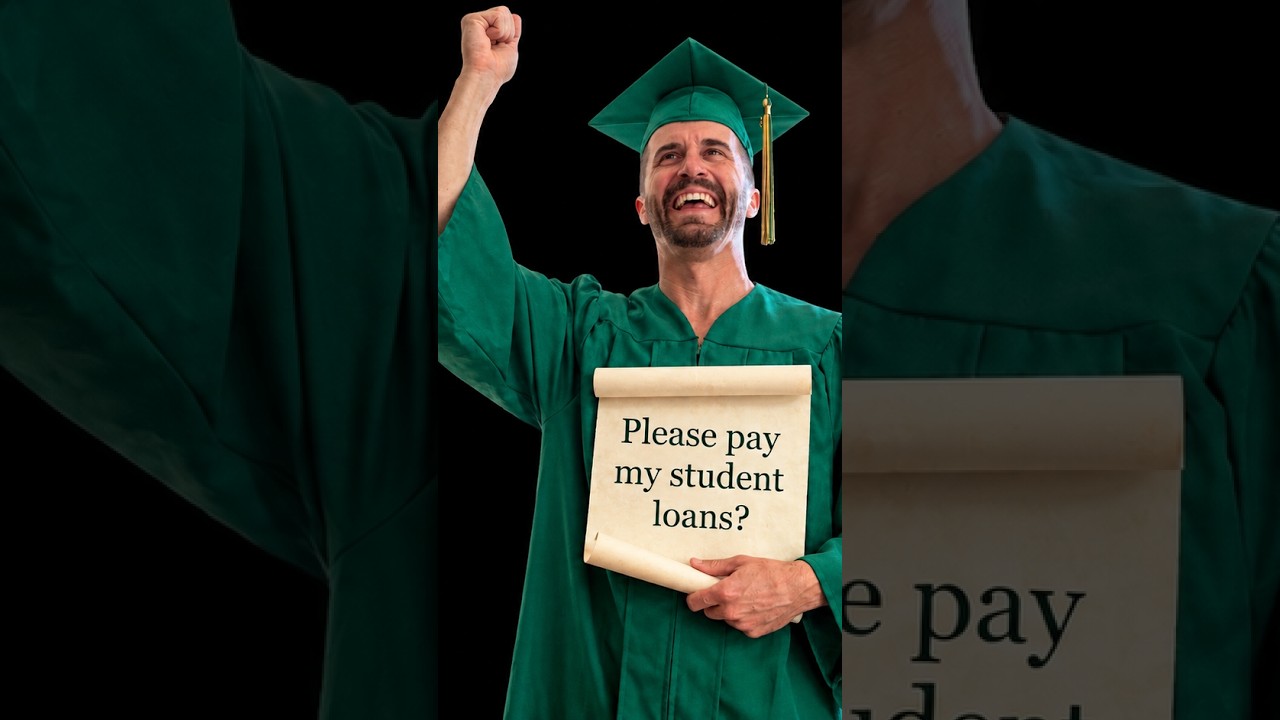
People who have never been to college should pay the debts of college students who took out huge loans for degrees. There's a lot to unpack on this one. As somebody that attended a 4-year university and graduate school, I've got my own personal experiences as well. But just for a frame of reference, in 2026, we'll just say an in-state university, the total all-in costs, which will include housing, food, transportation, books, supplies, your, you know, cost of tuition, all included, $124,000 on average over 4 years. And when you look at the interest rates for student loans, they're close to 7%. I geek out in finance. Anything over 4% in interest is bad debt and something that you want to be motivated to pay off pretty darn quick. So even in a situation where it says the average borrower as of recent graduates is maybe taking out roughly $30,000 in debt over a 10-year plan, that's over a $330 monthly payment akin to a car, and they're still paying an additional 11 grand nearly in interest over 10 years. Now the average person takes 20 years, so we can compound and add those numbers, and that's not great. And this is typically, regardless if somebody graduates and they're a junior-level accountant, or they're a nurse, or they're a junior engineer at a construction site, whatever it may be, they're starting lower on the totem pole, they're earning less, and they're immediately faced with repaying debt. Now, we can also say that the student is responsible to be learning and maybe seek the advice and guidance, hopefully parents or trusted loved ones, to say, You know what, this college is obscenely expensive. Maybe consider this other option that still has great educational standards, all these things. I can even think of examples from my university days where there was a couple guys that were using money from their loans meant to be used towards rent, food, transportation, your books, all this stuff to like buying a new TV and going out and drinking or partying. An irresponsible use of funds, right? So we can go down that rabbit hole as well. But more to the author's point, I just think it's the wrong question. They're angry at the borrower, an 18-year-old that takes on this debt 4 years later at age 22. But shouldn't we be asking a different question? Who created the price for college and university. And why is it important? Well, let's just unpack this a little. He's treating— the author, or she, I should say— they're treating it as a personal choice. When I would argue college nowadays almost seems like the price of admission to get a decent job. Employers require it, and And we look at the price. How does this come together, right? So governments subsidize, they guarantee loans, they give grants, they give tax benefits to universities. Um, you know, businesses rely on the universities for recruitment, for credentialed talent. So when we think about a hospital and all the smarts and the talent and the education that goes behind doctors nurses, physician's assistants, radiology techs, you know, heck, the operations manager that's keeping things afloat and understanding the priorities of a hospital. And that's one specific example. We can get into tech companies, we can get into finance, we can get into engineers, scientists, all of these fields that are critically important to our society functioning at a high level. So when we think about it, society benefits. We want a country that has an educated future and is considering new ways to innovate while creating greater efficiencies in terms of how we sustain ourselves. How are we designing towns, you know, infrastructure, all of these things, all of these people, they matter, right? We don't want to call 911 and have somebody that doesn't know what they're doing, and then we're not there anymore. That's an extreme example, but you get the idea. So maybe it's a thought process of this isn't a personal choice. It's practically required in most situations to get ahead in this world. And if society benefits and the government and institutions are giving all these benefits back to universities, then why is the student alone strapped with this huge private financial burden? I think it's a pretty good question. So I'm an 18-year-old. Do you think I've got great negotiating power with lenders? Do you think that I've got a great idea in terms of what the limitations are or are not in the job market once I get out there? What can I expect to do at age 18 in terms of controlling any of this? I'd say none. It's other adults. It's a system. It's things that we have to dig deeper on. And we want to ask questions to better understand. So, why are universities so much money? Well, I guess think of it this way. You see a commercial on TV and you see these beautiful buildings. They cost a lot to erect, to maintain, to update, to upgrade. Beautiful lawns and landscaping. We want it to look really nice, but that comes with a cost. Maybe it's the new fancy rec center. Maybe it's the new ponds that we're putting in, you know, you name it. But then there's the administration. There's executive salaries. Wonder what that looks like. And athletics. Now, not all colleges are created equal, as a disclaimer. Some athletic programs don't turn any kind of profit. But I think it's a fair statement to say that there are many university examples out there that seem that they prioritize their athletics more than the education. Last I checked, it is student athlete, not athletic student. Just my own 2 cents and thoughts on that one. But how much of the money, when we think about the cost of the tuition, to get back to that number, the $124,000, if we were to break it down in terms of what actually is the tuition cost, that's maybe roughly around like $44,000. How much of that per student, and imagine a big university and all the students that go there, how much of all that money is actually going towards the quality of the education in the classroom versus other things. Universities have complete control over how this money is spent. So that's, I think, a key thing to keep in mind. So I graduate, I'm 22. Who benefits from having an educated, credentialed worker? Well, the employers, that require it on their job applications and are looking for a certain tier and level of somebody to come in with a certain level of education to perform the duties that they're being asked to perform. The communities that benefit from these folks that are moving and living and progressing in their careers because of that education jump-off in terms of higher spending power, boosting the local economies, thinking of how they're innovating and contributing to their communities and civic responsibilities and doing more. which there's plenty of things that tie into showing that that is the case. Yet if society benefits, if employers benefit, if universities benefit from all this money they can spend on all these other things, why is this massive private burden, 6% plus interest rate, $124,000 all in, and that's just an in-state estimate, All on this poor 22-year-old that just graduates. Why? So maybe the better question is, from this author's perspective, not why should somebody pay for something, but if we just take a step back and we say having highly educated folks graduating with college degrees is critical to the advancement of us as a society, as I just elaborated on all the ways that they help communities grow and thrive, then the better question is, how is public investment structured? How are we then saying if employers are benefiting, universities are getting all these subsidies and payments and grants and guaranteed loans from the government, if institutions are benefiting, if society is benefiting, shouldn't it be more than just the student's responsibility? But shouldn't we also just have more questions into that cost? Who carries the risk? Well, the student, 100%, right? You know, the institution, society, the communities, the university— I mean, they get all the benefits of me graduating with this 4-year degree and then what I'm contributing to my community, to the workforce, to, you know, the greater advancement, you know, of us here in society. The university gets tuition. The lender gets interest, employers get this credentialed workforce ready to go, and society gets all these ancillary benefits that I just mentioned. Yet the student gets on average 20 years of debt to pay off their student loans. And what happens for that student when it's a poor job market? What happens if the promise of that 4-year degree and that education doesn't lead to them getting— A job. the job that everyone told them and sold them that they could? What happens and who shares in that loss? Pretty sure it's still just the student. So if we're all sharing the benefits in this society of an educated workforce graduating college, then why is the student carrying all the risk? Universities, lenders, employers, the public, Do we want educated doctors, engineers, scientists, researchers, accountants? I think we do. So it's part of the infrastructure of our country. We need to look at this much differently. So we need to be asking different questions, I would say, to this author. Who raised the money? Who profits? Who benefits? And if it's personal, As this person tries to contend, then why does the whole economy depend on these young 18-year-olds making these decisions, achieving these degrees, and then going on to bigger and better things to raise the standard for how we live in this world? I think he's asking the wrong question.
More from Chris
Copy Paste Post #5 - I never owned slaves why should I have to pay those that were never slaves?


Cool for Joe, a Crime for Don? Does he have any idea how Quid Pro Quo works?!


#2 Short: Only Americans Count? #personalgrowth #podcast #learntopodcast #politics #uspolitics