How Reddit CTO Chris Slowe Started His Career | How to Run a Tech Company ft. Reddit CTO
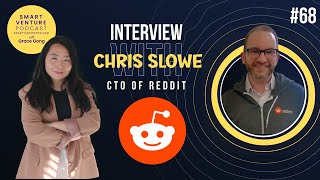
Reddit's first employee and current CTO Chris Slowe started with QBasic on a 486, got a physics PhD, and joined Y Combinator's first batch. He talks about early startup chaos, why he left Reddit and came back, and how Reddit handles moderation at scale.
Chapters
I think for Reddit, like I prefer the more distributed, like where possible, distributed decision making is better just because like why the hell did you hire all these experts if you're not going to get their opinion on something?
You started programming when you're younger because you like computer games and uh, later on you've studied like physics and grad school and like, tell us more about like how you started your career in programming. And later on I know that you joined YC because. And then that's how you met the Reddit founder because they're renting an apartment with you. So yeah, I would love to learn more about like how you started your career.
Cool. So I'll give, Let me give the. I guess, I guess give the abridged version of my life story. Um, so I, yeah, I started using computers so quick vintage on me. So I'm a 90s kid. I'm late Gen X, which makes me a little old for most of the tech startups around these days, or at least the ones that haven't already IPO'd or done something else along the way. I got my start. My first computer I didn't get until I was about 14 and I was in high school at that point. And I remember almost immediately this is before computers were by default network. So it was just, just sitting happily with my 486 like playing around with it. And I think I discovered QBasic just by like trying every possible command on the DOS prompt to see what I got and then found this entire programming environment and just like started playing with it. And so that was my, my first experience was like just kind of the figure it out method of computer programming. You know, in the meantime, at the time like it was, there was a lot of work that went into curating your computer so you could actually run computer games. Memory management was a critical thing and so just kind of learning all that stuff early on was. It was definitely formative. I mean in retrospect, at the time just seemed like normal tinkering that you do as a kid. And then later when I actually got into college, I remember I had to decide between. I was trying to decide between doing math, physics and computer science. And so I ended up taking the intro to all three classes my freshman year. At that point in my career I was definitely much more of an overachiever that took years and years to burn out on and decided to stick with physics actually at that point. And so did a whole degree in physics, made it all the way through to my PhD and decided about four years into my PhD program where I started getting a little burnt out. And I think at that point I didn't really know that was a thing because, you know, you're. I also didn't realize until that point that up until that point in your life there's always like a four year limit on how long you do a thing. It's like, you know, high school is four years, college is four years. PhD is whenever you finish your PhD. And so four years in, I was like, oh, so I have like two to four more years of this. Great. So I think I got a little bit, a little bit jumpy, like kind of jumpy and actually got a friend pitch me on a startup that turned into me getting into the first White Combinator batch, like totally lucky and eventually turned me into being the first employee at Reddit when my startup failed. But my two roommates whose names were Steve and Alexis, succeeded at, at keeping their company going for a lot longer. Yeah, that's a short version.
Yeah. What, what is the long version? What, what is something?
Well, I think the longer version is that finishing up. So you know, for, for the, for the Y Combinator, like first Y Combinator batch, it was fantastic. I don't think, you know, the nice thing about that batch is like we were all kind of doing it live. Like no one, you know, the YC founders, especially Paul and Jessica put a lot of work into Paul Graham and Jessica Livingston put a lot of work into trying to make it so that it was really easy and seamless to build a startup and take all the BS out of it. So that, you know, because at that point, since 2005, we were still dealing with the hangover from the dot com bust in 2000. And so people weren't really start finding companies and there wasn't really an easy mechanism to even start a company. And so the fact that they managed to make it into a thing, you could just kind of like, here's some paperwork, here's an initial starting grant of like I think at the time was $6,000 per co founder and just go. And that was unheard of. And it was really fantastic. And it was, it was fantastic to be able to crash and burn that summer and have a, have no, have like no company at the end of it. You know, you'll learn from your failures. And that was definitely one of them. And I think the, you know, subsequently to that Reddit as a startup was, was just a real trip in that we. The thing about Reddit is that the site's Just always grown like we've just always had this kind of low key growth at the time in the early years it was like much more low key. It was like we were doubling every three months in the first year. And so that meant that you could actually see on the traffic graph the noticeable kind of uptick of traffic. And so it was always this game of fighting against the scaling problems we'd have to deal with about, you know, a month or two from now because, you know, a month or two from now we're going to be at like close to double traffic, which means whatever, whatever thing is creaking on the back end has to be fixed like immediately. So to go back into like the personal narrative part from over the course of 2006, it went from working on Reddit was my nighttime activity and by day I was a PhD grad student at Harvard. And and then end of the year came around and Reddit got acquired by Conde Nast. We were all told to move to California and my PhD, like I got my data from my PhD all in that last couple months of the year and so it turned into my PhD was my night job of me writing my thesis. And by day I was a software engineer working, working on, working on Reddit.
So yeah, yeah, I think, I think that's such an awesome story. I'm curious about not now. When you're looking at the accomplishment from the YC badge back in time, like everybody is like a superstar. Was it really obvious that like you guys were gonna make something awesome and like how did Paul filter out? Like all these geniuses are gonna be like coming to this batch? Because I feel like nowadays when you look at the YC mafia, like everybody is like really? Yeah, just like everyone's like really, really successful and can curious like you know how like what are some characteristics were where you guys all have and like that your peers probably. Don't that like make you more successful or was it just like a coincidence?
Oh, I don't know. I think it's, you know, I think from that, from that initial YC batch, I don't remember the numbers of successes of that. There was definitely at least an early acquisition within that like within maybe the first few months. One of the startups actually ended up merging up with Reddit. There was a blog startup by the name of Infogami that ended up merging up with Reddit Reddit right around the time I started in October. And so that maybe that counts as a success I guess. But I think of like, of those startups about half of them probably failed in some way or another or kind of like stuck around for a bit and moved on. That said, there was a really awesome initial batch of people. So in that first summer batch there was Emmett Shear and Justin Kahn who later went on to found Justin tv, now Twitch. There was also Sam Altman was doing a startup that year. He's now, um, the supreme all knowing, all knowing dictator of yc and Sam, Sam's great sims, also on our board. Um, and you know, it's just a lot of, especially those early years, a lot of people who just kind of stuck with it. So I don't know, I think that there's a, there's definitely a chicken and egg problem of hey, you know, there was a, there was a gap that Paul identified that was out there. And so you tend to, you tend to at the same time draw people who have a certain amount of like entrepreneurial spirit in them and who are also willing to take our crazy risk. And also, I mean that group was very, I think I was the outlier in that I was actually in grad school. Everyone else was busy for sort of college. And so it was very much like a like high beta, like it's going to work or it's not. And like if it doesn't work then like, yeah, we'll just get a job somewhere else. And I think that I don't want to, of course I want to downplay how fantastic that group was and like how that was actually most of the value on CMYC was just like being able to go to dinner once a week and hang out with people who were going through exactly the same thing you were at exactly the same time and exactly the same age group. That's continued to be the main magic in YC is the social network attached to it of just shared commiseration and also a pool of people who are entrepreneurs who are trying things out and might fail. But you can tap them for expertise and if that doesn't work out you can always hire them later. And that sort of network is really valuable.
Honestly that sort of like resonate with like the current co learning things like everyone's trying to actually meet people instead of just learning a particular knowledge or something. I'm curious about like at that point, were your parents cool with you doing a PhD and after you finish your PhD, like joining a startup that may like most likely will fail.
Right.
Like, curious how. Yeah. How did that pay?
So my parents were, were very. Not okay with it. They, they thought they were, they weren't sure. What I was doing because at that point I, I had put all of my effort into finishing my like, basically grad school. And PhD was like the route. And it was, I was, My mom was. I hope she's probably gonna listen to this later. Hi, mom. My mom was very originally into me being a doctor. Like the regular, like the other kind of doctor, the md, that's still a running joke. It's like I, whenever I, whenever I joke about, like, I only bring up being a doctor now, either because I'm. I have to flex over something which I hate doing, or as a joke. And every time I bring it up around my wife, she's like, he's not that kind of doctor. And so at least for, for, you know, I put so much time into, into academia that when she heard I was like spending time doing a startup, she's like, what do you, what is this thing you're doing in your spare time? Like, why aren't you working like harder on your PhD or other things? And especially when I, when I decided to like, stick with, stick with Reddit after grad school, definitely very skeptical, uh, given the path at that point. Um, that said, one, one easy thing was like making. Making software engineer money fresh out of grad school as opposed to making postdoc money was definitely not a bad thing. But that was like a. Still felt like I was abandoning entire career, which took a while to kind of convince. I think it actually legitimately took it. So probably like maybe the last, maybe the last year, maybe like roughly before. She's like, okay, maybe that's a good idea.
Before the CTO part, everything.
My mom has very high standards, so, you know, it's like the overachiever thing wasn't in a vacuum.
Do you pick the Reddit route versus your stable PhD route? Because it seems like the opposite.
Right?
Because PhD seems like really, really stable. After the program, there's. You're definitely going to have something like more stable to do. And like, I think the startup is. Did you just really enjoy the problem solving thing or like, was it just like the people that you enjoy working with?
I think at the roots of it, I mean, the people were great. At the roots of it, it was very much. The problems were interesting. Um, I think that, you know, the way that grad school ended up working out. So I was doing experimental physics, which meant I was spending roughly like a third of my time building computer simulations of whatever I was trying to build, and then a third of my time designing the next experiment and a third of My time like in a machine shop building whatever I was going to do next. And then the remaining little sliver of time was actually like doing the science part of the experiment of the, of the degree. Um, and so I had a lot of time to actually just like kind of ad hoc become a software engineer. Like you know, doing this effectively. A couple of years of time in my grad school experience was me just doing software engineering. I didn't think of it in that way, but I was definitely doing it. And so I was, I was able to kind of like practice those muscles. And it always been like a background kind of fun activity. I think with, with just the, with with White Combinator especially what it brought to the front was like there were all these interesting real world problems that people can bring to bear where to some extent the solution is just like some combination of determination, brute force and hope. And that was like the same problem that you had in grad school, but like in a much more, I don't know, it felt, it felt more tractable. I think grad school by, by about four or five years in, you know, it felt like there's this giant. I actually there was a, there was a comic I remember around this time that I, that really resonated with me was like somebody drew a picture of like imagine this circle is all of human knowledge. Your PhD is you're going to take a little tiny dimple on the side, burst out into like the undiscovered territory right on this huge pile of knowledge. It's like little extra little blip. And so it's that discoveries are few and far between. Discoveries are happening all the time. But academia is huge. And so like your contribution is going to be relatively kind of tiny over in the grand scheme of things. Whereas I felt like with software engineering there were like real world problems and really hard problems that were being, being solved like live there like now. And I think also the skill set of being a physicist is like around. It's like kind of take. You take problems apart, they train you for years just to learn how to take problems apart. And that works just as well in software engineering as it does in any kind of science. In fact, physicists are generally pains in the ass because there's this presumption that you can solve any problem once you figure out physics. And it's all, it's, it's, it's, it's true in the non annoying way. It's true insofar as like you're trained for all of your time to like take a really hard problem and break it into pieces and then solve the pieces, then put it all back together. And that's a really great toolkit to be able to apply.
I really like that you really set like the core things that you learn at your PhD or like doing the physic things. Because it is like you said, it's like kind of. Oh, internally like related to programming as well. Like taking a problem, breaking into smaller problems, I guess.
Yeah, yeah, I think, I mean, because. Because the, the big problem is usually difficult. The little problems are not necessarily easy, but they're usually easier than the big problem. Um, and then, and you can, you can actually start applying tools to little problems. Like there's, there's probably other people have solved those problems. Yeah, Getting very abstract, but like, that's kind of the, that's kind of the nut of it.
I thought that's really cool that like, you are very one of the really rare people who can handle like all the really academic things as well as the startup world. Because most likely, you know, when you hear about like the top startup founders or like the startup teams are made up by really like the pirates of the world, like they, you know, drop off college and like, not finish anything and then you're like really like a good student. You're like the. Basically, I assume you are like the straight A students all your career now.
Guilty is charged. Well, it's funny, actually. I, we have, I have a, I have a running. So there's a, There's a couple of other. There's definitely a couple other PhDs at Reddit who I'm friends with and a couple of PhD dropouts and various levels of people. Right. And so one of the running jokes I've had for a while is that it's like when you take somebody fresh out of school and you have to figure out what level they should be at. As a software engineer, you have this individual contributor ladder, IC1 through, in our case, six. So it's like fresh out of college is like IC1 fresh out of master's is like an IC2 fresh out of a PhD. I see one. Fresh out of like PhD dropout. I see three. And the reason behind that is that when you're. We spent so much time in academia, you start not being able to talk to normal people anymore. And so you have to have that kind of beaten out of you again once you've finished your degree. Whereas, like the joke I have with some of the people who I know of who are fantastic software engineers who dropped out it's like, well, first they knew what they wanted, which is a great life skill to have and you know, whereas like I suck it out for seven years before I discover what I want to have or like, you know, accepted the fact that there was another path.
Yeah, I think, yeah, like when you already invested so much time and energy into something, I definitely feel like I would be like really committed as well. And I think it's so cool that you got yourself into where you are now. And I. Congratulations. And I'm curious, I'm curious about like, do you think like actually doing a PhD helps your career like down the line or do you think it was just help you with the patience or like kind of train you to break down problems?
I think it depends very much on what area you're getting a PhD in. So I think, and I don't mean, I don't mean to pan academia as a, as a, as a critical, as a path. I think that the problem is, is that there is a, there are more PhDs than there are academic posts at any given time. And so, you know, if you're going to get a PhD in something, at least make sure it's something you can apply elsewhere or like get a job in industry because it's a good hedge at the very. I also think that, you know, for computer science, probably less so critical for getting a PhD right now. Like masters are usually pretty good. A lot of the cutting edge stuff is happening in industry in many cases. And so not just not to suggest that there hasn't been cutting edge things coming out of academic research, but usually the proof of it comes in academia, like out of academia, just because, you know, real world problems is moving rapidly. You know, it's kind of hard to be tapped into what's going on in the real world when you're in academia. Now I said if you're talking about something like, you know, biomedicine or pick your other route, like that's definitely much more of a case to go and finish a PhD. Also, you know, keeping, keeping in mind that I have like tech, tech is a distinct group for startups. I think biotech is its own beast and you know, definitely lots of PhDs running around over there and it makes a lot of sense. I think the last thing I'll add is the places where I think more, more time in academia makes more of a difference. Data science is a place where, you know that that field didn't exist when I started. In fact, I remember the first time I heard the word, the use of data science was around probably 2011, 2010. And I just remember thinking, I was like, oh, so that's what. So all that stuff that we've been doing for the last couple of years has a name now. Great. I guess I'm a data scientist. That's great to know. So because you know, at that point it was like it was, there wasn't really much of a discipline and so it was great to see it form. That's a place where like, you know. Yeah, having a degree in statistics, probably helpful. Knowing, knowing some more advanced techniques for things. Definitely helpful.
Probably most of the cutting edge technology are happening in the industry itself. So I think you, you know, you, you joined Reddit as like the first employee, right? And then now you're the cto. Curious back in time, assuming you were coding all day, actually doing all the technical part now assuming you're like majorly interacting with people, paying attention to the, the general pictures and curious like what is one skill that you're constantly trying to get better at? It could be like technical skill like coding or soft skill like sales or like communications.
I would say at this point I only threatened to write code as a way to go people into writing code. In fact, if anything my main job. So a lot of the work we're doing right now at Reddit is to do a lot of like rebuild and rejuvenate and replace some of our older technology with new stuff. Which is another way of saying because, you know, not, not for any other reason then it, the newer stuff will scale. We can replace it with better technology, you know, just apply, apply new things. Which means that ultimately my current job is to replace all the stuff that I wrote 10 or 15 years ago, which is actually kind of great. It's like I'm now erasing myself from the get blame across the entire repository over time. The skills that I've been mostly putting time into has definitely been more on the people management side or like the, you know, long term strategic planning, less on the actual like day to day building and operations. I think, I think I have, you know, I try to keep my skills sharp from the standpoint of like, keep up with the current trends on what's going on with technology. I also have now 15 years of experience of spidey sense on what's going to break and being able to inform architectural discussions around what to build and what not to build and why. But I also have some fantastic experts who are way better at that than I am. And so I think most of my job is now, in the. Honestly, hiring is a big part of my job at this point. Getting in some awesome people who are way better at their job than I would ever be and then helping to provide direction where we're going, which is, which is a lot harder than it sounds like.
It's.
I think there's nothing scarier to me than a blank piece of paper of like, where are we going?
Yeah, you work at Reddit because the Reddit founders came to you to rent your apartment while you were doing the PhD. Rumor says, like, they were playing a Word of Warcraft until 3pm and then you kind of like, you guys code and then like, everybody go to sleep, you go to work. And then like the. Just like the cycle repeats and stuff like that. I don't know if it's true.
It's. It's fairly true. In fact. My first, so my first, my first job at Reddit, before I was an employee was. So I was on a early morning schedule, like, get up at 7 in the morning, which was generally a couple hours after, after Steve would go to bed. Steve was at the time the only, only engineer working on Reddit. And it was. So that meant I was, I was also a Reddit user at that point, and it was a pretty small niche site. And so I would be one of the first people in the morning to check it. And so I was like the second or third morning in a row where I had to like, wake up Steve and was like, hey, Reddit's down. Like, bang on his door. Just showed me how to restart it. So it was like my first job was as an SRE doing like, monitoring of Reddit, in fact. But, but yeah, no, it was, it was, it was definitely like, you know, hey, early 20s and mid 20s are magical time where you can not sleep, eat nothing but garbage, don't exercise, and you still survive and you're fine the next day. So it was like, that was definitely the peak of that.
I know that, like, Steve went on to work for Hipmunk after Reddit was bought by Content nas, and you sort of followed him and, you know, you were great at, you know, figuring out who to work with. Curious. Like, what kind of things do you see in the people that you work with back in time? And like, who is on your personal board of advisors when it comes to making career moves?
So I think from the first one, Hipmunk was actually the first real opportunity we had to grow a company past its initial startup phase. So if you look at Reddit for the first. Honestly, the first five years. We never had more than 10 employees and so really did that much in the way of hiring. We got acquired very early and the team was always very small.
Six months. Right after six months you guys were.
It was actually, it was 18 months. It was, the company was founded in June of June of 05 and we got acquired in October of 06. And so it was 15 months, very short startup period. And from that point on we were just a small autonomous unit inside of Conde Nast. And so we hired a very small number of people in the meantime and it wasn't really until we started. So Hipmunk was also co founded by Steve Hoffman and at that point he was the CTO there and kind of siren songed me over to come and join, which was actually, you know, it was a good choice. I felt a little, it was a tough, tough decision to make. And in fact this is one of those cases where honestly the number one person I talked to about this is my wife. At that point it's like, you know, it's like am I, is it time to do another startup? Like should I, should I abandon this like lovely stressful but full time job and like go back to being a startup? This is also around the time where we were planning having a family and so you know, the idea of like leaving my job with a child in my future kind of decided actually that this is like probably the last chance I'd have and so decided to do it. And I would say that a lot of the work at the work at Hipmunk was discovering really how to grow a company up, you know, learning how to hire, learning how to like learning how to fire, learning the importance of management was really that, that period of time to be honest. And in fact I say one of people who's definitely on my, on my, my, my, my long term advisor slash friend slash mentor is our VP of engineer at Hipmunk. This guy says Sakamoto. He's we've been now friends for geez, been 10 years now. And you know he was my boss at one point at Hipmunk. He's not my friend and mentor and like we, we bang ideas off each other all the time.
I think that's really cool. Yeah, I think I saw on your LinkedIn you said hipmunk. At Hipmunk you sort of like learn how to grow the team and then like so basically like you gain all the CTO job responsibilities over that area.
Yeah, I had, I had my first management experience at Hipmunk. You know, we learned we Learned how to, you know, one of the jokes I have is like we learned what PMs do was the first, you know, we Never had a PM at Reddit @ that point. I learned what designers are for. It's like, oh great, somebody can actually take care of this whole making it look nice. That's great. It's much better than what engineers would come up with. And then all the mechanics in between. I remember the, the, I remember the first time. So at the time I was like, I was the back end manager like infrastructure and kind of data and platform and I was sitting in a meeting with our head of design and I just remember thinking myself like, oh boy, if we're both in the same room, this is going to be a doozy. And now it's like I spent all my time in giant cross functional meetings where I spend all this time talking to RGC about whatever the hell is going on with privacy on Reddit, which is historically would have been something a younger version of me would have been terrified at the idea of. I'm going to spend up my time with cross functional discussions. How can I talk to these people? They're normal humans as opposed to engineers. But no, it's been, it's been fun. And I think it's like anything else too. I think that the process to get from that version of me to this version of me is like a slow gradual transition, right? Like every step along the way there's another barrier and you can either go over it or through it, or avoid it, or decide not it's time to stop. And I guess I apparently lack an ability to stop. So I have, you know, the running joke I have right now is hey, a CTO at a huge company like Reddit, nowhere to go but down.
So first of all, I don't think you will ever go down. But I'm curious, you know like at one point you join a company as a co founder and then you join as a first employee, you join another fast growing startups. Curious like what in your perspective like and then you back in. And you also mentioned Reddit was like growing really steadily. Right? So why do you think Reddit growth steadily compared to the other company that you've worked.
For? Yeah, I think, I think to, to. To. To frame it in. This is something that wasn't obvious at the time, but in retrospect is very obvious. So what we didn't realize with Reddit originally was that Reddit had immediate product market fit and that, I mean that phrase didn't even exist until Five years until, you know, five years after Reddit was founded, there's Reddit always filled, filled a solution to it filled a needle that people had. It took us another 10 years to articulate what that need is. And right. You know, the way we describe it now is that Reddit is a community platform and we help people find community blog and blogging and our mission is to bring community belonging to everyone in the world. Right. So, and that, that in retrospect seems obvious, but at the time was like, we're just trying to get people entertaining stuff and have given a chance to communicate. The fact of the matter is that every user, the acquisition of Reddit users was always difficult and onboarding a Reddit user still continues to be difficult. But once we get people, they stick and that means there's something magical in the product that makes them want to stick. I think to contrast that with working on Hipmunk. Hipmunk was the anti Reddit in a lot of ways in that it was a travel startup that had a built in monetization scheme up front. And every, like every user we got on Hipmunk we fought for and every user we retained, like retaining users. On a travel startup, if you see the same person twice in a year, you've succeeded. Whereas like on Reddit we're talking about, you know, we talk about daily active users and about retention rates that are kind of day over day. And so the nice thing about the contrast between the two was one, well, after, after five years working at Reddit with a bunch of users who constantly tell you what they want, having a, and also having trouble with a business model, having a company that built a business model was very nice, except for the fact we defy for every user. We got a chance to really learn about the value of experimentation. You don't want to mess up with your funnel if you're critical. If the last step in the funnel is somebody entering their credit card number, it's the one place you want to make sure that they are absolutely not. There's nothing broken at that point because if you lose that user, you lose life. Making sure that we had good notions of what should the user experience be, what's our goals, what's our vision, what's our mission. All the stuff that just kind of became part of running a company we really kind of discovered as we were doing Hipmunk and then bringing that back to Reddit was actually the fun part. I think the lovely thing about coming back to Reddit in 2016 was there was a giant pile of problems that Reddit was experiencing at that point, but they were very similar to the problems we'd experienced like five years before. And we already had some play, like a playbook to use to deal with them. And we had a whole bunch of experience with doing the other things that are needed to build a company. And it felt like a, you know, it still to this day feels like a magical second chance at a, an opportunity to like solve a bunch of problems that I had cared a lot about, that I had already had some answers.
For. I'm curious about. You mentioned that like the travel startup is sort of in terms of like Reddit, the people are using it every single day. You guys hit product market fit right away. But the other travel startup, just probably the opposite problem happens. It's hard to make people stick and curious. Why do you think it just people just really like to use Reddit right away and then like, what's the difference problem that you were facing in those two companies that are like drastically.
Different? Well, one of the, one of the, we've had a whole bunch of like fake taglines for Reddit. The one that I always liked was come for the cat, stay for the community. You know, it's all about initially the attraction of Reddit was always the entertainment or the information. And in a way that is like, how should I put it, like, the community at Reddit has always had this kind of innate sort of snarky skepticism that stuck around for the entire duration of the site. And it's kind of a cultural thing. And it means that like, Reddit's the one place on the Internet where the comments are actually better than the content in a lot of ways, when traditionally it's like, why would you read comments on the Internet? The one place you can read them is actually on Reddit for the most part. Now that said, we put a lot of effort and time into making sure that that experience is smooth. Because if you think about it, you have the ultimate case of we've always been outnumbered by our user base by about a million to one. And so whatever things we do has to scale up faster than our team can. And so we've always tried to optimize for community self governance and like making sure that what where we have places that we can actually keep track of it. So like, okay, so one example, voting, voting on Reddit has been a core competency since the very beginning. And it's actually a really important point to be able to make sure that the votes that we count are the ones that are the good ones. And good is a. Good is a subjective term. And what I mean by good here is, you know, we don't want to make it a place for cheating and like boosting content that shouldn't be in front of a bunch of users. And that starts off with being us about spam, and it later becomes about like the whole bevy of misbehaving that people can do on the Internet. And so the line I've always used in this one is like, we count every vote, but that doesn't mean every vote counts. And it's a game of making sure that we can identify when people are cheating or doing things that are, that are, that are ill begotten, I think to contrast. And that goes along with just scaling. So traffic is always high. We always have to scale up to deal with our users. And that means scaling the product, means scaling the experience, it means scaling the technology. And all of those have different pitfalls and learnings along the way. I'd say the contrast with Hipmunk was just the funnel is just so sacred. Like, you have to make sure that like every, every step you add to the funnel, you're going to lose users. And like, if you're talking about optimizing for getting single digits of bookings in a unit of time, that better be as tight as possible and you have to be able to identify all the places where you're losing people and why. And so we got very good at like, we built out a much, we actually built out a very rich data science pipeline from scratch at Hipmunk. And we had a very, we had an awesome experimentation framework and if anything, I've been spending a lot of, a lot of time coming back to Reddit just chasing that framework we set up. Um, and so, you know, the learning there is kind of craftsmanship. It sounds kind of hokey, but like, you know, you gotta, you gotta have an experience that is actually pleasant and well thought out and like also very well measured and maintained. And that's been something that's been a little harder to apply to Reddit oftentimes because there's just so much happening on Reddit at any given.
Time. Yeah, I think you brought up a really good point. You mentioned about the community is self governance. I feel like nowadays the new apps are all trying to build great communities, trying to, I feel like Reddit is more organic and then like the, the current apps that are mostly trying to replicate what Reddit has, you know, achieved back in time. And what do you think make Reddit that different? That make people want to self.
Governance. I mean, self governance was the cornerstone of how we ended up bootstrapping the site to its current size. So the, the origin story of that is, and you know what's, what's unique about Reddit as a platform is that we started off with us. You know, originally it was just a single page that was the front page of Reddit, which were all the content kind of accumulated. And then you know, realized early on that, you know, as the community gets, as the community of Reddit users gets broader, the topical areas that they want to engage with will kind of fan out. And then you don't want to end up a situation where you have like the average be the response that you see, because that's how you get like the lowest common denominator set of things separately. There was a certain amount of pressure to start to identify places, to categorize content because like politics is always something that's divisive. And Even back in 2006, 2007 was like the first thing. It's like why Israel is Politics on the front page was like a constant complaint. And so what we did early on was we just decided, okay, so let's just try to scale this up in the obvious way of we'll make topical areas column subreddits and just hand build a couple of them. And you know, this is kind of, this was Steve's strategy. It was brilliant in that he just, we had a plan early on to like, at some point we'll figure out a way to make these self serve. But let's just start off with the basics of just like build a couple of our own. And that turned into a problem of also figuring out how to moderate communities where you start to need people who want to actually engage with the community and keep track of like, you know, manage spam, manage the community health. And so when we actually, we had a chance to kind of experiment with it early on with about 10 communities, before we called them communities, they were just subreddits. When we opened up to sort of the self serve model and kind of opened it up, there was already some, well, trodden kind of paths on, hey, look, we'll let you run your community. If it works, it works. If it doesn't work, it doesn't work. And for probably about, for the first roughly 10 years of subreddits, the model was, yeah, create any community you want and good luck, see you later. And so it just kind of went off into this like organic growth model of, you know, success or failure, you know, here you go. And it wasn't until really recently, like last couple of years where we started to look at successes and failures to try to help help communities to grow or at least you know, having it having a giant pile of like anecdotes and insights into what helps communities grow, being able to actually, you know, help with that process. But I will say that at the end of the day, you know, the moderation approach is one where, hey, look, we want people to be engaged with the content that they are. We want them to engage the content they're interested in, either from the standpoint of being able to submit to communities that they are, that are share common interests or being able to moderate communities that share that kind of common interest. And the only thing that scales with humans is humans. So we can either do it in the heavy handed way where we have to be the arbiters of taste, or we can let communities figure it out on their own. And I think, you know, self governance is a pretty well demonstrated way to operate. And so we chose that.
One. I have another question on like the competitor side. I know that you guys had a competitor called Digg. Now I feel like it's kind of gone. I mean, I wouldn't think when I think about like any sort of like online conversation happening, I just think about Reddit. I never, I don't even know if Digging still exists. Curious, you know what happened? I heard that you guys were the underdog back then. Now you guys are like the winner. What's the difference between like Reddit and Digg that like made Reddit more successful.
Now? So yeah, this is around 2010 when Dig was our competitor or before we were always the underdog. But I think by about 2010 we discovered we'd actually kind of just about kind of caught up in fact what went wrong with Dig. And actually Dig was a. Dig was a very important lesson to me early on, which was if you're going to do something drastic, make sure to only do one thing drastic at a time. Dig had a very well publicized disaster in middle of 10 where they were doing simultaneously a technology rebuild, a business model tweak and they also updated the way they did their algorithms at the same time and they did it all with like a hard cutover. And so it's like the, it's a good, it's a good case study in how to break trust with your community at the same time that your technology is brittle and not working because it's brand new and just, just kind of do Everything, everything wrong at once. And I apologize to any former DICK users and employees who are listening to this. I mean, we, at that point. So at the time it's like August of 10, we actually dropped by DIG headquarters and we was like the entire engineering team of four dropped by Digg to kind of say hi, in part just to kind of see how things were going. They were using specific technologies we were already using and we just wanted to make sure there was anything we could do to help because we were kind of afraid about the onslaught of users that would arrive on our front door if DIG were to go down. And so I remember that week was like a tough one. We had to scale up drastically and like kind of absorb the onslaught. You know, like I said, a lot of lessons learned, a lot of technology lessons learned, a lot of business model lessons learned. Since then, it's been actually fun to watch the entire social space kind of grow up and to show that the model Reddit still works and it's actually really effective. So I don't really know who our competitor is at this point. Kind of choose your adventure, but like, you know, we're probably, we're probably competing with everyone else for time at this point. You know, it's pretty, pretty broad.
Based. I think Reddit has such a powerful community. I couldn't think of a direct competitor nowadays either. Like, maybe. I don't know, I.
Literally. Yeah, I mean it's kind of.
Like, I don't know, I don't maybe it's very.
Different. It's kind of like we're the, you know, we're kind of like the progression of like forums, like what a forums turn into in the modern, modern web and modern apps and like modern. The model works, you know, the technology still works and as long as you have good moderation. I think another thing I should mention too about you know, differences of our, of us is that honestly the culture of the platform is important. So there was an initial kind of culture that was baked in of like how to self govern and we gave, we kind of, we kind of built in a set of rules, like a way for moderators set their own rules and like enforce them. And that also helps to set up cultures. And so it's less so that we're like a giant moderated platform. It's more so that we're a bunch of communities that all have their own models how to govern and they can set us at their own tone and it just kind of works. I mean, the nice thing about that model is that, you know, There are, there are rules that are enforced on the platform by most communities that we can never enforce as a, as a business. Like most communities have a rule that effectively boils down to don't be a jerk. Right. And you know, it's not much more than I can call it if I see it, but there's a certain power in that. And you can have the community decide what jerk is, depending on the tone of the.
Community. And I feel like a. Reddit has always been keeping it real. Like whenever I search on anything else, I feel like it's all hacked by like the advertisers Reddit. So like really organic, really. Most likely people are saying the truth. I feel that's how I feel at.
Least. Oh, for sure. And I think that, you know, I used to joke that if there wasn't like a thousand people telling me I was doing a terrible job on the platform that I wasn't doing enough. You know, the community is definitely, it's a, it's exciting to always hear exactly what we're doing wrong at all.
Times. I'm curious, how do you guys keep the community so strong even to.
Today? I think that. So where we put a lot of our work and where we've put especially for the last last four or five years is to figure out, okay, so we've kind of bucketed under what we call authentic behavior. And this is a way to kind of absorb things like, okay, so it's starting working up the hierarchy of needs for community. The first one you encounter is spam. So if you have a platform that's job is to generate attention and eyeballs, it's going to be gamed. And so it is impossible to do a perfect job on spam. But it, everyone who thinks that there's a lot of spam on Reddit should consider that we catch like 99.9% of it, it's actually going out. And of course that last little 0.1% is annoying, but it's like the tip of the iceberg and that with that spam comes all of the pile of. I won't even call them humans or bots or agents. They're just these things that are trying to game the system and work on it. So it's very adversarial. So that's kind of like one major, one major piece going up from there is just providing a safe environment for users. And you know, again, we, we will never do a perfect job, but we will always try to iterate and improve on what we did in the past. And that goes all the way from like, you know, starting off with, starting to get onto preventing user harassment where possible, trying to identify places where you, you know, groups are being targeted on the platform. Whenever you have communities that self identify, especially in at risk groups, you end up with wars between communities and being able to maintain, you know, who's attacking humanity over time. You know, last summer we rolled out our first ever hate speech policy, which was something that we had to learn to scale up and, and basically again improve the level of discourse. And so we just keep trying to keep the bar for discourse high and we try to keep, we try to pay attention to user safety as a main component of how we operate and we try to facilitate our users being able to see what they want, control what information they share and honestly have a fun but real experience. And it's a very tough line to be able to stay on top of. Yeah, edgy but safe is difficult and we'll never, we'll never hit it, but we'll always.
Try. I think this is called like Innovation Stack because I was the co founder of Square was on the show and then he wrote a book called Innovation Stack. So essentially was a lot of things you guys were doing right to make it like unbeatable, I guess, like uncopiable. So maybe that's why like you are doing all these, all the controls or like not controls but like helping people to having a safe community, that kind of self.
Governance. Yeah, I think, I think what's been hard to replicate from Reddit is really the culture, like the culture of the stack, the culture of the platform and also just the cultures that are formed in the communities. It's somewhat, there's been some fantastic studies of how rules on Reddit have turned into cultural norms and it is very like it's somewhat intangible and I mean beware of physicists who are meddling in metaphysics. But I definitely feel about Reddit is like, there's a whole bunch of like, it's almost, it's like watching experimental sociology like writ large and mostly.
Functional. I think it's just really amazing. It's like really hard for another platform to like even do anything remotely closer to that, I guess. I'm curious. So at one point Content Ask bought you guys and you at the core team, oh, went on to do their own startup or like their other projects and then five years later you guys, guys, oh came back. What's happening there and what have you guys.
Learned? Well, yeah, I think, I think with the, with the, with the so with the leaving originally it was, you know, we were, we were acquired. We had like a, we had a pretty clear kind of like somewhat standard, like three year resting cycle and like, you know, we, we never thought of at that point in our lives. It didn't seem like Reddit was a vocation. It felt like it was like a first, a first thing. Which is why, you know, especially Steve went off and decided like, well, make another startup and just do it again. And I had the same kind of attraction to go over to Hipmunk and do the same thing. And it was tough to leave, but it definitely felt like, hey, Reddit was in good shape, we'll kind of let it be and go off and do other things. Fast forward five years and like middle of 15, early 16 was like a tough time for Reddit where it kind of scaled past this point where it was stable and there was a bunch of problems on the platform and a bunch of toxicity kind of like worked its way in. And that year was the year where I discovered that I thought I had kind of emotionally separated myself from Reddit and thought of it as like a kind of a done thing. I'd even like, a couple years after that, after leaving, like kind of gave away all my T shirts. Like I had, I had like one or two like the original T shirts. Stupid. I wish I had all my vintage T shirts. And you know, that that was the point where I discovered that I actually wasn't as separated from it as I thought. Or like, you know, it's almost like, it's like, it's like finding your adult child is like going through a rough time maybe was the best analogy and like decided to go back and just, you know, there is a certain like, reason why the return of the founders stories happen and turn into some successes. It's like you kind of get. Well, first of all, you kind of know the problem space. You're coming into a new, a new job with a bunch of experience and separately you do get a certain amount of free pass. Because the way I always thought about it coming back was that I've seen Reddit go through some terrible things in the past. I personally have broken Reddit in terrible ways and it's always come back. And so it's not like there's less of a fear about taking this thing apart and putting it back together and hoping it still turns on when you've already done it a couple times. And that was like something that took a fair amount of, had to kind of do it to see that it was actually possible to kind of come in, make some changes, and things didn't break or they broke, but we fixed those two and kind of work from there to grow the company up into an actual lovely business as it is today. Here I am at 2016, we had 75 employees, and now we're getting close to 1,000. And it's a lovely, lovely place.
To be as a cto. Now, like, what's your gross thought back then? Like? I mean, I feel like at any point you could have joined another really, like, hot Silicon Valley startup based on your track record with Reddit, right? And how, I mean, you still, like, stick around with your core team from the beginning, you know, what was that like? And then what was the decision over the.
Years? I think that the. It would be hard to pry me away from Reddit at this point, just because it's. The whole job has been about growth, right? There's always like, another challenge, and like, the, the problems today are always different from the problems yesterday. And so, you know, I have. I have a. I have a ton of challenges, and I get a chance to, like, learn new things every day, which is fantastic. You know, I don't, I don't think if you, if, you know, if you'd asked me 10 years ago if this is where I would be, I would have been way off at that point. Right? It's like, you know, or even like 15 years ago, I would have thought I was gonna be an academic. Ten years ago, I would have thought I was gonna still be an ic, you know, hacking away. And here I am as like, you know, running an org of like, a couple hundred people and not writing a look at code day to day. It's. It's a. It's a. Definitely. It was a. It was a gradual. It was a very gradual shift over a very long time, but it's been delightful and I've enjoyed every minute of it. Plus, I have to say, like, the people are fantastic. Like, that's, that's been the real. The real joy has been the, Hey, I spent. Spent the last five years growing a really awesome team. I kind of want to be with them when they continue to succeed, watch them, watch them.
Grow. You just talk about, like, the growth of Reddit, I think, couple maybe like two years ago, before the.
Pandemic. Two.
Years. Wait, maybe a year ago, I think when I took. I actually took a visit to the Reddit so old office. I think at that point you guys were only, I guess, like between 95 to 200 people and then now you guys are way.
Bigger. No, last year we were at maybe not last year. Last year a couple. So I think it depends on, it depends on when you did it. So like last year started the year we were probably north of like five or six hundred people. I give or take.
Yeah. Maybe before the pandemic, before the pandemic happened, maybe like the end of 2019, you guys were in an old office. I think you guys are in like a new office.
Now. Well, funny story about that one. So we are in a new office and our start date for our new, actually our move out date for our old office was March 13, 2020. Which if you, if you remember what you're doing in March, that was exactly the time when we went from everything's fine to everybody go home. Yeah. And so it just so happened we had our new office plan starting like in like late May, March, early April. And so this was my sitting at my current desk at home is week number 60 something of initially a two week work from home period for moving offices in San Francisco. So it went from like, it was like a week of hey, we're gonna, you know, it's like, hey, remember everybody get your stuff ready to work from home for two weeks. And then later was like, maybe it'll be longer than two weeks. And then a couple days later it was and maybe New York, Chicago, Santa Monica and Dublin. You all should work from home.
Too. The opposite of going to work. Yeah, yeah, yeah, they're moving. Um, so speaking of hiring, you guys hire really proactively and like I know that you sometimes I saw your LinkedIn post and like you guys are hiring someone that's like really, really technical anyway, so I guess like you guys are growing really fast and then you are hiring a lot of people. What do you look for in the people that you hire? And as a non technical person, I, you know, if I want to work with like technical, talented people, how do I kind of recognize their talent? Like what are some benchmarks that people should I guess, look for and then how do we make ourselves more? What does technical people look for in non technical co founder or people to work.
With? Yeah, so I think, I think I could probably answer the first one. I'll cover some of the second. So if kind of what we look for, you know, it's honestly been a game of just continuously trying to raise our bar for the talent we hire. And you know the nice thing about any kind of exercising exercise of bar raising is like as you hire better people, they naturally attract better People and also your company gets better. It's like, it's kind of magical now. The hard part is always getting started there. And there really is some importance in like getting some good people in your initial founding team. I think that the hard part about growing up a business is honestly the other side of it, which is that if you're constantly raising your bar, it means that you're going to start to grow past some of the people you hired early on. And that's either an opportunity or a crisis, depending on how things are arranged. Right? Because the opportunity is to my point about I feel like I'm growing every day. I've got to keep growing because the whole business is moving around me and so I can't stay still. And it turns into honestly some tough decisions and discussions about like, hey, is this kind of the right place anymore for certain people? And that's actually okay because, you know, at the end of the day, it is a, it is work. It's a job, right? It's not like, it's not personal. And in fact, I often try to go into, especially for management discussions, I try to go into with it with a certain, like, hey, you know, my job as a manager is to help you grow in your. Grow in your career. And ultimately, if that's here, great. If it's not here, great. Also great. I'll totally help you in whatever next thing you try to do. And it's just got to be part of the contract up front in terms of like, what to look for. You know, I would say there, this is again something that's definitely changed over time. For me. If you'd asked me like early on, like, technical chops is really critical. Being able to be really good at what you do, that's still very important. And like, I don't want to downplay the fact that like, yes, engineers primary job is to generally write code and be good at it and to like be technical. It's also really great if you're not a jerk and you're able to actually like, work with other people and like work on a team and you know, the, the, the, the cultural fit and knowing that. Well, first of all, defining what you want in your culture is critical as you grow. Sometimes you have to define it by discovering things that don't work. Other times you discover it as you're kind of like finding things to do. It takes a long time to have cultural, cultural changes shift. Cultural shifts take a while. Turn that to a sentence. And so you have to be very deliberate and can't change it too often but you get a chance to set the tone of how your work. It also helps you define like what you're looking for in candidates when you know what your culture is. So I think for Reddit, you know, we want people who are going to work hard. We also want people who are going to work well with others and like, and collaborate. I mean ultimately Reddit is a community platform and so you have to have a notion of like working with people. I think also you know, it's, it started off as a don't be a jerk and then we've defined it more in the positives over time. I think you know, back to some of my roots like for engineers I like critical thinkers. Like I don't, I don't necessarily care about getting the right answer. I care about getting. Showing me a path where you can find an answer is more important because honestly like for most, for a lot of, for a lot of technical interviews, like I don't want to gimmick, I don't want to riddle like you have to like I actually like giving people real world problems and seeing what they do with it because I don't probably have an answer. In fact most of your day job you're not going to solve a problem that has an easy answer. Like if it has an easy answer, you can Google. Google it. That's what, that's what the Internet's for. Yeah, I think in terms of like the answer to the second question about what to look for in a technical like being non technical person who's looking for something technical, start off with hey, if they seem really smart but you can't understand what they're doing or how they, what they're trying to achieve. It's probably not going to work. Like they can be super awesome and a great startup person but they have to be able to talk to you especially as a co founder and to some extent you can take some of it on trust later when they're working on things that are abstruse and they know what they're doing. But as an initial relationship you have to have some sort of common value and common framework to talk because.
Sometimes like as a non technical person we got introduced by our technical friends so and so is amazing. And how do we kind of evaluate their work beside our friends tell us they're good. What's the difference between a good founder, founding engineer or like a co founder that are have an engineering background versus a person who will be great working as a software engineer at.
Google? I think that honestly for the sake of like starting a company, you know, definitely dedication is a part of it in a way. It's like you're not, you're not, you're not, you're doing it for the glory and with a certain amount of hope. So maybe to flip that around, it doesn't hurt to be a little crazy as part of it. Like, you know, you have to be a little bit off the beaten path because you have to be willing to kind of like, you know, I mean, whenever I am. Well, let me put it this way. As I've been growing up the company and like debating with people who are thinking about taking the cushy software job at the larger company, my usual argument with them or like my statement that usually makes them decide is like, look, that job is going to be there in a year. In fact, the offer probably won't expire because they're hiring a thousand of that job. This job exists right now. And so it's no harm, no foul if you want to take the dedicated clear path job, but maybe live a little while you can. And I think that usually resonates with people or at least gives them a chance to make the choice of do I want the paycheck or do I want something that's a little bit more. But I do think that is actually a large chunk of it. We usually talk about internally about hiring missionaries over mercenaries. It gets a lot harder to do that as the company grows because to some extent we start becoming a more stable business. It becomes a lot easier just be paycheck to paycheck. But I still want people with a certain amount of passion and dedication. So for the helping find a co founder, I don't know, it's one of those things where I think finding a company is not much different from being a parent. You don't really know what you're going to do in those situations as you're in it. And you know, unlike being a parent, the operation is generally reversible. So if you decide you don't want to do it anymore, you can get a bill out, find somebody to take over for you. That's considered a bad form as a parent, as a co founder. I mean it's often you see this come up with technical founders or on both sides where at some point the business scales to the point where they decide that hey, maybe me being the boss here or being the manager here is a bad idea. Uh, and that's a, that's a perfectly reasonable solution is to say like, yeah, I don't want to be the manager of a hundred people. Let's hire somebody who's better at it than.
Me. I mean, that's like, I, I love the honesty and I feel like that's a, I mean, it's a really great way to look at things. You know, if you can do it, then do it. And then if you can, you can always, you know, do the other.
Thing in terms of the same fact. Oh, sorry. I say, I think that the, the tricky part for me honestly of, of growing Reddit to the size is that I think as I've probably gotten across in this interview, I don't take myself hugely seriously. I kind of give people a hard time to take themselves too seriously. And I have to remind myself like, oh, I guess I am kind of a big deal. There's a.
Lot. I definitely think you're a big deal. As a CTO of Reddit, I feel like the technology is changing really fast. There's always something new coming up. How do you keep yourself stay on top of the technology game or how do you expand your own personal knowledge.
Database? Well, I will, I will, I will mention that I do read a lot of Reddit, but I also tend to read, I think at this point, let's see, for I still also read a heck of a lot of hacker news. I think I still use hacker news this day as like a good place to kind of keep tapped on what's going on in tech at large generally. I think to be honest, one of the hard parts about COVID has been, and it took me a while to notice this, was that I actually spent a lot of time on my commute reading. So I used to commute by public transit, so I spent a lot of time in the morning reading and it's been a lot harder to kind of keep that up. But I will say that good old fashioned books at this point has been a major, major source of it. Especially as I get more into management, like figuring out books that have, you know, there's management books are dime a dozen but finding good ones is a, is a, is an art and like definitely been a couple of them that have resonated well with me when it comes to mind is like, what is it? The hard thing about hard things was one that I read about two years ago when going through some tough reorg stuff and it was a great reminder of like no matter how, how bad I was a day I was having, there's much, much worse days you could be having though. Yeah. Honestly, it's finding time to read and just to do the stuff that feels like you're not working but actually are. Yeah. Self work, self help is actually self practice, self.
Care. That's so interesting. I thought you were going to read like the you know, TechCrunch every day or like some sort of technology.
Journal. No, it's more like it really is just kind of like just, just kind of keep, keep up to date. Just read low key.
Yeah. What do you think would be the differentiator between you and you know, or and some other people who, you know, you are pretty successful today? You know, Reddit is like a definitely like a. I don't even know if it's a unicorn. It's never a startup anymore because it's like a really big tech company now. I'm curious like what's the difference between you and like someone who you know, also joined a top startup who may not achieve your level of success? You know, what's the difference between someone like yourself to them. And I know it sounds like a super douchey but like I feel like I definitely trying to understand like what make a great person.
Great. So I mean I'll be, I'll be, I'll be totally honest on this one. I, and this is, I'm not trying to continue down this like low key thing. It's like I really don't, I really don't think people appreciate how important luck is in the, in the situation. Like I have, I've worked extremely hard. I have done a lot in my career so far. I've also been super lucky. Like being in the right place at the right time doesn't hurt, you know, like, hey, at the end of the day like I got into, I got into startups because I happened to run into an old friend after a talk who just pitched me on a startup idea I got. I became the first employee at Reddit because I happen to have a failed startup in YC and had two free rooms in my apartment. You know, those little things are important and like they don't feel like much at the time, but they end up being the points that change your life. Like it's like, you know, I put it in the same class of things as like, you know, meeting your, meeting your spouse. Right. Like that maybe, maybe the, the skies opened and angels sang. But, but sometimes it's just like at the time didn't seem like, didn't seem like anything other than like oh, cool, new relationship and you find out that you have something magical with somebody. That was another thing I did in 2006, by the way. Was met my wife that year. I must have been indestructible. I didn't sleep.
Much. Oh, nice.
Congratulations. Anyway. No, it's. It's funny. I think that. But the flip side of this, so. So the things that are under control are. Yeah. Like work on things you like as well. You know, I think that passion is important and passion is usually correlates to something you actually like to work on. And so if you hate it, it's gonna. It's gonna be a lot. It's not impossible to work on something you hate and have it be successful and like be a major thing, but it's definitely not the standard way of.
Things. What do you wish people knew about your job? That. That is like kind of people normally don't.
Know. Okay. So one of my running jokes has been that the T in CTO stands for therapy talking to people. I think that there's a. You know, it's like anything else. Like the. There's a lot of day to day and a lot of coordination that happens that ends up being like just. Just a bunch of like a lot of one on ones. A lot of discussions, a lot of stuff that feels like it's not. Might be a little bit to the side of the direction of where you'd expect it to be. But it's all about relationships to some extent. Like, you know, keeping track of your team, keeping track of people, making sure that things are on track. That's probably most of it. It's like it is. It is less architecture and more team building, but it's critical for the.
Business. I can definitely imagine the back to back meetings every single day. And there's a little firearm for you. The first question is, what's your favorite.
Book? Oh boy. So let me think about that one. I think. Well, I gave one that actually has been pretty high in the list, which is the hard thing about hard things. That one was actually very important. Another one, just a random, random book that. That really resonated with me actually. Shogun the. The. It's the story of a 16th century Dutch, I think merchant who's transit in imperial Japan. And the lesson I learned from that book that really hit me was, you know, the main character is this character by Dineba Toranaga. And his entire strategy of how to succeed is to delay until the decision is inevitable. So it's like. And that is not to say that delay all the things but like not everything is always urgent. Is the. Is the one I got from that.
One. Yeah, I love that. Actually two episodes ago the, the CEO of skillshare said the same thing. His dad told him to don't response to the email like right away or something. So I mean, I like the, the rest. The, the message was kind of like resonant for these episodes and curious. What's. So who made that biggest impact in your.
Career? I mean, I be lying if I didn't say. Steve Huffman. I think that, you know, the two of us have been working together now for 16 years and you know, it's great to have found somebody that, you know, implicit trust and we have honest conversations and we've just. It's been really great to be able to build this. A set of wonderful companies with.
Them. I'm sure there's you know, three basically three companies like Reddit 11 and Reddit Now. So who would you invite to your dinner.
Party? You know, I would really like to at some point. I. This is a lazy answer, but I have to say it. It's like Elon Musk. I must be a fun, a fun guy have at your dinner party. So I think he's, he's also it. I think he also wins that. He just wins the nerd trifecta at all times. Right? He's got like, he's, he's got, he builds cool cars, he has his own fleet of rockets and he makes flamethrowers. I mean like, what's, you know.
It'S like what else do you.
Need? What else do you need? It's like he has a company called the Boring Company that makes holes in the ground. It's like, what? How? Just. Yeah, no, I think, I think it'd be pretty high. Yeah.
Yeah. Wow. What are you guys going to talk about in the, in the dinner.
Party? I think we would probably end up having a discussion about cryptocurrency, which seems to be pretty hot on the list right now. And I would probably, definitely. I would probably just end up. Once I got over the initial fangirl screaming that I would do, I would probably end up trying to figure out how I could get on one of those. Eventually retire on Mars, I think is going to be the long term plan. Or maybe, maybe asteroid mining. That's always been like the. If I was going to get into a random. I feel like asteroid mining would be the future direction of like some sort of space.
Endeavor. Where can we find you outside of.
Work? Well, you know, Covid time is weird, so probably my house is the same answer for both of them. But you know, it's fine. I've got, I am the father of two. I've got two small kids, 10 and 7 in and so generally helping around their school, doing stuff with them. For sure. That's, that's a, that's a big.
One. What's your favorite Reddit forum? What is like your favorite things on to, to read on Reddit? Like favorite.
Topics? Oh boy. Okay. So I think I would say favorite community variously has been. I've always been a fan of changing my view and it's, it's a, it's a our, I think more recently political discussion. Like there's two communities that are about like kind of having like open minded discussions on the Internet is just a really, it's almost like a, it's not a lost art, it was never an art and so to see it that it can actually happen on Reddit is fantastic. So generally like having kids. I do, there's a couple of good kid themed communities that are on the like humorous side. There's one called Hope My Juice Box which is generally kids getting into weird situations and not actually hurting themselves, but definitely something embarrassing. It's really pretty.
Funny. I'm going to check them out. That's so cool. Thank you so much Chris for coming onto the show.
Today. My.
More from Chris
Reddit CTO Chris Slowe: The Engineering Decisions That Built the Front Page of the Internet
Chris Slowe (CTO at Reddit) Fireside Chat at Startup World Cup Grand Finale 2023
How We Are Building External and Internal Communities at Reddit - Chris Slowe, CTO at Reddit
Elevate Conference — Chris Slowe, Reddit's CTO — "Managing During Growth & Change"