Working@Reddit: Chris Slowe CTO | Building Reddit
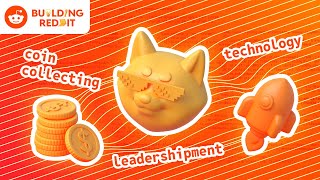
Podcast interview with Chris Slowe, CTO of Reddit. Covers his two-phase tenure at Reddit (joined ~Oct 2005, left Oct 2010, consulting mid‑2015, returned Jan 4, 2016), his responsibilities overseeing ~1,000 people across infrastructure, consumer engineering, data science, security and user safety, and his leadership style (providing context rather than control). He recounts April Fools’ highlights—especially the 2017 r/place event—memorable outages including a 24+ hour Cassandra outage and an early migration to cloud, views on adopting new tech (caution about adopting too-early technologies; language choices like Python→Go/Node/TypeScript), and thoughts on AI (DALL·E/ChatGPT) affecting content and creativity. He also describes his daily routine, reading habits (likes Andy Weir, Project Hail Mary, The Expanse, William Gibson), and coin collecting hobby (interest in pre‑1965 silver coins, e.g., 1932 Denver quarter).
Questions this video answers
Around October 2005 (first employee).
Original tenure: ~October 2005 – October 2010; consulting beginning mid‑2015; returned full‑time Jan 4, 2016.
About 1,000 people.
A 24+ hour outage caused by a Cassandra deployment (they were on Cassandra v0.6).
Chapters
Welcome to Building Reddit. I'm your host, Ryan H. Lewis. There are many employees at Reddit who've been with the company for a long time, but few as long as Reddit's Chief Technology Officer, Chris Slow. Chris joined Reddit in 2005 as its founding engineer, and though he departed the company in 2010, he returned as CTO in 2017. So since then he's been behind some of Reddit's most incredible growth spurts, both in site traffic and employees at the company. In this episode, I had a chance to sit down with Chris. He shared some old Reddit war stories, what he's excited about at the company today, and what sci fi books he and his son are reading. Thanks for coming on the podcast, Chris. Could you start by introducing yourself?
My name is Chris Slow and I am the CTO at Reddit. Or as I like to joke, I am the rug that really ties the room together. Man.
When would you say you started at Reddit? I know the answer is a bit complex.
Yeah, it's a two phase commit, if you would. So originally started in, so I was the first employee. So my start date I think is sometime in October of 2005, give or take. And then my original tenure was From October of 05 until October of 10 and then came back, actually did some consulting starting in about middle of 15 and then came back full time on January 4th of 2016. So now at the seven year mark now, but they're definitely dog years.
I guess that means there's been a lot to do. So what are you responsible for as the cto?
Oh boy. So I think that if you look on, if you look on paper, I have, you know, the whole chunk of the consumer engineering and tech team somehow worked up to me, ends up being about 1,000 people right now. That's goes all the way from infrastructure, consumer engineering, data science, security, user safety, I've got it. Or more to the point, I don't have any of them. I have fantastic leaders who run all those functions and somehow report to me. And I think that the statement of the job is generally chief Technology Officer is about strategic vision and with kind of an external facing look. So different from oftentimes traditionally it was like a cio, which actually is more like the internal facing version of it. So I guess I'm supposed to get up on stage and do stump speeches, but also to talk about tech help, help lead strategic direction, work in architecture, kind of all, all of those things. I'm also, I guess a. I used to have a joke that, you know, an engineering manager is like a meta engineer. And so if you look at how many layers I have, I think that makes me like a meta, meta, meta, meta, meta engineer now. So nothing actually productive is the main point.
So let's talk about Reddit. One of the funnest events of every year is whatever Reddit does for April Fool's Day, April 1. Were there any things that Reddit did before you left in 2010 and what has been your favorite so far?
I gotta rack my brain because I remember doing things before april fools in 2010, but I can't remember what they were because they were just a lot more muted. There were a lot more subdued projects. And one of the first ones that we did that. I don't remember what year it was, it might have actually been 10, but I think it was before was we. We actually pretended that we accidentally released the admin toolkit to the entire community. And so we added like it was basically close to mod kit at the time. And so we gave everybody removal buttons just like as if they were a mod. And we actually created extra ones, Super Ban, Ultra Ban and like Ninja Ban. And we didn't explain what any of them did, but we just kind of like created the set. And so for a very long time, there's a meme on Reddit about Ninja Band as a thing that goes pretty far back, I think, in terms of. It's like, if we're going to talk about the. My favorite one though is like, oh man, I can't not talk about the 2017 Our Place. Not to say that this year's wasn't great, but the original one was just so fantastic to watch happen and unfold.
What was special about our place in 2017 compared to 2022's event?
Yeah, the main concern was actually to some extent that it was the moderation side. Right. It was like that. We didn't really know if we could moderate it, how to moderate it, how much we needed to moderate it. What are users going to do with legitimately a blank canvas? It's a completely blank canvas. And so everything beyond that, we'd never done anything with an art setup. We'd always done text, and so we understood text. And so we're kind of deploying this whole thing all at once. Where we had to do the technology was interesting because there's a bunch of websocket pixel dropping. We had to build the cameras from scratch. We'd never really had a canvas at that point. We had to figure out the moderation model and what we're going to do to make sure it stayed under control. And we were learning live as it happened and it actually worked out as you can see, really beautifully. But there was a couple of moments in there at the beginning where it's like, what have we brought? Here's going to go. My memory of it is as we were kicking it off, the first version of it actually was centered on the canvas. And so what happened was is that just out of the foam of the Internet, like the quantum foam of the Internet memes, several extremely rude pictures started appearing. I remember looking over to seeing the PM who wrote our place was this guy named Josh Wordle who you might know from his places as Wordle, really, really brilliant guy. And I just remember looking up, seeing a, I'll just say a very crude image that was developing over time looking over at Josh and he just, just looked up, shock on his face, flipped up his hoodie and just kind of walked away. And so it was like one of those moments of like, you know, he had this like same kind of thing. Ends up being all we had to do was randomize the start point of the canvas and give people like a fresh view because otherwise they'll just gravitate on lowest common denominator image I could think of. It was actually a pretty quick fix, but it's one of those moments of like, oh man, this is going pretty far south really fast. What's happening?
So what are the traits that you think make a good engineer at Reddit?
Okay, I have a lot of ideas on this one. I'd say to start with like general engineer to some extent does depend on what kind of engineer we're talking about. So I'll probably end up biasing more towards like typical software engineer sort of swe. Doesn't matter what platform to not to sideline our SRE friends or any of the other specializations that happen. There has to be either a built in kind of level technology or actually a deep seated hatred of technology. But wanting to bend it to your will, it manifests the same way, right? Really wanting to be able to manifest what you want on a computer. I used to joke when I was actually hands on in engineering. It's like software engineering. It's a creative act where you're constantly taught again and again that you can't think logically provable by a computer. So that's a big part of it. I think that one thing I always look for in the characters of a good software engineer is honestly a fair dose of Humility, which I find is typically also very closely tied to curiosity. Right. If you're going to be able to progress in your craft, you have to know your own limits and you have to be able to tell them and be able to exceed them with your own natural curiosity. And it also helps with things like making sure you develop a really good team. If you have a bunch of people who are humble experts, that's the best situation you ever have. I've also seen that there's a well known, I think it's the, I think it's Dunning Kruger. It's like this well known artifact of the way that we act as humans where your level of confidence with time is highly variable and it's time on any given project and the way it works out is that there's. Initially when you come onto a new project, you, you'll find that the first thing you have, your first reaction is like, oh yeah, this is like totally easy. And so you come in and immediately have this giant high confidence, like oh, this is trivial, what are you talking about? And then you've realized how hard it actually is. And so you fall off that peak into this, this usually they call that peak Mount Stupid. And then when you learn a little bit fast Mount Stupid, you end up in what is called the pit of despair of like, oh, this is impossible, I can never do this. And then you spend the rest of your time like trying to climb back up to the same level of confidence. And so I think that, that the quicker you can get past that hump the better and work. And then I'd say in terms of like by level to some extent, like you know, love of love engineering and love of, of the work gets you started. And then you know, for characters to look for at the different levels, like senior engineer, you know, you have to be able to like be autonomous and get things done and just kind of be able to potentially brute force things. You know, your way to success with some good instincts about the architecture and what you should be doing. Staff engineer is where you start to get into needing for leadership. And so that's where we start to look for. You have nothing but soft power, but you have to be able to take that soft power and turn it into other engineers kind of following you even if they don't have to. You're not in the management chain, you can't dictate, but you can upset direction. And then principle is like that kind of on steroids. It's like principal engineer is. Your scope has to be beyond your team to like potentially the entire org to help set the tone with those.
Different levels of engineers. Does the size of an organization drive the need for more higher level engineers?
Yeah, I think to some extent it does. And I think that also applies just as well to management levels with a startup, right? So like as you're developing, as the company's developing, you know, for example, when you only have a startup of 50 people, it doesn't make sense to have a VP of engineering who can handle a team of a thousand, right? Like, if anything, like being able to handle 1000 people is distinct as a specialization to some extent than being able to handle 50. And I think it's also true for this, for the sake of the engineering team, right, Smaller team, everyone naturally kind of has to be, everyone has to have kind of a high impact, otherwise your startups probably failed. Whereas the larger team, you just can't have everyone know what everyone else is doing. And so you have to rely much more on a little bit of structure, but also the right level of autonomy. It's not to say that people can't be autonomous in a larger company. It's just a lot harder because there's just more people to bump into along the way. And so it means they have to be able to navigate that stream as opposed to in a startup or in a smaller team where it's like, you better know what you're working on because if you don't, no one else is going to do it and then finding that in between.
So what are you the most excited about at Reddit right now?
Oh, I mean, like, I just feel like that, honestly on the product and the evolution side, I just, you know, our model hasn't changed in forever. We've always had this kind of community based model. We've always had a model where we say that like we care about the content more than we care about, than anything else and kind of content is king and we don't care about the person, we don't care about influencers, we don't care about any of that stuff. And for a very long time that made us like the, the contrarians in the, in the social space. Like even to the point where I used to make jokes that like Reddit, I wouldn't even consider Reddit to be, to be social. It's like antisocial effects. It's like, well, who are you? That's right, I want to read stuff. Give me, give me, give me, give me the jokes, give me the memes. And it's been, it's Been kind of gratifying to watch that model proven out now over. We're at what, we're almost 18 years and it's still working and it still scales and it still goes in the right direction and it generally leads to, you know, pound for pound, it's. It leads to a lot more positive experience than you see in a lot of the other, you know, toxic areas of the Internet at this point.
So you've had a long career at Reddit, from the founding engineer all the way to the cto. In that time, what's one way that you've changed and one way that you've stayed the same?
Okay, so I think the way that I have stayed the same is, I don't know, my preferred. There's different schools of leadership. And I have to shudder a little bit from calling myself a leader because actually one thing that hasn't changed is continuing recurring imposter syndrome, which I think is endemic to our field. But I'll switch to a positive one, which is to say that I like to lead via context rather than control. I kind of want people to make the decision because it seems like the right one, not because I told them to. In fact, to some extent, my entire job is to have people who are more talented at their jobs than I am to do the work best I can, give them as much context and help them to lead them to the right call. One place that I've changed, well, besides the fact that my beard is now gray and I'm shrinking, my eyesight's getting worse, that's also in there too. It's probably a side effect of the work. I don't know. I've definitely. I am not particularly hands on on the engineering side anymore. I don't get to write much code. I do some on my spare time. I think the way it shifted was probably like originally I was much more of like a, let's say brute force engineer, which is to say I would just apply keyboard strokes until the damn problem was solved, mostly out of spite. And then I would work my way towards a better solution, kind of like anneal it to something that was actually nice looking. And I think then with time that turned into getting worse time with architecture and digging into how to build systems, apply all the experience and all the times where I had to slam my hand in the virtual car door to say, like, oh, no, don't put your hand there, there's a door you're going to miss. And then work my way up to kind of setting up systems and processes to make sure that those are just features the way that the operates. Right Design process, like the meta processes. So I mean, I usually make a joke about how meta I am. I've had to like every, every level of meta has meant I'm programming a different unit. So you know, instead of a computer, instead of systems, it's like people. And people are fantastically terrible at Turing Machines, man. It's just like this lossy. It's like the languages are really obtuse. It's really tough.
Speaking of people, you mentioned that you have about 1,000 people reporting to you now and you've overseen most of that growth since you started as cto. What have been your keys to growing your organization successfully?
I have a running joke about it often in the middle of things. Feels like winging it. It feels like I'm actually never really quite sure what I'm doing. But actually I think that experience and like having being able to apply patterns from the past means that we're all kind of winging it. We're just like progressively winging it with style. Right? We're making the right calls. Because appeal to authority is sometimes okay because that usually covers a whole bunch of personal experience that you can use to extrapolate the current situation. And I think that one thing that has been helpful is like, look, I am, I try to, I try to be very open to receiving feedback. I try to give feedback. I also just try to like, I am very quick to admit when it's my fault or I was wrong because I just don't see the point of digging your heels in when you're so obviously wrong. Right? Like it goes back to the imposter syndrome thing. Right? It's like, it's, it's like, why would you make a mistake? Call it, fix the mistake, move on. That's what you do in a, that's you do in software. When I do the same thing with people, um, I also tend to just be like as honest as I possibly can be. I don't have a lot of energy for, for, for machinations. I usually, I have a running joke there too about like, you know, I usually tell the truth because I don't have time to keep track of my lies. So, you know, just might as well like just be honest and transparent and just kind of keep going. And, and I think above all like the, the theme there is probably something like authentic, I don't know, self deprecating usually leaks out as well. Can't really help. I can't really help it kind of way I'm built.
Are there any especially memorable moments that you've had in your career?
I mean, I think I've got a lot of memorable moments of like, there have definitely been points in time where it's, it's, you know, especially when it's much more hands on of like Reddit going down and like that moment of like, huh, I wonder if it's going to come back up this time. Right. So, you know, like I said in the early days, we were out for more than 24 hours at one point because of a big Cassandra outage, which is a tough, tough situation to have. We've also had some really killer migrations between tech. Like I was there during the initial migration from physical hardware into the cloud. It was back in 07 or 08. And so to some extent, I think those are the ones that leave the scar tissue on the inside. You have to use scar tissue on the inside is synonymous with experience. It's not that I am trying to be the old man in the rocking chair on the front porch saying, don't get off my wand, don't do that. But sometimes it's because the pattern is visible that you're heading the same direction. But yeah, that initialized the quick one on that outage, the one that I usually bring up is the 24 hour outage was we had just been experimenting with Cassandra for the first time. We had a very small ring of about, I want to say, three or five nodes, some really small token ring. And we had it the entire time we were using it. We didn't realize we were running it behind a worm cache or we knew we were, but we didn't internalize it. That, that had some implications for load. And so basically we dropped a memcache node, we just had an instance fail and we ended up with just the most spectacular case of Thundering Herd that I've ever seen. We couldn't get any of our caches warmed up because anytime we would turn on any line of traffic, it would just take the whole thing down. And so we had to learn live how to warm the cache while trying to expand to Cassandra ring, never having done the louder thing, which was just, it was just, it was just heroin. I will say that the person who did all of that work and who saved Reddit was actually David King, who is also employee number three and who is still at Reddit. He's a great engineer.
That sounds like a lot to have to learn in just about 24 hours.
Yeah, we know lack of sleep and adrenaline are a Heck of a drug.
So now that you're CTO and not as hands on as you used to be, how do you keep up with changes in technology?
I think it's, I mean, I definitely cram in reading. I think I've always been a pretty active reader of hacker news to start with, just to get kind of like, you know, tech trends, summaries there weird facts, stupid human tricks, and of course a fair amount of salt is usually mixed into it. It's always interesting forum. I subscribe to Strikery, which is one of my. Which is a really great recurring blog that is a good summary of kind of what's going on. I think I just generally tried to, like, I've just got a lot of stuff pinged at me in a couple of slack groups where I get random interesting facts coming at me. And so I'd say it's probably a combination of about maybe call it 30% active seeking and about 60% osmosis. And then that doesn't add to 100%. The last 10% is just probably, I don't know, I can't think of what the last 10% being not hacking anymore, definitely. I don't have that much time anymore to do that.
So when you're hearing about Newtek, how do you evaluate when it's the right time to bring it into Reddit?
Oh, I mean, to start with on that one, I think it's mistake that I've remade a number of times is doing things that are too early, like too new. Because it's not that I want to only operate on top of standards, but that standards are nice and stable. Right. Whereas like, you know, like the Cassandra example I gave before on a kind of worst outage I'd ever seen, we got onto Cassandra in version 0.6, which like, @ the time was like, it seemed totally reasonable because we were always kind of on the edge of what we could actually handle. And it seemed like a next step was to move into something else, but like it would be nicer to be in something a little bit more stable at that point or a little bit better tested because like, you know, the better tested, the better battle hardened, the more likely you're going to find that somebody else already has the answer for you. You know, it helps when you're googling and looking on stack overflow that somebody's already answered the question like years ago. That's not like a bad thing necessarily. I've also kind of, for the most part, like, you know, everyone goes through a phase where they get all kind of language fatty and they like I want to keep track of what's the, what's the neatest, newest, hottest language. To some extent the best language for the situation is the one that you have your team ready to write in and that everyone has experience in. And then the one that's better than that is maybe something that will give you better CPU utilization that you can actually move to pretty quickly later. And so we've been. It's not true, it's true anymore, but we were for a very long time a fully Python shop. We've since moved into now more and more go more and more Node. But I mean speaking as somebody who has actually also done a lot of infrastructure is kind of a backend chauvinist. It took me a while to get over the idea of putting Node on servers. It just seemed like kind of like a wrongness. But I think node + typescript is actually pretty neat and it actually works out really well. It was actually kind of funny to switch into a mode between JavaScript which has no real object model. It's not even. It's a prototype based language to all of a sudden have this like strong type system that's been, you can bolt on top of it to make it more strongly typed than most, most server side languages. It's kind of fun. But. But no, I think, I think it's like it is a fair amount of battle harden to get to those spots, right? Because if you're going to move between two technologies as you scale up, it becomes a game of like well, how much investment is required to move, right? Like it might be neat and hot but like, well if everyone can't write in it or you need some specialization that's already a barrier to entry. If it's going to take a month to migrate, what else could you be getting done in that month? And that has to be part of the trade.
Off. Speaking of new technology, Dall E and ChatGPT are two new AI technologies that are making waves in both technology and culture. What do you think about them and how do you think it'll impact.
Reddit? I mean I did stable diffusion into the mix too. Like I think that that, that group of tech, it's, it's, it's fascinating to watch because I think what it's, what those are doing is there's, they really are pushing the question of what is it that humans are actually good at? Like what is our, what is our. What is the. Like what is it? What are humans good at? And also like with Time. I can wear the old man hat for this one. All of these technologies, especially ChatGPT, that would have easily passed a Turing test turn of the century, right? The Turing tests are getting harder because as we learn more about how to do deep learning and how to build these kind of giant complex systems and these effectively billion dollar one shot models, we're learning what is, what's the difference between actually pretending to be sentient and actually being sentient, right? Not that we have a good answer for that yet, but, you know, I think that we're especially things like Dall E and simple diffusion are also pushing the edge of like, what's creativity, right? Because now what you have is you have this system for generating. I mean, no matter what you say about it, they're beautiful images, right? They're beautiful, interesting images that can go as surreal or as realistic or as stylized as you want. And I think there's always been this kind of assumption, like if you look at science fiction writ large, go to Star Trek, right? Everyone's like an artist and just kind of hangs out and does stuff and there's no money. And everyone. It's like this sort of super duper hippie dippy future. This kind of wrecks that picture a little bit. It's like, no, actually the machines are pretty damn good at art. They're not bad. And it also opens up some interesting questions about what is the meaning of, of copyright in these situations, right? Because these models are trained on something they don't have in them. Copyrighted materials, but they might have been trained on it. And that's something that I remember. There's a demo of. There's that tool that from a couple of years ago. There's that tool that was the GitHub had, that was like a code.
Assistant. Oh yeah.
Copilot. Yeah, exactly. And you could kind of give it a prompt and it would give you the code for it. It was kind of neat. And I think one of the interesting demos somebody did initially was like, they basically said like, implement the Carmack fast inverse square root. And it dumped the source code down to the comments of the original one. And that was like a. Whoa. Did that. Is that stored? Like, probably not exactly stored, but it's like definitely one of those overtraining spots. So it's fascinating to watch. I can totally see why it's. Look, this is where technology pushes the limits of what culture can handle. And this is a good demonstration of where another culture has to adjust to machines that can do things that we previously thought were Just the realm of.
Humans. So what does that mean for Reddit if content is king, what is the impact when AI tech can create the.
Content? Well, I mean like one of the recurring problems on Reddit or perceived problems that comes up is re hosting at least to go up with new things. But I don't know, I think that so far what these systems need to be really good at is things like summarization, right? They seem really good at generating like summaries, driven styles and helping to even things like I think where the beauty is like being able to do transcriptions really well, being able to expand the horizon of what is currently more of a manual process to offload that onto computers. That's the goal in general, I think it has interesting questions for content, right? Because to some extent content is king. If you get your answer, if it comes from a human or from a, from an expert system, you know, it, it's, it maybe doesn't matter. And like, you know, it's, it's like it goes back to the old meme, right? On the Internet, nobody knows you're a dog, right? And that's the kind of situation here with these, with these, these bots. I, you know, I worry about there being a universe where it's just a bunch of bots talking to each other, but I can't really see that ever happening. Like somebody at the end of the day has to, has to be there for the, for the journey and also what's the point? Why would people, besides it being a fun thing, posting on Reddit is about the joy of posting to some extent, or the reading is about the joy of.
It. So I'm curious what your days are like besides being a God tier cto, I know that you're also a human. So what does your day to day look.
Like? So I would say I get up fairly early, usually get up around 6. Married, I have two kids, 8 and 11. And so first hour of the day is usually get the coffee into me as I usually joke that I have to turn my personality on and that requires a certain dose of caffeine. And then usually it's a good time to catch up on email, look over the day, get the lay the land and then I rapidly switch at 7 to wake up the kids and get that part of the day started, Be dad for an hour and change, get them out the door and then head back to work around 8. This is the advantage of remote work life, you know, usually probably four days a week I'm working at home and so that Means I got a chance to do stuff around the house while I'm doing it. My commute's really easy and then it's really, I mean honestly from probably 8 to 8 to 5, it's, it's fairly well to. Well, like it's basically like you know, a little bit of time in the middle to eat probably another cup of coffee in there. But like it's, it's a lot of meetings. Most of I, I have a, I have a series of running jokes as you probably figured out for this discussion. But like I, to some extent my job is like I'm a glorified routing bus. I actually like, I'm a message bus. I talk to people and then I like route them appropriately or help them solve their problems. To be the provider of context, I need to have the context and so I have to kind of like keep synced with a whole bunch of different parts of the org and it varies by temperament like you know, fair amounts of one on ones in certain days. Other days ends up being larger team meetings. Tuesdays when all the exact team meetings tend to happen, that's kind of like sets the start of the week. But it is a lot of it is a lot of it's for a lot of talking and listening which is, you know, seeing as my background is I have a PhD in experimental physics and I spent the first five to 10 years of my career as a, as a software engineer. It was a, it's a shift over the last, over time it's become more and more a people job than it has been about the technology part. And then maybe if I'm lucky I get a chance to write or reply to one or two of those emails that I got six in the.
Morning that I saw with wall to wall meetings. Do you use any tools or strategies to keep things straight, to remember everything that's going.
On? Yeah, one of the, one of the nice things is, one of the nice things about remote for me is that what I used to do is I used to walk around with a literal physical book like paper notebook and just take notes as I went along. The idea being like, you know, I remember stuff better if I write it down. But I found that one of the nice things about, about being remote all the time is I can actually type while I'm talking without really much of a problem. That was a it, it was one of those things that got better with time as you, you know, as you got used to remote work and so I can actually keep taking notes while we're going along and so I have this, this I have a fantastic chief of staff and we basically live in the same doc at all times and just kind of keep synced in that and so it's a good way to like kind of pick out the gems and the turds and figure out what we have to do with which one of them next and also just kind of like jot down ideas. No real structure, just open. It's effectively a long Google Doc that we just going to keep hacking away.
At. Let's move on to some non work topics now. I know you're a big sci fi fan. What's a good book that you've read.
Recently? So actually I can say I've been, I've been reading. My son is also really into sci fi now and I've been reading to him at night for. Since I'm in Memorial but we switched up to reading more we'll say grown up science fiction books and so I read to him. So we're currently on an Andy Weir kick. And so I read the Martian to him because I was like I bet you would like the Martian. And so I started reading the Martian and he loved the Martian. And then I actually just finished reading like literally two nights ago we finished reading Project Hail Mary which is the latest anti rare book. And that book is just so really well done. Like it's a little bit of a. It's very reminiscent of the Martian compared to his middle book but like it's just really, it's just really great. So I really enjoyed that one a lot. I think on the other side I tend to be like on the science which I tend to be kind of a space opera person. I do like the bigger, grander stuff. Big fan of the Expanse books and have been picking up some of the newer William Gibson stuff. On the cyber side he's, he's a, he's still, he's still great. I wish, I wish he would write more like he, he always. It's a brain grip things. I started watching, I finally started watching the Peripheral a couple weeks ago and I'm enjoying it so.
Far. I've also heard that you collect.
Coins. I.
Do. How did you get started with that? And is there some holy grail coin that you're looking.
For? So yes, I do collect coins. I started when I was 8. I got into it because actually my I, I think I, I think I remember getting to it because I was sick at one point when I was 8 and my mom showed me her coin collection which at the time Was like three or four of these. I think they're Whitman folders. They're like the trifold ones with the little holes you stuff the coin into and the overlap between, again, software engineer, physicist, and ocd. Like tendencies tend to run pretty. So it might be a circle, the stuffing holes. And finding a coin of a particular date just kind of scratches this nice little itch. And so I think I've gotten mostly into that side to the point where I have like, instead of. Instead of having just, you know, three humble Whitman folders, one of each domination, I've got a stack of books on a shelf above me that I try to fill up. So mostly like the. Honestly, the joy there is like, looking through change, which as my eyes age is getting harder with time. I actually now have a magnifying glass, which is really frustrating. At that point. I was like, I can't read the dates anymore. God. But no. And so, you know, I try to be deliberate about invoking ebay for that kind of stuff because that's a rat hole that could get pretty deep pretty fast. But it is. It is fun to pair. I can go to, like, coin shops, see things that are overpriced, look on ebay, dabble. Look for things like, you know, rare dates and rare mint marks. I think. I think the one that I'm currently looking for is like, there's like early, early quarters. So fun fact. Prior to 1964, coins in the US used to be made out of silver. And so that's why you don't find it. You don't find anything before about 65 right now because they actually brought them all back and Milton all down because it's worth silver. The earlier ones, like the 1932 Denver Mint Quarter, is actually fairly rare because they make many of them, mainly made a few. So, yeah, maybe that's probably pretty.
Endless. So if you were on a deserted island and you only had access to one subreddit, what would it be? And.
Why? If I only had access to one separate drama, am I allowed to post or can I only.
Read? Sure, you could.
Post. Oh, if I could post, then I would probably subscribe to R How to and I would say, help. I'm dropped in a desert island. How do I get off? And that group would find me an answer almost immediately. They're really great. They have those quick, obscure references or like, how do I figure out what desert island I'm on? If it was only. If it was only to read, it would probably end up being something on, like on the self help sector. I actually do enjoy like right now. Personally one of my favorite subreddits just to kind of casually browse is like one of the machinist subreddits. I think it's actually R machinists. I did a lot of machining in grad school and it was kind of fun to like see people build stuff. So you know, something, something probably on the maker side that would be helpful for surviving the desert island is like where I probably window my searches.
Down. Nice. How about your favorite.
Meme? So I think that, so I would say let me define, let me just redefine a meme. I think I go back to probably basic definition of meme which is going to be generally like a pretty funny picture with some ability to do some text over it to say like, you know, that the meme exudes a particular feeling that everyone agrees upon as the feeling. And then the text of course is always the joke there. And so I think the one of the, one of the ones that I employ especially with my own self is the Office space one. What exactly would you say it is you do here? I think is always a really good one for setting the tone. I recently had to explain to a VP who shall remain nameless banana for scale, which was delightful to have to try to get into the weeds on that one. That one goes pretty deep on that. And I, I often do invoke the one does not simply Lord of the Rings meme. That one comes up pretty, pretty often I think as.
Well. Well, thank you Chris for taking time out of your day to answer some of my.
Questions. Thanks for having me.
Ryan. That's it for this episode. I want to send a big thank you to Chris Slow for sharing his work life with you and me. So what did you think? Does it sound cool to build Reddit one of the largest sites on the Internet? If so, check out our open positions@www.redditinc.com careers and to get more behind the scenes info, check out Reddit's engineering blog@Reddit.com r redditeng. And that's it for now. See you in the next episode of Building Reddit. Building Reddit is an official podcast from Reddit. This episode was produced by Ryan H. Lewis and Lee Lisa.
O'.
Keefe. Thanks for.
More from Chris
Reddit CTO Chris Slowe: The Engineering Decisions That Built the Front Page of the Internet
Chris Slowe (CTO at Reddit) Fireside Chat at Startup World Cup Grand Finale 2023
How We Are Building External and Internal Communities at Reddit - Chris Slowe, CTO at Reddit
How Reddit CTO Chris Slowe Started His Career | How to Run a Tech Company ft. Reddit CTO
Elevate Conference — Chris Slowe, Reddit's CTO — "Managing During Growth & Change"