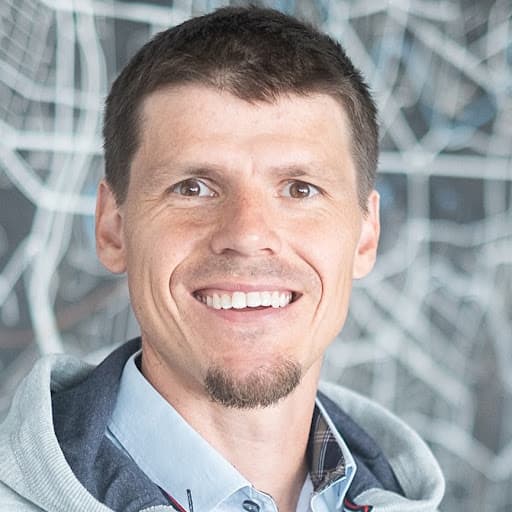
Can Capital Drive Real Change? 💡 | Investing with Mario Barosevic | Changemaker Insights Ep. 4

In this Changemaker Insights interview, Mario Barosevic, partner at Emerge Education, shares his personal journey from war‑torn Bosnia to Harvard and impact investing, explains the origins and mission of Emerge’s $50 M pre‑seed/seed ed‑tech and workforce development fund, and defines impact investing as a spectrum between grant‑like impact‑first and profit‑first models. He outlines the four‑pillar framework (drive & motivation, unfair advantage, execution speed, leadership) used to evaluate founders, and describes Emerge’s hands‑on support model built around a network of 100+ venture partners who provide sector expertise, introductions, and weekly/bi‑weekly mentorship. Mario discusses the stressful, multitasking nature of venture capital, the emotional toll of saying “no” to many founders, and the long feedback loops that make the job challenging. He then details Emerge’s disciplined operational rhythm (quarterly planning, monthly agile sprints, 70‑20‑10 learning framework) and shares practical advice for aspiring investors—cultivating analytical thinking, social skills, entrepreneurial mindset, and process discipline—as well as concrete steps like networking, publishing thought‑leadership, and targeting fund job boards. Finally, he offers a succinct piece of advice for any changemaker: align deeply with a mission you believe in and then simply act, embracing risk and possible embarrassment. The conversation blends personal storytelling, fund strategy, and actionable guidance for investors and impact‑driven entrepreneurs.
Chapters
Hello, Mario. Really good to have you. Today we're talking about early-stage investments and really lucky to have you here as my favorite early-stage investor from Emerge Education. Maybe you want to start off with a few words about yourself, but then also the early days at Emerge and how you dive into investment in general.
Of course. Thank you, Thomas. Pleasure to be here. Happy to start with my background and a few sentences on Emerge. So on a high level, I started my career in strategy consulting, then moved into impact investing, and really wanted to focus my career on an industry I was the most passionate about. So my story going way back is originally from Bosnia. When I was 17, got very lucky to win a series of scholarships that helped me move to the US and study at Harvard, changed my life, and career trajectory. So I became very aware of how fortunate I was and how much luck I had to be able to convert hard work into results. And throughout my career, I realized how many people there were in the world that just didn't have that luck and those opportunities. So built up my interest in education technology, workforce technology as a sector where I believe there was a ton of potential for technology really to enable everyone to fulfill their potential. 7 years ago, met my 2 partners who were at the time running Emerge. Quick history of Emerge was we started as the first investor in Europe focused on education technology back in 2014. At the time, we ran an accelerator and an angel syndicate in parallel that would invest in the companies that we would find. And those were the early origins in terms of the markets. US, China were picking up when it came to edtech. No one was Looking at Europe, nothing was happening, so we're really passionate about kickstarting the space through investments in Europe. And throughout that experience, it led us on to raising our first institutional fund and now investing out of our second institutional fund, which is a $50 million fund investing in pre-seed and seed-stage businesses in the education technology workforce development sectors.
Really inspiring already. Let's touch a bit on your topic of passion because you said education is a topic of passion for you. And at the same time, now it's also investing into edtechs, into entrepreneurs that really changed the landscape of education. But how did you realize that this is really the field, the topic that you want to get into? Was that a feeling that grew within you? How did it all start? Like, why an investor? You could have started the university too, or you could have started your own edtech too.
Yeah.
But why this combination of the 2 fields?
It's a great question. For me, career discovery, I actually ran a process with my wife at the time when we were both at specific periods in our career where we didn't really know what to do next. And for me, thinking about career was thinking about, from a functional skills perspective, what I was good at and where I can contribute the most to the world. And from a passionate passion perspective on what gets me up in the morning and really motivates me. I think I reached a stage where there were many opportunities in perhaps at the time more lucrative sectors financially, like private equity as an example, but realized that I'm the type of person that just cannot motivate myself to do things I don't believe in. At the time, I realized I was good in finance. I like doing finance. I like working with numbers. I like understanding markets. I like thinking about tough decisions and where to allocate capital. Given my story, I was just extremely passionate about the potential businesses can have in getting more Marios from Bosnia and other parts of the world. to get to top universities, to top jobs, and help them fulfill their potential. So it was really deeply reflecting on my skills and passions and finding the perfect combination. And why investing versus entrepreneurship versus running university, I guess another part of my persona has always been getting a a bird's-eye view of the market and getting variety and exposure to working with tons of amazing founders and companies. So at the time, and still, that was a great area of interest for me versus just doubling down on one specific thing. I liked the opportunity to have exposure to dozens and hundreds of companies and individuals in the space.
That's definitely something really great to have that holistic bird's-eye view where you can even have a passion for more topics than just one, which is very, very different angles when it comes to education. Diving a little deeper because you said you did a lot of introspection and more or less talking a lot about your own skills with your wife. Thinking of your own childhood and your own education, to what extent did that influence who you are today?
It played a big role. So, you know, coming from Bosnia, which was a war-torn country in the '90s, I, you know, saw a lot of, you know, poverty, inequality, and, you know, a lot of people working really hard to get out of that situation and earn a better life. And, you know, I saw a lot of people that, you know, didn't have the luck I had to really fulfill that potential that they had through the hard work. So it was a big inspiration for me in terms of thinking about the sector and what I do and helping others. But also from a family perspective, I come from a family of educators. One of my grandfathers was a piano professor. Another grandfather was a schoolteacher. Grandmother worked with children with special educational needs. Mom was an English teacher. Father was a guitar teacher. So pretty much everyone, now that I count it up, was a teacher of some type. So I was surrounded by teachers, and especially my grandfather played a key role with helping me build study habits, revisions, memorizing things for school, and really embedded the habits I needed and the motivation and the passion I needed at the time to enjoy studying. So education on that front was always a key thing that surrounded me and definitely played a role in inspiring me for my career.
Speaking of the many teachers in your life, do you or did you have role models early on? Do you still have role models now where you're like, wow, this is an investor that really inspires me? Or is there no such thing where you say there's one specific person that you look up to and want to learn from?
Yeah, it's a great question. Personally, I've never been a person that has had idols or role models from a career perspective. Obviously, I had them from a music perspective growing up as a kid. You had your favorite bands. From a career perspective, I'd say I'd had inspirations that played key roles in my career. From a role model perspective, I like to read from everyone. I think everyone has their strengths and weaknesses, and there's so many people that do amazing things. So I've never quite had that, you're my person, but I've had that approach more like, hey, there are 50 amazing people, what can I learn from each one of them? In terms of inspirations and mentors I've had in the earlier days, there were probably 2. One was an amazing woman, Marina, that I met when I was a teenager in Bosnia, who really inspired me to think big and advised me on education in the US and different opportunities, different scholarships. And she became my host mom in the US. So I consider her playing a huge role in motivating me and opening my eyes towards what was possible with my life. And then probably while I was in university, I took a class on social entrepreneurship Professor David Ager that I had that ran the most exciting, amazing class on really opening my eyes to, you know, the potential to do business for good. And I remember reading How to Change the World. I think this was Bill Drayton, founder of Ashoka, which played a huge role in just inspiring me and, you know, thinking about the world through that lens rather than just kind of making money. So Those are the things that highlight—
Many people actually inspired you and let you become who you are. But it's also interesting to hear that for you, a university experience in one university course led you to dive deeper into a specific field. You spoke about doing business for good or social entrepreneurship, which actually lets us move into a very interesting next field, which is the topic of mission-driven entrepreneurs that actually change the world, that have an impact. And Emerge is a fund that not only primarily, but I would say exclusively invests with a thought of impact. But let us understand your personal note of what's success and impact for you personally and what really makes a successful venture for you.
Yeah, that's a great question. And I must admit that if you're asking me from a personal perspective, I think that's something That's always evolving in terms of really trying to quantify and understand what is my personal contribution to the world. I'd say more from a qualitative perspective, I like to see what I do, what we do, to be net additional to the world of education. So rather than just kind of being another investor that chips into a company's fundraising round, more so being an instrumental investor that really plays that 0-to-1 role in the company's development. That's what excites all of us. We think there's still a huge shortage of capital for young early-stage businesses, and that's where we can really move the needle in terms of that 0-to-1 making sure that once we're done with our work at the end of our careers, we really contributed to something that would not have existed otherwise. From a qualitative perspective, that's how I see it. From a mission perspective, from my work and our fund's work, the democratizing access to opportunity statement is very much what ties us and ensuring that in all ways possible, the businesses we are backing are creating a more equal world with more opportunity where everyone, regardless of who, where they're born to, can, with the right affordable education that's accessible and impactful, fulfill their potential. So that's how we think of it from a top-down perspective. And underneath that, we have various metrics we track in terms of the reach of the business, the efficacy of the business, and other pillars that we ask our portfolio companies to report on an annual basis. So again, in summary, it's the importance of what they're doing, it's the inclusivity of the end users, It's the reach and it's the evidence base to back what they're doing. So that's how we operationalize things from a mission tracking. And then fundamentally, from a financial perspective, we are a fund that invests because we deeply believe in the financial side of the equation as well as the impact side of the equation. So your typical back-of-the-envelope venture capital expectation Especially investing at this early stage is believing in businesses that can, through various business models, achieve a $100 million revenue annual run rate as the target in 7 to 10 years from us first investing in them.
So that means for you, impact investing definitely goes hand in hand with the financial part of it, right? That the company has the potential to grow, scale globally, and to reach millions, if not billions of people, right? So, but it's not something exclusive. So you wouldn't say it's either or, it needs to go hand in hand, right?
Yeah, I think there are different definitions of impact investing. There's a spectrum there, right? On one side, you've got, having been in the impact investing, more impact-first space previously, you've got a spectrum where there are certain institutions usually attached to foundations that used to do grant investments and have transitioned more in an investing role where their expectations could be that actually they're happy to lose money on this investment as long as specific financial, specific impact goals are met, given that it's a very difficult target population, a very difficult business to run if you're looking for, you know, financial profits. So you have that on one side of the spectrum. In between, you've got impact investors that appreciate that they want to make money on the investments, but that the return in exchange for the impact they're making is likely to be below market returns if you look at the S&P 500 and if you look at the benchmark for for-profit-first investors. So there's a category in there that acknowledges there's a trade-off. And then there's a category on the other side of the spectrum, which is all about not compromising on either of those metrics. So hitting financial goals and hitting impact goals. So we see ourselves in that bucket, but there's a spectrum here in terms of how you think about, how you define impact investing.
Maybe one, one more question on that topic, because it's so exciting. Is that something that you see growing, or that you could observe growing in the past years, this very specific term, but then also the, the subsegment of, of venture capital or angel investments towards impact? Or is that something that's always been there? Or is this more or less, yeah, really growing and strongly growing field?
Yeah. Again, I think it's, you know, how you define impact. I would, I would definitely say overall, yes, I think when I started in, in my previous company more than a decade ago, impact investing was quite a niche term that everyone was trying to wrap their head around. I think now it's, uh, it's a lot more recognized. And previously, for-profit investors would just run away from the label because they didn't want to be associated with, with charity, which is at time perhaps a connotation of impact investing, but now you have, you know, a lot of large financial institutions that lean into it and, and, um, and embrace it. So definitely think it's a, it's a, it's a bigger space. I think what remains a challenge always is, is the definitions of what that exactly means. I think some people apply blanket policies to specific sectors, that everything is impact. Some people are much more rigorous in terms of impact, meaning reaching specific populations that are towards the bottom of the pyramid. So I think that remains and will continue to be a discussion topic. And it's always important to have the right definitions and tools to clarify who thinks what when they think about impact investing.
Cool. Let's move a bit to the humans and the people and the team you invest into. I can share that we found you as Tomorrow University as our early-stage investor through, I still would say, one of the most brilliant series of articles that you personally wrote on challenger universities. And I'm still waiting, by the way, for the next episode of it. But that was something that really inspired me and Christian, where you thought deeply, but then also spoke a lot about challenger universities and And why Christian and I reached out to you was because it seemed you really had a clear conviction and a mission with what you're doing with the fund. To what extent are you looking for the same in entrepreneurs? So what's the, what's the thing you're looking for when you want to invest into entrepreneurs? Is that prior experience? Is it a strong mission-drivenness? Is it the business model? Is it the market? So what makes an outstanding team plus entrepreneur for you?
On a high level, as you said, from a market perspective, we are a sector specialist fund that lives and breathes education and workforce development, and in most cases are very proactive in terms of having knowledge well in advance to understand what types of businesses we want to back, given how many people we speak to and how many end users we speak to. every day to appreciate and understand their problems. From a founder perspective, yes, we are very operations-focused funds in terms of structures and processes that we have to create standardized processes and fair comparisons between businesses when we make investment decisions. So Against your question, we have currently 4 dimensions we look at when we are evaluating specifically the teams. Number one is understanding the drive and motivation. As you mentioned earlier, really believing in the genuine motivation why this person is doing what they're doing is a huge role, I believe, in making a decision to invest for us. I believe, from many other funds. It's just necessary given the time horizons and the difficulties of entrepreneurship. If you are backing a founder that came across an idea because it was cool, it's hard to see a situation where the business is about to go bankrupt. It's tough. And the founder persisting for another 5 years to achieve their goals. Whereas if you're backing missionary founders that can deeply tie why they're doing to their stories and their personal interests. Those types of businesses, in our opinion, are more resilient to the tough times in entrepreneurship. So that's the number one thing we look at. And we believe this sector of ours attracts many mission-driven founders like yourself and Christian that we just love working with and are excited for every meeting we have, given we feel like we're in the same career missions and journeys. In the background to that, of course, there are other criteria. The second one we think of is unfair advantage. So this is very much in the skillset perspective. Does the team demonstrate in their previous careers they have the right skills to achieve the mission of the business? And this includes previous operating experience, market knowledge, openness to listen to feedback and learn, but also more importantly, learning agility. We've backed teams that don't have the experience on their CVs, but we think are just learning machines and can very quickly acquire the knowledge and fill in the gaps through hiring. So that's number 2. And then number 3 is very much the execution side of things. Again, we invest early, so there's not much data. So it is going into minute details of understanding distance traveled from day to day and week to week when we speak. Do we feel like this team has momentum? Can they move fast with very little resources? What we were amazed by you guys at Tomorrow University was meeting a team with an idea and you genuinely got us believing that you can launch a university in the first year, and you did. And, you know, we judged that based on every time we spoke, you guys were making significant process on a dimension that could have taken another company 2 months, you were doing it in 2 days. So just the, you know, the velocity of execution, the productivity, um, is, is, is key in this space. And, you know, really the the depth of knowledge and vicinity to the end user in terms of understanding their problems as well. And then lastly is the dimension of leadership. Do we believe this is not just a great founding team, but a team that can find more people like themselves, manage those people, leads, communicate effectively, fundraise, and have clear strategic clarity in terms of how to navigate difficult situations and how to take the business from the next level in the many pivotal moments the company is going to have. So I'll leave it at that. Those are the 4 key pillars we look at to evaluate a team.
Super inspiring. Forwarding to the next topic, let's assume you made that decision based on the 4 dimensions whom to invest in. How does that then work from the moment that you have decided to invest in it? Is there a clear mission that you follow with every investment where you say, this is how we help these people, this is how we contribute? Because the way I experience it for you, it's not here's the money and please leave me alone. You're a really active investor. But based on which principles, which ideas do you actually build that collaboration with the founding team?
So as you say, we're a very hands-on fund that believes they really have a lot of knowledge and a network that can really move the needle for the founders and be very net additional in their journeys. The fundamental part of our DNA is our venture partner group. So we have 100+ venture partners with our funds who are individuals that have founded, led, and managed some of the largest businesses in education technology and workforce development. These individuals invest in our funds and they work with us because they are excited about supporting the next generation of founders in the industry. So that's how we started back in the days. And that's really how Over the years, we have built out our DNA, and we have amazing coverage of the biggest businesses in edtech, founders of these companies, functional skills, market knowledge, whatever we need as a founder. So every business we're investing in throughout that due diligence journey, we have at least 10, 15 of our venture partners to look at the deal with us, both to help us validate the market potential and the founders and identify, you know, the gaps in knowledge of the founders. And then on the backend, to help us identify that once we do invest, what is that select group of venture partners that could really closely work with the companies alongside us? So each one of our companies has full access to all of our venture partners when they need them on a specific basis. We have a you know, very detailed codified database of, you know, on how everyone can help. And, you know, fundamentally, core part of our working with founders is, you know, getting to work with one of us very closely, weekly, biweekly, monthly basis, and getting to work with our venture partners as well.
I mean, I can definitely confirm that many of the things you did after investing into us led to where we are today, really, really strong active support. meaning from or ranging from international contacts to introductions. I think that's, that's what smart investing is about. It's not only about the money, or actually the money is not the core part of it. But what lies behind is the people.
For sure.
We talked a bit about the beauty of investments. And we talked about the things that you look up for when it comes to entrepreneurs. But what about the dark sides of an investor? Is there a dark side? I mean, it's beautiful to work with mission-driven founders to democratize the access to education. But are there dark sides, either for you personally or in general?
Many people in general think of investing as this wonderful career where you can just sit back and enjoy and get founders chasing you and dying, you know, dying to take your money, and where you can just easily pick the ones you want to work with and everything goes well. I think in reality is there are so many elements to venture capital that make this a job that requires a lot of strong multitasking skills and context switching skills, where in a given day I'm probably switching 6 contexts in 6 hours. Either I'm judging someone, I'm helping someone, I'm pitching someone, I'm evaluating someone, or I'm empathizing with someone. So that context switching, you know, can be quite challenging in terms of, you know, needing to play different roles in different times. And from an investment perspective, you know, it's an incredibly tough job where you're seeing, you know, 1,000 businesses and, you know, you need to back, you know, 1 or 2 businesses out of those 1,000. You know, that tends to be the the funnels we're looking at. So every day, unfortunately, you're telling a lot of people you don't want to back them because that's just how the model works. The average venture capital fund is making 20, 30 investments over a 3 to 4 year period. So there's a lot of tough decisions and saying no to a lot of great people. So I think that's definitely a challenging part. And then there's always the part in venture capital where you're backing founders and the feedback loops are very long, right? So you track follow-on investing, you track financial metrics, but then as we know, you know, you can become a unicorn, but if you don't have the right fundamentals, it's still not going to work out, right? So I think, you know, constantly reevaluating yourself and understanding the decisions you've made and whether they've been the right ones, given how long the the feedback cycles are, I think, can be stressful to a lot of people in the industry. And then lastly, of course, a lot of funds have a reputation of not adding value. But if you're on the board of the businesses, it's a tough job in terms of being resourceful and constantly being there for the companies in the tough times and figuring out what to do when a company is running out of money, when a company needs a key introduction there. So Obviously empathizing, going on those journeys with founders through the tough times can also obviously be highly stressful.
That's a beautiful, beautiful topic. Let me dig in a little bit, understanding more about you and making you a thriving individual at that fund. Do you have any secrets to share, like any habits that you grew over time, for example, to manage the multitasking or context shifting? What is it that you personally do for learning and becoming even more successful than you are right now?
I think, you know, in terms of how we manage our work, we very much see ourselves running a company rather than just a fund. So we have a quarterly cycle where we plan all of our missions as a team with individual responsibilities in terms of who's doing what this quarter and what we're committing to doing from the more standard actions around meeting ex-founders, facilitating ex-investments, specific support around portfolio companies to missions that move the needle forward for the company, creating new assets, updating the websites, creating new processes, pitch decks, et cetera. We're quite disciplined on that perspective to kind of run the business on a quarterly basis. So we always have the check and challenge around are we setting the right objectives and priorities for ourselves. And underneath that, we run an agile process, which is on a monthly basis where we commit to the top tasks we're looking to do. And those are the top tasks that really should be done. And if the other things don't happen, they don't happen. But we try to stay focused on the highest ROI opportunities. So, That's a core part in terms of how we operate, which helps with the habits and the routines. And of course, having very frequent personal development sessions on a weekly basis, I'd say biweekly basis, perhaps on average, everyone on the team gets to share feedback with each other in terms of how can we learn, how can we better? I'm a big believer in learning from work and learning in the flow of work. of course, a lot of my learning is reading about industries, reading about what funds are doing, following newsletters, understanding the fundamentals of finance that happens. But if you've got the right processes as a company, I'm a big believer in the 70-20-10 framework that a huge part of your learning comes from every conversation you have. If you're able to reflect on it and integrate the learnings from each conversation, you're— in your day-to-day work.
Thanks for sharing. I have 2 remaining questions. Putting myself in the shoes of wanting to become an investor and seeking your advice, what would be good steps to actually embark on that journey? I have the mission to do the same as you do, because you're inspiring me. What would I need to do? Baby steps, but then maybe also on a bigger scale?
Yeah, in general, venture capital is a relatively small market. It's a sizable industry from an amount of money that's invested, but most funds are still run by relatively small teams when we're talking single digits. So by nature, it's a hard industry to get into. I'd say if I think about key traits that are favorable for you to have a good start in In venture capital, I think analytical thinking is a super important one in terms of are you able to quickly go through a lot of noise filter and identify what the key companies are to look at and also what the key levers are for each business to understand their potential? That's number one. Number 2 is strong social skills. We're in the business of networking, building relationships. and persuading each other with every founder we work with that we're the right partner and they're the right partner for us to spend the next decades and plus working together. And then I'd say number 3 is probably the entrepreneurial mindset. So being able to deal with a lot of ambiguity, being proactive at times where you might not know what you're doing. We're not working in big corporates where you have this daily micromanagement as a junior person. You need to figure things out yourself. You need to run your own initiatives. You need to be proactive and creative. And then, you know, fourth is, you know, running and managing processes. You know, finance is very much process-driven. So, you know, being able to reliably create those processes, align the processes, and then stick to processes, you know, that, that is a, you know, big trait of, you know, the most successful funds that can, you know, reliably every fund vintage continue producing great, great results. So, you know, if you have those traits, you have a great starting point. If you don't, you know, it's figuring out how can you develop those traits in your careers before venture capital. And then, you know, if you think about specifically how to get into venture capital, there's the obviously looking for funds you like, following their job boards and understanding when they're hiring. A second important angle is, you know, Networking, you'll be doing networking in the job, so showing that you can network before the job, going to relevant events, going to places, getting introductions to your network, to people that might be your future employers is a great start. And then third is probably building a portfolio and exhibiting behaviors that clearly show that even before you apply to the job, you are extremely passionate about the job. So if you're applying to a place like Emerge and you spend the last year and a half publishing articles on LinkedIn about your passion and the future of education technology, it will set you apart in terms of you having shown that previously. So doing as much as you can on that front can be helpful as well.
Well, that sounded like we could even build a whole curriculum on what you just shared on the different traits that you could educate yourself for. when wanting to become an investor. Mario, maybe one last advice, putting myself in the shoes more of a changemaker in general. That may mean that I want to start a business or simply change an organization, start a movement. You've seen so many entrepreneurs, you've seen so many people that are actually changing the world, either on a small scale or on a bigger scale. But what's that one single advice that you would give to anyone out there? wanting to create a better tomorrow, wanting to really do something meaningful? What's that one thing that you would say, this is really what moves the needle? I know it's a hard question because it's always many things that do. But if you were to pin it down to that one single thing, what's the advice that you would like to leave the audience with?
Yeah. If I may bundle 2 little things together, I'd say think carefully about what you want to do. And How closely it aligns to your missions and values, and and how much you believe in the problem, I think is a prerequisite. And then my main advice is just do it. The main reason why most people don't succeed and most people aren't entrepreneurs is because they they're afraid to take that leap. They're afraid to take risks. They're afraid of failures and. In my life, being naive sometimes and being brave enough to apply to a university I never thought I could get into was the best thing I'd ever done. So I'd say that's the key trait that separates some of the best entrepreneurs to the rest of the field. Willing to do something, being okay with being embarrassed, being okay with being wrong, because everyone gets embarrassed at some stage. Everyone's wrong sometimes. But if you really find the right idea and if you really find the right path, that's the only way you can really change the world.
So having the courage to actually change the world and then that certain action orientation of simply doing it. Love it. Thank you very much, Mario, for sharing your wisdom and your expertise on investing, but then also on you personally and how you came to where you are. I personally found that incredibly valuable and insightful. Curious to see where that leads you even further. Yeah, we'll definitely stay in touch nevertheless. But thanks for sharing all your thoughts and experiences on Changemaker Insights. Thanks, Mario.
My pleasure. Thanks, Thomas.
More from Christian

What Comes After Graduation? 🎓 | Class of 2026, Berlin & Building What’s Next
This Is What an Online University Meetup Looks Like 👀 | Berlin Immersion Summer 2026 🐝


This Is What an Online University Meetup Looks Like 👀 | Amsterdam Immersion Week 2026 🦋
Food was never meant to be this complicated. 👀 Student to Founder. #food #entrepreneur
How We Helped Rescue Food with Berliner Tafel 🍎 | Tomorrow University Social Impact Day
Why Most People Are Mentally Checked Out at Work (And What Fixes It) #burnoutstress #mentalhealth


What Comes After Graduation? 🎓 | Learning with AI, Remote University & Berlin 2025