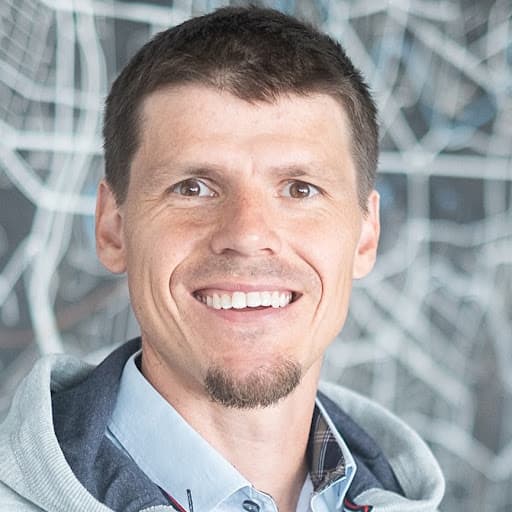
How Conviction Builds Unicorns 🚀 | Michael Cassau (Grover) | Changemaker Insights Ep. 2

In this Changemaker Insights interview, Michael Cassau, founder of the German unicorn Grover, shares his entrepreneurial journey from childhood ventures to building a rent‑to‑own tech platform that disrupted traditional consumer financing. He explains how a personal conviction about monthly ownership and consumer value sparked Grover’s business model, and how that conviction, combined with curiosity and courage, drove him to execute relentlessly. Cassau discusses the evolution of Grover’s vision and mission, emphasizing the importance of clear, transparent communication and a leadership style that favors group alignment over traditional one‑on‑ones. He reflects on scaling challenges, the shift from hands‑on problem solving to building systematic processes, and the role of hiring ultra‑committed, character‑driven talent. The conversation moves to his next venture, Scroll, which aims to modernize and sustain small‑ and medium‑sized businesses facing succession challenges in aging economies, positioning the company as a backbone of the global economy. Cassau outlines how he discovers new problems through curiosity, market research, and questioning existing talent allocations. Finally, he offers advice to aspiring changemakers: identify an energy‑driving problem, prioritize loyalty and character in teams, stay true to conviction, and embrace resilience despite the dark sides of entrepreneurship.
Chapters
Welcome, Michael, to our next episode of Changemaker Insights. Great to have you here.
Hi, thank you. Great to be here. And yeah, thanks for having me.
Quite an exciting time to talk to you because you just handed over everything you did and built at Grover and are about to build something new. But before we come to the new, I would like to start talking about what you actually have built. You have built in the past years a unicorn, quite renowned in Germany. With the name of Grover, but before I introduce what Grover is and what the company does, maybe you give us a short introduction from birth to where it is now.
Okay, sure. Yeah, so look, I think I'm a classical, I would say, not classical, but kind of immigration kind of a journey child. So wherever kind of I go, I'm the A little bit the the guy who just immigrated into a set group, so it gives me typically the ability to look at you know standards and and groups a little bit from the outside, always a little bit observing. And I think this also helped me a lot in in launching Grover because you know when I I saw kind of a market need when everybody was I think just continuing to to to buy or finance or maintaining the status quo, I think. And yeah, I think you also asked with regard, you know, how did I come to entrepreneurship? And I think what you find often, very often, is that entrepreneurs used to be also entrepreneurs when they were children. So same applies to me, right? So I was, you know, selling fireworks when I was 11 or had a facility management company when I was 17 with employees already before studying and so forth. So I was always doing some stuff. which was entrepreneurship related. And what always gave me energy was to, you know, just think years ahead. You know, I was like, oh great, this, you know, this fireworks stand will be just huge, you know, I will make it and so forth. And yeah, so I think that's kind of what drives entrepreneurs is just seeing the thing as it's done, you know, years ahead and then going ahead and doing it.
So having a vision seems to be very important and you started to be entrepreneurial already when you were a child or when you were a kid. That's great to hear. When you look at Grover, what was the vision on day one? Like, what did you start it with? What was that initial idea? You said like immigrating and having a look to the outside or from the outside to something, but what actually sparked that idea and how did you then decide to really put it to life?
Yeah, it's a known story almost, I think. I tell it every time because it's real and it's true. But I used to work in private equity investment banking after university for You know, for two years, and that was in London. I always wanted to kind of move back to Berlin and see how things turn out. So as I moved in the summer back to Berlin, I intended only to stay for a year, and also spend a weekend in Rome. I think that was great experience. You know, a couple of days only cost me five hundred euros, and then I rented a small apartment at Hackescher Markt. It was great, great place directly where everybody is. But that apartment. I needed to furniture it. I need to furnish it. And I thought, man, I just spent, you know, €500 on the, you know, time of my life. I still have memories of it. This is great stuff. But the cheapest option I have, like going to IKEA and, you know, it's like €3,000. It's a huge disconnect between, you know, what gives me value versus what I need to spend the capital on. So I didn't want to spend that money because I could just go to Rome 6 more times and have a great time. And the alternative was to take out a loan in the market. They said, hey, no worries. You don't want to spend your money. Just take out this loan and keep repaying it for the next 4 years. And I was like, okay, well, hold on a second. I was thinking, I'm expecting to go back to London actually. I don't want to pay the furniture in Germany whilst being, you know, back in London. That doesn't make any sense either. So the first question was, okay, wait a second, why isn't there a third option which gives me— by the way, tech products, we're also involved, right? Which gives me, you know, the option to pay monthly for things that I use monthly, you know, and then just exchange them. Because the truth is also that if your monthly payment stays similar or same and you can get new products for it, you will immediately experience a greater value, right? Because if something gets old, to you, you experience zero value from it at some point in time. And if something is new to you, you experience great value. Now, if you can exchange those assets, have similar prices, uh, or the same price even for an always new experience, your consumer welfare will always be higher. So that was an instant kind of, uh, conviction, uh, which I'm an economist also, but trading, that I thought, okay, great, this I understand. And that I think helped me all the time to also, you know, just move forward because everybody who didn't understand it, they just didn't rationalize, didn't understand it. But I was convinced that they will eventually feel it because it's just true.
And when you have these ideas, I call them, because you said you have been an entrepreneur when you were a child, when is that moment when you actually say, I'm going to turn that idea into reality? Because there's this saying that we don't lack ideas, you know, everybody has ideas and most probably You can also discover problems pretty quickly that need solutions. But when do you actually have that vision of a solution for one specific problem that you then execute on ruthlessly? When is that moment and how is it?
Yeah, so I think the difference between ideas and things that actually get done is that I see this a lot all the time. People come with ideas and then they lose the idea the next day. And then it's like, oh yeah, It just flies in the air. It's gone. Like you sleep on it one day or two. So what needs to happen, I think, is that you have the idea, but then the next day it's bigger. You're like, you know, and you just get, you get pressed and it's like a steam cooker, you know, it just grows and grows. And at some point you reach this element, okay, you gotta quit your job. You gotta stop doing anything else. You just gotta go and Do it. And I think once you have that, most ideas will become reality because you can just start executing and working on them. But most people who say ideas are, you know, whatever, it's true because people never act on the different ideas that they have. They never put them to market. They never see how people react to the product that they eventually build, which is necessary to put your idea into practice.
So that is a certain urge within you that is a certain like, wow, that's really not just an idea. It gets bigger every day. puzzle piece added every day and you're like, now I, now I jump. Now I really need to start swimming. And now I really need to—
It becomes impossible not to do it because you're, it's like you, you're, you're falling off a cliff otherwise. It's, uh, it's, you have a total urge to do it and everything else pales in comparison. Like there's nothing anybody could do almost offer you in order for you to not proceed. what you think is necessary to happen.
And what holds you back in these days? Is it then, oh well, it's totally new and it's uncertain to pursue an idea like that? Or is it just like, it's obvious I need to go for this?
No, it's like, let's go do it. Okay, where do we start? You know, it's okay. Well, we need a website and we need this. And then I'm going to buy a bunch of assets, which I did, you know, personal money. I'm just going to fund this thing. And then we're going to, you know, see how people react once we offer, you know, iPhones and Apple Watches or other, like drones as well, for, you know, a certain monthly price.
That sounds— it sounds so wonderfully easy, right? But I also believe it needs a lot of courage, right? You need, as an entrepreneur, you need courage to actually do these things and say, well, there's a high likelihood that I actually may fail, right? Because maybe I'm even shaming myself putting something out there that doesn't work, right? But did you ever have these thoughts or?
No, I've never had any fears, I would say. I think what we need is not— I mean, courage, yeah, sure, everybody needs courage, but you know, you shouldn't think about fear so much. You should be really excited, I think, and curious and say, yeah, let's do it. Let's give this a real try and just go and move ahead.
Wonderful.
Yeah, I think being courageous is necessary and so forth, obviously, but Most people who never start, they're just caught in worries. And I'm not sure if they have what it takes to be on the other side of fear. And then this is where you operate on entrepreneurship, essentially.
So seeing it as an opportunity, as a learning chance, as fun to actually build, that's kind of the antidote to having a fear, right? So really seeing it as a chance. How much did your childhood and your youth actually help you? And because you said like initially you, Started a couple of ventures, fireworks. But how much did this entrepreneurial path that you already had in youth? How did how much did it help you for launching Grover?
I think quite a lot. So that that urge that I you know was talking about and so forth, you also feel it when you work somewhere in a way. So I was working as I said in London, you know banking great thing and so forth. And also there you're like okay, I need to do something else. This is like this cannot be my life. Like you know you see. Where you are, and then the person next to you, like the managing director, just has a you know an office with a glass door. That's the difference. This is what happens in ten years: you move from here to there, and then meanwhile you're working on similar things. So that became also impossible to sustain. You just want to move out in the world and you know pursue your own adventures in a way. So that's also a kind of urge that that that you have is being adventurous and doing your own kind of. Pursuing your own journey. And I think if you had this in the childhood, you always have these patterns of doing something like that.
And do you think your courage and excitement building new things grows over time? Like the first time you successfully built a venture makes the next one even bolder and makes the next one even more courageous? Do you think that there's courage at scale?
Definitely, yes.
So you grow confident.
You're like, okay, right, so did this now. What's the next, right? And you always need to exceed your past. Obviously, that's a necessity.
And when would you consider a venture and potentially also you as an entrepreneur, as a successful entrepreneur? What is success for you? Is it making some money? Is it growing a unicorn? Is it changing the world? Or what's your personal definition of entrepreneurial success?
Yeah, I think when you You come close to how you see the venture that you're starting when you come close to your vision. The closer you come, the more successful you are.
So you say you pin down a vision at the start, right? In the first days, you already really write down a vision and then you say, this is the state that I want to achieve with my venture, with my entrepreneurial acting.
It's also evolving. It's also evolving, right? It's like a never-ending story. So the vision always evolves. It always grows, right? Always gets bigger. You always get smarter. You always see, you know, new adjacent things that you can just add to it and so forth. So it keeps growing. That's why people just keep going all the time, right? And if you ask very successful entrepreneurs who built much bigger companies than myself, do you feel successful? I think they're all gonna tell you the same thing. Say, well, you know, Look, I'm quite close to where I, you know, the business can be, but I'm not quite there yet. So even Mark Zuckerberg, I think he will tell you, oh, wait, wait a second. You know, the metaverse is not there yet. You know, it was still a lot of work. So it's always, always, always a lot of work. But if you're, the closer you come on your journey, if you know, the, the, the more you feel that, okay, I'm on the way. It's, it's good. It's fine. We'll keep going and so forth. But you, you, you don't have a— kind of feeling of, you know, you're in the wrong space. So I'm not even sure what the definition of success is in that regard, but if you're making good progress towards where you ought to be, where this needs to go, and this is always growing, but you're, you know, growing along the way, the company's growing along the way, then you're feeling good about making that kind of progress.
So better is always possible, right? That's this nice saying. Yes, you can always be better. There's no way that you're perfect.
For university students, very simple comparison. I mean, you have the final exams, right? But imagine you have 10 final exams and you wrote, you passed the first one. And then, I mean, you're not going to go on a party and then travel for 2 weeks afterwards. So, okay, great. I have another exam to go tomorrow and so forth. So imagine like a never-ending exams.
Yeah, it's lifelong learning more or less, right?
It's a— All the time. You'd pass one today. Next week is another one. There's just, Yeah. You get a breather, you know, 5, 5 minutes, 10 minutes, maybe a day, but it just always goes on. And yeah, it's, you know, success is very comparable. Like how, how did you write that exam? What was it good? Do you feel good about yourself? You put down everything you, you was in your brain. Yes. Great. Well, tomorrow's another one. Let's do it again, you know, in a different topic.
Exactly. And that's the concept of lifelong learning, right? There's a challenge every day that you can overcome and grow with. And it's never like, oh, there's the degree and now we're done, right? You keep on going, keep on. You just mentioned very successful entrepreneurs. I'd be interested, like, when you started or even throughout when you started Grover or earlier, were there any role models? And are there now role models that you look up to for whatever reason? May that because they've built a business in a really bright and smart way, or may that because they lead their life in a very bright and smart way, because they're very mission-driven, but are there people you look up to, you, you're like, wow, that's really a great entrepreneur or simply a great human to look up to. Yeah.
So look, when, uh, in 2015, when I launched Grover, there was the same question, uh, from Wired. And back then I said, hey, Elon Musk, man, what, what this guy is doing is crazy. And fast forward 9 years to today, I think what he's doing now or has been doing and is doing now is even more out there. I think he's clearly the best entrepreneur that has ever existed or that also currently exists. And if we're all coming close to, you know, see how he's doing, how many things he's managing, giving, you know, the clarity and support, that's quite something. So if there's an entrepreneur that where I say, well, he's really following his own thoughts regardless of what other people say in a way, and he just keeps pushing, it's clearly a role model for, I think, all sorts of people. More people should follow his role model in terms of independence and following his own vision.
So that was the role model when it came to Grover. And when you were a child, when you were a kid, any other role models, like maybe before you even thought of becoming an entrepreneur, anybody you looked up to? People always laugh at me. I'm saying my role model is Boris Becker, at least was. And then I have to explain why.
No, my role model, you know, My grandpa or something like that. I always looked. I had a few men in my or you know in my in my life that I looked up to. Really respectful, decent human beings. But no external external folks were you know big for me.
Okay, great. Maybe before we move on to the the venture the venture more itself, I'd be interested. Like when you started Grover or when you started any other venture, how How explicit did you make your vision, your mission, your values? Did you really write it down? And did you really spend a lot of time to make it explicit in writing and then present it? Or was that more or less emerging on the go?
So also here, I think it's an evolution. It depends. So at Grover, for instance, it evolved. Right? So we started with a certain vision statement and, and so forth. And we said, hey, we need to adjust it a little bit. And then we did, and then it stayed there and so forth. But as the brand was evolving, we kept tweaking it a little bit always. Um, in, in my new venture, and we can speak about it later, uh, but here we're, we're clear just like that, and it's gonna stay like that. It's, uh, you know, you just fast forward a lot of the stuff that you do in your first venture. You just fast forward all of it. You're also gonna be very clear around the expectations. You're not gonna, you know, let's say overpromise work-life balance, but actually expect loads of hard work. I think you gotta be just very clear. This is what we expect, this is what's gonna be, and everybody can just self-select into it or, you know, out of it.
So making it very clear, very explicit for yourself and for everybody working at the company, you're saying is definitely a key driver for success. Having very— Exactly.
Yeah, it avoids many, you know, misunderstandings. Very important being super, super straightforward, very, very clear, very transparent, and also being able to select for it. I think there's also a company here in Miami that it's extremely clear about it. It's, I think, Founders Fund backed, and they had a podcast with 20VC recently. What they say, they say, with us, you're just going to be working a lot, like all the time. And they even do trial work and some people, Say yeah, I'm opt for it, and then they need to quit after a week. In a way, they don't pass the trial work. But as a result, the founder claimed that lots of people now are able to self-select into it because they want to work with other folks who work a lot because they want to work a lot, right? So if you whatever it is though, right? You can also say, hey, we're a lifestyle brand. We're taking it this way and easy or whatever it is, right? The clearer you are, the better for everybody.
So it's clarity that lets everybody understand what you expect from them and what they can expect also from working in that startup, right?
That's no misunderstanding.
It seems to be a strong leadership principle of yours to be really clear, to have clarity when it comes to what you expect from the people and what they can expect from you.
Also learning, by the way. Yeah, it's also ever learning. So I've seen it also go the other way, right? The expectation never stops, but also the feedback that you get. If you are saying, hey, this is what we're promising and this is 100% for real, like we're promising 100% hard work. And then somebody comes to you and says, hey, you know, I cannot work hard here. This is too busy. It's not, I'm not busy enough. Then you really feel it. You're like, okay, wow. Right? That doesn't work. But if you're unclear about the expectations, right? Let's say, You say, you know, everybody have a happy life here and so forth, and then you expect something differently, and then the feedback is on something. I mean, it's just a mess, right? So I think a big learning for all entrepreneurs when dealing also with, you know, lots of people is, is you just gotta be as clear as possible. Yes. As soon as you can.
Otherwise, I mean, especially what you're saying is, is for example, people are expecting nowadays increasingly, uh, very flexible work modes, uh, 4-day work weeks and all of these elements. And if your philosophy is hard work leads to success and you make that very clear, it's very fair.
Yeah. Promise a 4-day workweek and, you know, remote. And then 2 months later say, you know, it's 5 weeks and everybody go to the office. I mean, this is a clear example of things that are going to fall apart.
And maybe sticking a bit with the topic of your leadership and how it actually helped to scale Grover. So from my experience, it needs a very different leader in the early days where it's really about validating the idea, Finding the product-market fit and then growing systems later in time and really putting a focus on not just systems, but processes, clarity. But what made your, or what do you think makes your leadership style unique and what helped actually when it comes to your leadership to bring the company to scale?
Yeah, so I need very smart and very ambitious, very strong, very hardworking people around me. And then things just fly by themselves. You know, and then they're self-motivated. They really don't— the people I work best with, they really don't want to work with managers. They don't want to work for some in a way. They just, you know, want to be part of a group. It's really like ultra-committed entrepreneurs that want to join you. They want to be part of the journey. And then this works really well. I think where with the people that I cannot work with really well, I think is as people who need management. Or like expecting like a one-on-one and, hey Thomas, you know, you didn't do this so well. You know what? I cannot do that. I, it's not for me. So for me, it's clear, look, we gotta grow this, we gotta do that. Let's go. And then it's a lot of Q&A. It's a lot of questions. Why, why couldn't we do this better and so forth? Because another thing is that even the best, they will always, you know, I mean, not so much as the, the, the less good ones, but even the best will try to Maybe settle on a no, right? So how many nos does it take for someone to settle on a not moving forward answer? You may see this in there. Oh no, sorry, Thomas, that's not possible, right? And the more nos somebody needs, the better they are, right? It's like, okay, now why is this a no? Let's find a different solution and so forth. But even the best ones, if you find out you still have a couple of questions to go before you can accept the final no, which for me, I mean, Almost never is the case. Like, okay, so how else could we do it? And why is this like that, right? You just never stop finding solutions in a way.
So does that mean you don't ever have one-on-ones with your people in your companies? There's no one-on-ones where you just directly manage somebody? There's a different way how you do it because that's prevailing wisdom, right? That have more one-on-ones with your direct reports.
We do like a weekly team, the OS weekly team. Alignment. So in the group, we do one-on-ones in a group. And obviously I will do a one-on-one whenever someone is personally, you know, asking for it or is personally, I can tell there's some sort of suffering or something is, you know, maybe not going well, then happy, then we will engage on a one-on-one level always, right? But other one, other than that, there's a weekly, everybody can share their thoughts together. Everybody's super transparent. And by the way, This has been something that's been a little controversial actually until now. The NVIDIA CEO is like, hey, you know, I have 50 direct reports. I never do one-on-ones. We're all in a group together once a week and so forth. So don't take it from me, right? Just, uh, yeah. But it's also, there's a, there's a, there's a structure behind it. There's a structure behind it, which is an organizational idea of putting people in the right place first and managing the organization. And the flow of you know the flow of the company and so forth, rather than engaging on these political one-on-ones all the time. You want to share information. You want everybody to be involved. And yeah, you just engage on one-on-ones when it's something really private.
That's great. And maybe to describe, I mean most probably there was never a normal day at Grover. But if you think of the early days, like what did you spend your time on? In the very early days versus in the late days, like when you were already unicorn, when it was big, when it was established, how has that changed and how adaptable do you need to be as a person to excel in both of these phases?
Yeah, so I think in the early days, most of the time you spend on moving the company and the business forward and you just do whatever is necessary, whether getting, you know, the marketing out or shipping You know, the products, or you just need to establish a certain level of operations, whether it's a technology develop, whatever design, you know, whatever it is to in order to form the first company. And I think as as it goes and as proceeds, obviously the usual fundraising, hiring, you know, all of that. It's I think there's almost boilerplate. You want to make sure that the company. Stays on the track where it needs to go, that is, you know, going in the right direction. But also you end up solving all the problems that, you know, have no solution at this point anymore. And so like, oh, really all the stuff lands on your desk that, you know, wasn't solved or customers reach out and then, I mean, you're a little bit also like the trash bin of the company because stuff just doesn't get solved otherwise. And you're like, okay, well, here's a problem. So Yes, you do the fundraising and you do the hiring and you make sure the company is in the other direction and everything is working fine and people are moving until things are falling apart, then it's on your desk again, right? So you're also kind of the person that's dealing always with the most annoying problems.
And would you say that the most important skill of that later phase is then being a problem solver? Because it apparently is that you're the one that gets the biggest problem on your desk. And you need to simply solve them, like at the later, that's very different from a skillset than in the early days, right?
Yeah, sure. But then comes the next question, which is how can I make sure that I don't need to solve this particular problem or something that is more systematic in this issue ever again? Like where did this fall apart? Like, so you do want to establish the systems. And here's also where you need to, you know, you need to make a call like, our process is wrong or is the person that came before, is this The wrong staffing. Maybe we should change something there in a way. But if something falls on your desk, then there's a— something didn't go right in the organization.
And speaking of skills, competencies that one can learn, what is it that you would have learned earlier or what you would advise yourself? Like, these are the skills that I could have grown earlier as an entrepreneur. Is there anything or would you say—
Very important. Ignore what the investors are telling you to 100%, okay? And just follow 100% your conviction, right?
Yeah. So no external influences. Follow your passion.
Yeah. I mean, or pick the people that you want to learn from really extremely wisely. I made so many mistakes by listening to other people like, hey, Michael, you got to hire the senior folks, right? And it's just the company is like one and a half years old, and then you hire some senior folks and. But they don't work. They don't want to, just want to manage people, but there are not enough people to manage. So now what, right? So it's you and then, you know, you go this process, right? And suddenly you learn. So I think, uh, so just be really ruthlessly following your conviction. Uh, again, Elon Musk does it. Take an example, just, you know, go straight ahead.
So following your mission, following your conviction is the one thing that you really, and that, that's to some extent also feeling, uh, or following your intuition, right? Following what you believe it needs to be, what your virtues are, right?
Yeah, I think it's very important to deal with a lot more controversy than you're dealing with on it. I mean, you're already dealing with a lot of controversy as an entrepreneur, but you need to step it up even more, I think, by just doing what you believe is true to 100%.
I'm going to ask now one last question to the scaling phase of Grover, and it's going to be a tough one. But, you know, future entrepreneurs and actually most people in life look for recipes, right? When you, when you look back at the success of Grover, was there a recipe for scaling, a recipe for actually making it a success? Could you pin that down to a couple of points where you say this is really the things that made Grover specifically very successful and made it a scale-up?
Yeah, I think entrepreneurs need to find a topic and a company that they, and a topic, a vision that gives them energy rather than, you know, consuming energy because it's a long path. It's gonna require the entire organization. Like you're the, the, the, the sun, the nuclear kind of added energy point of the entire organization, of the entire topic. You need to do all of it. And This topic in itself needs to produce energy for you. If it doesn't, then it will fail or, well, I mean, this will not even really start. So, and if, if it doesn't give you energy, you cannot do it, right? So you really gotta be ultra excited. Um, but most importantly, you know, excitement, curiosity, and you gotta be convinced that you're the, you, you, you got it right. You've, you know, something that is 100% true. But everybody else doesn't know it yet. So all the people will tell you, no, that's wrong. Like, Thomas, this Tomorrow University thing, it's not working. Well, let me show you. It will work. I know why, because it just makes sense. And that was the case with Grower. Like, why rent? Well, because it gives you more consumer value if you're going to have new things. So I just knew economics, you know, microeconomics are on my side. I don't care what people say. They will find out eventually, even if they don't, you know, believe in it in a way today, it will, they will feel it. And then you have that customer feedback, luckily, that underwrites it because, you know, once people get experience, they're like, hey, this is awesome. You're like, great. Now I'm getting that feedback and that actually is true what I'm convinced of. So I think conviction is the number one thing that gives you energy and that just lets you go through the jungle, through all the nos and all the skepticism, all the criticism, you know, all the whatever it is, you just, the conviction and your energy just, you know, gets in the direction of where the company needs to go.
Great. We're getting back to that point. It also seems that we've made something right in the curriculum with Tomorrow University because we ask everyone to apply with a mission statement. The first challenge is to really derive your own mission and be really clear about your own passion. So It's great that you're confirming that. But speaking of, you need a lot of energy, and most probably you also need that energy to overcome the dark sides, the obstacles. When it comes to being an entrepreneur, when it comes to running and scaling a business, what are the dark sides for you? What did you experience? Is there anything that you say, well, if you're that kind of person, don't do it, don't become an entrepreneur? Or would you recommend everybody, hey, there's only one life. There's maybe there is challenges and obstacles involved, but go for it and start your own venture.
Well, I think the topic is, again, the topic really needs to be worthwhile solving to you. Like you really got to want to solve this issue that you're following with because you believe that the world will be a better place. You know, it's a huge slogan at this point, but it's true. You think, okay, this is worthwhile doing because it will You know, turn out better, and listen to it. And you just gotta have that conviction, obviously. But the dark side clearly is—I mean, you're gonna have a lot of nos, and people will, you know, be super skeptical and look at you, and other people will criticize you. And like some people will all the time criticize you, or they will, you know, project their disappointments. I mean, it's just. So you really got to be able to just, you know, cancel out whatever the noise is and just go through. And entrepreneurship sometimes is really tough, you know. There's this interesting— and by the way, you also have employees and you're being served the problems that nobody else could solve meanwhile, right? So it's all combined. There's this guy, a meme, right? He's on the treadmill. And then there are like stones on the treadmill. And by the way, meanwhile, somebody's punching in the head and throwing water for them. So like, okay, this is what ultra-marathon was like, but it's really fun. It's really fun. It's a, it's a, it's a great, great, great, uh, great journey, great topic. Uh, so long as the, the topic that you wanna solve, um, is for you, you know, the source of energy worth solving.
Great. So there are dark sides, no doubt, because there are setbacks, there's nos that you got to deal with. But if you have a certain resilience and if you're able to deal with them, plus if you have the conviction, then it's definitely worthwhile and it's a lot of fun.
Right.
Maybe moving on from Grover to your new venture that the world has not yet heard so much about compared to Grover. Why did you decide to leave Grover and what is the new chapter that you're opening?
Sure. So look, at Grover, I'm still in the board of directors and so forth, and Grover is more or less now a mature company. And with the new venture, I think that the other structural issue globally today, right, besides this you know, financing that is too long commitment that, you know, I was solving, um, or we're solving with Grover. On the other side is the aging population. And it's a real issue across most Western economies. And what you find very interesting, uh, is that the, the most advanced economies have the most aging population as well. And also, almost 99% of the economic value in these industrialized economies is held by small businesses. And all of these small business owners are looking for succession, but most of the kids are not, you know, not going to follow. It really depends, really individualistic. So lots of businesses and lots of economic value is about to hit a wall, and economic production is about to be destroyed because there's no follow-up in terms of maintaining Those businesses, and maintenance is is just one thing. That's why you say okay great, we're just going to acquire and continue. What is also true is that most of these small businesses are not I mean they're not modernized; they are in need of modernization, and this includes technology technology. It includes but also know how. I mean most businesses don't know what the other business is doing across the same industry, but then let alone across countries or across verticals. So there's a lot of opportunity and a lot of necessity to maintain, modernize, and also technology-wise, if you will, small businesses everywhere globally across industries, across countries to hopefully also increase the gross domestic product of the economy. So it's Scroll. That's the name of my new company, Scroll. If Scroll succeeds, then I think we will visibly move the needle in terms of, you know, economic output of the companies that we operate in because we help small businesses survive, we help them grow, we help them become more modernized, more technologified. And also, despite them, you know, being able to learn from each other, you know, with the know-how, best practices, and so forth, another thing, if you look at You know, the people we were staffing into Grover, like super, you know, we pay recruiters, we put the best people in and so forth. They will also benefit from access to hire, you know, employees that, you know, that are from maybe a different section of access because, you know, staffing them globally. So yeah, I'm very, very excited about Scroll. I'm very excited about helping the global economy here. modernizing it. And yeah, that's kind of embarking on that new journey.
Exciting. So you came across a new problem, you felt a strong conviction that will give you a lot of energy for the next couple of years to build the next venture. Maybe digging a little deeper into that, how do you learn about these problems? How do you discover them? What do you do for yourself to educate or to stay educated to Stay up to date, to learn new skills, to discover exactly these problems? What is it that, what's your recipe there?
So one question I was already asking myself for a longer time, right? When I look at the quality of the people that we're hiring into startups, right? And startups are new companies, right? And Series C, this and that and so forth. But most of them aren't profitable. But the quality of the people that we hire is quite high. So the question I had always was, okay, what if we put these people into small and medium-sized businesses that are not accessing that same pool of talent? What would happen then? And what if we, you know, every day we're like, okay, how can we grow faster? How can we, you know, improve this and that and so forth? What if we also input that, you know, mentality into already profitable businesses? So, these 2 questions, okay, what if we add lots of different talent and push for growth and for improvement elsewhere? What would happen then? And so, that was just one question. But then I was looking at, okay, what are the structural kind of issues that need solving? And obviously, there's climate change and there's sustainability and there's But there's an aging population. It's a huge issue. And, you know, suddenly those things got combined. The one, you know, thing that I had already kind of on my radar, uh, thinking about it to like, you know, at least, you know, kind of more loosely or randomly, um, with that aging population, then became really clear that these things need, need a solution quickly. And then you look into the industry, then you look, you do the research and then becomes really clear that there's a, there's a There's a gap.
So again, your passion drives you to learn, right? So you have a certain question that you ask yourself that you ponder around. What if, for example, all of these talents were fuel to the SMEs that are out there, plus helping them to grow? But then you dig deeper, then you dig deeper. So you have that natural curiosity in you as an entrepreneur that drives you actually to explore even further, right? Yeah. So that's the—
and then you need to see how this goes, right? you're like, oh wow, and you get this inflow of energy as you kind of develop the topic for yourself. And you know, you can commit to this and then, okay, well, this is really something that you want to do for the next years, next 10 years, 20 years, who knows? But it's, I think it's a very important topic.
Great. So, well, briefly summarizing before we come to the last statement of yours, but briefly summarizing What I take away is really exciting. I mean, there's a lot of advice for, I would call, future changemakers, not necessarily only entrepreneurs, because I think everybody that develops new products, business models, may that be within a company or may that be even starting their own company, that certain competencies and skills that you grew over time, starting in your childhood, that they can also take away and potentially even learn themselves. So the one, and that's the strongest, is conviction. You need a certain mission that gives you the energy to actually execute on a certain idea and to really bring it to life. It can't keep you anywhere else. You just simply have to go for that path. And it's also a certain feeling that lets you ruthlessly execute on that. Then there also needs to be a certain element of curiosity, right? So you need to be open for new worlds and open to discover new paths, right? That's also it. And then I took away from it, it's courage, even though you say everybody needs courage, but you also need to say, well, there's a lot of fun in creating the new, even though there may be dark sides, but there's a lot of excitement actually that comes along. But that's to me the 3 things. And most probably you have many, many more that every entrepreneur more or less, or every innovator more or less needs, right? Apart from all of the others that may that be the network, the right way of leadership. What I found particularly interesting is that you said, I want transparency, no politics, no One-on-ones, yes, of course, taking care if there is a problem of a certain person. But in the end, we need to discuss together, right? And you need hardworking individuals that believe in your mission too. Now, having said all that, what is your number one advice if you were to advise anyone that wants to start a changemaker journey, an innovator journey, entrepreneurial journey? What's the first thing you would advise them to do? What is the first thing that they should look at and maybe discover for themselves?
At the beginning of the journey or during the journey?
Once, whenever. I mean, that's really, that's a good question, but maybe for both of the types, for the ones that start the journey and potentially also the ones that are a little ahead in the journey.
Yeah. So as I said, before the journey, you gotta find the energy spot. You just gotta, you know, see where we're at and then you have to see where it is and then you have to go there. You gotta just, you know, light up. It must be. And then if it's not, then it's not. Then you cannot do it, right? Like, I wouldn't do a dating app, for example. Like, doesn't give me energy. It's like, why am I right? So you gotta find the topic, number one. And then number two, I think once as you go, I think what I would do differently is You will work with lots of people and long-term folks. So I would say loyalty and character must always be over skill or over perceived skill.
Nice.
So important. So if someone you think is lacking skill, then be really clear what needs to change. What do you want to do? What is the level that is required in a way? Um, because you cannot replace loyalty and character.
Nice.
You just enter, you know, a space then of, you know, folks that are indistinguishable.
Great. So you hire particularly for loyalty and character and not necessarily for skills too. I mean, you need the people that—
Yeah, you hire for skill, very important. Um, but you got to make sure that character is right and integrity. Is very clear. So do all of the reference checks and make sure this really checks out between you and the people.
Great. Do you want to share your vision for your new startup publicly? So what is it going to be and what does the world look like in 5 to 10 years from now if your case will be successful, which I see as a high likelihood because you've built quite a few ventures already, but what will change in the world in 5 to 10 years?
So without taking it away, we're going to be the more been doing, you know, more public stuff later on, but we say Scroll is the backbone of the global economy.
Wow.
And yeah, and if we succeed, then part of Scroll will be thousands of small businesses globally, and we'll be able to modernize and improve them and advance them together with the economy, right? Rather than them each, you know, struggling and battling individually and so forth, we'll be able to Lift them up together. That's all it will. So scroll is the backbone of the global economy, and on that, I think a couple of things that you know I will not say now, but you obviously can then expand from it, right? There are a lot of things that these businesses also need in sum and in total, and so scroll can be also the the service provider there.
Wow, that's an impressive vision to have the backbone of the global economy. And I can imagine, I mean, judging from what I hear from my insight, that's a vision to follow, right? That's a vision that is full of energy and giving you a lot of energy to pursue it for the next couple of years.
Yeah, it's exciting. It's phenomenal.
I definitely wish you all the best and success. You're right now in the US, so you also decided to launch your new venture not in Europe, but in the US. Maybe a last word on why that decision, and then we say goodbye to everyone.
Sure. So look, I think it's particularly for Scrawl where you look at, okay, you want to tackle the biggest economy first because it's the most dynamic. Most businesses are for sale here. Most businesses, I think, need a lift also here, but it's true also for Europe and Germany. But I think The US is the most relevant market for Scroll to start with. And then from here we can expand elsewhere.
Cool. Yeah, it's about the global economy, but interesting that you're starting in the US. Grover was started in Berlin, if I'm not mistaken.
Correct.
Michael, thank you very much. Really insightful. Gave me a lot of goosebumps in between. So I'm definitely following your journey as an entrepreneur, and I think many more will. So thanks for letting us learn from you, and hopefully that will lead to many more changemakers in this world. when they try to apply some of your insights. Thank you.
Okay. Cheers. Thank you. Thank you very much. So much for having me.
More from Christian

What Comes After Graduation? 🎓 | Class of 2026, Berlin & Building What’s Next
This Is What an Online University Meetup Looks Like 👀 | Berlin Immersion Summer 2026 🐝


This Is What an Online University Meetup Looks Like 👀 | Amsterdam Immersion Week 2026 🦋
Food was never meant to be this complicated. 👀 Student to Founder. #food #entrepreneur
How We Helped Rescue Food with Berliner Tafel 🍎 | Tomorrow University Social Impact Day
Why Most People Are Mentally Checked Out at Work (And What Fixes It) #burnoutstress #mentalhealth


What Comes After Graduation? 🎓 | Learning with AI, Remote University & Berlin 2025