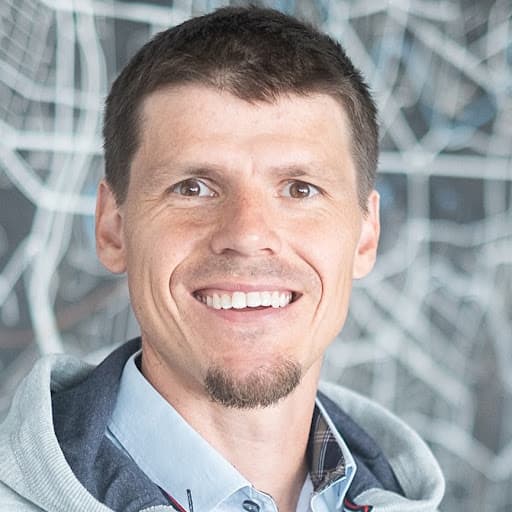
How New Work Helps You Find Your Mission 💡 | Kira Marie Cremer | Changemaker Insights Ep. 9

Kira Marie Cremer, a German author and New Work consultant, explains how the concept originated from Fridtjof Bergmann and why she's built her mission around making work more human-centred. She critiques mandatory office returns while celebrating New Work spreading into healthcare, and advises organisations to start with small pilots and align culture before scaling.
Chapters
So, hi, Kira. I'm extremely excited to interview you today on our podcast. And, uh, you are one of our owners of the course Intro to New Work and the Future of Work. Um, and that's extremely exciting because you're the true expert when it comes to new work. You have your own podcast, you wrote a book that you, um, published, um, which is a big achievement from my perspective, where you really condensed all the knowledge that you learned, past years, and you're also a consultant and do many, you're doing many different things. Um, and I think that gives you also a unique perspective on the topic. And therefore I'm extremely excited to call you one of our challenge owners and one of our ambassadors. And I'm excited to paint a little bit of picture of who you are, what your mission is, what really drives you, and, um, give everyone, yeah, an opportunity to start learning from you. Um, I would love to have a quick intro from you and who you are and what you're doing, and then we deep dive into your background and your mission and all the other topics.
Sure. Thank you so much for inviting me. I'm very, very, very excited because it's my first podcast I'm doing in English. You maybe hear the little British accent because I lived 3 months in London and I, yeah, adapted the British accent. But, um, yeah, my podcast I have is called New York Now and we're doing all the episodes in German, obviously. So this is my first podcast in English. I'm very excited and I'm very excited as well. Um, yeah, to be your challenge owner and lecturer and, uh, yeah, I'm, I'm so happy that I can start again because I was a lecturer, um, back, I think, I don't know, 2 years ago. for 2 and a half years, and I loved to, yeah, to talk to the students and help them with the, of course, topics, but, and yeah, talked with them about so much more than just the topics and the theory, and it was so uplifting for me as well. So yeah, for all of you who is listening, just a quick overview who I am. I'm Kira, Kira Marie Kramer, very German. I'm, yeah, obviously an author. I wrote a book this year, end of April, it was the release date. It's called New Work. So everything I do is new work related. But the thing is, new work is very, very German buzzword. So a lot of people internationally don't know it and they know it more on future of work and I don't know, better work or something is, yeah. very similar, but yeah, the theory is called New Work in Germany and I'm an author, consultant, podcast host regarding New Work and some people call me an influencer as well because I'm a LinkedIn influencer and yeah, that's it. So I have a deep passion for the future of work, yeah, and the New Work principles. Nice.
I love already that you mentioned that you have a Because we'll dive deep, dive into the mission. And I think missions really come out of strong passions for a topic. And before we do that, let's look a little bit into your background and how you, you know, became an author, podcaster, and a consultant, also an influencer. You just mentioned that, how the journey really until right now looked like.
Yeah, it's very interesting. And we have to go back to the, um, year 2019 because I finished my master's degree in 2019 and I was, during my master's, I was self-employed and after my master's I was looking for a job, obviously, like everyone is doing and my, yeah, boss, when you're self-employed you don't have a boss, but it was a customer, yeah, and she said, okay, do you want to work for us, like in full-time? And I was like, yeah, for sure, of course.
Cool.
It was in event management. So event business, live communication. And, um, but she said, okay, you can work full-time, but we don't have so much to do for you, uh, like for 40 hours. And I was like, okay, no problem. I'm still self-employed. I can work like in full-time and self-employment and I can, um, yeah, work in full-time. Like we did 60% and the self-employment was like 40%. And she was like, okay, let's do it. And, uh, so I was like, self-employed and full-time employed or employed. And these 2 types of work models or this new work model was very futuristic back then. So yeah, I found out when I was on LinkedIn 2020 that there was a word, new work was it called, and there was a theory and we were doing a little bit of new work already, but we didn't know. So then I dived in into that topic and I heard so many podcasts, wrote so many books, and then I discovered, okay, this topic is very, very old because in 1980, at the end of 1980, Fridtjof Bergmann was the, yeah, it's not really a founder, but the founder of the topic of the theory, maybe not the— not the company, but not the typical founder. But, uh, he was, um, yeah, the founder of the theory and, uh, he was like, okay, we have to change our perspective of work. We have to change our work to help the society, to make, um, the world a better place, to help the environment and yeah, to, to be very future related and to, to, yeah. make work something we do for the individuals and make the individuals stronger. It's like the very, very, yeah, philosophical sometimes, but that's the theory behind it. And I wrote it and I was like, okay, I want to make, yeah, work a better place for so many people. And, Yeah, then I worked self-employed and employed for almost 3 years, and then I was only self-employed. And now this year I started a, yeah, self-employment and employment again together because I really like this work model. And I'm still on a journey. I'm very curious about stuff. And, uh, I want to learn so many things. Um, yeah, that's, uh, how, how it went or how new work, um, found me. You can say that.
I love it. I also love that you mentioned it found you because I think so many great things happen by us just being present to, um, what happens, but also how we feel about it. And this, um, this is how we come to really the things that really, where we have a strong passion and which become our purpose and our mission. And one more thing about your, your past and your journey, like when you reflect a little bit, like who were some of the most influential people on the path that really helped you become the person who you are today?
So I had, you call it mentors today. Um, I just say I had several people, um, who yeah, influenced my journey and inspired me and my personality and made me who I am today. Yeah, a lot of happened through my podcast because then I learned so much more about new work. A lot happened in the beginning of my career with my bosses or my mom. She was a very, yeah, still, she's still someone I look up to. And, uh, yeah, I think I don't have that one role model I want to be or want to act like, but I have in very, in every, in every situation or every station I'm in, I'm working in, I'm working for, I'm doing, I have several people I look up to. Um, for me, for example, um, I always say it's Verena Pahlsdorf. She's, I don't say it because she's invested into Tomorrow University, but, um, uh, the people who are listening to my podcast know how much a fan I am of her. Um, for example, but I have so many people I look up to and I, from every person I, I take something I like and, um, put it into my work habit or yeah, my, my personal brand or how I want to be or how I want to act.
And now, but another thing also, I personally, I don't have, I don't have, um, of course I have one person which I holistically look up to, but then there are so many people.
Who is it? Can you, can you say?
Um, yes, it's one of them is Alexander Weber, um, who mentored me back in, back in the days, 5 to 6 years ago it started and who also brought me to Tomorrow University and really helped me develop as an, as an entrepreneur and, and into the person I am today. And as a human being, you always very much fascinated me because he has such a strong set of values and he really lives into them. And that's what I always admired, not just him making, you know, being a great entrepreneur, but being a great human being. And I think that are the best, the best role models out there. And then there are many, many more. For example, also Christian, one of the founders of Tomorrow University. I admire him for being extremely resilient, for example.
Mm-hmm.
Like he just keeps going no matter which obstacle comes the way. Because like building a university is a challenge. I can definitely say that the past 4 years, but he such has always a conviction that it's just, you know, another, another roadblock and we just jump over it and we get going again. And that's something I strongly admire.
Yeah. See, you have one thing you like about that person.
One of them.
And then you, you take it and you adapt it to you. Yeah.
Yeah, yeah, that's, I think that's the beauty of meeting a lot of different people.
Sure, yeah.
Moving to your mission. Mission is a very big topic at Tomorrow University because every learner starts with identifying their mission. And we love to ask, of course, you as a challenge owner, but as an ambassador as well, like, what's your mission? Like, what really drives you day by day?
I have to laugh because regarding that podcast, So I know my mission. Yeah. But sometimes I, I have so many thoughts and I, and I don't know how to, um, put it into 1 or 2 sentences. So for this podcast, I wrote it down and I want to read it for you. Um, because for me it was, yeah, for me it was a challenge because I know what I do and what I want, but to put it into words or into 1 or 2 sentences is not that easy. So for everyone who's listening, if you know your mission, write it down. It's very hard. So, um, yeah, my mission is to transform the way we work by promoting new work principles. So there's a lot of new work principles, um, that prioritize flexibility, purpose, and human-centered approaches. And, uh, I found this mission through a combination of like my personal experience and professional challenges and a deep see to believe their work can and should be more fulfilling and sustainable. And this is, uh, my mission and I hope you like it, Julia.
I love it. And we would call it the long version of your mission statement, but I love it. And I, I personally, I mean, I had also a mission before I joined Tomorrow, but then, you know, we, I got introduced to the concept and it really started to structure it and to really break it down. And I think also from that day onwards, it became super powerful because it beco— it had even, you know, more clarity than it had before. Um, but I think really doing the work and having a mission is such a, such a superpower.
Absolutely.
And I think one thing is to have the clarity, and we seem to have that clarity. And another one is then to really find people who support us on that mission. And, um, I asked a similar question before, but who would you say are the biggest supporters on your mission? Um, Right now, at the point—
Definitely my community. My community on LinkedIn, on Instagram, and the podcast. They are opening so many doors for me. This is amazing. Like, for example, I told you new work found me. Yeah, but for example, you found me as well. I put outside at the beginning of this year, I put outside into the universe, I was like, okay, I want to be a lecturer again. I want to be with the students. I want to work with them. I want to challenge them and learn from them. Yeah, because yeah, of course they learn from me, but I learn from them as well. And I put it out into the universe. And a few months later, you come to me and you say, okay, Kira, do you want to work with us? And I was like, okay, the universe was listening. And of course it was my community because, because of them, I gained a lot of followers. I'm very gained a lot of awareness. You saw me and, uh, you saw, okay, there's someone talking about New Work already. Maybe she's matching to the Tomorrow University. So I'm very, very, um, thankful for what I achieved, uh, through social media. And a lot of people know that because especially, uh, LinkedIn made a lot of, or yeah, opened a lot of doors for me.
I love it. And I think that what we can learn from here, from, from this example is like really building a community around whatever you wanna do and like having the courage to go out there and expose yourself.
Yeah.
Um, because that's the way to build a community. And I just listened to your 100 episodes, um, podcast summary, which I very much loved. And I think you had, you have an amazing community, what you just mentioned, of people who are passionate about the same topic that you are. and really, you know, come together to learn from each other because I think it's about doing it together, not, you know, one person doing it all.
Thank you so much.
We talked about the mission, we talked about the people, but how do you make sure, but I think it's easy when you have a passion, but you can confirm that, how do you make sure that you really stay connected to what is important to you?
So, I think it was last year, end of last year and in the beginning of this year, I was like, okay, am I really knowing what new work is about? Am I still with my mission? Am I still doing what I wanted to do, or am I still on the right path I want to be? So, um, this was a challenge for me at this time, and I was constantly thinking about it, and I was like, okay, do I have to switch topics? Is new work still my topic? I don't know. I was very like, is it still my mission? And, um, I made make sure to talk to the right people. This is always a tip I give to people or friends or family or in my network when they come with this question. And the people I talked to were people who are working in new work and they know the topic and they told me it's often like this when you feel you don't know the topic anymore, you one time knew that you are very diving into this topic and you're very into what it is about. And I was like, okay, so I'm still on the right path. And yeah, I just sometimes made a break. So maybe a LinkedIn break or a topic break. And I posted a lot of mental health because I have history of mental health. I, at the end of 2023, yeah, 2023, I was diagnosed with depression. So And I made sure to focus on my mental health and that was very, very important to me. And it, uh, made sure that I still connect with my mission and, uh, how I feel and do what I feel and not what I have to do.
Yeah, I think you mentioned multiple valuable things. Like one is really taking the breaks.
Mm-hmm.
I think that's so crucial because I personally, I love to be all in and to really, you know, do it like during the evenings, the weekends, because I just love it. But Sometimes you lose perspective and then you need to zoom out a little bit and let go of it, take a break, and you have a different perspective. And also having people who know you and can challenge you, um, is such an important, important thing. Um, from really staying connected a little bit to your day-to-day work, I would call it. And when you, when we look a little bit now into the topic of new work, there will be more, um, in the, in the course that you that you teach, but I want to touch it already a little bit. And, um, the first question out of curiosity I have is you have multiple roles, right? And I think multiple roles in a topic give you unique perspectives. And how would you say that the different roles, being a podcaster, being an author, being a consultant, being an influencer, like shaped the perspective that you have on your work right now?
So the best thing or the most important thing that shaped my perspective on New Work was definitely, or is definitely the podcast because I have an understanding of New Work and sometimes my guests are challenging this and sometimes they're thinking different and I, I listen to them and then we are discussing the things and this is what I like for example, as well from LinkedIn because they can discuss a lot about topics and it's never that negative. Sometimes, yeah, but not the main part you can discuss. And this is why what I love in the podcast that I get to challenge myself and my perspective or to challenge the guest's perspective and that I can learn so much more because you can read and hear so many podcasts, but when you You know, you have a learning pyramid. I don't know if you know this, but when I read something or listen to something, it's the, I think, first learning step. But when I talk to someone about it and yeah, we can exchange or we can discuss about the topic, then I learn so much more. And this is why the podcast is so important to me. And yeah, I learn so many more topics, like for example, new pay, how to get paid in the future, where we can change about it, like corporate culture. How are some companies already focusing on mental health? What are they doing? What are some benefits some companies are already doing or putting out for their employees? But also, what are some companies not doing? For example, there are some companies who are not giving out free water for the employees, where I think, what the heck is happening?
Yeah.
For me, it's definitely the podcast and yeah, the different roles I have is I can learn so many things from these roles. For example, when I'm a consultant, then I get, of course, the new stories about how the companies are working, but I can make a difference as well. So I can dive into the company's needs. It's much, much deeper than with the podcast. So, yeah, I love, I love my roles and it's all new work related and it's very important for me that I have one topic and I have many roles I can, yeah, be very curious with and learn some, so many things.
Yeah. Amazing. And I think you, you mentioned like learning the podcast, right? I think it's, we call it active, active learning where you're really extremely engaged in it and you get, get to know a lot of people who have extremely different perspectives. And this way I think you, you get a lot of perspective and can, you can, can paint your own picture of how you want to see the topic because I think also like having one's own perspective is so crucial.
Definitely.
Especially, um, after many, many voices out there about this topic right now.
Yes.
And what would you say, right, also based on maybe all the guests you had on your podcast, the conversations you had, what are the biggest trends right now when it comes to the future of work?
The trends I really don't like, but are currently at the moment very hyped from the companies, is going back to the office and not just making the opportunity for the employees to come back to the office when they want, how they want, if they even want, but they are like telling them you have to go back to the office. And this is what I don't like because we were fighting so much or still fighting so much for the individuals and how they can fulfill themselves and how they can work on a healthy work environment. And if the companies start again to tell them what they have to do, this is not new work. This is not the theory that we want to teach or that we want to— yeah, implement into our society. So this is a bad trend. But for example, a good trend is that new work or the concept or the theory behind it gets more and more well-known from people we call blue-collar workers or blue-collar jobs. Not the, yeah, like the— Like I had a guest in my podcast, he's from a, now I'm missing the vocabulary, Krankenhaus.
From the hospital, from a hospital.
Yeah, thank you. Oh my God, oh my God, thank you. From the hospital and they have so many new work principles they are doing and so many interesting things and they have no problem to find new employees like a lot of hospitals in Germany have to find right now, and they are having so many problems and they don't have it. And he told us so many good examples and I was like, okay, wow, this is very, very nice. And so many, in this case, hospitals can look up to and can implement to their work habits as well. And I think there are more and more stories about new work with new principles that are coming up and that are getting more known. And this is what I really, really like. And this is a trend I hope will never end.
I love it. I also love the example you shared because it really shows, because I think there's like, the topic of new work is already super big in like companies, but when it really comes to like healthcare and like, you know, where a lot, a lot of people work, it's like totally new. Um, and it's something that is not often talked about. And that's why I love the example so much because it shows what it means to really have it in so, so many different areas of life and really making it accessible. We already talked about the podcast and one question I would love to ask is, you had 100 different people, 100 different stories. Like, what are some of the stories, or it can be just one story where you say, hey, that really, that story that really, yeah, I learned something that I didn't expect, for example, that Hit me hard and I was like, okay, I didn't, I didn't thought it before.
I won't say what my favorite, my favorite episode was because this is not fair for the other guests, but I always share the hospital story that I already shared with you. And one episode was, was with Hans Wusinek, was episode 97. And he talked about the future and how we look at the future. So because for us the future is very in the next years, but he said when we look into the future, like I think the biology does, or then we have in our brain, I don't know, you have to listen to this episode. But he says everything that was in the past, Um, is until I think second, all, all before second 15, the, um, and the future starts at second 16. And this was so interesting for me because when we look at the future like the biology does, then we can change so many things because in second 16, something to change is so easy then into, I don't know, 16 years. Yeah. And, uh, this was very inspiring to me and Yeah. For a lot of people who listen to this episode as well.
I think it, it, it, for me it's a lot about, we often have a big vision, right? But how do we, and, and we often get stuck because we are like, okay, how do we get, you know, the big vision now on the street? But I think it's so much about breaking it down and like really thinking, okay, what can I do the next hour? Can I do something different? Or what can I do tomorrow? Like, what can I do different? Um, and really breaking it down. And I think that's where the superpower of any change in the end, uh, lies. So last question about, um, the topic in your work, about your different roles. Um, and I would love to, we talked a lot about the role as a podcaster now, but as a consultant, it's really about, you mentioned that before, of course you as, as well deep dive into a topic, but then you really go into an organization and see how you can make, you know, the the change that you want to do happen? And what are your, from your perspective, the biggest challenges to really implement new work and really, yeah, make changes on the organizational side of things?
So the most, yeah, painful thing is definitely the expectations, the different expectations. about new work. For example, all the leaders think, okay, the employees will work more on their own. Um, we will work faster. We are just implementing the 4-day week and then everything's fine. And the employees think, okay, uh, we have to work less. We, uh, can maybe do something about new pay or remote work. And, um, yeah, these are the different expectations you have to bring together and you have to bring on almost one level. So it's very important to ask questions before you start implementing any of New Work principles. And, um, yeah, to start very small because a lot of companies always think, okay, when we start with New Work or we're implementing New Work, then they think, okay, we have to do it for the whole company. No, start with the team, start with the small manageable changes you can do and this doesn't have to be the big, big things you have to change in your company. It has to start with the small things. It's very, very easy and you, yeah, can still save, save, you can still shift the structure you have and yeah, the culture. You have to change the culture and the expectations and the things you are doing day by day because we, yeah, we, we, we, it's very hard to change things in your private life and in your work life also. So it's very hard to change and you have to make small changes and yeah, share advantages for every person. who is doing like things like this. And yeah, this is always the advice I give to the companies, but I have so many more. But yeah, this is, I think is the, the small things can change a lot.
I think it's really about like how can the lifestyle, like really the day-to-day change.
Yeah.
And, and that's really about like habits, for example, like really developing habits that, you know, bring, bring up the change that we wanna see. We are.
Yeah, in, in Germany we say we are Gewohnheitstiere. Yeah, yeah, sure. So, and it's very hard to, yeah, change habits, and, um, you have to give it time. Definitely.
100%. Um, we approaching the end of the podcast, and one of my favorite parts is always a little quickfire, um, where we have shorter questions And most likely also short answers. Let's see how that goes. But one of those 3 last questions is about advice. Like, what's the best advice you have ever received?
I don't know because I really, I'm very efficient. Yeah. In answering. So I don't know because I forget a lot of things very fast.
Amazing. And most likely you get a lot of advice and it's very, very, very hard to remember it. And second question is about learning because we love learning. And what's one learning you learned on your journey that really stick to you?
Give a fuck. Am I allowed to say this?
Yeah, sure.
Okay. Give a fuck about what people say. This is what I learned during my journey.
Yeah, I think that's so true. It's, it's so much superpower in just being you.
Yeah.
So relieving you. So the last question, it's about laws. And if you would be, if you would be able to create one law in the world that everyone sticks to, what would it be?
Um, that there's a law that we have to make sure everyone is, is healthy in the work environment or that we can Or maybe the government has to pay for mental health in companies. That would be my, my law.
And I think a lot, like a lot of companies or all of the companies would be way better, but just exactly. Sure. Exactly.
100%.
I love it, Kira. I've really, really enjoyed, um, this episode and this conversation with you. It was amazing to get to know you on a personal level. data, but also learn a lot about, um, your work topic that we will definitely learn more from you in the future. And thank you so much. And I'm excited for follow-up, a catch-up, and a deep dive in the future.
I'm so looking forward to it. Thank you so much for inviting me and, uh, being a part of the Tomorrow University. I'm very happy. Thank you.
More from Christian

What Comes After Graduation? 🎓 | Class of 2026, Berlin & Building What’s Next
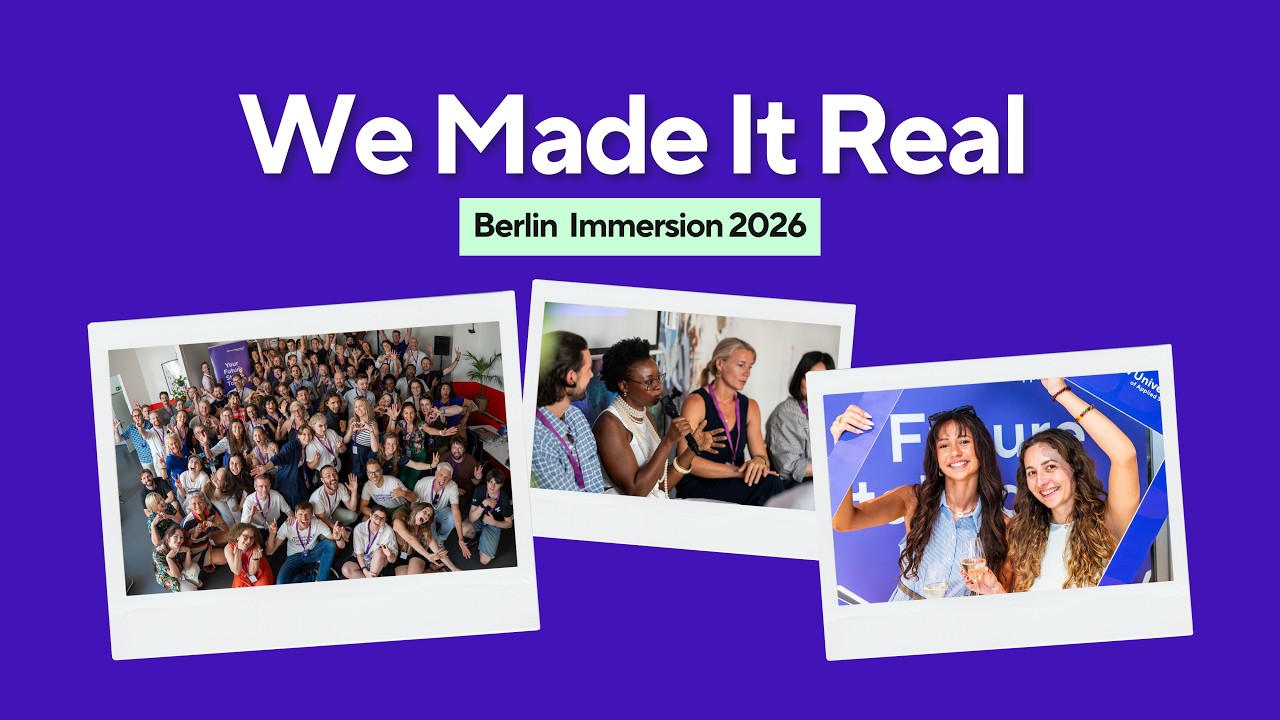
This Is What an Online University Meetup Looks Like 👀 | Berlin Immersion Summer 2026 🐝


This Is What an Online University Meetup Looks Like 👀 | Amsterdam Immersion Week 2026 🦋
Food was never meant to be this complicated. 👀 Student to Founder. #food #entrepreneur
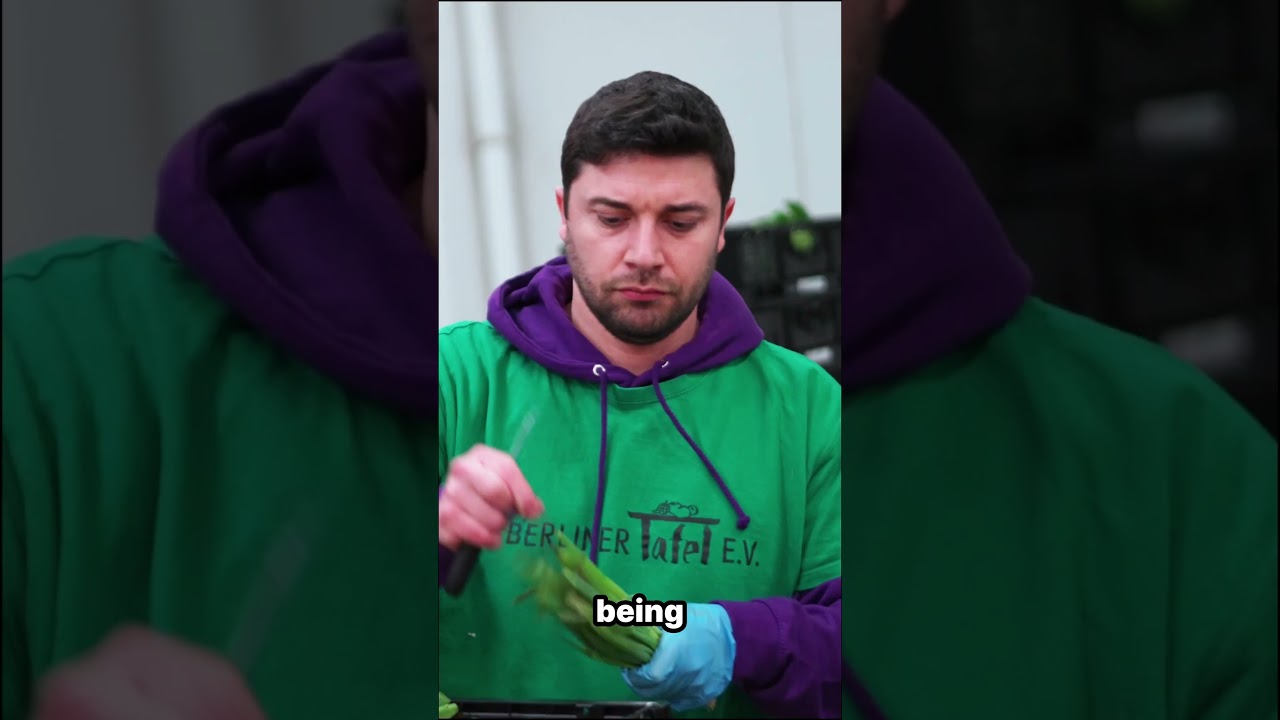
How We Helped Rescue Food with Berliner Tafel 🍎 | Tomorrow University Social Impact Day
Why Most People Are Mentally Checked Out at Work (And What Fixes It) #burnoutstress #mentalhealth


What Comes After Graduation? 🎓 | Learning with AI, Remote University & Berlin 2025