How to Find Your Mission & Lead Change 💡 | Marina Ziblis | Changemaker Insights Ep. 7
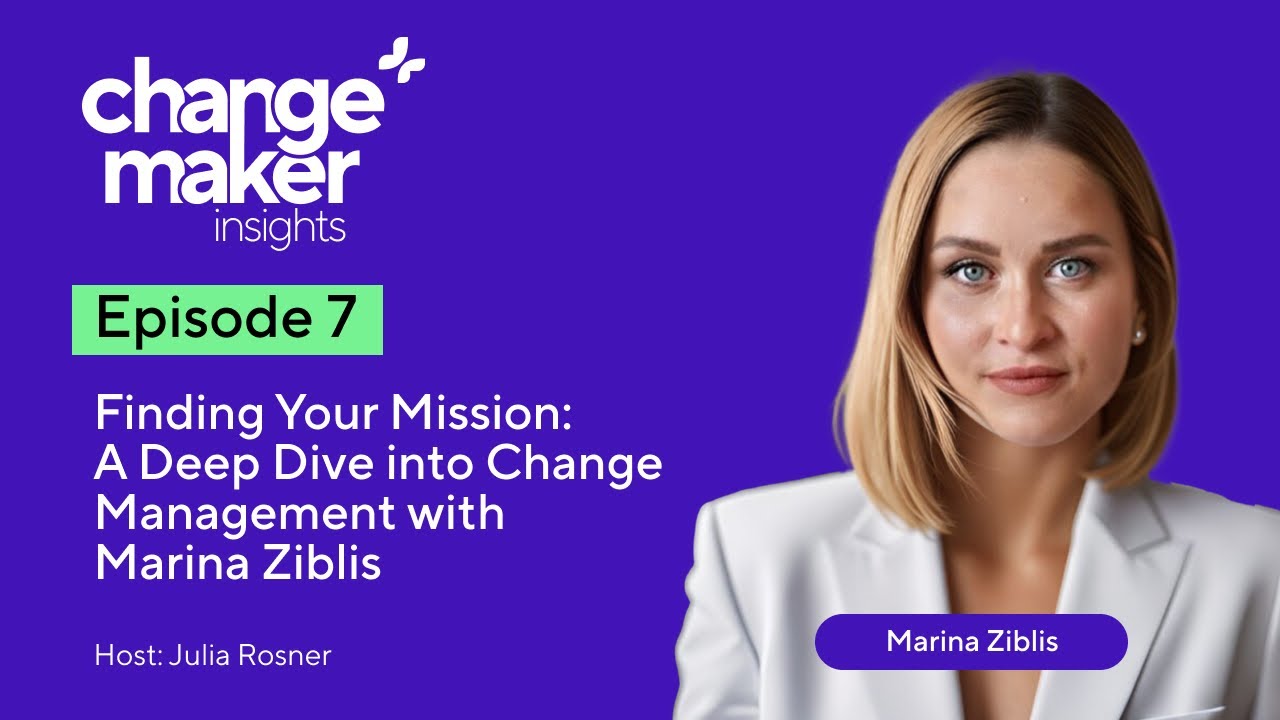
In this Changemaker Insights episode, host Julia interviews change‑manager and keynote speaker Marina Ziblis. Marina shares her personal background—growing up in a high‑performing household, a diverse sports and arts upbringing, and her current roles at PwC Germany and as a LinkedIn coach. She describes a personal crisis that sparked a deep search for purpose, leading her to a structured self‑discovery process that includes reflecting on life highs and lows (the “lifeline” exercise) and discussing insights with trusted friends. Marina explains how family, friends, partners, and professional networks (e.g., Nushu Network) form her support system. She outlines what makes a successful organizational transformation: a shared vision, transparent communication, and early employee involvement. For leaders, she introduces Prosci’s CLARC model—Communicator, Liaison, Advocate, Resistance manager, Coach—highlighting the importance of role‑modeling and empathy. The conversation concludes with personal advice about believing in oneself, setting boundaries, and a proposed “law” that people should prioritize everyday happiness through meaningful connections and purpose. The episode serves both as a personal narrative of mission discovery and a practical guide for change leadership.
Chapters
Hi, Marina. I'm really, really excited to finally have that conversation about yourself, about your mission, and a little bit about change management. We'll deep dive in a different session more into it, but very happy to just get to know you a little better and show everyone in the community who you are. And I would love to kick it off with the first question, which is always about who is Marina? Who are you?
Yeah, Julia, nice to see you as well. And really looking forward to this little episode and also the lecture that is coming soon. So who is Marina? So I'm not going to read or go through all the stages in my CV, so I will try to make a nice mix out of it. So I'm 29 years old, living in Berlin since 7 years already. I'm originally from a small village in the northern part of Germany. So I kind of escaped as soon as I could. And yeah, what I would say that I am, I am a firm believer that everybody is here on earth for a reason. And I myself eagerly try to find purpose in life and also at work, and which is why I'm very motivated to do the same for others and help them kind of find their ways. And yeah, especially when it's related to work. So I work as a change manager at PwC Germany. And besides that, I'm also a keynote speaker and mostly covering the topics of employee experience, change management, and leadership. And I also do coach individuals to help them spread their voice via LinkedIn, but that's more on the side when I'm not fully covered and occupied with my main job and also the keynotes that I'm holding. And Personally, when I'm not working, um, for me it's more work-life blending than work-life balance, I have to say. But, um, I love traveling around. I love trying out new things, doing sports, and I'm socializing as much as I can. So, um, Julia, I guess we will see each other on many, many networking events in the future.
I love it. And I also love that you mentioned the personal side here, because I think that really paints the full picture on it. And like, I'm a firm believer, right, that we all have a story that led us to where we are And what's your background story? How did you become the person you are today?
Yeah, I think many things shape you in general, but, um, I would say everybody is very influenced by, in general, very influenced by their childhood experiences, right? So I grew up in a very loving, but also very high-performing environment household. So, um, since I'm young, I, I had many hobbies, so to say. Starting with ballet, going over to piano lessons with a very strict Russian teacher and private lessons, martial arts for 10 years. So I also have the black belt in karate, then different types of dancing, language courses and this and that. So I would say that this, yeah, especially martial arts, maybe they shaped me very much in terms of endurance and discipline. And I think that's something that I will never get out of my head, kind of. So when it comes to, I would say, pursuing my goals, whether it's like in my personal life or at work or wherever, I'm very, very much of a fighter personality. So that's why also when it comes to spreading the word, when it comes to work and LinkedIn, I am just not content with leaving the working world as it is. Yeah.
Nice. Um, we definitely share having a sports background and I think we both have that very strong desire to, um, be disciplined, to always be better and always keep improving. And, uh, yeah, just love to, love to hear that. And I personally, besides, um, having certain experiences that shaped me, also had a bunch of people, handful of people who really influenced me. And what are like some of those people, 1, 2 people that really influenced you on your, on your journey?
Yeah, I have to say, it's not that I can say that I have one specific mentor or 2 mentors. So I recall that at least when I'm listening to podcasts and this question comes up, many people come up with one or 2 mentors that have shaped them very much. For me, it's more many people in different stages of my life. So beginning with my mom, who has influenced me very much when it comes to this topic of discipline that I just talked about, determination, and this like go-getter attitude. but also being very loving at the same time and emotional. Um, I think that was something that, that shapes me very much in terms of my personality. But also, I would say the friends of mine, um, that are inspiring to me. Um, my, my partner as well, um, very recently in terms of, um, yeah, pursuing my goals and supporting me in that sense. But also different people, um, that I read books of. Um, and I also, in different episodes of my life, I had kind of mentors who were, um, helping me in certain challenges. So I cannot really say it's these or these people. It's more like a mix of the people I'm, I'm always surrounded with. Yeah.
Very nice. I think that's like a great example of really learning from others. It's like really looking, okay, what are the people around me and what can I learn from them? I just, just love that you mentioned family, friends, uh, and, um, your partner and everyone that you're learning from. I love that. And Marina, you already mentioned purpose in your, I think first or second sentence you mentioned. And for us at Tomorrow, it's a lot about purpose and mission.
Um, yeah.
And always we, we talk of a mission journey. Therefore, we support every student from day one until the end to really find and execute the mission because one is finding it, then it's really just pursuing it and really going for it. And what we always love to do is give examples of people who have a strong mission and how they found it. And I would love to go in here and ask you, like, what's your personal mission?
Yeah. So my personal mission is to solve complex challenges for employees, leaders, and companies, and to drive positive changes in the working world. That sounds very scripted, but it is very scripted because I actually thought about this very much. Um, I firmly believe that we all deserve a working world or the job that motivates us to get up in the morning with enthusiasm rather than just needing to get up. And I have to say, I found this very scripted sentence and, uh, direction actually through a personal crisis, I have to say. So I had this day once I woke up actually, and I really questioned my everyday life. So I was wondering like, Okay, what does actually make me happy? What does not? Who are the people around me? Am I still comfortable in it? What am I doing at work? Is it fulfilling? Why am I doing what I'm doing? So all these questions just certainly popped up one day. And yeah, so I was struggling with this a lot because it's not easy to answer them straight away, right? And I also know many people that struggle with finding their why, finding their purpose, and Yeah. So all these deep questions led me to the fact that I reflected very much on this topic and it took me a while. So it's not something that I was sitting down on and answered like in 1 or 2 days. It's something that I thought about very, very thoroughly, talked about with very close friends of mine. So it was a long process of self-discovery. And actually what's super interesting and what I can recommend maybe also for the people listening to it is I don't think it solves all of your challenges per se, or it might not give you the straight answer right away, but I think it's a very nice piece of literature to at least reflect a bit more on yourself and to help you like get into the right direction. So that's something that, yeah, that I came up with. And that's also a topic that really keeps me up at night is, you know, what is my purpose in life?
Yeah.
Really having, yeah, pursuing the goal of making the world a better place. Because also as a consultant in my everyday work, I'm working with so many different stakeholders, many, many leaders especially. And I can see the good sides of it. I can see many best practices and I can share them, but I also see the bad side of things. And when, especially when it comes to the company culture, how people are working together, how the atmosphere is like, and also myself in the first first years that I worked, um, I worked in a corporate. Um, I also not only had the best experiences. So all of these things that shape me every day, um, that, yeah, they, they make me pursue the mission to, to make the world a better place. Yeah.
Very nice. And I really love that you like shared that you had that crisis and you have had to ask yourself those questions because I think, yeah, All kind of have, but we don't like to talk about it. And it just broke the ice with it. I really loved it. And what would you say besides really, I mean, I think it's a lot of self-work you do in the times to really figure it out, but what are things that really helped you, um, on the journey of figuring out what your mission is?
Yeah. So actually I went through a very, very structured process. Um, so when I had this, let's say personal, um, crisis or whatever, I listen to. So what I usually do when I have a challenge personally, I read a lot of books and I hear a lot of podcasts relating to this. So that's what I did first of all. And then I found a very structured way. I'm a very structured person. I like following specific rules or specific, let's say, tools. And one of them is actually also related to this book of Simon Sinek. And what you basically do is that, so this process takes around 1 or 2 months. I cannot really tell you how long it took, but what you basically do is you reflect on your highs, like highlights and lowlights in your life in general, not only right now, but also in the past. So you look a lot at what you did before, how you grew up, um, what experiences you had emotionally, especially. And then you come up with these experiences and they reveal a lot about what is kind of, yeah, what arouses the most emotions, the topics that really are like close to your heart and that you would like to shape and something that you would like to work with. So that's one thing. It's, I don't know how it's called, but it's like a valley. So you have a graph and then you write down the highlights and the lowlights and you really rate them like on, how nice they made you feel and how low they made you feel. That gives you a first idea about what's really—
I really love it. It's like the lifeline exercise. And we have it in the Mission Orientation course. Exactly. We have it in there. That's why I personally did it 3 years ago when we started. And yeah, super, super powerful. Yeah.
Yeah. That one was really, really powerful. It also makes you reflect on many things that you didn't think about or for a long time. And also really like part of this exercise that I went through was also, so you collect all these things in this lifeline, and then you just basically find somebody that you trust and you just talk for 2 or 3 hours. You just talk about all the experiences that you went through, all the things that you thought about. And the other person is observing the patterns that you have when you talk.
Mm-hmm.
And they can also observe what it does to you when you talk. You know, you can sense if people are emotionally touched with some topics and less with others. And that also gives you a bit more ideas about what is really like your talent and something that you could pursue and many more to this. So this is really a big process, but these are like 2 things that helped me very much. Yeah.
Very nice.
I love it.
Um, because I think a lot of the things that you just talked about, we, we are using the same tools and sharing the same tools. Really, really love it. Um, one more question here when it comes to your mission, right? Because I think you are like a strong, you mentioned networking events at beginning. Yes. And I also believe we'll meet at a lot of those events in the future. But, um, like you are a lot into building a community. Uh, I would even say a community, um, of people that have the same interests that you are having, right? And what would you say as, you know, some communities, people that really support you on, on really driving your mission? Because I think you can't do it alone, right? You can only do it together. And what are the communities that really, yeah, go with you on the journey to achieve that mission?
Yeah. So I think it's friends, actually. It's people that share similar interests in a way, or also sharing similar values, more of that. I believe you can learn from everyone, even though people might pursue different goals. But I have a big support system in my, in my friend circle. So that is, I'm very happy about that. So even though some of them might do something completely different, they are still very open to support me. It's my family. It's my partner, as I mentioned, but also of course, like during the process, especially when you go out more, you you share your thoughts a bit more on social media and you go on these networking events that you just mentioned, you meet more people that are also very like-minded and that have, that might have similar goals, that might have similar ideas on, on how, how they would pursue their, how would they would like to pursue their career. And there I was also lucky to find some people that I can, I can talk about. So there are a few people that I can talk about, um, topics like finances, and there are other people that I can talk more about pursuing the purpose. And there are other people that I can talk about other stuff with. So it's a very different range, but it's not only one network. So I was part of the Nushu Network for a while, which is a female network, which is really great. I would really recommend it to everybody, especially when you start networking strongly. But I'm also, due to the fact that I'm attending many events, I I have these networks here and there. Yeah.
Yeah. And I think the key message here is like, when you have different things you pursue, you can have different communities or like networks to go into. And I think we often think, hey, what's the one thing and what's the one community? No, it doesn't have to be one. It can be many. Right. And I think that's a key message here that I hear out of, out of your answer. Um, very nice one.
Yeah. And I believe that especially if you, you know, your, your way, or, you know, what you would like to achieve and, you know, what your values are, you know, what your goal is, and you're very vocal about it, then you will like naturally kind of, yeah, like a magnet, people that think similarly, they will come to you. I very strongly believe in that because if you know yourself, what you want and what you value, and you're very true to yourself and you live it and you're also vulnerable with it, then I believe that. The people that think the same, you will find them eventually. So yeah. I love it.
And Marina, now we have your personal story, we have your mission journey. I would love to go a little bit into transforming organization, just a little bit, because we'll have a lecture about it. But I would love to learn from you, like, what makes really a great transformation in any organization? What are some learning insights that you can share with us just to kick off the topic?
Yeah, so it's a big question. What makes a big transformation? It really consists of the kind of transformation you have, right? There are different kinds. So, at PwC, for example, we cover very different kinds of transformations. So, you have agile transformations where you have maybe a new target operating model, Then you have cultural transformations. You can also have, I don't know, change in leadership. So there are a thousand kinds of transformations that you can go through. So it's very hard to say it's one way. It really depends on the specific client, their culture, because always a transformation also has to be culture fit. But in general, what are success factors? Maybe I can name a few before diving too much into detail. For example, is having a shared vision in this, in this transformation. So, what I recognize sometimes is usually when you go through a transformation in a company, you don't only work there as a change manager yourself, but you work with project managers, you work with leaders, you work with different kinds of stakeholders. And one very relevant point from my point of view is trying to bring all these people together and have a unified vision into the future and also communicating this very transparently to the employees. So, what happens in transformation is very often that especially the leadership is very involved in it because they know the goals in the next year, the next couple of months, and then they know why they do this. But you also have to know that like the employees, and it goes more down and down, it goes from the higher management to the middle managers, to the employees, and then maybe people even working on the floors, front office employees. That they also need to be involved in all these processes. And if you don't have a shared vision, all of you together, you don't know where you're heading together, and you can't communicate this to the people and really make them understand what does this actually mean for me, whether you're a leader or not, doesn't matter. It really depends on your specific position. Then that makes it very, very hard. And usually— Especially communication is something that people believe that they have said something already too much. Like they feel like, okay, we have this new change coming up, this new transformation, and we need to involve the employees. So maybe we send out a newsletter once, we have an update call second, whatever, and we update them after 2 months again. And you feel like it's already a lot and you don't want to bother people, but it's Usually the opposite, that it's better to communicate even more. Sometimes it even feels uncomfortable how much you communicate until everyone really receives the message and understands what it actually means for them. And that's, for example, I would say 2 things that are very, very relevant for transformation. So this shared vision, the communication, maybe just to name a 3rd one, because I could talk about this for I don't know, hours. It's also involving the employees very much. So, this goes, I think, also hand in hand with what I already said, but like collecting feedback right from the start, involving people in the process. For example, if you implement a new tool, involving them in the selection of the tool, not everybody, of course, but involving the people in testing it first. Asking about the opinions, because what also is something that I notice is that people come up with a new idea on what they would like to change, whether it's a tool, whether it's a new strategy, whatever. And the people get only confronted once it is already decided, right? And I think you can really connect this also to your personal life, that if you're confronted with something that that you were not involved in from the beginning, and maybe it's even uncomfortable because. You liked how it was before, I mean, everybody would be unsatisfied and unhappy, right? So involving people right from the start, including them, collecting feedback, trying to let them test the new environment, the new system before. So these are things that I think are very relevant, but I will dive into it more in the lecture then because there are many more things to it. And yeah.
Yeah, I love it. And I think in any transformation, you mentioned a bunch of options here, but also when a company just develops from, let's say, 10 people to 50 or 100, you really need to name those things because it's also a transformation. And I personally also reflect on those 3 points on how we did things or how we did it not. And I think it really is strong points. And one more question about that topic, and that would be around—
Yeah.
I think it's a lot about— so much comes from like the leadership and like the people really taking ownership of it. And what are some key skills that leaders should develop to really nail those, the transformation that they're about to manage and lead?
Yeah, the role of leaders is very relevant. It's not only on them, but they have a very huge role because of Like one of the reasons is that they are really like the role models for any transformation. They are like the point of contact, and especially when people are insecure or wondering what's going to happen, they really look at their leaders and they try to understand how they feel about it, what their response is. It's a bit like I always like making transitions to your personal life, right? It's a bit like looking up to your parents when you were a child when. you were in a situation that you cannot own or manage yourself, you look up and you feel like, okay, what do they do? You try to understand how they feel about it. And the same is for leaders also in transformation. So they have a very, very important role model function. And that's also something that is not understood by everybody, I think. And it's not about signing up in the beginning of a project, being in a meeting saying, this is super relevant. You will to the employees, you will be involved in this project for the next 2 years, have fun. And then being back there at go-live or maybe 1 month before, but it's really the constant support that they need to handle. I know it's a lot of time effort and it's also a lot of emotional effort to guide people through transformations, but it is super necessary, especially for leaders. And What I'd like to mention here, or what I can remember really well, is one abbreviation or acronym that is from Prosci. Prosci is a very famous research company in the field of change management. And they tried to nail the role of a leader down when it comes to transformations. And they came up with an acronym that is called CLARC. And that basically sums up what a leader is in a transformation. And C, the first one, stands for communicator. So this is what I just mentioned in the last question, is communicating the changes to the different employees, communicating and making them understand what's in it for them. Then L is liaison. So they should be also the source of feedback, and they should like help people understand the progress of the change and whether it actually delivers the promised benefits. And whether or not, so even if it doesn't work well, like keeping people in the loop. Then we have A, which is advocate, because they need to advocate for your employees. They also need to practice what they preach, which is this role model function. R, I think, was resistance manager. So really understanding if resistance comes up in the organization. And I can tell you, like in any project that I was in, there's always resistance coming up at one stage from one person or more. It's completely normal, but it's really about how you manage this resistance, how you behave, if you're empathetic, if you know strategies on how to handle it. And last but not least, C is the coaching function. So a leader not only being like a very, let's say, people that— a person that is very directing the different tasks to the people, but also having the possibility to coach them along the way, to help them find their way, to make them understand what's going on. Because in a transformation process, there are different phases that people go through. And you have to understand that every single person in this whole process is at a different stage at a different time. So there's no one-size-fits-all approach, which also made it hard for me to tell you what makes a successful transformation, because For every single person, it's different. And as a leader, you have to understand, okay, what's going on with my employees? Why are they unhappy? Maybe what can I do to help them, basically? So yeah, to sum it up, the role of a leader is super relevant. Yeah.
I love it. And I love the model. I'm also a fan of frameworks and models. And I really— Yeah, as you can see, right? I love it. And we are reaching kind of the end, and I always have 5 favorite, like 3 favorite questions at the end of every podcast I am doing. And the first one of these 3 is, what's the best advice you've ever received?
Hmm. It's a good question. It's also hard. I would say that One of the best advices that's really influencing me personally is that if you believe that you can achieve something, that you can actually do it. Because I feel like many people are holding themselves back a lot, restricting themselves, and maybe some even believe that they don't deserve to achieve more. I feel like if you're really passionate about a topic, and it doesn't have to be in business, it can be about Uh, I'm passionate about becoming the best cook. I'm passionate about being a very good mom. I'm passionate about, I don't know, um, traveling the world. Um, is really trying and believing in yourself. And if you feel like you're struggling with, with it at a certain stage, just trying out different things, having an open mindset. Um, because for me personally, um, I think that the mindset is super, super strong. And I was personally very able to transform my whole life and my surroundings by just believing in me when maybe nobody else did. So that's one advice that I could really give other people. Yeah. What I would like to give them.
I love it. And I did triathlon when I was younger and I always had, Jan Frodeno was one of my role models. He was like Olympic champion, world champion. And he had a quote which was conceive, believe, achieve. It's like literally what you just said. It's also like really just seeing that something could be possible, then believing it, and then really achieving it. And I think that really nicely reflects it. I love it. And I'm also a big fan of, um, the whole mindset development topic. And Marina, second question, it's a little bit again, um, reflecting on your experiences and it's about what's one thing, I know it's the one thing question is very hard, but what's one thing you learned? You learn on your journey. That you would love to share, right?
Yeah. So one thing, yeah, that directly comes to my mind is really, um, staying true to yourself and setting your own boundaries, knowing your values. Um, I feel like when I was younger or in general, when you're younger, it's, you're more in a role of a people pleaser. You try to, you know, be liked by everybody, trying not to confront many people. Of course, not everybody, everyone's different, right? But I personally was like that. But the more I grew up and the more I, I also tried to develop my personality, the more I learned that how important it is that you know what your values are and you know what you say yes and no to. So especially if you grow on, on, for example, on social media, or you become an— you, you get a role in, in a company as well, or whether you're self-employed or you're in a company where you have more responsibility, it more and more people want something of you. They want to involve you in more, which is great. At the same time, puts you in a very vulnerable position. And I think that if you're not aware of, of your values, you're not aware of your boundaries, then it can become very, very hard. And unfortunately, not everyone has good intentions. So that's something that, that I learned. Yeah.
Yeah.
Very true.
I think super, super crucial. Um, especially as a lot, yeah, a lot more requests are coming through all the platforms that we're having today. And there's a wave that's coming towards our direction. And the last question, it's one question I took from Shishet's podcast, which I very much love.
Oh yeah, me too.
If you would be able to create one law in the world, what would it be?
One law. That's really like, these questions are very tough, I have to say. I like to have more answers to that, but if I have to choose, I would say, and this really resonates, I think, with the rest that I said today, is finding happiness in your everyday life. So I feel like if you, if you think that, that you were like a person that would like to find more purpose or calling in your everyday work or in your personal life, um, I've also observed that there are many people that are more driven by materialistic things, more driven by success. And by other things. And I personally believe this is a bit regrettable because besides the fact that research has shown that this is not what truly makes you happy, I also can recommend a TED Talk on that. But besides that, I feel like these small things that you in your everyday, that you do in your everyday life, they can really transform the life that you live. It's the connections that you build. with your friends, with your family, also at work, finding higher purpose, the whole topic that we talked about in the beginning, and creating small moments of joy. So I think if more people would take the time to reflect on what makes them happy actually in everyday life, personally and at work, we would have a better life. And this sounds really cliché, but I believe that if you try to find happiness in your everyday life and you think about all these small things that can transform it, I believe it's a law that would make many more people in the world much more content and happy. Yeah.
What final words. I really love it. And I think it's really starting with ourselves and like really trying to be like the happy versions of ourselves and to really inspire others to do the same. And I think that's where already a lot of impact happens. And it's just starting with us and really transforming us before we transform others and teams and organizations. Marina, I really enjoyed the conversation. I personally took away a lot of different things, and I'm excited for our deep dive. I just got a sneak peek today that made me even more excited for it. And yeah, thank you so much for the time and sharing all your insights. And we will continue, um, in your lecture in, in autumn. Very excited for that. Thank you, Marina.
Thank you very much. Thank you, Julia.
More from Christian

What Comes After Graduation? 🎓 | Class of 2026, Berlin & Building What’s Next
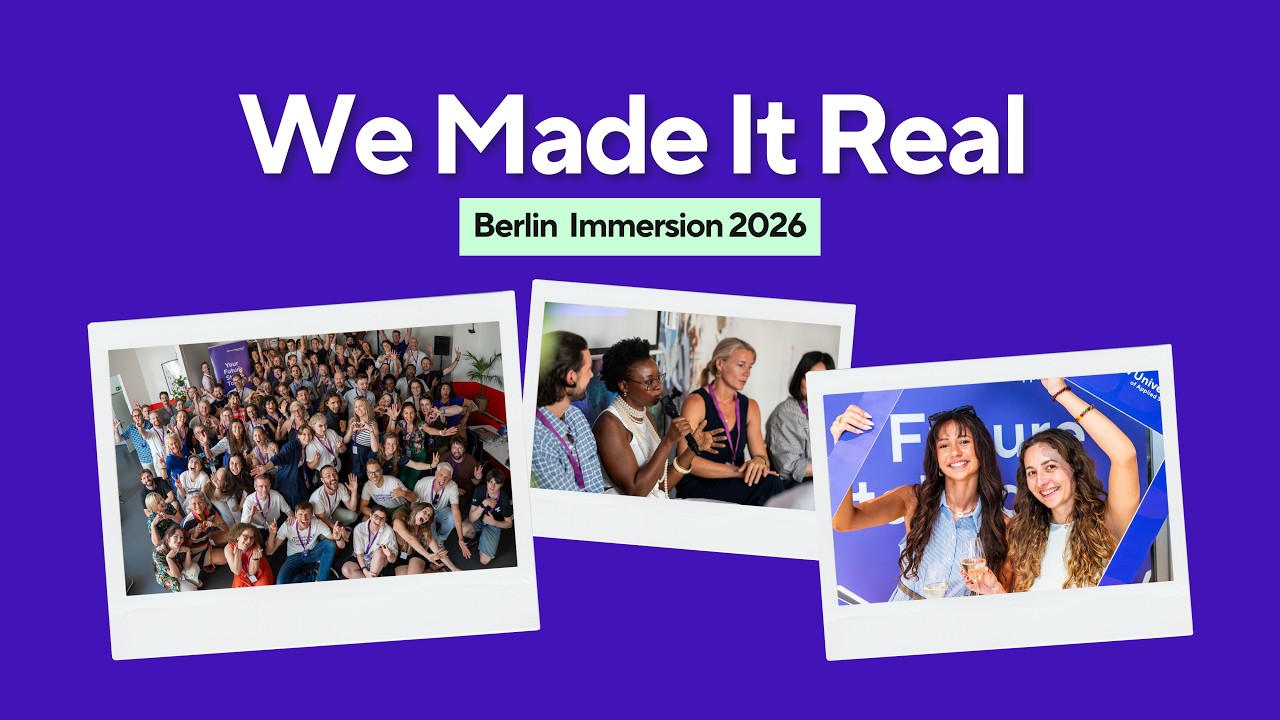
This Is What an Online University Meetup Looks Like 👀 | Berlin Immersion Summer 2026 🐝


This Is What an Online University Meetup Looks Like 👀 | Amsterdam Immersion Week 2026 🦋
Food was never meant to be this complicated. 👀 Student to Founder. #food #entrepreneur
How We Helped Rescue Food with Berliner Tafel 🍎 | Tomorrow University Social Impact Day
Why Most People Are Mentally Checked Out at Work (And What Fixes It) #burnoutstress #mentalhealth


What Comes After Graduation? 🎓 | Learning with AI, Remote University & Berlin 2025