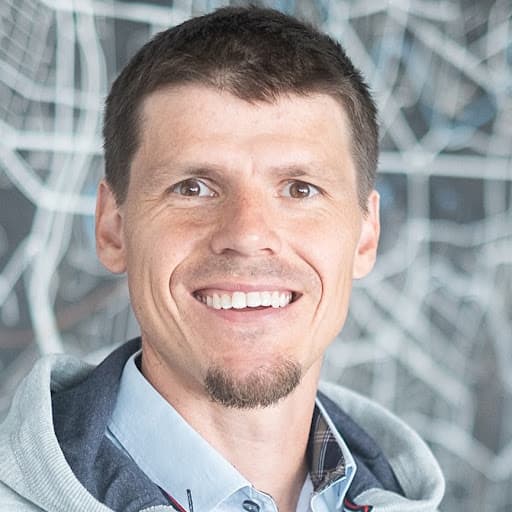
How to Focus Your Mission in the Climate Crisis | Wolfgang Gründinger | Changemaker Insights Ep.10 ⚡

In this Changemaker Insights podcast, host Julia interviews Wolfgang Gründinger, Chief Evangelist of Enpal, a leading European renewable energy company. Wolfgang explains his unconventional role as a chief evangelist, drawing parallels to early Apple evangelism, and outlines Enpal’s mission to turn every household into a flexible prosumer of solar, storage, heat pumps, and electric vehicles. He shares his working‑class upbringing and the influence of his mother, which shaped his work ethic and commitment to climate action. The conversation delves into Enpal’s culture—blue‑collar roots, customer‑obsessed mindset, and founder‑led long‑term vision—contrasting it with typical German startup exit‑focused models. Wolfgang describes the company’s organizational structure, product roadmap (solar panels, batteries, wallboxes, heat pumps, IoT energy‑management, dynamic tariffs, smart meters) and a disciplined growth strategy of “crawling, walking, running” that enabled scaling from 30 installations a year to thousands per month. He reflects on investor relations, including the Leonardo DiCaprio fund, and how a tangible hardware product fuels word‑of‑mouth brand building, especially amid emotionally charged debates like Germany’s heat‑pump legislation. Finally, Wolfgang shares personal leadership lessons: pick your battle, stay single‑threaded, avoid taking everything personally, embrace nuance, and maintain dialogue across political divides. He ends with a wish that everyone would respect the laws of physics and climate science. The interview offers insights into mission‑driven scaling, culture, branding, and personal philosophy for climate‑focused entrepreneurs.
Chapters
Wolfgang, I'm very, very excited to have you today with us. You're the Chief Evangelist of Enpal, one of Europe's leading companies when it comes to really driving change towards a greener society. You're also one of our ambassadors for the Cleaner Earth Innovation. I believe a very great match when it comes to really giving your knowledge to a lot of eager students who want to have a change as well, build their own companies, drive change in their companies. they're working at, and I'm excited to paint a little bit about a picture of who you are, about your journey, about your mission, and of course a little bit about NPAL. And Wolfgang, I would love to hand it over to you to talk a little bit about yourself, your role at NPAL, and yeah, your journey.
Yeah, thank you, Julia, for having me in the podcast. Thanks for having me to Tomorrow University as an ambassador. Well, I started 3 years ago on or 3 and a half years ago at Enpal, which is Europe's most successful renewables company, Germany's market leader when it comes to solar, when it comes to heat pumps. And that even within a few years only with purely organic growth. So 100% organic growth, no M&A activities, and one of the front runners when it comes to the energy transition. So, very happy to work also at Enpal. I worked for the German Armed Forces before, and now I protect the atmosphere, and that's also as good as protecting your country. So, that's quite a good match.
I love it. And you already mentioned a little bit where you're coming from and what also the synergies are to your role you're having right now. And I would love to talk a little bit about your role in specific because I think it's not so common. to have that role, and maybe you can explain it a little bit, what's your day-to-day and what we're doing at NPAD and how you're really helping to make the mission happen.
Yeah, sure. So my official job title is Chief Evangelist, which is common in the tech scene. It's not so common outside of the tech ecosystem. So this job function comes from the 1980s, so it's not a modern thing. It's quite old and even ancient when it comes to startup talk. The first evangelist with a modern meaning of that title was Steve— was Guy Kawasaki, who worked for Apple in the '80s together with Steve Jobs and Steve Wozniak, and who brought the mission of Apple to the customers because PCs, personal computers, were not common at the time. They were quite new. And people didn't even know what to do with them. Yeah. So your parents would tell you, you don't need a computer because what's that for? Yeah.
Mm-hmm.
And so, um, Guy Kawasaki had, had to, to tell people why they need a product they feel they don't need.
Mm-hmm.
Um, and why a PC, and in particular, um, obviously an Apple computer, a Macintosh, would, uh, be a revolution. For the way we work, we think, we live. And I think the same is now happening to energy. Until now, we are just consumers of energy. We have power plug at home, plug our devices in, they charge, they run, they operate, whatever. We go to the gas station with our cars, fill them with gasoline. We have our gas heating at home or our oil heating at home. And do our heating this way. But in the future, we will be prosumers of energy, even flexsumers. What do I mean by that? We produce our own energy on our rooftop. And by that, by the energy that comes from the sun, we supply our household, but we also charge our cars at home. We have never to go again to a gas station because you charge at home.
Yeah.
And you charge your heat pump. So, you don't need oil anymore. You don't need gas anymore. You charge your heating yourself. And of course, you're connected to the energy system. So, also when the sun doesn't shine, you get energy from the grid through wind power and other means. And as the wind doesn't always blow and the sun doesn't always shine, those consumers like the storage battery, Your car, which is a gigantic battery, it's 10 times even bigger than your normal household battery, and your heat pump, which is also a thermal battery. They charge when prices at the stock market or at the market for energy are low, and they sell the electricity into the grid when electricity is scarce and therefore expensive. And that is what I mean by a flexible prosumer because We are becoming producers and consumers, which means prosumers in short, of energy. And we do this flexibly according to the supply of sun and wind power.
I love it. And I also love how you explained it in detail and the whole history about it to really give context to it. And I very much believe a lot of companies should have the role to really communicate effectively what they're working on and why it matters. I think it's a lot, there's so much power in why it matters. That is often not really communicated strongly enough. It's amazing to have that role, Wolfgang, but I think it's a long way to get there. And I would love to talk the last one when it comes to really painting a little bit of a picture of who you are, to talk a little bit about the people that shaped you on your journey to really become the person you are towards today, but also happy to talk a little bit who are the people who really shape you today to really make you the person who you are.
First of all, I believe my mom, obviously. Yeah. I grew up as a working-class kid. My father died on our farm before I was born. And then my mom had to raise my brother and myself as a single mom. And we didn't have much. And so my mom was never complaining, even though we had little. Everything was always scarce. So we had no money, we had nothing. We didn't go on holidays ever. We lived in a little apartment in a small town and, well, didn't have much. But this was never something we would complain about. Some of my uncles died before my grandma now has died at a very old age. And so the only thing my mom wanted is to survive. Raise 2 kids and survive somehow, but never complaining, never saying how bad things are. It's just we don't have money and that's how things are. We work hard to make it somehow. And as far as we can live together, as far as we're alive, as far as we have something to eat and a roof above our heads, it's all fine. Because she knew That it can be different, that life can be over by any accident, that other people, you know, like in our— some in our families, they started drinking or smoking heavily. And so my mom always like was, work hard and survive somehow.
Mm-hmm.
And yeah, that's what I did. Work hard and survive somehow, right? So That's how I came here.
Thank you for sharing. Thank you for sharing the story. And I think those stories really tell a lot about us, how we operate in the world as we do. And that's a very powerful role model and example of that, Wolfgang. For us at Tomorrow, it's a lot about really helping everyone be clear on their personal mission because I believe when you know your personal mission, you have a different way of going through the life of really developing yourself, but also others around you. And in this way, really having an impact. And how would you define your mission, Wolfgang?
Well, my mission is to bring a solar rooftop to every house, to bring a battery into every basement, to bring a heat pump into every garden and an electric vehicle in every garage and connect humankind to a renewable community. Because I believe when people produce their own energy, they will have a different thinking and they grow together again. Now, the trenches in society are apparently getting deeper and deeper and broader and broader. And I believe that renewable energy can also be a means to reconnect people again and to connect them into a renewable community.
Love it. And who are the people who you work with the most to really make the mission happen?
Yeah, Enpal is a very big company. We have a department for every special purpose and task. So, I'm here the ambassador, so to speak. We have a department for grid connection. They connect all the systems that we build to the grid. We have, of course, our sales department. They explain to customers our product and ask them if they fancy it or not. Obviously, we have our customer service department. If there's any problem on the construction site, then they jump in and help the customers because like we are a very customer-focused company. So we do everything that we believe that our customers should have and put every effort into making our customers super happy. So I think it's also learning of any company that is thriving, that you have to think from the customer's perspective, not from your perspective as a company, what you think the customer should have, but on the other way around, be customer obsessed and always ask yourself, What do customers want? So yeah, of course, also with our product team and with our IoT, so with our tech team, because they program the software that we are using to connect all those devices and to connect all those decentralized power plants into one gigantic virtual power plant that is flexible but more powerful than a nuclear power plant.
Yeah.
So it's a very diverse set of people. that I work with. And maybe one thing that is also kind of special about N-PAL is we are a working-class company. So our founder, Mario Kohle, he himself, he's a working-class kid. And I think that is also influencing the entire company culture. So it's not about big chichi and fancy startup thingies. It's a very down-to-earth company. Yeah. Of course, we have a very nice office and you're all welcomed to visit in the heart of Berlin with a nice rooftop terrace and with Club Mate in the fridge and stuff. But half of the company is blue collar. So they are our installers who don't have an office. They go to the construction site, they do their work from the very morning when the sun rises through the evening when the sun goes down. And they are like our, yeah, our A-team, our special forces, because what would we do without our installers out there in the field? They have the touchpoint to the customer. They go on the rooftops, they go in the basement, they go in the gardens and install our energy systems there. So, it's very much also influenced by our blue-collar workers.
I love it. And I think there's so much blue-collar workers and working-class people embody when it comes to really working hard and having the right values to really build great companies. I think there are a lot of great examples out there. Mario's one of them, but there are many, many more out there. And from really your mission and who you work with to really make it happen, how do you make sure that the whole company, especially as it gets bigger, is really strongly connected to the mission? And everyone, really every single individual, no matter in which department, is really working into that one and also getting motivated by it because I think there's a lot of motivation on an individual but also team level to come from really having that mission top of mind.
Yeah. Good thing about N-Parl is that we do have a mission at all, right? So, many companies, they have to make up a mission somehow, right? So, If you are like any random company XYZ, they have their brand building and employer branding processes, and then they come up with any random mission, right? To kind of try to gather their employees behind any blah, blah, blah mission statement that no one would even know if you ask the people and they couldn't say what the company stands for. That's very much often the case, but it's not the case at Enpal because it's obviously what we do. And this is why people even apply for us, write us, because we want to change the world. We want to achieve the 1.5 degrees Celsius goal of the United Nations, at least as far as we can as humankind. And we want to— we have a hardware product, so it's very tangible.
Yeah.
We also have a system here in our office so that people like our employees see it every day that what we are selling, what we are doing, it's a hardware product. And I don't know if you've seen a heat pump and a storage battery in your life. Most people haven't. And then they wonder, wow, this is how a heat pump looks like. This is how a storage battery looks like. Oh, batteries that small.
Wow.
Okay. It's not even like, it's like a, Just like my packages that I order online are always bigger than this little battery. And that lasts for 2 days? Wow. Okay, cool. So it's very tangible what we do and very clean, obvious what we do at Ampol. And so it's kind of easy to gather behind that mission. And everyone knows when he or she gets up in the morning and looks into the mirror, Why we do this? Because we want to protect the climate. We want to bring down CO2 emissions. And we want to make our customers independent from fossil fuels and save money, of course, for customers, because that is why many people do it, why they switch from the old fossil world to the renewable world, because they say, okay, I can save heavily on on my expenses for energy, I get independent from fossil fuels, and also do something for our kids. That comes on top. And so if we help our customers to get independent from fossil fuels and to protect the climate and do something good and making money from it, I think that's a very good mission. And that's why everyone here is so convinced and so happy to work for Ampar.
I love it. And we talked a lot about mission now, which I love to do, but let's talk a little bit about NPAL. I mean, we talked just about your mission, but let's have a different angle on it. And one of them would be, how did NPAL develop over the years? Like, how did your— what you're working on, your vision change? Because I think from an outsider perspective, right, there's quite some change happening and a lot of things are launched. And when it comes to really products, but also markets. And I would be very interested to hear how it's developed over time.
Yeah, Ampare started as a very small company. In the first year, we installed only 30 systems or so in one entire year. Now we are building 2,000 or 3,000 solar energy systems per month instead of 30 per year. So it grew exponentially. And we don't do only solar. We started with our MVP, with a minimal viable product, which was the solar energy system only, just the photovoltaic system, nothing more. Then we added the storage battery. Then we added the wallbox, which is the charging station at home for your electric vehicle. Then we added the heat pump. Alongside, we developed our own energy management system, which is a lot of coding because it needs AI, it needs a digital platform, it needs an IoT ecosystem. Then we launched an electricity tariff that is dynamic. So we buy at the energy market intradays or every hour. We buy energy when it's cheap and we bring it to the customer. Then we also now install smart meters. We are the biggest installer of smart meters in Germany. So all of that was always the vision where we want to go, but we started little because if you don't know what you're doing—
Right.
Because you haven't done it yet, you have first to try it out. So we call that the principle of crawling, walking, So you start little and test out everything and make all the mistakes possible to learn how not to do it. And then you find out a way how to do it. And then you can walk and try it out on a larger scale. And then you can scale it crazy, crazy. That happened, for instance, to our heat pump department. So in 2022, which is like 2 years ago, we started with our heat pumps. We sold 100 heat pumps in the first year. Next year, 2023, we installed 1,000 heat pumps. This year, we are going to install a run rate of 5,000 heat pumps, which makes us then the probably biggest heat pump installer of of the country. And that's how we do it because if you don't do this, if you don't start slowly and make all the mistakes possible, then you make the bigger mistakes while scaling and then your customers would suffer because of all your mistakes because you can't control the processes. But if you learn first for a long time, and then you scale exponentially, then you can grow fast and with high quality and with high customer satisfaction. So growth in quantity and improvement in quality and customer satisfaction go hand in hand at Ampower. And this is how we approach that.
I love also the principle you shared, which is about crawling, walking, and running. I very much believe in it, and you often hear go slow to go fast in the end. And I think there's so much about really learning and then really scaling as soon as you have made those learnings and you can really ensure the quality, but also the growth at the same time. As the chief evangelist, it's all about also communicating to the outside world, right? And you have quite some renowned investors on board. For example, one, you have the fund of Leonardo DiCaprio invested and How much, um, how do you think do those people invested in Enpal, what's the impact on how people in Germany but also, um, outside of Germany perceive Enpal?
Yeah, uh, this was a nice newspaper headline that, um, that showed a picture of Leonardo DiCaprio and, and then above it like, uh, Leonardo DiCaprio invests in Enpal. I don't know if he has ever heard of us, honestly, because it's just, it's, I mean, it's just a fund, quote unquote, that is supported and advised by DiCaprio. But I'm not certain if he knows that we exist.
Hmm.
But of course, that was a nice headline, the DiCaprio company, so to speak, right? So that helped us in our image and reputation. But I like, um, he's always welcome to visit us if he hears the podcast. Hey Leo, we are here. Come by. We have coffee. Uh, it's bad coffee, but we have coffee. Uh, so, so come along.
Yeah.
Um, but obviously you need investors at first. Um, and, um, Mario, our founder, he put in all his, his money from his first startup that he sold because he sold his first startup after 10 years. only to found NPal because he wanted to do something more meaningful to him. And this is why he put all his money that he made from his first exit into NPal. And this is now his life mission. So he won't do anything else anymore in his entire life. And that's also a philosophy that we have, that I have, for instance, that this is not something you would go off, like leave after 2 or 3 years to do something else because it's just like one stop in your life, like one another step in your career. This is what we do for our lifetime mission. I'm here now for 3 years. I will be here many more years to come and maybe until I retire, maybe even then. Let's see where it goes. But I will be here for a long time. And this is also what shapes the company's culture. Either You learn very fast that you don't want to be part of it because you imagined it differently. And then you leave the company or you stay with the company for a very, very long time. And that's also what our investors, if you're asking from our investors. So we don't want a short-term exit. We are not seeking for the IPO next year. We are seeking for the long-term market leadership, the long-term profitability, and IPO is just one option on the table, but not what we are actively preparing at the moment. And that also makes us different from many other startups, in particular from the first wave of startups in Germany. that were just built for being sold or built for the quick exit. And then, you know, you are a founder, you make a startup, it can be anything. It can be like the Zalando for goldfish or like the X4Z, whatever. And then you sell it and then you're out and then you go, then you do your next thing, right? And this is not the case at Enpar. We want to build the largest renewable company in Europe and we are in here for the long run. We are here for the endgame of energy and we want to avoid climate change. And so that makes us different from the culture of many other startups where the founders have just thought, okay, this is something I can make money with. Excellent. So I do it. And after a few years I go out and sell it. That's not what happened at Ampol. It's also still founders-led. So the founders still have the majority of the votes. So we cannot be pressured by investors. Of course, you wanna have a good relationship with them, and we do have a good relationship with them, but in the end, it's the founders who decide, and that's also very important for us. It's a bit like the Mark Zuckerberg rule. Maybe I tell this little rule, and then I give you the floor for the next question. So did you see this movie, The Social Network?
Yes, I did.
Yeah, and there was this one little scene in there he's in bathrobe and goes to his investor and just puts a business card on the table, which says— That's a picture in my head. I'm the CEO, bitch, and then leaves again and drives off. And why can he do this? Because he has majority of votes. And we would never go in a bathrobe to our investors and put them like a kind of stupid and Post puberty business card on the table. That's not our style, but just the thinking behind that is you have to have the say in the company because you are at the steering wheel and you know how the energy market is. And this is why we believe that that's what what is best for the customer is also best for for us and is best for our shareholders.
One percent little. What I, what I love here is the long-term game. I love the saying, play long-term games with long-term people. Like really find your people you wanna work with and really do it over the long term. I think that's where the great things happen. And before we go into the quickfire, which is a very short, the shortest part of, of the podcast, I would love to give you one more question, which is about your personal learnings over the past 3 years. It can be just focused on Enpal. It can be maybe focused on your, also the years back, the roles you had before Enpal, but I would love to have. One or two learnings you had when it comes to really strong communication, really building strong brands, especially to the outside world?
Yeah, how to build a strong brand. I believe that also the brand comes from what you do. If you are successful, then the brand will come alongside with it. And after building like 70,000 solar energy systems in a few years only, with many new happy customers, tell your story to their friends, to their family, to their neighbors, that creates this, the word of mouth. And then of course also when you do something new, right? And when you go into the heat pump sector, for instance. Yeah. And that's a very emotional topic for many Germans because we had a, a very heated, oh, heated debate. Okay. You can even say that. Yeah. A heated debate about heating systems last year because the government enacted a new law and that was very controversial. And so a simple technology, a heat pump, which is just a heating system, right? Turned into a very emotional topic. And if you as a company do something so emotional for many people, like unbelievably emotional, like after this controversial debate about this new law by the German government, and people look at you, then because you are one of the few larger companies, and now probably even the biggest that installs that thing. And so this is like the brand comes with itself then. If you do good work, then people will hear about you.
That's very, very true. I think that's the biggest predictor of how strong a brand can be in the end. And moving towards the last part, which is a little quickfire questions. Question part. I would love to learn from you, Wolfgang, what's the best advice you have ever received?
Very, very— Oh, best advice. That's a tough cookie. But maybe just to manage my daily schedule because I have a manager schedule, which is like every half an hour I have a new appointment and it's super stressful and things change every day and the market goes up and down, regulation of policymakers goes up and down and here and forth. And also problems in the company. You see all the problems in the world, in your country, in your company, obviously, but you can't solve them all. So the advice is maybe pick your battle because you cannot resolve all the problems. We also— and Paul, I mean, there would be other problems on the earth, right? So there is plastic pollution, There is overfishing, there is gender equality, there is, and so forth, right? So there are so many problems on Earth, but you cannot solve them all. We decided to go for climate protection to avoid some gigatons of CO2. And if we can do that, then we are part of the solution, but all the other problems, We have to leave to someone else. And the same also holds for me as an individual person in this company. I can tell people, hey, look, here's something we should resolve because it's not going well. But you yourself, you cannot solve all the problems. You have to limit yourself to what your task is and be the responsible single-threaded leader for this one particular task, but also make sure that other people, they are there for their particular problems to solve.
I love it. Pick your battle. I think it's a very true one, especially when a company develops. I think it gets even more important than in the very early days. The second question would be around what's one lesson you learned on your journey? Can it be the same? You can just say that's the advice, I just shared my number one lesson and turned it into advice, or is there Any other lesson that you say like, hey, I want to share it?
What will help me a lot is not take everything personal and don't think in black and white. So not in 0, 1, so not in either or, but recognize the many shades in between. Yeah. Because often you need support from someone and then you have your personal fights with him or her, or maybe policymakers too, right? You might be in a very deep disagreement with some policymakers because they do just plainly the wrong thing. But as long as they are in the democratic spectrum and respect the rules of the game, I think you should stay in touch with them. Yeah. And I think we in Germany have a bit unlearned how to have societal dialogue across the political spectrum. Also, the US, obviously, they have forgotten how to do this. But a few years back, just look at John McCain and Barack Obama. How they had their presidential debates and how McCain, even when Obama was not present, treated questions of some Republican voters at party congresses. How he even defended his opponent and saying, no, no, no, no, no, no, no, no. Excuse me, ma'am. No, Barack Obama is not an Arab. You can trust him. He's an American citizen. It has nothing to do with being Arab or not being Arab. He's born here. He's a good family father. I just happen to have strong fundamental disagreements with him. And that's about it. And if you cannot have strong disagreements anymore, but still talk to each other, I think that society will break apart. And I want to unite and not divide.
Very strong words. And we already at the final question, which is also a tough cookie. If there would be one law—
Only tough cookies here.
Exactly. Would everyone really stick to, what would it be for you?
Yeah, well, some, some one law that is, that is applicable worldwide. Well, I think it would be enough for me if everyone would respect that there is something like laws of physics. Because some people even argue that climate change doesn't exist or is not manmade or is not bad for humankind. And it's all good after all. Well, if some people were to respect the fact that there is laws of physics and you have some evidence for climate change and that we are getting hotter and that this is bringing catastrophes worldwide. I mean, if I can have that one wish, that would be enough for me. Yeah.
Amazing. It's already a big one, to be honest, but an amazing one. Wolfgang, we are already over time here. Thank you so much for the great conversation, for giving all your insights, but also a lot of principles. And it was just amazing to listen to you and really understand how you think and what really matters to you. And I'm excited for another, maybe deep dive in one or the other topic in the future. But I think we give everyone an impression of who you are, what Empath is all about. And yeah, thank you so much for the conversation and looking forward to having more in the future. Thank you.
Thanks, Julia, for having me.
More from Christian

What Comes After Graduation? 🎓 | Class of 2026, Berlin & Building What’s Next
This Is What an Online University Meetup Looks Like 👀 | Berlin Immersion Summer 2026 🐝


This Is What an Online University Meetup Looks Like 👀 | Amsterdam Immersion Week 2026 🦋
Food was never meant to be this complicated. 👀 Student to Founder. #food #entrepreneur
How We Helped Rescue Food with Berliner Tafel 🍎 | Tomorrow University Social Impact Day
Why Most People Are Mentally Checked Out at Work (And What Fixes It) #burnoutstress #mentalhealth


What Comes After Graduation? 🎓 | Learning with AI, Remote University & Berlin 2025