"I Get It" Just Lost Him $6K (Fitness Sales Call Breakdown)
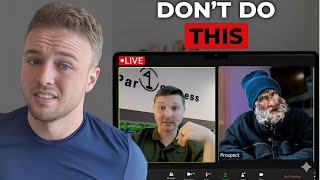
Christian Polk breaks down a sales call where Nick loses a $6K golf training deal. The mistakes: accepting surface answers during discovery, failing to create doubt about the prospect's current plan, and rushing through objections instead of tying the program's value to real outcomes.
Questions this video answers
$6,000
67
21 handicap
12 months (one year)
This closer just lost a $6,000 golf training deal because of one simple mistake that 99% of salespeople make every single day. Look, if you're getting the I need to think about objection or you're having a hard time getting prospects to open up to you, or at the end of the sales call they're telling you it's more than what they expected, then you're probably running into the exact same problem Nick had on this call that is costing you thousands of dollars each and every month in commissions. Now, after helping hundreds of students go from 5 to 40k per month and having students close over 90% of their sales calls, I can tell you that this one discovery mistake is what separates average closers from the elite ones. So in this sales call breakdown, I'll show you exactly how Nick was accepting surface level answers instead of creating doubt why this actually causes 67 year old golf prospect to get defensive. And the circle secret lottery ticket reframe that will cause fitness prospects to admit that they are the problem and they don't have the right plan in place. So let's dive into Nick's call and I'll show you the exact moment that it goes sideways.
Speak. That felt like I should have closed. Every time I kept kind of digging deeper into like why it was important for her to solve her problems, she basically kept like kind of brushing it off where it was kind of like she'd give me some real pain and then she'd be kind of like, eh, you know, I don't really know why it's important to me and things like that. And so obviously got some objections at the end. Would it be helpful for me to just pull up kind of at the end of the call or what would be best for us to kind of like evaluate that.
Let's take a look at the beginning a bit like when it's coming up, we can, we can look how we can break that pattern and then let's take a look at the end. Okay, cool. You just want me to share my own. What exactly do you sell?
Yeah, yeah, yeah. It's golf fitness. So through remote coaching, helping people get out of pain, play better golf. I found out that our mechanism yesterday is that we are custom and we are specific to each person. So let me go ahead and play it.
Yeah.
You know their names by chance?
Tom. Tom. Worst is one.
Okay. Yeah. And she was saying she knew some people in the program. I think she was talking about a different company because these people who weren't working with us. So I Just kind of, like, rushed over. I was like, oh, yeah, I know those guys.
Yeah. Like, we chat all the time.
That's awesome. I'm always kind of curious. We have so many golfers in Florida, you can imagine, and California. We're starting out baseline wise. Talk through some of your goals, and then towards the end of call, we feel like there's some things that we could help out with. We could talk about some, like, next steps that sound good.
So I'm a 21 handicap. I started playing golf three years ago. My husband is a 7 handicap, and he loves golf. So that's why I'm playing and 100%.
And we can definitely get into all that for sure immediately.
Yeah.
Now, what you should do, because, like, here's a bit of the issue now, just for everyone's context, like, Nick sells to a very older audience that do not hop on zoom calls. So a frame really helps him.
Okay.
So I know I say sometimes, like, hey, don't use frame to, like, somebody who's like, hop. Like, these people, like, they're not hopping on fuck calls. So it's like they need a little bit more context. So. But at the end of the frame and we can just go over, like, possible next steps. So I have to start off by asking or, like, does that work? And I have to start off by asking, like, you're immediately into, like, the next thing. So you don't really give them a lot of space in between now if they do, because, like, what they're doing, it's not like it's. It's bad in any way. It's like they're literally like, oh, let me tell him everything, right? Like, let me help him. You know what I mean? Like, it comes from a good place. But let's say they do start talking about it as soon as. Oh, yeah. Like, as soon as there's a little open. Oh, yeah. We'll definitely cover, like, all that for sure. Like, I am curious, though. And then we're on to the next question. Like, what particular help were you actually looking for specifically in terms of your golf game? Right on point. Because if she, like, blabs on, we're gonna have a hard time. Right? You know what I mean?
Yeah, yeah, yeah, for sure. Okay, cool.
I'm trying to get better, you know, the better better. And I notice for me, when I'm playing, it's hard for me to get greens in regulation because of age. And so I thought if I could. I noticed when I do hit longer drives, it's so much easier or even my second shot. It just makes things so much easier because I'm not trying to hit 150 yards into a green. It's for a woman, it's hard. So.
Yeah, no, I can understand that. Okay, and then how old are you now?
67.
67. Okay. And you know, roughly clubhead speed right now with driver.
Now something. Did you pick up on it?
He said at the end it can be tough for like women.
She also mentioned because of her age.
Right.
Already, like in the first sentence, she's blaming her age and blaming her gender. Two things that you're not gonna help her with. You know what I mean?
Yeah.
So it's like I. I know I, like, I probably want to address that like right then, but I know at least I gotta ship these things that you have. You know, it's like, you know, we have women that, you know, like some of them are in their 80s doing X, Y and Z. But what do you feel like stopping you from being able to do that? Right. Like you need to be able to debunk that. You can tell like she, she's justifying a bit like already. So there probably is a slight ego when it comes to it, or at least not wanting to accept fault that this is like her fault.
Yeah, definitely. And I mean, there was definitely some of that for sure. I think I was trying. So we've got a database of a bunch of golfers. So the way that I typically like cut through that is I get their percentile for their age range and their gender. That way I can tell you it's like, hey, it's not cause you're old, it's not because you're gender like you are in the 8th percentile. So I. I know what you're talking.
About though, because when do you typically do that, though?
So typically that's when I'm running through like the mobility assessment. So I'm starting to put holes in their mobility. Yeah, it's relatively early on. Good. Yeah.
Okay, good, good, good.
Yeah, I can skip a little bit because. Let's get further. And then a lot of times people like blame like knee replacements or like shoulder replacements. And it's like if you just got em replaced, they should be working like they're brand new. So I think I kind of walked her through that. So like to your point, she's giving like a million excuses around it. Yeah, yeah, for sure. And then I did hit on the point. We got people that are 80, 90 years old going out there and playing maybe like right here. And then we can see. And now I can go to the end.
I hadn't done it for a couple weeks. I did it this week. But yeah, I do that. We have a TRX here, but I don't use it as much as I should. So. Yeah, I don't know.
I see where you're coming from. Okay, what maybe, what maybe shifted for you recently to where, I don't know, kind of looking for help.
Because if you go back, it looks like you asked like, hey, what's missing with what you're doing? And she has told you what she is doing. Right. Or no, like if you go down, that's it. Like just a question you asked before. Right back just go to the question you asked before of what she just said.
Oh, back up. Fair enough.
We have 80, 90 year olds.
Yeah. So anything else they're doing? Exercise, potentially add on clubhead speed. Okay.
So you're, you're, you're still in her situation.
Yeah.
Okay, so when you use like the comparative frame, it, it should be to like you want to ask like more of like a doubt question. Like, so what do you feel like is missing with your current regimen that's preventing you from doing that? Yeah, because like again, you want her to take ownership of the problem because you're like saying like, hey, we have these people who have like solved this problem and they are older than you are. Right. And they don't have this problem. Like what do you feel like is missing that's causing you to still have this problem?
Yeah, okay.
Right, that's.
Yeah, that probably would be.
That's where we want to gonna create doubt. So it's more about the question on the back end of that. Cause all then she just told you like, oh, like what she's doing. We didn't cause doubt. And like what she's doing now what you could do at the end of that is ask at the back end. Okay. So why do you feel like that really hasn't been able to get you XYZ result?
Yeah. Right.
Like I think doubt in our current situation.
Yeah. So in my mind, I typically use that one for when people are actually being religious about sticking to things. For her, she was like not sticking to things. Even if people aren't putting in the work or saying whatever, still go down that path because at least they're gonna, at the worst they're gonna say, well it's because I'm not like actually putting the work in. And then at least be like, I don't want that. Is that right?
Well, why Aren't they putting the work in?
Yeah. Yeah.
Okay, like you tell me if you had a lottery ticket, a billion dollars, and all you gotta do is go, just go cash ass sucker in. Are you gonna fucking cash it?
Yeah.
But if you knew you had a losing lottery ticket, what motivation do you have to go try to cash it in? Hey.
Yeah.
So it's like you just need to dive into it. Well, Well, I just haven't been, you know, adhering to it. Oh, well, why haven't you? Well, can. Can I make a suggestion? What we see oftentimes is people who like, really don't stick to plans. It's because like, deep down they don't under. They don't really feel like the plan like, has been working for them. Like, for example, like, if you knew you had a winning lottery ticket, like, how motivated would you be to go and actually cash it? Right. But probably pretty motivated. But if you knew you had a losing ticket, there's no motivation there. So what do you feel like is missing with like that current plan that makes you feel as though, like, you know, we don't have a winning lottery ticket, so we don't have the motivation to actually use it. So I'm shifting the meaning of, oh, I'm just not motivated to do it into, well, the reason you're not motivated is because you know deep down it doesn't work.
Yeah, okay.
I can.
That's interesting, man.
You can address like, hey, you have accountability. It does address a little bit of the motivation. But when you're really wanting to create doubt in the mechanism, you want to like, change the meaning of, like, well, the reason you don't have the motivation is cause you don't think it'll work.
Yeah, yeah, that makes sense. And then let's say like when we're outside of this portion where we are focusing on creating doubt around the mechanism, let's say we're in a part of the call where we're trying to dive into like motivation to like actually like make a change that's just kind of going more into pain, consequences. Yeah, things like that. Right.
Because like when I'm talking about like future pace and you can even like sprinkle this in to your presentation. Like, hey, you talk about getting quick wins basically, right? Like, hey, and like we're going to like do this, this and this. It's going to give you quick wins. That's why like, everyone who jumps in, like as soon as they start seeing moving in the right direction, like, they're so motivated to actually do the rest of it. Right. So it's like what that means for you is like we're not going to be sitting knowing like, hey, this is lottery ticket.
Right.
I'll bring back up the example. Is this lottery ticket, is it a winning one or a losing one? We're going to know right away it's a winning one. So you actually have the motivation to do it.
Yeah, dude, that's Love that, man.
And then like she's cooked. Yeah, she's, she's like, oh, okay, right. I want a winning lottery ticket. You get, I mean, so that's a real, real easy one you can do. Hopefully this breakdown is helpful. And if you want to work with me one on one to two to five extra sales by selling to identity, check out the first link in the description. Let's keep going. What you can do is like if people have lack of. And this, this is specifically like for fitness, but you can do it like biz op offers or really whatever it is you're selling. If they tell you they have a lack of motivation, it's because deep down they don't think it would. It works.
Yeah. See my first thought is that like it's not important enough to them, but I guess if they're on the call, it's important enough, right?
Yeah, like if they're on the call. Well, it's like you can push like the importance of like if you, if you dive deeper, like you know, further on the call. Like. Because right now the way I'm thinking about it is I need to create doubt in our current mechanism. First I need to create pain and then I'm going to go into like limiting beliefs.
Yeah.
Because as, as far as like lack of motivation. Because here's why I don't want that to be the limiting belief. Because like if I tell them like, hey, you just need to get more motivation and just do it. Well, guess what? That doesn't require.
Yeah, yeah.
Coaching you guys. It doesn't require the mechanism.
Right.
Like they don't need you. So it's like you want to create doubt and I don't want motivation to be the limitation. Like maybe not priority, maybe not. Like motivation to get individualized hands on help. That can be the limiting belief that I'm then going to attack. But just lack of motivation by itself can't be the limiting belief because it's like, oh, well, I guess I'll just try harder. Thanks Nick. You know what I mean?
Yeah, yeah, yeah, yeah, Fair enough.
I'm really, I'm really motivated now. That you had this chat with me.
Yeah, yeah, yeah, for sure. I'm trying to see where I go in the pre handle because that actually could be kind of good because I'm sure I botched that with this one, too. This is a bad call.
Not a bad call. Just a call with a lot of learning moments.
Yeah, man, for sure.
Reframe your mind, bro.
It's. You watch Rick and Morty at all?
A little. Like, not any of the later episodes. It's kind of what the show.
Hey, man, stuff's pretty decent, but that's just me.
I watched, like, the first. Well, it's like, now I don't really have, like. The only TV I watch now is just, like, TV shows that I've, like, been watching since I was a child because I want to turn my brain off. So I watch, like, psych, and, like, I have. I have a fiance who's, like, not from the U.S. so it's like, I get to, like, reintroduce these shows, and I'm fine watching the same thing over and over again.
Yeah, no, that's. That's how my. Yeah, that's how my wife is.
Yeah.
Yeah, I love it. Yeah, she can watch the same thing I repeat for forever. Okay, so here's where I get into pre handling. And what's maybe prevented you to, like, you know, get some outside help with this and, you know, so you can start working on some of these things?
I don't know. I don't really.
Also, I'll just pause. I gotta get so much more specific with those questions. That's.
Yeah, working on some of these things. Like, hey, what's preventing you of getting, like, professional help so you could get outcomes.
Yeah, exactly. All right, I guess why is it important for you to do this now, though, then? Rather just push this down the road like another year or two. Right.
Okay. So she said, well, I don't. I don't know. I don't know. Well, if you really thought about it. Yeah, just right there. Well, have you really thought about it? Like, just lean in, like, hey, what's going on? So have you really thought about it? Anytime somebody tells you, like, I don't know to a question, we don't just accept that. Well, if you really thought about it. Oh, I don't know. Well, if you. If you did know, like, what would it be? You'd be surprised how well that works. Yeah, it sounds so stupid. It works every time.
Okay, if they come back and say, I really don't know, would you just double down again? Say, like, okay, well, if you had to think about, like, just internally.
Yeah, like, if you had to think about, like, internally, and then, like, if she says, like, oh, yeah, I just really don't know. Well, it's like, do you. Do you feel like that might be part of the issue that we're running into right now? Because if we have, like, all this pain now, that's why, like, really getting good problems is important, and making sure we create doubt that they are the problem. That's all really important, because if you do get pushback right here, you need leverage. So, like, if we know, like, we're running into all this pain, like, why don't we know what we've. We haven't really tried to solve it. Like, what's going on? Like, I'm confused. I'm befuddled. Like, what? Yeah, like, dude, like, you know, like, the Mr. Krabs meme, where it's like, everything's moving. You're like, oh, what's going on? Right. Like, I'm confused. I've never heard this before. And it causes, like, again, it's like, it causes them to, like, question themselves, and it doesn't come across as, like, confrontational because you're like, what's going on? Like, if you tell me, like, you know, you're in pain and you can't do what you want, but you haven't tried, like, you don't even know why. You haven't even tried to get help.
Like, what.
What's going on?
Yeah.
And then they'll. They'll come up with something. They're like, oh, I just never thought it. Like, you'll probably get. Well, I just never thought about it. Oh, so, like, we just never made it a priority? No, not really. Yeah. Can I make a suggestion? Can you see how, like, you not thinking about it or making it a priority is kind of led us to be in the position we're at right now, like, you know, having this pain and. And really not be able to, like, get more, you know, distance on our drives. Are you okay with me saying that? Oh, yeah, I'm okay. Well, and if you had to think about it, because I know it's hard to think about, but if you had to put a cost to that, like, us not making this priority, like, us continuing to be in pain, us not actually solving this problem, like, what does it actually cost us? In the past 10 years, this has been going on, if you. If you really had to put a cost to it. Okay, so is that way of thinking worth keeping? Like, Moving forward, if we actually want to change, why isn't it? And then I'm going to bridge into identity. And the reason why I ask is like, yeah, we can tell you exactly everything to do. Like, yes, this is skills, knowing what to do, but it's also like being a better person, like being the better golfer. Because if you're that golfer, you know that's out there, that's like hitting yard. Like you have more confidence about you. You're not, you're pain free. You know what I mean? It's just right now with what we're doing and just what we're prioritizing, like we're not pain free or not able to hit it the way that we want. Like, is that right? So I have to ask, are you okay being the person that you have been? Because you are on the first one. Hey, just keep doing what you're doing. Well, why not? And then naturally, as we like grow into the person we need to be, we have to let some things die. So what do you need to let go of in order to step into that pain free, confident golfer? If that's what she really wanted. Right. So I'm just, I'm being a little bit generic because, like, I don't know what she really wanted. Like, like, what do you need to let go of? Why that, what happens if you like, don't let go of that and this continues to get worse for the rest of your life? Like, how's that going to feel? Don't allow that to happen.
Okay. And then move on. Yeah. Okay. And then. So that actually brings up a really good point. And that, that was super helpful when I dove into because I just had a guy this morning where it was like a priority thing. So we kind of went down that road. Not as good as that, but like still kind of got to a point where like he knew he had to like make this a priority if he wanted to change. I went straight into consequence because it's just flows super easy from there.
Yeah, it's like, hey, what, what happens.
If we don't though? Went down that path he knew couldn't play golf, blah, blah, blah, blah, got some good consequence. And then it was like at that point in my script, I kind of just skipped over future pacing. Okay. Is that like, is it imperative that we.
You can't, you can, you can.
Right now it's like pre handle. It's like free handle future pacing. And then consequence is the way that I have it, like structured. So like if I went into consequence directly after Pre handle. If it just flows really nicely into that, would it make sense then to paint that picture of future Pacey and then go into presentation?
Yeah, yeah. Like, ideally I get both. So typically I'm asked like two really big consequence questions. So the two big consequence questions are like the first one, like, after I get the limiting belief.
Yeah.
You flush it out, tie it to a cause, and then typically I'll go through identity. But you saying like, hey, not going through identity right now, just more like going on consequence, which is fine. Okay. And it all comes down to like your comfortability in the conversation. So I'm gonna get that one there. And I'm a consequence on either the limiting belief or their identity. That's the first big consequence. Then I love fully painted out and future pacing. And then I'm consequencing. What if you never get everything you ever like, everything that you wanted? That's a, that's a different consequence.
Yeah. So, okay, maybe I understand like the, the two different types of consequences there. One around the limiting belief and identity, and the next is more tied into like, outcome essentially, and then emotional tangible from there. I feel like when I do the first one, like, I'm getting some sort of outcome from that. Okay. Do you know what I'm saying? Like, it's like, hey, if we don't prioritize this, we don't let go of it. We don't become the person that actually takes action on this. Like, where does that put us? And then it's like, hey, I can't play golf, I can't do this. We future pace. And it's like, I'll be pain free, I'm playing my best golf. And then I go. If I go back in a consequence and say, like, you know, nothing changes. You know what I'm saying? Yeah.
Here's what you can do so we can shorten the consequence. What I mean by that? So it's like, if I never prioritize in a year, two years, three years, I'm gonna never play golf again. So what happens if next week we're still in pain and we're out on the golf course? Like, how is that gonna feel like so your second consequence? Because if we can, right. If we get a really good, like, you know, in the future consequence, like, fantastic. I always want to bring it to the present as well. Hey, man, like, what if you, like next week you go out in the golf course and like, you're feeling this pain and you know you're not performing well, like, how is that Gonna feel?
Yeah.
Like, I want to bring it a little bit more to, like, the present. So it's like, I want to shorten the timeframe on them feeling pain because they. If they don't do anything about it, and if they golf next week, I want them to vividly picture that in their mind. So that could be a good second consequence. So you can even frame it up, like, I know we talked about, like, the personal story and different things along those lines. You can even, like, frame that up, like, with your personal story of, like, your consequence, like, not being, like, you couldn't, like, play golf anymore. It's just, like, it could be more like, you just being sick and tired of feeling pain every single time you went on the golf course. So I gotta ask you, man, like, what happens if, like, not a couple years from now, like, what happens, like, next week if we don't do anything about this? You go on the golf course and you just. You have pain. You can't do this. Like, how is that gonna feel?
Yeah. Okay, that makes sense. Yeah. That would push urgency up a lot, too. And then looking for, like, a commitment to change kind of after that second consequence, where it's like, are you gonna allow. Takes ownership?
Why not?
Who?
Like, who's responsible? Or, like. No, who's responsible or who allows it?
Right.
Who's actually responsible if that happens or not? It's time to make a change. Why now? Like, this is the normal ones.
Cool. All right. Sweet, man. Super helpful. Is it okay if I show the objections? I don't. You know, I mean, let's.
Let's dive into that.
I mean, clearly, like, this is why they all came up at the end. I can't even.
No, it's good. It's good to get, like, both ends of it. Because if you really dial in the objection handling, like, you can make up for, uh, some things you missed in discovery. Because, like, honestly, bro, like, you're never gonna get, like, a hundred percent, like, perfect sales call. Like, this is, like, something, like, even with, like, my most seamless sales calls, like, I can pinpoint a few. Like, oh, shouldn't that better? That better? That better? So it's like, you can still make up for it. So it's just understanding, like, what your strengths are and really leaning into it and just making sure, like. Cause, like, right now, I know you said, like, so you've been leaning more heavy into discovery and, like, not getting as many objections or making them easier. But if you, like, you improve your objection handling, then it's like, you're able to get more of those people that, for whatever reason, weren't able to do it in discovery. So we want to be working on both ends.
Yeah, that makes perfect sense. Yeah. Okay, let's see. So I think this is where I tie up value, and then before I kind of dive into, like, the investment, what that looks like there, you feel like this could be the solution for you to get from where you're at right now to get to where you want to be.
It looks like it has good, good exercises for golf. That's what it looks like. But the word investment scares me.
Yeah. Well, did you think if I told you we could do all this, did you think it'd be free?
No, no. But investment versus cost is. Is a difference.
Okay.
Okay.
Yeah. I'm happy to dive into the cost. Right. To put it in nicer terms for you, you can see this.
Like, I want to. I want to buy into a frame. Like. Well, do you know the difference between, like, an investment and a cost? Like, an investment is an outcome, or you put something in, you get something out, like a cost. Like a car costs something. Right. But you have investments because it gets you a. Right. So do you want something just cost something, or you want something to get you a return? Right. That's exactly what we get. Right. So the investment. Right. I'm sure you very, very rarely run into that. It's very rare.
That being said, though, that's pretty. Yeah, I didn't even notice that. So, yeah, that's.
And then we just, like, we just bought into our frame. Anytime somebody challenges my frame, like, I just. I'm a double down. Like, listen. Yeah, right.
Yeah, yeah, for sure.
You always do it like, you know, you have the composure. You never take anything personally. Well, it's like, hey, well, can I show you why? You know, I use these different words, and then once you explain it like this, she's going to fall right into frame. She's. She's not going to say, like, oh, well, yeah, I want it to be a class so I get nothing out of it.
No.
She's gonna be like, oh, yeah, I get why you call it an investment.
Yeah.
Okay.
That's all I need to hear there. So, yeah, when we're looking at, like, the cost to get you not only that longevity, but also build. Probably should have asked her, too. Why does she feel like. Because all she said was, it looks like there's some good exercises for golf. Probably should have asked her. Why does she feel like it would work for her personally? Yeah, probably A good question. Yeah. Your body out in a way where you get more clubhead speed, become that golfer you want to become and just be.
Well, it's like in terms of tying off. In terms of tying off value, just always it's. Do you feel like with what we covered, that would get you outcome?
Yeah. Okay, right.
Because like, if I'm talking to you about sales training and I'm like, hey, man, do. Do you feel like this will actually work for you? And you go, yeah, it looks like, you know, it has some good sales training tips. I'll be like, the. Are you talking about right now? Right. You know what I mean? I'm like, I did not tie a value at that point. So it's like, well, do you feel like with what we covered, like, that would actually get you to xyz, like amount or like XYZ commissions? Like, why do you feel like it would?
Yeah, for sure. Okay.
Yeah. So it's like I just. I need to always tie it into value.
Yeah, man. Okay, cool. All right. That makes sense. And that would be for an entire year of programming, though. So get you 12 months. You'd be working with your coach one on one. All the sessions we do, ship you all the equipment you need as well to your door. Also, I made an adjustment after hearing a suggestion that you made for someone last week. This is a lot shorter now. It's just like, hey, this is the investment. You're going to get equipment. This we do onboarding. I'll set you up on a coaching call. How would you. I know, yeah, that's way too long. Obviously, if you have TRX and some things at home, that's great. We can incorporate that in. We just want to make sure you have what you need. And then we also send you a launch monitor as well, so that helps you track clubhead speed throughout this whole process. That would also be yours to keep.
We had a lunch monitor of some kind. It's an old one, but. Yeah, yeah, yeah, that's awesome.
You don't want it. You can give.
Yeah, it's just like creating, like, other things in her head that just don't need to be there. Simple, sweet. Make it easy for them to say yes.
Yeah.
Expected. So, yeah.
Awesome.
Well, I didn't think it would be that much money.
Okay, so slow down.
Yeah, yeah, that's.
Yeah. Too quick.
Bit higher. Bit higher than I expected. Did she ask a question? No, I was just trying to clarify. Right. You say it to me.
Yeah, man. It's just a bit higher than what I was thinking it would be. Okay.
Well, when you said it's a bit higher, like, what do you mean by that? See, it's like, it's slow because, like, oftentimes if you give them that space a bit as well, they'll start handling their own concerns. Number one. Or number two, it will allow them to put their guard down because if you're. If you're the guy who doesn't immediately just jump down her throat, you're like, okay. Like, yeah, I always have my water here as soon as I hear the first objection. Five seconds.
Yeah, okay. And to that point, like, if you get someone that. Yeah. If you get someone that goes like, that would have been. Yeah. If you get someone that's like starting to talk themselves out of it. You know what I'm saying? Where it's like, yeah, it's just more than I thought it'd be. Yeah, I'll definitely have to think about that. Do this, that, this, like, blah, blah, blah, blah. Doesn't matter. Or just always let them just like let it go. Yeah, I'll just give.
I'll give them the. I'll. Yeah. Just because that, that also give you key insight on what their actual objection is or, like, what's behind it. So when somebody says it's more than what I expected, they're not. It's more. It's a belief underneath the money. So it's a money objection, but there's an underlying belief there. So I'm not just gonna go straight into logistical.
Yeah.
You know what I mean?
Yeah, that makes sense. Yeah. And to your point, when I play or when people I listen to either like your calls or like people when we have like call reviews, it'll be on 1.5 and it's like how I normally talk on like 1x and then my 1.5 is like super fast. So it's like, I think just generally speaking, I'm too quick too just like.
Yeah. So it's just like, dude, you can make a just a fucking post it note and put like five seconds. Just put five seconds on there. Just to remind yourself to slow yourself down. When we talk about what in the authority, like, masterclass, like something you could just start doing right now. It's like you move like you're underwater. Just calm yourself down. Help them calm down as well.
Yeah.
Because especially in objections, intent is so key. So if you're just a cool, chill guy just trying to understand what's going on, very different of like, how she's going to perceive what you're Saying versus, like, oh, slick salesperson. Especially with older people, they're going to be very, very adverse to that.
Yeah, yeah, I run into that a good amount. Yeah. Okay if I keep playing some more?
Yeah, yeah, let's keep going.
Sure. Okay. All right. Yep. Totally fine.
I will think about it. But yeah, yeah, yeah.
And for you, we just looked money aside here, right? Would you do the program?
Yeah, probably. Yeah, probably.
You don't sound so sure.
No, I would. I would. Yeah.
Yeah.
Well, for you, like, why would you do the program, though?
Well, we've talked about it.
Remind me, like, why would you. Why would you want to get in there?
I want to get better at golf. I want to be more fit. I think it would be a, you know, a great program to do both of those things.
Absolutely, that makes sense. And for you, like, knowing that you, like, we want to do this thing, like, let's focus on maybe, like, what we can do, not what we can't do. All right. Because I want to see.
So there's still underlying belief that we're not addressing now something that we can do, like, right away, like, especially in objection handling. I'm gonna be very, very particular on their words.
Right.
She said, I want, I want.
Whoa.
Can I make a suggestion? Do you know the difference between a want and a need? One is if it's convenient, right? But you doing X, Y and Z, do you feel like that's gonna be super convenient? Need is, I'll do whatever it takes. So would you be willing to change that want into a need? Why? So can. Can I share perspective? If we. If it really is a need for us, like, what's riskier? At the end of the day, like, we go on ahead, we invest in ourselves, even though it might be a little bit more than what we expected, but we actually become pain free, start playing golf the way they want. Or is it going to be riskier? We do nothing about this? God forbid our pain gets worse and our game gets worse. Like, what's riskier in your mind? Why is it riskier? So what happens if nothing changes? Hey, money is the easy part. The hard part is just commitment to change. So are you actually committed to change? Why? So Bill's expensive side, what are you working with? Because, like, the, the reason is, like, right now, just from how she's objecting what she's saying, there's underlying belief that if we just go right into logistics, the likelihood that she's going to give you a good answer is pretty low. Right?
Yeah. Yeah, for sure. That makes sense. And then she just. It's just not good, man. All right, cool. Super helpful. Really appreciate you going through, like, that whole thing with me. Yeah, yeah.
Cool, man. So just biggest thing is just. Just to. I would say two biggest takeaways. Number one is two biggest takeaways for objections. Number one, slow down a bit. They'll help you. Number two, if they're saying statements and they're not trying to come up with solutions, there's an underlying belief that needs to be addressed before we talk about the logistics.
And the way to get to that belief is to walk them basically just down the path that you did. Going down consequences.
Why invest in yourself, especially for a non roi, just a what's riskier frame, pretty easy consequence. Then we shift the meaning from like, hey, money's hard to commitment is hard. Money's easy. And then from there, get buying that they're committed and then ask like, hey, like, what do you have? Okay, so it's just following the framework that I have, like, laid out there.
Yeah, yeah, for sure. I think the reason I went to that too, going, this is funny, dude. Literally just going down the logistical route worked for me like, so many times last week where before I was not even tie off money like that.
So actually, you gotta make sure you tie off money. Like, don't get me wrong, like, don't get out of the money. Objection. Without tying it off. But when people are, like, not trying to come up with solutions, then very rarely is it purely logistical. There's like an underlying belief. So you don't get as good of answers.
Yeah.
So don't get, like, lulled to sleep. It's just being able to identify between one and the other. If somebody says, like, oh, like, I just don't have that right now. Like, are there other options? That's probably logistical. But if somebody say, that's a lot of money.
Yeah.
You know what I mean? Like, that there's. There's a belief underlying it. It's not what they say. It's. It's. What do they mean by what they say? They're saying that's a lot of money. Therefore, like, I don't get the help I need.
Yeah. Okay. And then obviously, if I would have done a better job of tying off value after my presentation, where I'm actually tying in it, like an actual outcome for them. If I do get that where it's like, a lot more than what I expected, whatever it is, tying out value again before I dive into the money. Objection. Do you like that? Where it's Just like, hey, with everything we laid out, you get to X, Y and Z goal emotional outcome driver. Like would that investment be worth it to you, making sure I nail that down first and then go into money? Or is that not even necessary?
Yeah, you can, right? Like if somebody said like that's a lot of money, I, I would always like typically my like what I'll go is like what do you mean by that? I guess. Compared to what? Compared to your goals? Well, no, not compared to my goals. Oh, if it's able to get to me to my goal. Right. So it's like I'm, I'm address it on that point. With that one in particular, we didn't really tie off the value like too much. Hopefully you found this sales call helpful. And if you want to actually see one of my real life sales calls, check out up here. Right. I'll have it linked here. And if you want to work with me one on one, check out the first link in the description. If not, leave your biggest takeaway in the comments and I'll see you in the next video.
More from Christian




Comment “LAZY” and I’ll send you how I’m making $100k/mo in sales working less than 4 hrs a day






